
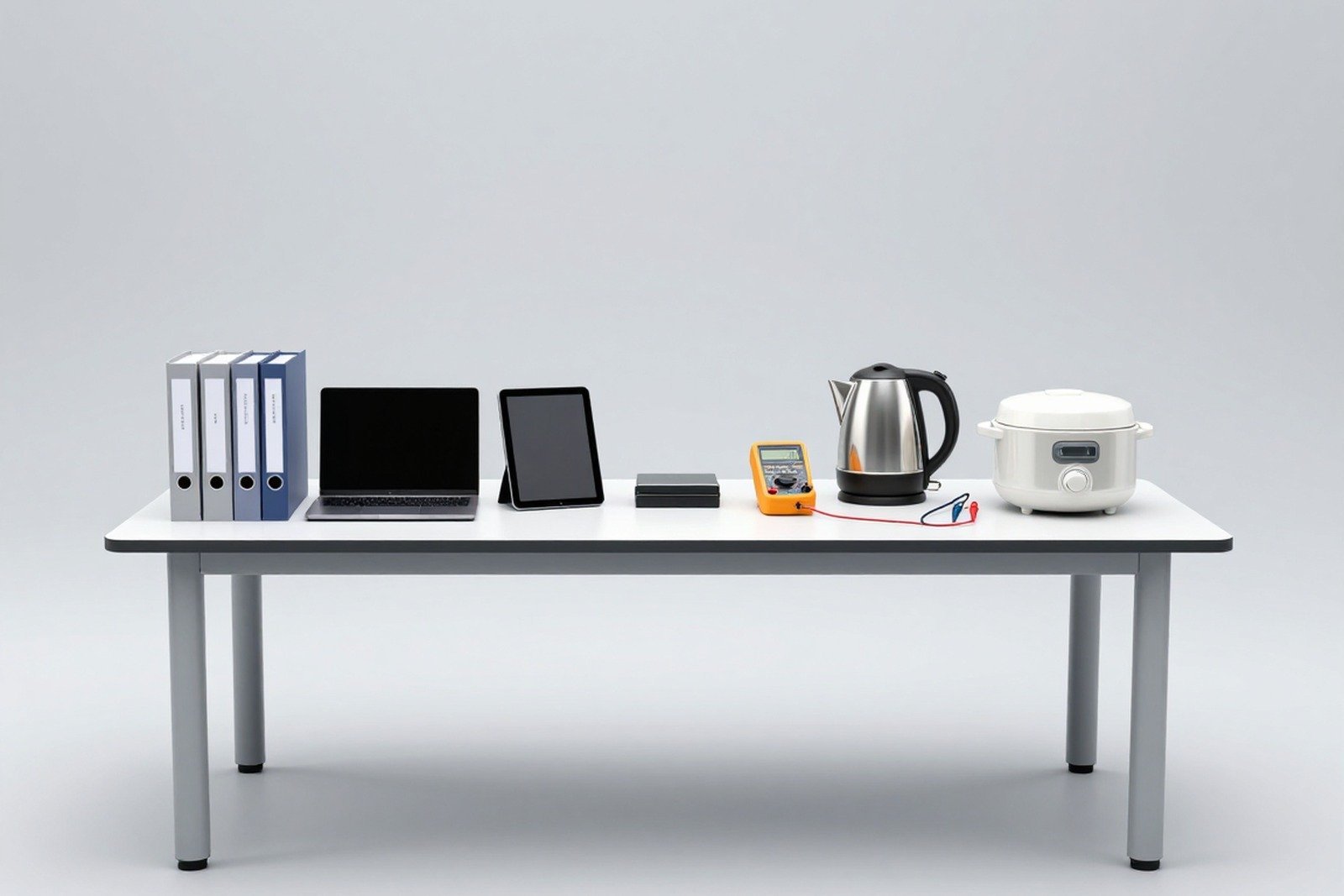
From 2026, conformity assessment procedures for household electrical appliances and information and telecommunications technology (ICT) equipment will be determined by the product risk level: medium-risk goods only require a declaration of conformity, while high-risk goods must obtain a certificate of conformity and be registered for state quality inspection before customs clearance.
1. Four documents governing the procedure from 2026
- Decree 22/2026/ND-CP (January 16, 2026): details of the Law on Standards and Technical Regulations — Chapter IV on declaration of conformity, conformity mark, recognition of assessment results; Chapter V on conditions for business services and conformity assessment.
- Decree 37/2026/ND-CP (January 23, 2026): details of the Law on Product and Goods Quality — ensuring quality in production (Article 66), with imported goods (Article 68); designation of conformity assessment organizations (Articles 71–72); State inspection of quality imported goods (Articles 82–87); Chapter III about goods label.
- Circular 14/2026/TT-BKHCN (April 9, 2026): announced conformity, 08 methods of certifying conformity (Article 5) and conformity mark.
- Circular 36/2026/TT-BKHCN (effective July 1, 2026): List of medium-risk goods (Appendix II) and high-risk (Appendix I) under the responsibility of the Ministry of Science and Technology, with quality management requirements for each product line; Repeals Circular 29/2025/TT-BKHCN and the earlier list circulars.
The legal background is Law No. 70/2025/QH15 and Law No. 78/2025/QH15, shifting from the group 1/group 2 approach to one based on the level of risk.
2. Step 1 — Determine the level of risk and applicable standards
Look up the product name and HS code in Appendix I or II of Circular 36/2026/TT-BKHCN; identify the quality management requirements for that product line, including grounds for declaration of conformity and methods for assessing conformity.
- Household electrical appliances, high-risk (Appendix I): rice cooker (8516.60.10), kettle (8516.79.10), electric fan, hair dryer (8516.31.00) — QCVN 4:2009/BKHCN and Amendment 1:2016; declared on the basis of certification by a designated body; methods 5 and 7; Imports must be inspected by the state for quality.
- Household electrical appliances, medium-risk (Appendix II): microwave oven, electric iron, refrigerator, washing machine, air conditioner — QCVN 9:2012/BKHCN and Amendment 1:2018; declared on the basis of certification by a recognised body or of self-assessment results; methods 1, 5 and 7.
- ICT, medium-risk (Appendix II): laptops (8471.30.20), tablets (8471.30.90), lithium batteries (8507.60.90), mobile and 5G information terminals (8517.13.00, 8517.14.00), DVB-T2 television receivers (8528.72.92) — QCVN 118:2018, 101:2020, 132:2022, 134:2024, 86:2025, 63:2020/BTTTT; methods 3 and 7.
- ICT, high-risk (Appendix I): 2.4 GHz broadband data transmission equipment (EIRP 60–200 mW; QCVN 54:2020, QCVN 112:2017/BTTTT), 5 GHz radio access equipment (EIRP 60 mW or more; QCVN 65:2021/BTTTT) — declared on the basis of certification by a designated body; methods 3 and 7; Imports must be inspected by the state for quality.

Two branches of procedure: for medium-risk goods there is no quality inspection on import — the business simply declares conformity before releasing the goods into circulation (Clause 1, Article 82), with no registration step. High-risk goods must be registered for state inspection before customs clearance; Testing and certification take place after the goods arrive at the storage location but before customs clearance is completed (Article 83).
3. Step 2 — Register for state inspection of high-risk imported goods
Correct order: the business registers for state inspection before customs clearance (for high-risk goods, registration comes first, before testing and certification); The inspection agency will only send a Notice to carry out customs clearance procedures when the dossier is complete and valid (Clause 1, Article 83) and customs clearance is granted only after a Notice confirming compliance with the quality requirements is issued (Clause 5, Article 83). If there is no Certificate of conformity, then carry out customs procedures to bring the goods to the storage location (Clause 2, Article 83) and then test and certify (Clause 6, Article 83) — before completing customs clearance, not after.
- Register with the product and goods quality inspection agency through the National Single Window or the National Public Service Portal (Clause 4, Article 83).
- Already have a Certificate of Conformity: The dossier includes Inspection Registration according to Form No. 1, Appendix VII; Certificate of conformity issued by a designated organization (if issued for a batch of goods, it must match batch information: product name, type, origin, manufacturer, quantity); photo or description of the goods with main label content; secondary label sample if the main label does not have enough content.
- No Certificate of Conformity: register with Form No. 1 with photo or description of goods and labels; Return the goods to the storage location according to customs laws and contact the designated organization for evaluation; When the results are available, it will be handled as if a certificate had been issued.
- Incomplete profile: The inspection agency confirms the missing content; the business must supplement it within 7 working days; if overdue, it must provide a written explanation of the reason and the expected completion date.
About labels: This labeling content is according to Chapter III of Decree 37/2026 (Decree 43/2017 and 111/2021 expire from July 1, 2026).
4. Step 3 — Testing at a designated testing body
- Goods High risk must be tested at a designated testing organization; This result is the basis for assessing compliance with corresponding standards (Clause 6, Article 83 of Decree 37/2026). With goods medium-risk, self-assessment testing must still be carried out by a recognised or designated body.
- Specified conditions (Article 72 Decree 37/2026): registered for testing activities; recognized in the right scope; at least 6 testers, each with a minimum of 2 years of experience.
- Results abroad: mutual recognition (Article 40) and unilateral recognition (Article 41) of Decree 22/2026/ND-CP with organizations recognized by ILAC, IAF, APAC members.
5. Step 4 — Certificate of conformity
- According to Clause 2, Article 66 of Decree 37/2026: goods medium-risk declared on the basis of certification by a recognised certification body or self-assessment results of businesses; goods high-risk declared on the basis of certification by a designated certification body and are not self-assessed.
- Designated certification body: The industry management ministry appoints and publishes the list; Conditions (Article 72): registering for certification activities, being recognized in the right scope, at least 6 review experts and a minimum of 20 working days of experience.
- Common methods (Article 5 of Circular 14/2026/TT-BKHCN): 1 — testing of representative samples of the type and type; 3 — add assessment of the production process, sample monitoring at the production site; 5 — add assessment of the production process or management system; 7 — batch testing and evaluation.
- Methods 1 and 6 Does not apply to high-risk goods (Clause 3, Article 6, Circular 14/2026/TT-BKHCN); The method must be stated on the certificate. Methods 3 and 5 are associated with periodic monitoring.
6. Step 5 — Declaration of conformity and customs clearance
High-risk imported goods, in addition to registration for inspection, must also comply with quality management requirements before being put into circulation (Article 68), including declaration of conformity on the basis of the Certificate of conformity of the designated organization (Clause 2, Article 66).
- Medium-risk and high-risk goods must both declare their conformity before being put into circulation: domestically produced goods according to Clause 2, Article 66, medium-risk imported goods according to Clause 1, Article 82.
- According to Article 37 of Decree 22/2026/ND-CP, the declaration above is registered in the National database on measurement, standards and quality and a confirmation code is received; When the system has a problem, submit it directly or by post.
- Enterprises are solely responsible for the published content and storage of technical records, test results, and certificates to present when requested.
- Results: Complete and valid records — in 01 working day The inspection agency issues a Notice of inspection results that meet quality requirements (Form No. 3, Appendix VII) for customs clearance. If the label does not comply, the business must remedy it within no more than 5 working days.
- After customs clearance: High-risk goods are still subject to market inspection according to Article 88; Goods that have been licensed for circulation or have implemented corresponding quality control measures according to specialized laws will not be re-inspected according to Article 82 (Clause 3, Article 82).
7. Exemption from inspection, no re-announcement and reduced inspection
- Exemption from inspection upon import (Clause 1, Article 86, Decree 37/2026) for high-risk goods: luggage, personal effects, gifts, and border resident goods within tax-free norms; diplomatic goods; sample goods, test samples for inspection and certification; raw materials for processing or producing exported goods; duty-free goods; emergency goods, specialized security goods.
- There is no need to re-declare conformity (Clause 5, Article 86): medium-risk imported goods that have been announced for the previous batch do not have to be re-declared when the next batch has same name, use, brand, type, technical characteristics, production facility and origin; Enterprises prepare internal documents to record for post-audit.
- Reduce testing: high-risk goods of the same import enterprise, with the same name, type, production facility and origin, then after three consecutive imports that meet the requirements, inspection is reduced for 2 years; Enterprises self-save documents; Stop the regime when there is a violation (Article 84).
8. Quick checklist before importing or selling to the market
- Look up the product name and HS code in Appendix I/II of Circular 36/2026/TT-BKHCN to know the risk level and management requirements.
- List all applicable standards (safety, lithium battery, electromagnetic compatibility, radio frequency…) with the correct version; Choose the method according to the risk level.
- High-risk goods: conformity certification before submitting the inspection dossier for customs clearance; Medium risk goods: declared conformity before being put into circulation.
9. Transition regulations you need to know
- Decree 37/2026 (Article 97): group 1 and group 2 goods according to previous regulations continue to apply until the end of June 30, 2026. Decree 22/2026 (Article 70): registered conformity assessment organizations continue to operate until the certificate expires.
- Circular 36/2026: Certificates of conformity and Notices of receipt of declarations already issued remain valid until their expiry date.
- ICT businesses note: the old catalog circulars of the Ministry of Information and Communications have been abolished; Check according to Appendix I/II Circular 36/2026.
10. Frequently asked questions
Registration for state inspection before or after customs clearance?
Before. Registration for inspection is the first step: the inspection agency only sends a Notice to the enterprise to carry out customs clearance procedures when the dossier is complete and valid (Clause 1, Article 83) and high-risk goods are only cleared after the Notice meets quality requirements (Clause 5, Article 83).
Are imported medium-risk goods subject to state quality inspection?
No. According to Clause 1, Article 82 of Decree 37/2026, medium-risk goods are not subject to quality inspection when imported but must be declared compliant before being placed on the market.
Are laptops and phones subject to state inspection when imported?
Not required, because laptops and phones fall under Appendix II (medium-risk), but a declaration of conformity is still needed.
11. Conclusion
The conformity assessment procedure for household electrical appliances and ICT equipment from 2026 revolves around one question: whether the product belongs to medium-risk or high-risk. Medium risk goods follow the route of declaration of conformity, without inspection at the border gate; High-risk goods must be certified as conforming to regulations at a designated organization and register for state quality inspection upon import. Determining the right level of risk, the right standards and the right method will help shorten customs clearance time.
Related articles
- Circular 36/2026/TT-BKHCN: Full Text of the List of Medium-Risk and High-Risk Goods
- QCVN 4:2009/BKHCN: safety requirements for electrical and electronic equipment and Amendment 1:2016
- How long must RoHS records be kept? Legal timelines businesses need to remember