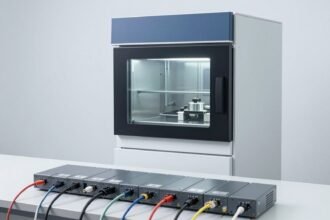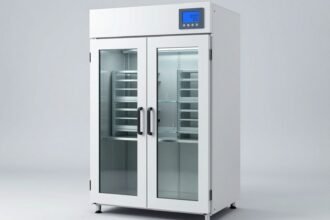
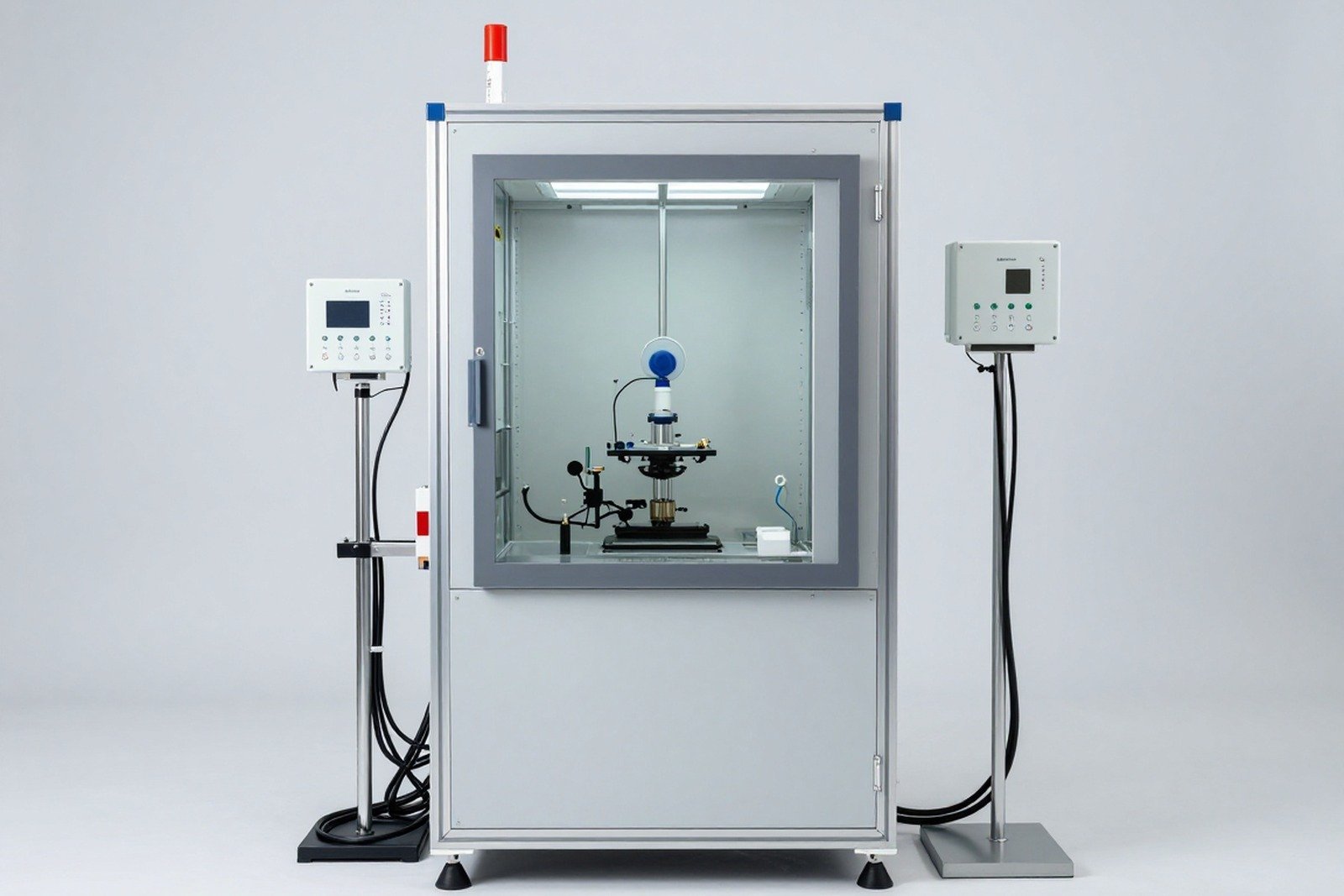
Just because the environmental chamber displays the correct temperature and humidity on the screen does not mean the conditions at the sample location are correct. The gap between “qualified chamber” and “qualified test test test specimen” is what IEC 60068-3-6 and IEC 60068-3-11 are about — two guidance documents for validating chamber capacity and calculating the uncertainty of test conditions.
This article explains what thermal-humidity chamber validation entails, why it must be performed when the chamber is loaded, and how to use the validation results to protect the validity of the test report.
1. What is chamber capacity confirmation?
Performance confirmation is the procedure of measuring the characteristics of a test chamber and comparing them with the requirements of applicable standards. With heat-humidity chambers, the characteristics that need to be confirmed often include:
- Stability: fluctuations in temperature and humidity at a point over time.
- Uniformity: temperature and humidity differences between different points in the working space.
- Deviation from set value (deviation): the difference between the displayed value and the value measured by the standard device.
- Rate of change: the ability to raise and lower the temperature at the required rate, necessary for tests with a regulated speed.
- Recovery time: ability to return to set conditions after opening the door or after introducing a sample.
The first three characteristics are the framework of every validation report. Results must be documented with date, operator, standard equipment used and measurement data, so that they can be compared when required by the customer or accreditation organization.
2. Where to measure and how many points to measure?
The key to qualification is spatial sampling: if we only measure a point in the middle of the chamber, we know nothing about the area near the door, the area near the condenser or the top area. The standard approach is to select a set of measurement points distributed throughout the workspace (including corners and boundary locations), measure them simultaneously, and then calculate the difference between the points.
| Confirmation content | How to do it | Meaning of test results |
|---|---|---|
| Stability at one point | Record continuously over time at a fixed point | Indicates whether the tolerance is tight enough for the test |
| Spatial uniformity | Measure multiple points simultaneously within the working range | Indicate whether sample placement affects the results |
| Difference with set value | Compare with standard equipment with standard link | Indicates whether the reported conditions match the actual conditions |
| Load conditions | Repeat the measurement when the chamber contains sample or dummy load | Indicates actual test environment, not empty chamber |
| Recovery time after opening | Open the door according to procedure and then measure again | Determine the impact of midterm testing |
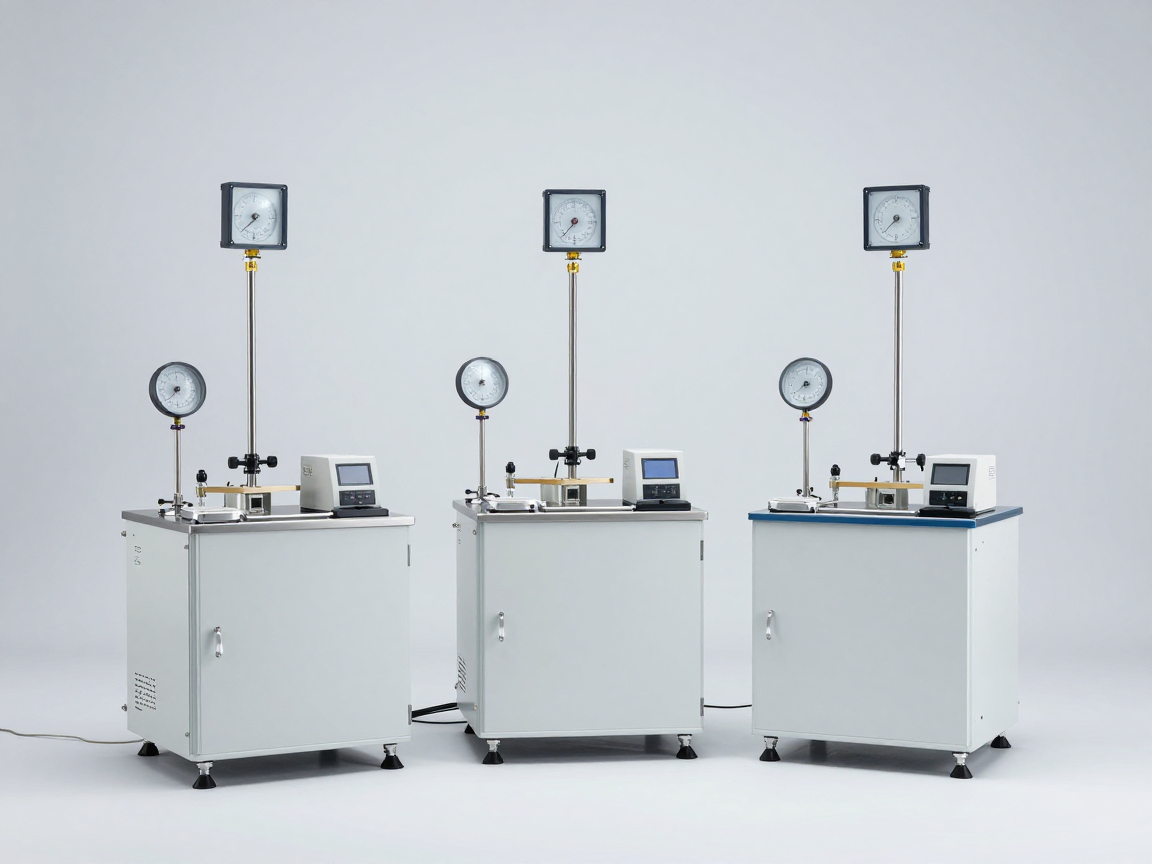
3. Why is it necessary to confirm when the chamber is loaded?
The empty chamber and the chamber with sample are two different thermal systems. Samples and racks put into the chamber change:
- Air flow: The sample hinders circulation, creating stagnant air zones and larger temperature differences.
- Thermal inertia: The sample mass needs time to reach temperature, so the holding time must be long enough.
- Moisture exchange: The hygroscopic material of the sample causes the chamber humidity to change, especially with large samples.
- Self-heating: Samples with power supply generate heat, creating a local difference.
Therefore, an empty chamber validation report only proves the capacity of the chamber, not the conditions at the sample. The next step — measuring the temperature at the sample itself under load conditions — is presented in the text cold/hot test with load: place the sensor and measure the sample temperature.
4. Uncertainty of test conditions
Confirmation results always include a degree of uncertainty. Calculation of uncertainty includes: uncertainty of the reference device and reference chain, uncertainty due to spatial sampling, the effect of chamber running on time, and the resolution of the recording system.
| Uncertainty component | Origin |
|---|---|
| Standard equipment | Error of the sensor and calibration chain, drift over time |
| Spatial sampling | The number of measuring points is small compared to the chamber volume, the measuring points are not representative |
| Variation over time | Control cycle of the chamber, sampling time |
| Effect of load | Shielding, dehumidifying, self-heating model |
| Human manipulation | Place the sensor, open the chamber door, time to record data |
Once the uncertainty is known, the evaluation of the test results becomes clear: if the error is within the uncertainty, it cannot be concluded that the sample is defective; On the contrary, a deviation that exceeds the uncertainty is strong technical evidence — this principle applies directly when developing criteria as in the article. Pass/fail criteria after environmental testing.
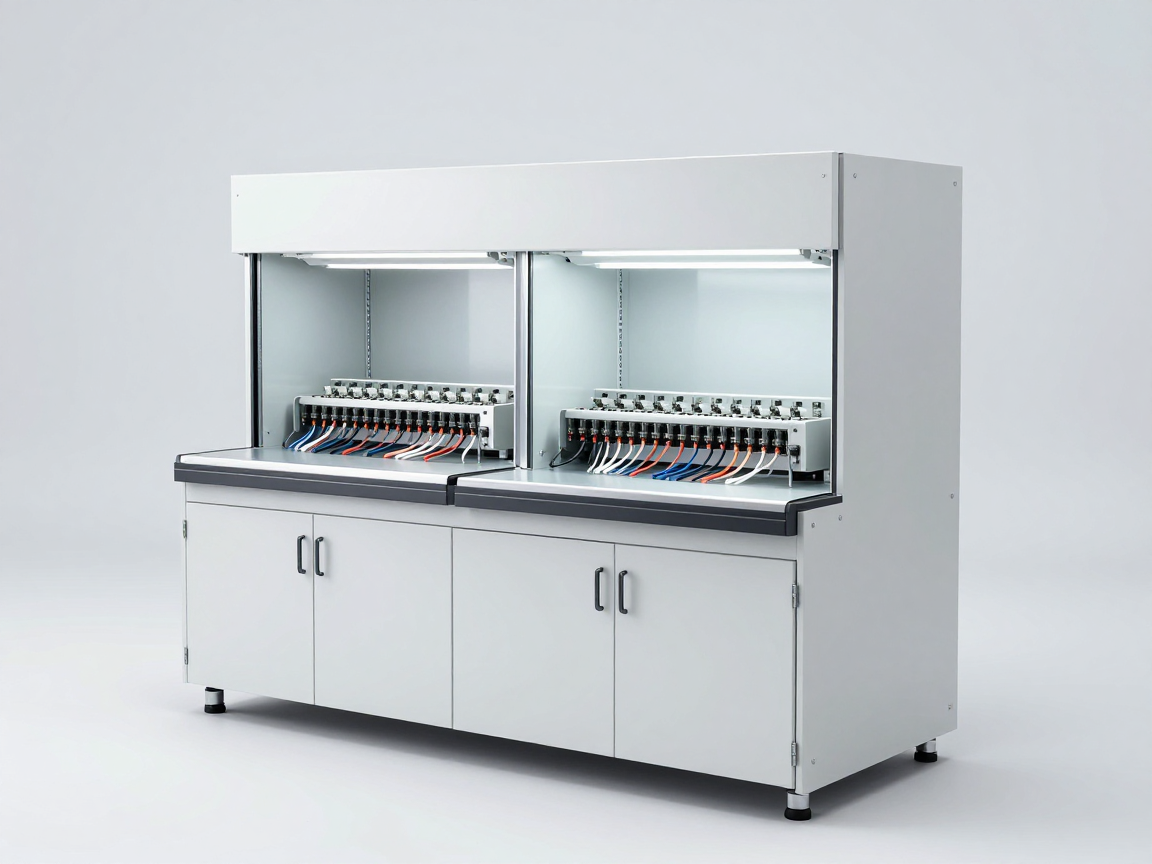
5. Confirmation cycle and records to be kept
- Before putting the chamber into use for a new test: confirm at the correct temperature and humidity range to be used.
- According to regular cycles: according to internal regulations and requirements of the accreditation system; Frequency depends on usage and severity.
- After repair, major maintenance or room relocation.
- When the chamber has a larger load than normal or change the rack configuration.
Records should be kept: measurement point location diagram, original measurement data, standard equipment used with calibration paper, loading conditions when measuring, conclusions about the ability to meet the requirements of the test, and the person performing the test.
6. Common mistakes and how to avoid them
- Only record the value on the chamber display without independent measuring equipment — it is impossible to demonstrate real conditions.
- Confirm the chamber is empty and then use it for the loaded chamber — lack of evidence of conditions at sample.
- Measure only one point in the center of the chamber — ignores misalignment between locations, which is a common source of dispute.
- The location of the sensor is not recorded — results are not reproducible.
- Ignore uncertainty when evaluating — pass/fail conclusions based on errors contained in measurement noise.
- Do not compare the time of calibration of standard equipment — records lose value before the evaluation organization.
7. Frequently asked questions
Does chamber capacity confirmation require calibration?
Not consistent. Calibration applies to measuring equipment (sensors, recording systems). Validation applies to the chamber as a system, assessing the ability to create and maintain conditions within the workspace.
Is a stand-alone measuring device needed when the chamber already has sensors?
Needed, because the chamber sensor is part of the system being evaluated. Independent measuring equipment with standard links is the basis for conclusions.
If the chamber meets the confirmation requirements, are you sure the test results are correct?
Not enough. It is also necessary to control the way the sample is mounted, the sensor position on the sample, the holding time for the sample to reach equilibrium, and the time to measure parameters after the test.
How much uncertainty is acceptable?
Depends on the tolerance required by the test: the uncertainty must be significantly less than that tolerance. Specific criteria need to be compared verbatim to the guidance documents and customer requirements.
Can chamber manufacturer’s confirmation results be used?
Should only be used as reference information. Validation should be performed at the installation site, with actual usage configurations, and repeated periodically.
Can an unaccredited testing room self-certify the chamber?
You can do it yourself according to the instructions, but when the results must be used for documents that need to be recognized, it is recommended that standard equipment be calibrated and fully documented.
8. Conclusion
Confirming thermal-humidity chamber capacity is the foundation of any valid climate test. It turns a “pass chamber” into a “sample received at the right conditions within a specified time period”, and includes an uncertainty to make a pass/fail conclusion valid.
Three things to do: confirm the correct temperature-humidity range and the correct load configuration to be used; Measure at many points distributed in the working space with independent standard equipment; and keep complete records including measurement point diagrams, original data and calibration papers.
References
- IEC 60068-3-6 — Validation of temperature and humidity chamber capacity.
- IEC 60068-3-11 — Calculation of uncertainty of conditions in a climatic test chamber.
- IEC 60068-3-5 — Validation of temperature chamber capacity for cold and dry heat testing.
- IEC 60068-3-7 — Measurement in loaded chambers, guidance on cold and hot loaded testing.
- IEC 60068-1 — General provisions and guidance.
Related articles
- Cab test: steady heat and humidity according to IEC 60068-2-78
- Test Db: hot and humid cycle 12h+12h according to IEC 60068-2-30
- Cy test (IEC 60068-2-67): steady heat and humidity accelerates components
- Cx test (IEC 60068-2-66): hot moisture in pressurized steam and when needed
Discuss further
Disclaimer
This article is an interpretive content compiled by us; not legal advice. Enterprises need to compare relevant documents/standards verbatim before applying them to specific products.
See more: Copyright Policy & Disclaimer by ticforall.com.