
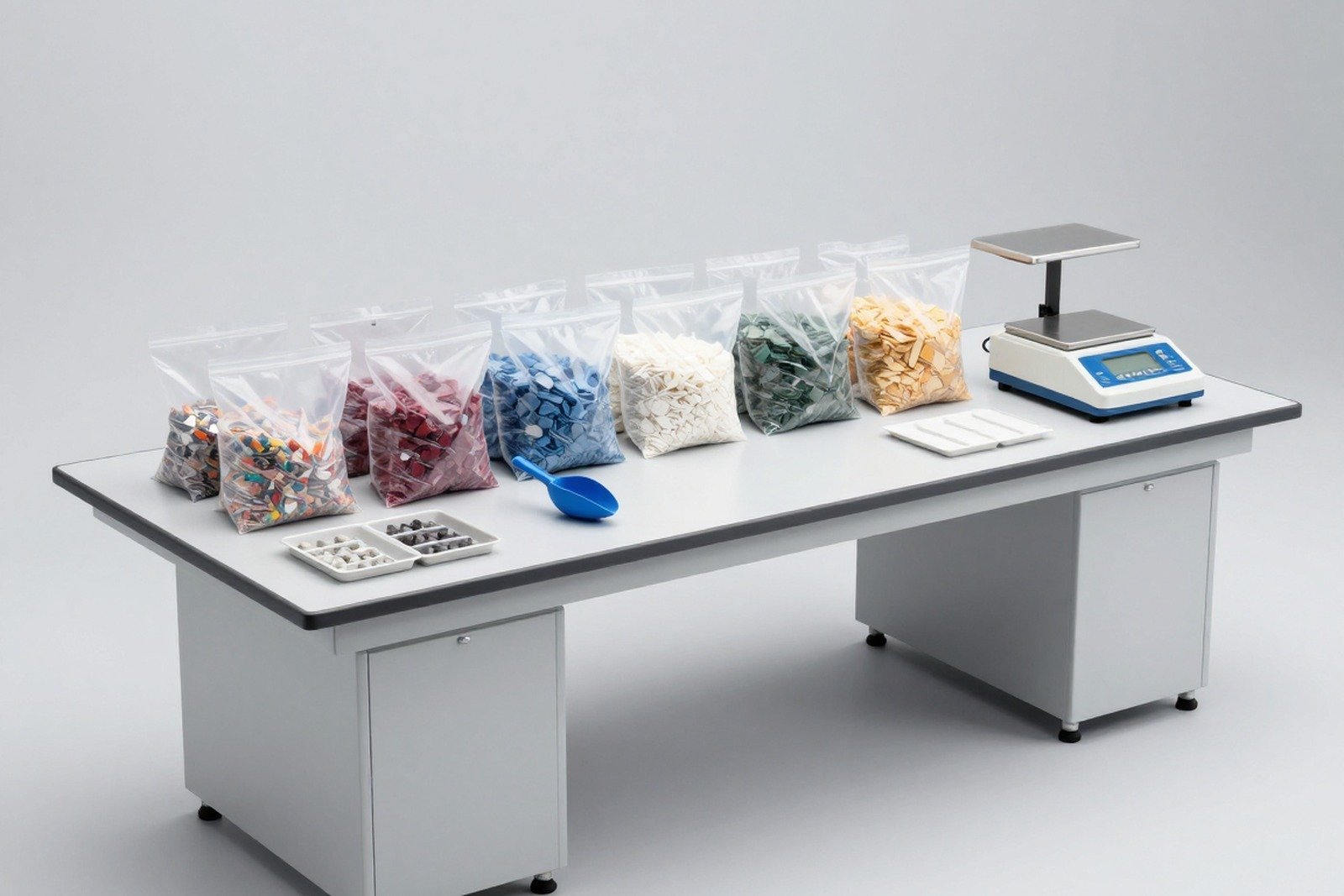
Of all the material groups, recycled plastics are the most difficult to achieve RoHS. Not because recycled plastic is inherently bad, but because it carries with it the history of previous products — including additives that are now restricted.
This article explains four groups of substances that often “migrate” with recycled plastic, why testing recycled plastic is more difficult than virgin plastic, and six steps to building a practical control program.
1. Why is recycled plastic the highest risk point?
| Characteristics | Primary plastic | Recycled plastic |
|---|---|---|
| Origin | Determined, as declared by the manufacturer | Often not fully identified, across multiple layers of collection |
| Additive ingredients | According to registered formula | May contain additives from older products |
| Uniformity between batches | High | Low, varies with input source |
| Document traces | There is a material declaration | Often lacking or only at a general level of commitment |
| Risk exceeds the limit | Low | High |
The bottom line: recycled plastics were a product of another time, when substances like organic brominated flame retardants or certain plasticizers were commonly used. When that plastic turns back into raw materials, the old substances come back with it.
2. Four groups of “sequelae” in recycled plastic
| Substance group | Common origin | Risk level |
|---|---|---|
| Organic brominated flame retardants (PBB, PBDE) | Old electronic device covers, plastic from machinery and household electrical appliances | Very high — this is the most common reason why recycled plastics fail |
| Plasticizing the phthalate group | PVC from old cables, pipes, and plastic films | High — especially with soft plastics |
| Cadmium and lead in colorants and stabilizers | Yellow, orange, red plastic; Old PVC | High — cadmium has a tighter limit |
| Other halogenated flame retardants | Plastic from old equipment and construction materials | Medium with RoHS, high with customer halogen-free requirements |
Note to the last group: many brominated flame retardants are not on the RoHS restricted list, but are still excluded in halogen-free claims or in customer purchasing policies. Therefore, recycled plastic often entangles both layers of requirements at the same time.
3. Why is it more difficult to test recycled plastic than virgin plastic?
- Inconsistent: Composition varies between grains, between bags and between batches. A small sample may not be representative of the whole lot.
- Physical dispersion: Flame retardants may concentrate in some pieces of plastic while the rest is clean.
- Influence of sample background: resins with fillers, reinforcing fibers, or dark colors make screening results less stable.
- Missing source data: Without knowing which product line the plastic comes from, it is impossible to assess risks by substance group.
Practical consequence: with recycled plastics, sampling and sample quantity are as important as the analytical method. Taking a small sample from one bag cannot be concluded for the whole lot.
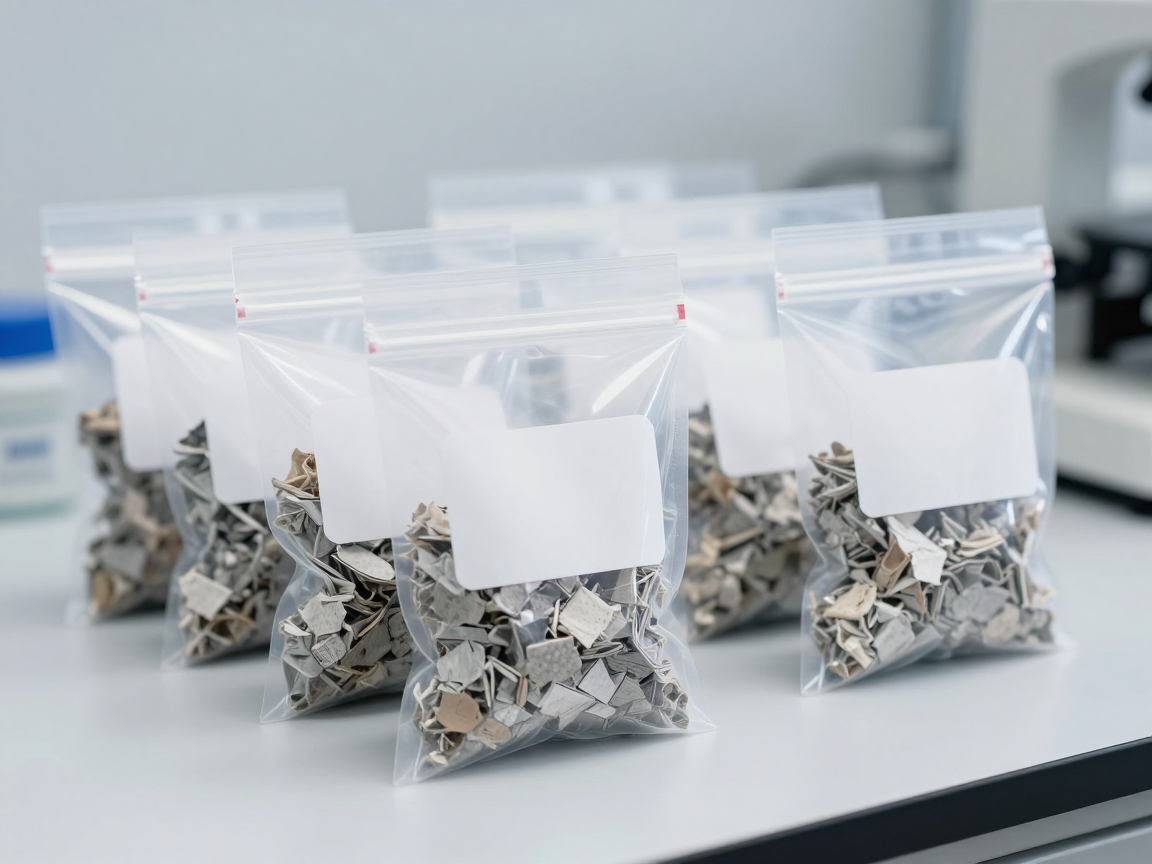
4. Six steps to control recycled plastic
| # | Step | Specific requirements |
|---|---|---|
| 1 | Choose controlled sources of recycled plastic | Prioritize sources from defined product lines instead of mixed common plastics |
| 2 | Request batch records | Origin, product line, import date, batch code |
| 3 | Screen each batch of raw materials | The screening index is lower than the limit to create a safe zone |
| 4 | Test periodically according to analytical methods | Organic bromine group, plasticizer group, heavy metal |
| 5 | Separating material streams at the factory | Do not mix certified recycled plastic with uncertified plastic |
| 6 | Recorded in the supply contract | Provisions for notification of source changes and liability when limits are exceeded |
5. There are no exemptions for recycled plastics
Here’s the point: RoHS has no exemptions for recycled materials. Products made from recycled plastic must still meet the same limit as products made from virgin plastic. Using recycled materials is an environmental choice, not a basis for lifting the limit.
At the same time, the pressure to increase recycled content in products is increasing. Enterprises therefore have to solve two problems at the same time: increasing the rate of recycled materials and maintaining evidence of conformity for that material.
6. Frequently asked questions
Can recycled plastic from old electronic device casings be used?
Possibly, but this is the highest risk group because of the greatest likelihood of containing organic brominated flame retardants. It is necessary to control each batch and test according to appropriate analytical methods.
Is there a way to quickly screen bromine flame retardants at the factory?
A screening device that measures total bromine can be used, but the results are only indicative. Conclusions must be based on analytical methods to identify compounds.
If recycled plastic only makes up a small percentage of the product, does it have to be inspected?
Yes. The limit applies to each material uniformly, regardless of the ratio in the product.
Can a recycled plastic supplier issue a “RoHS compliant” certificate?
It is possible, but a test report with batch data and resin source description should be requested. A general confirmation does not indicate whether a particular lot passes or fails.
Should recycled plastic be avoided completely?
Not necessarily. With recycled plastic from a defined and controlled product stream in batches, the risk can be managed. What should be avoided is using mixed recycled plastics of unknown sources without a control program.
7. Conclusion
Recycled plastic is the most difficult to achieve RoHS because it carries additives from previous life cycles, composition is inconsistent, and a documentation trail is often lacking. There are no exemptions for recycled materials in RoHS.
Three things to do: choose recycled plastic sources from a defined product line; control each batch of raw materials instead of checking once; and separate the flow of confirmed material from unconfirmed material within the plant.
References
- Directive 2011/65/EU and its amendments (RoHS) — limits apply according to homogeneous materials, with no exemption for recycled materials.
- IEC 62321-3-2 — screening of total fluorine, chlorine, and bromine in electrical and electronic products.
- IEC 62321-8 — determination of phthalate groups in polymer materials.
- Recycled content requirements in the EU sustainable product ecodesign regulation.
Related articles
- PBB/PBDE testing by GC-MS: why recycled plastics are organic bromine hot spots
- PVC and phthalates in cables: most common cause of limit exceedance
- What is halogen-free? Not covered by RoHS but customers still request it — why?
- When is XRF only needed, when is wet testing required? Batch RoHS control strategy
Discuss further
Disclaimer
This article is an interpretive content compiled by us; not legal advice. Enterprises need to compare relevant documents/standards verbatim before applying them to specific products.
See more: Copyright Policy & Disclaimer by ticforall.com.