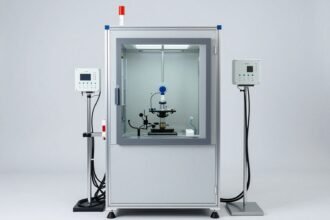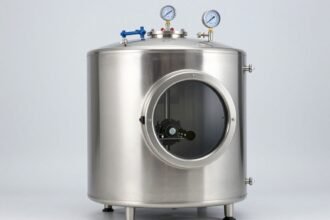
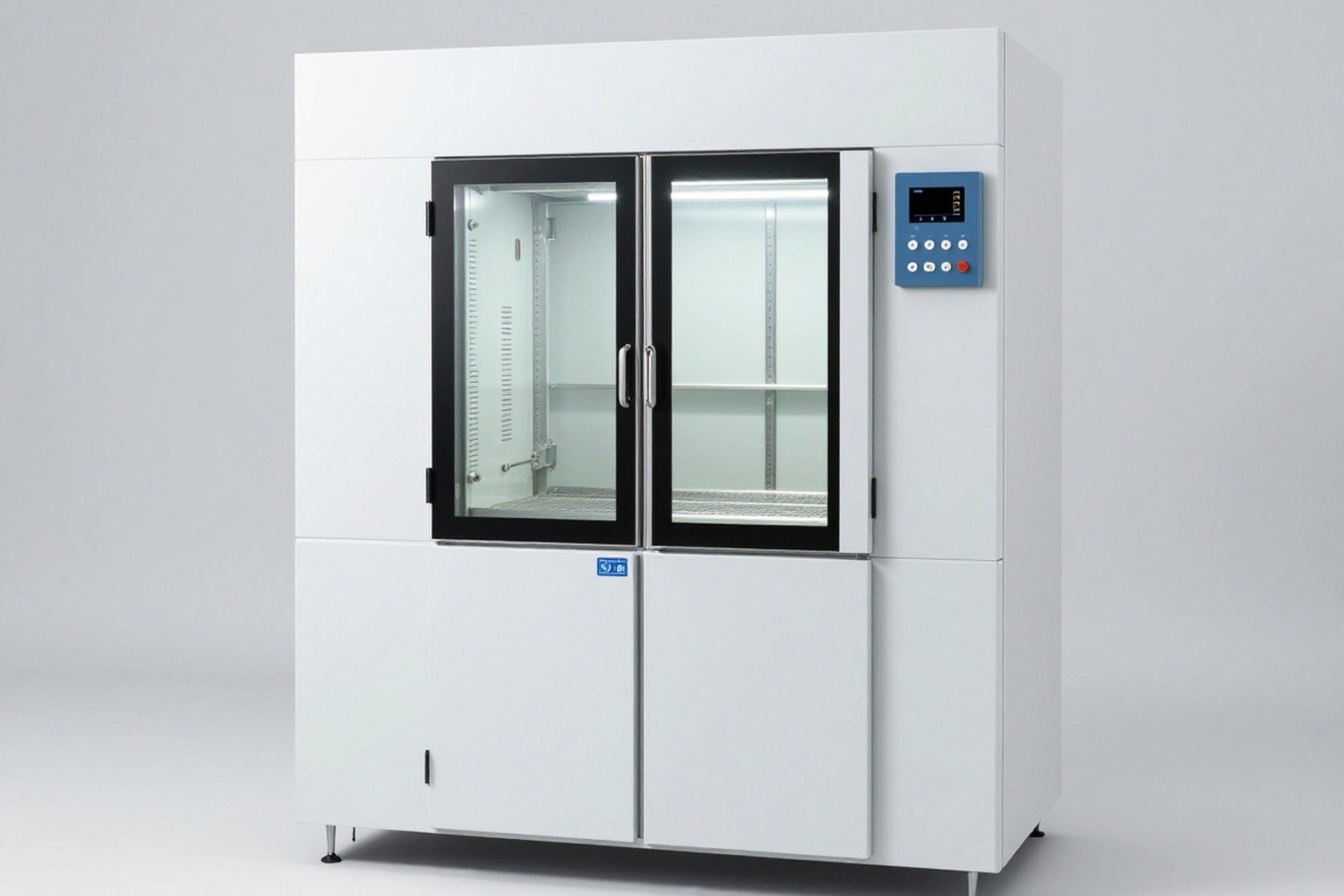
Within the IEC 60068 family of climatic tests, the Z/AD test according to IEC 60068-2-38 is a “two-in-one” test: it couples a temperature change cycle with a warm-humidity period within the same 24-hour period. Because of that combination, Z/AD is commonly used for components and component assemblies – where the risk does not come from moisture alone but from moisture combined with thermal expansion.
This article explains how Z/AD is different from Db cycle hot and humid testing, when to choose Z/AD, and what to agree with the testing laboratory before starting.
1. What question does the Z/AD test answer?
Z/AD is a cyclic heat-humidity combination test. Each cycle consists of multiple phases: the sample is brought to high temperature, to low temperature, and through hot and humid stages under controlled conditions. Unlike Db — where the focus is on condensation as the temperature shifts — Z/AD emphasizes alternating between thermal stress and moisture stress on the same sample.
Question that Z/AD answers:
- Do components crack, crack welds, or delaminate when subjected to humid thermal cycles?
- Does moisture penetrating into a sealed enclosure cause deterioration of electrical parameters?
- Can packaging materials, adhesives, and coatings withstand alternating contraction and expansion and moisture absorption?
- According to what law does damage accumulate over the number of cycles?
Important point: Z/AD is a test that controls both temperature and humidity over time, so it requires a capable test chamber and detailed data records. This is not a test that can be replaced by placing the sample in a humid room.
2. In what way is Z/AD different from Db?
| Criteria | Z/AD (60068-2-38) | DB (60068-2-30) |
|---|---|---|
| Nature of the test | Combination of heat and humidity cycles in the same 24-hour, multi-phase cycle | Hot-humid cycle with condensation, two main phases |
| Stress focus | Alternate heat and moisture stress on the same sample | Condenses and absorbs moisture according to the day-night cycle |
| Typical object | Components, component assemblies, electronic modules | Products and assemblies in general |
| Device requirements | High: need to control temperature and humidity in multiple phases | High: need to control humidity during heat transfer |
| Typical conclusion | Parameter deterioration according to number of cycles, cracking and delamination | Electrical leakage, corrosion, insulation deterioration |
Because there are multiple phases in each cycle, Z/AD allows a more fine-grained observation of cumulative damage: for the same number of testing hours, the number of times the sample undergoes thermal and moisture transitions is much greater than with single tests. For details on the test code and how to write it in the request, see the article Read the IEC 60068 test designations correctly.
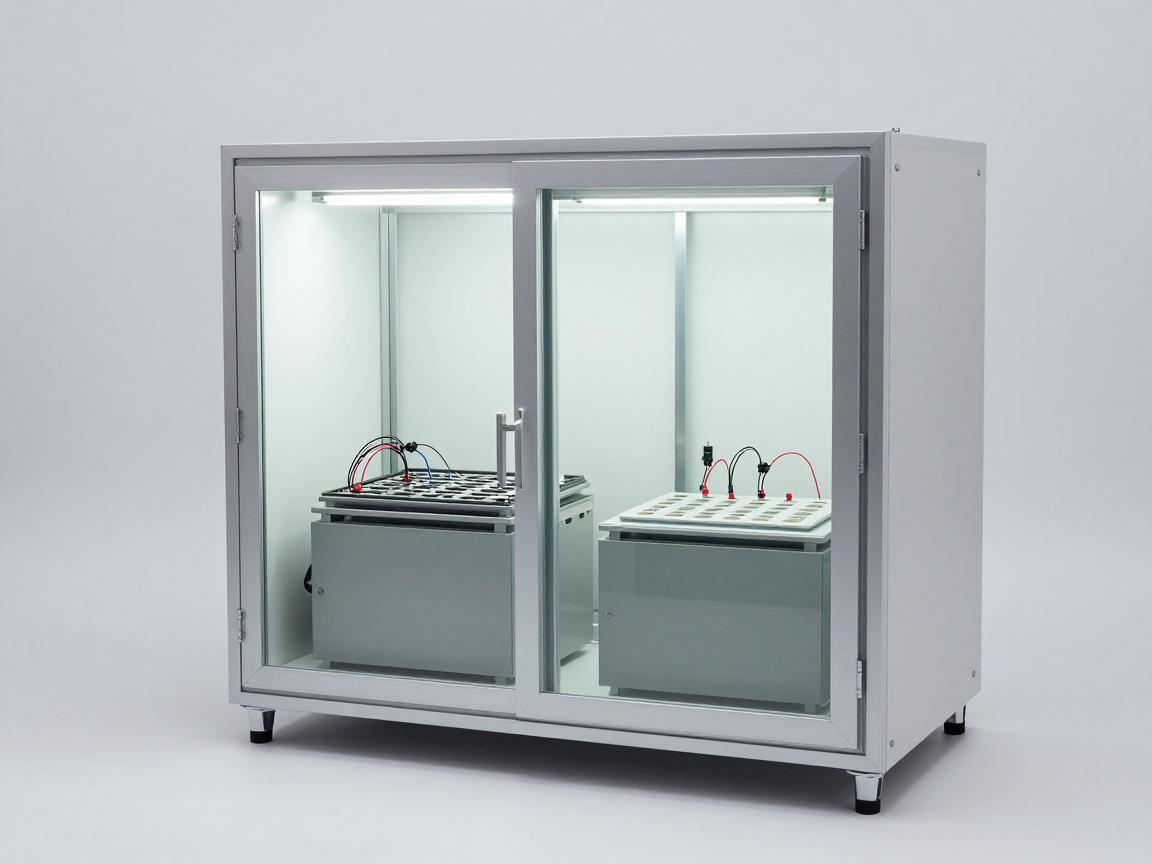
3. Why is Z/AD suitable for components?
Electronic components often die due to three mechanisms associated with heat and moisture: cracking due to cyclic thermal stress, moisture penetration through plastic housings or gaskets, and electrochemical corrosion at component pins. These three mechanisms do not appear separately in reality but occur simultaneously. Z/AD is designed to create exactly that concurrency.
- Moisture penetration into plastic housing: Moisture diffuses into the packaging material in the hot moist phase, then becomes “locked in” as the material cools.
- Cracking due to thermal shock: The temperature phases in the cycle produce a greater number of contractions than a simple moisture test.
- Corrosion in metal contact: Moisture and voltage are present at the component pins and solder joints.
- Layer separation in composite materials: Plastic – metal – ceramic have very different expansion coefficients.
4. Implementation sequence
- Sample preparation and benchmarking: Measure typical electrical parameters, check appearance (microscope with small components), record batch number and code date.
- Mounting jig: arrange the sample in the manner described by the standards and requirements; With components plugged into the board, the main mounting fixture is the test board and how to solder.
- Run cycle: Carry out the required number of cycles, controlling temperature and humidity for each phase.
- Midterm exam: According to plan, measure a number of samples at cycle milestones to build a decline curve.
- Recovery and final examination: Bring the sample to standard conditions, treat surface moisture, and re-measure all parameters.
- Damage analysis: For damaged samples, cross-sectional analysis or X-ray examination should be performed to determine the mechanism, not just the phenomenon.
The order of Z/AD in a large test program requires consideration: if placed after mechanical tests such as vibration, the results may be worse due to pre-existing cracks — the same logic applies to thermal cycling depending on the test. N test — temperature change.
5. Severity level and number of cycles
IEC 60068-2-38 specifies a cycle structure and several levels of cycle numbers to choose from. High and low phase temperatures, time in each phase, and humidity periods are all specified by the standard; Therefore, you should not design another cycle and still call it Z/AD. Values and tolerances need to be compared verbatim to the standard.
| Factors need to be confirmed with the testing laboratory | Why is it important? |
|---|---|
| The cycle structure is strictly according to the standard | The homemade cycle cannot be compared with the published results |
| Number of cycles | The main stress variable, which determines the number of times the stress accumulates |
| Temperature and humidity tolerances for each phase | Directly affects the ability to reproduce results |
| Is there power supply or not? | Decide whether to evaluate galvanic corrosion or not |
| Measuring points and sensors | Prove that the sample actually received enough stress, not just the chamber reached the value |
| Time to measure parameters | Decide whether the deterioration is real or whether it is due to surface moisture |
6. Common mistakes and how to avoid them
- Replace Z/AD with Db or Cy then label Z/AD — invalid result.
- Shorten the humidification phase to save chamber time — losing the moisture penetration mechanism, which means losing the very purpose of the test.
- Do not measure electrical parameters before testing — without a comparison benchmark, the decline cannot be concluded.
- Measure immediately while the sample is still moist — results reflect surface moisture, not internal damage.
- Do not analyze sample damage after testing — loss of information most important for design improvement.
- Tested on a sample that has passed another test without recording it — cumulative stress history cannot be traced.

7. Frequently asked questions
Is Z/AD an accelerated test to infer longevity?
Not in the simple sense. Z/AD is a standard climatic test to assess tolerance and detect failure mechanisms. To infer longevity, a specific acceleration model and experimental data at various severities are needed, with assumptions clearly stated.
Can Z/AD and Db share the same room?
If the chamber can control both temperature and humidity in multiple phases with appropriate tolerances, then the equipment can be shared. However, the accuracy and data requirements of Z/AD are higher, so chamber capacity must be confirmed first.
Who should use Z/AD?
Usually components and component assemblies: capacitors, resistors, sensors, modules, circuit boards with protective coating. For large finished products, steady-state or cyclic heat-moisture tests are often more suitable.
Is it necessary to power the sample during the test?
Depends on the goal. Power supply helps to exhibit galvanic corrosion and localized heating, but also complicates temperature control. If power is applied, the power must be measured and recorded because self-heating affects the actual temperature of the sample.
What is the minimum number of samples?
There is no general number. It is necessary to have enough samples for both end-of-term assessment and inspection samples at mid-term milestones, and at the same time reserve for samples that must be analyzed for damage. The number of samples and distribution method should be agreed upon before testing.
Can Z/AD results be used to declare conformity?
Only if the certification program or specification properly cites this test, and the testing laboratory has accredited qualifications for that test.
8. Conclusion
Z/AD is a cyclic heat-humidity combination test for components, where damage arises from a combination of thermal expansion and moisture penetration. Because the cyclic structure is strictly regulated by the standard, this test cannot be replaced by a simpler test that retains the same result value.
Three things to do: confirm the chamber has enough capacity to run the correct cycle configuration within the allowable tolerances; Allocate the number of samples for both final assessment and mid-term sampling; and prepare a damage analysis plan before testing, so that the damaged sample remains intact for analysis.
References
- IEC 60068-2-38 — Z/AD test: combined heat-humidity cycle.
- IEC 60068-2-30 — Test Db: hot-humidity cycle.
- IEC 60068-2-78 — Cab test: steady heat and humidity.
- IEC 60068-2-14 — Test N: temperature change.
- IEC 60068-1 — General provisions and guidance.
- IEC 60068-3-6 and 60068-3-11 — Confirmation of environmental chamber capacity and uncertainty.
Related articles
- Test Db: hot and humid cycle 12h+12h according to IEC 60068-2-30
- Cy test (IEC 60068-2-67): steady heat and humidity accelerates components
- Cx test (IEC 60068-2-66): hot moisture in pressurized steam and when needed
- Is 85/85 enough of a conclusion? Limits of hot damp test in reliability assessment
Discuss further
Disclaimer
This article is an interpretive content compiled by us; not legal advice. Enterprises need to compare relevant documents/standards verbatim before applying them to specific products.
See more: Copyright Policy & Disclaimer by ticforall.com.