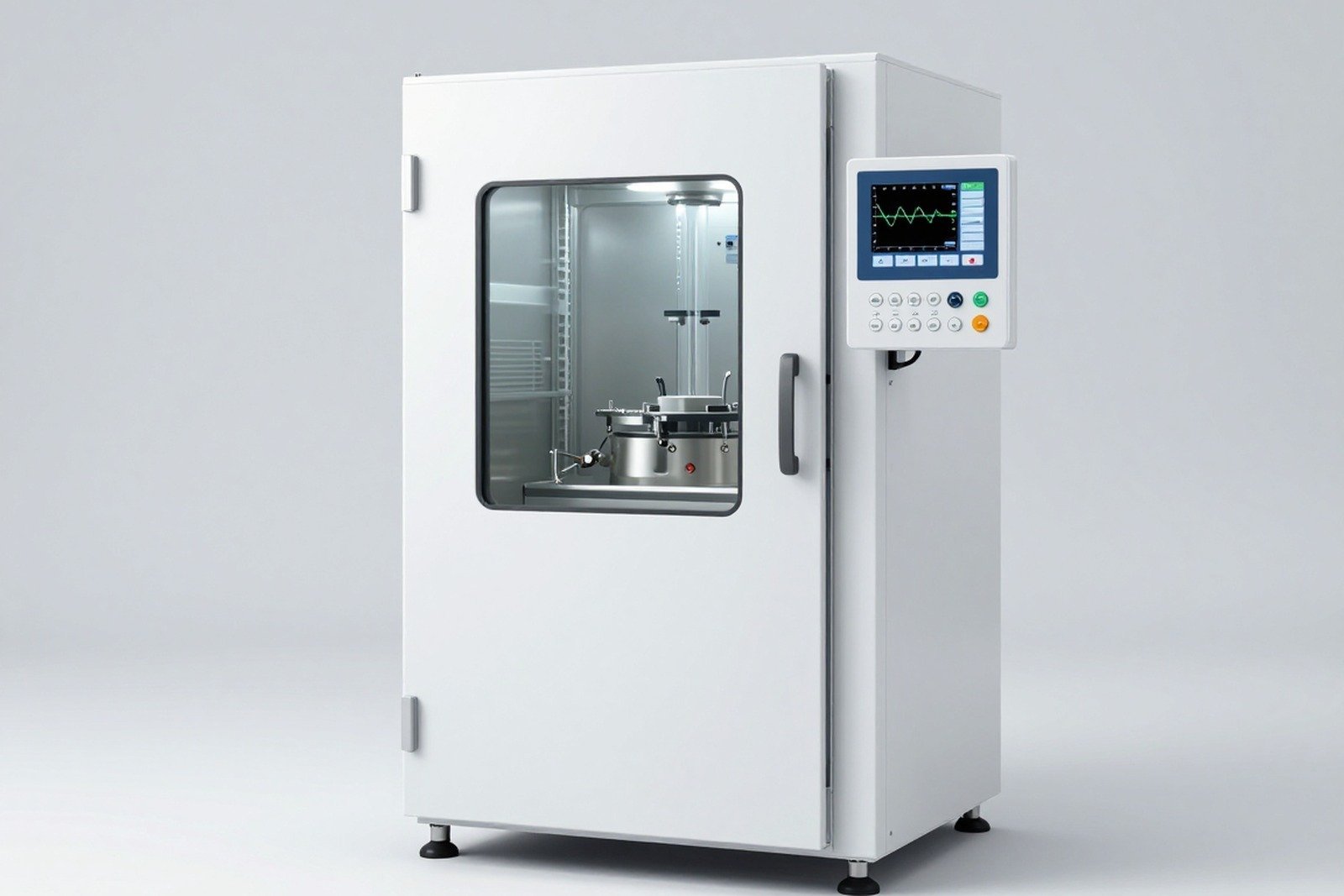
If the steady hot and humid test answers the question “can the product withstand continuous moisture?”, then the Db test according to IEC 60068-2-30 answers another question: “the product can withstand hot and humid environments that change with the day-night cycle, is there condensation on the surface, is there?”. This is a test that closely simulates humid tropical environments and climate-controlled factories.
This article explains how the 24-hour Db cycle works, why condensation is an intentional part of the test, and what recording is required for results to be valid.
1. What questions does Db testing answer?
Db is the damp heat, cyclic test. The sample is subjected to multiple 24-hour cycles, each cycle consisting of a period of high temperature with high relative humidity, and a period of lower temperature. During the temperature rise phase, moisture condenses on the sample surface — this is a purposefully designed effect, because that is exactly what happens in reality.
- Condensate can seep into the gap, through the gasket, into the housing and cause an electrical leak.
- The wet-dry cycle causes galvanic corrosion much faster than steady humidity, especially when voltage is present.
- Joining materials, coatings, and adhesives are subjected to repeated stresses due to varying elasticity.
- Labels, ink, and wire connections are common early deterioration points.
Therefore, Db is a more suitable test than Cab when it is necessary to simulate the actual operating environment in Vietnam and tropical areas, or when the product is installed in a non-atmospheric conditioningled factory.
2. How does the 24-hour cycle work?
A Db cycle has two phases: a high temperature phase that maintains very high humidity, and a lower temperature phase. The key point lies not in the temperature value, but in the kinetics of the procedure:
| Phase in cycle | What happens to the sample? | Technical meaning |
|---|---|---|
| High temperature, high humidity mixing | The sample heats up, the material absorbs moisture, the surface retains a layer of moisture | Creates favorable conditions for surface corrosion and conductivity |
| Turn down to low heat | Relative humidity increases as temperature decreases; Moisture may condense | Condensate can enter the slots and capillaries inside the sample |
| Low temperature brewing | The sample cools, the material shrinks | Repeated mechanical stress to the graft material |
| Turn to high heat | The sample warms faster than the environment in some cases; Moisture condenses on the surface | Controlled condensation phase — characteristic of Db |
The difference between Db and Cab is not just “whether there is a cycle or not”, but whether there is condensation. Number of cycles is the main severity variable, along with high phase temperature and sample power status.
3. Implementation sequence
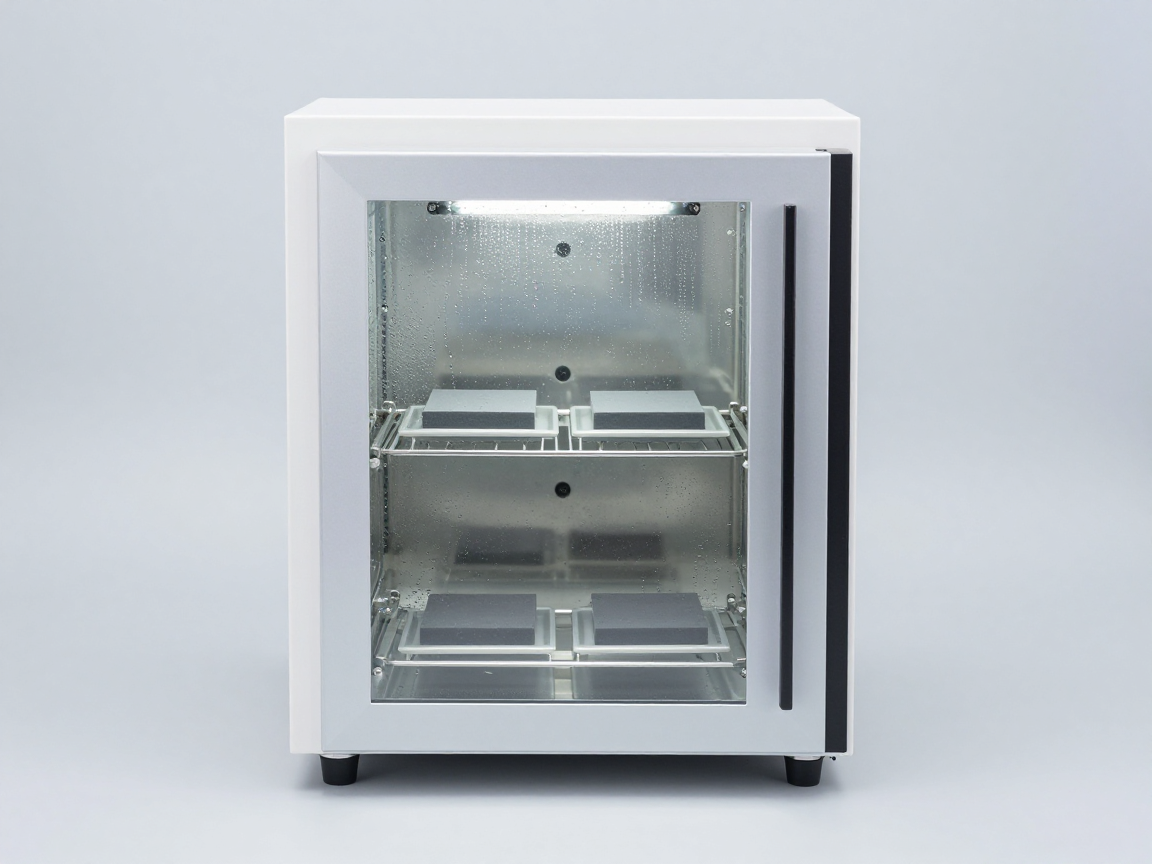
- Initial stability and benchmarking: measure insulation resistance, leakage current, function; Take bonded photos from many angles.
- Insert the sample into the chamber in the specified state: Power supply or no power supply; Record the power consumption if power is supplied, as self-heating alters the results.
- Run cycle: perform the required number of cycles, keeping temperature and humidity within tolerances in both phases.
- In-process inspection: only follow the plan; Prioritize functional testing at the end of steady-state phases to avoid cycle disturbances.
- Recovery: At the end of the last cycle, return the sample to standard conditions and dry before measuring again.
- Rating: Compare the initial milestones according to the agreed upon criteria; Record both appearance and electrical parameters.
The order of tests in a large program also affects the results: if Db is run after vibration or shock, mechanical damage can open the way for moisture and make the results much worse than when run independently. The principle of ordering is presented in the article the order of tests in a sequence.
4. Severity level and number of cycles
IEC 60068-2-30 specifies the high and low phase temperatures, high phase humidity, and number of cycles to choose from. In practice, test programs typically use a high phase at approximately 40 °C with very high relative humidity, a low phase lower than about 15 °C, and a number of cycles ranging from a few to several dozen cycles depending on the desired severity level. Specific values and allowable tolerances need to be compared verbatim to the standard.
| Factors to record | The why determines the outcome |
|---|---|
| High and low phase temperatures | Determines the amount of moisture the air can carry and its condensation potential |
| High mixing humidity | Directly affects corrosion rate and surface leakage current |
| Number of cycles | Key harshness variables; Increasing the number of cycles means increasing the number of condensations |
| Temperature transfer rate | Decide the degree of condensation and how long the sample will be wet |
| Power supply status | With voltage, electrochemical corrosion and flashover appear |
| Check between cycles | Indicates whether damage accumulates over time or appears suddenly |
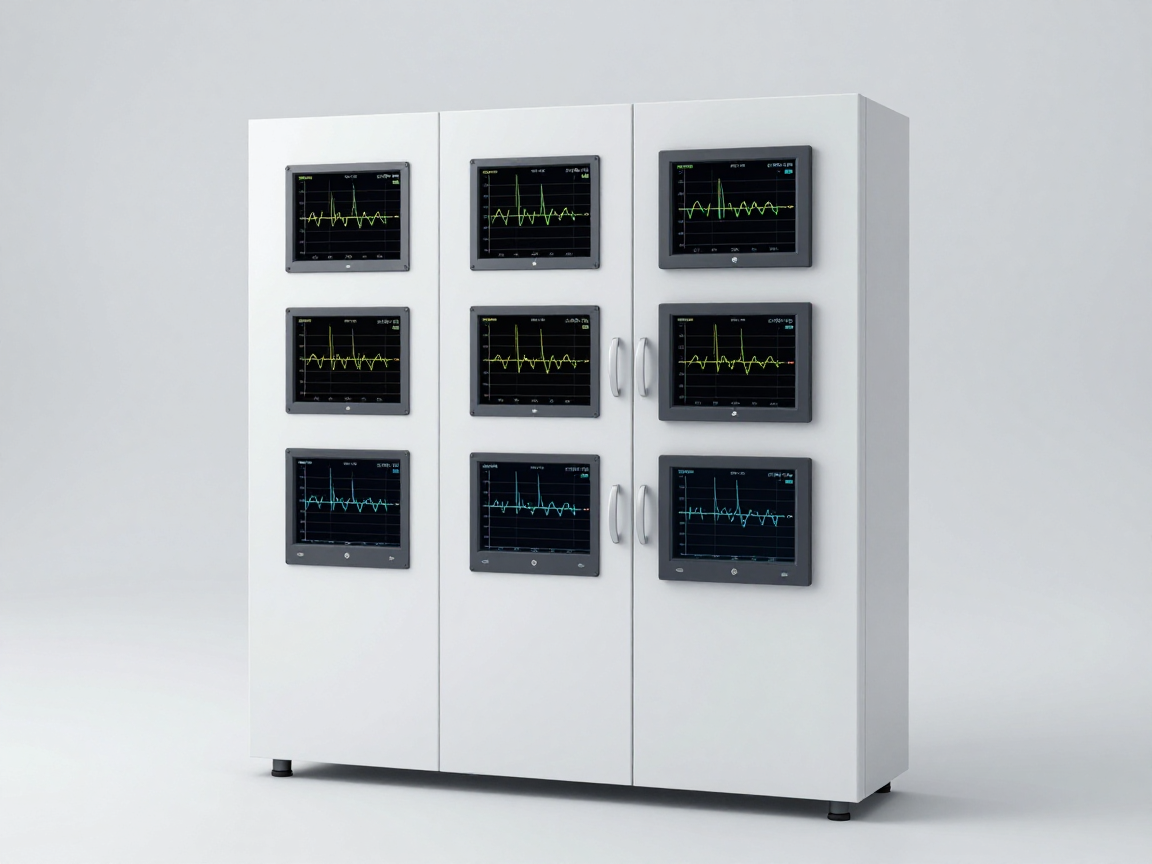
5. Condensation: an effect to be controlled, not a problem
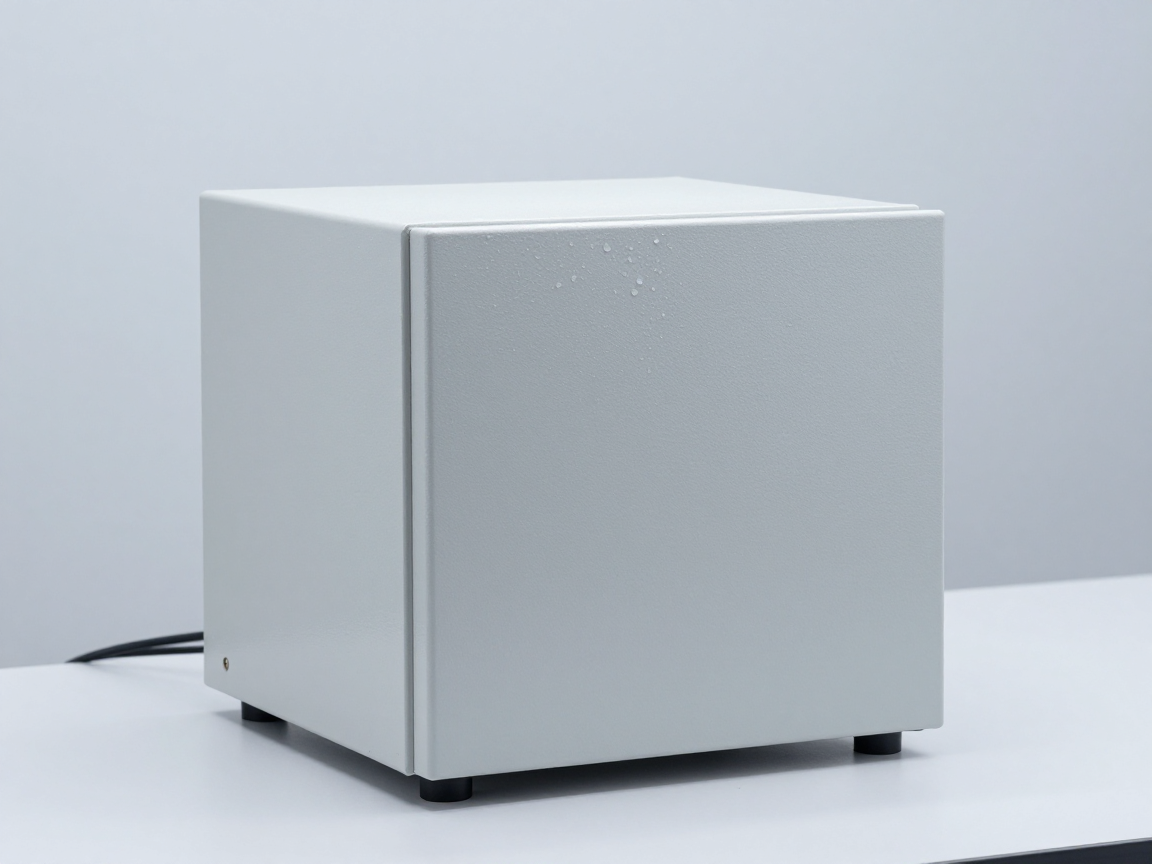
In Db, the condensate on the sample is part of the test. Therefore, condensation should not be considered a technical error of the chamber. On the contrary, three points need to be controlled:
- Condensation time — the standard describes at what stage the sample is wet; need data to prove that happened.
- Amount of water in the sample — horizontally placed samples have a different water volume than vertically placed samples; Mounting methods must simulate usage conditions.
- Handling after leaving the chamber — condensate may remain inside the device and cause an electrical leak when power is restored. A clear recovery and drying procedure is required before functional testing.
6. Common mistakes and how to avoid them
- Write “cycle humidity test” without recording the number of cycles and temperature level — results cannot be compared with standards.
- Turn off the humidity control system during the transfer phase to “let it dry” — losing the very characteristics of Db.
- Observe the sample periodically by opening the chamber door — change the actual number of condensation cycles received.
- Re-energize immediately after removing the sample when there is still water inside — causes damage not covered by the test.
- Sample location not recorded — condensation conditions depend on location, especially near the condenser or chamber door.
- Use the Db result to replace Cab or Cy — three tests with different, non-interchangeable stresses.
7. Frequently asked questions
What is the most important difference between DB and Cab?
Condensation. Cab keeps humidity stable and avoids condensation; Db creates a wet-dry cycle with condensation on the sample. It is the condensation that makes this test closer to the actual tropical environment.
How many cycles should I try?
There is no common number. The number of cycles must be chosen by the prescriber according to the use environment and desired life, taken from the options given by the standard. Results are only meaningful within the number of cycles tested.
Does the Db test need to supply power to the sample?
There should be, if the goal is to assess the risk of electrical leakage and galvanic corrosion. Unenergized testing is still valuable for evaluating construction, materials and tightness, but does not fully represent the risks of the product working.
Are there two hot and cold chambers used in the chamber to transfer samples?
Transferring samples between two chambers is a common practice in industry, but must ensure that the heat-humidity dynamics are equivalent to the conditions described by the standard, and must have measurement data to prove it. Otherwise, results are difficult to compare between tests.
Is it possible to combine Db with other tests in the same program?
Yes and usually should be done, for example run vibration first then Db later, or Db then test the function at high temperature. It is necessary to agree on the order before testing because the order affects the final result.
After testing the rusted screw slot sample, what is the conclusion?
It is necessary to distinguish functional damage from visual damage that does not affect use, and this criterion must be predetermined. If the contract does not stipulate, it should be agreed in writing before testing to avoid disputes later.
8. Conclusion
The Db test simulates a cyclically hot and humid environment with condensation — realistic conditions in the tropics and in non-atmospheric conditioningled factories. The value of the test lies in the number of condensations the sample undergoes, so the number of cycles, temperature transition rate and power supply status are three mandatory information that must be recorded in the test request.
Three things to do: record temperature-humidity data over time for the entire cycle; Specify recovery procedures before re-energizing power; and create a visual record that records the sample location in the chamber.
References
- IEC 60068-2-30 — Test Db: hot-humidity cycle (12 h + 12 h).
- IEC 60068-2-78 — Cab test: steady heat and humidity.
- IEC 60068-2-38 — Z/AD test: combined heat-humidity cycle.
- IEC 60068-1 — General provisions and guidance on recovery procedures and conditions.
- IEC 60068-3-6 and 60068-3-11 — Confirmation of environmental chamber capacity and uncertainty.
- TCVN 7699-2-30 — Corresponding national version (if issued).
Related articles
- Cab test: steady heat and humidity according to IEC 60068-2-78
- Z/AD combined heat-humidity cycle (IEC 60068-2-38) for electronic components
- Confirmation of heat-humidity chamber capacity according to IEC 60068-3-6 and 60068-3-11
- Moisture condensation when the sample leaves the cold chamber: causes and ways to control
Discuss further
Disclaimer
This article is an interpretive content compiled by us; not legal advice. Enterprises need to compare relevant documents/standards verbatim before applying them to specific products.
See more: Copyright Policy & Disclaimer by ticforall.com.