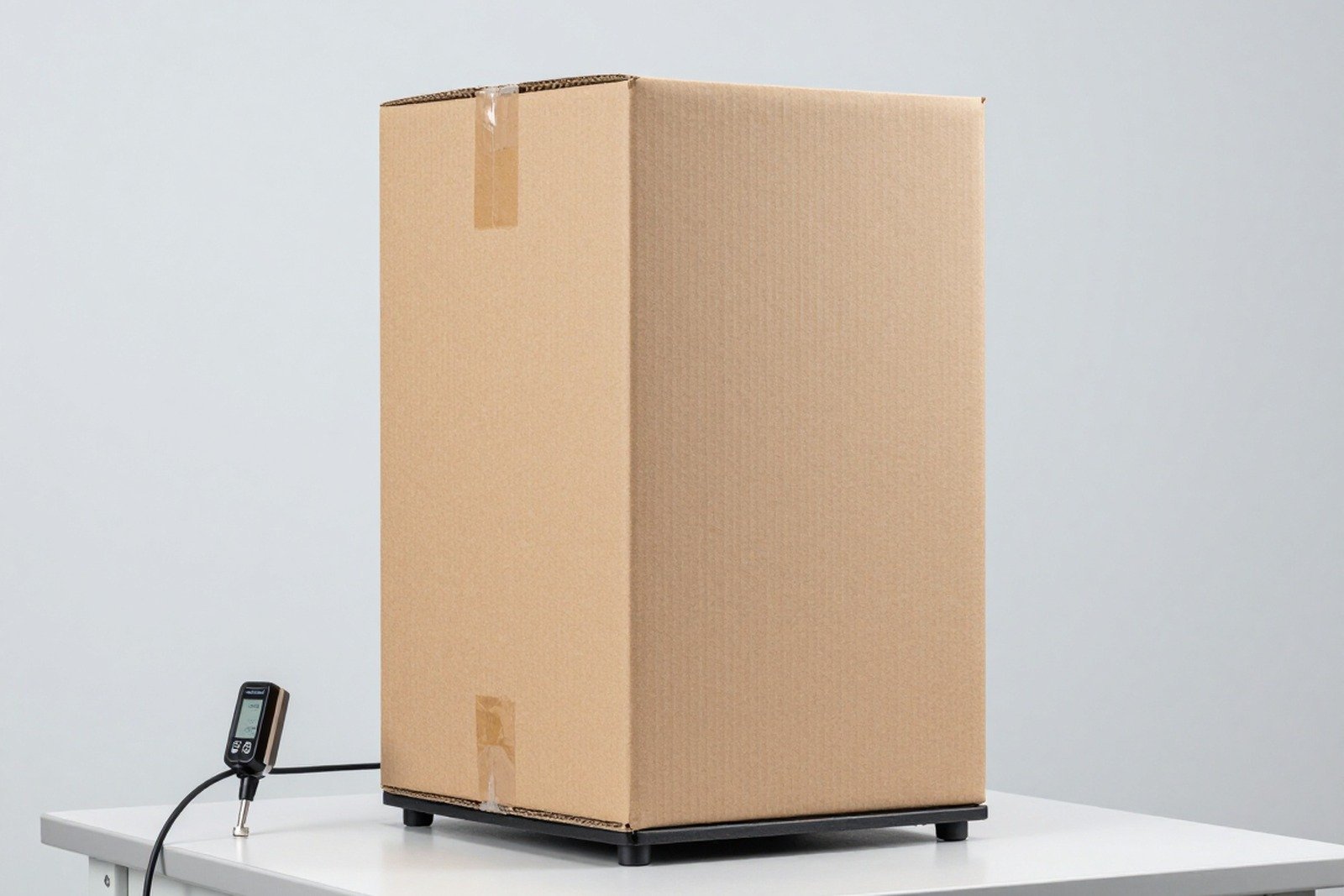
In the ISTA® set of shipping packaging testing standards, 1A is the most mentioned process: fastest, cheapest, most accessible. And because of that, this is the most misunderstood process. Many businesses hold the result of “passing ISTA 1A” and commit to their partners that the goods will not be damaged during transportation – a conclusion that the standard itself does not make.
This article analyzes ISTA 1A in exactly the way the standard positions itself: what it measures, what it does not measure, when it should be used, and when it is mandatory to switch to another procedure.
1. What is ISTA 1A?
ISTA (International Safe Transit Association) divides testing procedures into several series (series) according to the level of realistic simulation. ISTA 1A belongs Series 1 — Non-Simulation Integrity Performance Test, roughly translated as non-simulated integrity performance testing.
Two keywords to know:
- Integrity — test to evaluate the overall durability of the assembly product + packaging. The standard states clearly: product and packaging are considered together, not separate. You don’t test “the carton”, you test “the carton with the product inside”.
- Non-simulation (non-simulation) — the test produces standardized mechanical stress, no recreate a specific transportation journey.
ISTA states two main uses for 1A: evaluating the protective performance of a package, and relative comparison between different packaging or product design options. The second purpose is where 1A promotes its greatest value.
2. Most common misunderstanding: 1A does not simulate real shipping
Right at the beginning of the entire Series 1, ISTA states three things straight: these tests challenge product and packaging tolerance; them no is to simulate realistic transportation hazards; and them not of course Comply with packaging regulations of shipping companies.
The practical consequences need to be clearly stated to customers and internally:
- Reach 1A no This means that the goods will be intact when passing through the parcel delivery network.
- Reach 1A no supersedes the requirements of large retailers/e-commerce platforms (which typically require Series 3 or Series 6).
- Reach 1A no must be a travel document for the carrier.
The standard further notes that certain transportation conditions—humidity, pressure, or unusual handling operations—can no is within the scope of process coverage.
An easy way to visualize: 1A is like a standard fitness test, not a race on the exact track that the athlete will compete on. It tells you if the platform is okay, but it doesn’t predict the outcome of the race.
3. Scope of application
- Subject: The individual packaged-product has been completely packaged and ready to be sent.
- Volume: total package weight of 68 kg (150 lb) or less.
- Exception: Packages located on visible skids or pallets and weighing more than 45 kg (100 lb) may be tested under procedure 1B or 1E instead of 1A.
- Not applicable for a unitized pallet load — that case belongs to 1E.
4. What tests does Procedure 1A include?
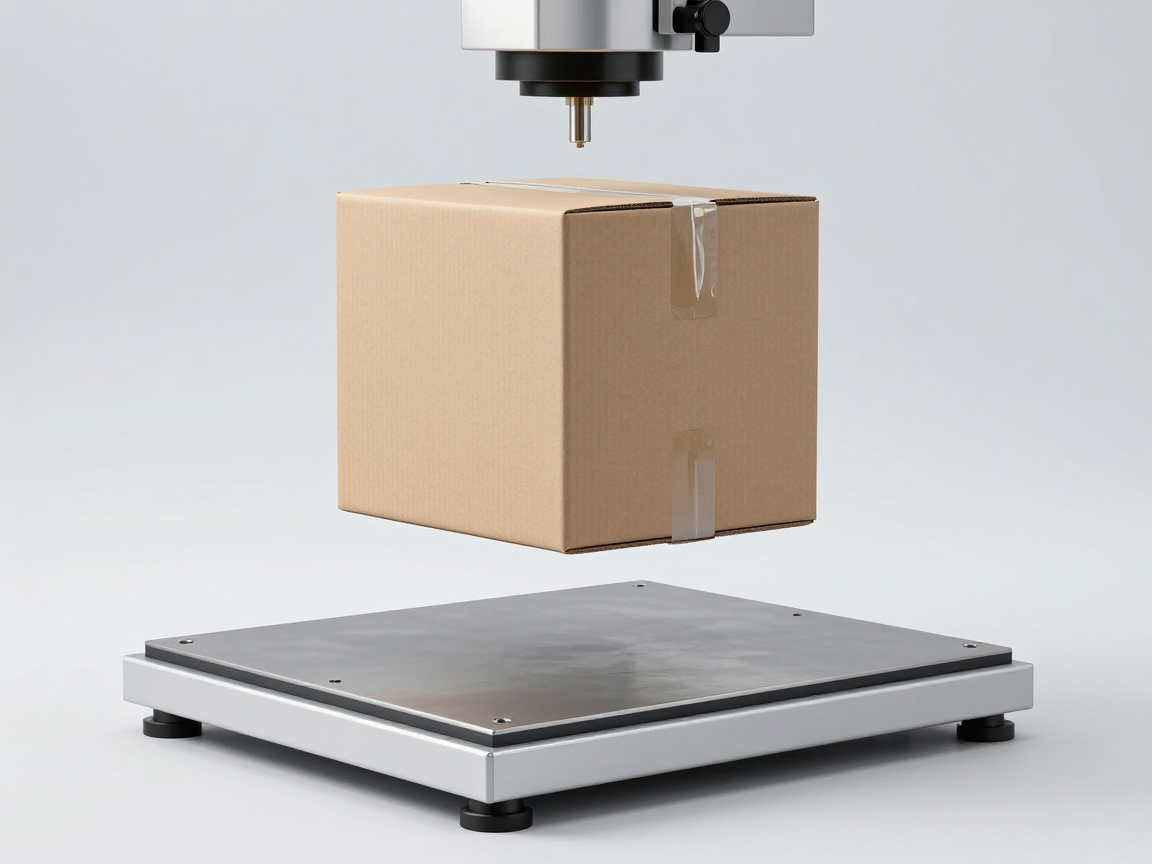
ISTA 1A is a series of three blocks of performance testing in the correct order on the same sample. The sample should not be “rested” or replaced — cumulative damage is part of the test.
1. Atmospheric preconditioning
The package is kept at laboratory temperature and humidity for a specified period of time before testing. Temperature and humidity shall be recorded at the beginning and end of the test.
Important note: this is Conditioning in lab environment conditions, not a climate chamber with heat and humidity control. Climate chambers are a feature of the Series 2 and Series 3. If your product is sensitive to humidity (paper packaging in a tropical climate, for example), the 1A won’t give you that answer.
2. Fixed Displacement Vibration
The package is placed on a vibrating table that vibrates at a fixed amplitude. The technician gradually increases the frequency until the bale begins to bounce off the table — this is verified by sliding a thin metal rod under the bottom of the bale. The test duration is calculated from the number of target impacts divided by the frequency just determined. With the rotary vibrating table, the package must be rotated horizontally in the middle of the test.
What does this test simulate? The bouncing phenomenon repeats thousands of times on the truck floor. It attacks: the strength of the seals and case staples, the abrasion resistance of the dunnage material, the tightness of the product in the cavity, and the joints of the product itself.
3. Shock
The default method is free fall. When dropping in a certain direction is not feasible (bale is too large, too heavy, unusual shape), the standard allows replacement with inclined impact (incline impact / conbur) or horizontal impact (horizontal impact) with equivalent velocity.
Drop height — or equivalent impact velocity — gradually decreases with bale volume: the heavier the bale, the lower the test level, because in reality the loader does not lift heavy bales as high as light bales.
The falling chain is designed logically from the weakest point out: starting at one corner (the most vulnerable angle, or a default angle if not yet determined), then the edge radiate from that corner in order from short to long, finally one after another face from small to large. The entire series executes on the same pattern.
What does this test simulate? Manual loading and unloading operations — falling off the conveyor belt, slipping out of hands, hitting the side of the vehicle.
About equipment
The standard cites the corresponding ASTM methods for each type of equipment: ASTM D 999 for vibration systems; ASTM D 5276 (free fall), D 5487 (shock machine), D 880 (tilt impact), D 4003 (horizontal impact) for shock section. This is the first question that should be asked of any testing laboratory: which ASTM method does your equipment comply with?
5. Sample preparation and sample quantity
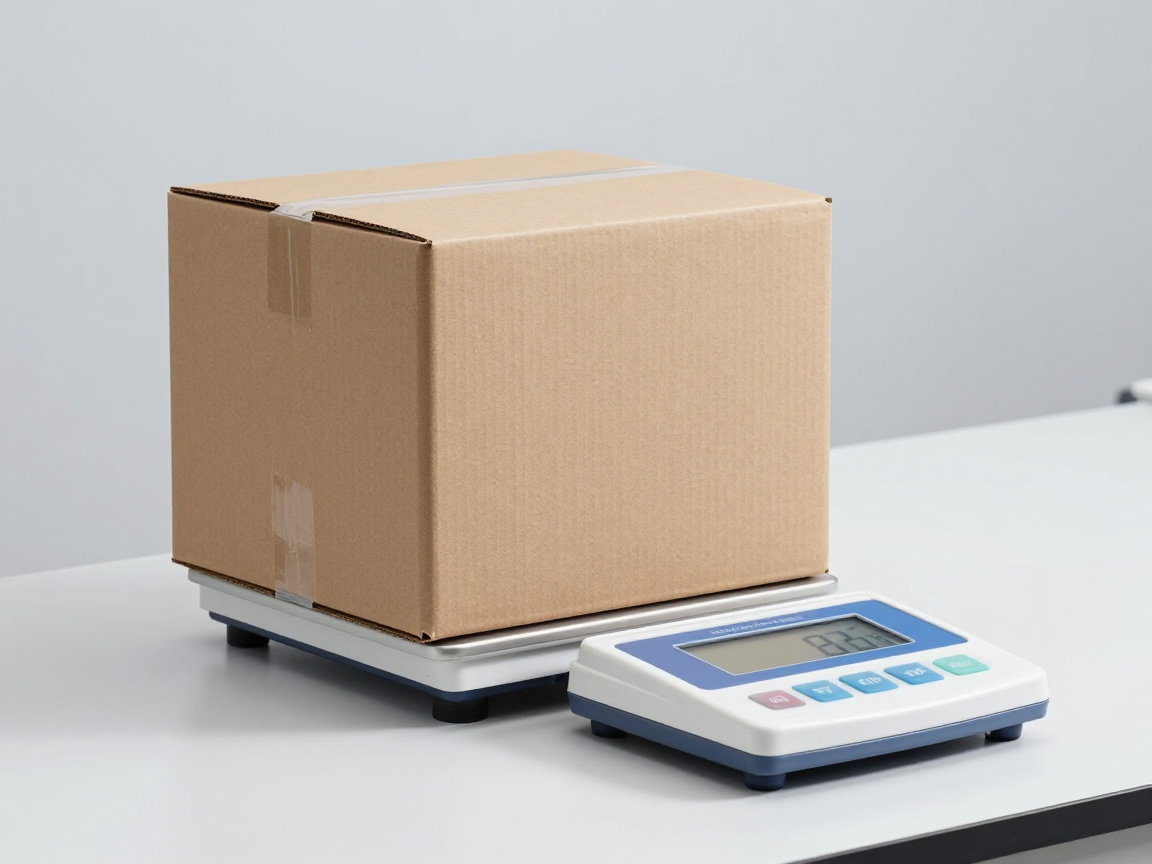
- Minimum 1 sample is enough to complete the process.
- However ISTA It is recommended to repeat the procedure 5 times or more, using a new sample each time, so that the results are representative enough. A single sample gives you a data point, not a statistical conclusion.
- Samples must be of the product and packaging Real, untested. If not available, the replacement sample must be as identical as possible to the genuine product.
The most valuable warning in this section: The standard states that a package that has undergone shipping is no longer considered to be in its standard condition. Therefore, the sample sent to the laboratory must be outer packaging (over-pack) in a separate protective carton, or Repackage with new packaging right in the testing room.
This is the most common and costly mistake we see: businesses send samples to the lab in the same packaging to be tested. The bale traveled several hundred kilometers before the test began — the results after that no longer said anything about the packaging design.
6. Reading and understanding the results: who decides “pass”?
This is the most important and most overlooked part. ISTA 1A does not have a pre-defined definition of passing. The standard stipulates that the shipper — the business, not the testing laboratory — must determine before testing four things:
- What is considered product damage?
- Damage tolerance level Which are acceptable, if any?
- Correct method What is the way to determine product condition at the end of testing?
- Packaging condition Which is acceptable at the end of testing?
Without this set of four criteria, the test report only stops at the description: “box with dented corners, tape partially peeled off, product has no visible damage”. Someone still has to decide whether this is a pass or a fail — and that someone is you, not the lab.
Additional note: packaging is deformed no automatically fail. A dented carton but the product is intact and the box is still eligible for delivery to the customer can be completely satisfactory — if the criteria you set from the beginning allow it.
7. Compare 1A with 1B, 1C and 1G
These four processes belong to Series 1 and are easy to confuse. The difference lies in three axes: bale weight, vibration type, and whether or not compression is added.
| Procedure | Subject | Vibration type | Shock/impact | Have you tried compression? |
|---|---|---|---|---|
| 1A | Single piece ≤ 68 kg | Fixed displacement | Free fall (or alternative impact) | No |
| 1B | Single package > 68 kg | Fixed displacement | Impact + rotating edge drop | No |
| 1C | Single piece ≤ 68 kg | Select: fixed or random | Same as 1A | Yes (compression conditioning before vibration) |
| 1G | Single piece ≤ 68 kg | Random (random vibration) | Same as 1A | No |
How to choose quickly:
- Want to use vibrate randomly instead of fixed displacement vibration → use 1G, not 1A. Random vibration is more realistic because it excites a whole range of frequencies simultaneously, instead of a single resonant frequency.
- Need further verification compression resistance (stacking in warehouse, stacking in containers) → use 1C. Note that the standard states that compression in 1C is a step conditioning before vibration and shock, is not a compression performance test and cannot be used to predict stackability in storage.
- Sue weighs more than 68 kg → use 1B.
8. When is 1A enough — and when should 2A or 3A be used?
Standard 1A itself provides two very specific redirection instructions:
- Goods for international distribution → consider ISTA 2A (Partial Simulation — partial simulation). 2A additional conditioning in a climate chamber with controlled heat and humidity, post compression, and two Vibration cycle clamps the shock test in the middle. This is a reasonable choice for export goods traveling by sea or through many different climates.
- Goods go through the parcel delivery system (parcel delivery) → consider ISTA 3A (General Simulation — general simulation). 3A classifies bales into four shapes (standard, small, flat, long), uses random vibration spectra built from actual measurement data on vehicles and airplanes, has multiple fall sequences and the option of testing at low pressure to simulate altitude. If your goods go through parcel delivery networks, 3A is the one that accurately reflects reality.
1A is suitable when: you are in the early R&D stage and need to quickly compare several dunnage options; you need a low-cost internal validation benchmark before investing in real-world testing; or the contract/customer specifically designates 1A.
1A is not suitable when: partners request their standards (Series 6 for some major retailers); Air cargo and pressure elements; High-value, fragile goods need evidence close to the actual itinerary to negotiate insurance or damage liability.
9. Seven common mistakes with ISTA 1A
- Consider “reaching 1A” as a commitment to no damage. The standard itself says it does not simulate reality.
- Send the sample to the lab in the same packaging to be tested. Samples must be wrapped or repackaged at the lab.
- Failure criteria to be determined before testing. The results will be inconclusive.
- Just try one sample and then finalize the design. ISTA recommends five or more times.
- Confusing 1A with 1G or 1C. These three processes yield three different types of evidence.
- Use 1A results for 3A or Series 6 capital requirements. Will be rejected at the supplier approval stage.
- Change the packaging after testing without testing again. Changing carton suppliers, reducing paper weight, changing insert materials — any change invalidates the old results.
10. What does the cost and time of ISTA 1A testing depend on?
There is no universal price for ISTA 1A, as costs vary according to:
- Package size and weight — the larger the goods, the more appropriate lifting equipment, floors and securing devices are needed; This part sometimes takes on a larger proportion than the test itself.
- Select the shock test option — drop, incline impact or horizontal impact; Not all laboratories have all three devices.
- Number of iterations — 1 sample as minimum requirement, or 5 samples or more as recommended by ISTA. This is often the factor that causes costs to increase the fastest.
- Atmospheric conditioning time before entering the test sequence.
- Sample preparation costs — over-packed to send to the testing room, or repackaged in new packaging at the testing room.
- Reporting requirements — the level of data granularity to be captured and the reporting format required by the end customer or carrier.
Regarding time, ISTA does not publish a standard number for a test — the actual time depends on the above variables (number of samples, number of iterations, atmospheric conditioning time, laboratory equipment schedule). How to get the real number: send the same request to two laboratories and ask for a quote with completion time for parallel comparison.
11. Frequently asked questions
How is ISTA 1A different from ISTA 1B?
The main difference is volume threshold: 1A for packages up to 150 lb (68 kg), 1B for packages over 150 lb (68 kg). Regarding the sequence, 1B has additional items Rotational Edge Drop for heavy loads — 1A does not have this step.
How is ISTA 1A different from ISTA 1C?
Same mass group (up to 68 kg), but 1C is an extended test: more categories compression conditioning and allows random vibration selection. If your goods are stacked in multiple layers in a warehouse or container, 1C provides closer evidence — while 1A only answers the question of underlying mechanical strength.
Is ISTA 1A a certification?
No. 1A is testing procedure; The result is a report indicating whether or not the sample met the specified test levels. If you want to use the results for the program ISTA Certification, the test needs to be performed at an ISTA-accredited laboratory, in the correct order and with all required items.
How many samples are needed for one ISTA 1A test?
Minimum requirements are 1 sample. ISTA recommends implementation 5 times or more with new samples each time for representative conclusions. A single sample gives you a data point, not a statistical conclusion.
Does “Reach 1A” mean that the goods will not be damaged during transportation?
No. ISTA itself states Series 1 no simulation Realistic shipping hazards. A “pass” result only indicates that the sample withstood the specified test sequence — not a guarantee that the item will arrive intact. To assess the risk of damage on a specific trip, simulation procedures (3 Series group) or 2 Series are needed.
My goods are on pallets, what process should I use?
If the package is on a visible skid or pallet and weighs more than 100 lb (45 kg), the standard allows testing according to 1B or 1E instead of 1A. If the row has been fixed into a unitized load, the correct direction is ISTA 1E, or ISTA 3E When you need a simulation for full pallet goods.
Does ISTA 1A replace carrier requirements?
No. The ISTA document states that Series 1 does not automatically comply with carrier packaging regulations. The alternative test procedure (if any) must be approved by the requesting party — the end customer or carrier —.
12. Conclusion
1A is the fundamental endurance test for single packages of 68 kg or less, consisting of three steps: atmospheric conditioning, stationary vibration and shock. It does not simulate a real shipping journey, so a “pass” result is not a guarantee that the item will arrive intact. The real value of 1A lies elsewhere: it turns the ambiguous question “Is this packaging okay?” into a repeatable measurement that can be used to compare packaging options under the same conditions.
So the decision is not whether to run 1A or not, but to choose the right procedure for the actual distribution channel of the shipment — 1G if random vibration is needed, 1C if compression testing is needed, 2A for international distribution, 3A for parcel delivery — and define yourself in writing what constitutes damage before the sample leaves the factory.
References
- ISTA — Test Procedures (list of current series and projects, accessed September 27, 2026)
- ISTA — Procedure 1A — Overview and equipment required (free overview published by ISTA; not enough to conduct testing)
- ISTA — Certify your Lab (testing laboratory certification program)
Read more: ISTA 1G — random vibration version for packages up to 150 lb (68 kg) · ISTA 1E — process for unitized loads · ISTA 1D — compression expansion process for packages over 150 lb (68 kg) · ISTA standards — overview of shipping packaging testing · Complete article on ISTA standards · What is ISTA 2A? Partially simulated packaging test procedures for packages up to 150 lb (68 kg) · What is ISTA 2B? Partially simulated packaging test procedures for packages over 150 lb (68 kg) · ISTA Series 1 — 7-process overview (1A–1H)
Talk to us
Disclaimer and IP acknowledgement
This article is an explanatory content compiled by us for the purpose of introducing and disseminating knowledge. This article is not a translation, copy, abbreviation or replacement of the original standard, and is not reviewed, approved or sponsored by ISTA (International Safe Transit Association).
The entire content of ISTA standards is copyrighted by the International Safe Transit Association, Inc. (East Lansing, Michigan, USA) — All rights reserved. ISTA® and the ISTA logo are registered trademarks of the International Safe Transit Association, Inc.; Mentioned in this article are for guidance purposes only and do not imply any affiliation, partnership or sponsorship.
The content of the article is for reference only; Before applying for any purpose — testing, evaluation, certification or commercial decision-making — the reader should refer directly to the original ISTA document (the most complete and up-to-date version) and consult an accredited testing facility when necessary.
When performing testing, it is mandatory to use the official, current version of the standard, obtained directly from ISTA. We do not redistribute ISTA materials in any form. Information in this article may be out of date with the current version of the standard.
See more: Copyright Policy & Disclaimer by ticforall.com.