

In the ISTA standard system, there is a confusing point: The same product group (up to 150 lb / 68 kg) has many different processes — 1A, 1C, 1D, 1G, 1H…
The difference is not in volume, but in level and number of test items. In which, ISTA 1C is the process designed to expand basic endurance test: additional items compression and allows choice random vibration.
This is the process often chosen when businesses want data that is “firmer” than the basic test — but before that, there is an important detail that many people misunderstand: the compression item in ISTA 1C not a performance compression test. This article will clarify that.
1. What is ISTA 1C?
ISTA 1C is the packaging testing process ISTA 1 Series — the most basic group of standards of the International Association for Safe Transportation.
- Full name: ISTA 1C – Extended Testing for Packaged-Products 150 lb (68 kg) or Less
- Version: 1C 2014 (latest technical change March 2014; editorial update July 2022)
- Classification: Non-Simulation Integrity Performance Test — overall durability test, does not accurately simulate actual transportation hazards
- Subject: each individual package has mass 150 lb (68 kg) or less, packaged and ready to ship
Key words to note in the standard name are: “Extended Testing” — Extensive testing. Same weight group as the basic test, but the test sequence is longer and has additional items.
One important exception (easy to miss)
If the package located on a clearly visible skid or pallet and has mass over 100 lb (45 kg), standard for testing according to ISTA 1E or ISTA 3E instead of 1C.
The reason is very practical: once the goods are secured as a block on the pallet, the individual test for each bale no longer accurately describes how the goods actually move. This is a detail that if overlooked, the test may fail technically correct but wrong subject.
2. Most common misunderstanding about ISTA 1C
The following three misunderstandings explain most of the misguided conversations about ISTA 1C:
- “The compression item in 1C is a performance compression test.” — No. In 1C, compression is compression conditioning step: it creates a load-bearing condition before vibration and shock testing, but does not make conclusions about the compression resistance of the packaging or predict stacking in the warehouse.
- “1C is for goods weighing over 68 kg.” — No. 1C is limited to packages to 150 lb (68 kg). Use heavier goods 1B (basic lesson) or 1D (extended post with compression).
- “Same mass group so 1A and 1C are interchangeable.” – Are not. The 1C adds exactly what the 1A doesn’t: a longer sequence, has a compression item, and allows random vibrato selection. The two processes answer two different questions.
3. What does ISTA 1C test? — 4-step sequence

| # | Test item | Test method | Required |
|---|---|---|---|
| 1 | Conditioning | Temperature and humidity at laboratory conditions (before testing) | ✅ |
| 2 | Compression | Compression conditioning — by compressor or by static load | ✅ |
| 3 | Vibration | Choose 1 of 2: fixed displacement (fixed displacement) or random vibration | ✅ |
| 4 | Shock | Choose 1 of 3: drop / incline impact / horizontal impact | ✅ |
The specific test levels of each item (compressive force/load, displacement level or Grms level, drop height, impact velocity…) are specified in detail in ISTA 1C 2014 — please see the original document.
Compared to the basic durability test of the same mass group, the difference of 1C lies in item number 2 (compression) and at work allows random vibration selection instead of being forced to use fixed displacementation.
Step 1 — Atmospheric preconditioning
Templates are saved in ambient temperature and humidity conditions of the laboratory according to the time specified in the standard before testing. Temperature/humidity must be recorded at start and end.
This is a mandatory pre-conditioning step for all vibrations and rear impacts — not a performance test.
Step 2 — Compression Conditioning: typical category of 1C
This is the part that causes the most confusion, and is also the part worth reading most carefully.
⚠️ Important principles: ISTA states that compression in 1C just requires conditioning before starting the vibration and impact exercises. Here no is a compression performance test, and neither must be an index that predicts stackability in the warehouse or on the vehicle.
In other words: the purpose of this step is create a realistic load state to the sample before vibration and shock testing — not to find the “maximum compression force the tank can withstand”.
Three ways to determine compressive force/load
The standard offers three options, depending on available equipment:
| Method | Characteristics |
|---|---|
| Apply & Release (AR) | Press to a certain level of force release immediately; Additional calculation formula Compensation coefficient according to compression time |
| Apply & Hold – compressor (AH) | Press to a specified level of force and Hold the load for the specified time |
| Dead Weight – static load (DW-AH) | Use load distribution plate + counterweight reach a specified load level, Hold the load for the specified time |
Test force/load is calculated from formula depends on package weight (Wt) and total length + barrel width (L + W), then okay limited to a minimum – maximum range specified by the standard. Special:
- If package height exceeds the specified threshold → use only minimum value.
- If the calculated value lower than the minimum level → use the minimum; higher than the maximum → use maximum level.
Detailed formulas and minimum – maximum limit tables are fully specified in the original document ISTA 1C 2014.
💡 Technical notes: One point that is easy to make mistakes when calculating is units of L and W. In the SI formula, L and W are calculated as meters (not inches), and the mass is in kg — if the wrong unit is transmitted, the compression force result will be greatly distorted.
How to do it
With compressor: Place the package with side 3 on the bottom table, bring the two table sides together at the speed specified in the original document, then test depending on the type:
- Apply & Release: increase force to AR level → release force → completed, move to vibration step.
- Apply & Hold: Increase force to AH level → Hold the load for the specified time → release force → move to vibration step.
With static load: Place the package on a flat, hard surface; put load distribution plate hard (larger than the top of the sample) upward; counterbalancing substance to the extent DW-AH → Hold the load for the specified time → unloading → move to vibration step.
⚠️ Safety warning: When using counterweights and load distribution plates, ISTA requires special care to avoid workplace accidents. This is the highest risk category in the entire 1C process.
Step 3 — Vibration: choose fixed or random displacement
Option A — Fixed Displacement (fixed displacement)
The principle of determining frequency is the same as other fixed displacement tests: vibration with 1 in (25 mm) displacement, gradually increasing the frequency until the package arrives begins to leave the tabletop intermittently, confirmed by metal base plate.
Test time is calculated according to the formula in the original document (based on the specified number of impact pulses divided by the determined frequency).
The biggest difference of 1C compared to simple vibration tests: vibrating time Divided into many positions of the package, don’t just run in one position and then rotate 90°/180°:
| Posture | Time ratio |
|---|---|
| Side 3 on the vibration table | 1/2 total time |
| Flip – face 1 on the table | 1/6 total time |
| Face 2 or 4 on the table | 1/6 total time |
| Face 5 or 6 on the table | 1/6 total time |
This means the package is tested all 4 posture groups in the same total duration — each change of position must redefine the resonance frequency (repeat the shim operation).
Option B — Random Vibration (random vibration)
This is an option that brings data closer to actual shipping. The vibration controller is programmed accordingly PSD spectrum specified in the original document, with The total Grms level is 1.15.
The random vibration time for each position (duration and distribution according to test surface) is specified separately in the original ISTA 1C document.
💡 Practical notes: total vibration time of random selection does not depend on the resonance frequency — so the results are much more repeatable than with fixed displacement. This is often the main technical reason for choosing the random option, not just because it “sounds more realistic”.
Step 4 — Shock: fall or impact
Falling height decreases with mass
Unlike tests that use a fixed drop height, ISTA 1C stipulates Drop height varies with package weight: the lighter the bale, the greater the fall height.
- Lightest mass group: highest falling height
- Heaviest mass group: smallest falling height
The full table (5 mass groups, with equivalent impact velocities for incline/horizontal articles) is specified in the original document.
The physics behind it is remarkable: The heavier the load, the lower the drop height. Because as the mass increases, the impact energy increases — if the drop height is kept high, the test will go beyond real conditions and become a destructive test.
Sequence of action: corner → edge → face
Another difference with 1C: impact sequence Start from the corner most vulnerable, then the edges radiating from that corner, then the faces — the full order and number of impact points are specified in the original document. This is more detailed than the tests that only list by face.
Three notes apply:
- Must try falling in all positions require that falling is feasible.
- If you fall in one position not feasible, can be replaced by post equivalent incline or horizontal for that pose.
- If the impact velocity is measured lower than the minimum level, that event must do it again until reached.
With parcel There are not exactly 6 faces (e.g. specially shaped barrels), the standard has a procedure for selecting and replacing corresponding corners, edges and faces.
4. Accompanying equipment and method standards
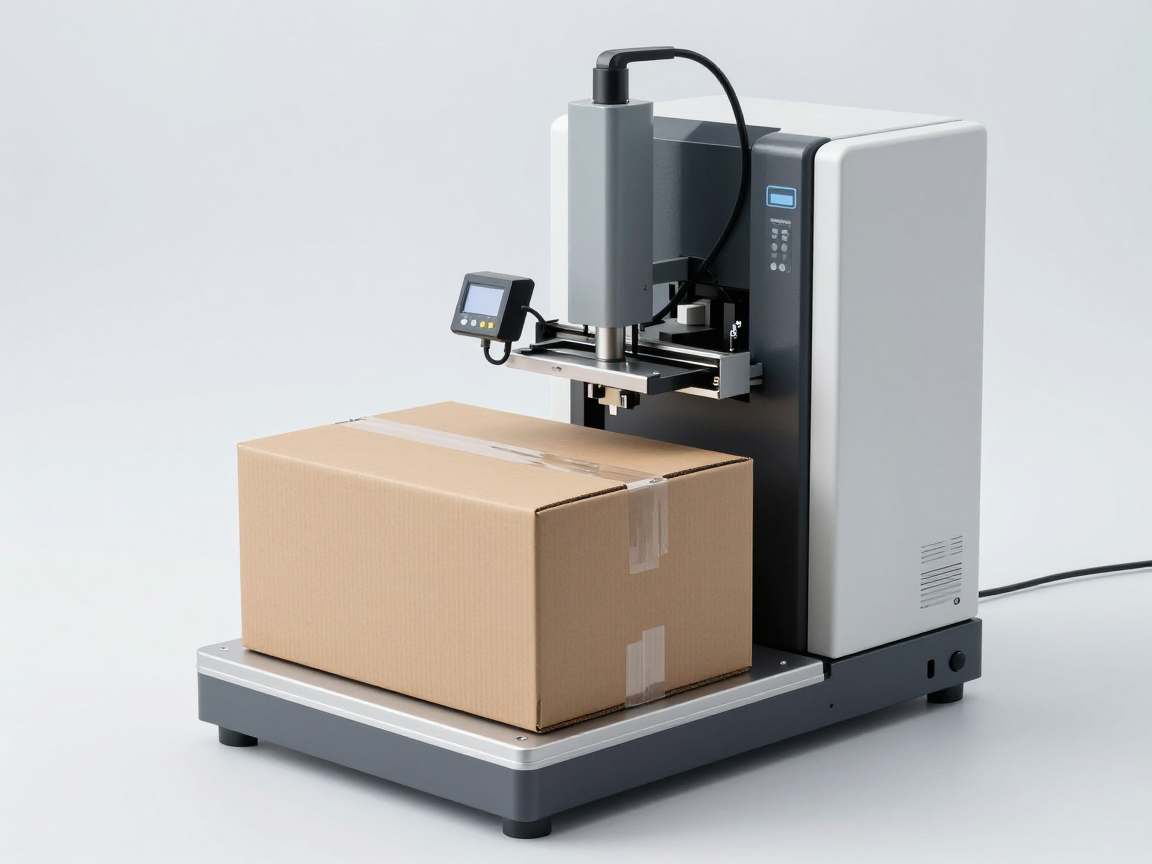
| Test item | Equipment | Method standards |
|---|---|---|
| Compression | Compression test system (Apply & Release / Apply & Hold) | ASTM D642 |
| Counterweight + load distribution plate (Dead Weight – Apply & Hold) | — | |
| Vibration – fixed displacement | 1 in (25 mm) fixed-displacement vibration table, rotary or vertical linear | ASTM D999 (Method A1 or A2) |
| Metal shim ~0.06 in (1.5 mm) | — | |
| Frequency meter (tachometer), stopwatch/timer | — | |
| Vibration – random | Random Vibration Test System | ASTM D4728 |
| Shock – Drop | Free fall drop tester | ASTM D5276 |
| Shock test machine (vertical shock test) | ASTM D5487 | |
| Shock – Incline | Incline impact tester (conbur) | ASTM D880 |
| Shock – Horizontal | Horizontal impact test system | ASTM D4003 |
⚠️ Mandatory requirements for vibrating table: must use restraining device so that the sample does not slide off the table, but Vertical movements must not be restricted of sample. With lighter goods (≤150 lb), it is easy to be subjective and tighten the sample too tightly — leading to the sample not being able to “bounce” as designed in the test.
Like other standards in the ISTA 1 Series, 1C presents two measurement systems with English units written first, metric in brackets; The performer can choose one system but must Use consistently and convertible values Round to two significant figures.
5. Sample number and sample preparation
The point to note when preparing samples for 1C is not the quantity but the location order of items run on the same sample: climate control, then compression, then vibration, then impact. Pre-compressed packaging will enter the vibration step in a degraded state — that is the intention of the process, but it also means that The initial state of the sample determines the outcome of all subsequent steps.
- Model Number: one sample for the entire sequence; ISTA Recommended repetitions 5 times or more with new samples each time.
- Record the status immediately after the compression step (photo + minutes), because the following steps add up and it is difficult to separate the cause if you wait until the end to check.
- The sample must be a real package and has not been tested; If the genuine product is not available, the replacement sample must be as similar as possible.
- Send sample to lab: Excessive packaging or Repackage with new packaging at the lab.
The set of pass/fail criteria is still predetermined by the business, the standards are not defined instead — see 4 criteria businesses must determine for themselves before testing.
6. When should ISTA 1C not be used?
| Situation | Recommended standards |
|---|---|
| Packages up to 150 lb, require durability test basic | ISTA 1A |
| Package over 150 lb (68 kg) | ISTA 1B |
| Goods up to 150 lb, need expansion with compression (this article) | ISTA 1C ✅ |
| Goods over 150 lb, need expansion with compression | ISTA 1D |
| Unitized load on pallets/skids | ISTA 1E |
| Need Test compression performance (not conditioning) | ISTA 1D or specialized compression test |
| Skid/pallet clearly visible and goods over 100 lb (45 kg) | ISTA 1E or ISTA 3E (substitutions allowed) |
| Want to vibrate random but no compression required | ISTA 1G/1H |
| Goods for international distribution | ISTA 2B (Partial Simulation) |
| Goods go to specific retail channels (Amazon, Sam’s Club…) | ISTA 6 (Corresponding Project) |
💡 Practical notes: A fairly common misunderstanding is to use the compression results of 1C to answer the question “How many floors can the box withstand when warehoused?”. ISTA has stated that compression in 1C is just that conditioning and is not a predictor of stackability in the warehouse or on the vehicle. If the objective is to evaluate compression resistance in storage, another test is needed (e.g. group 1D or specialized compression procedures) — and this objective should be made clear before planning the test.
7. Common errors when implementing ISTA 1C
- Wrong drop height applied — ignore height drop decrease with volume, leading to overtesting.
- Forget the time compensation factor in the Apply & Release formula.
- Do not clamp the value to the min/max range specified by the standard.
- Do not check the barrel height — if the specified height threshold is exceeded without switching to the minimum value.
- Wrong unit used in SI formula — transmit L, W accordingly inches instead meters.
- Misunderstanding the purpose of the compression item — consider it a measurement of compression performance or stacking index.
- Wrong division of fixed displacement vibration time — forget structure 1/2 – 1/6 – 1/6 – 1/6 and having to redefine the frequency in each position.
- Do not check the vibrating table stroke when running, vibrate randomly — lack of travel does not reproduce the correct spectrum.
- Using a retaining device that is too tight — limits the vertical movement of the sample.
- Ignore skid/pallet exception — still try individual packages secured on pallets.
8. What does the cost and time of the ISTA 1C test depend on?
1C is the process with the most items in Series 1: Climate control, compression, vibration and impact run consecutively on the same sample. The cost therefore depends strongly on the option you choose in each category — compression by machine or by static counterweight; fixed vibration or random vibration (two different types of vibration tables); impact by free fall, incline or horizontal. Each combination of options results in a quote and a different equipment occupancy time.
Because many items run on the same pattern, completion time is often much longer than a single vibrato; The number of iterations increases the cost exponentially. Summary of common factors: What does the cost and time of ISTA packaging testing depend on?
9. Frequently asked questions
ISTA 1C is different ISTA 1A at what point? Same weight group (up to 150 lb / 68 kg). The main difference: 1C is a test expand, there are additional categories Compression Conditioning (compression) and allows choice random vibration next to the fixed displacement vibration.
Is the compression item in 1C a “compression test”? No. ISTA states this is just that Conditioning requirements against vibrations and shocks — not a compression performance test, nor a predictor of stackability in a warehouse or on a vehicle.
How to choose between Apply & Release, Apply & Hold and Dead Weight? Depends on available equipment and target: AR uses test force with compensation factor and then releases immediately; AH holds the force according to the time specified on the compressor; DW-AH uses counterweight + load distribution plate and also holds the load for a specified time. All three have a min/max range that must be adhered to.
How long does random vibration take in 1C? The duration and distribution according to each test surface are specified in the original document of ISTA 1C.
How long does it take for a fixed displacement vibration in 1C? Depends on the determined frequency, calculated according to the formula in the original document. The point to note is that the duration is divided into 4 groups of postures (1/2 – 1/6 – 1/6 – 1/6), do not run in a single position.
What should I do if a 120 lb item has skids? ISTA 1C allows the following test ISTA 1E or ISTA 3E in cases where the package is on a visible skid/pallet and weighs over 100 lb (45 kg).
Are 5 samples required? Optional — 1 sample is the minimum requirement; Five or more samples is recommended to assess representativeness.
If you want to look up detailed test levels, where can you look? Compression formula, min/max limits, random vibration spectrum, drop height table and detailed step-by-step sequence are fully specified in the original document ISTA 1C 2014 — can be searched and ordered at ista.org.
10. Conclusion
ISTA 1C is a test expand for loads up to 150 lb (68 kg), with three core differences from the basic test: There is a category of conditioning compression, allows random vibration selection, and Detailed impact sequence according to corner → edge → face.
Three most memorable things:
- Compression in 1C is conditioning, not a performance test — don’t use this result to answer the question about storage/vehicle stacking capabilities.
- The compression formula must be clamped to the min/max range, and if the tank height exceeds the specified threshold, only the minimum value is applied.
- The greater the mass, the lower the drop height — this is a physical principle, not an arbitrary standard.
For goods under 150 lb but requiring more solid data for packaging decisions, 1C is often a reasonable balance between depth of testing and cost of implementation.
References
The full standard should be searched and ordered directly from ISTA. Below are the public sources used for reference when compiling the article:
- ISTA — Test Procedures (list of current series and projects, accessed September 27, 2026)
- ISTA — Procedure 1C — Overview and equipment required (free overview published by ISTA; not enough to conduct testing)
- ISTA — Certify your Lab (testing laboratory certification program)
Original source: ISTA 1C 2014 – Extended Testing for Packaged-Products 150 lb (68 kg) or Less, © International Safe Transit Association.
Related articles: – ISTA Series 1 — 7-process overview (1A–1H) – What is ISTA 1B? Complete packaging testing process for packages over 150 lb (68 kg) – What is ISTA 1A? Packaging testing procedures for packages up to 150 lb (68 kg) – What is ISTA 1D? Extended packaging testing procedures for packages over 150 lb (68 kg) – What is ISTA 1G? Random vibration test procedure for packages up to 150 lb (68 kg) – What is ISTA 1E? Test procedure for unitized loads – What is ISTA standard? Instructions for choosing the right shipping packaging test – What is ISTA 2A? Partially simulated packaging test procedures for packages up to 150 lb (68 kg) – What is ISTA 2B? Partially simulated packaging test procedures for packages over 150 lb (68 kg)
Talk to us
Disclaimer and IP acknowledgement
This article is an explanatory content compiled by us for the purpose of introducing and disseminating knowledge. Article is not a translation, copy, abridgement or replacement of the parent standard, and is not evaluated, approved or sponsored by ISTA (International Safe Transit Association)..
The entire content of ISTA standards is copyrighted by the International Safe Transit Association, Inc. (East Lansing, Michigan, USA) — All rights reserved. ISTA® and the ISTA logo are registered trademarks of the International Safe Transit Association, Inc.; Mentioned in this article are for guidance purposes only and do not imply any affiliation, partnership or sponsorship.
Article content For reference only; Before applying for any purpose — testing, evaluation, certification or commercial decision-making — the reader should refer directly to the original ISTA document (the most complete and up-to-date version) and consult an accredited testing facility when necessary.
When performing testing, it is mandatory to use the official, current version of the standard, obtained directly from ISTA. We do not redistribute ISTA materials in any form. Information in this article may be out of date with the current version of the standard.
See more: Copyright Policy & Disclaimer by ticforall.com.