There is a question that almost every business has encountered, but it is very difficult to answer emotionally: “Is my packaging sturdy enough?”
With light goods, the error may be just a few dented products. But with packages weigh more than 150 lb (68 kg) — machinery, industrial equipment, electrical cabinets, wooden crated goods — one damage due to transportation can lead to a chain of consequences: customers refuse to accept goods, compensation costs, liability disputes between the seller – transporter – packaging supplier, and reputation is affected.
When a dispute occurs, the question is always: Is there a packaging problem, or is there a shipping problem? And to answer that question objectively, one needs data — not speculation.
ISTA 1B is one of the most commonly used standards to generate such data for goods weighing over 68 kg. This article summarizes the core content of ISTA 1B 2014 along with practical notes commonly encountered when performing this test in the laboratory.
1. What is ISTA 1B?
ISTA 1B is a packaging testing process ISTA 1 Series — the most basic group of standards of the International Safe Transit Association.
- Full name: ISTA 1B – Packaged-Products Over 150 lb (68 kg)
- Version: 1B 2014 (latest technical change March 2014, editorial update July 2022)
- Classification: Non-Simulation Integrity Performance Test — try overall durability of the package, no simulation Accurate actual shipping hazards.
- Subject: each individual package (individual packaged-product) has volume over 150 lb (68 kg), packaged and ready to ship.
It is necessary to clearly distinguish two easily confused points:
- ISTA 1 Series no simulation actual transportation hazards, and
- ISTA 1 Series do not automatically comply Packaging regulations of shipping companies.
In other words, 1B answers the question “How durable is this packaging, and which option is better?” — but not answer the question “Is this packaging up to the shipping company’s standards?”.
Position in the ISTA system
ISTA clearly distinguishes between Non-Simulated Integrity (Series 1), Partial Simulation (Series 2), General Simulation (Series 3), the Project according to specific distribution channels (Series 6) and Development Tests (Series 7).
ISTA 1B is located on the first floor the most basic: fast, inexpensive, suitable for early screening and Compare plans before entering more expensive simulation tests.
2. Most common misunderstanding about ISTA 1B
Before getting into the test sequence, there are three misunderstandings that come up most often in conversations about ISTA 1B:
- “1B is a simulation of a real transport journey.” — No. 1B belongs to Series 1 (Non-Simulation Integrity) and the standard itself clearly states this group no simulate realistic shipping hazards; nor does it automatically comply with the carrier’s packaging regulations. To simulate a specific journey, 3 Series group processes are needed.
- “Reaching 1B means the goods will not be damaged.” — No. The result is a report describing whether the sample withstands the specified test sequence, compared with criteria that the business must determine itself before testing. A passing sample is not a commercial commitment.
- “For heavy items, just use 1B.” — Not enough. If the package has been secured as a block on the pallet/skid, the correct direction is ISTA 1E or 3E. If the target has additional compression when stacked, it is necessary ISTA 1D.
3. What value does ISTA 1B really bring?
The ISTA document itself clearly states the benefits of applying the correct process:
- Shorten packaging development time and increase confidence when launching products
- Protect products and profits: reduce damage, reduce loss of goods
- Distribution costs are reasonably balanced Economically (no over-pack, no under-pack)
- Increase customer satisfaction and maintain business operations
In addition, in actual operation, result 1B is also used as one technical profile for three very common situations:
| Situation | How does ISTA 1B help? |
|---|---|
| New product development | Compare 2–3 packaging options using data, not gut feeling |
| When there is a damage claim | There is objective evidence to determine whether the packaging meets or fails the test level |
| Evaluate packaging suppliers | There are standard technical criteria to compare, not just prices |
💡 A practical observation: The packaging supplier offers a lower price that sounds very attractive — until the packaging fails the test and the difference in savings is “eaten up” by the cost of handling damaged goods, reshipping, or compensation. This is why many businesses move from price comparison to comparison test results.
4. What does ISTA 1B test? — 4-step sequence
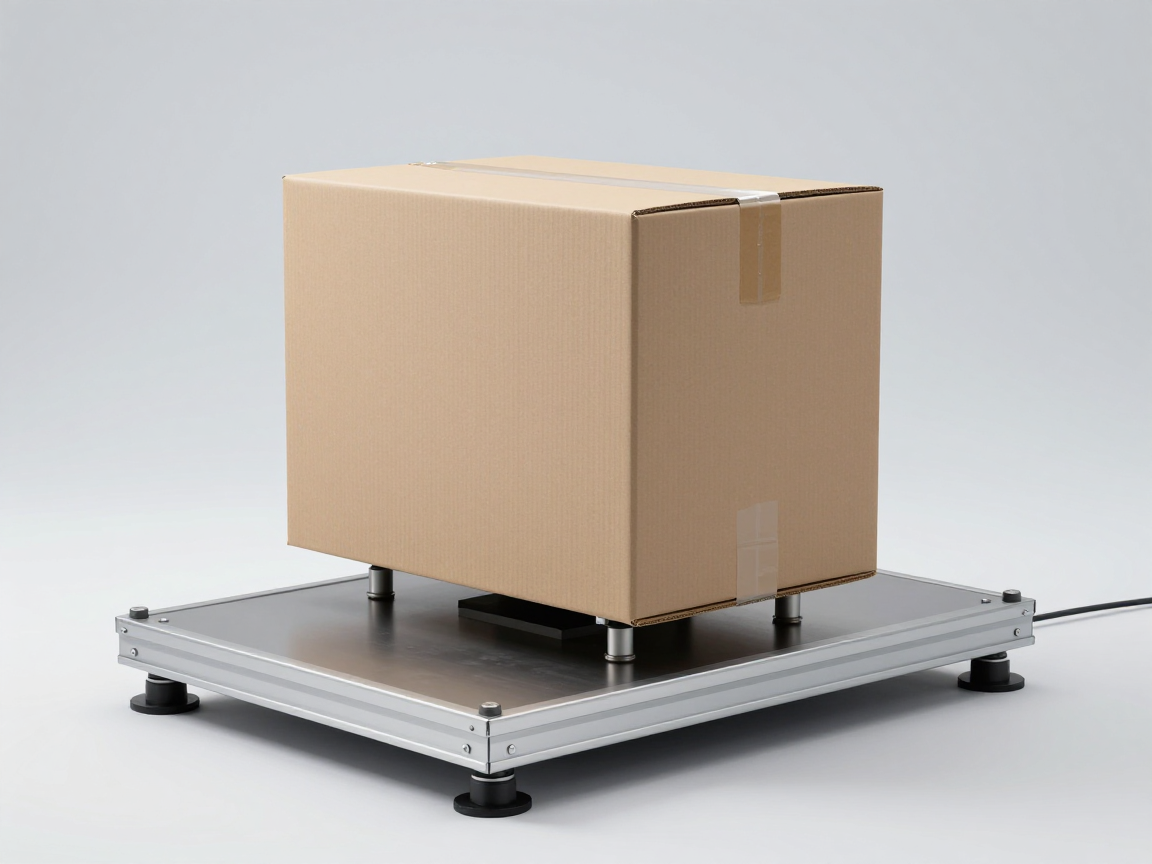
ISTA 1B requires implementation 4 items in correct order above each test sample:
| # | Test item | Test method | Required |
|---|---|---|---|
| 1 | Conditioning | Temperature and humidity at laboratory conditions (before testing) | ✅ |
| 2 | Vibration | Fixed displacement (fixed displacement) | ✅ |
| 3 | Shock | Choose 1 of 3: drop / incline impact / horizontal impact | ✅ |
| 4 | Shock | Rotational edge drop | ✅ unless don’t try side 1 |
The specific test levels of each item (drop height, displacement level, vibration duration, impact velocity…) are specified in detail in ISTA 1B 2014 — please see the original document.
Step 1 — Atmospheric preconditioning
Templates are saved in ambient temperature and humidity conditions of the laboratory according to the time specified in the standard before testing. Temperature/humidity must be recorded at start and end.
💡 Practical notes: This is the most overlooked step. But cardboard, glue, foam, and wood all absorb moisture very differently between the dry season and the rainy season. Skipping step 1 is a common cause of poor results cannot be recreated try again at another time.
Step 2 — Vibration: Fixed Displacement Vibration
Implementation principles:
- Place the package on the vibrating table so that side 3 is in contact with the table surface.
- Vibrate with fixed displacement 1 in (25 mm) at the lowest frequency, yes gradually increase the frequency until the parcel starts leave the tabletop intermittently.
- Certificate confirmation metal shim inserted between the bottom of the package and the table top. If shim can be inserted intermittently → the required frequency has been reached.
- Calculate test time from the specified number of impact pulses divided by the determined vibration frequency (CPM, or Hz × 60), according to the formula in the original document.
- If the table vibrates Do not use vertical movements, yes rotate the sample 90° halfway through the test — or 180° if 90° rotation is not feasible due to size/stability — then run the rest.
⚠️ Mandatory note: must use restraining device so that the sample does not slide off the vibrating table, but this device Vertical movements must not be restricted of sample. Holding too tightly is a fairly common technical error, distorting the nature of the test.
Step 3 — Shock: drop or impact
Select one in three methods:
- Drop (free fall): according to the drop height specified in the standard — with ISTA 1B 2014 it is 6 in (150 mm).
- Incline Impact (Conbur): Use the minimum impact velocity as prescribed by the standard.
- Horizontal Impact: Use the minimum speed change as prescribed by the standard.
Order of impact: smallest face → opposite face → average face → opposite face → largest face → … according to the table in the original document, then comes edges and corners.
💡 If the velocity is measured lower than the minimum level request, test event must be done again until passed — ISTA does not accept missing results.
Exception: No need to try to shock it side 1 (top side) If the package have clearly visible skids or pallets, or if the positioning/testing is in that position not safe.
Step 4 — Rotational Edge Drop
Done without testing shock on face 1: place one edge on the spacer bar of the specified height, lift the opposite edge up 8 in (200 mm) Then let it fall freely onto a hard, flat surface (steel or concrete). Then repeat with a bottom edge 90° perpendicular with the edge just tested.
⚠️ Safety note: if the package has it Length ≥ 2 times width and The center of gravity is higher than the height midpoint, sample at risk flip when testing on the longest edge — in this case it is permissible to do the above both shortest sides.
5. Accompanying equipment and method standards
| Test item | Equipment | Method standards |
|---|---|---|
| Vibration | 1 in (25 mm) fixed-displacement vibration table, rotary or vertical linear | ASTM D999 (Method A1 or A2) |
| Metal shim ~0.06 in (1.5 mm) | — | |
| Frequency meter (tachometer) or CPM/Hz indicating device | — | |
| Stopwatch or automatic timer | — | |
| Shock – Drop | Free fall drop tester | ASTM D5276 |
| Shock test machine (vertical shock test) | ASTM D5487 | |
| Shock – Incline | Incline impact tester (conbur) | ASTM D880 |
| Shock – Horizontal | Horizontal impact test system | ASTM D4003 |
| Shock – Rotational | Rotational edge drop | ASTM D6179 |
A little-noticed detail: ISTA 1B presentation two measurement systems — Imperial system (inch–pound) and SI system (metric). Implementer is selected a system as a standard unit, but yes Use consistently throughout the process, and convertible values Round to two significant figures (not an absolutely exact equivalent). This is why on test records, test levels are often recorded in pairs such as 150 lb / 68 kg nice 6 in / 150 mm.
6. Sample number and sample preparation — a mistake in this step will invalidate the entire test
1B is the lesson for Packages over 68 kg (150 lb), so the “sample preparation” part here is more about loading and unloading than about packaging techniques.
- Model Number: one sample for the whole sequence (fixed displacement vibration then selected impact category). ISTA Recommended repetitions 5 times or more with new samples each time.
- Sending samples to the laboratory: Because the model is heavy, vehicles, lashings, and lifting equipment must be considered in advance. A block of goods that is jostled along the way is a sample that was damaged before it started.
- Repackaging: sample must be Excessive packaging during shipping or Repackage in new packaging at the laboratory — goods that have passed their voyage no longer represent standard condition.
- Prepare data before testing: total mass and external dimensions (length × width × height) according to the measurement system you choose, because the test level of 1B depends on mass.
And one thing that cannot be left to the laboratory: the shipper must determine its own set of pass/fail criteria before testing — see 4 criteria businesses must determine for themselves before testing.
7. When should ISTA 1B not be used?
Here’s the part that helps avoid off-target tests — and is a question that should be clear from the start:
| Situation | Recommended standards |
|---|---|
| Package ≤ 150 lb (68 kg) | ISTA 1A |
| Package > 150 lb (68 kg) | ISTA 1B ✅ |
| Want to try random vibration instead of fixed displacement | ISTA 1H |
| Need to check minimum compression value (compression) | ISTA 1D |
| Goods unitized load on pallets/skids | ISTA 1E |
| Goods for international distribution | ISTA 2B (Partial Simulation) |
| Goods go to specific retail channels (Amazon, Sam’s Club…) | ISTA 6 (Corresponding Project) |
The ISTA document itself gives clear redirection suggestions:
- If you want to use it random vibration instead of fixed displacement → use ISTA 1H, do not use 1B.
- If needed check one Minimum compression value → use ISTA 1D.
- If it is unitized goods → use ISTA 1E, do not use 1B. (Unitized load defined as one or more products/packages usually placed on skids or pallets, always fixed or tied for distribution as a single block.)
- If the row is towards international distribution → consider ISTA 2B (Partial-Simulation).
💡 Practical notes: In many cases, partners request “ISTA results” for multi-hop export shipments, and the default is interpreted as 1B. While 1B — with its non-simulation nature — may not be the test that partners are actually looking for. Clarification Test purpose and output requirements before choosing a standard will avoid a whole round of rework.
8. Common mistakes when implementing ISTA 1B
Summary from actual tests performed:
- Choosing the wrong standard by volume — use 1A for packages exceeding 68 kg, or vice versa.
- Skip the climate control step — results are not reproducible, especially in the rainy season.
- Submit shipped samples without overpackaging or repackaging.
- Only try with 1 sample while representative conclusions are needed → ISTA recommends 5 or more samples.
- The sample holder is too tight, restricting the vertical movement of the package.
- Wrong calculation of vibration time — confuse CPM with Hz, or choose the wrong resonance frequency.
- Skip the Rotational Edge Drop step when side 1 is not tested → missing items, incomplete records.
An error that is rarely mentioned but still has a clear impact: failure criteria and acceptance tolerances are not predetermined. At that time, the test results may be technically correct but not conclusive pass nice fail. fail — and the test became commercially meaningless.
9. What does the cost and time of the ISTA 1B test depend on?
With 1B, costs are pushed up by two characteristics: Packages over 68 kg (150 lb) and The impact item has many options. Heavy goods entail lifting equipment, heavy-duty vibrating tables and the labor of transporting samples to the laboratory. The impact part can be performed by free fall, incline (conbur) or horizontal impact — three different groups of equipment, not every laboratory has enough.
The remaining two variables are number of samples (one sample as minimum requirement, or five replicates as recommended by ISTA) and documentation requirements. Because the sample is heavy, shipping and handling costs often account for a significant proportion of the quote — this should be clearly asked when comparing prices between units. Summary of common factors: What does the cost and time of ISTA packaging testing depend on?
10. Frequently asked questions
Other ISTA 1B ISTA 1A at what point? The main difference is volume threshold: 1A for packages up to 150 lb (68 kg), 1B for packages over 150 lb (68 kg). Regarding the sequence, 1B has additional items Rotational Edge Drop (Step 4) for heavy goods.
Is ISTA 1B a certification? No. ISTA 1B is testing procedure; The result is one test report Indicate whether or not the sample meets the specified test levels. Testing by itself does not create “product certification”.
Is it mandatory to try 5 samples? Not required. ISTA Request 1 sample but 5 samples or more recommended to evaluate representation. If the results are used to make production decisions, a larger number of samples will give more reliable conclusions.
Does ISTA 1B replace carrier requirements? No. ISTA states that the 1 Series does not simulate actual shipping hazards and does not automatically comply with carrier packaging regulations. Need to check specific customer/carrier requirements.
Do goods with pallets have to be tested to fall on the top? Not required. ISTA 1B allows shock testing on side 1 (top side) to be omitted if the package has a clearly visible skid/pallet, or if testing in that position is unsafe.
What if the sample tips over during testing? For long packages (length ≥ 2 times width) with a high center of gravity, the standard allows Rotational Edge Drop to be performed on both shortest edges instead of the longest edge, to ensure safety.
If you want to look up detailed test levels, where can you look? Specific test levels (drop height, displacement level, vibration duration, impact velocity, detailed step-by-step sequence) are fully specified in the original document ISTA 1B 2014 — can be searched and ordered at ista.org.
11. Conclusion
ISTA 1B is a fast, compact and economical choice for testing packaging durability for packages weighing over 68 kg during the screening and comparison phase.
Three most memorable things:
- 1B does not simulate actual transport — its value lies in comparing, screening and creating technical profiles, not in simulating the shipment’s journey.
- Choosing the right standard is more important than running the wrong test correctly — check the volume, product properties (unitized or not), and partner requirements before starting.
- Sample preparation determines the value of the results — untested samples, overpackaging for shipping, and predetermined damage criteria.
With heavy goods, investing in the right test from the start is always cheaper than the cost of dealing with a damaged shipment at the other end of the supply chain.
References
The full standard should be searched and ordered directly from ISTA. Below are the public sources used for reference when compiling the article:
- ISTA — Test Procedures (list of current series and projects, accessed September 27, 2026)
- ISTA — Procedure 1B — Overview and equipment required (free overview published by ISTA; not enough to conduct testing)
- ISTA — Certify your Lab (testing laboratory certification program)
Original source: ISTA 1B 2014 – Packaged-Products Over 150 lb (68 kg), © International Safe Transit Association.
Related articles: – ISTA Series 1 — 7-process overview (1A–1H) – What is ISTA standard? Instructions for choosing the right shipping packaging test – What is ISTA 1A? Packaging testing procedures for packages up to 150 lb (68 kg) – What is ISTA 1C? Extensive packaging testing procedures for packages up to 150 lb (68 kg) – What is ISTA 1D? Extended packaging testing procedures for packages over 150 lb (68 kg) – What is ISTA 1H? Random Vibration Test Procedure for Packages Over 150 lb (68 kg) – What is ISTA 1E? Test procedure for unitized loads – What is ISTA 2B? Partially simulated packaging test procedures for packages over 150 lb (68 kg) – What is ISTA 2A? Partially simulated packaging test procedures for packages up to 150 lb (68 kg)
Talk to us
Disclaimer and IP acknowledgement
This article is an explanatory content compiled by us for the purpose of introducing and disseminating knowledge. Article is not a translation, copy, abridgement or replacement of the parent standard, and is not evaluated, approved or sponsored by ISTA (International Safe Transit Association)..
The entire content of ISTA standards is copyrighted by the International Safe Transit Association, Inc. (East Lansing, Michigan, USA) — All rights reserved. ISTA® and the ISTA logo are registered trademarks of the International Safe Transit Association, Inc.; Mentioned in this article are for guidance purposes only and do not imply any affiliation, partnership or sponsorship.
Article content For reference only; Before applying for any purpose — testing, evaluation, certification or commercial decision-making — the reader should refer directly to the original ISTA document (the most complete and up-to-date version) and consult an accredited testing facility when necessary.
When performing testing, it is mandatory to use the official, current version of the standard, obtained directly from ISTA. We do not redistribute ISTA materials in any form. Information in this article may be out of date with the current version of the standard.
See more: Copyright Policy & Disclaimer by ticforall.com.