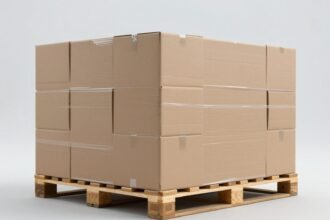
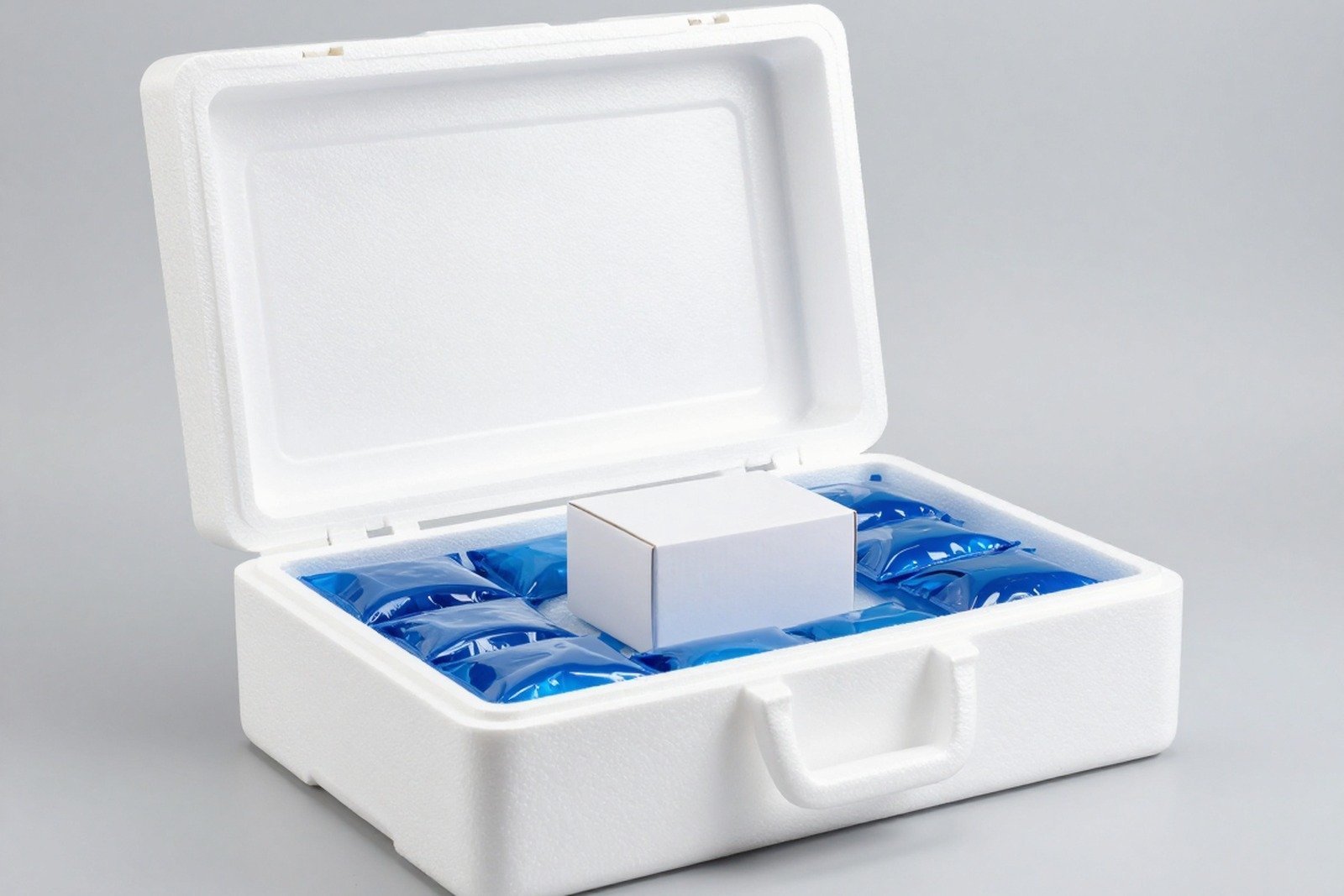
ISTA® 7D is a group test Development Test — packaging development article group. Full name: Temperature Test for Transport Packaging, 2007 edition (editorial revision July 2022).
What needs to be said now, before anything else: This article only evaluates one factor — temperature. It no impact measurement, no vibration measurement, no compression measurement. So 7D never stands alone: it must always be paired with a Series 1, 2 or 3 lesson to form the full review set. This is the most common point of confusion — many records say “ISTA 7D tested” and are interpreted as “packaging tested”.
The second important point, and the main thing the ISTA document must make clear: ISTA strongly recommends the use of ISTA 7E instead of 7D. 7E was developed following a comprehensive survey of the temperature range in parcel delivery systems, and is considered the best and most up-to-date simulation of the thermal environment. This article presents 7D as documented, and clearly states when to choose 7E.
1. What is ISTA 7D?
Document definition: Procedure 7D is an article development test to evaluate effects of exposure to outside temperatures up each packaged-product individually. Specifically, the document states four purposes of use:
- Used to Develop temperature-controlled shipping packaging, made of any material.
- Used to Analyze individual or comparative performance between standard shipping packaging and insulated packaging, compared to commonly encountered conditions.
- Designed to measures the relative ability of packaging to protect the product when exposed to temperature cycles.
- Products and packaging are considered together, not separate.
And a very important limiting sentence: this article It is not intended to evaluate the packaged-product’s ability to protect against shock, vibration and/or compression.
2. Warning before use: 7D profile is not “worst case”
The document places a notable warning (CAUTION): the cycle profile in 7D is General simulation, not intended to represent the worst temperature exposure. Furthermore, the document states: “The profiles listed in this procedure are not based on current research data” — while there are many variables that influence thermal and distribution performance, as well as the thermal extremes of the actual distribution environment of each distribution situation.
From there, the document outlines a series of instructions that should be read carefully before committing to customers:
- If you try to comply with government, industry, laboratory, validation or regulatory standards or guidelines This procedure can be supplemented or replaced It is the user’s responsibility to know and understand such requirements and use the appropriate procedures accordingly.
- ISTA strongly recommends using ISTA 7E instead of 7D. 7E was developed following a comprehensive survey of the thermal range in the parcel system, is considered the best and most up-to-date simulation of the thermal environment, and can be purchased separately from ISTA.
- After the packaging has achieved acceptable thermal performance through a series of 7D screening/probing, should run an additional series of general simulation distributions — to simulate the extremes expected to be encountered in the shipping environment.
- With packaged-product can be sent via system small parcel, consider General Simulation 3A.
- With insulated shipping container In parcel system, you should consider ISTA 7E.
In short: 7D is a tool develop and compare good, but not “covers all heat conditions” proof. For pharmaceutical products, cold chain, frozen foods — need to read more articles What is ISTA standard? to place 7D in the correct position in the deck.
3. Responsibilities of the shipper
The document requires the shipper to determine before trying two things:
- Limit the exact temperature of the product — upper and/or lower limits.
- Limit the time allowed above or below those temperature limits (excursion).
This is the basis for a pass/fail conclusion. If we just say “the product can withstand 2–8 °C” without saying anything How long are you allowed to overtake?, the test has no criteria for judgment. In essence, this is the same principle as the card Four pass/fail criteria when testing packaging: businesses must determine themselves in advance.
4. Test sample: strict requirements on “thermal equivalence”
Because this is a thermal lesson, 7D’s model requirements are much more stringent than mechanical lessons. Regulatory documents:
- Samples should be real packaging and products, not tested. If either (or both) are absent, the sample must be substituted as real as possible.
- Replacement products must be as close as possible composition, texture, thermal mass, consistency — e.g. liquid, powder or paste and other physical properties, and must packaged in the product’s correct primary packaging.
- Recommendation: packaged-product simulation should be as close as possible specific heat compared to the real product, so that the temperature of both materials changes at the same rate.
- If used Refrigerant or heat stabilizer, must be right type that the shipper will use in practice.
- Model Number: a template for the articles in this process.
- Repeat recommendation: ISTA requires running the procedure once, but Recommended to run three or more times with a new sample for each test.
The document also notes: packaging has undergone transportation should not be considered representative of standard conditions. To ensure testing is in perfect condition, the product and packaging must be sent to an accredited laboratory over-package when sending, or Repackage with new packaging at the lab.
5. The test sequence consists of 4 steps
| # | Category | Test | Test level | Status |
|---|---|---|---|---|
| 1 | Temperature | Preconditioning | Store the product and each packaging component at the required temperature, Minimum 24 hours | Options (according to documentation: “Optional”) |
| 2 | Ambient temperature | Cycle 1 of the selected profile | According to profile | Required |
| 3 | Ambient temperature | Cycle 2 | According to profile | Required |
| 4 | Ambient temperature | Remaining cycles of profile | According to profile | Required |
Technically, this sequence is much simpler than the 3 Series exercises — but “simple” here only refers to the number of steps, not the rigor of the operation. Three important operational requirements:
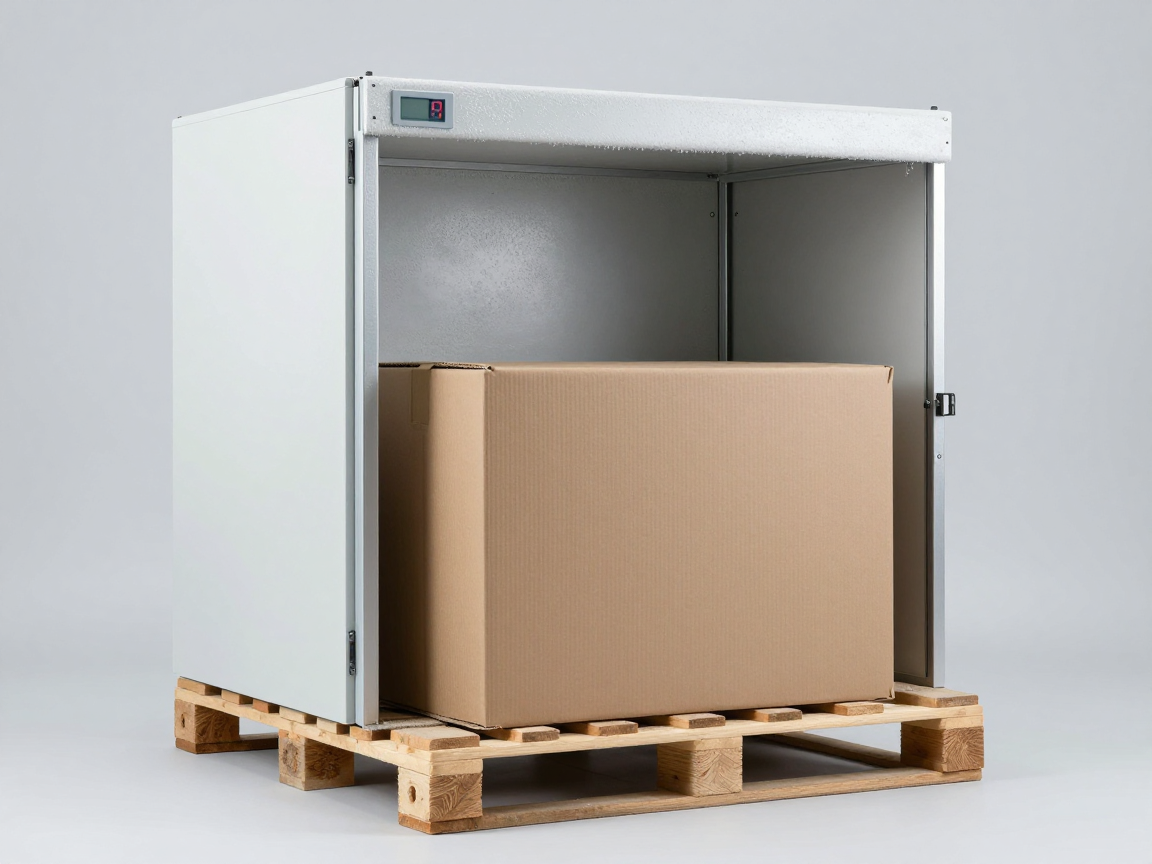
- Every cycle: set packaged-product on pallets or open platforms Let the heat circulate completely around all sides; guaranteed Minimum clearance 6 in (150 mm) between any side of the bale and the floor, interior wall or other bale.
- Yes Confirm that the chamber/room has reached the correct cycle temperature before testing — don’t “put it in and wait”.
- At the end of each cycle, remove the bales and transfer the temperature to the next cycle manually or with a pre-programmed controller.
Return Primary conditioning, the document has two branches: if used thermocouple probe To measure product temperature, it is a must Insert the probe into the product First, condition for at least 24 hours, then install the product in the box without delay, check the probe is working properly, make sure the probe wire comes out does not create air leaks at the lid, then add wrapping paper/dunnage and seal; then Start temperature recording at a predetermined recording interval (e.g. 15 or 30 minutes). If you do not use a probe, skip those steps but still have to condition for a full 24 hours.
Two practical notes are rarely mentioned, but if done incorrectly, the results will be meaningless:
- If used frozen gel/ice packs, possible thermal stabilization time longer than 24 hours, especially if they are frozen in the shipping container itself and not individually.
- Must confirm correctly that the material has been properly conditioned by product testing and that the coolant has been individually monitored prior to testing.
6. Thermal cycle profiles (cycle profiles)
This is the “data” part of the 7D. The documentation provides two profile families: cycle/soak (keep at temperature for a number of hours) and ramp (transfer temperature along the ramp).
Cycle/soak family — domestic United States
24-hour domestic small parcel shipping (air), winter/summer:
| # | Winter Profile (cold sent & cold received) | Now | Total | Summer Profile (hot to send & hot to receive) | Now | Total |
|---|---|---|---|---|---|---|
| 1 | 18 °C (65 °F) | 4 | 4 | 22 °C (72 °F) | 4 | 4 |
| 2 | −10 °C (14 °F) | 2 | 6 | 35 °C (95 °F) | 2 | 6 |
| 3 | 10 °C (50 °F) | 12 | 18 | 30 °C (86 °F) | 12 | 18 |
| 4 | −10 °C (14 °F) | 6 | 24 | 35 °C (95 °F) | 6 | 24 |
Domestic cargo transportation within 48 hours (airway): The four-cycle structure is similar to the 24-hour level, but cycle 3 is longer 36 hours (42 hours total) instead of 12 hours, bringing the total time to 48 hours.
72-hour international express air shipping (from USA): also four cycles, but cycle 3 lasts longer 56 hours (66 hours total), bringing the total time to 72 hours.
| Profile | Cycle 1 | Cycle 2 | Cycle 3 | Cycle 4 | Total |
|---|---|---|---|---|---|
| Winter 24 hours | 18 °C / 4 h | −10 °C / 2 h | 10 °C / 12 h | −10 °C / 6 h | 24 h |
| Summer 24 hours | 22 °C / 4 h | 35 °C / 2 h | 30 °C / 12 h | 35 °C / 6 h | 24 h |
| East 48 hours | 18 °C / 4 h | −10 °C / 2 h | 10 °C / 36 h | −10 °C / 6 h | 48 h |
| Summer 48 hours | 22 °C / 4 h | 35 °C / 2 h | 30 °C / 36 h | 35 °C / 6 h | 48 h |
| East 72 hours | 18 °C / 4 h | −10 °C / 6 h | 10 °C / 56 h | −10 °C / 6 h | 72 h |
| Summer 72 hours | 22 °C / 4 h | 35 °C / 6 h | 30 °C / 56 h | 35 °C / 6 h | 72 h |
Cycle/soak family — when the sender and receiver are in different seasons
For international shipments within 72 hours from the United States, the conditions of the sender and receiver are specified not the same season, documents for two year-cycle profiles:
| # | Profile COLD → HOT (send cold, receive hot) | Total | Profile HOT → COLD (send hot, receive cold) | Total |
|---|---|---|---|---|
| 1 | 18 °C (65 °F) / 4 h | 4 h | 22 °C (72 °F) / 4 h | 4 h |
| 2 | −10 °C (14 °F) / 6 h | 10 h | 35 °C (95 °F) / 6 h | 10 h |
| 3 | 10 °C (50 °F) / 32 h | 42 h | 0 °C (32 °F) / 32 h | 42 h |
| 4 | 22 °C (72 °F) / 24 h | 66 h | 10 °C (50 °F) / 24 h | 66 h |
| 5 | 35 °C (95 °F) / 6 h | 72 h | −10 °C (14 °F) / 6 h | 72 h |
The law extends when there is a delay
The document states a very practical rule: because Delays are possible, if experience indicates concern, the total hours of the profile can be extended as follows:
- Profile 24 hours → increase by 8 hours.
- Profile 48 hours → an additional 16 hours.
- Profile 72 hours → increase by 24 hours.
With winter 24/48/72 and summer 72 profiles, plus last cycle. As for the 72-hour profile, which has different sending and receiving conditions, it is added 8 hours into cycle 2 and 16 hours into the last cycle.
Ram family — when to use it?
The document clearly states: ramp profile is more suitable than cycle/soak in two cases — (1) Very small insulated tank, with little thermal mass, and (2) situations that do not involve transporting goods, for example shipped in car trunk. The temperature levels are then transferred in 2-hour ramps, with interspersed “2-hour at temperature” segments: for example, a 24-hour freezing profile goes from 18 °C (0–6 hours) → 2-hour ramp → −20 °C (−4 °F) for 2 hours → ramp 2 hours → 10 °C (12–18 hours) → ramp 2 hours → −20 °C for 2 hours → ramp; summer profile used 45 °C (113 °F) for hot spots instead of 35 °C.
Worth noting: they use ramp −20 °C and +45 °C — much harsher than the cycle/soak family (−10 °C and +35 °C). This is a technical detail that is easily overlooked when choosing a profile.
7. Identify faces, edges, corners and safety warnings
The document still requires a standard angled face identification procedure (placed according to the intended shipping position; if the position can be changed, placed so that the main shipping label is on the top side; special rules for cartons include manufacturer’s joint — manufacturer joints — and rules for non-6-sided bales). With thermophoresis, this mainly serves to record probe position and results.
But part safe of 7D is the most readable part of the entire document, because it is directly related to life:
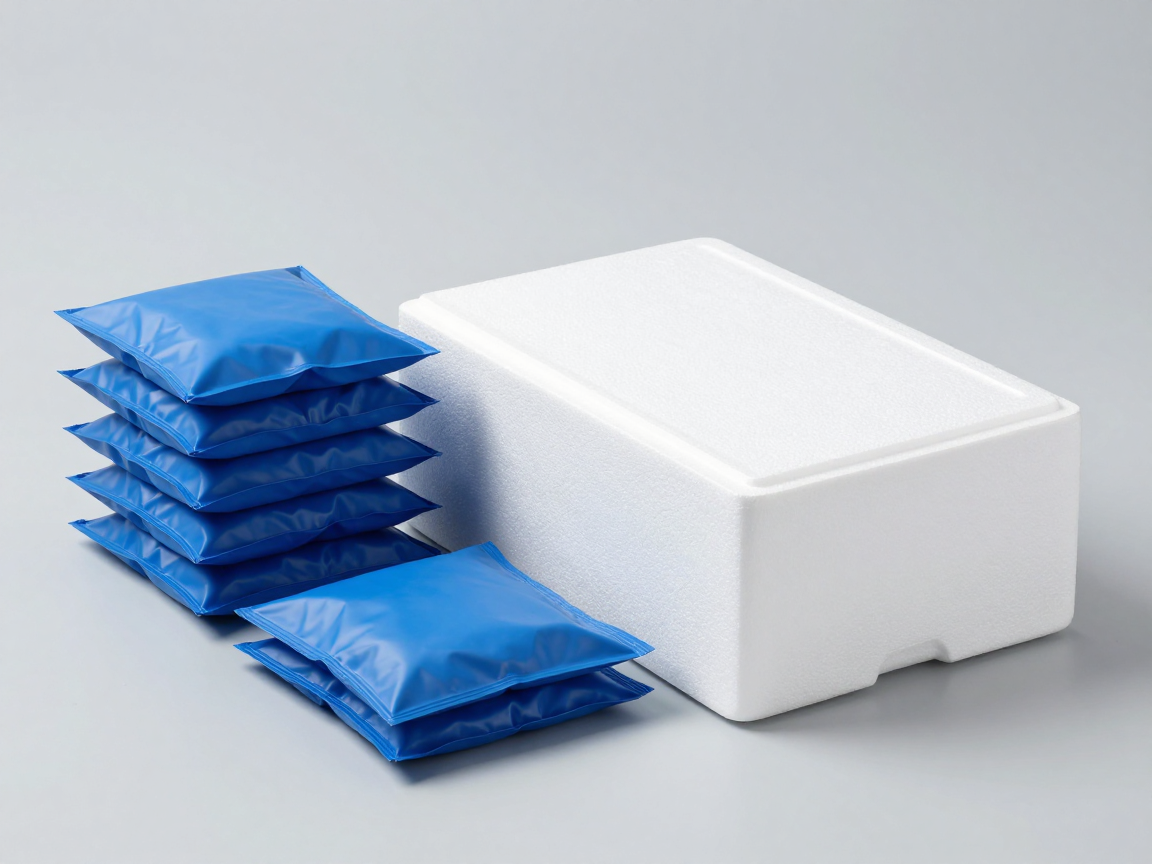
- Solid CO₂ (dry ice) has surface temperature −78 °C (−108 °F); Use dry ice in heat-controlled packaging with extreme caution. Always working at well ventilated area because CO₂ gas is a sublimation product of dry ice; over a long time it push oxygen out of enclosed spaces, maybe cause suffocation to testing staff. Must use Goggles and cold-resistant gloves when holding. Packaging containing dry ice must be designed to The sublimated CO₂ escapes.
- Liquid nitrogen (for specialized tank systems, e.g. dry nitrogen vapor shippers, liquid nitrogen tanks) are subject to the same warnings: the oxygen-repelling properties of the gas phase and extreme cold temperatures −195 °C (−319 °F).
- Any frozen refrigerant such as gel pack or foam ice pack Even in sub-freezing temperatures, you must handle it carefully.
8. Equipment required
| Category | Request | Standard |
|---|---|---|
| Air conditioning | Room or chamber draft-free + control device | ASTM D3103 (equipment section) |
| Temperature indicator | Thermocouple probe, temperature recorder, datalogger (optional) | ASTM D3103 (equipment section) |
| Baling platform | Pallet or open platform, ensuring clearance ≥ 6 in (150 mm) on all sides | — |
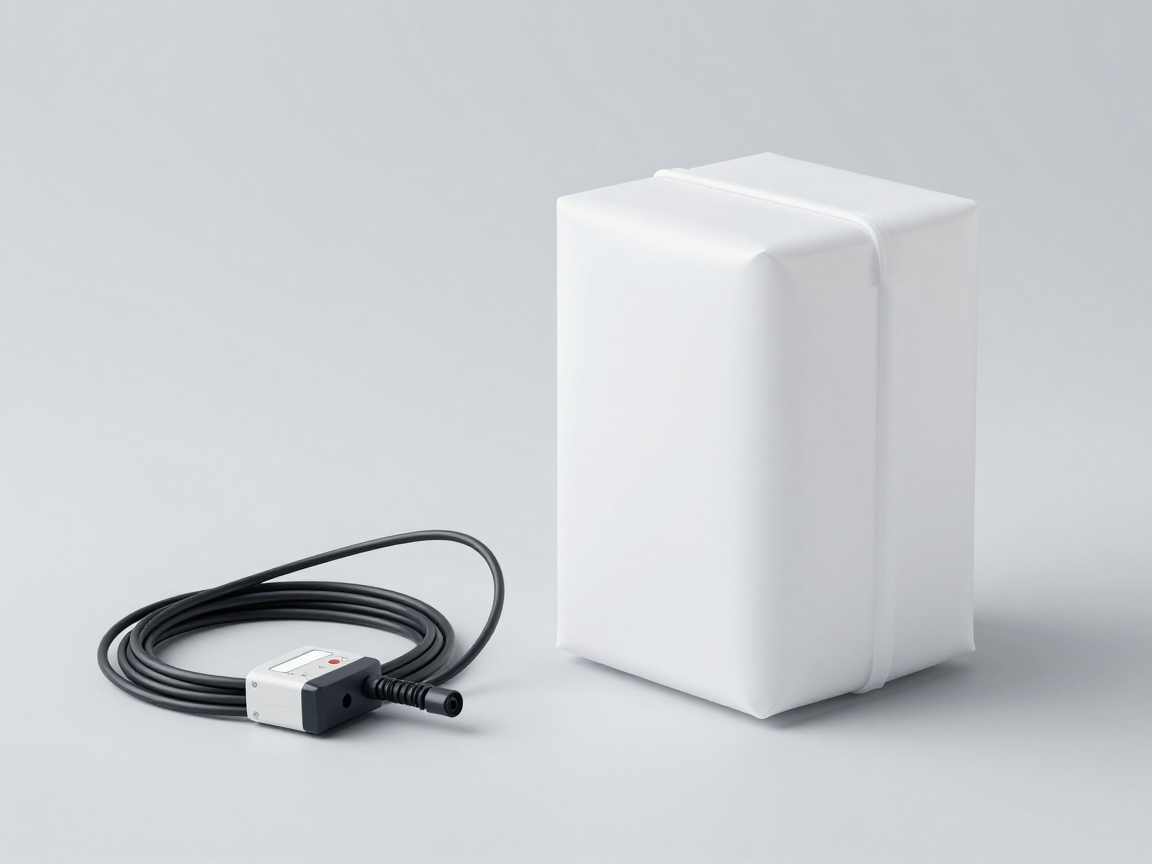
The documentation also mentions one thing before starting: Check and confirm calibration of temperature monitoring equipment and environmental chambers. And it is necessary to know in advance the total weight and external dimensions L × W × H of the packaged-product in inches (mm or m).
9. Common mistakes when performing 7D
- Consider the 7D a full packaging test. The 7D only measures temperature — not shock, vibration, or compression. It must always be paired with a Series 1/2/3 article.
- Thermal limits and excursion duration are not specified in advance. Without these two numbers, it is impossible to conclude pass/fail.
- Choose the wrong season or the wrong time period. Winter and summer profiles are different; 24/48/72 hours different; and the off-season send–receive profile is a separate set of five cycles.
- Use cycle/soak for small containers or transport in the trunk of a car. In these two situations, it must be used ramp profile (and note ramp uses −20 °C / +45 °C, which is harsher).
- 6 in (150 mm) clearance is not guaranteed. If the bale is placed close to the floor, wall or close to another bale, the heat will not circulate and the results will be wrong.
- Place the bales in and then wait for the chamber to reach temperature. Must confirm that the chamber is at the correct cycle temperature before place a case.
- Use alternative products that are not thermally equivalent. Must be closest in composition, texture, thermal mass, consistency and specific heat capacity; must be packaged in the correct primary packaging of the product.
- Use a different refrigerant than what the shipper actually uses. Documents required are of the correct type.
- Let the probe wire create an air leak. The thermocouple wire going out must not create gaps/leakage in the cover.
- Leave the gel/ice pack for 24 hours and it’s done. Gel packs frozen in shipping containers may be required longer 24 hours thermal stability.
- No temperature recording range recorded. Must set a predetermined recording interval (e.g. 15 or 30 minutes) and run recording immediately at the start.
- Do not handle dry ice/liquid nitrogen safely. Ventilation areas, goggles, cold-resistant gloves, and packaging must have ventilation for CO₂.
- Skip the calibration check. Calibration of the thermal monitor and environmental chamber must be confirmed prior to testing.
10. 7D or 7E — which song to choose?
| Situation | Suitable article | Reason |
|---|---|---|
| Insulated shipping box in parcel system | ISTA 7E | 7E is built from a comprehensive survey of the thermal range in the parcel system; The 7D documentation strongly recommends using 7E |
| Heat testing according to specialized regulatory requirements (pharmacy, cold chain) | According to that industry standard | The document clearly states that it is the user’s responsibility to know the supplement/substitution policy |
| Screen/explore and quickly compare two insulated packaging designs | 7D | Right for the purpose of “development testing” |
| Very small barrel, little thermal mass; or transport in the trunk of a car | 7D — ramp profile | Ramp is more suitable than cycle/soak in these two situations |
| It is necessary to evaluate the overall packaging (drop, vibration, compression) with heat | 7D/7E graft an article Series 1/2/3 | 7D does not measure shock, vibration, or compression |
| Small parcels in general | Consider 3A | Document 7D shows 3A for small parcel systems |
11. What does cost and time depend on?
Three main variables: profile selected (24/48/72 hours, and five-cycle profiles when sending–receiving off-season — plus grace period if there is a risk of delay); conditioning time (minimum 24 hours for all materials, may be longer with frozen gel packs); and thermal sample preparation — replacement product with equivalent heat, correct refrigerant, insert probe, ensure no air leaks. Since there is only one sample required (three recommended), sample costs are often much lower than for mechanical lessons — Test chamber time costs is the dominant factor. See more articles What does the cost and time of ISTA packaging testing depend on?
12. Frequently asked questions
Does ISTA 7D test for drops and vibrations?
No. 7D only evaluates the influence of outside temperature. The documentation clearly states it no to evaluate protection against shock, vibration and/or compression. To fully evaluate, you must pair 7D with a Series 1, 2 or 3 lesson.
Why does ISTA recommend using 7E instead of 7D?
Because 7E was developed following a comprehensive survey of temperature ranges in parcel delivery systems (in collaboration with the Pharmaceutical Cold Chain Interest Group) and is considered the best, most up-to-date simulation of thermal environments. The 7D document also clearly states its profiles Not based on current research data and does not represent the worst case.
Which profile should I choose for my product?
Answer three questions: goods go domestic or international; Estimated journey 24, 48 or 72 hours; and whether the sender – receiver conditions are in the same season or not. If the package is very small or transported outside the cargo route (for example, the trunk of a car), use a ramp profile.
How many samples are needed?
A sample is required. ISTA recommends running three or more times with new samples each time to get sufficiently reliable conclusions.
Is 24-hour pre-conditioning required?
According to the document’s Test Sequence table, the preconditioning step is listed as “Optional”; But when done, it needs to be conditioned enough for all materials to reach the required temperature, at least 24 hours – and longer with freezing gel packs. In practice, this is a step that should not be skipped.
Is it allowed to extend the test when the goods are delayed?
Yes. Documents allow extending the total time: 24 hours + 8 hours, 48 hours + 16 hours, 72 hours + 24 hours (added to the last cycle; for the 72-hour send-receive profile in different seasons, add 8 hours to cycle 2 and 16 hours to the last cycle).
13. Conclusion
ISTA 7D is a packaging development test that evaluates the influence of external temperature on packaged-products — for temperature-controlled shipping packaging, insulated packaging, cold chain, and comparative thermal performance analysis. Three things to remember: only measures temperature — does not measure shock, vibration, or compression, so it must always be paired with a Series 1/2/3 test; The 7D profile is a general simulation and ISTA strongly recommends using 7E instead, especially for insulated boxes in parcel systems.; and test series has only 4 steps — minimum 24-hour preconditioning followed by thermal cycles, with strict requirements for heat equivalent sample and 6 in (150 mm) clearance for heat circulation.
Before testing, it is necessary to determine: upper/lower temperature limits of the product; Excursion time allowed; domestic or international travel and 24/48/72 hours; conditions of sender and recipient; and type of refrigerant if any.
Reference standard version: article content is based on ISTA 7D document (2007 version, revised July 2022) — Temperature Test for Transport Packaging. The test levels are a summary for reference; When implementing, the official standard, the current version of ISTA, must be used.
References
- ISTA 7D, 2007 version (editorial change July 2022) — Temperature Test for Transport Packaging, International Safe Transit Association
- ISTA 7E — Testing Standard for Thermal Transport Packaging Used in Parcel Delivery System Shipment (recommended post to replace 7D)
- ISTA — Test Procedures & Projects (current catalog, accessed September 28, 2026)
- ASTM D3103 — Referenced method for conditioned rooms/chambers and temperature indicators
Related articles
- Conditioning Before a Packaging Test: 12 Hours or 72 Hours?
- ISTA 6-AMAZON.COM What is SIOC? Packaging test procedure sent in the product’s own box
- What Is the ISTA Standard? How to Choose the Right Transport Packaging Test (3A, 6-Amazon, ASTM D4169)
- What is ISTA 6-SAMSCLUB? Packaging test procedure for Sam’s Club distribution system
- What is ISTA 6-AMAZON.COM Over Boxing? Procedure for testing outer box packaging for goods sent to Amazon
- What is ISTA 3A? Packaging test procedure for parcel delivery system (Parcel Delivery)
- ISTA Packaging Test Pass/Fail Criteria: 4 Things You Must Decide Yourself
Discuss further
Disclaimer and acknowledgment of intellectual property rights
This article is an explanatory content compiled by us for the purpose of introducing and disseminating knowledge. Article is not a translation, copy, abridgement or replacement of the parent standard, and is not evaluated, approved or sponsored by ISTA (International Safe Transit Association)..
The entire content of ISTA standards is copyrighted by the International Safe Transit Association, Inc. (East Lansing, Michigan, USA) — All rights reserved. ISTA® and the ISTA logo are registered trademarks of the International Safe Transit Association, Inc.; Mentioned in this article are for guidance purposes only and do not imply any affiliation, partnership or sponsorship.
Article content For reference only; Before applying for any purpose — testing, evaluation, certification or commercial decision-making — the reader should refer directly to the original ISTA document (including ISTA 7E where appropriate), and consult an accredited testing facility when necessary.
Safety note: the use of dry ice (solid CO₂) and liquid nitrogen in temperature controlled packaging testing poses a risk of asphyxiation and frostbite. All operations must comply with current labor safety regulations and the equipment manufacturer’s instructions.
When performing testing, it is mandatory to use the official, current version of the standard, obtained directly from ISTA. We do not redistribute ISTA materials in any form. Information in this article may be out of date with the current version of the standard.
See more: Copyright Policy & Disclaimer by ticforall.com.