ISTA® 6-SAMSCLUB is a group test procedure Member Performance — developed by ISTA in collaboration with Sam’s Club, used exclusively for goods sold into Sam’s Club’s distribution system in the United States. The standard version being referenced: Packaged-Products for Sam’s Club® Distribution System Shipment, 6-SAMSCLUB, 2010 edition.
The special thing about this process compared to all other ISTA exercises is that it divided into four types of packaging (Type A–D) with four completely different test sequences — and this is the first “hurdle”: choosing the wrong Type means the entire test plan, number of samples, and cost are all wrong. The classification is based on two questions: row palletized or floor-loaded, and goods fresh or not.
This is also the coverage process 12 TEST BLOCKS with rare articles like rotational flat drop, rotational edge drop, clamping simulation, flat push with lifting blade, bridged impact and concentrated edge impact — that is, types of damage that occur in real warehouse infrastructure (forklifts, clamp trucks, unloading pallets, hauling bales) and not just drops and vibrations. The article goes through the definition, classification, four test series, four “specialty” TEST BLOCKs along with equipment table, compression force formula and common errors.
1. What is ISTA 6-SAMSCLUB?
Document description: Project 6-SAMSCLUB is an article general simulation for packaged-product sent via Sam’s Club distribution to a destination in the United States. The process is built from a program Large-scale field survey, observation and measurement on the Sam’s Club system itself: visit Distribution Centers (DCs), foreign suppliers, seaports and club stores in the US; attach accelerometers to ocean containers, trucks and forklifts; then convert all that data into lab test levels.
So this is not a “logical inference” article, but an article derived from real measured data — the reason why the test series here is more detailed and “strange” than the regular 3 Series articles.
One point to emphasize about infrastructure: in the Sam’s Club system, goods often come from the manufacturer Go through one or more Distribution Centers and then go to the club store. At DC there are many types of handling: manual, forklift, clamp truck (clamp)… and Initial shipment configuration may be changed at DC to suit the needs of the system and the requirements of each club. The final trip to the store is usually on pallets.
Document notes: users need to know other packaging requirements of the Sam’s Club system — configuration, material, mass and height limitations… This test procedure is only a part of packaging performance and does not replace operational requirements.
2. Four types of packaging Type A–D — the classification step decides everything
The document defines four types of packaged-products, based on two axes: original sending method (palletized or floor-loaded) and Are the goods damaged by temperature/humidity? (Perishable or Non-Perishable).
Definition first
- Perishable — food, drinks, fresh flowers… can be spoiled if not kept at the correct temperature and humidity.
- Non-Perishable — aviation is affected by extreme heat/humidity.
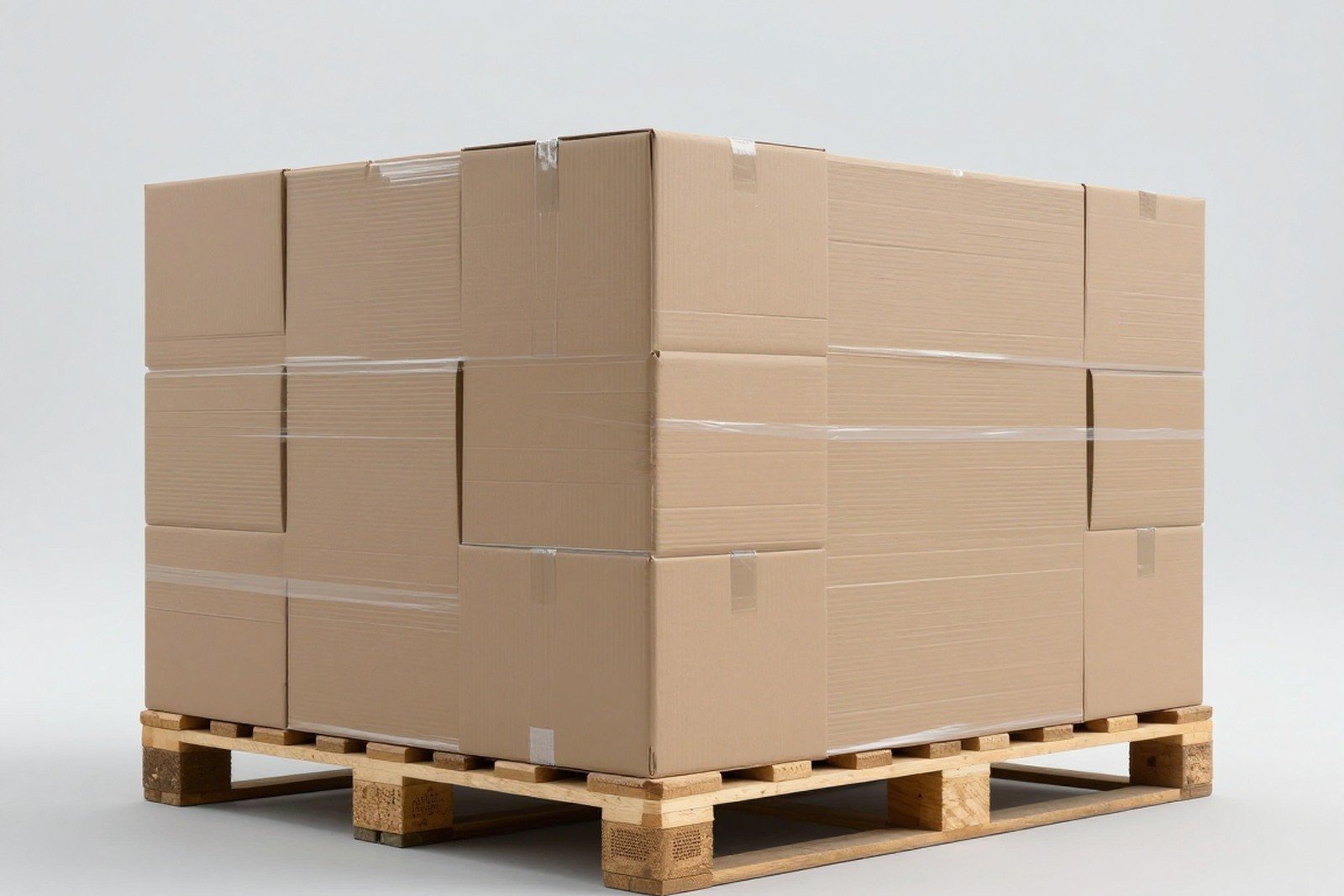
- Floor-Loaded — original item sent No palletization, no unitization, loaded directly into a truck or container, and “club quantity” is a case/unit.
- Club (Store) Quantity — packaged-product numbers are usually sent in one go to replenish a club/store. A group of goods may leave the factory as a unitized load, but then be damaged remove into small groups or individual products to send to clubs according to additional needs.
- Unitized Load — many bales are tied together with straps, shrink/stretch films… to be loaded, unloaded and transported as one block.
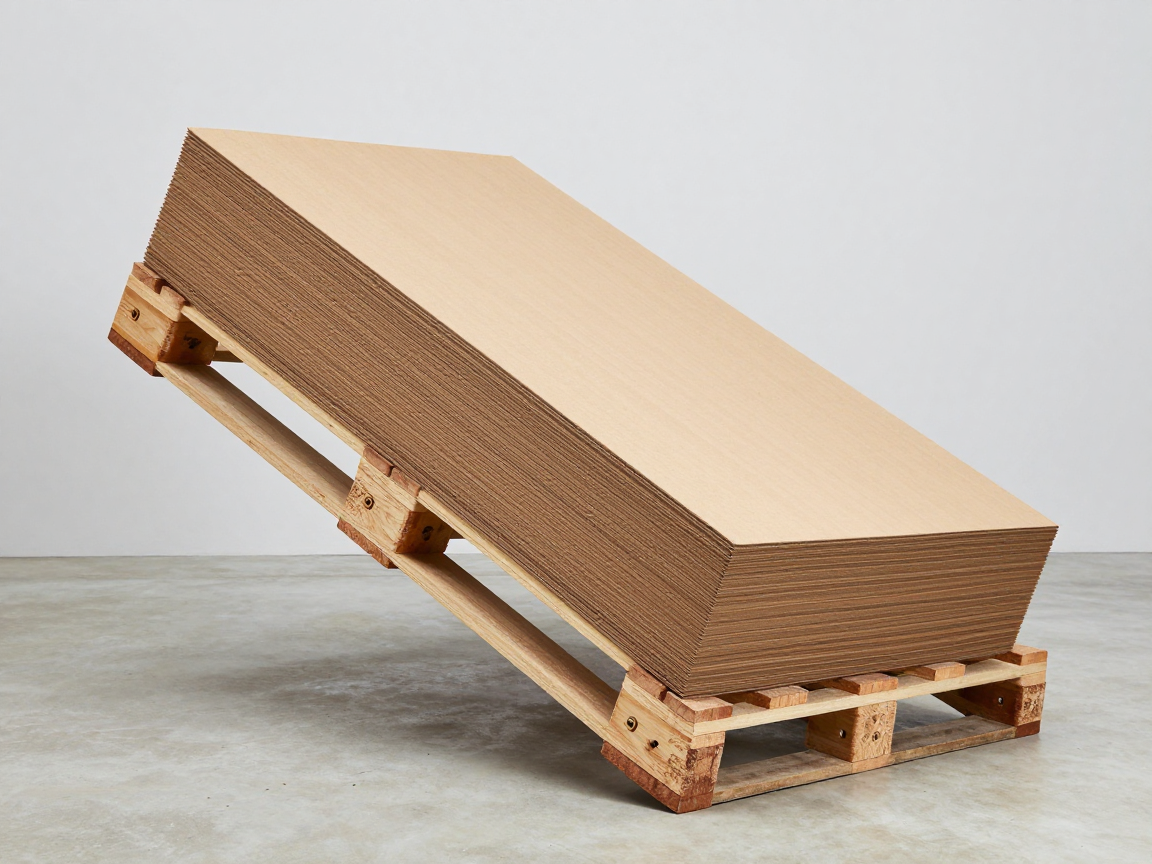
- Slip Sheet — flat plate with edges on one or more edges, used as a base to collect/hold/unload goods into a unit load (replace pallet).
- Standard vs Custom Pallets — standard pallets are popular designs, with published parameters; Custom pallet designed for a narrow product, performance specifications are not common/published.
- Elongated (long bale) — longest side ≥ 36 in (910 mm) and The remaining two edges are each ≤ 20% of the longest edge.
- Flat (flat bale) — shortest side ≤ 8 in (200 mm) and The next side is 4 times or more longer than the shortest side and volume ≥ 800 in³ (13,000 cm³).
The document emphasizes: if a bale fits Elongated medium Flat then must try like Elongated lawsuit.
Large or Small? (only applies to floor-loaded goods)
A floor-loaded event is considered Large if satisfied at least one under three conditions:
- Volume ≥ 50 lb (23 kg); or
- Longest side ≥ 24 in (610 mm) and second longest side ≥ 20 in (510 mm) and shortest side ≥ 20 in (510 mm); or
- Any any length/width/height ≥ 30 in (760 mm).
If the above conditions are not met, then Small. This is the criterion that distinguishes Type B (Large) and Type C (Small).
Table of four types
| Type | Nature | How to send initially | Notes |
|---|---|---|---|
| A | Non-Perishable (dry goods) | Palletize on standard or custom pallets | Two sub-branches: club quantity it is batch of intact pallets, or no (including long and flat bales) |
| B | Non-Perishable | Floor-loaded, sued Large | Including long and flat bales |
| C | Non-Perishable | Floor-loaded, sued Small | Club quantity is case or unit |
| D | Perishable (fresh goods) | Palletization | Shortened test string — no vibration |
Two “Type conversion exceptions” are important to remember, because they decide which posts to run:
- Floor-loaded goods unitized on slip sheet but in the end placed on pallets To send in bulk to the club → must be placed on a standard pallet before trying and considered Type A.
- Floor-loaded goods unitized but without slip sheet, finally placed on the pallet → run part of the private chain and then switch to Type A. Specifically: Type B runs Sequence 1, 2 and 7; Type C runs Sequence 1, 2 and 6; then fasten it onto a standard pallet and run Sequence 3–7 of Type A.
3. Four test series Type A–D
Type A — Non-Perishable, sent initially on pallet (most complete post)
| # | Category | Test | Test level (US / international) | Request |
|---|---|---|---|---|
| 1 | Climate | Pre-conditioning | Ambient lab room, 12 o’clock | Required |
| 2 | Climate | Controlled air conditioning | Select by chart | Options |
| 3 | Impact | Inclined or Horizontal Impact | Impact velocity 42 in/s (3.5 ft/s) (1.1 m/s) | All 4 vertical sides of the pallet lot |
| 4 | Shock | Rotational FLAT Drop | 6 in (150 mm) / 8 in (200 mm) | Whole lot of pallets |
| 5 | Vertical compression | Top-to-Bottom | According to the formula, keep the force 1 hour | Whole lot of pallets |
| 6 | Vertical vibration | Random | Grms total 0.46, 3 hours | Whole lot of pallets |
| 7 | Shock | Rotational EDGE Drop | 4 in (100 mm) / 6 in (150 mm) | Whole lot of pallets |
| 8 | Push horizontally | Flat Push with lifting blade | Push 40 in (1 m) for 2–3 seconds | Only with custom pallets |
Read the transition step carefully: if club quantity is the whole batch of pallets, then stop here. If club quantity no Whole lot, choose three samples from the batch (ideally one in the upper layer, one middle, one lower layer) and run three steps 9–13:
- 9. Clamping Simulation (horizontal compression) — calculated according to the formula, clamped in many positions; only required in certain distribution situations.
- 10. Free-Fall Drop — Bottom Orientations: 15 in (380 mm) (domestic) / 18 in (460 mm) (international), 3 drops per sample.
- 11. Vertical vibration, stacking — all three models stack on top of each other: Grms total 0.55, 1 hour.
- 12. Concentrated Edge Impact — with bales only flat: hazard box falls 12 in (300 mm) / 15 in (380 mm).
- 13. Bridged Impact — with bales only long: hazard box falls at the same level as above.
Type B — Non-Perishable, floor-loaded, Large case
| # | Category | Test | Test level (US / international) |
|---|---|---|---|
| 1–2 | Climate | Preconditioning 12 hours / controlled (optional) | — |
| 3 | Impact | Inclined/Horizontal Impact | 42 in/s, 4 or 6 sides according to instructions |
| 4 | Shock | Rotational FLAT Drop | 7 in (180 mm) / 9 in (230 mm) |
| 5 | Vertical compression | According to the recipe, keep 1 hour | Top pallet if top ≥ 45 × 37 in |
| 6 | Vertical vibration | Random has top load 0.0035 lb/in³ (96 kg/m³) | Grms 0.46, 3 hours |
| 7 | Horizontal compression | Clamping Simulation | Just some situations |
| 8 | Shock | Rotational EDGE Drop | 5 in (130 mm) / 7 in (180 mm) |
| 9 | Shock | Concentrated Edge Impact | Flat bale thread — 12 in / 15 in |
| 10 | Shock | Bridged Impact | Long bales only — 12 in / 15 in |
Type C — Non-Perishable, floor-loaded, Small case
| # | Category | Test | Test level (US / international) |
|---|---|---|---|
| 1–2 | Climate | Preconditioning 12 hours / controlled (optional) | — |
| 3 | Shock | Free-Fall Drop, chain 1 — 6 falls | Max 14 in (360 mm) / 18 in (460 mm) |
| 4 | Vertical compression | According to the recipe, keep 1 hour | — |
| 5 | Vertical vibration | Incidentally, there is a top load of 0.0035 lb/in³ | Grms 0.46, 3 hours |
| 6 | Horizontal compression | Clamping Simulation | Just some situations |
| 7 | Shock | Free-Fall Drop, chain 2 — 6 falls | Max 26 in (660 mm) / 32 in (810 mm) |
| 8–9 | Shock | Edge Impact / Bridged Impact | Flat bale / long bale only — 12 in / 15 in |
Details of Type C’s two falling chains (this is the only free-fall card with two chains in 6-SAMSCLUB):
| Times | Sequence 1 — posture | Sequence 2 — pose |
|---|---|---|
| 1 | Face 1 | Edge 2-3 |
| 2 | Face 2 | Corner 3-4-6 |
| 3 | Face 6 | Edge 4-5 |
| 4 | Corner 2-3-5 | Corner 1-4-6 |
| 5 | Edge 3-4 | Edge 1-6 |
| 6 | Face 3 (highest level) | Face 3 (highest level) |
Chain 1: 10 in (250 mm) for the first 5 times and 14 in (360 mm) for the 6th time (domestic); 12 in/18 in for international. Chain 2: 14 in for the first 5 times and 26 in (660 mm) for the 6th time (domestic); 18 in/32 in for international.
Type D — Perishable, sent on pallet (short chain)
| # | Category | Test | Test level |
|---|---|---|---|
| 1 | Climate | Controlled air conditioning — required: Cool, Cold or Frozen | Choose according to distribution conditions |
| 2 | Shock | Rotational EDGE Drop | 4 in (100 mm) / 6 in (150 mm) — a whole lot of pallets |
| 3 | Vertical compression | Top-to-Bottom | Hold force 30 seconds then release (other than Type A: 1 hour) |
| 4 | Shock | Free-Fall Drop — Bottom Orientations | 15 in (380 mm) / 18 in (460 mm), 3 drops per sample |
Two important notes about Type D: (1) strings are intentionally shortened to complete in the shortest possible time, to ensure that the properties of cool/cold/frozen samples do not change significantly throughout the series if testing cannot be done immediately in a conditioned environment; (2) Type D does not require vibration testing. With Type D, three models are selected from inside batches (if possible), one in the upper layer, one in the middle, one in the lower layer.
4. Four “specialty” TEST BLOCKs need to be understood properly
Rotational FLAT Drop
This article imitates the situation The entire shipment tilted and fell with a thud: place the bale on a hard surface (steel or concrete), Raise one edge to the correct height and let it fall freely. Test level: Type A is 6 in/8 in, Type B is 7 in/9 in. With packages that allow multiple sending positions, the document has ramifications: if can lift edge up to the correct height without the bale overturning then proceed, otherwise skip that position – this detail must be read carefully in TEST BLOCK 3.
Rotational EDGE Drop
Different from flat drop: One edge is placed on a support pillow 3.5–4.0 in (90–100 mm) high of wood or equivalent, the opposite edge lifted and then dropped freely against the floor. For example with Type A: place side 3 down, place sides 3-5 on the pillow, lift and release sides 3-6; Then remove the pillow, place edges 3-4, lift and release edges 2-3. Level: 4 in/6 in with Type A and Type D; 5 in/7 in with Type B.
Clamping Simulation (horizontal compression — clamping vehicle simulation)
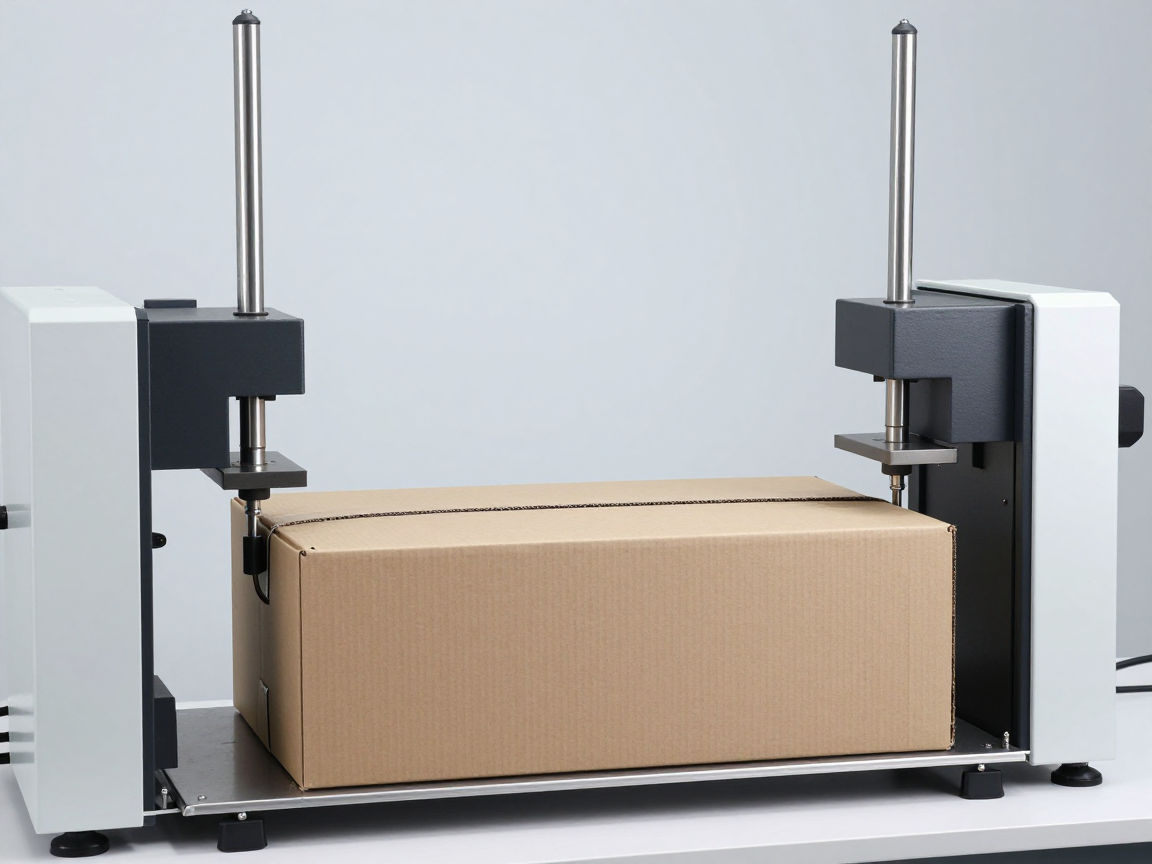
This article simulates clamp truck at DC. Operating rules:
- The vise is placed 3 in (76 mm) each way from bale corners (3 in. back and 3 in. deep), pressing against two opposite sides (e.g., sides 2 and 4).
- Pressing speed: 0.02–0.1 in/s (0.5–2.5 mm/s).
- Hold force 30 seconds then release; Repeat for a total of 5 compressions up with a pair of faces.
- The clamping force is calculated according to the formula and then clamped for approx 400 lbf (1800 N) to 2000 lbf (8900 N) (If calculating below 400, use 400; above 2000, use 2000).
- No perform clamping with Pails/Cylinders (drum/pillar).
Flat Push with lifting tongue (custom pallets only)
With the above shipment Custom pallets, add push post: use forklift blade to push the shipment 40 in (1 m) in 2–3 seconds. This is a “slide push” test on the floor — simulating pushing a pallet with the lifting blade without engaging the pallet. Note: if club quantity it is If the batch is intact, this step is required in the Type A chain.
5. When to use Type B or Type C?
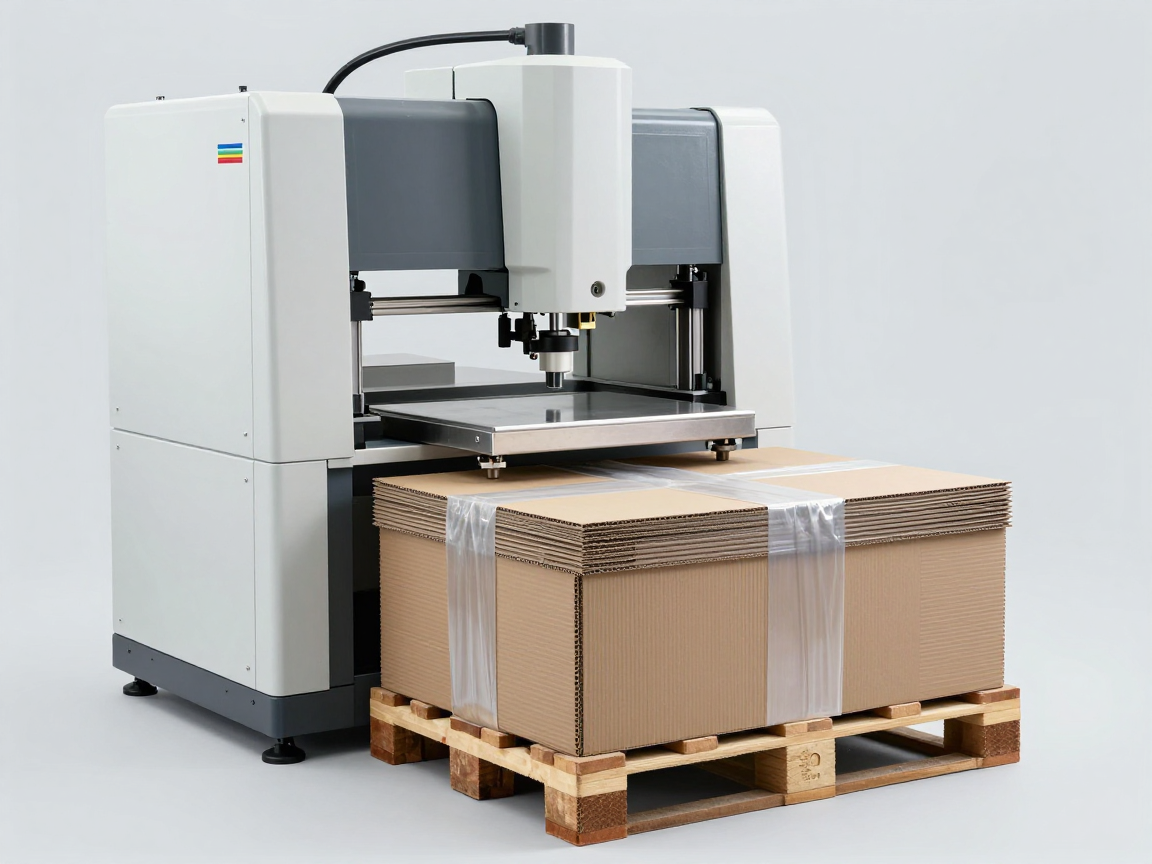
Type B and Type C are different just in size/mass (Large or Small), but the test sequence is different in nature: Type B tries equal horizontal impact + rotational fall (because large packages can no longer be picked up by hand), but Type C is equal two chains fall freely (because small bales are still hand-picked and dropped from many different heights). This is the easiest point to make mistakes when planning.
With Type B, a detail about vertical compression: if the top of the bale is in the test position ≥ 45 × 37 in (1140 × 940 mm) then the pallet must be placed on top; If smaller then No need for upper pallets.
6. Vertical compression force formula (easiest to make mistakes when making records)
Documentation for two groups of formulas. With Type B and Type C (floor-loaded):
Compression force (lbf) = [(108 − V) / V] × WG ×M
In which: V = height of package according to actual shipping position (in); WG = mass of entire unitized batch (lb); M = compensation factor — 2.5 for domestic, 3.0 for international. If the result is > 7500 lbf, use it 7500 lbf.
With Type A and Type D (palletized): must run trial calculation before:
Trial (lbf) = {[(108 − H) / H] × WG × M} + {(L − 1) × WC ×NL}
In which: H = height of entire pallet batch; L = number of layers in batch; WC = volume of one case/unit; NL = number of cases/units per class. If pallet batch no have individual cases/units in regular layers (e.g. a large product on a custom pallet), use L = 1, WC =WG, NL = 1.
Then, depending on the trial results and batch weight, choose one of the formulas 4a–4f: for example, Type A ≤ 750 lb (340 kg) but trial ≥ 1500 lbf, use the formula [(108−H)/H]×WG×M; If trial < 1500 lbf, use 1500 − [(L−1)×WC×NL]; and the threshold is similar to the 2500 lbf mark for lots > 750 lb. The result is always blocked on at 7500 lbf (33,400 N). This is the part that needs to be calculated carefully using a spreadsheet because a wrong threshold will result in a completely different compression force.
7. Random vibration spectrum — two PSD panels
6-SAMSCLUB used two different vibration spectrum; Here are the most important technical details when setting up a vibrating table:
Spectrum 1 — for pallet lots (Type A) and odd floor-loaded cases (Type B, C). Gross grms 0.464, duration 3 hours, theoretical peak-to-peak stroke 1.556 in (39.5 mm):
| Frequency (Hz) | PSD (G²/Hz) | Frequency (Hz) | PSD (G²/Hz) |
|---|---|---|---|
| 1.6 | 0.00090 | 15 | 0.00450 |
| 3,4 | 0.04750 | 20 | 0.00450 |
| 4,3 | 0.04750 | 30 | 0.00063 |
| 7 | 0.00175 | 80 | 0.00063 |
| 13 | 0.00175 | 200 | 0.00006 |
Spectrum 2 — for three stacked bales (TEST BLOCK 12 of Type A). Gross grms 0.552, duration 1 hour, stroke 1.649 in (41.9 mm):
| Frequency (Hz) | PSD (G²/Hz) | Frequency (Hz) | PSD (G²/Hz) |
|---|---|---|---|
| 1.6 | 0.00050 | 13 | 0.00405 |
| 3,4 | 0.06500 | 20 | 0.00405 |
| 4,3 | 0.06500 | 30 | 0.00115 |
| 6 | 0.00260 | 68 | 0.00115 |
| 11 | 0.00260 | 80 | 0.00090 |
| 200 | 0.00030 |
Return top load for vibration: if the total theoretical load of one shaft < 25 lb (11 kg) then do not use load on that axis; If ≥ 25 lb, round up to a multiple of 5 lb (2 kg). The document divides the load into one, two or four parts depending on the size of the top (18 in). For small and light cargo, the theoretical load is reduced, and for packages ≤ 30 lb (14 kg) or ≤ 2 ft³ then split in half formula results.
8. Equipment and supplies
| Category | Request | Standard |
|---|---|---|
| Climate conditioning | Record temperature and humidity; controlled air conditioning chamber | ISO 2233 or ASTM D4332 |
| Free fall | The machine falls freely | ISO 2248 or ASTM D5276 |
| Rotational drop (face) | Hard surface — steel or concrete | ISO 2876 or ASTM D6179 |
| Rotational drop (edge) | Hard surface + support pillow 3.5–4.0 in (90–100 mm) high and correspondingly wide, at least 8 in (200 mm) longer than the longest side of the bale | ISO 2876 or ASTM D6179 |
| Horizontal impact | Machine inclined or horizontal impact | ASTM D880 / D4003 / ISO 2244 |
| Hazard box — Concentrated Edge | Wooden box 12 × 12 × 12 in (305 mm), total volume 9 lb (4.1 kg); The impact edge is covered with corner steel (angle iron) | ASTM D5276 / ISO 2248 (machine) |
| Bridged Impact | Machine falls + hazard box on + two support pillows Place the two ends of the longest side parallel to each other and the shortest side parallel | ASTM D5265 (except impactor) |
| Vertical compression | Fixed table compressor, or load + load spreader | ASTM D642 |
| Top pallet | Standard block pallets 48 × 40 in (1200 × 1000 mm), “picture-frame” style, base wraps around entire perimeter; If the goods go on a custom pallet, use the same custom pallet | — |
| Clamping | Clamping machine; The vise is larger than the sides of the bale | — |
| Vibrate randomly | Vertical vibration system + holding device (no vertical movement restriction) | ISO 13355 or ASTM D4728 |
Three material details that are easy to get wrong:
- The concentrated edge hazard box must include Corner armored edges, 9 lb (4.1 kg) total and 12 in. each way. Ballast mass (if required) must be Concentrated loose material in bags, held in place by void fill — not rock or solid block.
- Right support block ≥ 8 in (200 mm) longer than the longest side of the bale and 3.5–4.0 in (90–100 mm) high/wide.
- The top pallet of the compression post must be the pallet full-perimeter-base picture-frame — because this type of base distributes compression force along the circumference, unlike regular pallets.
9. Number of samples and sample selection method
Documentation: a sample is a requirement for this procedure; If the sample is a pallet/unitized then it may be necessary withdraw individual cases/units from that lot for the next tests. When many identical samples are tested, All samples must pass all tests. ISTA requires running the procedure once with a specified number of samples, but recommended run the entire process five times or more with new samples each time.
How to get Type dependent sampling:
| Case | Number of samples for the next articles | How to choose |
|---|---|---|
| Type A, club quantity no intact batch | 3 | One in the upper layer, one in the middle, one in the lower layer (if possible); reuse for Test Block 10 (clamping) |
| Type B or Type C (clamping) | 1 | — |
| Type D | 3 | Choose from inside lot (if possible), one top, one middle, one bottom |
Two practical notes: (1) if the sample is sent to an ISTA Certified lab for testing, yes full over-package or Repackage with new packaging at the lab to ensure samples are in perfect condition; (2) pallet/skid used in the test must be of type and status typical of field reality.
10. Pass/fail criteria and documentation
Like all ISTA processes, 6-SAMSCLUB does not set itself “pass” criteria: Shipper, manufacturer, Sam’s Club buyer and/or related parties must confirm before testing four things:
- What is product damage?
- Allowable damage tolerance level (if any).
- Correct method to determine product condition at the end of the test.
- Acceptable packaging condition at the end of the test.
The parties must also provide information Input to determine the correct test parameter: club (store) quantity, pallet type, initial shipment configuration, approved container loading diagram, shipment details and distribution system configurations, typical climatic conditions… The documentation clearly states: many TEST BLOCKS need this information to perform properly — examples if available approved container loading diagram then only try the positions in the chart; If not, you must try all three positions.
Regarding documentation: documents require description configuration, materials and structure of the product and test packaging (seemingly small differences can cause large performance differences) and Imaging is strongly recommended with detailed description. With corrugated cartons, documentation recommends identifying and recording basisweight of paper/board — because quantification is a better indicator of texture and barrel equivalence than the ECT/Burst index (see also article Four pass/fail criteria when testing packaging).
11. Common errors when implementing 6-SAMSCLUB
- Misclassification Type. This is the most expensive error: Type A/B/C/D have completely different test sequences, model numbers and devices. Need to determine correctly original sending method and club quantity is an intact batch of pallets or not.
- Missed the “continued run” part of Type A. If the club quantity is not an intact lot, you must select 3 samples and continue testing Block 10, 5, 12 (and 13/14 if flat/long) — do not stop at step 8.
- Do not use the top pallet for compaction. Must be a full-perimeter-base picture-frame 48 × 40 in block pallet; For Large top cases < 45 × 37 in, the top pallet is not required.
- Wrong calculation of compression force. Wrong compensation factor M (2.5 domestic vs 3.0 international), wrong V/H height, or wrong trial calculation branch all lead to wrong compression force — need to make a calculation and check again.
- Confusion of two vibration spectra. The pallet/floor-loaded spectrum is Grms 0.464 for 3 hours; three-bale stacking spectrum is Grms 0.552 in 1 hour. Using the wrong PSD table means trying another lesson.
- Forget top load when vibrating Types B, C. Top load 0.0035 lb/in³ (96 kg/m³), divided into 1/2/4 parts according to top size (18 in mark), and omitted if total theoretical load < 25 lb (11 kg).
- The support pillow is too short or the height is wrong. Pillows should be 3.5–4.0 in (90–100 mm) high/wide and ≥ 8 in (200 mm) longer than the longest side of the bale.
- Hazard box “fabricated” incorrectly. Concentrated Edge Hazard Box must be 12 × 12 × 12 in, total 9 lb (4.1 kg) and has angled steel-coated edges; Ballast must be loose material in a bag, held by void fill.
- Placing the clamp in the wrong position. The vise must be retracted 3 in. (76 mm) both horizontally and in depth from the corner of the bale, and must be pressed 5 times × 30 seconds.
- Try Type D vibration. Type D no Vibration test request; instead the air conditioner is cold required and the string is intentionally shortened for quick testing.
- Forget Slipsheets. Floor-loaded goods unitized on slipsheet but sent as a whole to the club must be placed on a standard pallet and tested as Type A.
- Do not try all three positions without a loading diagram. If there is no approved container loading diagram, Type B/C must try all three compression and vibration positions; Only diagrams can narrow the pose.
12. What does cost and time depend on?
Four governing variables: Type (Full Type A is the longest sequence — 13 steps, including tongue lift; Type D is the shortest sequence); model number (3 samples for Type A when the club quantity is not a whole lot, and all 3 samples must pass); time chain — 12 hours of pre-conditioning plus controlled conditioning, drop/impact exercises, Keep compress for 1 hour, vibrate 3 hours (Type A/B/C), and Type A additionally vibration stacking 1 hour; and manufacturing supplies — picture-frame top pallet, bearings, corner armored hazard box, top load for vibration, holding device. Article What does the cost and time of ISTA packaging testing depend on? Analyze further how to compare quotes between processes.
13. Frequently asked questions
How are 6-SAMSCLUB and 6-AMAZON.COM different?
Both are Member Performance — built by an ISTA member for its own infrastructure. 6-SAMSCLUB serves the Sam’s Club system (mainly pallet/floor-loaded to club stores), while 6-AMAZON.COM serves parcel goods to Amazon customers (SIOC and Over Boxing). Articles in the 6 Series are not interchangeable.
How do I know if my goods are Type A, B, C or D?
Answer two questions: are goods goods? fresh (Perishable) no → if yes, Type D. If no: original sent goods on pallets (whether standard or customized, including the case of unitizing on a slipsheet and then placing it on a pallet) is Type A; send floor-loaded then rely on Large/Small to separate B and C.
How is Type D different from the other Types?
Three points: air conditioning is cold required (not optional), Don’t try vibrating, and vertical compression just holds 30 seconds instead of 1 hour. The series was shortened to limit changes in frozen/cold sample characteristics.
Why does 6-SAMSCLUB have “push with lifting tongue” and “horizontal clamp” exercises?
Because Sam’s Club infrastructure uses many forklifts and clamp truck at the Distribution Center, and the shipment configuration may be changed at the DC. These two exercises simulate exactly those effects — no drops or vibrations on the road.
How to test if the bale is both flat and long?
Must try like Elongated — which means running Bridged Impact, not Concentrated Edge Impact. The document clearly states this priority rule.
Is it mandatory to run 5 times?
Not required: ISTA requires the procedure to run once with the specified number of samples, but recommended Run the entire procedure five or more times using the new sample to get a sufficiently confident conclusion about representative performance.
What is club quantity and why is it important?
It is a packaged-product number that is usually sent in one go to replenish a club/store. It’s important because in the Type A string: if club quantity it is If the batch of pallets is intact, stop after step 8 (no need for further testing); if no Then you have to choose 3 samples and continue running the horizontal compression, falling, and stacked vibration exercises.
14. Conclusion
ISTA 6-SAMSCLUB is a Member Performance process for goods entering the Sam’s Club system in the United States, built from a large-scale field measurement program. Three things to remember: The Type A/B/C/D classification step determines the entire test plan; Test series covers typical warehouse injuries — horizontal impact, face/side drop, 1 hour vertical compression, 3 hours vibration, horizontal clamping simulating a clamp truck and pushing with lifting blades; and Vertical compression must be calculated according to the formula with compensation factor 2.5 (domestic) / 3.0 (international), while vibration uses two separate PSD spectra (Grms 0.464 for pallet/floor-loaded, 0.552 for three stacked packages).
Before placing a trial order, businesses need to prepare: initial shipping method (pallet or floor-loaded) and type of pallet; club quantity is the whole lot; Three-dimensional size and volume to classify Large/Small; whether the product is fresh or not; origin point in or outside the United States (to choose domestic or international level); and approved container loading diagram if available.
Reference standard version: article content is based on document ISTA 6-SAMSCLUB (2010 version) — Packaged-Products for Sam’s Club® Distribution System Shipment. The test levels are a summary for reference; When doing so, you must use the official standard, the current version of ISTA and comply with the current requirements of Sam’s Club.
References
- ISTA 6-SAMSCLUB, 2010 version — Packaged-Products for Sam’s Club® Distribution System Shipment, International Safe Transit Association
- ISTA — Test Procedures & Projects (current catalog, accessed September 28, 2026)
- ISO — ISO 2233, ISO 2248, ISO 2876, ISO 2244, ISO 13355 (referenced methods)
- ASTM — D4332, D5276, D6179, D880, D4003, D642, D5265, D4728 (equivalent methods cited)
Related articles
- ISTA 6-AMAZON.COM What is SIOC? Packaging test procedure sent in the product’s own box
- What is ISTA 7D? Temperature testing procedures for shipping packaging
- What Is the ISTA Standard? How to Choose the Right Transport Packaging Test (3A, 6-Amazon, ASTM D4169)
- What is ISTA 6-AMAZON.COM Over Boxing? Procedure for testing outer box packaging for goods sent to Amazon
- What is ISTA 3E? Procedure for testing unitized load traveling by full truck (FTL)
- What is ISTA 3H? Bulk Transport Containers test procedure
- ISTA Packaging Test Pass/Fail Criteria: 4 Things You Must Decide Yourself
Discuss further
Disclaimer and acknowledgment of intellectual property rights
This article is an explanatory content compiled by us for the purpose of introducing and disseminating knowledge. Article is not a translation, copy, abridgement or replacement of the parent standard, and is not evaluated, approved or sponsored by ISTA (International Safe Transit Association)..
The entire content of ISTA standards is copyrighted by the International Safe Transit Association, Inc. (East Lansing, Michigan, USA) — All rights reserved. ISTA® and the ISTA logo are registered trademarks of the International Safe Transit Association, Inc.; Mentioned in this article are for guidance purposes only and do not imply any affiliation, partnership or sponsorship.
Sam’s Club® are trademarks of their respective owners; are mentioned to indicate technical standards and do not imply affiliation or sponsorship.
Article content For reference only; Before applying for any purpose — testing, evaluation, certification or commercial decision-making — the reader should consult the original ISTA document and applicable Sam’s Club requirements directly, and consult an accredited testing facility as needed.
When performing testing, it is mandatory to use the official, current version of the standard, obtained directly from ISTA. We do not redistribute ISTA materials in any form. Information in this article may be out of date with the current version of the standard.
See more: Copyright Policy & Disclaimer by ticforall.com.