

ISTA® 3E is a belonging process Series 3 — General Simulation Performance Test (general simulation), for unitized load is prepared to go through the system full truck — Full Truckload (FTL), which means the whole trip only carries unitized load, usually retail products of the same type, towards a single destination — typically from factory to distribution center.
If 3A simulates individual packages in the parcel network and 3B simulates multiple shipments, then 3E correctly simulates the problem of unitized load traveling in whole trucks: stacking throughout the journey, impacts along the vehicle body when braking and cornering, and the stability of the entire load when loading and unloading. The article presents the definition of unitized cargo, seven steps of the procedure, three ways to perform the compression step and points to prepare before testing.
1. What is ISTA 3E?
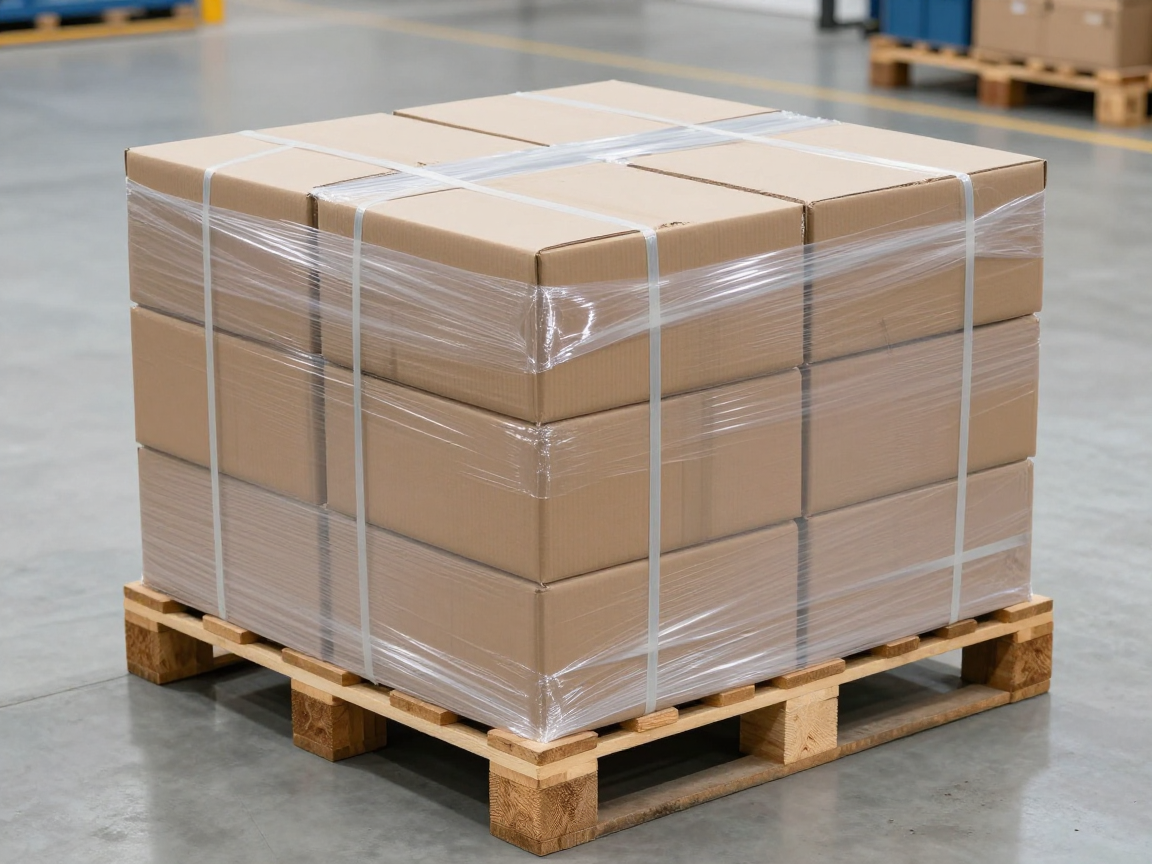
First, you need to understand the definition used in the document: 1 unitized cargo block is one or more products or packages, usually placed on skids or pallets, but always secured or bound for circulation as a single unit. Example in the literature: a shrink-wrapped pallet containing many individual boxes; a machine that does not pack boxes tightly onto pallets; or a pallet with tray, tube and carton cover.
This procedure is used to:
- Reviews protection performance of goods and packaging against vibration, impact and other stresses commonly encountered during loading, unloading and transportation.
- Reviews stability of the entire block of goods — something that procedures for individual packages do not check for.
The document also clearly states the limits: 3E test levels is based on general data and may not be representative of a particular distribution; packaging and products are evaluated together, not separate; and some shipping conditions such as Abnormal humidity, pressure or handling may not be covered.
Reference documents: ISTA 3E 2016 — Unitized Loads of Same Product (latest technical change April 2017).
2. Most common misunderstanding about ISTA 3E
- “Once palletized, 3E can be used for all cases.” No. 3E is only correct when the whole trip bring unitized load a destination. Pallets for multiple shipments belong to the palletized/skidded group of 3B.
- “REACHing 3E is a product that is not damaged no matter which channel it goes to.” 3E stops on the journey to the distribution center. If the goods are still separated from the center to the point of sale, that part not in 3E — the documentation clearly indicates that 3F should be used in this case.
- “3E only checks the packaging.” No. 3E reviews packaging and product together, and evaluate stability of the cargo — so it also checks stacking configurations, wraps, belts and pallets.
- “3E’s test level is representative of our distribution channel.” The documentation is straightforward: test levels are based on general data, which may not be representative of any particular distribution.
3. What does ISTA 3E test? — 7-step sequence

The items are performed in the following order, on the same sample block. Note the two impact stages at either end of the procedure, surrounding the compression and vibration sections:
| # | Category | Test level/requirement |
|---|---|---|
| 1 | Pre-conditioning | Ambient temperature and humidity — required |
| 2 | Controlled air conditioning | According to the table of standards — option |
| 3 | Impact | Choose one of two: inclined impact (conbur) 48 in/s (1.2 m/s), or horizontal impact 48 in/s (1.2 m/s) — required |
| 4 | Falling rotating edge | Height depends on cargo volume — required |
| 5 | Compression | Choose one of three: loading and unloading machine — calculated force × 1.4; loading and holding machine — computational force; or use weights and spreader plates — calculated load — required |
| 6 | Vibrate randomly | Level Grms 0.54 — required |
| 7 | Falling rotating edge | Repeat, height depends on cargo volume — required |
Two points worth noting about the structure: first, Falling rotated edges appear twice — before and after compression and vibration; Second, the compression step is the simulation step realistic stacking load that the cargo block must bear, so it cannot be ignored when the cargo travels intact.
4. Accompanying equipment and method standards
| Category | Equipment | Method standards |
|---|---|---|
| Climate conditioning | Air conditioning chamber with temperature and humidity recording device | ASTM D 4332 |
| Inclined impact | Inclined impact testing machine (conbur) | ASTM D 880 |
| Horizontal impact | Horizontal impact test system | ASTM D 4003 |
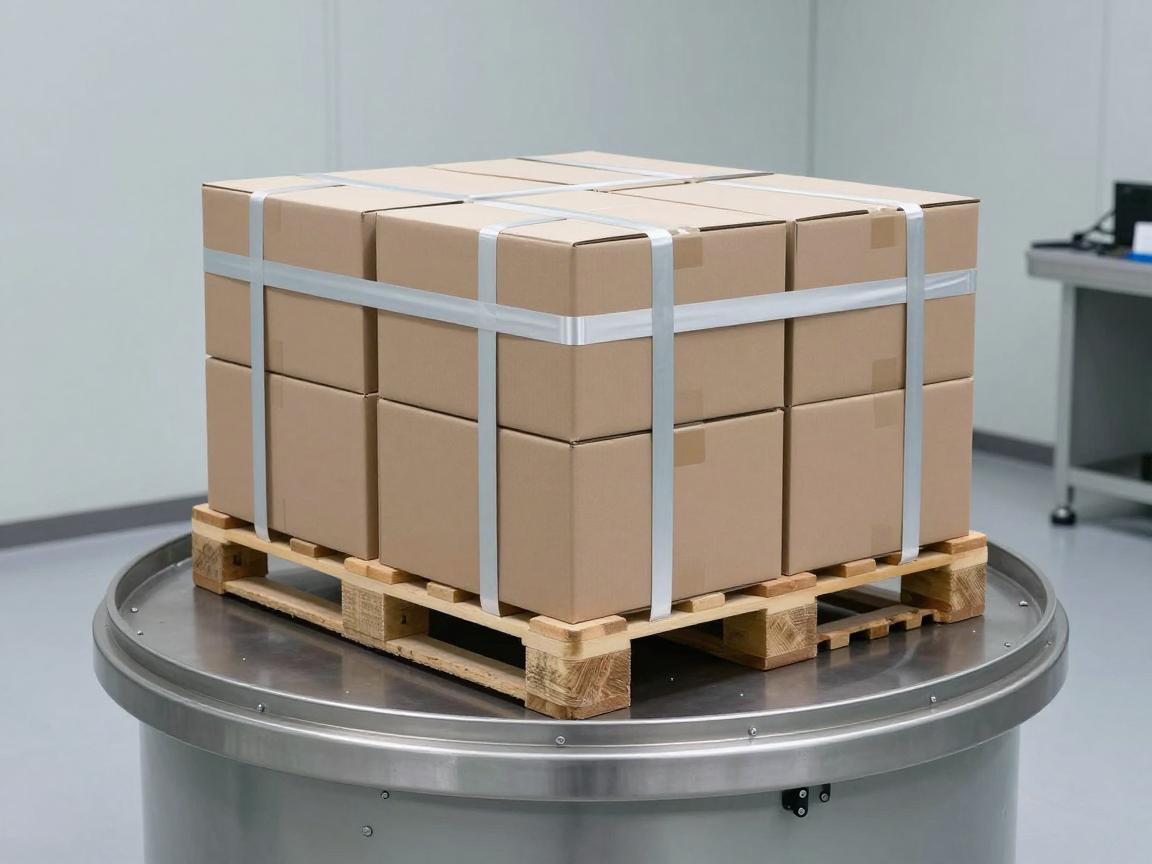
| Compression — load and then release | Compression testing machine (both fixed or floating tables can be used) | ASTM D 642 |
| Compression — loading and holding | Load with load spreader plate | The documentation does not cite a method standard for this approach |
| Vibrate randomly | Random vibrating table system | ASTM D 4728 |
Two equipment requirements are notable in the compression step:
- With how Load then release, required documents Use the exact same type of pallet as the pallet on which the goods are transported, and place it on top of the sample block — to compress the download to look like the real thing.
- With how Use load and spreader plates, documents It is recommended to install a safety latch Support the spreader plate and weights, in case the load collapses quickly, causing damage or accident.
5. Number of samples and sample preparation
- A block of unitized load is the required level for this process.
- ISTA It is recommended to perform the procedure 5 or more times, using a new sample for each test.
- Sample must be genuine, not yet tested; If not available, the replacement sample must be as similar as possible to the actual product.
- The package has actually been shipped is not considered a standard sample: goods sent to the testing laboratory must be Excess packaging for shipping, or new packaging at the testing laboratory.
- The document emphasizes the work Fully recorded configuration, materials and construction methods The goods and packaging have been tested and included photo, because small differences can cause large differences in performance.
- And as with all ISTA procedures, shippers must determine for themselves before testing: what constitutes damage, the allowable level of damage, how to determine product condition, and acceptable packaging condition after testing — see 4 criteria businesses must determine for themselves before trying.
6. When should ISTA 3E not be used?
The 3E documentation itself gives quite clear redirection instructions:
| Real situation | Should switch |
|---|---|
| Retail packages are sent no Unitization from distribution centers to retail points | 3F |
| Goods shipped via LTL multiplex system, multiple senders, multiple destinations in the same vehicle | 3B |
| Parcels travel separately within the parcel delivery network | 3A |
| Only screening for durability is required at the design stage | Series 1 (1E · 1G · 1H for heavy and unitized load) |
| Need a partial simulation, fewer categories | 2A/2B |
| Journeys involving moisture, pressure or unusual loading and unloading are the main risks | Outside of 3E — documents stating these conditions may not be covered |
7. Common errors when implementing ISTA 3E
- Try 3E and then use the results for separate trips. 3E only ends at the distribution center; The section from the center to the point of sale requires 3F.
- Using the wrong pallet in the compression step. With loading and releasing, the required material is placed on top of the sample block the right type of pallet like the goods being transported on it — using another pallet causes the wrong way of conveying.
- Ignore the safety pin in load usage. The document recommends safety pins to support the spreader plate and weights; Missing latches are a safety risk when the cargo block collapses.
- Do not prepare samples “as is”. Items that have been shipped no longer represent standard condition — must be overpackaged when sent to the testing laboratory or repackaged at the laboratory.
- Evaluate product packaging separately. 3E views packaging and product as one entity; Conclusion based only on the condition of the box and ignoring the condition of the product inside is a misreading of the procedure.
8. What does the cost and time of ISTA 3E testing depend on?
3E has seven steps, but cost is usually influenced by three heavy factors: compression step (requires compressor or loader and spreader plate, plus pallet placed on sample block), inclined or horizontal impact step (requires conbur machine or horizontal impact system), and weight and size of the entire block of goods — determines the rotating drop height and the ability to load and unload sample blocks into the device. The number of samples is also variable: the minimum is one block, the recommendation is 5 or more. Common factors: What does the cost and time of ISTA packaging testing depend on?
9. Frequently asked questions
In what way is 3E different from 3B?
Shipping way. 3E is for a unitized all-cargo trip to one destination (FTL). 3B is for multiple shipments (LTL), where packages from multiple shippers and multiple destinations are mixed in the same vehicle.
My goods travel in one vehicle to the distribution center, then separate into stores — how many processes are needed?
Two. 3E for factory route → distribution center (unitized load), and 3F for central route → retail point (single package, not unitized). Document 3E clearly states this instruction.
There are three ways to compress, which one should you choose?
The document allows to choose one of three: load and release machine (calculated force × 1.4), load and hold machine (calculated force), or use load and spreader plate (calculated load). You should finalize the method of implementation with the testing laboratory in advance, because the method chosen affects the equipment, time and how to read the results.
Does this procedure evaluate the stability of the cargo block?
Yes — the document clearly states that one purpose of 3E is to evaluate the stability of the cargo, in addition to evaluating its performance against vibration and impact.
Why doesn’t 3E cover humidity and pressure?
That is a limitation that is explicitly stated in the document: some shipping conditions such as humidity, pressure or unusual handling may not be covered by the procedure. If this is the main risk of your product, you should discuss additional items with the testing laboratory separately.
10. Conclusion
ISTA 3E is a general simulation for Unitized cargo volumes go by full truckload (FTL), from factory to distribution center. Points to grasp: 3E rating packaging and product together, and evaluate stability of the cargo; sequence yes seven steps, which stands out as compression step simulates stacked loading and two falling rings rotating edges placed before and after the compression and vibration steps.
The two most common mistakes when implementing: using 3E for the separate separation process (3F must be used), and using pallets of a different type in the compression step (the document requires the same type of pallet as the real product, placed on top of the sample block).
References
- ISTA — Test Procedures (list of current series and procedures, accessed September 27, 2026)
- ISTA — Procedure 3E — Overview (free overview published by ISTA; not enough to conduct testing)
- ISTA — Certify Your Lab (information about testing laboratory certification)
- ASTM — method standards cited in the procedure: D 642, D 880, D 4003, D 4332, D 4728
Related articles
- What is ISTA 3L? E-commerce fulfillment process
- What is ISTA 3K? Fast-moving consumer goods packaging test procedure in European retail chains
- What is ISTA 3H? Bulk Transport Containers test procedure
- What is ISTA 3F? Packaging test procedure for individual packages on mixed pallets at retail intersections
- What Is the ISTA Standard? How to Choose the Right Transport Packaging Test (3A, 6-Amazon, ASTM D4169)
- What is ISTA 3A? Packaging test procedure for parcel delivery system (Parcel Delivery)
- What is ISTA 3B? Packaging test procedure for LTL shipping (joint shipments)
- What Is ISTA 1E? The Test Procedure for Unitized Loads on Pallets
- What Is ISTA 1G? Random Vibration Testing for Packages Up to 150 lb (68 kg)
- What Is ISTA 1H? Random Vibration Testing for Packages Over 150 lb (68 kg)
- What is ISTA 2B? Partially simulated packaging test procedures for packages over 150 lb (68 kg)
- ISTA Packaging Test Pass/Fail Criteria: 4 Things You Must Decide Yourself
- What Drives the Cost and Lead Time of an ISTA Packaging Test?
Discuss further
Disclaimer and acknowledgment of intellectual property rights
This article is an explanatory content compiled by us for the purpose of introducing and disseminating knowledge. Article is not a translation, copy, abridgement or replacement of the original standard, and is not evaluated, approved or sponsored by ISTA (International Safe Transit Association)..
The entire content of ISTA standards is copyrighted by the International Safe Transit Association, Inc. (East Lansing, Michigan, USA) — All rights reserved. ISTA® and the ISTA logo are registered trademarks of the International Safe Transit Association, Inc.; Mentioned in this article are for guidance purposes only and do not imply any affiliation, partnership or sponsorship.
Article content For reference only; Before applying for any purpose — testing, evaluation, certification or commercial decision-making — the reader should refer directly to the original ISTA document (the most complete and up-to-date version) and consult an accredited testing facility when necessary.
When performing testing, it is mandatory to use the official, current version of the standard, obtained directly from ISTA. We do not redistribute ISTA materials in any form. Information in this article may be out of date with the current version of the standard.
See more: Copyright Policy & Disclaimer by ticforall.com.