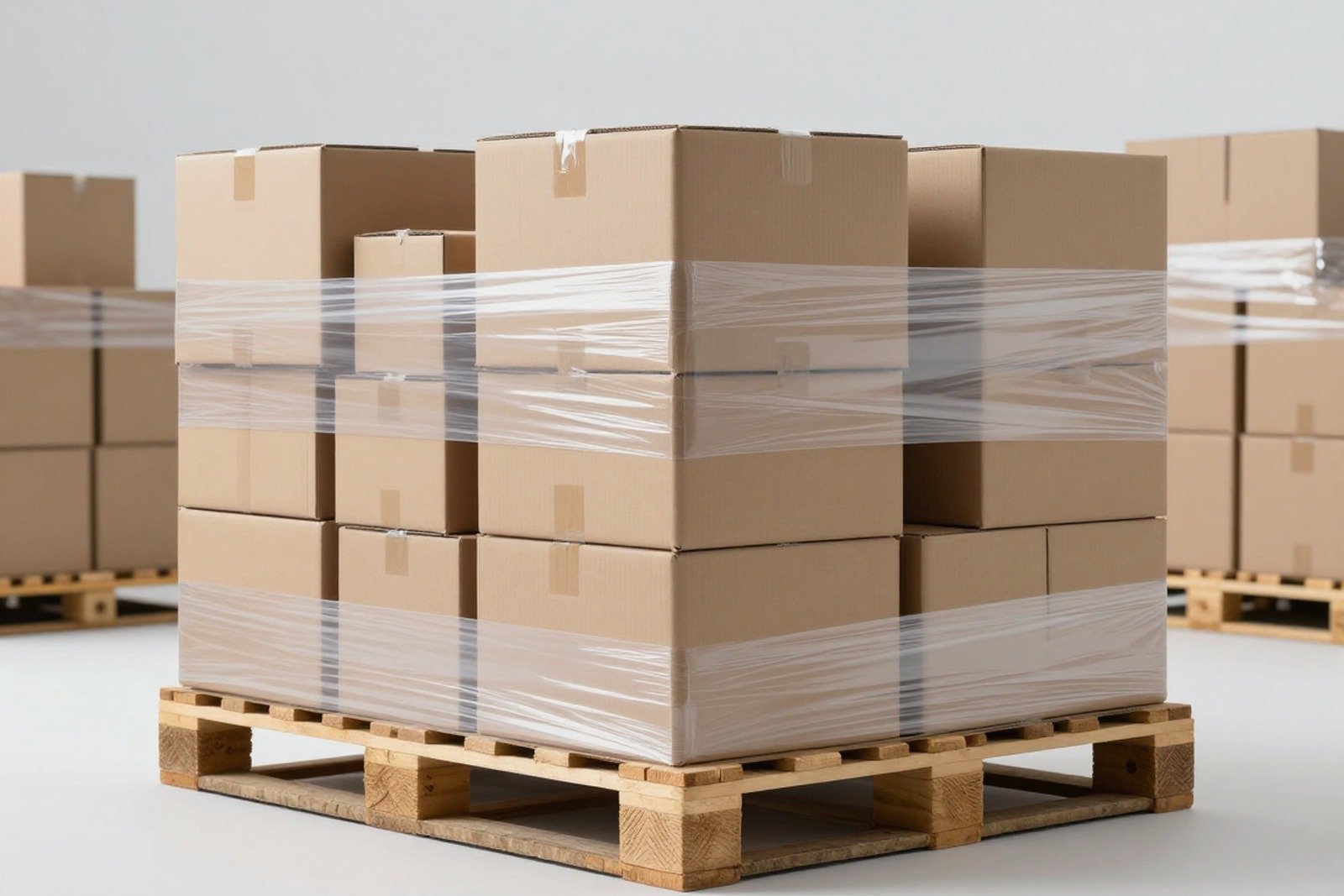
ISTA® 3F is a belonging process Series 3 — General Simulation (general simulation), for Each individual package weighs 100 lb (45 kg) or less sent as part of mixed pallets (mixed pallet load), following a regional route — typically from a distribution center (DC) to a retail store.
What makes 3F different from most other processes in the same set: The test unit is still a single bale, but the test context is a mixed pallet. Your package does not travel alone, but is stacked with goods from many other suppliers on the same pallet, subjected to stacking loads from the packages above, subjected to vibrations of the whole block, and handled as a pallet, not individual packages. Therefore, 3F has both a compression category (like the logistics test) and a falling category (like the single bale test).
This article presents the scope of application of 3F, the sequence of 6 test stages, how to calculate compression force, random vibration spectrum, how to arrange 6 samples, required equipment and points to prepare before sending samples to the testing laboratory. If you are considering 3F vs 3A or 3E, part 9 of the article directly compares these three processes.
1. What is ISTA 3F?
According to the original document, ISTA 3F is post general simulation test for “packaged-products that are shipped as an individual package from a distribution center to a retail outlet in a mixed pallet configuration” — that is, individual packages are sent from the distribution center to the retail outlet in a mixed pallet configuration.
Four limitations ISTA clearly states in the overview, which should be discussed with customers before using the results:
- Test levels are based on general data and maybe not representative for a specific retail distribution system.
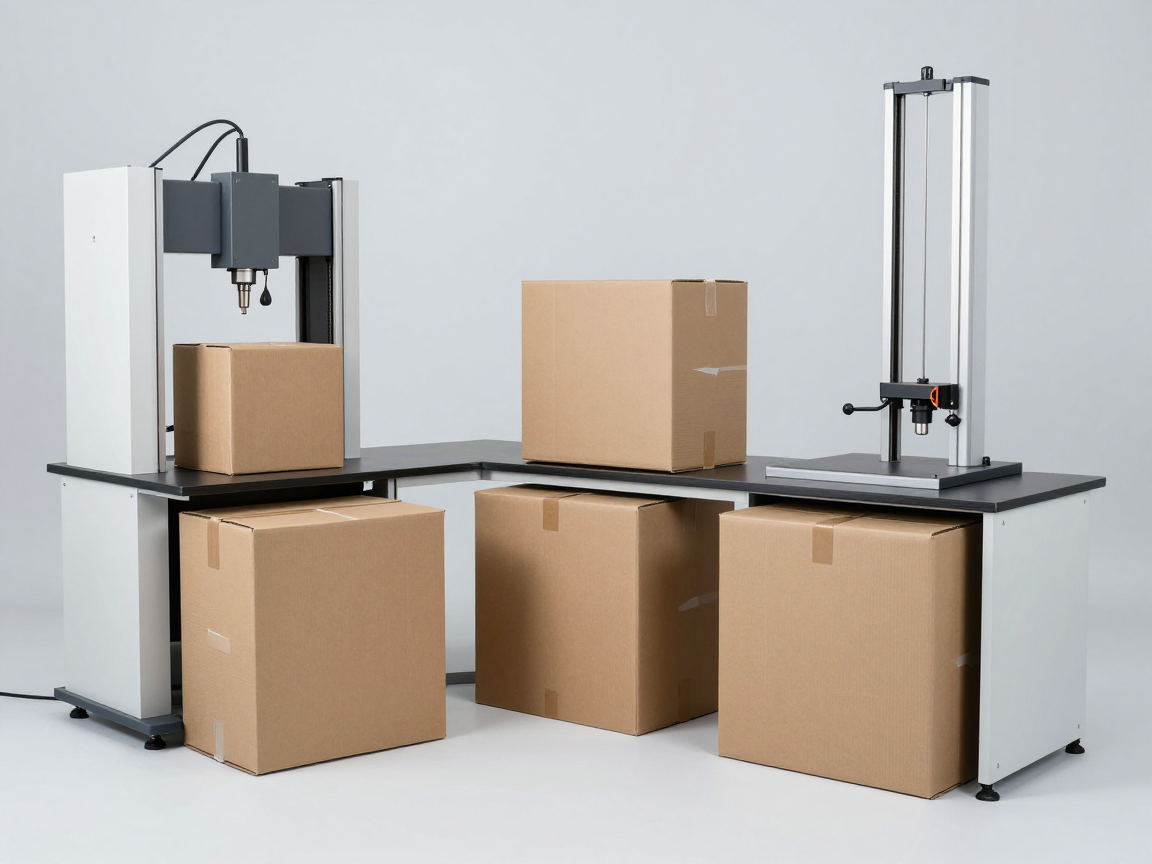
- Products and packaging are evaluated together, not separate.
- Some shipping conditions are not covered: humidity, pressure, or abnormal handling.
- Series 3 does not automatically comply with carrier packaging regulations (carrier packaging regulations). If the buyer requires compliance with carrier regulations, it needs to be checked separately.
The volume range is 100 lb (45 kg) or less for an individual package. This is the threshold that needs to be determined first: packages weighing more than 45 kg usually no longer follow the retail mixed pallet model, but move to other process groups such as 3B (LTL) or 3E (unitized load).
2. Most common misunderstanding about ISTA 3F
Most common misunderstanding: Consider 3F the “pallet test”. Not. The unit subject to evaluation is still single case — ISTA requires 6 separate packages and tracks the status of each package. Pallets are just that context creates loads (stacking, vibration, loading and unloading) that the package must endure. If your goal is to value the entire pallet as a shipping unit, the correct procedure is 3E, not 3F.
Second misunderstanding: think 3F only has vibrato and compression. Actually 3F does two falling stages — one leg before vibration (12 in and 30 in) and one leg after vibration (18 in and 24 in, with the latter also falling on corners and edges, not just faces). This “drop – shake – fall” structure simulates the real life cycle of a package on a mixed pallet: loading onto the pallet, long-distance transportation, then unloading at the store.
Third misunderstanding: I thought I had to make real pallets according to the customer’s configuration. No need. What you need to know is the bale mass, external dimensions, and the number of layers that can be placed on it — serving the formula for calculating compression force. Setting up the sample stacking column on the vibrating table is pre-determined in the procedure.
3. What does ISTA 3F test? — 6-stage sequence
The procedure runs sequentially on the same set of samples, in the fixed order below. Accumulated damage from the previous pass is part of the result — do not replace the sample or rest it in between.
| # | Category | Test type | Test level | Required |
|---|---|---|---|---|
| 1 | Preliminary atmospheric conditioning | Temperature and humidity | Ambient laboratory conditions, 12 hours | Required |
| 2 | Controlled atmospheric conditioning | Temperature and humidity | Choose from conditions table (72 hours) | Options |
| 3 | Compression | Compressor or counterweight + load distribution plate | According to the calculation formula (see section 4) | Required |
| 4 | Shock — fall | face drop | 12 in (310 mm) and 30 in (760 mm), side 3 | Required |
| 5 | Vibration | Vibrate randomly | Spectrum “Steel Spring Truck”, Grms total 0.54, 30 min | Required |
| 6 | Shock — fall | Falling face, falling corner, falling edge | 18 in (460 mm) and 24 in (610 mm) | Required |
Stage 1 — pre-conditioning (mandatory). Samples were stored at internal laboratory temperature and humidity 12 o’clock before trying. This is a state preparation step, not a simulation of extreme conditions.
Stage 2 — controlled air conditioning (optional, 72 hours). Use only when it is known that extreme climatic conditions are harmful to the product. ISTA requires use highest limit of the product and recommended use both the highest and lowest limits. Commonly used levels: extreme cold −29°C; cold and humid 5°C/85% RH; Control conditions 23°C/50% RH; hot and humid 38°C/85% RH; hot, humid, then extremely hot (38°C/85% then 60°C/30%); high temperature 50°C; extreme dry heat 60°C/15% RH; extreme cold −18°C. Each selected conditioning chain must run a separate full test, with a new sample. After exiting the air conditioning chamber, the remaining stages must be performed as soon as possible.
4. Stage 3 — compression: how to calculate compression force
This is the technical part that makes many businesses passive when receiving quotes, because of compression not a fixed number which is calculated from the weight of the package and the number of layers that can be placed on it.
Symbols in the formula:
- Wt — total weight of the package (lb or kg), including packaging.
- S — the total number of bales that can be in a column in the warehouse, including the bottom bale.
- F — compensating factor, used by default F = 3; Using other values must have an explanation in the test report.
- 1.4 — factor that takes into account compression time, only used for “apply and release” method.
When the actual number of bale layers is unknown, ISTA gives an estimate formula based on the stack height: S = 196 in ÷ H (metric system: S = 5 m ÷ H), rounded up to an integer. Where 196 in (5 m) represents one tall warehouse stacking column; The best way is still to determine S from the actual warehouse.
| Device/method | Formula (Inch-Pound system) | Formula (metric system) |
|---|---|---|
| Compressor — apply and release | Wt × (S − 1) × F × 1.4 — units lbf | Wt × (S − 1) × F × 9.8 × 1.4 — units N |
| Compressor — apply and hold | Wt × (S − 1) × F | Wt × (S − 1) × F × 9.8 |
| Counterweight + load distribution plate (apply and hold) | Wt × (S − 1) × F — unit lb | Wt × (S − 1) × F — unit kg |
Important note: if never there’s a possibility of having something stacked up in the warehouse, then S = 1, the calculated value is 0, and no need to try compression. This is a point that can help reduce costs, but it must be determined honestly: goods traveling on mixed pallets almost always have an upper layer.
Regarding running method: the sample is placed with the underside in the correct storage position; If the actual folding position is unclear, place it in the most stable position (3rd side down). The two compression plates press against each other at speed 0.5 in/min (13 mm/min). With the apply and hold method, the force is held 1 hour then discharge. With the counterweight method, the load is held for 1 hour on a rigid load distribution plate, larger than the top surface of the sample.
5. Stage 5 — random vibration: “Steel Spring Truck” spectrum
Vibration stage of 3F used vibrate randomly with spectrum ISTA Steel Spring Truck (steel spring truck) and level Gross grms 0.54. This is the vibration spectrum shared by many Series 3 road processes — that is why tests 3A, 3B, 3E and 3F have similar vibrations, differing in sample arrangement and order of stages.
Breakpoints need to be loaded into the vibration controller to create a spectrum:
| Frequency (Hz) | PSD level (g²/Hz) |
|---|---|
| 1.0 | 0.00072 |
| 3.0 | 0.018 |
| 4.0 | 0.018 |
| 6.0 | 0.00072 |
| 12.0 | 0.00072 |
| 16.0 | 0.0036 |
| 25.0 | 0.0036 |
| 30.0 | 0.00072 |
| 40.0 | 0.0036 |
| 80.0 | 0.0036 |
| 100.0 | 0.00036 |
| 200.0 | 0.000018 |
The theoretical journey needed for this spectrum is 45.13 mm (1.777 in) peak-peak. Vibration time: 30 minutes.
How to arrange 6 samples on a vibrating table — the easiest part to get wrong:
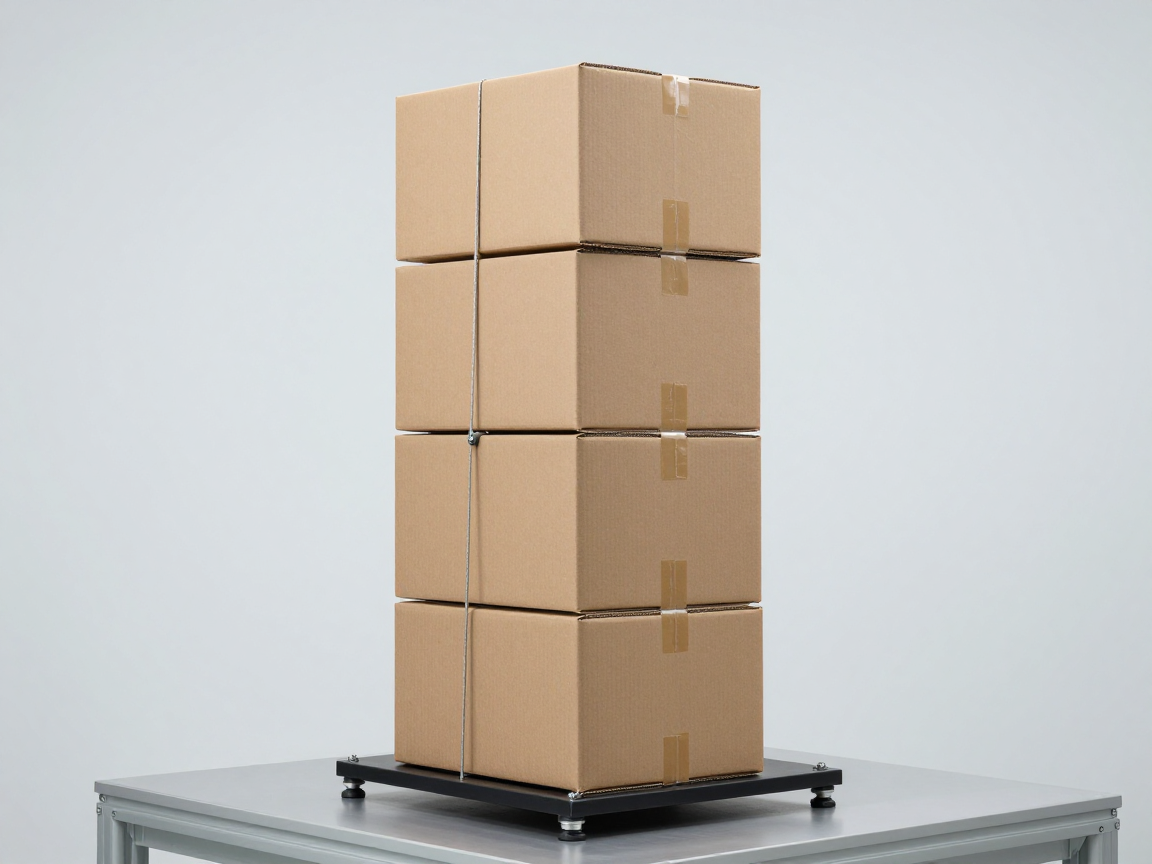
- The first three samples (1, 2, 3) are arranged in columns in the middle of the vibrating table, use a column stack fixing device, all of them side 3 facing down. Order: sample 1 on the bottom, sample 2 in the middle, sample 3 on top.
- If the column height exceeds 108 in (2,743 mm), remove the top sample from the column (and check again; if it’s still too high, remove the middle sample). The discarded sample is placed separately on the vibrating table with side 3 facing down.
- The remaining three samples (4, 5, 6) are not ranked, each model has one position: 4-sided model 3 down, 5-sided model 4-down, 6-sided model 6 down – placed spread on the remaining vibrating table.
- Fixed equipment Vertical movements must not be restricted of sample. This is an important technical condition: improper fixation will render meaningless results because the sample is not subjected to the correct level of vibration.
6. Stages 4 and 6 — two drops surrounding the shaking stage
Stage 4 (before shaking): each sample is released face fall at two heights — 12 in (310 mm) and 30 in (760 mm), all fall in face 3. The different falling heights reflect two different loading and unloading situations in the regional retail chain.
Stage 6 (after shaking): each sample is released 18 in (460 mm) on side 3, then release 24 in (610 mm) According to the specific pose of each model:
| Sample | 1 | 2 | 3 | 4 | 5 | 6 |
|---|---|---|---|---|---|---|
| Drop position 24 in (610 mm) | face 3 | corner 3-4-5 | edges 3-6 | corner 2-3-5 | edges 2-3 | edges 2-5 |
The numbering of faces/edges/angles follows the general ISTA convention: an edge is named by the two faces that make it up (for example, edge 3-6), an angle is named by the three faces that meet there (for example, angle 2-3-5). Before testing, the sample is placed in the actual transport position; If the shipping position can be changed, place it so that the main shipping label position is on the top side. With carton included manufacturer’s joints (manufacturer joint), the procedure has separate instructions for determining side 1 and side 2 — this step should be done properly before starting, because all subsequent fall positions depend on it.
7. Accompanying equipment and method standards
| Category | Equipment | Method standards |
|---|---|---|
| Climate conditioning | Temperature and humidity recording device; air-conditioned chamber if choosing the optional route | ASTM D4332 |
| Compression | Compressor (fixed table or floating table both work) or counterweight + load distribution plate | ASTM D642 |
| Free fall | Free fall drop test system | ASTM D5276 |
| Vibrate randomly | Random vibration system with universal control + column fixing device | ASTM D4728 |
8. Number of samples and sample preparation
ISTA 3F requires 6 samples for a full run — a figure that is higher than many other processes, and is why 3F typically costs more than 3A. These six samples are not for “try again if it fails”, but for distributed according to stage 5 structure: three samples stacked in columns (bearing stacked load) and three samples lying oddly in three different positions. Therefore, if a sample fails midway, it cannot be “replaced” with another sample without disrupting the structure of the test.
ISTA also states: requires the procedure to be performed one time, but recommends performing the procedure five or more times using new samples with each test. That is, one run is the minimum; To obtain conclusions representative of the actual performance of the packaging, it is necessary to repeat 5 or more times with a new sample each time. This is a point that needs to be agreed upon with the customer right from the time of obtaining a quote, because the number of iterations directly affects the cost.
Samples must be packaging and products not yet tested. If the goods are sent to the laboratory by ordinary transport, the packaging must be over-packaged for that stage of transport, or Reclose with new packaging at the laboratory — otherwise, the results are no longer representative of reference conditions.
9. How is ISTA 3F different from 3A and 3E?
These three processes are often used interchangeably. The simplest distinction is by Queue context:
| Process | Object | Transport context |
|---|---|---|
| 3A | Single packages ≤ 70 kg go to the parcel delivery system | Packages come separately, go through automatic classification, and process each package |
| 3B | Single package going LTL (combined shipment) | The package is in a truck with multiple shippers, loaded and unloaded many times, not unitized |
| 3E | Unitized cargo block (pallets of the same type) | The entire pallet travels with the vehicle, evaluating the block as a unit |
| 3F | Single package ≤ 45 kg | The bale is on top mixed pallets travel from DC to retail locations on regional routes |
ISTA also suggests it directly in the 3F document: if necessary try it unitized cargo block sent to distribution center, using 3E; if it is single case In floor loading conditions with common compound rows, use 3A.

10. Common mistakes when implementing ISTA 3F
- Counting sample errors. Many units send 5 samples because they remember the “five samples” of SIOC procedures or mistakenly remember the recommendation to repeat 5 times. 3F needs 6 samples per run.
- Wrong column placement in vibrating stage. Mixing samples 1–2–3 with 4–5–6, or forgetting to properly position 4-side down / 6-side down for two odd samples, will lose the representativeness of the results.
- Fix the sample too tightly. The fixture must not block the vertical movement of the sample. If the sample is “pinned” rigidly, the vibration transmitted to the product will be distorted — the results may be artificial.
- Ignore determining the storage position before compression. The compression surface must be the lower surface in the actual storage position; If you don’t know, use the most stable position (face 3 down) and clearly state it in the record.
- Select S machinery. Using the formula S = 196 in ÷ H is an estimate when there is no data; If actual goods are always arranged in 4 layers, using S = 4 with clear explanation will be accurate and may be cheaper.
- Samples were not packaged properly. Samples that travel by road to the lab without being over-packaged or repackaged at the lab are already “tested” before testing — the results are no longer valid for comparison.
11. What does the cost and time of ISTA 3F testing depend on?
The three main controlling factors are: number of samples (6 for each run) and number of replicates; equipment occupancy time — the vibration phase alone is 30 minutes, plus the load hold compression phase of 1 hour if using the apply and hold method, plus 12 hours of preconditioning, and 72 hours for each controlled conditioning sequence if selected; and Column stack fixing for the vibration stage, which requires specialized equipment that not every lab has. Article What does the cost and time of ISTA packaging testing depend on? Carefully analyze the five factors that affect price and how to compare quotes between units.
12. Frequently asked questions
How heavy is ISTA 3F used for packages?
100 lb (45 kg) or less, calculated based on the total weight of the package including packaging. Heavier bales need to be transferred to another process — usually 3B or 3E depending on the packaging type.
In what way is 3F different from 3A?
3A is for packages traveling in a parcel delivery system (each package is handled separately) and has four package groups (Standard, Small, Flat, Elongated) with different drop test levels. 3F is for bales on mixed pallets, yes compression category which 3A doesn’t have, but no grouped by shape and only has a weight threshold of 45 kg.
In what way is 3F different from 3E?
3E reviews unitized cargo block (pallets of the same type, fixed into one unit). 3F reviews each case in a mixed pallet context. If your product is individually palletized and shipped in its own vehicle, 3E is correct.
Why do we need 6 samples?
Because the vibrating stage requires a column of three samples at the same time (simulating bales under stacked load) and three odd samples in three positions (simulating different positions on the pallet). Without a sample, it is not possible to build enough test structures.
Is it mandatory to run a controlled air conditioning stage?
No — this is an optional leg. Should only be chosen when extreme climatic conditions are known to be harmful to the product. If selected, each series lasts 72 hours and each series must run a full test with the new sample.
My goods are never stacked, should I try compression?
If there is really no possibility of anything loading on the package, S = 1 and the calculated compression force is 0 — no compression test is needed. But with mixed pallet shipments, there is almost always a layer of bales on top, so in practice this category almost always has to run.
Does achieving 3F mean that the goods are not damaged during transportation?
No. 3F is a general simulation based on general data, not a specific distribution system; ISTA documentation states that test levels may not be representative of your particular retail system. A successful result means the packaging exceeds the specified test levels according to the criteria you have predetermined — see four pass/fail criteria.
13. Conclusion
ISTA 3F is a general simulation process for retail packages up to 45 kg traveling on mixed pallets from distribution centers to retail points. Three points to remember: 6 samples per run, Compression items are calculated according to a formula and are not fixed, and The vibrating stage must be built with the correct structure of columns + odd bales. Mistaking 3F for 3A or 3E is the most costly mistake, because these three processes simulate three completely different queuing scenarios.
If you need to determine the right process, prepare four pieces of information: the total weight of the bales, the outer dimensions (L × W × H), the number of layers of bales that can be stacked in the warehouse, and the shipping method (mixed pallets, single bales, or uniform pallets). Those four pieces of information determine almost the entire choice of process and compression force calculation.
Reference standard version: article content based on ISTA 3F document (2017 version, revised July 2022). The test levels, formulas and lookup tables in the article are a summary for reference – when doing so, the official standard, the current version of ISTA, must be used.
References
- ISTA 3F — Packaged Products in Mixed Pallet Loads for Regional Shipment 100 lb (45 kg) or Less, 2017 edition (edited July 2022), International Safe Transit Association
- ISTA — Test Procedures (current process list, accessed September 27, 2026)
- ASTM — cited method standards: D4332, D642, D5276, D4728
- ISTA 3A, 3B and 3E — used to compare scope of application
Related articles
- ISTA 6-AMAZON.COM What is SIOC? Packaging test procedure sent in the product’s own box
- What is ISTA 7D? Temperature testing procedures for shipping packaging
- What is ISTA 6-SAMSCLUB? Packaging test procedure for Sam’s Club distribution system
- What is ISTA 6-AMAZON.COM Over Boxing? Procedure for testing outer box packaging for goods sent to Amazon
- What is ISTA 3L? E-commerce fulfillment process
- What is ISTA 3K? Fast-moving consumer goods packaging test procedure in European retail chains
- What is ISTA 3H? Bulk Transport Containers test procedure
- What Is the ISTA Standard? How to Choose the Right Transport Packaging Test (3A, 6-Amazon, ASTM D4169)
- What is ISTA 3A? Packaging test procedure for parcel delivery system (Parcel Delivery)
- What is ISTA 3B? Packaging test procedure for LTL shipping (joint shipments)
- What is ISTA 3E? Procedure for testing unitized load traveling by full truck (FTL)
- What Is ISTA 1C? The Extended Packaging Test Procedure for Packages Up to 150 lb (68 kg)
- ISTA Packaging Test Pass/Fail Criteria: 4 Things You Must Decide Yourself
- What Drives the Cost and Lead Time of an ISTA Packaging Test?
Discuss further
Disclaimer and acknowledgment of intellectual property rights
This article is an explanatory content compiled by us for the purpose of introducing and disseminating knowledge. Article is not a translation, copy, abridgement or replacement of the original standard, and is not evaluated, approved or sponsored by ISTA (International Safe Transit Association)..
The entire content of ISTA standards is copyrighted by the International Safe Transit Association, Inc. (East Lansing, Michigan, USA) — All rights reserved. ISTA® and the ISTA logo are registered trademarks of the International Safe Transit Association, Inc.; Mentioned in this article are for guidance purposes only and do not imply any affiliation, partnership or sponsorship.
Article content For reference only; Before applying for any purpose — testing, evaluation, certification or commercial decision-making — the reader should refer directly to the original ISTA document (the most complete and up-to-date version) and consult an accredited testing facility when necessary.
When performing testing, it is mandatory to use the official, current version of the standard, obtained directly from ISTA. We do not redistribute ISTA materials in any form. Information in this article may be out of date with the current version of the standard.
See more: Copyright Policy & Disclaimer by ticforall.com.