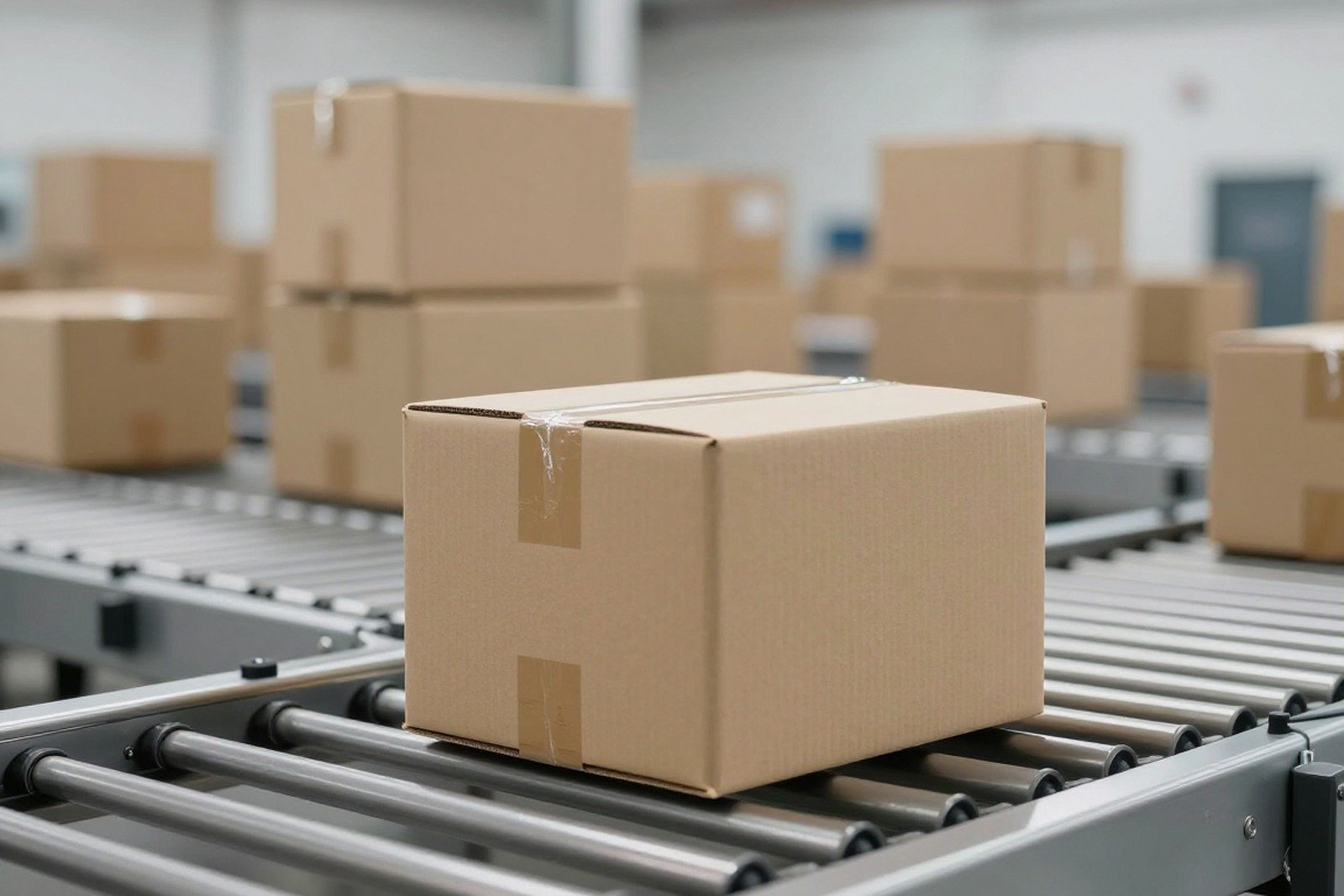
ISTA® 3A is the belonging process Series 3 — General Simulation Performance Test (general simulation), for Each individual package passes through the parcel delivery system., volume 70 kg (150 lb) or lighter. This is the procedure most talked about by e-commerce sellers and shipping units, because it simulates the exact chain that most retail packages have to go through: automatic sorting, falling from conveyor belts, stacking in vehicles and impacts at joints.
This article presents the structure of the 3A process, the four package types that 3A distinguishes, the test sequence, the equipment required, and the points that need to be prepared before sending the sample to the laboratory.
1. What is ISTA 3A?
ISTA 3A is the lesson general simulation, not a simple endurance test. The difference lies in three points:
- 3A simulate real hazards of the delivery system (falling, vibration, impact at joints, stacking), not only challenging the durability of the packaging.
- Test levels are built from General data of distribution channels, so the results are closer to reality than a Series 1 article.
- Still, 3A do not automatically comply each carrier’s own packaging regulations — these are two different systems.
A notable detail right in the scope section: in 3A, the mass limit is stated as 70 kg (150 lb), while most other ISTA processes use 68 kg for 150 lb. The reason is clearly stated in the document: 70 kg / 150 lb is a common division in the delivery system of countries using the metric and imperial systems, and 3A chooses that exact datum instead of exact conversion.
Reference documents: ISTA 3A 2018 — Packaged-Products for Parcel Delivery System Shipment, 70 kg (150 lb) or Less (latest technical and editorial change March 2018).
2. Most common misunderstanding about ISTA 3A
The following three misunderstandings come up frequently in discussions about retail packaging:
- “3A is the packaging durability test.” Not really. 3A is the card general simulation: its test levels are built from general data of the delivery system, so the results indicate whether the sample withstands a series of hazards close to reality, not just “strong or weak packaging”.
- “REACHing 3A means meeting the carrier’s packaging regulations.” The document states Series 3 not by default Comply with shipping company’s packaging regulations. To be certified according to the regulations of a specific company, you must follow that company’s program.
- “Goods under 150 lb automatically use 3A.” Volume is just a condition. 3A also requested the goods to be shipped according to the parcel delivery system, and which group the package belongs to (Standard, Small, Flat or Elongated) determines the testing sequence.
3. Four types of packages that 3A distinguishes
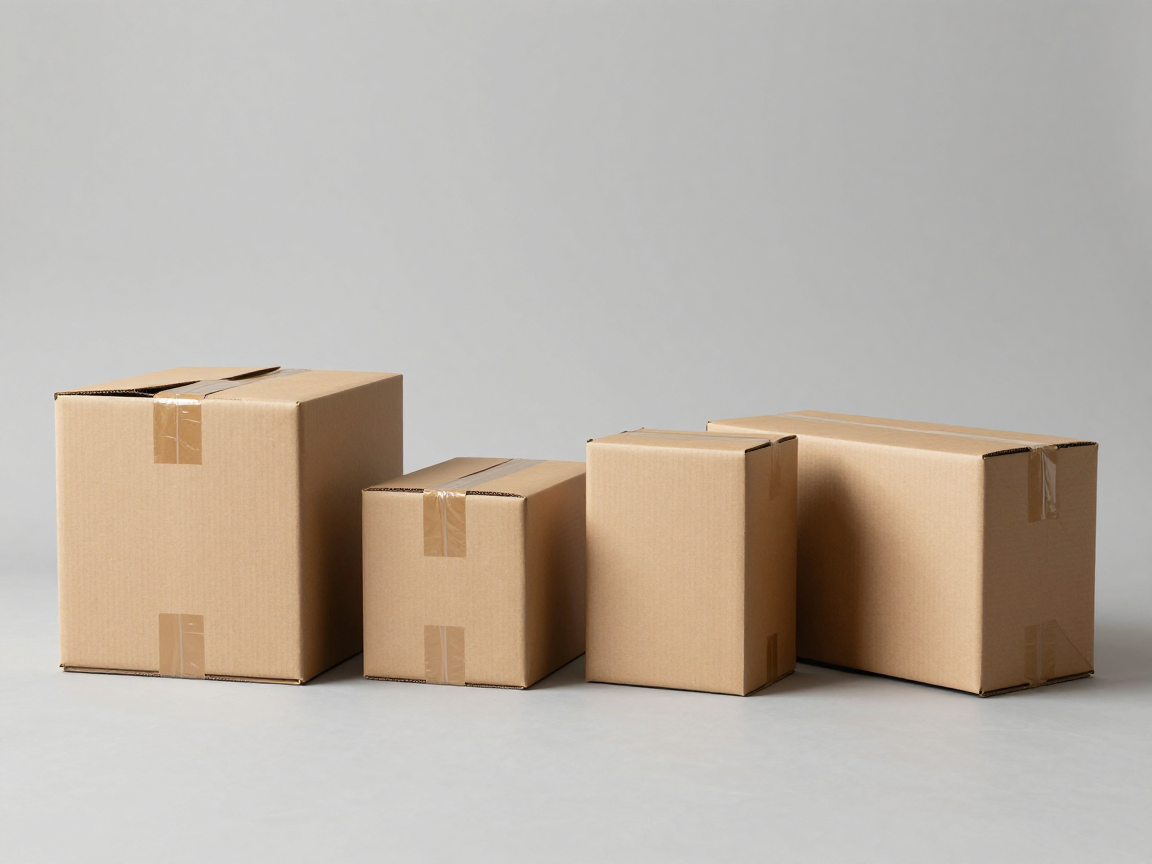
What makes 3A different from other processes is that it Classify packages into four groups and apply different test sequences to each group. Misclassification will lead to wrong category trials.
| Type of bale | Classification conditions |
|---|---|
| Standard (standard) | Does not belong to the other three groups — for example, regular cartons, plastic boxes, wooden boxes, cylinders |
| Small (small) | Volume < 13,000 cm³ (800 in³) and longest side ≤ 350 mm (14 in) and mass ≤ 4.5 kg (10 lb) |
| Flat (flat) | Shortest side ≤ 200 mm (8 in) and The next edge is ≥ 4 times larger than the shortest edge and volume ≥ 13,000 cm³ (800 in³) |
| Elongated (long) | Longest side ≥ 900 mm (36 in) and The remaining two sides are both ≤ 20% of the longest side |
The document clearly notes: if a package fits Flat medium Elongated, yes try following the Elongated group. This is the rule that is most easily overlooked when declaring samples to the testing laboratory.
4. What does ISTA 3A test? — Test sequence
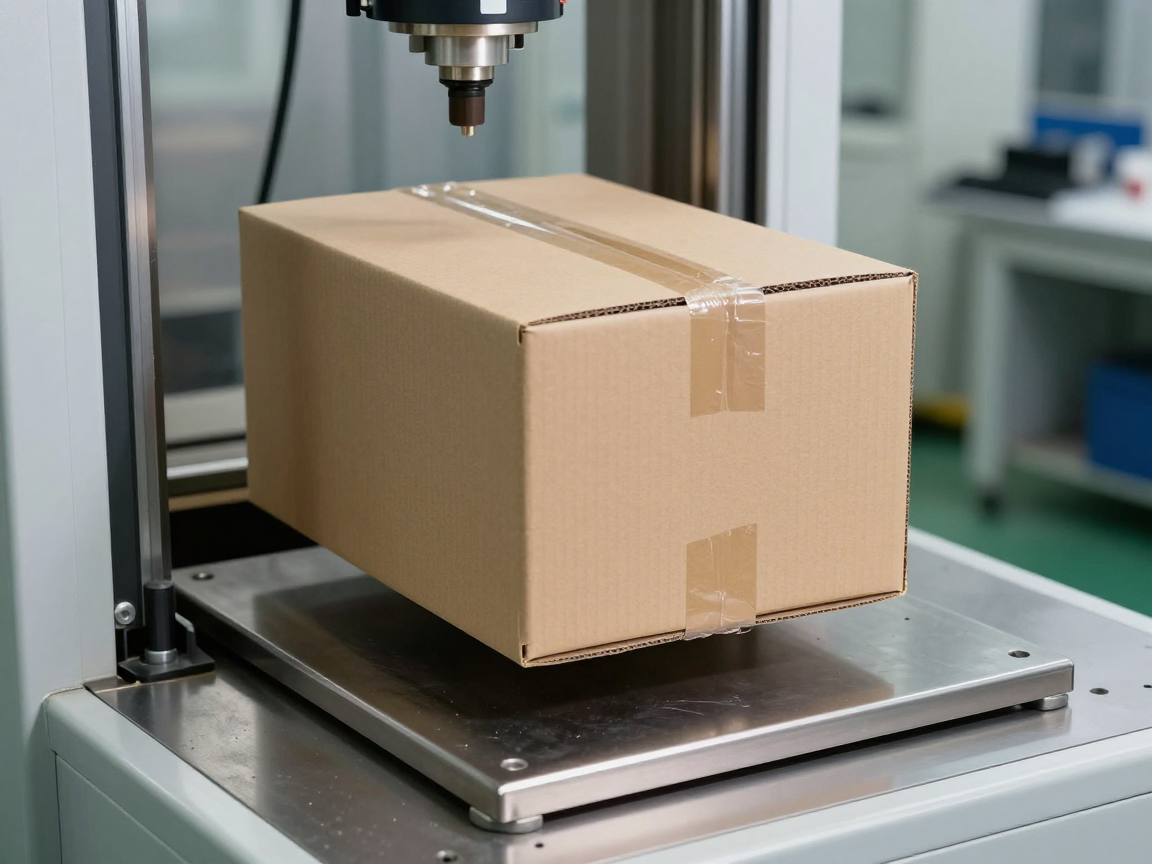
With the group Standard, Flat and Elongated, the items are performed in the following order, on the same sample:
| # | Category | Test level/requirement |
|---|---|---|
| 1 | Pre-conditioning | Ambient temperature and humidity — required |
| 2 | Controlled air conditioning | Select temperature and humidity according to the standard table — option |
| 3 | drop | 9 falls, height depends on package weight — required |
| 4 | Vibrate randomly | With and without loads stacked on the,level Grms 0.53 and 0.46 — required |
| 5 | Random vibration under low pressure | Altitude simulation (road, or road + aviation) — option |
| 6 | drop | 8 drops, has an item that falls on an obstacle (hazard) — required |
| 7 | Falling edge rotation | 200 mm (8 in) — applies to bales only Flat and Elongated |
| 8 | Full rotation flat fall | Rate depends on package size — only Flat and Elongated |
| 9 | Concentrated impact | Hazard box falls 400 mm (16 in) — for bales only Flat |
| 10 | Bridge impact | Hazard box falls 400 mm (16 in) — for bales only Elongated |
| 11 | Check for leaks | 8 o’clock — applies to containers only liquid |
With the group Small, the sequence is shorter but has one important difference: the package is tested individual free fall first, then shake in the collection bag, then fell again but this time in the pocket — correctly simulates a small package mixed in a large bag at the post office:
| # | Category | Test level/requirement |
|---|---|---|
| 1 | Pre-conditioning | Ambient temperature and humidity — required |
| 2 | Controlled air conditioning | According to the table of standards — options |
| 3 | Free fall (not in bag) | 9 falls — required |
| 4 | Vibrate randomly | With and without top load — required |
| 5 | Random vibration under low pressure | — option |
| 6 | Fall (in the bag) | 7 falls — required |
| 7 | Check for leaks | 8 hours — liquid bales only |
5. Accompanying equipment and method standards
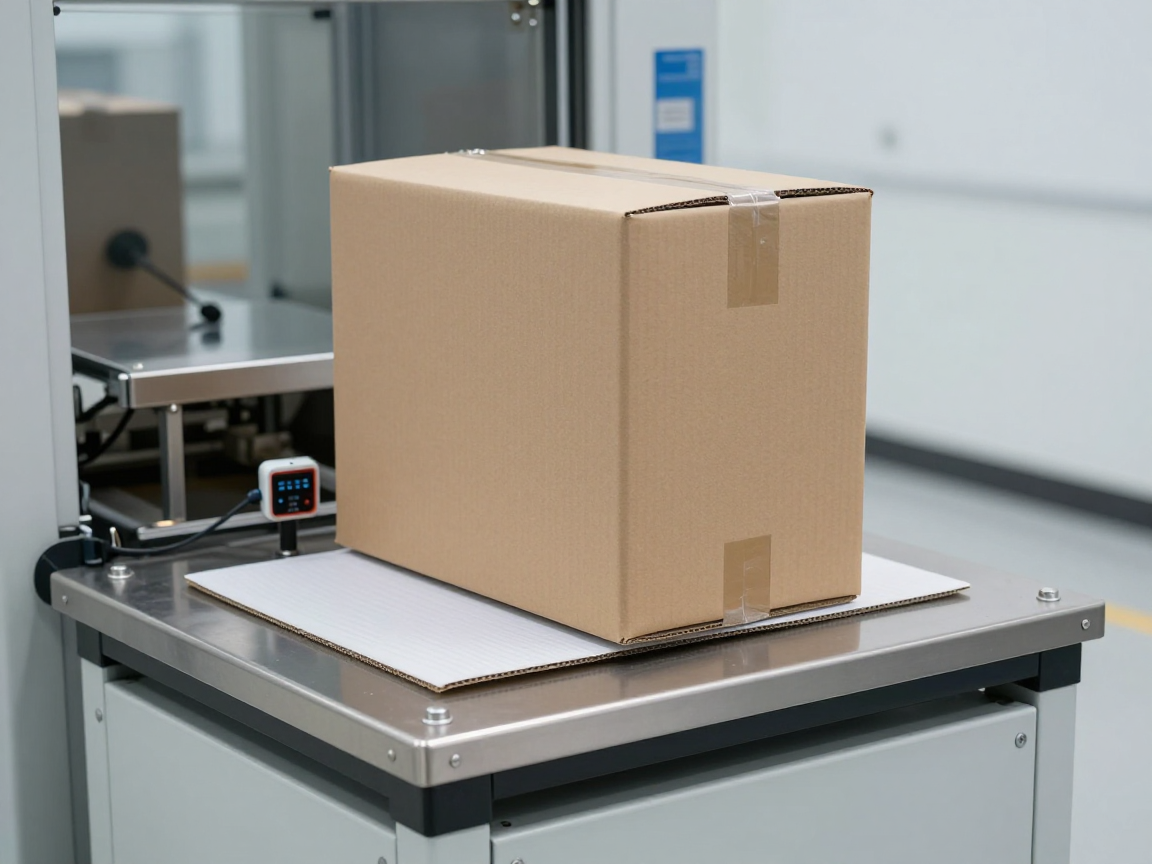
| Category | Equipment | Method standards |
|---|---|---|
| Climate conditioning | Air conditioning chamber with temperature and humidity recording device | ISO 2233 or ASTM D 4332 |
| Free fall | The machine falls freely | ISO 2248 or ASTM D 5276 |
| Falling edge rotation | Rotating edge falling machine | ISO 2876 or ASTM D 6179 |
| Concentrated impact and spherical impact | Machine falls with hazard box (see below) | ASTM D 5265 (except hazard box) |
| Vibrate randomly | Random vibrating table system, stacked guide column, upper load generating device | ISO 13355 or ASTM D 4728 |
| Random vibration under low pressure | Low pressure chamber fits on the vibration table; suck down 60 kPa (8.7 psi) for land + air post, or 70 kPa (10 psi) for road directions | ISO 2873 or ASTM D 6653 |
Hazard box for Flat and Elongated bales: Solid size wooden box 300 × 300 × 300 mm (12 × 12 × 12 in), total volume 4.1 kg (9 lb), with at least one bottom edge covered with corner steel, inside placed sandbags and inserts to fix the bags. Hazard block (used for bridge impact items) made of hard wood or metal: high 20–25 mm (0.75–1.0 in), wide 150 mm (6 in), at least 200 mm (8 in) longer than the second shortest edge of the package, with the top two edges rounded.
support block for rotational edge drop items: 90–100 mm (3.5–4.0 in) high and wide, at least 200 mm (8 in) longer than the shortest edge of the test surface.
6. Number of samples and sample preparation
- A sample is the required level for this procedure — but it is a minimum level, not a recommended level.
- The documentation states: with fragile product or The product contains liquid, should try two or more samples because the variability of packaging and products is higher in this group.
- ISTA It is recommended to perform the procedure 5 times or more,new sample each time, for representative conclusions.
- Sample must be Real package, not tested; If not available, the replacement sample must be as similar as possible to the actual product.
- For small packages (Small group), the laboratory needs to prepare shopping bag: a sample bag with “junk” packages simulating common mail items, and a Top loading bag holds 36 kg (80 lb) sand or similar flowing material.
- When the outer packaging is cartons and documents Recommended determination and recording of paper weight (basis weight). If the rating changes — even if the carton is still rated at the same performance class — it should be retested.
And one thing that cannot be left to the testing laboratory: the shipper must determine their own set of pass/fail criteria before testing — see 4 criteria businesses must determine for themselves before trying.
7. When should ISTA 3A not be used?
3A simulates a parcel delivery system. If the actual distribution channel is not that system, using 3A will give misleading results:
| Real situation | Should switch |
|---|---|
| Goods travel by truckload (LTL) and not by parcel | 3B |
| Goods have been unitized into blocks, going full truckload | 3E |
| Only screening for durability is required at the design stage | Series 1 (1A · 1C · 1G) |
| Need to simulate part, cost is lower than 3A | 2A (or 2B for pieces over 68 kg) |
| Packages weighing more than 70 kg (150 lb) | Outside of 3A — see process group for heavy bales and unitized cargo |
| Goods sold through channels have specific requirements of the floor or a specific distribution system | Processes specific to that channel (e.g. projects by national distribution system or by floor) |
8. Common mistakes when implementing ISTA 3A
- Misclassification of package groups. Flat bales registered as Standard will have the three most severe categories (rotated edge drop, fully rotated flat drop, concentrated impact) ignored — a “pass” result is then invalid.
- Ignore the Flat + Elongated rule. Satisfying both definitions must try the Elongated group.
- Try Small group as standard package. Small group needs collection bags and load bags over 36 kg; Missing the “fall in bag” step is missing the most dangerous situation of a small package.
- Change the carton quantity without trying again. The document states that paper weight changes are grounds for retesting, even if the cardboard is rated at the same performance level.
- Sample configuration and initial status are not recorded. 3A has up to 11 items on the same form; Without photos and original records, it is impossible to attribute the cause of damage to the correct step.
9. What does the cost and time of ISTA 3A testing depend on?
3A is the longest test in the common process group for retail packages: with the standard/Flat/Elongated group, a sample must go through a maximum of 11 items, including two falling rings, two vibration rings and specific impact items. So the cost depends strongly on package group (Flat and Elongated cases have more items than Standard cases), model number (one sample is minimum, more for fragile or liquid items), and whether or not to choose the category of vibration under low pressure — This item requires a low pressure chamber, which not all testing laboratories have.
With small packages, the cost also depends on the laboratory having to prepare collection bags and simulated “junk” packages. General factors that determine cost and time are summarized at: What does the cost and time of ISTA packaging testing depend on?
10. Frequently asked questions
Can 3A replace 3B?
No. 3A simulates the parcel delivery system, 3B simulates LTL shipping (joint shipment). The two channels have different risks and queuing methods, so you must choose according to the channel you actually go to.
Does reaching 3A mean that the goods will not be damaged during transportation?
No. A result of 3A means that the sample has withstood the specified test sequence, compared with Failure criteria are determined by yourself before testing. This is a general simulation, not a commitment to every trip.
Is my 54 kg (120 lb) package in 3A?
Yes — 3A applies to packages up to 70 kg (150 lb). Above that mark, the procedure belongs to the group for heavy packages or unitized load, depending on the packaging.
Is it okay if I don’t choose the low-pressure vibration category?
This is an optional item in the document. It is worth considering when the goods are traveling by air, or when the packaging contains welds, valve caps, gas or liquid pockets — situations where low pressure conditions can open or deform the packaging. Should finalize with end customers before trying.
Is it necessary to measure the quantity of cardboard?
The document states this as a strong recommendation, with reasons: if the nominal quantity changes, the old results are no longer representative, even if the cardboard is still rated at the same performance level.
11. Conclusion
ISTA 3A is a general simulation for single parcels sent by parcel delivery, up to 70 kg (150 lb). The first and most important thing when using 3A is Correctly classify packages — Standard, Small, Flat or Elongated — because the testing sequence depends entirely on that group. Flat or Elongated bales have three additional items that collide with the hazard box, while Small bales have steps to fall in the collection bag.
Regarding samples, the minimum is one sample, but fragile goods and goods containing liquids should start with two samples or more; and pass/fail criteria must be finalized in writing before the sample leaves the factory.
References
- ISTA — Test Procedures (list of current series and procedures, accessed September 27, 2026)
- ISTA — Procedure 3A — Overview (free overview published by ISTA; not enough to conduct testing)
- ISTA — Certify Your Lab (information about testing laboratory certification)
- ISO/ASTM — method standards referenced in the procedure: ISO 2233, ISO 2248, ISO 2873, ISO 2876, ISO 13355; ASTM D 4332, D 4728, D 5265, D 5276, D 6179, D 6653
Related articles
- ISTA 6-AMAZON.COM What is SIOC? Packaging test procedure sent in the product’s own box
- What is ISTA 7D? Temperature testing procedures for shipping packaging
- What is ISTA 6-SAMSCLUB? Packaging test procedure for Sam’s Club distribution system
- What is ISTA 6-AMAZON.COM Over Boxing? Procedure for testing outer box packaging for goods sent to Amazon
- What is ISTA 3L? E-commerce fulfillment process
- What is ISTA 3K? Fast-moving consumer goods packaging test procedure in European retail chains
- What is ISTA 3H? Bulk Transport Containers test procedure
- What is ISTA 3F? Packaging test procedure for individual packages on mixed pallets at retail intersections
- What Is the ISTA Standard? How to Choose the Right Transport Packaging Test (3A, 6-Amazon, ASTM D4169)
- What is ISTA 2A? Partially simulated packaging test procedures for packages up to 150 lb (68 kg)
- What is ISTA 2B? Partially simulated packaging test procedures for packages over 150 lb (68 kg)
- What is ISTA 2C? Packaging test procedure for furniture (Case Goods)
- What Is ISTA 1A? A Detailed Look at the ISTA 1A Packaging Test Procedure
- What Is ISTA 1C? The Extended Packaging Test Procedure for Packages Up to 150 lb (68 kg)
- What Is ISTA 1G? Random Vibration Testing for Packages Up to 150 lb (68 kg)
- ISTA Packaging Test Pass/Fail Criteria: 4 Things You Must Decide Yourself
- What Drives the Cost and Lead Time of an ISTA Packaging Test?
Discuss further
Disclaimer and acknowledgment of intellectual property rights
This article is an explanatory content compiled by us for the purpose of introducing and disseminating knowledge. Article is not a translation, copy, abridgement or replacement of the original standard, and is not evaluated, approved or sponsored by ISTA (International Safe Transit Association)..
The entire content of ISTA standards is copyrighted by the International Safe Transit Association, Inc. (East Lansing, Michigan, USA) — All rights reserved. ISTA® and the ISTA logo are registered trademarks of the International Safe Transit Association, Inc.; Mentioned in this article are for guidance purposes only and do not imply any affiliation, partnership or sponsorship.
Article content For reference only; Before applying for any purpose — testing, evaluation, certification or commercial decision-making — the reader should refer directly to the original ISTA document (the most complete and up-to-date version) and consult an accredited testing facility when necessary.
When performing testing, it is mandatory to use the official, current version of the standard, obtained directly from ISTA. We do not redistribute ISTA materials in any form. Information in this article may be out of date with the current version of the standard.
See more: Copyright Policy & Disclaimer by ticforall.com.