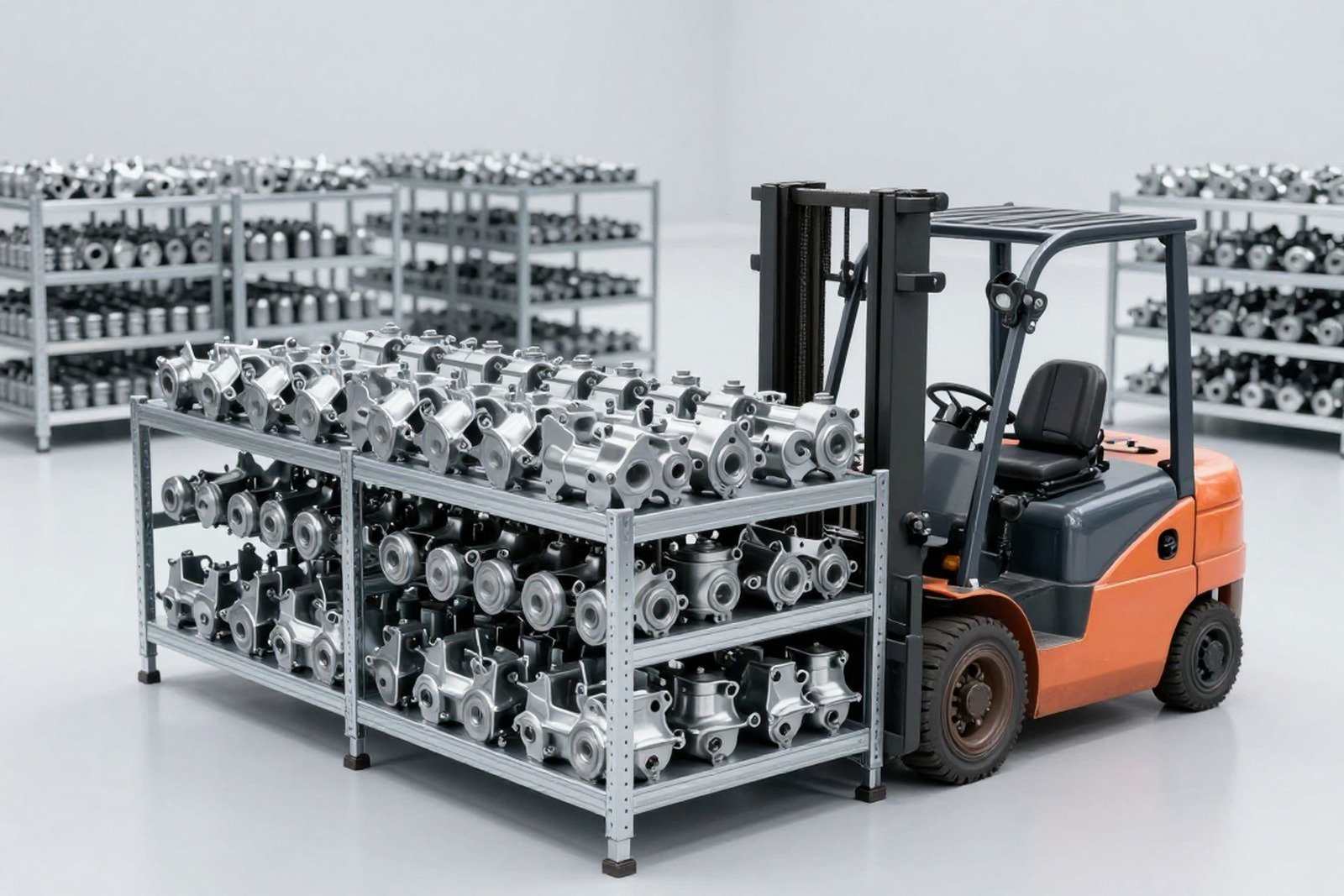
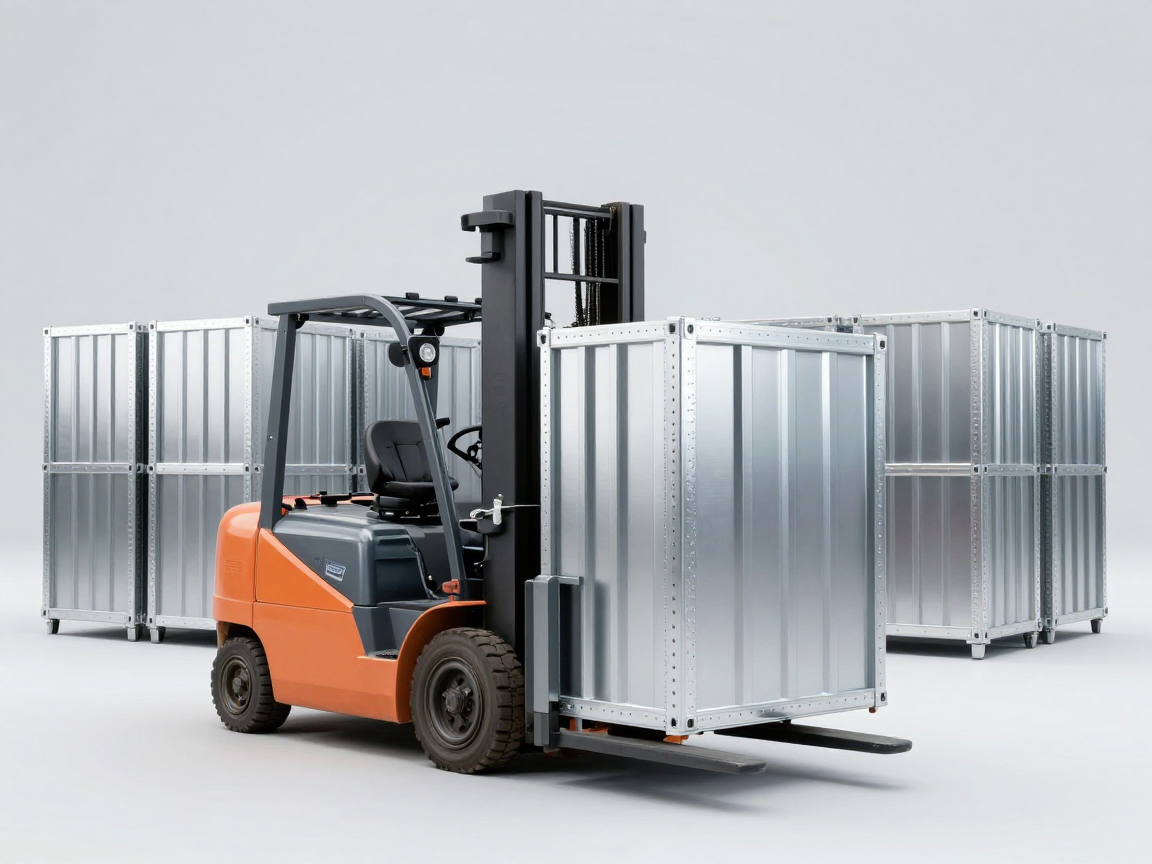
ISTA® 3H is a belonging process Series 3 — General Simulation (general simulation) for Bulk goods in shipping containers are loaded and unloaded using mechanical equipment — Products or Packaged-Products in Mechanically Handled Bulk Transport Containers. This is the procedure for goods units cannot be loaded or unloaded by human power: because of their size or mass, they must be handled by forklifts, trailers or cranes.
Typical example that the ISTA document itself states: Auto parts stored in reusable racks. The test unit is one shipping container (or a system of containers) containing the same product. ISTA states 3H also possible considered for mixed goods, and can be used for evaluation internal dunnage material (interior dunnage).
This article presents the application scope of 3H, 9-stage sequence, three vibration spectra according to transport mode (steel spring road / air-ride road / rail), vibration time calculation formula, railway shock categories and points to prepare before bringing the container to the test room. Note about version: post based on ISTA 3H version 2025 — This version replaces 3H’s old approach and has many technical changes, so if your internal documents still refer to the old version, you need to compare them.
1. What is ISTA 3H?
According to the original document, ISTA 3H is the lesson general simulation test for mechanically handled bulk loads — general simulation for mechanically handled bulk cargo. Scope: “bulk made loads up of one transport container or system consisting of the same product that because of their size and/or weight must be handled by mechanical means”.
It is necessary to clearly distinguish three easily confused concepts:
- Bulk load here is not “bulk cargo” (dumped goods, grain goods) in the sense of maritime logistics. In ISTA 3H, “bulk” means a large block of goods — usually a container/rack/shelf containing many similar products.
- The test unit is the whole container, not each small package inside. This is the core difference compared to 3A and 3F (test unit is single bale).
- 3H emphasizes the entire mechanical loading and unloading chain, not just shipping. That’s why the procedure has categories rotational drop (drop edge rotation) and impact (horizontal impact) repeat twice — before and after the vibration stage.
The four ISTA limitations mentioned in the overview should be informed to customers before using the results:
- Test level based on General data, may not be representative of a particular distribution system.
- Products and packaging are evaluated together.
- Some conditions are not covered: humidity, pressure, unusual handling.
- There are non-equivalent alternatives (non-equivalent alternatives). ISTA clearly warns: in many cases these options no give the same results, and the chosen option must be clearly stated in the test report.
2. Most common misunderstanding about ISTA 3H
Biggest misunderstanding: Consider 3H as the “goods on pallet” test.. Incorrect. Goods on regular pallets (including mixed pallets) belong to 3E or 3F. 3H is for goods units so large that it cannot be handled by hand — industrial racks, reusable metal shelves, specialized containers for spare parts. If you can lift a package with two people, chances are you don’t need 3H.
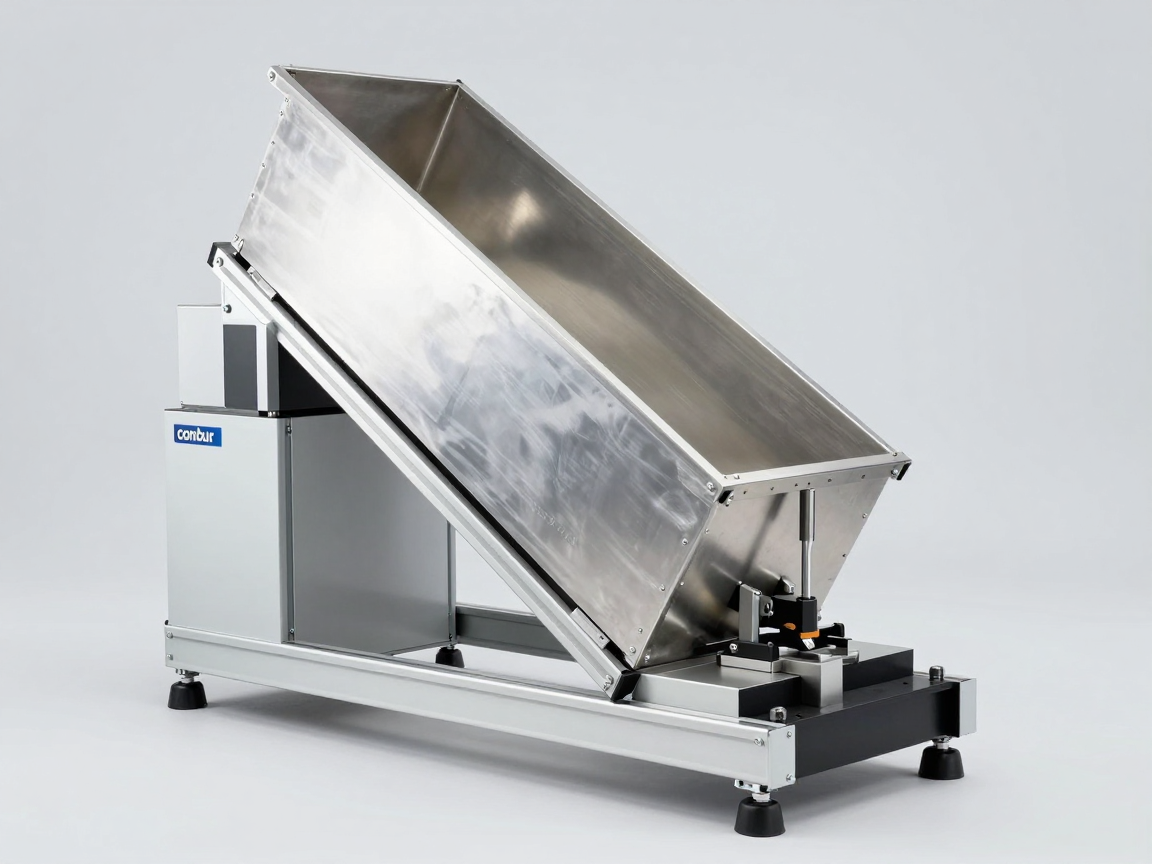
Second misunderstanding: think that any alternative chosen is the same. Document 3H clearly states the alternatives are non-equivalent — for example, a short shock stage can be done with an inclined impactor (conbur) or a horizontal impactor, but the two recording methods are different (impact velocity vs. velocity change with a nominal 10 ms half-sine pulse) and can give different results. The document also has a separate warning: inclined plan may not be suitable with specimens prone to rotation/out of position — a recumbent position may result false negative results (false negative).
Third misunderstanding: ignore route data. The vibration stage of 3H depends directly on the mode of transport and expected distance — the same package traveling 200 km and 1,200 km will have different vibration times. This is different from 3F (fixed vibration for 30 minutes).
3. What does ISTA 3H test? — 9-stage sequence
The procedure runs sequentially on the same sample set in the order below. The three shock/fall stages are repeated twice — one before and one after the vibrating leg — simulates the container being mechanically unloaded at both ends of the journey.
| # | Category | Test type | Test level | Required |
|---|---|---|---|---|
| 1 | Preliminary atmospheric conditioning | Temperature and humidity | Laboratory conditions, 12 hours | Required |
| 2 | Controlled atmospheric conditioning | Temperature and humidity | Choose from conditions table (72 hours) | Options |
| 3 | Shock — brief impact | Inclined impact (conbur) or horizontal impact | 35 in/s (0.89 m/s), hitting all 4 vertical surfaces | Required |
| 4 | Shock — drop rotation | Rotational drop, flat and edge forms | 4 in (100 mm) | Required |
| 5 | Vibration | Vibrate randomly | Spectrum by mode of transport — Grms 0.54 / 0.28 / 0.13 | Required |
| 6 | Shock — brief impact (repeat) | Inclined impact or horizontal impact | 35 in/s (0.89 m/s) | Required |
| 7 | Shock — drop rotation (repeat) | Rotational drop, flat and edge forms | 4 in (100 mm) — all 4 bottom sides | Required |
| 8 | Compression | Compressor or counterweight + load distribution plate | According to the calculation formula (see section 6) | Options |
| 9 | Shock — prolonged horizontal impact | Horizontal impact slide | 6 mph (2.7 m/s), 300 ms, trapezoidal pulse | Only required for goods traveling by rail |
4. Shock stage: two impacts and two rotation drops
Short impact (impact). The container is placed in the middle of the sled so that one vertical surface is flat against the retaining wall (backstop/sail) and parallel to the front edge of the vehicle. Minimum impact speed 35 in/s (0.89 m/s). The impact is repeated 3 more times let it all All 4 facades were damaged. This stage is performed twice — before and after the vibration stage.
Technical notes when choosing equipment: use an impact machine inclined it must be noted impact velocity; Use an impact machine horizontal then note it velocity change and the shock event must be a half-sine pulse of nominal length 10 ms. The two methods for data sets are different in nature.
Rotational drop. This stage simulates a container being lowered incorrectly and one bottom edge hitting the concrete/steel floor — a very real situation when loading and unloading with a forklift. There are two forms:
- Flat swivel release: Place the container on a hard surface (steel or concrete), lift one edge up 4 in (100 mm), then let it fall freely.
- Drop edge rotation: Place the container on a hard surface, using a wooden bar/cushion 3.5–4.0 in (90–100 mm) high and wide. opposite edge, lift the other side 4 in (100 mm), then let it fall freely.
On the first rotation release, the operation is repeated with an adjacent bottom edge. On the second rotation release (after the vibrating stage), the operation is performed with the edge opposite the first one, and ISTA requests Make sure all 4 bottom edges are lifted and released through two chains. This is an easy point to miss when checking the minutes: enough times is not necessarily enough all four sides.
5. Vibration stage: three spectrums according to mode of transport
Before vibrating, it must be determined that the container will travel flat railway, steel spring truck or air-ride truck. If there is only one method, use the spectrum of that method. If there are multiple methods, ISTA requires them to be used spectrum has the highest Grms in potential methods.
| Mode of transport | Grms total | Theoretical journey |
|---|---|---|
| Steel Spring Truck | 0.54 | 45.13 mm (1.777 in) peak-to-peak |
| Air-ride Truck (Air-Ride Truck) | 0.28 | 54 mm (2.14 in) peak-to-peak |
| Railway (Railcar) | 0.13 | 21.26 mm (0.837 in) peak-to-peak |
Each spectrum has its own breakpoint table that needs to be loaded into the vibration controller. Prussia Steel Spring Truck of 3H overlaps with the spectrum used in other Series 3 road processes (3A, 3B, 3E, 3F); The two spectrums, air-ride and railway, have completely different shapes, characterized by lower energy levels but distributed in different frequency ranges.
How to calculate vibration time — typical points of 3H, calculated according to actual distance:
- Test time (minutes) = distance (miles) ÷ 5, max 240 minutes.
- Or: test time (minutes) = distance (km) ÷ 8, max 240 minutes.
Documented example: distance 750 miles → 150 minutes; distance 1,000 km → 125 minutes. Number 240 minutes is the ceiling — meaning that no matter how far the line goes, the vibration time will not increase.
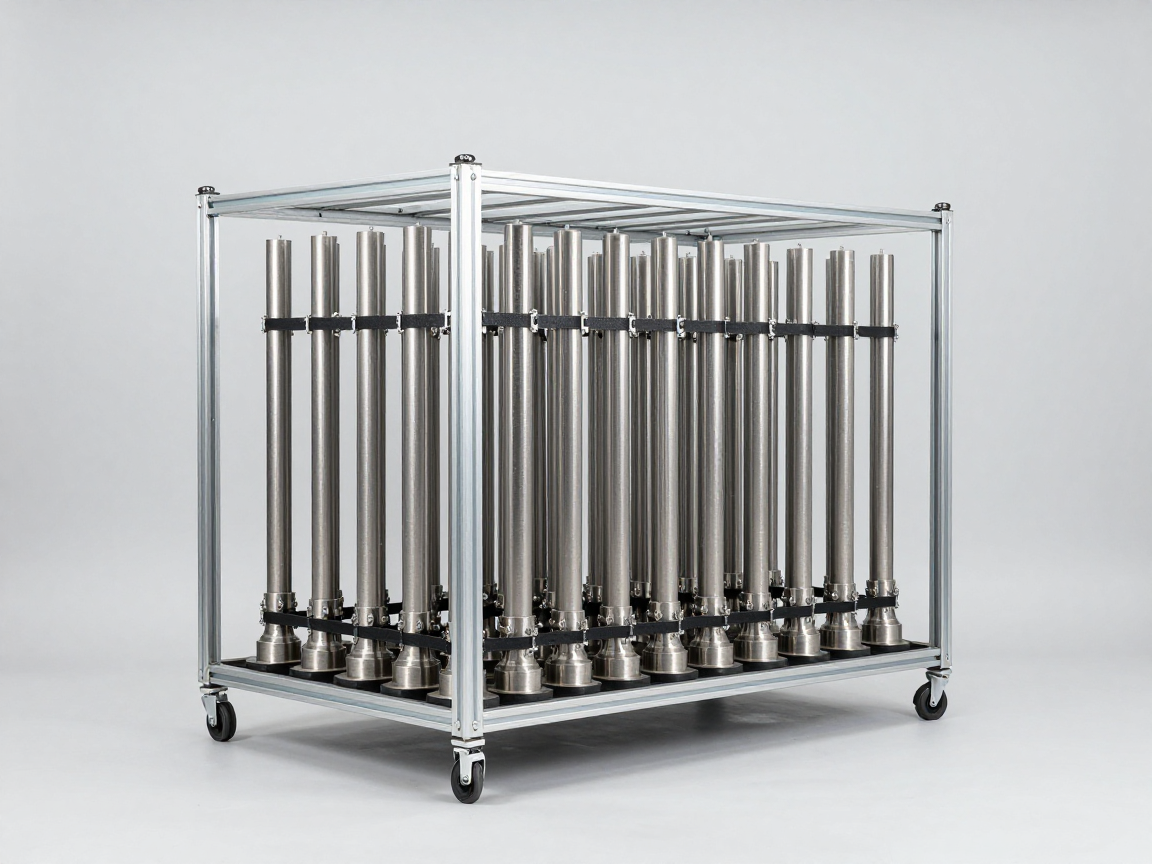
Regarding specimen fixation, ISTA has an important technical warning: fixation devices Vertical movements must not be restricted of sample. With large containers, tightening the belt too tightly to “make sure” is a common mistake and distorts the results.
6. Compression stage (optional): formula for calculating compression force
Unlike 3F (forced compression), in 3H the compression category is option. Compression force is calculated using the same formula as other Series 3 processes, applicable to both warehouse and vehicle loading situations:
- Wt — total volume of cargo (container + product).
- S — the total number of blocks that can be placed in a column (warehouse or vehicle), including the bottom block.
- F — compensation factor, default F = 3 (If other values are used, there must be an explanation in the minutes).
| Device/method | Formula (Inch-Pound system) | Formula (metric system) |
|---|---|---|
| Compressor — apply and release | Wt × (S − 1) × F × 1.4 — lbf | Wt × (S − 1) × F × 9.8 × 1.4 — N |
| Compressor — apply and hold | Wt × (S − 1) × F | Wt × (S − 1) × F × 9.8 |
| Counterweight + load distribution plate | Wt × (S − 1) × F — lb | Wt × (S − 1) × F — kg |
If never capable of stacking on this block, S = 1 and the calculated value is 0 — no need to try compression. The running method is similar to 3F: two compression plates are pressed at speed 0.5 in/min (13 mm/min); Apply and hold method holds force 1 hour; Counterweight method holds the load for 1 hour on a rigid load distribution plate larger than the top surface of the sample.
7. Stage 9 — rail shock: prolonged horizontal impact
This is the category Compulsory only for goods traveling by rail, and is the most complex part of 3H. This item must be completed by degree horizontal impact sled (do not use tilt machine), with pulse trapezoidal 300 ms at a variable speed of 6 mph (2.7 m/s).
Before testing, it must be determined queuing direction (loading orientation) — this depends on the container size, vehicle/wagon size and whether the shipper guarantees to use only one loading orientation or not:
- Folding only long face (sides 2 and 4) parallel to the front wall of the car/coach → hitting the long side.
- Folding only short face (sides 5 and 6) parallel to the head wall → hitting the short side.
- Can be folded both directions → hit the long side and then the short side respectively.
The test level table consists of four lines, different in gap. gap — distance between sample and bulkhead sail before impact:
| Pulse | Time (ms) | Velocity (mph / m/s) | Long face | Short face | Gap (in/mm) |
|---|---|---|---|---|---|
| Trapezoidal | 300 | 6 (2.7) | 2 | 5 | 0 |
| Trapezoidal | 300 | 6 (2.7) | 2 | 5 | 4 (100) |
| Trapezoidal | 300 | 6 (2.7) | 4 | 6 | 0 |
| Trapezoidal | 300 | 6 (2.7) | 4 | 6 | 4 (100) |
What is Gap and why does it exist? In rail transport, goods are usually not close to the front wall of the carriage but have space. When the train brakes or blocks cars and cargo Accelerate through that gap then hits the wall — the collision kinetic energy level is much greater than if it was close. The gapped pulse accurately simulates this situation. The order of blows can be flexible, as long as enough corresponding blows are performed.
8. Accompanying equipment and method standards
| Category | Equipment | Method standards |
|---|---|---|
| Climate conditioning | Temperature and humidity recording device; air-conditioned chamber if choosing the optional route | ASTM D4332 |
| Short impact — inclined | Inclined Impact Tester — Conbur | ASTM D880 |
| Short impact — horizontal | Horizontal impact system (velocity change recording, 10 ms half-sine pulse) | ASTM D4003 |
| Prolonged horizontal impact (railway) | Horizontal impact sled (trapezoidal pulse 300 ms) | ASTM D4003 |
| Rotational drop | Rotating drop test system | ASTM D6179 |
| Vibrate randomly | Random vibration system with spectrum control | ASTM D4728 |
| Compression (optional) | Compressor (fixed table or floating table) or counterweight + load distribution plate | ASTM D642 |
9. Number of samples and sample preparation
ISTA 3H requires 1 sample per run — at least in currently available Series 3 processes, and is the cost sweet spot for bulk batches (as the sample is a large container). ISTA Recommended to do 5 times or more with a new sample each time to get representative conclusions. With batches, the cost of building 5 samples can be very large, so in reality many businesses only run it once — in which case the limits of the results need to be clearly understood and clearly stated in the minutes.
Two important preparation points:
- Samples must be untested. If sent to the lab by regular shipping, it must be over-packaged or repackaged in new packaging at the lab.
- The total mass and external dimensions (D × W × H) must be measured and recorded. — all three of these information are used in the steps of determining test position, alignment direction, and compression formula.
10. When should ISTA 3H not be used?
Three processes that are easily mistakenly chosen interchangeably are 3E, 3F and 3H. How to distinguish:
| Real situation | Correct procedure | Why? |
|---|---|---|
| Goods are palletized uniformly, loaded and unloaded by forklift, but pallets are the standard transport unit | 3E | Units are unitized blocks on pallets, simulating FTL |
| Retail packages are on mixed pallets of many types, delivered to retail locations | 3F | Unit is individual package; The pallet is just a backdrop |
| Large containers/racks contain the same type of products, requiring loading and unloading by forklift/crane; can take the railway | 3H | The unit is a whole cubic container, with a rail shock category |
| Bulk goods are bagged and poured into containers | Not in 3H | 3H’s “bulk” is a large block of goods, not loose goods |
| Goods going by sea/international containers, need to simulate high stacking | Consider 3E with conditioning, or a channel process | 3H does not cover humidity/pressure |
11. Common errors when performing ISTA 3H
- Only do one impact/drop rotation. The whole shock chain must repeat twice (stages 3–4 before vibration, stages 6–7 after vibration) and must ensure that all 4 vertical surfaces are hit and all 4 bottom edges are lifted and released.
- Choosing the wrong vibration spectrum. If the cargo can travel by both road and rail, the spectrum with the highest Grms (usually steel spring truck 0.54) must be used, not the spectrum of the “main” route.
- Calculate vibration time according to feeling. Vibration time must be inferred from the expected distance; If route data is not available, the assumption should be clearly stated in the minutes. The 240 minute ceiling is a limit, not a default.
- Fixing the sample too tightly on the vibrating table. Improper vertical movement of the container — “passing” results can be artificial.
- Missed the rail shock category. If the goods go by rail but skip stage 9, the test is no longer within the 3H range – this is a mandatory category specifically for rail.
- Use a tilting machine to make it easier for the sample to rotate. The literature warns that tilted positions can cause false negatives; For samples that are easy to rotate/deflect, choose the horizontal impact option.
- Do not record the selected alternative. Because the alternatives are not equivalent, the records must clearly state which method was used — otherwise, the results cannot be compared between tests or between laboratories.
12. What does the cost and time of the ISTA 3H test depend on?
Four main controlling factors: sample size (an entire container/rack, with product inside — the cost of prototyping is often greater than the cost of testing itself); specialized equipment (tilted impactor or horizontal sled, rotating drop system for large blocks, vibrating table with enough load capacity — not every lab has it); Rail shock category If the goods go by rail, because horizontal impact sled is needed; and Vibration time calculated by distance — up to 240 minutes occupying the vibration table, plus 12 hours of preconditioning (and 72 hours for each controlled conditioning sequence if selected). Article What does the cost and time of ISTA packaging testing depend on? Detailed analysis and how to compare quotes.
13. Frequently asked questions
Is ISTA 3H a test for pallet goods?
No. 3H is for block rows forced to load and unload using mechanical equipment — usually a reusable container or rack containing the same product. Goods on normal pallets fall into 3E (homogeneous pallets) or 3F (mixed pallets).
How many samples does 3H need?
One sample per run. ISTA recommends 5 or more repetitions with a new sample, as one run only indicates whether the sample passes the test levels or not.
Why do we need to run compression if this is a heavy load?
The compression category in 3H is option and only makes sense when the loads can actually be stacked (in a warehouse or in a vehicle). If stacking is never done, S = 1 and there is no need to run.
For goods traveling by both road and rail, which spectrum should you choose?
Choose the spectrum with the highest Grms among the potential modes — usually 0.54 steel spring truck — and still have to run the extended rail shock category because the cargo is rail capable.
Can a rotating drop be replaced with a flat drop?
No. Flat and edge rotating drops are two separate stages that simulate a situation where the container is lowered sideways, with one edge hitting the floor – essentially different from dropping the entire bottom flat.
Is it mandatory to run 5 times?
Optional — ISTA request done once and recommended 5 times or more. But if it is run only once, this limitation should be clearly stated when interpreting the results.
Does 3H cover humidity and pressure conditions?
No. The ISTA document states that certain shipping conditions such as humidity, pressure or unusual handling may not be covered. If the goods are affected by these factors, it is necessary to choose a controlled conditioning stage or other suitable process.
14. Conclusion
ISTA 3H is a general simulation procedure for mechanically handled bulk cargo, with three features to remember: 1 sample is the minimum, The impact-rotation shock sequence is repeated twice surrounding the vibration stage, and Vibration spectrum and vibration time depend on mode of transport and distance. The category of prolonged rail shock is only required when goods travel by rail — but when required, it cannot be ignored.
Before scheduling a test, businesses should prepare four pieces of information: total volume and outer dimensions of the container; Actual mode of transport (steel spring road, air-ride, rail) and expected distance; stackability in warehouse/vehicle; and the loading direction in the vehicle if the goods can go by rail.
Reference standard version: article content is based on the January 2025 ISTA 3H document — Products or Packaged-Products in Mechanically Handled Bulk Transport Containers. This is a version with technical changes compared to previous 3H versions; When implementing, the official standard, the current version of ISTA, must be used.
References
- ISTA 3H — Products or Packaged-Products in Mechanically Handled Bulk Transport Containers, version 2025 (technical change January 2025), International Safe Transit Association
- ISTA — Test Procedures (current process list, accessed September 27, 2026)
- ASTM — cited method standards: D4332, D880, D4003, D6179, D4728, D642
- ISTA 3E and 3F — used to compare scope of application
Related articles
- ISTA 6-AMAZON.COM What is SIOC? Packaging test procedure sent in the product’s own box
- What is ISTA 7D? Temperature testing procedures for shipping packaging
- What is ISTA 6-SAMSCLUB? Packaging test procedure for Sam’s Club distribution system
- What is ISTA 6-AMAZON.COM Over Boxing? Procedure for testing outer box packaging for goods sent to Amazon
- What is ISTA 3L? E-commerce fulfillment process
- What is ISTA 3K? Fast-moving consumer goods packaging test procedure in European retail chains
- What Is the ISTA Standard? How to Choose the Right Transport Packaging Test (3A, 6-Amazon, ASTM D4169)
- What is ISTA 3F? Packaging test procedure for individual packages on mixed pallets at retail intersections
- What is ISTA 3E? Procedure for testing unitized load traveling by full truck (FTL)
- What is ISTA 3B? Packaging test procedure for LTL shipping (joint shipments)
- What is ISTA 3A? Packaging test procedure for parcel delivery system (Parcel Delivery)
- ISTA Packaging Test Pass/Fail Criteria: 4 Things You Must Decide Yourself
- What Drives the Cost and Lead Time of an ISTA Packaging Test?
Discuss further
Disclaimer and acknowledgment of intellectual property rights
This article is an explanatory content compiled by us for the purpose of introducing and disseminating knowledge. Article is not a translation, copy, abridgement or replacement of the original standard, and is not evaluated, approved or sponsored by ISTA (International Safe Transit Association)..
The entire content of ISTA standards is copyrighted by the International Safe Transit Association, Inc. (East Lansing, Michigan, USA) — All rights reserved. ISTA® and the ISTA logo are registered trademarks of the International Safe Transit Association, Inc.; Mentioned in this article are for guidance purposes only and do not imply any affiliation, partnership or sponsorship.
Article content For reference only; Before applying for any purpose — testing, evaluation, certification or commercial decision-making — the reader should refer directly to the original ISTA document (the most complete and up-to-date version) and consult an accredited testing facility when necessary.
When performing testing, it is mandatory to use the official, current version of the standard, obtained directly from ISTA. We do not redistribute ISTA materials in any form. Information in this article may be out of date with the current version of the standard.
See more: Copyright Policy & Disclaimer by ticforall.com.