
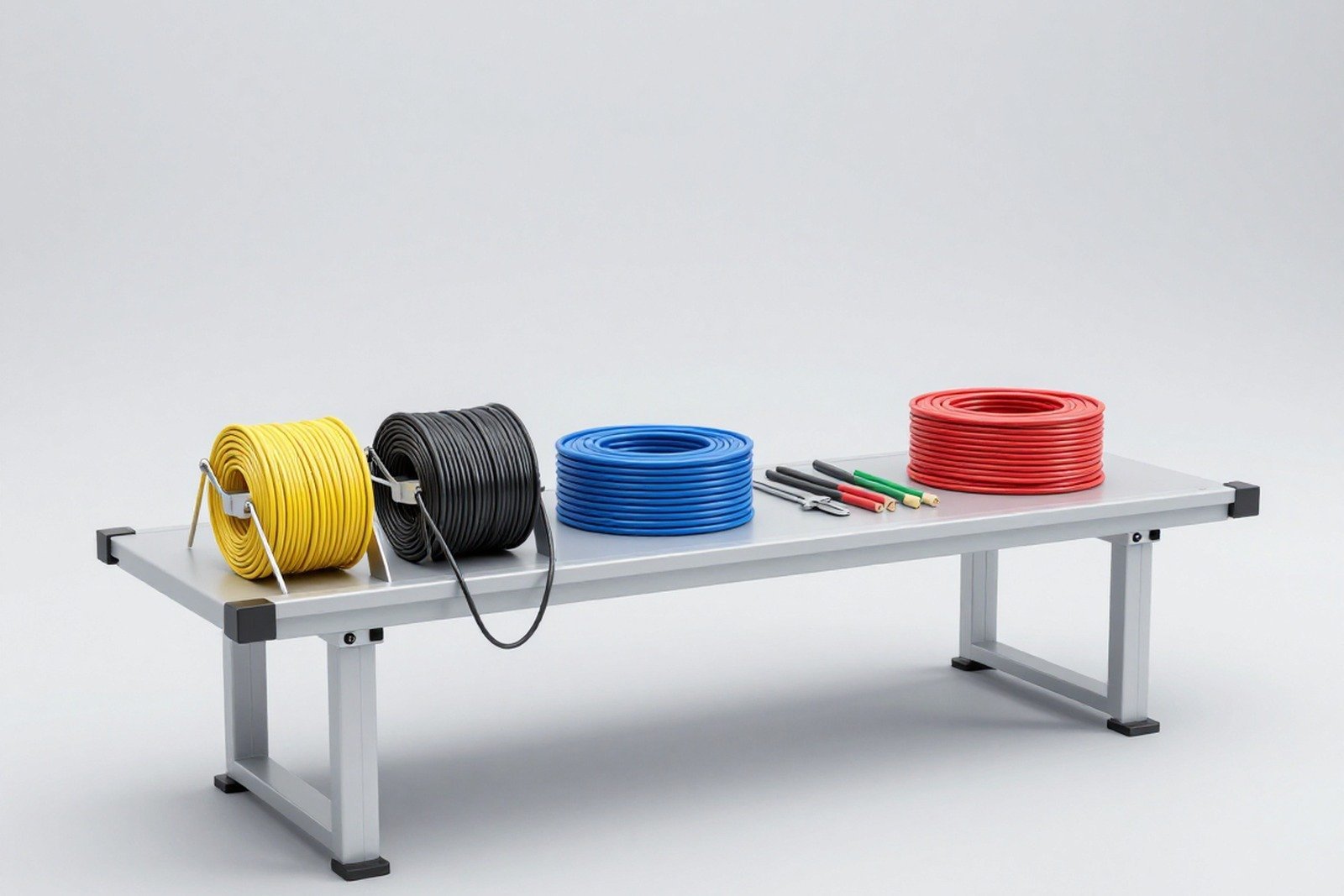
If I had to point to a single reason why electronics have exceeded the RoHS limit in recent years, the answer is usually cables: PVC casings containing phthalate plasticizers. This is a hot spot for three reasons at the same time — the large volume of plastic, the widespread use of plasticizers, and the group of substances that are limited by route so many old reports have not been included.
This article analyzes the mechanism, application roadmap, and how to control cables in the supply chain.
1. Why are cables a phthalate hot spot?
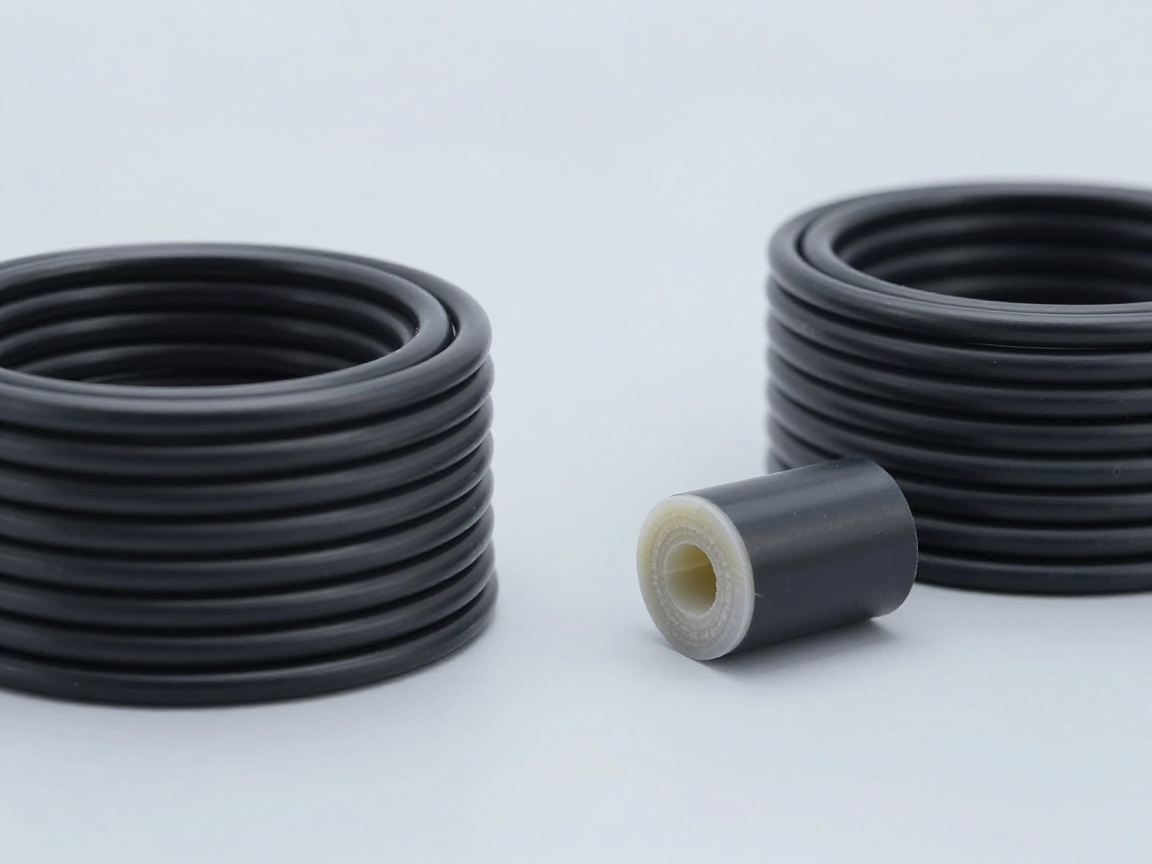
Hard PVC cannot be used for cable sheathing because it is too brittle. To be flexible, manufacturers add plasticizers in large proportions – some up to tens of percent by weight. The most common and cheapest group of plasticizers includes phthalates which are on the restricted substances list.
Three factors make the risk higher than other materials:
- Large additive ratio: Plasticization accounts for a significant proportion, so the concentration of restricted substances in a homogeneous material can easily exceed the limit.
- Many types of cables: One product can use many types of cables from many different suppliers.
- Recycled plastic: Cables or recycled plastics may carry plasticizers from unknown sources.
2. Group of related substances
| Substance group | Role in cable | Related to any request? |
|---|---|---|
| Restricted phthalate group (DEHP, BBP, DBP, DIBP) | Plasticizer softens PVC | RoHS restricted substances list, applied according to product group roadmap |
| Bromine flame retardant | Increases fire resistance for cable sheaths | Some compounds are restricted; Total bromine involved requires halogen-free |
| Lead and metal-containing stabilizers | Heat stabilization for PVC years ago | Lead is on the restricted substances list |
| Cadmium in pigments | Color some types of cable covers | Cadmium has a stricter limit |
Point to note: cable is where many groups of substances meet in the same material. So when testing cables, it’s a good idea to test for phthalates, flame retardants, and heavy metals — not just one group.
3. Roadmap for applying phthalate group
| Product group | When to apply the phthalate group | Note the fact |
|---|---|---|
| Most electrical and electronic equipment | The word mold applies generally to the list of restricted substances | Many older reports prior to this milestone did not include the phthalate group |
| Medical equipment and monitoring and control equipment | Apply later according to separate roadmap | It is necessary to check the correct milestones by product group when receiving old reports |
| In vitro diagnostic medical equipment | There is a separate itinerary for groups | Should confirm with customers about specific application milestones |
Practical consequence: many RoHS test reports predate the phthalate application milestone, although they are still “in time” in the sense of time. Businesses need to check whether the content of the report includes this group of substances, not just the date of issue.
4. How to control cables in the supply chain
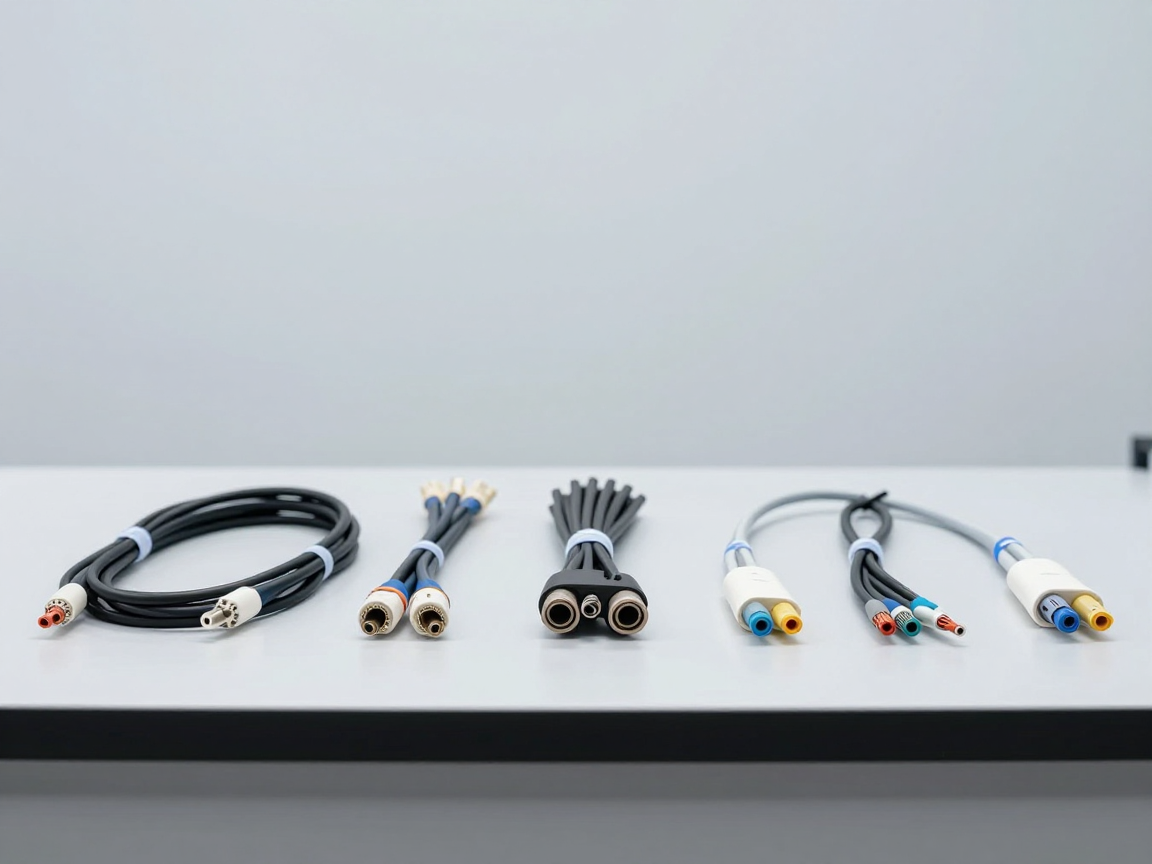
- Make a cable list by detailed code: Includes both separately purchased cables and pre-installed cables in purchased modules.
- Requires material declaration for each type of cable cover, clearly state the plasticizer group and the fireproof group.
- Try confirming according to mass spectrometry method for phthalate group, for first batch and periodically.
- Controlling recycled plastic: If the cable jacket uses recycled plastic, put it in the high-risk group and control each batch of raw materials.
- Internal labeling for materials meets: Helps warehouses and factories avoid mixing unconfirmed materials.
5. Alternative material selection and trade-offs
| Choose | Advantages | Trade-offs need to be evaluated |
|---|---|---|
| PVC with plasticization is not in the restricted group | Maintains the familiar properties of PVC | It must be verified that substitution plasticization is not limited and is batch stable |
| Halogen-free materials such as polyurethane or thermoplastics | Does not generate halogen groups when burned | Higher cost, need to re-evaluate fire resistance and durability |
| Cross-linked insulating material | Good electrical properties, commonly used in power cables | Flexibility and bending radius may vary |
What needs to be avoided is changing materials just to achieve one criterion and then ruining another criterion. With cables, three criteria often have to be weighed at the same time: fire safety, mechanical durability and electrical properties.
6. Frequently asked questions
Are RoHS reports from before the phthalate adoption milestone still valid?
Formally it may be there, but in terms of content it does not include the phthalate group unless tested. Need to try supplementing this group of substances, especially with products that use a lot of PVC.
Are alternative plasticizers restricted by RoHS?
May not be on the restricted list, but still needs to be checked according to other requirements such as REACH and customer’s own requirements.
Does the cable purchased with the module have to be tested separately?
Yes. This is a material included in the end product and therefore within the scope of assessment, even if purchased by the module supplier. Material data for the entire cable section should be requested.
What if the limit is only exceeded in a small section of cable?
The limit applies to each homogeneous material, regardless of length or mass. So it still has to be handled.
Is there a way to quickly test for phthalates at the factory?
There is no reliable hand-held screening method for phthalates because they are organic compounds. Control is mainly based on material declaration and periodic testing using mass spectrometry methods.
7. Conclusion
Cables are a phthalate hot spot because the PVC sheath contains a large proportion of plasticizers, and this group of substances is only applied by route so many older reports do not include it. Good cable control eliminates one of the most common causes of overshoot.
Three things to do: check the content of the old report to see if there is a phthalate group; Requires declaration of cable cover according to detailed code; and evaluate all three criteria when switching to alternative cable jacket materials.
References
- Directive 2011/65/EU and its amendments (RoHS), including the Directive authorizing the addition of the phthalate group.
- IEC 62321-8 — determination of phthalate groups in polymer materials by mass spectrometry.
- Regulation (EC) 1907/2006 (REACH) — restrictions relating to plasticizers and plastic materials.
Related articles
- QCVN 4:2009/BKHCN: safety requirements for electrical and electronic equipment and Amendment 1:2016
- Testing 4 phthalates (DEHP, BBP, DBP, DIBP): GC-MS principles and 6 common traps
- What is halogen-free? Not covered by RoHS but customers still request it — why?
- RoHS and plastic recycling: why is it most difficult for recycled plastic to achieve RoHS?
- 10 RoHS restricted substances: how do the 0.1% and 0.01% limits apply to “homogeneous materials”?
Discuss further
Disclaimer
This article is an interpretive content compiled by us; not legal advice. Enterprises need to compare relevant documents/standards verbatim before applying them to specific products.
See more: Copyright Policy & Disclaimer by ticforall.com.