XRF is the first device that nearly every test lab and every electronics factory uses when it comes to RoHS. It is fast, non-destructive, and low cost. But it is because of its convenience that it is most misused — and erroneous conclusions from XRF are the source of a large portion of the disputes over test results.
This article covers how to properly read XRF results, and five limitations that cannot be ignored.
1. How does XRF work?
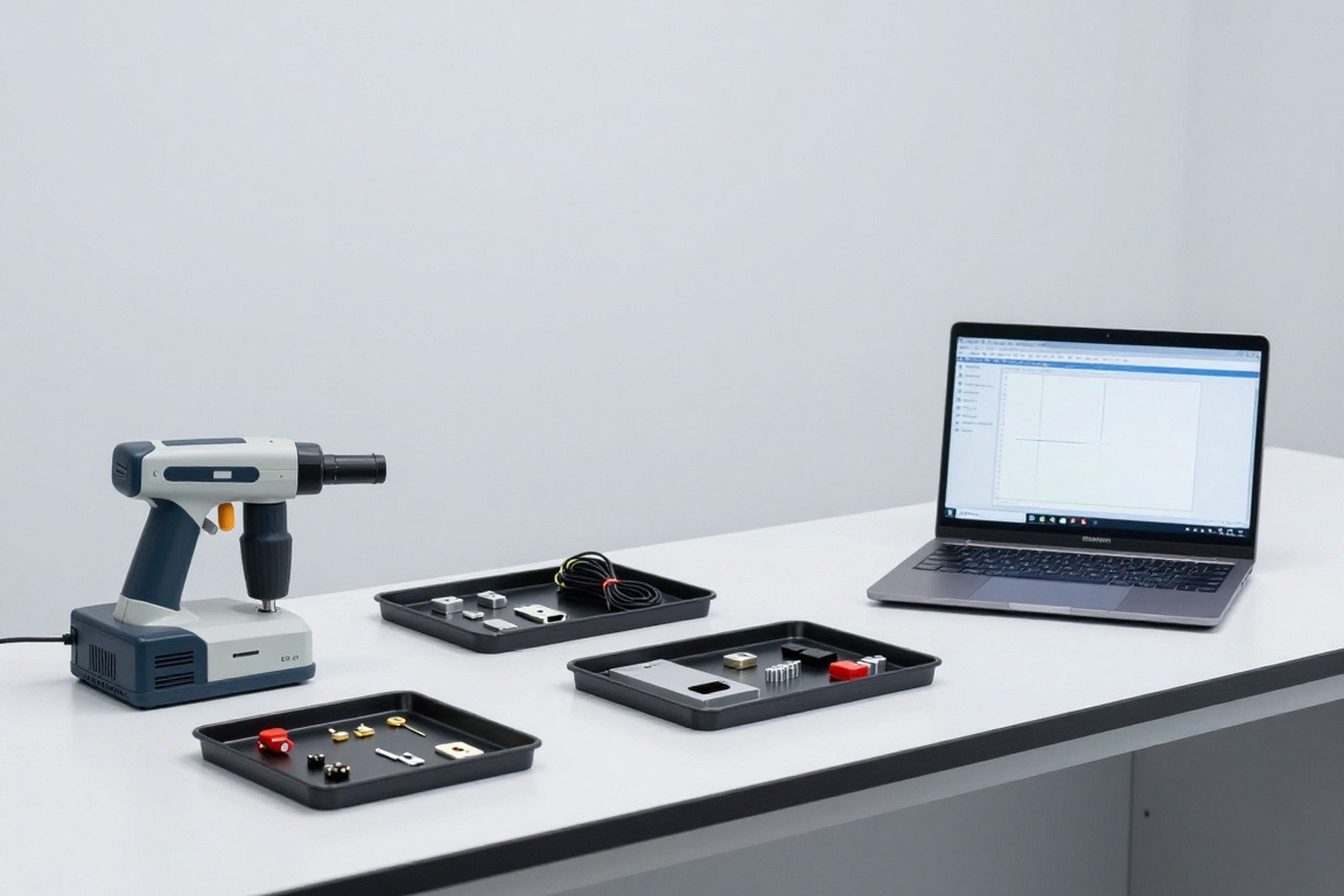
XRF (X-ray fluorescence) uses primary X-rays to shine on the sample. Atoms in the sample are excited, then emit energetic secondary X-rays characteristic for each element. The device measures that energy spectrum and infers the elemental composition of the sample.
The key point to understand: XRF measurements element, not measured compound. This is the key to understanding the rest of the article — and the root of nearly all misunderstandings.
2. What XRF can and cannot do
| Restricted substance | Can XRF screen? | Notes |
|---|---|---|
| Lead (Pb) | Yes | Characteristic element, good measurement |
| Mercury (Hg) | Yes | Measurable, but LOD higher than Pb/Cd; with very low concentrations is often inconclusive |
| Cadmium (Cd) | Yes | The limit of 0.01 % is very close to the baseline; Pay attention to spectrum interference |
| Chromium (Cr) — total | Yes | Only indicates total chromium, does not differentiate between Cr(III)/Cr(VI) |
| Cr(VI) — separately | No | Required to use chemical methods (colorimetry or ion chromatography) |
| PBB and PBDE | Only indirectly | Measure total bromine; individual compounds could not be identified |
| Four phthalates (DEHP, BBP, DBP, DIBP) | No | Phthalates do not have a characteristic element for XRF to recognize |
Looking at this table, we can see immediately: with RoHS’s list of 10 substances, XRF can only really answer about three and a half substances (Pb, Hg, Cd and total chromium). The remaining five substances — Cr(VI), PBB, PBDE and four phthalates — require a different method.
3. Three result zones: pass – inconclusive – fail
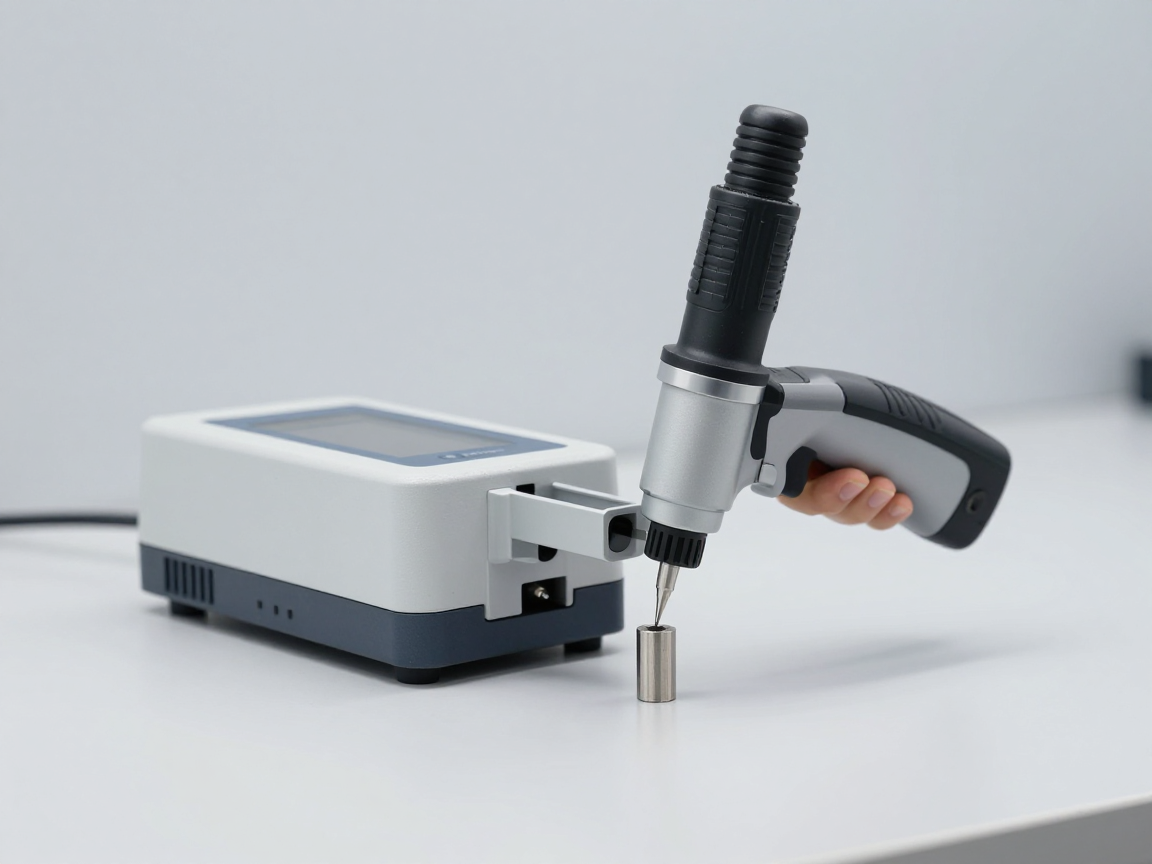
XRF results are not “pass” or “fail” but include: three regions:
| Region | Meaning | Things to do |
|---|---|---|
| Lower than the limit by a large enough distance | Pass in screening | Can be used as a basis for screening; recorded on file |
| Located close to the limit | Cannot conclude | It is mandatory to test confirmation by chemical method |
| A large enough distance higher than the limit | Failed screening | Try confirming; At the same time, check to see if any exemptions apply |
Zoning principles are based on measurement uncertainty of the device: a safety margin is used around the limit (common practice is a margin of ±3 times the standard deviation of the measurement for each element and each type of sample matrix). The specific number is specified in the standard and in the instrument’s calibration documentation — so when reading the report, look for the decision limit instead of just looking at the results.
Common misreadings: saw “850 mg/kg” and “limit 1,000 mg/kg” and concluded it was successful. If 850 is in the inconclusive region, the conclusion is invalid. This is a mistake that both buyers and sellers make.
4. Five limits you must know
Limitation 1 — XRF only for elements, not valence forms
The device indicates “Cr” as total chromium. Only some of that chromium can be Cr(VI). High chromium results not synonymous with exceeding the Cr(VI) limit. Details are presented in the article XRF reports “Cr” exceeds the limit: why is it not sure it is Cr(VI) and what should be tested next?
Limit 2 — Total bromine other than PBB and PBDE
XRF detects bromine, but PBB and PBDE are only two groups of many bromine compounds. Other brominated flame retardants (e.g. TBBPA) are not restricted by RoHS. So the result “High Br” is the necessary signal try GC-MS, not a conclusion of violation.
Limit 3 — XRF does not see phthalates
This is the most serious point in current reality. The four new substances of RoHS (and of China’s GB 26572-2025) are all phthalates. There are no specific elements for XRF to identify them. Meaning: a RoHS dossier based solely on XRF, technically, never tested for 4 of the 10 restricted substances.
Limit 4 — Coating thickness and sample matrix have a strong influence
With thin plating or paint layers, the XRF signal depends on the layer thickness, material density and the underlying metal substrate. With samples that are small, curved, or have complex geometries, errors can be much larger than with standard flat samples. Therefore, XRF results should be read in conjunction with the sample description and not as an absolute number.
Limit 5 — Only valid when measuring on homogeneous material
Measuring an entire assembly of parts using XRF is the wrong method. The X-ray beam can “see” a wider area than the material you intend to examine, and the result is a mixture of signals from multiple materials. The RoHS principle is to evaluate each homogeneous material — as described in the article What is “homogeneous material”?
5. When should confirmation testing (wet testing) be performed?
| Case | Need a confirmation test? |
|---|---|
| XRF results are clearly below the limit, the sample background is simple | Usually not |
| The results are close to the limit | Required |
| The results exceeded the limit | Required (to be sure and to determine the extent) |
| Suspected phthalates (PVC materials, soft plastics, glues, inks) | Required — XRF failed to check |
| Cr(VI) needs to be determined separately | Required — own chemical method |
| The customer requested a report citing chemical standards | Yes — XRF reports are not a substitute |
6. What is needed in a readable XRF report?
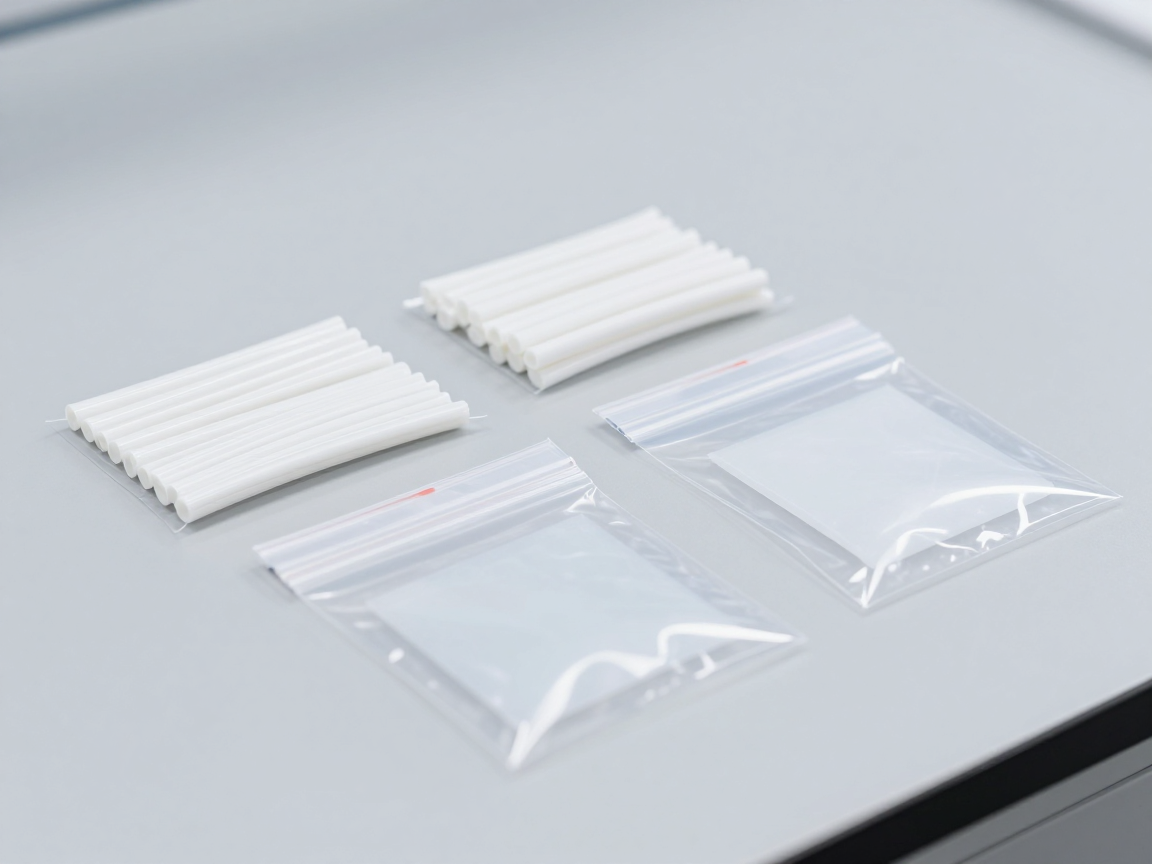
- Device name and model; measurement mode (e.g. plastic mode, metal mode); measurement time per point.
- Limit of detection (LOD) and limit of quantification (LOQ) for each element, according to each sample matrix.
- Decision limits are used for each element (to know the pass/fail/fail zone).
- Sample description: which sample, what material was removed, shape and thickness.
- The number of measurement points and the value of each point, not just the maximum value.
- Conclusion has scope: “screening results”, not “conclusion of conformity”.
7. Frequently asked questions
If the XRF passes, is it necessary to test for phthalates?
Yes, if the product contains materials that pose a risk of containing phthalates (PVC, soft plastics, glues, inks, cables). XRF does not technically test for phthalates, so a “pass” result from XRF does not cover these four substances.
If the product previously met RoHS 6 substances, will it now automatically meet 10 substances?
No. Four phthalates were added according to the 2019–2021 roadmap (and 2024 for in vitro diagnostics). The old dossier under 6 substances does not cover the four new substances.
Can XRF be used at the factory to check 100% of shipments?
Used for internal control, it is reasonable and very effective. But compliance documentation still requires results according to the standard-specified method, on a representative sample — and must include substances that cannot be measured by XRF.
Why do two devices give two different results for the same sample?
Due to differences in calibration, measurement geometry, beam size, measurement time and sample matrix treatment. Deviations between devices are normal; Therefore, results close to the limit should always be treated as inconclusive regions.
Is the XRF report legally valid?
The XRF report is part of the assessment record, valuable in accompanying risk assessment and validation results. It does not replace a conclusion of conformity, and it cannot replace chemical results for substances that cannot be measured by XRF.
8. Conclusion
XRF is a good screening tool, but Not a conclusive tool. Three things to remember: one, XRF only shows the element so it cannot conclude Cr(VI), PBB/PBDE and cannot test four phthalates at all; two, the result close to the limit is the inconclusive zone, not the pass zone; three, only measurements on homogeneous materials are meaningful.
References
- IEC 62321-3-1 — X-ray fluorescence screening
- Directive 2011/65/EU and Directive (EU) 2015/863 — list of restricted substances and limits
- European Commission Guidance on the RoHS Directive
Related articles
- How is Cross Section different from X-ray, AOI and ultrasound? When must the sample be destroyed?
- When is XRF only needed, when is wet testing required? Batch RoHS control strategy
- Cadmium in plating and brass alloys: a little talked about RoHS hot spot
- Lead in solder joints: lead removal roadmap and pitfalls when switching to SAC305
- What is halogen-free? Not covered by RoHS but customers still request it — why?
- Checklist of 20 RoHS control points for electronics factories (input – production – output)
- What is GB/T 39560? Why does China uniquely specify this set of test methods?
- PBB/PBDE testing by GC-MS: why recycled plastics are organic bromine hot spots
- Lead, cadmium, mercury testing: ICP-OES, ICP-MS or AAS — which method to choose?
- Cr(VI) test: how are colorimetric and ion chromatography (IC) different?
- Testing 4 phthalates (DEHP, BBP, DBP, DIBP): GC-MS principles and 6 common traps
- What is IEC 62321? What parts does the RoHS test method set include and what substances is it used for?
- RoHS test procedure from A to Z: from sample receipt, extraction, screening to reporting
- 10 RoHS restricted substances: how do the 0.1% and 0.01% limits apply to “homogeneous materials”?
Discuss further
Disclaimer
This article is an interpretive content compiled by us; not legal advice and does not replace the technical opinion of an accredited testing laboratory.
Decision limits, detection limits and specific results handling are specified in the standards and calibration documents of each device; Enterprises need to compare with testing laboratories.
See more: Copyright Policy & Disclaimer by ticforall.com.