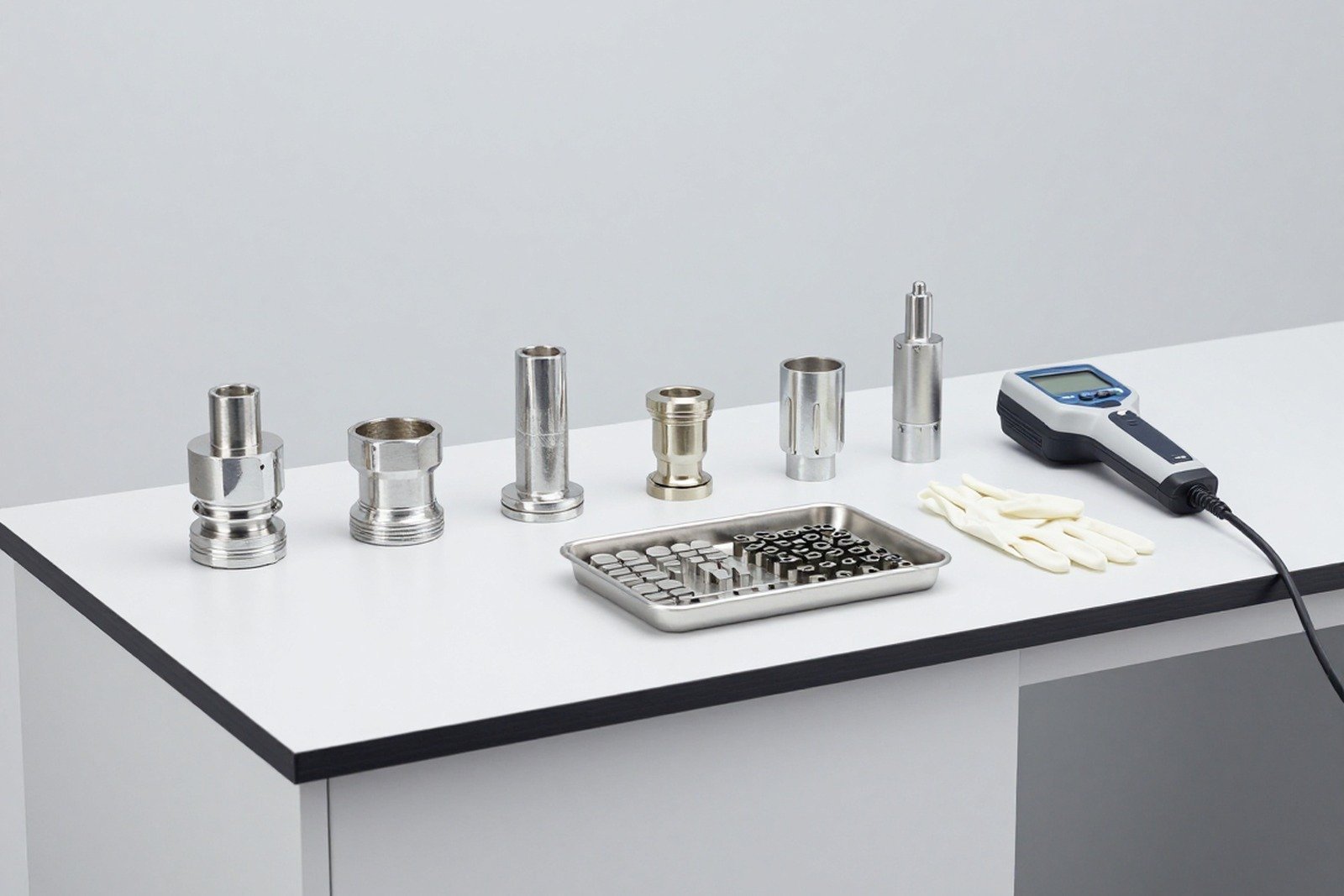
This is probably the most controversial situation between the factory and the testing laboratory: the XRF machine reports high chromium, the factory wants to know immediately “whether there is a violation”, and the testing laboratory can only answer “no conclusion yet”. Both sides are right — because this is a limitation measuring principle, not excessive caution.
The article explains why high chromium results from XRF do not say anything about Cr(VI), and the correct procedure to reach a conclusion.
1. Total chromium and Cr(VI): two different concepts
RoHS restrictions 6-valent chromium — Cr(VI), also known as hexavalent chromium. But chromium exists in many different oxidation states, the most common being:
| Form | Characteristics | Is it restricted by RoHS? |
|---|---|---|
| Cr(III) — trivalent chromium | Stable, much less toxic; Used in trivalent chromium passivation layer, tanning, pigment | No |
| Cr(VI) — hexavalent chromium | Strong oxidizer, toxic, causes allergies and cancer; Used in traditional chrome passivation layer, anti-rust paint, hard chrome plating | Yes — limit 0.1 % |
XRF counts chromium atoms. It does not read oxidation state. So:
- “High Cr” result could be 100 % Cr(III) → valid.
- A “low Cr” result may also still contain Cr(VI) → with coating, the assessment is completely different (see section 4).
In other words, XRF inability to answer questions about Cr(VI) — in both directions. This is why many testing laboratories only use XRF to decide whether further analysis is needed or not.
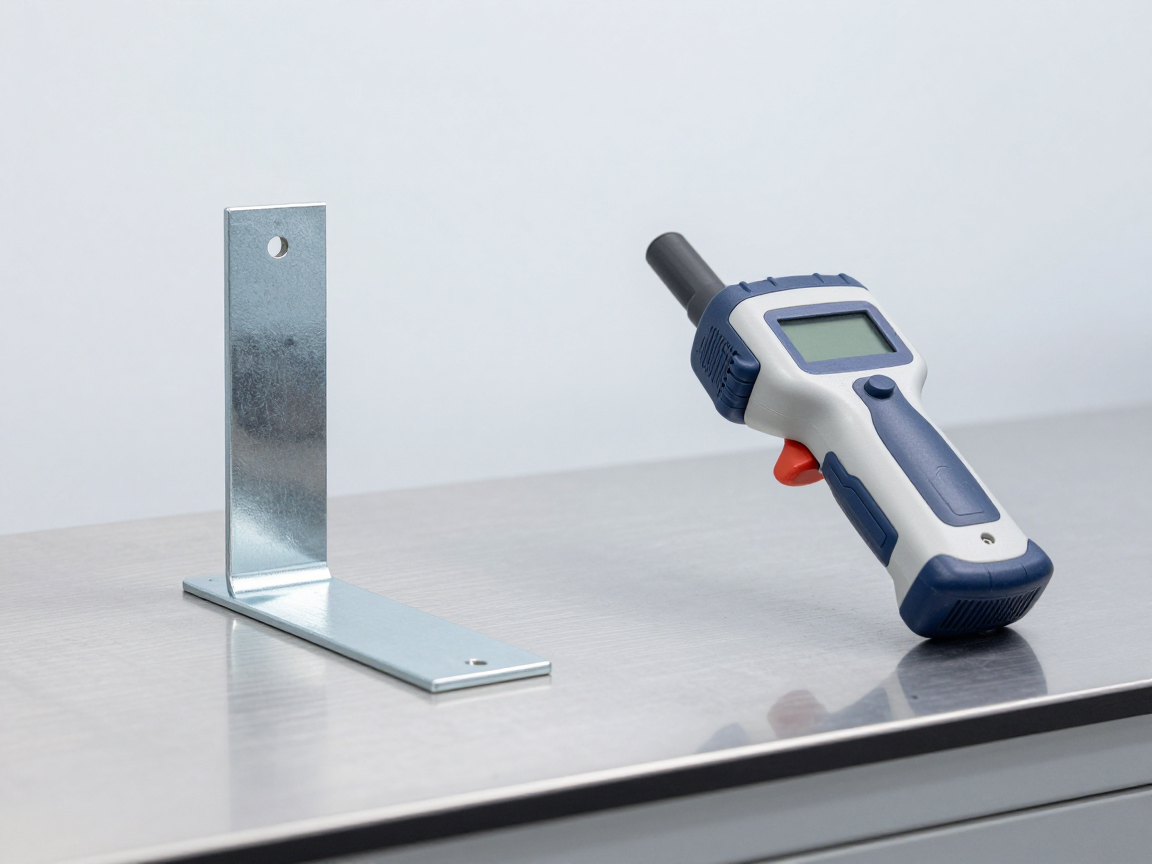
2. Why do you encounter high levels of chromium more often than you think?
In electronic and mechanical goods, chromium appears in places that are easy to miss:
- Chromium passivation layer on galvanized or electroplated steel parts — this is the most common source. This layer is very thin but lies exactly on the surface, so XRF measures it immediately.
- Hard chrome plating on wear-resistant parts, shafts, molds.
- Paint and anti-rust coating containing chromium pigment (for example, paint containing chromium zinc).
- Printing inks and plastics contain pigments contains chromium; Some types of recycled plastic contain chromium from other sources.
- Leather and fabric materials used for chrome tanning — not RoHS-compliant but commonly found in product accessories.
Common point: chromium is usually located extremely thin surface layer. This creates two opposing consequences — XRF is easy to detect, but sampling for Cr(VI) is also easy to get wrong.
3. Correct procedure after XRF reports high chromium
- Correctly identify chromium-containing homogenous materials. Don’t even try the details. It must be determined whether it is a passive layer, a plating layer, or a paint layer — because each layer is a separate subject of evaluation.
- Choose the method according to the nature of the chromium layer:
- Coatings, passivation layers, plating layers: using methods color measurement (colorimetric, with diphenylcarbazide) — this is the method specified for metal coatings. When the sample matrix is complex or requires confirmation, ion chromatography can be used.
- Bulk materials (plastics, polymers, electronic materials): determination of Cr(VI) by post-extraction colorimetry — IEC 62321-7-2 specifies the method for this group of materials; In case chromium is dispersed in metal, it dissolves and analyzes like a normal sample, compared to the limit of 0.1%.
- Compared to the correct type limit: with coating, Cr(VI) results are often expressed accordingly mass per area (µg/cm²) not by percentage. The corresponding limit for the overlay is 0.1 µg/cm² — this figure is essentially different from 0.1 % by mass.
- Clearly state in the report: method, sample area, sample mass, and limit used.
Step 3 is the most overlooked step. When seeing the result “0.08 µg/cm²”, readers often compare it to 0.1 % and then conclude “much lower than the limit, pass” — while 0.08 µg/cm² compared to the limit of 0.1 µg/cm² is close to the limit, should be handled with caution.
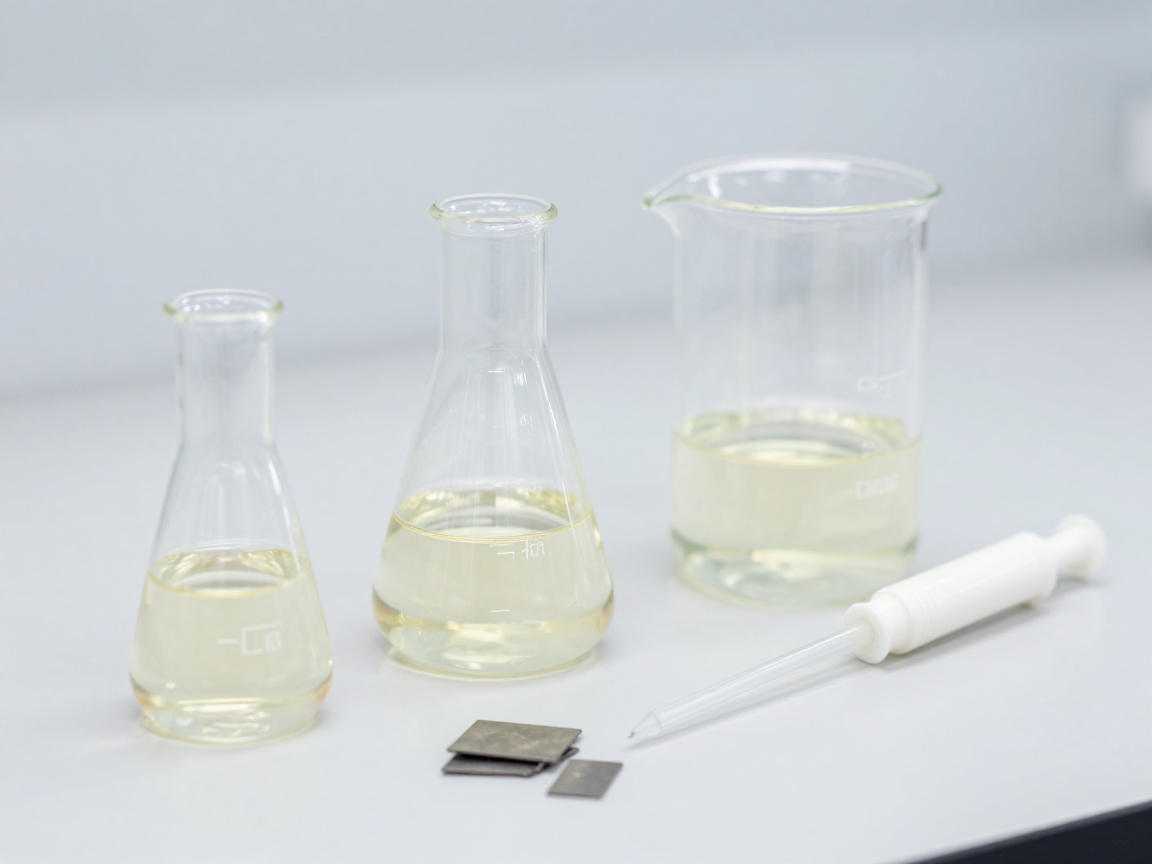
4. Two chemical methods: colorimetry and ion chromatography
| Colorimetric | Ion chromatography (IC) — complementary technique | |
|---|---|---|
| Principle | Cr(VI) reacts with the reagent to form a pink-purple complex; Measure color intensity using a spectrophotometer | Separate Cr(VI) on ion exchange column and measure; Total chromium determined by ICP after oxidation |
| Corresponds to IEC 62321 | Part 7-1 (metallic coatings) | Part 7-2 (polymers and electronic materials) — all use colorimetric methods |
| Advantages | Fast, low cost, great for coating | Good discrimination and quantification when the sample matrix is complex; better handling of difficult samples; is an additional technique besides colorimetry |
| Limitations | Sensitive to color interference and complex sample backgrounds | Higher costs, more complex equipment and techniques |
| Most suitable | Plating layer, passivation layer, light colored sample | Samples have complex backgrounds, samples with many metals, and require high reliability |
In reality, the two methods are not mutually exclusive. In many cases, colorimetry is used for quick checks, and ion chromatography for confirmation when results are close to the limit or when there is a dispute.
5. Three traps when sampling Cr(VI)
- Take the wrong class. If you also submit the part for “Cr(VI) testing”, the testing laboratory is forced to choose the treatment — and the results may reflect the base and not the coating. If you only need to evaluate the passive layer, be clear and ask how to sample.
- If the sample is left for a long time, the surface will oxidize. Cr(VI) is the oxidized form; Sample surface changes over time and storage conditions may alter results. Samples should be stored dry, clean, and sent promptly.
- Wrong units and limits. As mentioned in section 3: µg/cm² for coating, % by mass for bulk material. These are two different assessments, not directly comparable to each other.
6. If the result is correct that Cr(VI) exceeds the limit, how to handle it?
| Processing direction | Characteristics |
|---|---|
| Switch to trivalent chromium (Cr(III)) passivation layer | The most common direction and usually already available from the supplier; Corrosion resistance needs to be checked again |
| Switch to a chromium-free coating | For example organic or titanium/zircon based coatings; Need to rerun to test reliability |
| Use exemptions if applicable | Only if the specific application falls under a valid exemption — must be documented |
| Supply chain control | Require galvanized parts suppliers to submit Cr(VI) reports in batches, not just once |
Practical lessons: moving away from Cr(VI) It’s not just about changing chemicals. The new passivation layer may be less corrosion resistant, so environmental testing (salt haze, thermal cycling, humidity) must be rerun. This is why the transition takes time, and why many businesses still have to rely on exemptions in some applications.
7. Frequently asked questions
XRF reports about 0.2% chromium, is that a violation?
Cannot conclude yet. Need to know what form that chromium is in. If the plating uses trivalent chromium passivation, the total chromium content can exceed 0.1% without significant Cr(VI).
Is there any type of XRF that can differentiate Cr(VI)?
Not commonly used in practice. Distinguishing oxidation state requires specialized spectroscopic techniques with specific equipment, which is not common in commercial RoHS testing. The standard way is to use chemical methods (colorimetry or ion chromatography).
Why are Cr(VI) results on coatings in µg/cm²?
Because the coating is very thin, the mass percent concentration does not reflect the true amount of chromium that may be exposed. The assessment based on mass per area is more suitable for the nature of the coating, and the corresponding limit is 0.1 µg/cm².
What if Cr(VI) exceeds the limit when the product is sold?
Depending on the circumstances, it may be necessary to compare whether an exemption applies, and there is an obligation to take corrective measures (recall, notification, correction) according to regulations. This is a situation that requires legal consultation, not just technical consultation.
Is Cr(VI) regulated in any market other than the EU?
Yes — for example in China, GB 26572-2025 imposes the same 0.1 % limit for Cr(VI) in a list of 10 substances. See more articles about GB 26572-2025.
8. Conclusion
When XRF reports high chromium, the correct question to ask is not “by what percentage” but rather “What form is chromium in and what layer is it in?”. Three steps: identify the correct homogeneous material, choose the correct method (colorimetric or ion chromatography), and compare to the correct limit type (µg/cm² for coating, % for bulk material).
In fact, the majority of high chromium cases are trivalent chromium passivates — that is, valid. But only chemical results can answer, and a good profile always has that result.
References
- IEC 62321-7-1 — colorimetric determination of Cr(VI) in metallic coatings
- IEC 62321-7-2 — colorimetric determination of Cr(VI) in polymer and electronic materials
- Directive 2011/65/EU, Annex II — 0.1 % limit for Cr(VI)
Related articles
- Cr(VI) in the chromium passive layer: why does the mechanical and electronic industry often stick?
- Cr(VI) test: how are colorimetric and ion chromatography (IC) different?
- What is IEC 62321? What parts does the RoHS test method set include and what substances is it used for?
- RoHS test procedure from A to Z: from sample receipt, extraction, screening to reporting
- XRF RoHS screening: how to read the results, how much to trust, 5 limitations you must know
- 10 RoHS restricted substances: how do the 0.1% and 0.01% limits apply to “homogeneous materials”?
- RoHS Annex III exemption: three delegated directives 2025/2364, 2025/1802, 2025/2363 and deadlines 2026–2027
Discuss further
Disclaimer
This article is an interpretive content compiled by us; not legal advice. Thresholds and methods are stated for reference; Enterprises need to compare the text of Directive 2011/65/EU and the corresponding parts of IEC 62321.
See more: Copyright Policy & Disclaimer by ticforall.com.