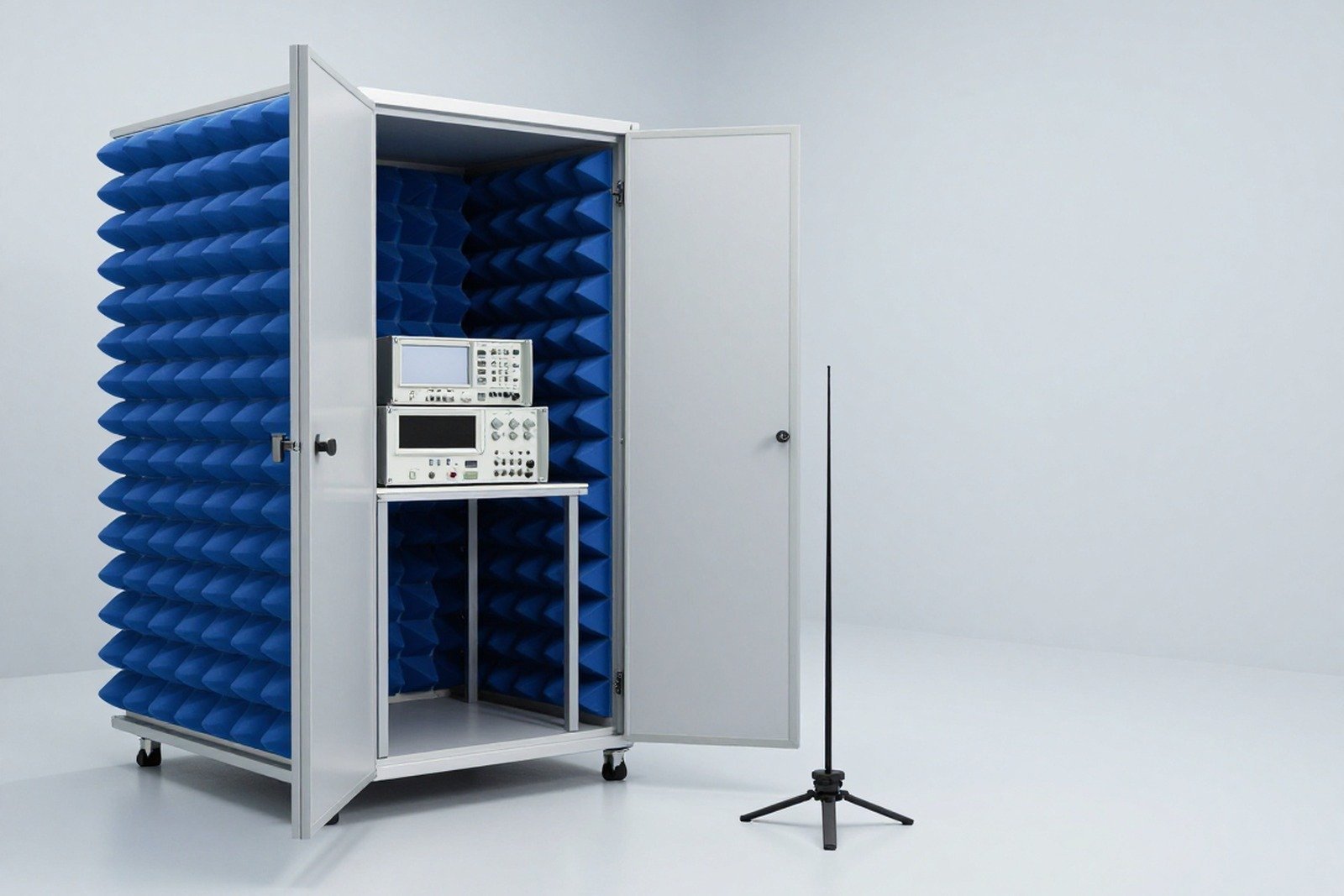
IEC 61000 is a set of electromagnetic compatibility (EMC) standards developed by the IEC: it does not stipulate which products must be labeled, but rather defines disturbance phenomena, test levels, measurement methods and limits so that all industry standards are shared. Correct understanding of this set of standards helps businesses choose the right test, the right version and not pay for unnecessary measurements.
1. Why an EMC basic standards series is needed
Almost all electrical and electronic equipment emit noise medium affected by noise from the environment. If each industry defines its own phenomena, test levels, and measurement methods, then test results in one lab cannot be compared with another, and a product that passes in one country fails in another.
IEC 61000 was born to solve exactly that problem: standardize phenomena and methods (belonging to group 61000-4), standardized low frequency emission limits (heading 61000-3), standardize the way the environment is described (heading 61000-2) and General standards for product groups (group 61000-6).
2. The six groups of the IEC 61000 series
- 61000-1 — General: concepts, terminology, evaluation models, functional safety and measurement uncertainty. For example, IEC 61000-1-2:2016 on methods to achieve functional safety, IEC 61000-1-9:2024 on uncertainty assessment.
- 61000-2 — Environment: Describe and classify the electromagnetic environment, compatibility level, and expected interference level. For example 61000-2-2 (low-band compatibility level in public low voltage grids), 61000-2-4:2024 (compatibility level in industrial installations).
- 61000-3 — Limits: emission limit low frequency injected into the public supply system — mostly current harmonics and voltage fluctuation/flicker (61000-3-2, 61000-3-3, 61000-3-11, 61000-3-12).
- 61000-4 — Testing and measurement techniques: Phenomena definitions, test levels, and testing methods — from ESD, EFT, surge, RF fields to voltage drops, magnetic fields, harmonics, and power quality. This is the group most used by laboratories.
- 61000-5 — Installation and mitigation guidelines: Instructions for installation, grounding, lightning protection and noise reduction at the system and construction level.
- 61000-6 — Generic standards: common standards follow usage environment when there are no industry standards: residential/commercial (61000-6-1, 61000-6-3), industrial (61000-6-2, 61000-6-4), power plant (61000-6-5), functional safety (61000-6-7), professional environment (61000-6-8).
3. “Basic EMC publication” and the role of IEC Guide 107
Most 61000-3 and 61000-4 standards carry status basic EMC publication follow IEC Guide 107. Meaning:
- They are not self-imposed on the product. The product standard or general standard (61000-6-x) is the “calling” document for use.
- They give test level range and standard method; Choosing which level and which criteria to meet is the responsibility of the industry technical committee.
- Therefore, when reading a test report, it is necessary to clearly distinguish: test level (from 61000-4-x) and applicable requirements (from product standards).
4. How to read the designation and edition
- 61000-4-2:2025 — part 4-2, official version 2025. The number after the colon is the year of issuance, not the version number.
- 61000-3-2:2018/AMD2:2024 — original 2018 with revision 2 issued in 2024.
- CSV (Consolidated version) is a consolidated version that has incorporated modifications; RLV (Redline version) is a comparison of changes; SER is the total package of parts of a group.
- When recording in documents, contracts or scope ISO/IEC 17025 should be recorded enough version strings, for example IEC 61000-3-2:2018+A1:2020+A2:2024, to avoid controversy over the application.
5. How do Part 3 and Part 4 differ?
This is the most commonly confused point:
- 61000-3 is the limit — says how many current harmonics and how many voltage fluctuations the device is allowed to emit. This is a “threshold”, there is no detailed test method.
- 61000-4 is the method — say how to generate disturbance, how much, how to arrange it, and according to what criteria to evaluate pass/fail. Here’s the “how to”.
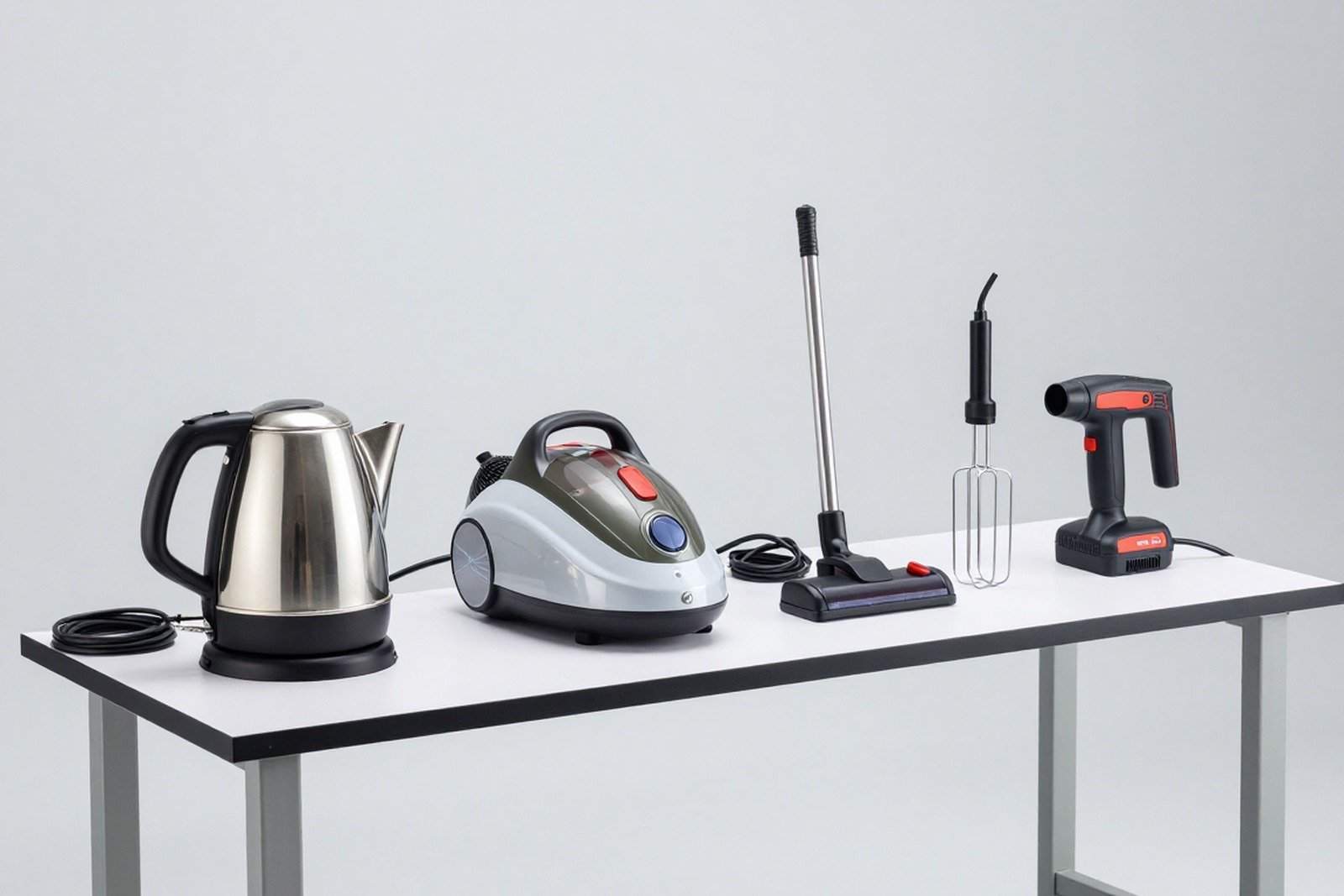
For example with a vacuum cleaner: the current harmonic limit is 61000-3-2, but the measurement is done according to the method of 61000-4-7; The flicker limit is 61000-3-3, and the standard measuring tool is the flickermeter 61000-4-15.
6. The relationship with CISPR — where most people get it wrong
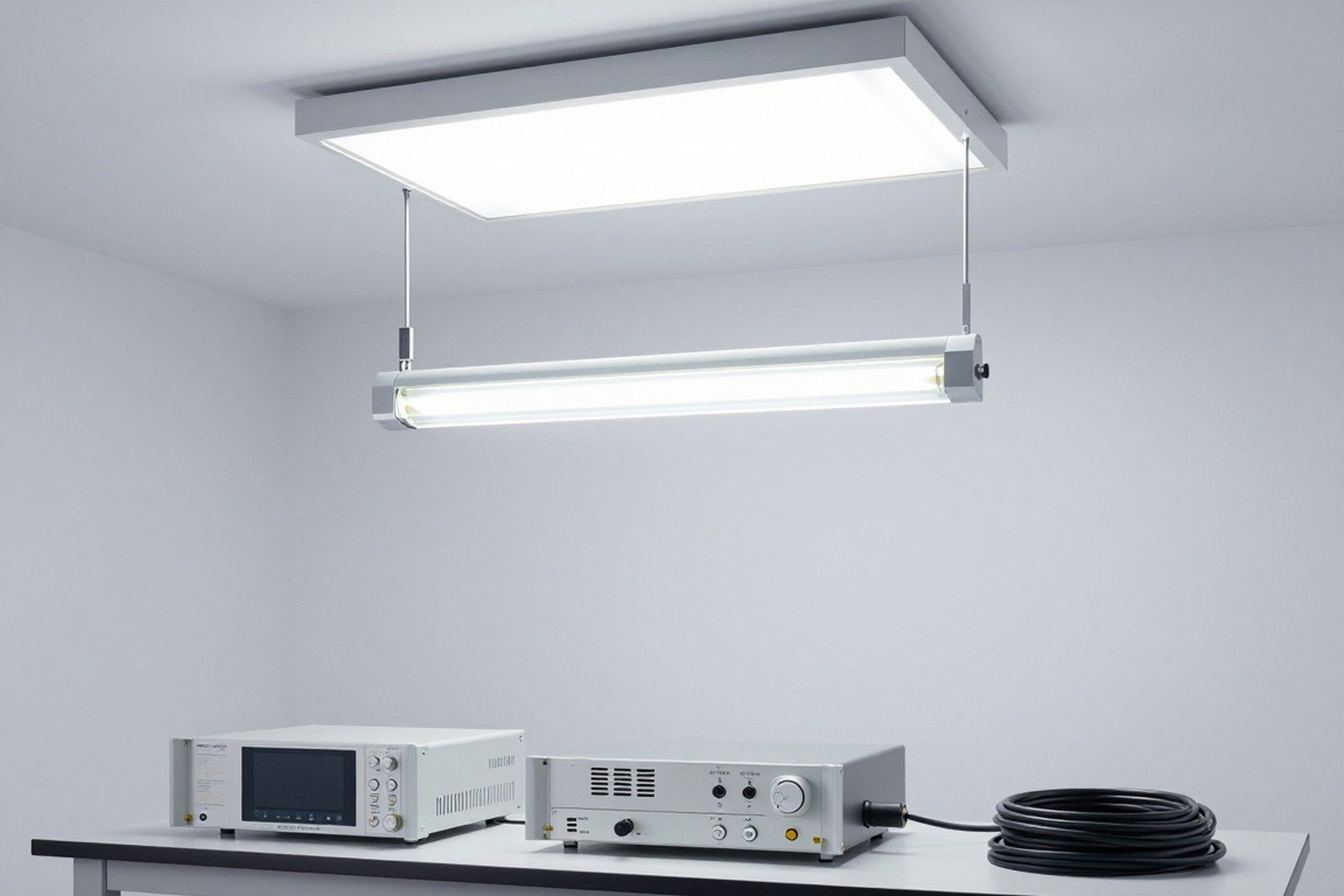
IEC 61000-3 only covers low frequency emissions (harmonics and flicker). Emission high frequency — conducted and radiated disturbances in the range 150 kHz and above — due CISPR regulations: CISPR 11 (industrial, scientific, medical equipment), CISPR 14-1/CISPR 14-2 (household appliances and electric tools), CISPR 15 (lighting equipment), CISPR 32/CISPR 35 (multimedia equipment), CISPR 16-1-x and CISPR 16-2 (measuring instruments and methods).
So a product may have to simultaneously: CISPR 14-1 for conducted/radiated interference, IEC 61000-3-2 for current harmonics and IEC 61000-3-3 for flicker — all are emission requirements but in three different standards.
7. Which editions are in force (checked 29 September 2026)
Look on the IEC Webstore, the IEC 61000 series is available About 170 publications are still valid. Some recently issued versions that businesses and labs need to update:
- IEC 61000-4-2:2025 (version 3) — replaces 2008 version, adds air-discharge electrode calibration requirements and wearable device appendices.
- IEC 61000-4-30:2025 (version 4, with revision 07/2026) — Class A/Class S power quality measurement method.
- IEC 61000-4-29:2026 (version 2) — voltage dips and short interruptions on the DC power port.
- IEC 61000-6-3:2026 (version 4) — general emission standards for residential environments.
- Notable mergers: 61000-3-2:2018+A1:2020+A2:2024, 61000-3-3:2013+A1:2017+A2:2021, 61000-4-6:2023 (version 5).
8. IEC 61000 in Vietnam
- Electrical safety: QCVN 4:2009/BKHCN and Amendment 1:2016, the standard is IEC 60335 (translated into TCVN 5699).
- Electromagnetic compatibility: QCVN 9:2012/BKHCN and Amendment 1:2018, the standards are CISPR 11, CISPR 14-1 and CISPR 15, translated into TCVN 6988, TCVN 7492-1 and TCVN 7186.
- For ICT and radio equipment, EMC requirements are within the specialized standards of the Ministry of Information and Communications; List and method of assessing conformity are found in Appendix I/II of Circular 36/2026/TT-BKHCN.
- Note: Vietnamese codes are currently based primarily on CISPR, but CISPR 14-1 and CISPR 15 cite 61000-3-2 and 61000-3-3 for harmonics and flicker — so group 61000-3 is still required.
9. Four steps to use the series in a technical file
- Determine the usage environment (residential, industrial, professional, power plant) and product type to find applicable industry standards.
- Check version of the IEC 61000-3 and 61000-4 sections cited by the industry standard — the version in the industry standard is the version that is valid for certification purposes.
- Finalize the list of tests, test levels and passing criteria before testing; clearly stated in the report.
- Compare national standards (QCVN) of the import market to supplement mandatory requirements such as labels, documents, and certification methods.
10. Frequently asked questions
Is IEC 61000 a mandatory standard for conformity marking?
No. IEC 61000 is a technical foundation standard. Mandatory documents are market standards/regulations (for example in Vietnam, QCVN 4 and QCVN 9), which cite the corresponding background standards.
Does a product need both Part 3 and Part 4 testing?
Depending on applicable standards: part 3 (limits) usually applies to all public low-voltage grid-connected equipment with current ≤ 16 A; Part 4 (immunity) only applies if required by product standards/regulations. Many markets require both.
11. Conclusion
IEC 61000 is the technical “skeleton” of EMC: group 1 talks about concepts, group 2 about environment, Group 3 on low frequency emission limits, Group 4 on test and measurement methods, group 5 is about installation, group 6 connects everything to the product according to the usage environment. Understanding the roles of each group, knowing which standards “call” which standards, and always checking the current version — these are the three things that help EMC documents go quickly and right the first time.
Related articles
- What is emission and immunity? EMC platform for standards makers
- What is IEC 61000-4? Overview of immunity tests
- Which EMC standards apply to your product? Selection diagram
- QCVN 4:2009/BKHCN and Amendment 1:2016: safety of electrical and electronic equipment
Talk to us
Disclaimer
The article was compiled by us for interpretation; not legal advice. Standard version data looked up on IEC Webstore on September 29, 2026. Enterprises should compare the verbatim standards and regulations applicable to specific products. Copyright Policy & Disclaimer.