The question “what EMC standards must my product test against?” there is only one answer: Applicable standards are product standards or product family standards cited by market regulations; Only when there is no standard do they use the general standard IEC 61000-6-x. Standard grade errors are the most common cause of returned documents.
1. Priority order among types of EMC standards
- Product standards: specific to a product type, for example transformers (IEC 61558), electric meters (IEC 62052), medical equipment (IEC 60601-1-2), electric drives (IEC 61800-3). Highest priority.
- Product family standards: for a functional product group — CISPR 14-1/14-2, CISPR 15, CISPR 11, CISPR 32/35. Second priority.
- Generic standards: IEC 61000-6-1, 6-2, 6-3, 6-4, 6-5, 6-7, 6-8 — only for use where there is no appropriate product/product family standard.
- Basic standards: IEC 61000-3-x and 61000-4-x — provide limits, levels and methods; It is cited by superiors and does not stand on its own.
Principles of practice: Do not stack two standard levels with the same scope. If CISPR 14-1 has already been applied to washing machines, there is no need to apply 61000-6-3 for the same emission requirement.
2. Step 1 — Classify the product by family
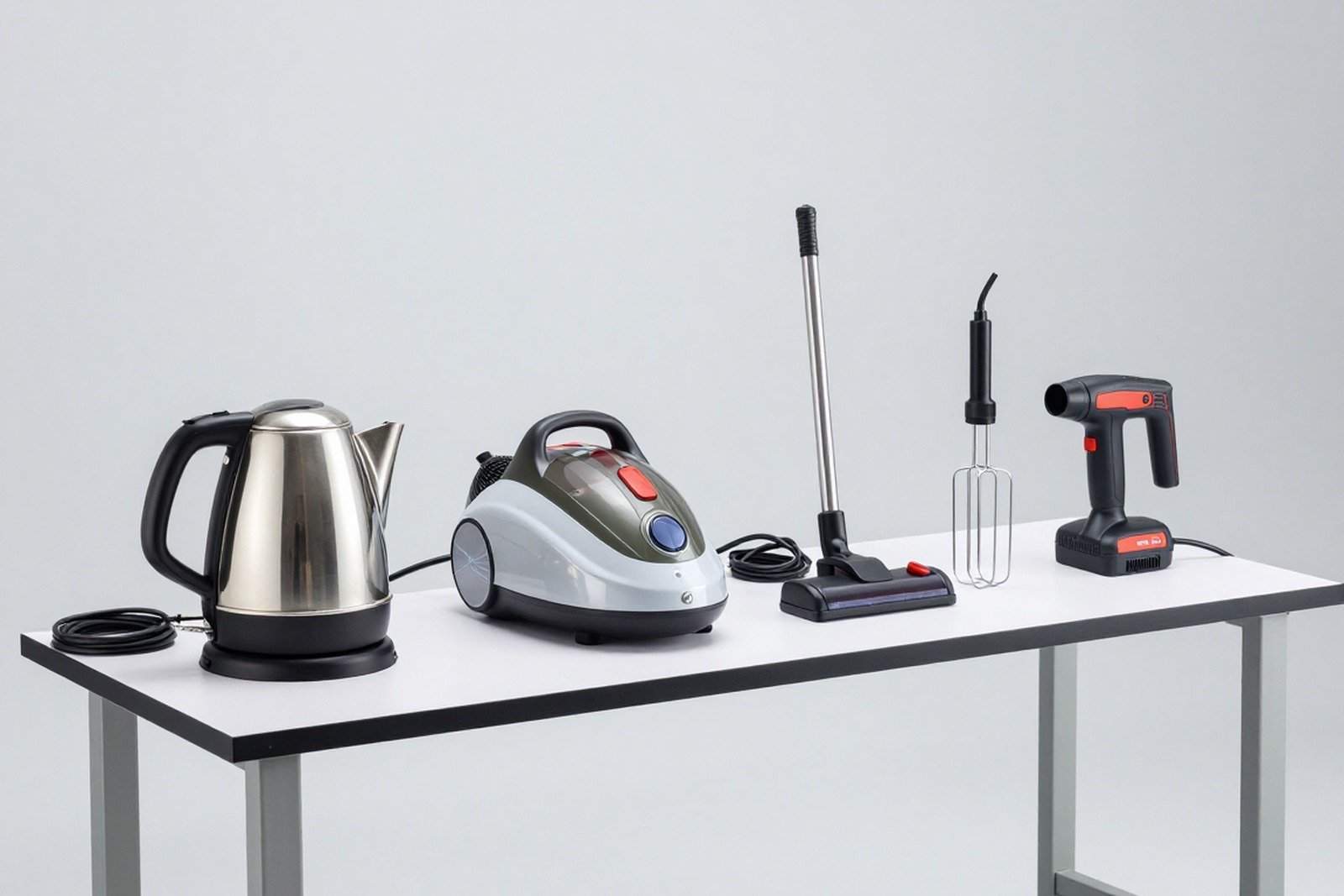
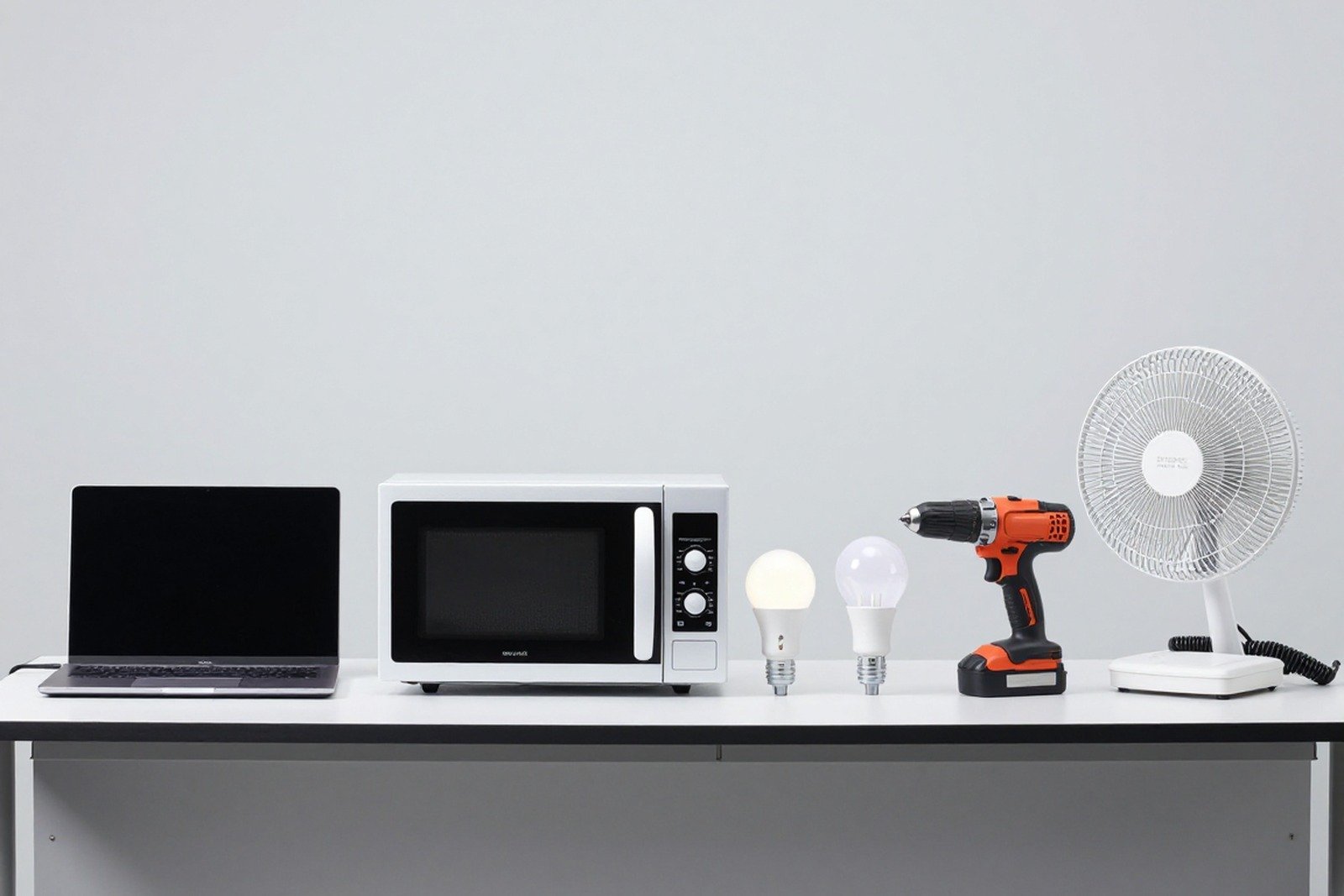
- Household appliances, hand-held electric tools, electric toys, cooking equipment: CISPR 14-1 (emission) and CISPR 14-2 (immunity).
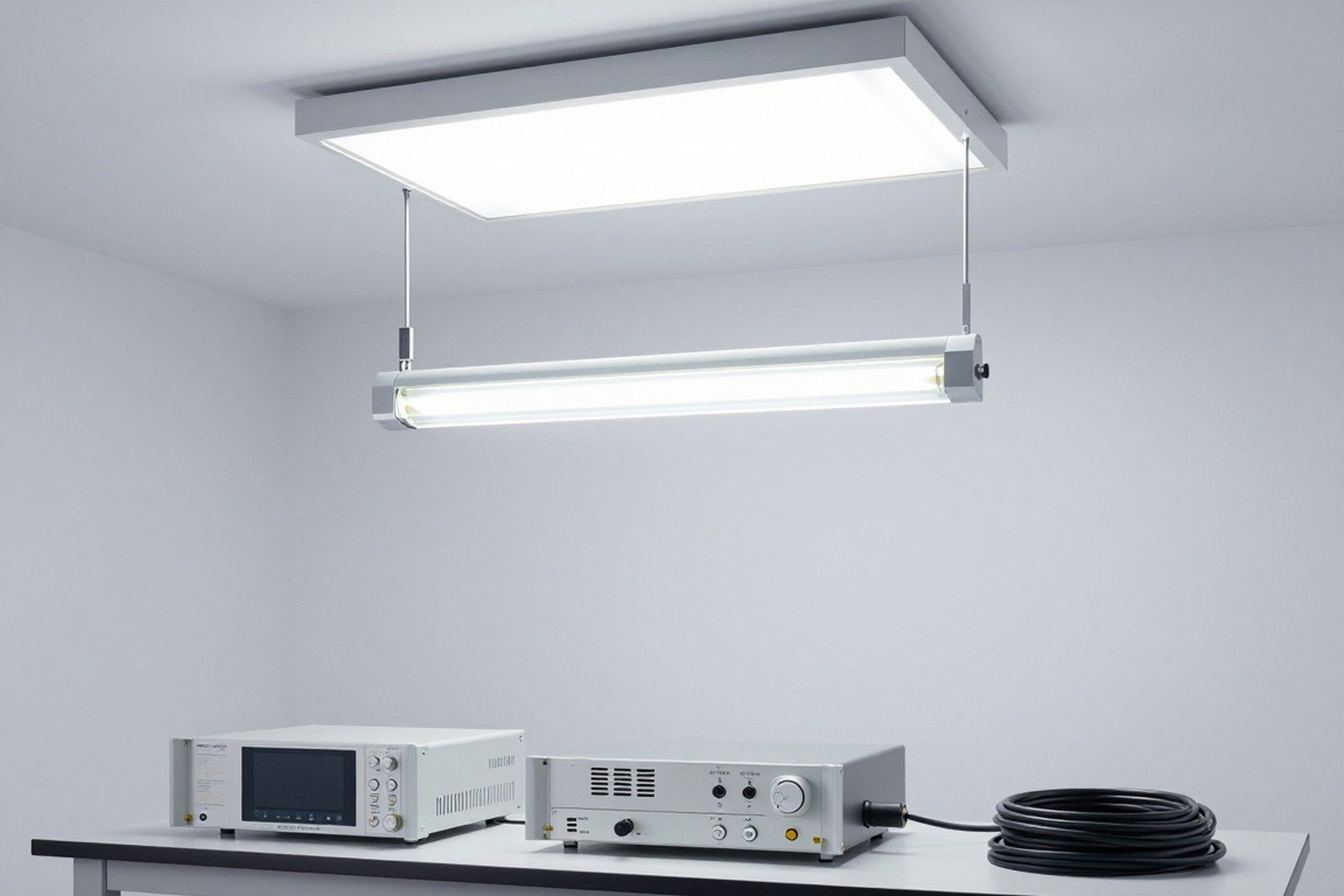
- Lighting equipment: light bulbs, light sets, drivers, ballasts, street lights — CISPR 15.
- Multimedia devices: computers, monitors, network equipment, routers, TVs, audio equipment, IP cameras, printers — CISPR 32 (emission) and CISPR 35 (immunity).
- Industrial – scientific – medical equipment (ISM), industrial power supplies, welding machines: CISPR 11 (emission); immunity according to product standard or 61000-6-2.
- Medical equipment: IEC 60601-1-2 (including detailed EMC immunity for medical devices and medical systems).
- Electric drive – inverter: IEC 61800-3.
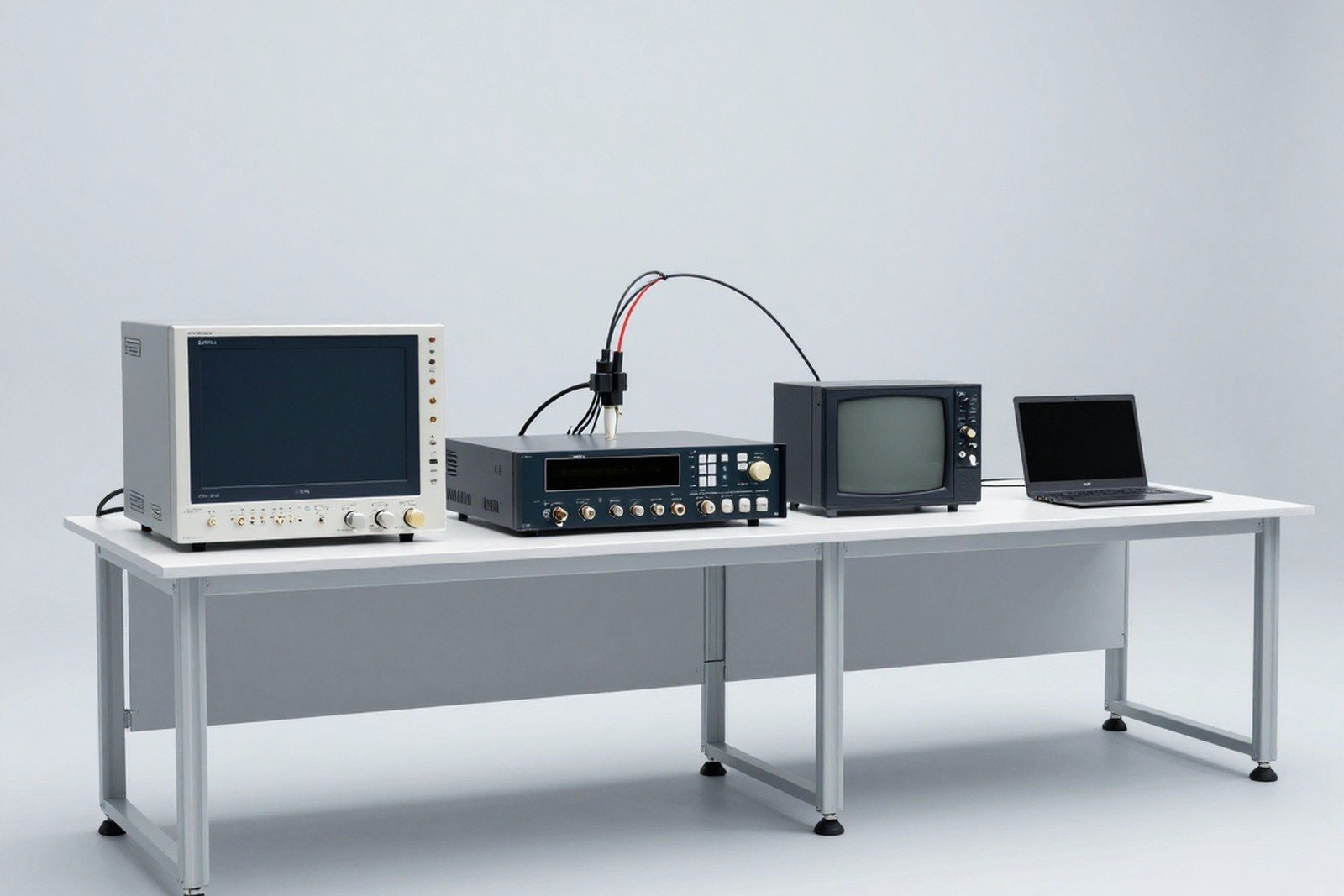
- Measurement and control equipment: IEC 61326-1 (and parts 61326-2-x for specialized measuring equipment).
- Electric cars and motorbikes: CISPR 25 (vehicle emissions), ISO 11452-x (vehicle immunity), ISO 7637-x (power cable impulses), UNECE R10.
- Wireless radio devices: corresponding radio standard (e.g. EN 300 328) and the accompanying EMC standard by functional group, usually EN 301 489-x.
3. Step 2 — Determine the environment of use
The environment decides Class (A or B) of emission limits and immunity levels when using common standards:
- Residential, commercial, light industrial environments: tighter limits (Class B according to CISPR 32; 61000-6-3 emission, 61000-6-1 immunity).
- Industrial environment: The limits are looser (Class A; 61000-6-4 emission, 61000-6-2 immunity) but the immunity level is higher.
- Transformer stations, power plants: 61000-6-5 — places with unusually high electromagnetic intensity.
- Safety function: 61000-6-7 — relating to functional safety and safety-related systems.
- Professional equipment for use in unknown environments: 61000-6-8.
Practical note: when selling the same product to both households and factories, manufacturers often choose a stricter level so that one set of records can be used for many distribution channels.
4. Step 3 — Always check the 61000-3 group if connected to the public supply
Regardless of product family, if equipment is connected to the public low-voltage supply system, the following two low frequency requirements are often cited in the family standard:
- IEC 61000-3-2: current harmonic limit — applicable for equipment with input current ≤ 16 A per phase.
- IEC 61000-3-3: Limits voltage fluctuations and flicker — applies to equipment ≤ 16 A per phase, not affected by 61000-3-11.
This is why CISPR 14-1 or CISPR 15 in the filing still entails the 61000-3-2/3-3 requirement: the 61000-3 group adds a “low frequency” section that CISPR does not cover.
5. Standard selection flow — four questions in a row
- Does the product have its own product standards? If there is one (medical, meter, transformer, transmission), use that standard first.
- If not, then which family does the product belong to? Household appliances (CISPR 14-1/14-2), lighting (CISPR 15), multimedia (CISPR 32/35), ISM (CISPR 11).
- Don’t belong to any family? Use general standard 61000-6-x according to the usage environment.
- Does the product plug into the public low-voltage grid? If applicable, add 61000-3-2 and 61000-3-3 when referenced in the standard.
6. Where it is easy to go wrong
- CISPR 22 and CISPR 13 have been merged into CISPR 32. New filings should not cite CISPR 22; Corresponding immunity switched to CISPR 35 (formerly CISPR 24).
- CISPR 32 has emission only. If the regulation requires immunity, CISPR 35 or the corresponding general standard must be added.
- LED lighting falls under CISPR 15, not CISPR 32 — unless the device is a display or multimedia device.
- The separate power supply (adapter, driver) may belong to a different family than the finished product — it is necessary to determine which products are “responsible devices” according to market regulations.
- Class A and Class B are not “immunity test levels” — they are environmental emission classifications, not interference resistance assessments.
7. Application in Vietnam
- Electrical equipment, household electronics and power tools: QCVN 9:2012/BKHCN (Amended 1:2018) cites CISPR 14-1, CISPR 15 and CISPR 11; Translated into TCVN 7492-1, TCVN 7186, TCVN 6988.
- ICT and wireless equipment: according to specialized standards of the Ministry of Information and Communications, with a list of potentially unsafe goods in Appendix I/II of Circular 36/2026/TT-BKHCN.
- Electrical safety (not EMC but comes with documentation): QCVN 4:2009/BKHCN and Amendment 1:2016, IEC 60335 series standards.
8. Conclusion
Choosing the right EMC standard is a hierarchical problem, not a “choose a test” problem. Let’s start from product standards – product families – general standards in the correct order of priority, determine the environment used to finalize Class A/B, and always check whether the profile entails the current harmonic and flicker requirements of group 61000-3.
Related articles
- What is IEC 61000? Overview of electromagnetic compatibility standards
- What is CISPR 32? Emission for multimedia devices
- CISPR 14-1: emissions for household appliances and power tools
- Conformity assessment procedure 2026 for household appliances and ICT
Talk to us
Disclaimer
The article was compiled by us for interpretation; not legal advice. The list of standards is a typical example and does not replace the search for applicable standards and regulations. Copyright Policy & Disclaimer.