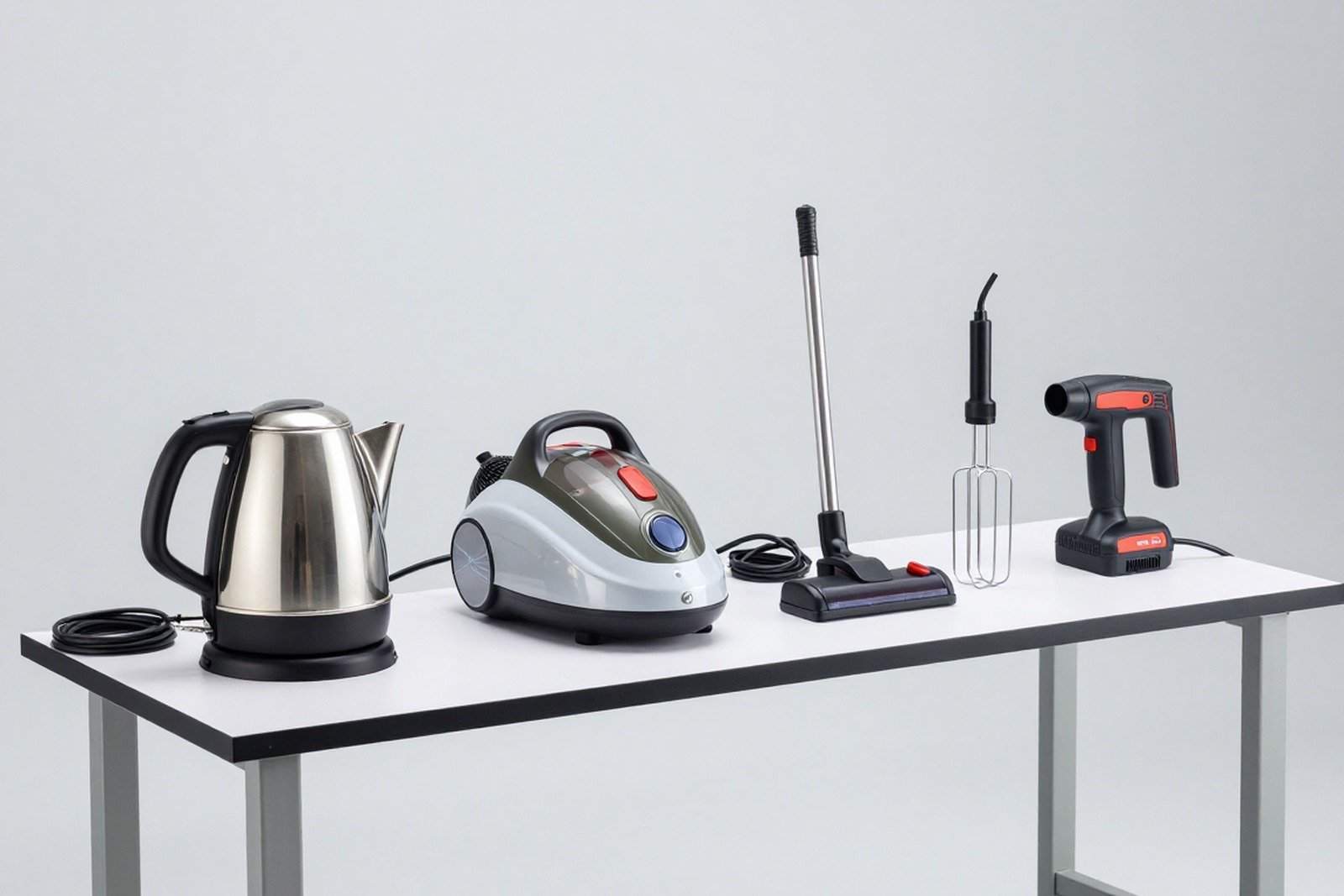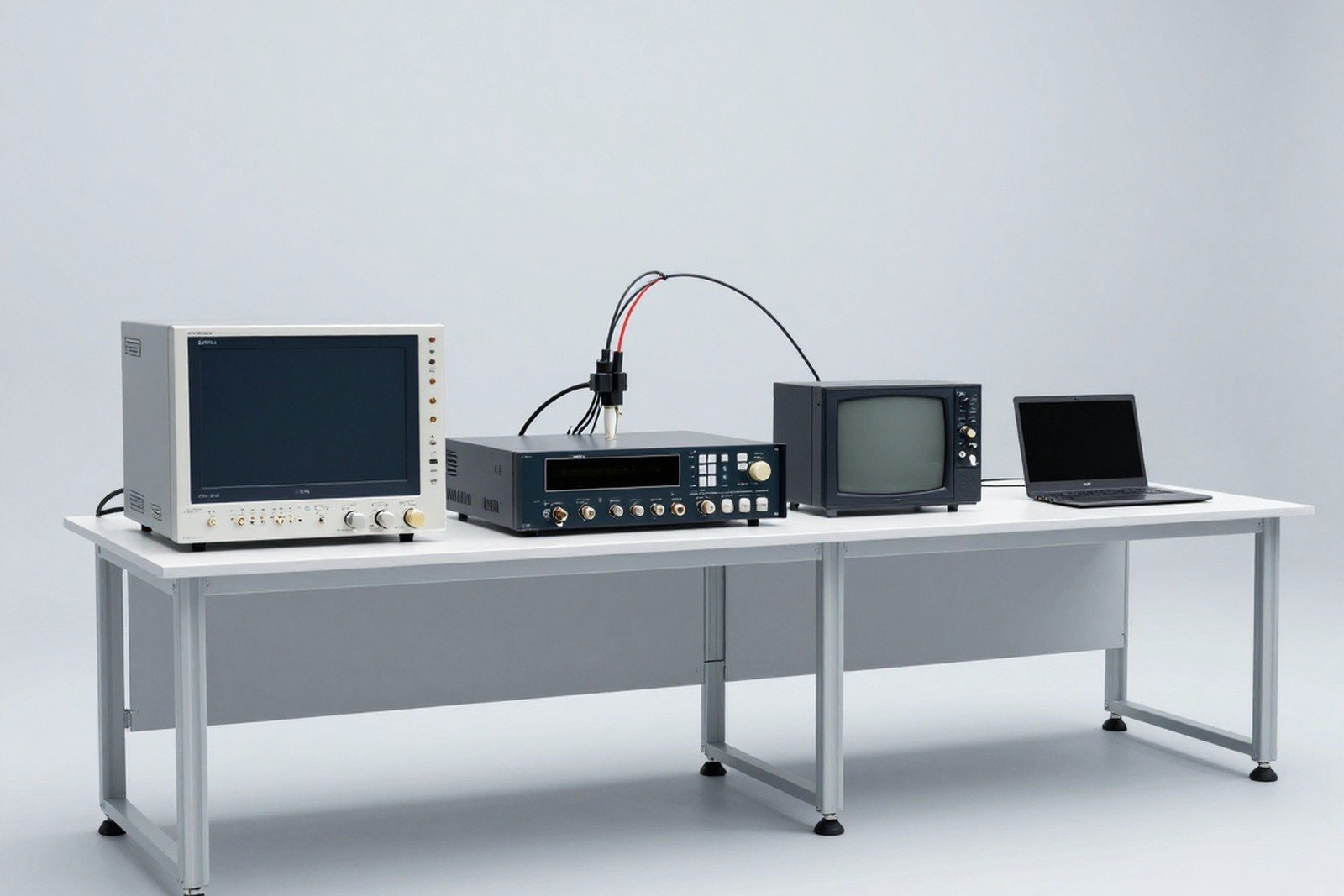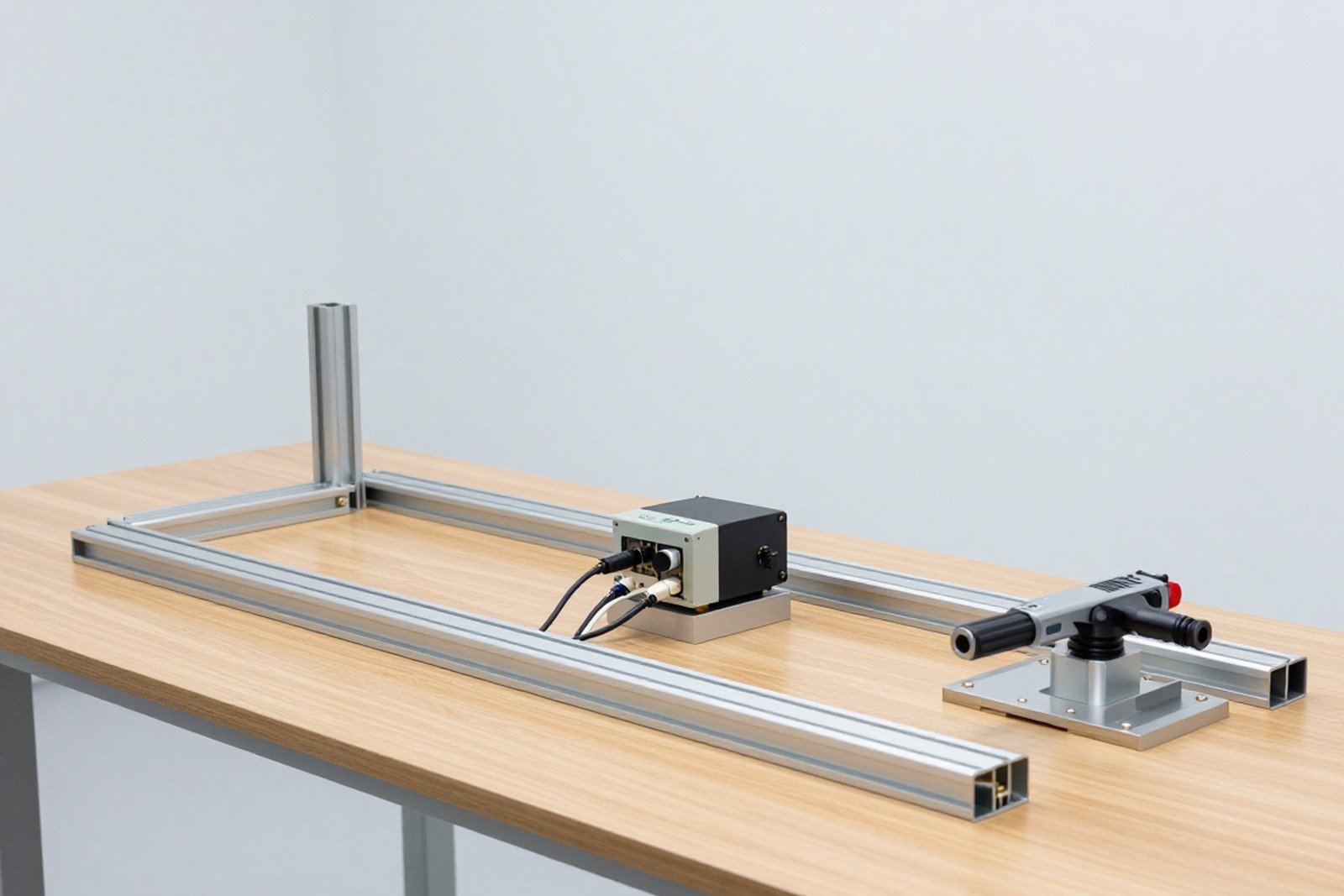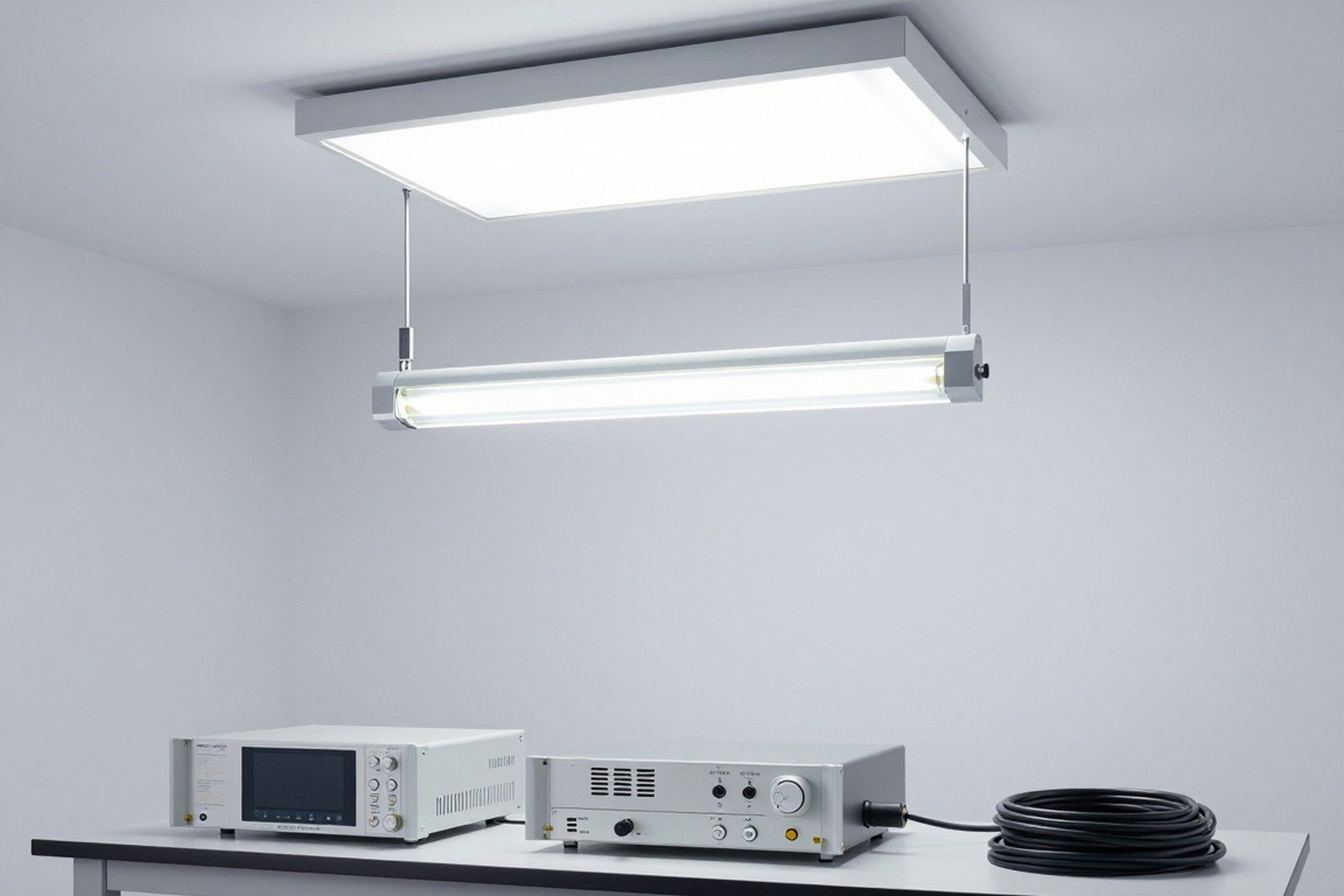
CISPR 15 is the prescribed standard Limits and methods for measuring electromagnetic interference for lighting and similar equipment. The point that makes CISPR 15 unique is: The measuring frequency range starts from 9 kHz — lower than most other EMC standards — along with specific tests such as insertion loss, because the luminaire is a system with long wires, ballasts and drivers distributed throughout the entire luminaire block.
1. Scope of application
- Bulbs and self-ballasted lamps: Fluorescent lamps, compact lamps, LED lamps, high-intensity discharge (HID) lamps, metal halide lamps, sodium lamps.
- Luminaire and accompanying control devices: electromagnetic ballast, electronic ballast, LED driver, power adapter for lights.
- Specialized lighting equipment: Street lights, headlights, decorative lights, construction lights, stage lights and some types of advertising lights as prescribed by standards.
- Devices use mains power and some devices use battery power or DC power, depending on configuration.
- Exclusions: display screens and multimedia equipment (CISPR 32), household appliances (CISPR 14-1), industrial – scientific – medical equipment (CISPR 11).
2. Why the measurement range starts at 9 kHz
Electronic ballast and LED driver switch at frequencies of tens of kHz (usually 20 – 100 kHz). The noise generated around the switching frequency and its harmonics falls exactly in the range below 150 kHz, where the radio-marine bands and some control systems on the grid are operating. Therefore, CISPR 15 must “cover” from 9 kHz instead of starting at 150 kHz like other standards.
3. The main tests
3.1. Terminal voltage disturbance at the mains port — 9 kHz to 30 MHz
- Use a network to stabilize the source impedance and evaluate quasi-peak and average.
- Limit has many sub-ranges, for example with power connector: approx 110 dBµV in the range 9 – 50 kHz, gradually decreasing 90 → 80 dBµV in the range 50 – 150 kHz, 66 → 56 dBµV in 150 – 500 kHz, 56 dBµV in 500 kHz – 5 MHz and 60 dBµV in 5 – 30 MHz.
- Because the limit below 150 kHz is quite “open” but the driver’s noise is large right there, most CISPR 15 errors of LEDs fall in the range of 9 – 150 kHz.
3.2. Radiated disturbance
- Range 30 MHz – 300 MHz, extended to 1 GHz according to some regulations; typical limit 30 dBµV/m (30 – 230 MHz) and 37 dBµV/m (230 – 300 MHz) when measured at 10 m.
- Large luminaires, street lamps, and lamps with long wires often cause stronger radiated disturbance than small lamps because the wire structure and lamp frame act as antennas.
- For the range below 30 MHz, the standard stipulates the measurement of radiated magnetic fields using frame antennas according to specific configurations.
3.3. Insertion loss — 9 kHz to 30 MHz
- Is a typical test of CISPR 15, applicable to some types of luminaires with separate ballasts.
- The test determines the amount of attenuation the luminaire provides to the interfering signal — that is, evaluates its ability to “block” the interference from spreading from the lamp to the grid.
- The required attenuation value depends on the frequency range and lamp type, so you must look up the table in the standard.
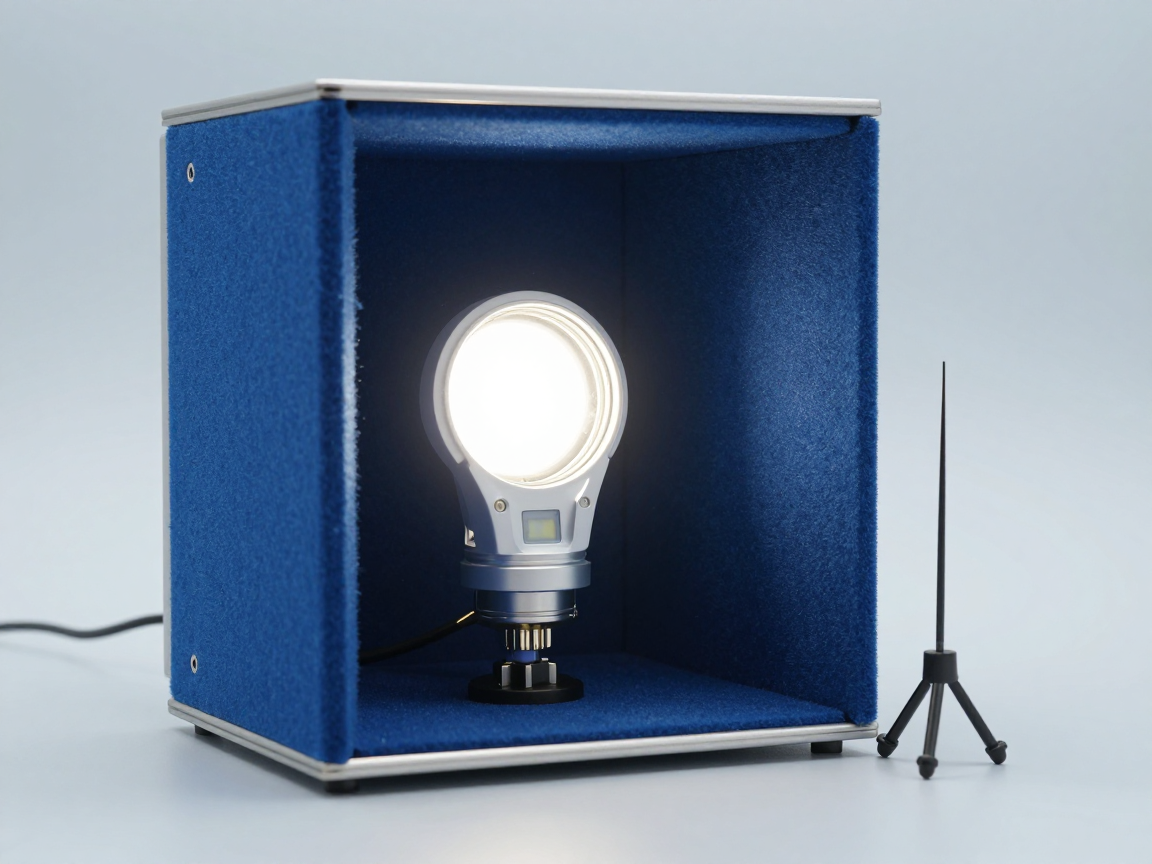
4. Lamps must meet both CISPR 15 and 61000-3-2 Class C
This is a point many businesses miss. Lighting equipment is inside two Different request groups:
- CISPR 15 — high-frequency disturbance (9 kHz – 30 MHz and radiation above 30 MHz).
- IEC 61000-3-2 Class C — current harmonics at low frequencies (3rd order = 30·λ % of basic current, next steps 10 %, 7 %, 5 %, 3 %…), same exemption conditions for some devices with power ≤ 25 W according to the provisions of the standard.
- With some types of lamps, additional considerations must be taken IEC 61000-3-3 if the capacity and load characteristics fall within the applicable range.
Common reality: LED lights use cheap drivers with only bridge rectifiers and filter capacitors — achieving CISPR 15 is quite easy but Class C sliding because the 3rd harmonic is too large, and vice versa, drivers with active PFC achieve better Class C but generate higher frequency noise if the EMI filter is not designed properly.
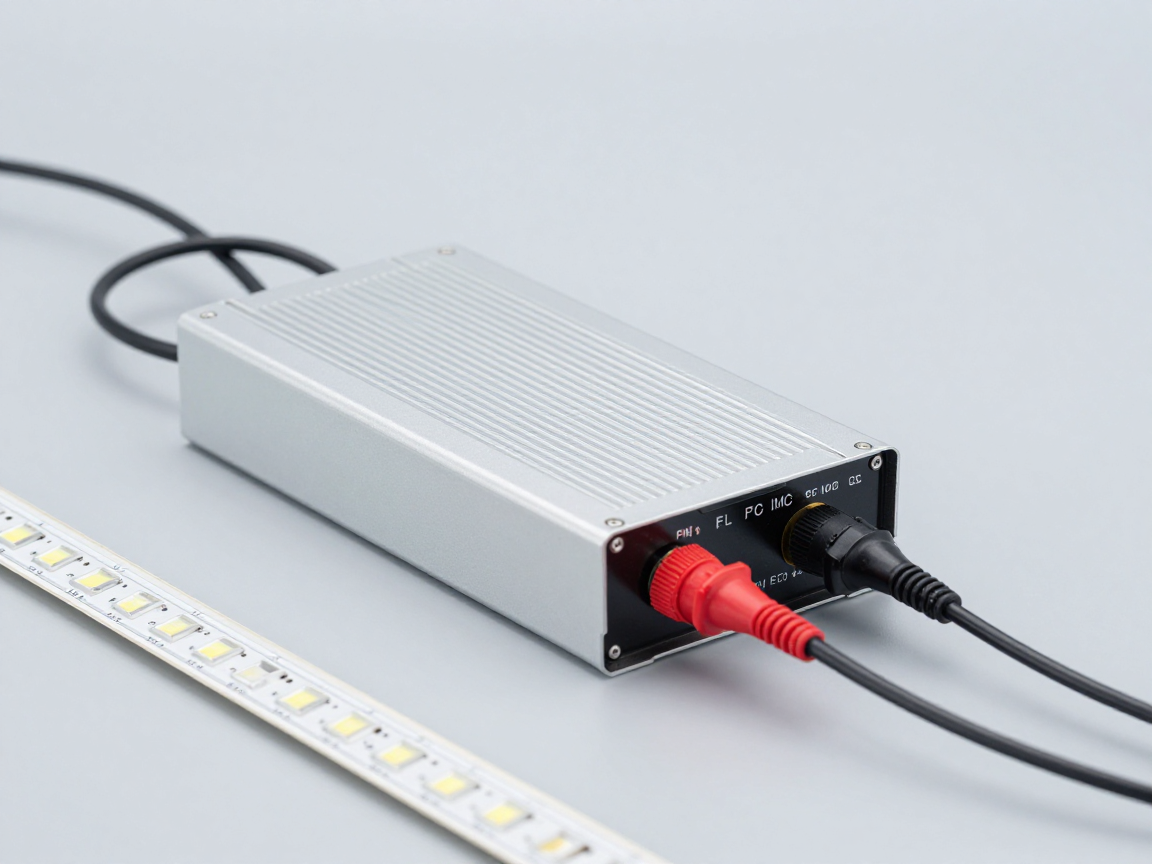
5. Test conditions and easy mistakes
- The lamp must be optically stable: Measure after the lamp stabilizes (usually 15 – 30 minutes), at the specified test room temperature. LED and CFL noise changes with temperature.
- Devices with brightness adjustment: Must measure at many dim levels because the switching frequency changes with the dim level, and the maximum interference level is not 100%.
- Included light and bulb set: When selling light sets with bulbs, you must try the correct combination sold on the market.
- Lamp wire and frame: Luminaire length, arrangement and size strongly influence radiated interference — do not change configuration between tests.
- Power source and measuring cable: All power wires must pass through LISN, including the dim or controller wires.
6. Edition and application in Vietnam
- CISPR 15 is updated multiple times to keep up with LED technology; When preparing documents, you need to look up the current version on the IEC Webstore and the version cited by market regulations.
- In Vietnam, CISPR 15 is translated into TCVN 7186 and is in the group of referenced standards of QCVN 9:2012/BKHCN with Amendment 1:2018 for household electrical and electronic equipment.
- For imported lights, documents usually include: electrical safety (IEC 60598/TCVN respectively), EMC (CISPR 15), energy efficiency (according to energy labeling regulations) and current harmonics (61000-3-2).
7. Frequently asked questions
Do LED lamps have to be tested to CISPR 15?
Have. LED lighting fixtures and LED drivers fall within the scope of CISPR 15. Only LED products with display/information functions will move to CISPR 32.
Are lamps below 25 W exempt?
The standard has provisions for exemptions for some low power cases, but exemption conditions depend on the type of device and version of the standard; must check the original text before drawing conclusions. In many cases, measuring is still cheaper than arguing about exemption conditions.
Why measure from 9 kHz when the equipment switches at only 50 kHz?
Because the harmonics of the switching frequency and transient phenomena at start-up create a spectrum that spreads below the fundamental frequency, directly affecting the frequency range used for information on the grid.
8. Conclusion
CISPR 15 is a “narrow but deep” standard: the scope is just lighting equipment, but the requirements range from 9 kHz to 1 GHz with specific tests such as insertion loss. With LEDs, success depends almost entirely on driver quality — and the driver has to satisfy high frequency noise (CISPR 15) confused current harmonics (61000-3-2 Class C), the two problems pull in two different directions.
Related articles
- Which EMC standards apply to your product? Selection diagram
- IEC 61000-3-2: current harmonic limits for equipment ≤ 16 A
- CISPR 14-1: emissions for household appliances and power tools
- What is emission and immunity? EMC platform
Talk to us
Disclaimer
The article was compiled by us for interpretation; not legal advice. The above limits are illustrative for common ranges; The original table in the CISPR 15 version cited for the specific product must be consulted. Copyright Policy & Disclaimer.