A business that produces circuit boards for both consumer electronics and automotive products often asks the question: “We have passed RoHS, so can we use it for car parts?” Short answer: not by default. Automotive goods are subject to a different set of substance limits — commonly called ELV — with a substance list and approach unlike RoHS.
Correct understanding of these two sets of regulations helps businesses avoid two costly mistakes: sending RoHS documents to auto customers (not up to the standards they need), or defaulting to “car parts are exempt from RoHS” and then selling those same parts to the consumer electronics market.
This article compares RoHS and ELV at the principle level: applicable subjects, substance lists, limits, exemptions and accompanying obligations. The goal is for businesses to know for sure which regulatory “roof” they are under before signing a declaration of conformity.
1. Two regulations, two different goals
Both were released around 2000–2003 and both have limited heavy metals, so it’s easy to be lumped into one. But the root goal is different:
| RoHS | ELV | |
|---|---|---|
| Object | Electrical and electronic equipment (EEE) launched on the EU market | Road vehicles and their materials/components |
| Original goal | Limiting hazardous substances in EEE, taking into account the procedureing of electronic waste | End-of-life vehicle management: substance limitation and recovery, recycling, reuse |
| Focus | Cleaner electronic product design | Manufacturer’s responsibility throughout the vehicle’s life cycle |
Here is the core difference: RoHS is simply a substance restriction regulation, also ELV both limits substances and imposes recovery obligations and recycling rates. In other words, ELV is broader than RoHS in terms of scope of obligations, but narrower in terms of restricted substance categories.
2. Four substances (ELV) versus ten substances (RoHS)
This is the most important practical difference. RoHS restrictions 10 substances. ELV is only limited 4 heavy metals:
| Quality | RoHS | ELV |
|---|---|---|
| Lead (Pb) | Yes (0.1 %) | Yes (0.1 %) |
| Mercury (Hg) | Yes (0.1 %) | Yes (0.1 %) |
| Cadmium (Cd) | Yes (0.01 %) | Yes (0.01 %) |
| Hexavalent chromium — Cr(VI) | Yes (0.1 %) | Yes (0.1 %) |
| PBB, PBDE (brominated flame retardant) | Yes (0.1 %) | No restricted under this category |
| DEHP, BBP, DBP, DIBP (phthalate) | Yes (0.1 %) | No restricted under this category |
The consequence is very specific: a plastic part can exceed the limit phthalates and is excluded by RoHS, but is not included in the ELV restricted list. On the contrary, it does not mean that automobile products are free to use up — substances not restricted by ELV can still be restricted by other regulations, for example REACH.
3. Threshold: same 0.1 % (and 0.01 % for cadmium), same calculated on homogeneous material
This point is re-defined by two sets of regulations same. Both RoHS and ELV impose weight-based limits in each homogeneous material, not calculated on the whole product or details:
| How to calculate | RoHS | ELV |
|---|---|---|
| Measurement unit | % mass according to homogeneous material | % mass according to homogeneous material |
| Cadmium | 0.01 % | 0.01 % |
| Remaining substances | 0.1 % | 0.1 % |
Because of the same “homogeneous material” logic, the analytical techniques used for RoHS — XRF screening, then confirmatory chemical methods — also work for ELV. The difference lies in List of substances to be tested, not located how to test.
4. Exemption: each regulation has its own appendix
Both have a list of exemptions, but are two independent documents, updated on separate schedules:
| RoHS | ELV | |
|---|---|---|
| Where exemptions are listed | Annex III (and Annex IV for medical and monitoring devices) | Annex II of the ELV Directive |
| Typical exemption group example | Lead in high temperature solder joints, lead in brass alloys,… | Lead in some aluminum/steel alloys and batteries, lead in solder joints of some electronic components mounted on vehicles,… |
| Who edits the list? | Modify through the Authorization Directive, the procedure associated with ECHA | Edit through authorization, but according to ELV’s own schedule and process |
Points to note: a RoHS exemption does not “flow” to ELV and vice versa. A weld that is exempt under RoHS for reason A may still not be exempt under ELV if the ELV does not have a corresponding entry. This is a very common error when businesses reuse records between two product lines.
Also, when automotive customers request proof, refer directly to Annex II of the current ELV Directive — do not infer from Annex III of RoHS. Details of each item and application deadline of both It is necessary to compare the exact text of the currently effective document.
5. Scope: when does a part “fall” into RoHS, when does it fall into ELV?
General principles: regulations follow the way products are brought to market, does not go by the name within the factory.
- Belongs to ELV: materials and components used to assemble into vehicles and put on the market as part of the vehicle.
- Under RoHS: Electrical and electronic equipment is marketed as an independent product.
- The car itself (vehicle for transporting people or goods) located outside RoHS scope — this is the connection that makes many people think “automotive goods are exempt from both”. In fact, the vehicle does not belong to RoHS, but still belongs to ELV.
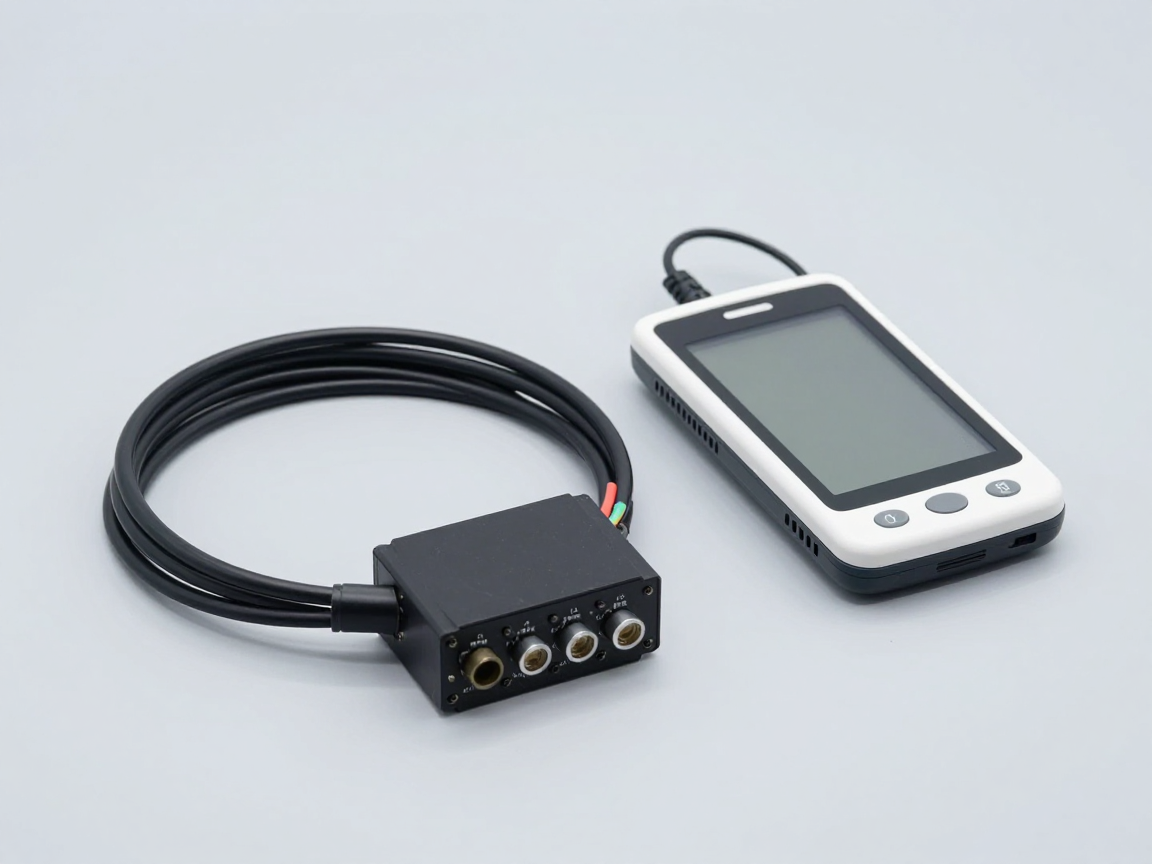
The actual boundary lies at the intersection. A control module (ECU), a set of wires, a sensor: if sold to the vehicle manufacturer to install in the vehicle, attached to the ELV; If it is itself sold as a standalone electronic accessory to consumers, it may fall within the scope of RoHS. Businesses should clearly define channel to market of each product code instead of applying a general conclusion to the whole factory.
6. One detail, two modes: real-life situations
| Situation | Conclusion of principle |
|---|---|
| Circuit boards sold to car manufacturers to install in cars | Attach to ELV; RoHS records cannot be replaced |
| That exact board, packaged and sold as electronic components for common users | May fall in RoHS if it is EEE to market independently |
| Electrical cables used in vehicles | ELV (4 substances); Phthalates are not included in the ELV category, but may still be covered by REACH |
| Portable charging device sold with car accessories | Usually Independent EEE → RoHS (10 substances) |
| Details are both vehicle materials and contain EEE | Must look both limiter; This is the most error-prone area |
7. ELV is more than just substance restrictions: collection and recycling obligations
Most businesses ignore: ELV poses Manufacturer’s responsibility End-of-life vehicles — recovery of old vehicles, systematic treatment, and targets for reuse, recycling, and energy recovery according to the average volume per vehicle. In the EU, these goals are associated with the stage of vehicle type approval for reuse – recycling – recovery.
For component suppliers, this obligation is expressed indirectly: car manufacturers need material data and the ability to disassemble parts, so material declaration requirements are often stricter than for consumer electronics. If you’re used to “just a RoHS test report”, be prepared for a more extensive set of documentation requirements at the car end.
8. RoHS – ELV quick comparison table
| Criteria | RoHS | ELV |
|---|---|---|
| Product type | Electrical and electronic equipment | Road vehicles and vehicle components/materials |
| Limited number of substances | 10 | 4 (Pb, Hg, Cd, Cr(VI)) |
| Threshold | 0.1 % (Cd 0.01 %) | 0.1 % (Cd 0.01 %) |
| How to calculate | According to homogeneous material | According to homogeneous material |
| List of exemptions | Annex III/IV of the RoHS Directive | Annex II of the ELV Directive |
| Obligations attached | CE mark, technical documents, declaration of conformity | Manufacturer responsibility, end-of-life vehicle recovery, recycling goals |
| Can test results be shared? | The test method is general, but The list of substances and exemptions must be checked separately for each regulation | |
9. Five common misconceptions
- “REACHing RoHS means meeting ELV.” Wrong — two different categories of substances and two different categories of exemptions. Achieving RoHS does not automatically satisfy ELV.
- “Automotive products don’t have to do anything about chemicals.” Wrong — vehicle belongs to ELV with 4 restricted substances, plus collection and recycling obligations.
- “ELV is stricter because of recalls, so it has to test for more substances than RoHS.” False — limited ELV less substance (4 vs. 10); it is broad in obligation, not broad in substance category.
- “RoHS exemption works for ELV.” Wrong — exemption belongs to each document; must compare with the corresponding appendix.
- “Just guess based on the sales channel.” Unsafe — it is necessary to clearly identify whether the product is marketed as a stand-alone EEE or as a vehicle component, and document that basis in the records.
10. Frequently asked questions
What if a part is used for both a car and an electronic device?
Determine the channel to market for each product code. If sold to a car manufacturer to install in the car, apply ELV; If sold as a standalone electronic device/accessory, RoHS compliant. In the case of indecision, the safe bet is to satisfy both sets of limits.
Does ELV limit phthalates?
According to ELV’s restricted substances list, four restricted substances are lead, mercury, cadmium and Cr(VI). Phthalates are not included in that list, but may still be governed by other regulations such as REACH — the current text needs to be compared.
Can RoHS test reports be used to demonstrate ELV?
In terms of methods, it can be utilized, but in terms of conclusions, it is not automatic. The report must include all four ELV substances and must be reconciled with Annex II of the ELV Directive, including exemptions.
Are electric vehicles part of ELV?
Electric vehicles are still road vehicles, so they fall within the scope of ELV; The battery may be subject to additional battery regulations. It is necessary to compare current documents for each component.
Are ELV limits different from RoHS?
In principle, it is the same: 0.1% according to homogeneous materials, except cadmium 0.01%. The difference lies in the substance list and exemption list, not in the limit.
11. Conclusion
RoHS and ELV are two different substance limits, not interchangeable. RoHS restricts 10 substances for electrical and electronic equipment; ELV limits 4 heavy metals for road vehicles, with collection and recycling obligations. The limits and calculations on homogeneous materials are the same, but the exemption lists are two separate appendices.
Three things need to be done immediately: clearly identify the channel to market for each product code; Compare the correct exemption appendix of each regulation; and don’t use the RoHS conclusion to answer the ELV question or vice versa.
If your business has both product lines, separate the records right from the sample receipt stage — much cheaper than discovering non-standards after sending the declaration of conformity to customers.
References
- Directive 2011/65/EU (RoHS 2) — scope, limits and Annex III
- Directive (EU) 2015/863 — addition of four phthalates
- Directive 2000/53/EC on end-of-life vehicles (ELVs) — Article 4 and Annex II
- IEC 62321 series of standards — method for determination of restricted substances
Related articles
- RoHS and WEEE: one side restricts the substance, the other side is responsible for recall
- RoHS comparison table for 6 markets: EU, China, Korea, Japan, EAEU, California
- Selling electronics on Amazon/eBay Europe: how must foreign sellers prove RoHS?
- What is RoHS? Complete guide to Directive 2011/65/EU and its 10 restricted substances
- RoHS Annex III exemption: three delegated directives 2025/2364, 2025/1802, 2025/2363 and deadlines 2026–2027
- 10 RoHS restricted substances: how do the 0.1% and 0.01% limits apply to “homogeneous materials”?
- GB 26572-2025: China’s first mandatory RoHS standard, effective August 1, 2027
Discuss further
Disclaimer
This article is an interpretive content compiled by us; not legal advice. The number of substances, limits and exemptions of RoHS and ELV are stated at the principle level and it is necessary to compare the verbatim of Directive 2011/65/EU (consolidated version) and Directive 2000/53/EC (consolidated version, with effective Appendices) before applying to specific products.
See more: Copyright Policy & Disclaimer by ticforall.com.