If you are exporting any products with electrical or electronic components to Europe, then RoHS is a set of regulations you must comply with — not the only one, but nearly impossible to avoid. This article is a complete overview: What RoHS requires, who must do it, where to measure, what the limit is, what the records include, and the most confusing concepts.
This is the pillar article of a series of content on RoHS testing. In-depth articles (each substance, each testing method, each market) will link back here.
1. What is RoHS?
RoHS stands for Restriction of Hazardous Substances — “limit the use of toxic substances”. This is the familiar name of Directive 2011/65/EU of the European Union: regulations restricting the use of certain toxic substances in Electrical and Electronic Equipment (EEE — Electrical and Electronic Equipment).
The goal is dual: to reduce toxic substances entering the e-waste stream, and to ensure a level playing field between manufacturers and importers selling into the EU market.
The three most important changes
| Mold | Text | Change |
|---|---|---|
| 2003 → applied from July 1, 2006 | Directive 2002/95/EC (original RoHS) | Limitations 6 substances: lead, mercury, cadmium, hexavalent chromium, PBB, PBDE |
| 2011 → applied from 2013 | Instructions 2011/65/EU (RoHS 2 — rewrite) | Expand the scope to 11 product groups, attach obligations CE mark and declaration of conformity, supplementing the Exemption Appendix |
| 2015 → applicable from 2019/2021 | Directive (EU) 2015/863 | Add 4 phthalates (DEHP, BBP, DBP, DIBP) → total 10 substances |
| 2025 | Directive (EU) 2025/2456 | Transfer the task of scientific and technical assessment (exemption, review of substance list). ECHA |
Note about names: in legal documents no the concept of “RoHS 1 – RoHS 2 – RoHS 3”. That’s what the market calls it. The currently effective document is Directive 2011/65/EU has been modified by 2015/863 and 2025/2456. When making the application, you should clearly state the document number instead of writing “RoHS 3”.
2. Who is subject to compliance and which products are covered
RoHS obligations imposed manufacturer (even if you are not the actual manufacturer but only have your name on the product), authorized representative in the EU, importer and distributor — Each party has different obligations but must both prove that the product conforms to regulations.
The key lies in the principles “open scope”: every Products with electrical or electronic components are covered by RoHS, unless specifically excluded. In other words, the right question is not “is my product on the list?” but “is my product included in the exclusion list?”.
11 product groups (Appendix I)
| # | Group | For example |
|---|---|---|
| 1 | Large household appliances | Refrigerator, washing machine, dishwasher |
| 2 | Small household appliances | Vacuum cleaner, iron, clock |
| 3 | Information technology and telecommunications equipment | Computers, phones, routers, monitors |
| 4 | Consumer equipment | TV, camera, audio equipment |
| 5 | Lighting equipment | LED lights, fluorescent lights, decorative lights |
| 6 | Electrical and electronic tools | Drills, welding machines, hand tools |
| 7 | Toys, entertainment and sports equipment | Electronic toys, children’s electric bicycles |
| 8 | Medical equipment | Blood pressure monitors, diagnostic equipment |
| 9 | Monitoring and control tools | Measuring equipment, industrial sensors, control panels |
| 10 | Vending machine | Water vending machines, ATM machines |
| 11 | Other electrical and electronic equipment | “Open” group — arrest all remaining products with electronic components, from July 22, 2019 |
Groups 8 and 9 have a later roadmap: medical equipment and monitoring and control tools apply from July 22, 2019; medical equipment in vitro diagnostics and industrial monitoring and control tools applicable from July 22, 2021.
Excluded cases (Article 2)
The common, conditional exclusion list includes: equipment for national defense and security; equipment designed to be sent into space; Research and development equipment is only sold between businesses; large-scale fixed industrial tools; large-scale fixed installation systems; vehicles (except electric two-wheeled vehicles); off-road mobile machinery used for professional purposes; active implantable medical devices; and solar photovoltaic panels used in fixed installation systems.
Actual warnings: Much of the dispute over scope lies in these exclusions, since each exclusion has conditions attached. For example, “large-scale fixed industrial tools” doesn’t mean every large machine in the factory — it depends on how it’s installed and operated. Before relying on an exclusion point to not make a dossier, you should check the full text of Article 2 and consult with an accredited testing unit.
3. Ten restricted substances and allowable limits
This is the core part of RoHS — and it’s also the most misunderstood part. RoHS no absolutely prohibited; RoHS set limit.
| # | Quality | Commonly found anywhere in the product | Threshold |
|---|---|---|---|
| 1 | Lead (Pb) | Solder joints, alloys, glass and ceramic components, plating | 0.1% |
| 2 | Mercury (Hg) | Old batteries, tilt switch, some lights | 0.1% |
| 3 | Cadmium (Cd) | Electrical contacts, plating, brass alloy, old rechargeable batteries | 0.01% |
| 4 | Hexavalent chromium — Cr(VI) | Chrome plating and passivation layer prevent rust | 0.1% |
| 5 | PBB (polybrominated biphenyls) | Flame retardants in plastic (now rare) | 0.1% |
| 6 | PBDE (polybrominated diphenyl ethers) | Flame retardants in plastics, cables, and equipment covers | 0.1% |
| 7 | DEHP (bis(2-ethylhexyl) phthalate) | Plasticization in PVC — cables, flexible covers, artificial leather | 0.1% |
| 8 | BBP (butyl benzyl phthalate) | Plasticizer in PVC, glue, printing ink | 0.1% |
| 9 | DBP (dibutyl phthalate) | Plasticizer in PVC, glue, rubber | 0.1% |
| 10 | DIBP (diisobutyl phthalate) | Plasticizer in PVC, replacing DBP | 0.1% |
Four phthalates (7–10) have their own application routes: from July 22, 2019 with groups 1–7 and 10; word July 22, 2021 with groups 8 and 9.
Three points need to be engraved in the head:
- Cadmium has its own limit of 0.01% — 10 times tighter than the other 9 substances. This is a substance that is often overlooked when reading reports.
- The 0.1% limit is according to the mass of the homogeneous material, not by total product volume. A tiny detail that exceeds the limit still makes the entire product non-compliant.
- Cr(VI) is a valence, not a chromium element. XRF measured total chromium, cannot distinguish between Cr(VI) and Cr(III) — this is the reason why many XRF reports “exceeding the chromium limit” still require additional confirmation.
4. Where is the limit measured? What is “homogeneous material”?
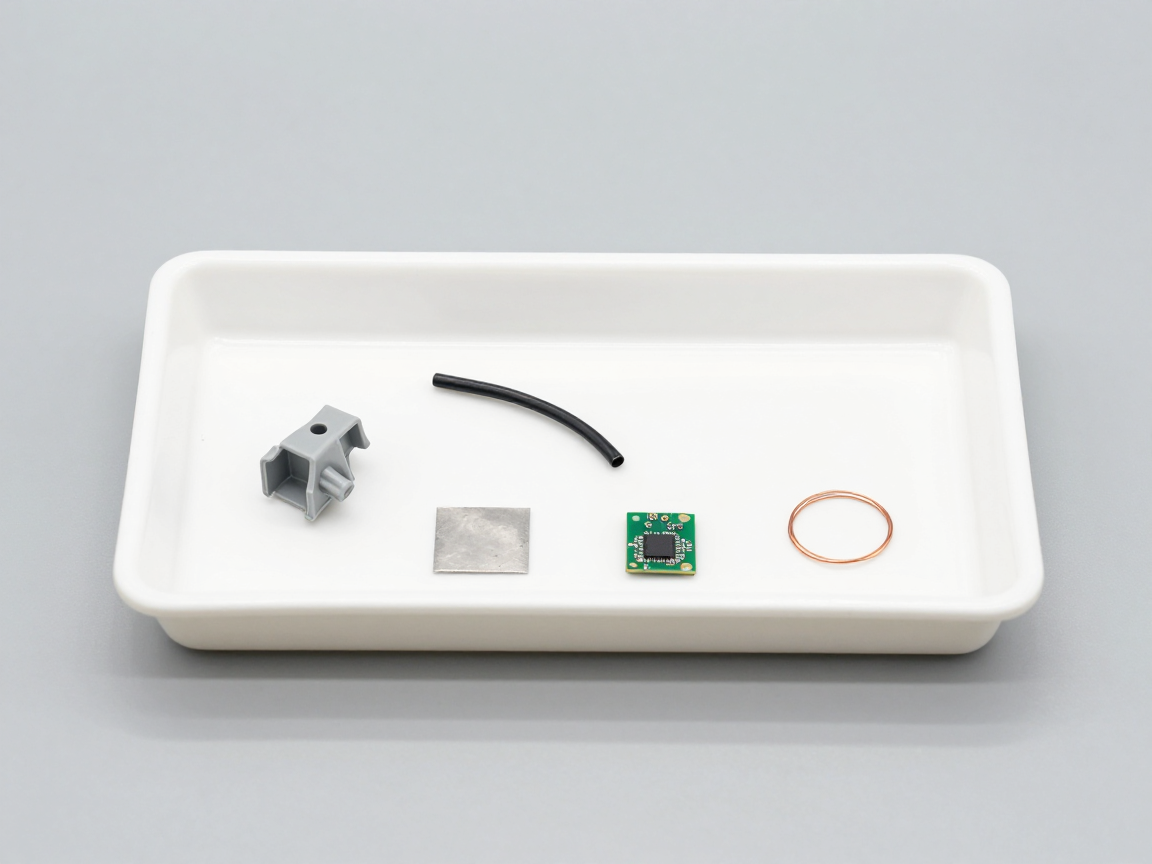
Homogeneous materials (homogeneous material) is a material with composition mechanically identical — cannot be further separated into different materials by mechanical disassembly (unscrewing, cutting, grinding, centrifuging…).
For example, with a cable: the PVC sheath is one homogeneous material; copper intestine is one homogeneous material; The tin plating on the copper conductor is again one homogenous material too. If the PVC sheath exceeds the phthalate limit, the entire rope is not compliant umbrella The copper conductor and plating layer are completely clean.
Given a circuit board: FR-4 resin, each solder joint, component pin, coating, plastic surrounding the component — each is its own homogeneous material and each must be evaluated separately.
This is why the number of measurement points in a RoHS test set is often much larger than initially envisioned, and is also why the sample extraction step determines the quality of the report.
5. Specific obligations: what must businesses do?
| Obligation | Content | Base |
|---|---|---|
| Ensure the product does not exceed the limit | Control input materials, evaluate components, and periodically inspect | Article 4 |
| Technical documentation | Prove compliance: material declaration, test results, risk assessment, supplier documents | Article 7(b) + harmonized standards EN IEC 63000:2018 |
| EU Declaration of Conformity (EU DoC) | The declaration, signed by the manufacturer, lists the RoHS Directive and related documents | Article 7(c) |
| Attach CE mark | CE is a declaration that the product conforms to regulations whole Applicable laws (RoHS, EMC, LVD, WEEE… depending on product) | Article 7(a) |
| Save profile | Keep technical documents and DoC 10 years after bringing the product to market | Article 7(c) |
| Cooperate with supervisory authorities | Provide documents when requested, take corrective measures if found to be non-compliant | Article 7(d)(e) |
Important points: RoHS does not require “certification”. The obligation of the enterprise is self warranty and self statement, based on technical records. The lab test report is one part of that record — not the entire record, and not the license.

6. Exemption: when RoHS allows the use of a restricted substance
Because of some applications not yet credible alternative, the Directive has a mechanism exemption — recorded in Appendix III (groups 1–7, 10, 11) and Appendix IV (groups 8, 9). Exemption yes deadline, is renewed in installments, and businesses using the exemption must clearly state it in the application.
This is also the part that is undergoing continuous change in 2025–2027: three new EU Mandatory Directives update a series of lead exemptions (groups 6, 7a, 7c) with deadlines falling on December 11, 2026, June 30, 2027 and December 31, 2027.
7. Don’t confuse RoHS with other laws
| Ministry of regulations | Core content | Where is it different from RoHS? |
|---|---|---|
| RoHS (2011/65/EU) | Restrict 10 substances in electrical and electronic equipment | Threshold calculated based on homogeneous material; attached with CE mark |
| REACH (1907/2006) | General chemical management; list of SVHC; obligation to declare and inform customers | REACH applies chemicals and materials, not just electronics; limit calculated accordingly entire product (0.1% mass) rather than homogeneous material |
| WEEE (2012/19/EU) | Responsibility for recovery and treatment of electronic waste | WEEE has no substance restrictions; WEEE is about registration, labels, recalls and costs |
| ELV (2000/53/EC) | Restrict substances in vehicles that have expired | Same spirit but separate substance list and limit, applied to cars |
| ESPR / Ecodesign | Requires ecological design, product passport no | This is a law on product design and information, which will interact with how to prove RoHS compliance |
| Battery Regulation (EU) 2023/1542 | Battery life cycle management: composition, recycled content, battery passport | Products with batteries may be subject to both: RoHS for the device, Battery Regulations for the battery pack |
8. How to prove compliance? Overview of the test procedure
RoHS does not mandate a single method; Enterprises choose their own way of proving. In practice, a RoHS testing procedure follows the following sequence:
- Get samples and product descriptions: Identify products, versions, components and materials.
- Dissection into homogeneous material: mechanical disassembly to the point where further separation is impossible — this is the step that determines the accuracy of the entire result.
- Screening by XRF: Quickly measure suspicious points to localize and classify risk levels.
- Try to confirm by wet method: ICP-OES/ICP-MS for metals; colorimetry or ion chromatography for Cr(VI); GC-MS for PBB/PBDE and phthalates.
- Evaluate by limit and prepare reports: Conclusions for each homogeneous material, with descriptions of samples, methods, equipment and measuring conditions.
This string is in the method set IEC 62321 — international standard on how to identify restricted substances in electrical and electronic products. With technical documents, harmonized standards need to be known EN IEC 63000:2018.
9. Five most common misunderstandings about RoHS
- “There is a RoHS certificate and that’s it.” RoHS does not have a certification mechanism. Obligations are technical documents and declarations of conformity under the name of the enterprise.
- “My product meets RoHS because the report says Pass.” Need to know that report Try it on any model: by sample (one piece) or by lot? Is this version for sale? Only the report does not say anything about the batch being delivered.
- “The 0.1% limit applies to the whole product.” Pressure limit follows homogeneous material. This is the root of most errors when businesses self-assess.
- “Chromium in the XRF report exceeds damage.” XRF only measures total chromium; need to confirm Cr(VI) before concluding.
- “RoHS is mandatory for the EU, but not for other countries.” China, Korea, Japan, EAEU, some US states… all have similar regulations, with different substance lists and label obligations. Details in the article comparing 6 markets.
10. Frequently asked questions
My product only has a small circuit board, does it have to comply with RoHS?
Yes, if it is an electrical – electronic product marketed in the EU. Group 11 (“other electrical and electronic equipment”) is an open group, catching the remaining products from July 22, 2019. Small size does not change the obligation.
The component supplier has submitted a RoHS report, do I need to retest?
RoHS allows reliance on supply chain information in many cases, but the business remains ultimately responsible. The usual way is to assess the risk: high-risk components (PVC plastic, plating, low-temperature welds) are rechecked; For low-risk components, save the declaration. Details are in the article on XRF strategy and batch wet testing.
Does RoHS require anything to be written on the product?
RoHS does not have its own label. Label obligations come from the CE marking and, for some non-EU markets, from domestic labeling regulations (e.g. EFUP labels and Chinese logos).
How often do I have to recheck?
The directive does not set a fixed period. In fact, retesting is recommended when materials, components, suppliers, factories, or when substance lists and exemptions change — which is approximately once a year for products that are being sold regularly.
What do Vietnamese businesses do when they do not have a legal entity in the EU?
Need an authorized representative in the EU or sell through an importer on duty; Technical documents should still be available on the Vietnamese side, because when there is a problem, the request will be transferred back to the factory.
Is RoHS recognized in many markets?
Results from laboratories accredited to ISO/IEC 17025 are generally accepted by markets, but market-specific obligations vary (labels, declarations, product grouping). You should determine the market before choosing a trial package.
11. Conclusion
RoHS in one sentence: All electrical and electronic equipment marketed in the EU must ensure that 10 restricted substances do not exceed the limit (0.1%, especially cadmium 0.01%) calculated according to each homogeneous material; Enterprises self-prove with technical documents, self-declaration of conformity and CE marking, keeping records for 10 years.
Three things to do immediately if you are exporting: one, check whether the product actually belongs to the exclusion list, instead of assuming; two, create a uniform material list for each product and localize risk points; three, monitor the 2026–2027 exemption deadlines if you are relying on the lead exemption.
References
- Directive 2011/65/EU on restriction of the use of hazardous substances in electrical and electronic equipment (amended consolidated version)
- Directive (EU) 2015/863 — adding four phthalates to Annex II
- Directive (EU) 2025/2456 — transfer of scientific and technical tasks to ECHA
- European Commission — official page about the RoHS Directive (accessed September 28, 2026)
- EN IEC 63000:2018 — technical document for the evaluation of electrical and electronic equipment with regard to the restriction of hazardous substances
- IEC 62321 (series of standards) — defines certain substances in electrical and electronic products
Related articles
- RoHS for textiles, footwear and toys: when does RoHS NOT apply?
- RoHS and ESPR/digital product passport: how will the way of proving compliance change?
- Same toy, three sets of limits: RoHS vs EN 71-3 vs CPSIA
- Foreign suppliers refuse to declare: how do businesses self-manage RoHS risks?
- How are RoHS and REACH different? Thresholds, scope and reporting obligations
- Material declaration according to IEC 62474 and IPC-1752A: what must the supply chain send and receive?
- What is the correct RoHS label? What words are considered misleading?
- RoHS comparison table for 6 markets: EU, China, Korea, Japan, EAEU, California
- J-Moss (Japan) and K-RoHS (Korea): who needs it, how is it different from the EU?
- Declaration of conformity (DoC) and CE marking for RoHS: who signs, for which products, what if it’s wrong?
- Selling electronics on Amazon/eBay Europe: how must foreign sellers prove RoHS?
- Circular 30/2011/TT-BCT and European RoHS: how do Vietnamese businesses comply with both?
- “RoHS 3” does not exist: read the correct amendment sequence 2011/65/EU → 2015/863 → 2025/2456
- RoHS scope of application: which products must comply, which products are excluded?
- EFUP label and Chinese RoHS mark: read the correct table SJ/T 11364-2024
- RoHS and ELV: two different sets of substance limits for electronics and automobiles
- RoHS technical records according to EN IEC 63000: what must businesses save and submit?
- Is there “RoHS certification”? Distinguish between test report – certificate – declaration of conformity
- What is IEC 62321? What parts does the RoHS test method set include and what substances is it used for?
- RoHS test procedure from A to Z: from sample receipt, extraction, screening to reporting
- XRF reports “Cr” exceeds the limit: why is it not sure it is Cr(VI) and what should be tested next?
- XRF RoHS screening: how to read the results, how much to trust, 5 limitations you must know
- Directive (EU) 2025/2456: RoHS moves technical assessment to ECHA — what businesses need to know
- GB 26572-2025: China’s first mandatory RoHS standard, effective August 1, 2027
- RoHS Annex III exemption: three delegated directives 2025/2364, 2025/1802, 2025/2363 and deadlines 2026–2027
- 10 RoHS restricted substances: how do the 0.1% and 0.01% limits apply to “homogeneous materials”?
- What is “homogeneous material”? Misunderstanding this concept is the entire result of RoHS being wrong
- RoHS 2026: changes Vietnamese businesses must understand before import season
- Circular 36/2026/TT-BKHCN: Full Text of the List of Medium-Risk and High-Risk Goods
Discuss further
Disclaimer
This article is an explanatory content compiled by ourselves for the purpose of introducing and disseminating knowledge; not legal advice and does not replace legal documents. Figures and timelines are given for reference only, and may have been modified in a later version.
For application to a specific product — design, testing, conformity assessment or commercial decision making — the reader should refer directly to the latest consolidated text of Directive 2011/65/EU on EUR-Lex, and consult an accredited testing body or consultant where necessary.
See more: Copyright Policy & Disclaimer by ticforall.com.