This is the most common and also the most costly misunderstanding in the RoHS field: businesses look for an organization to do so “RoHS certification”. In fact, RoHS certification does not exist in the sense of an organization guaranteeing that your product meets RoHS. That responsibility lies with the manufacturer, and the proof is a set of records — not a certificate.
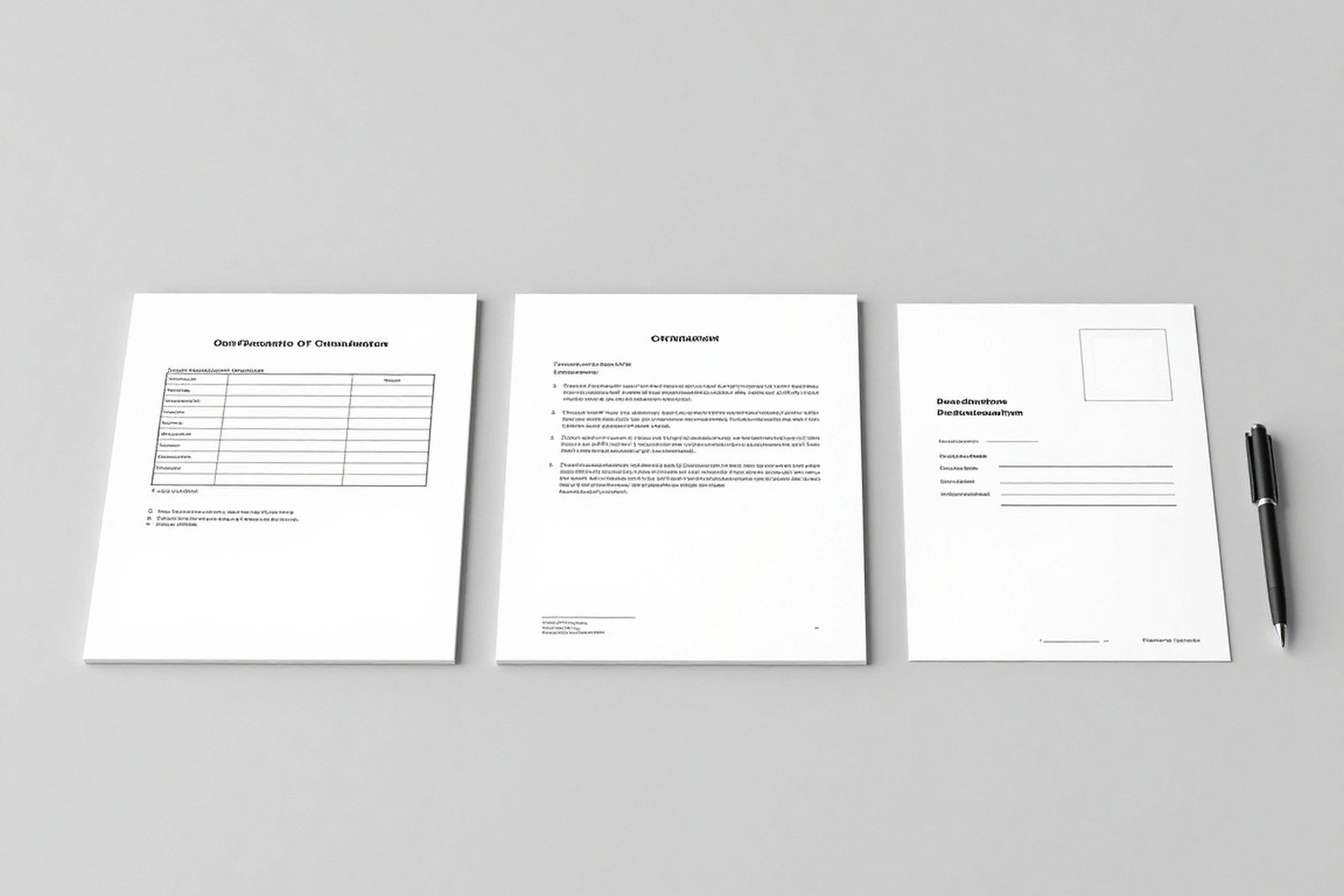
The article clearly distinguishes three types of documents that the market often calls each other: test report, certificate and declaration of conformity.
1. Why is there no “RoHS certification”?
Directive 2011/65/EU operates according to this mechanism:
- Manufacturer self-assessment products according to the requirements of the Directive.
- Manufacturer Prepare technical documents demonstrate the evaluation process.
- Manufacturer Sign the declaration of conformity (DoC) and is responsible for the content of that statement.
- The product is okay CE marking on the basis of that statement.
There is no step requiring a third party to “certify” a product to RoHS. That differs from some other areas (for example, radio equipment requires assessment by a designated organization). With RoHS, The manufacturer is solely responsible.
First consequence: if a unit says “we issue RoHS certification for your product”, you need to ask clearly what they are granting — because in legal terms, there is no such type of paper.

2. Three types of documents, three different roles
| Test report | Certificate | Declaration of Conformity (DoC) | |
|---|---|---|---|
| Who created it? | Test room (third party) | Certification organization | Manufacturer/importer |
| Content | Measurement results on specific samples, according to specific methods | Confirm scope (e.g. management system, or scope of accreditation) | Commitment that the product/product model meets the listed directives |
| Scope of responsibility | Indicates the sample received and the time of testing | Range recorded on paper | All products have been released to the market |
| Legal value | Yes evidence, is not a legal conclusion | Is proof of system capability or scope, not proof of product | Yes base for CE marking |
| Who is ultimately responsible? | Test room, within range of results | Certification organization, within the scope of the grant | Manufacturer/importer |
Reading this table vertically will see why the three types of documents cannot be substituted:
- The test report says that a sample was measured and gave the same results.
- The certificate says that an organization have capacity or a system that has been evaluated.
- The declaration of conformity says: Manufacturer’s commitment Its products meet regulations.
3. So why is there still “RoHS certificate” on the market?
There are several real-life situations that lead to the phrase “RoHS certification”:
| Actual document type | Nature | Need to understand correctly |
|---|---|---|
| “Certificate of compliance” is included with the test report | One page summary by test room issued and confirmed the results on the test sample meeting the limit | Still proof by sample, not certification for the entire product line |
| Management system certification (e.g. ISO 9001) with restricted substance control content | Rate the system, not the product | Cannot replace test results or technical documents for the product |
| Certification by a private organization according to its own standards | Commercial services under contract | Value depends on reputation and content; does not create any liability on behalf of the manufacturer |
| The manufacturer’s declaration of conformity is incorrectly called a “certification” | It’s DoC | This is the most important document in the file |

4. Is the test report “sufficient” to prove it?
Not self. Test reports are of great value when:
- Sample in report representative for the product version being sold (same materials, same supplier).
- Report included enough restricted substances under current regulations — including four phthalates.
- The results are placed in a review file exemption (if any).
- In addition to the tested samples, the profile also contains grounds for the parts Can’t try it all (eg material declaration from supplier).
A report that says “pass” for six substances, or one based solely on XRF, or testing on a sample that is no longer representative — all three are inadequate. This is where the technical profile makes a difference.
5. Three questions to ask when receiving a RoHS document
- Is this a test report or a declaration of conformity? If it is a test report, ask again: what sample, what date, what method, what substances are included?
- Is the sample in the document representative of the lot/model of product I purchased? Otherwise, this document will not help your shipment.
- Who signs and is responsible? Documents signed by the manufacturer have a different value than documents issued by the testing laboratory and are different from those issued by the commercial unit.

6. What should businesses do?
| Work | Why? |
|---|---|
| Construction technical profile according to EN IEC 63000 | This is a requirement of the Directive; is what the market watchdog actually asked |
| Sign declaration of conformity for each product type | It is a legal obligation and cannot be replaced by third party paper |
| Use test report as evidence in the file, not the entire file | The report only covers tested samples |
| Request supplier material declaration according to the homogeneous material structure | Compensate for the part that cannot be tried at all |
| Save profile 10 years from the time the final product is placed on the market | Usual deadline according to EU regulations |
7. Frequently asked questions
Is third-party certification required to sell into the EU?
No. RoHS does not require third-party evaluation. The manufacturer self-assesses, prepares technical documents, signs the declaration of conformity and affixes the CE mark. A third party (testing laboratory) provides technical proof, but is not legally required.
What about e-commerce platforms that require “RoHS certificate”?
This is a commercial requirement of the exchange, not a legal requirement. Actual solution: provide a test report from a recognized testing laboratory (eg VILAS or equivalent) with a declaration of conformity. If the exchange requires a specific form, follow it — but understand that the real value is in your profile.
Are test reports from foreign testing laboratories valid in Vietnam?
Reports from accredited testing laboratories (e.g. according to ISO/IEC 17025 in an international accreditation scheme) are generally accepted. The issue that needs to be checked is whether the scope of recognition includes the right substances and methods.
How should a customer insist on “RoHS certification”?
Respond with content: “We provide test reports from accredited testing laboratories, technical documents according to EN IEC 63000 and a signed declaration of conformity. RoHS does not have a third-party certification mechanism for products.” This clear answer is often accepted by professional customers, because they also need correct records.
So is “RoHS compliant” written on the product?
The content of claims is at the discretion of the manufacturer, but must be truthful and authoritative. Writing “certified” when in fact there is only a test report is an expression that could be considered misleading. Clearer labeling — for example the product meets the substance restriction requirements of Directive 2011/65/EU — is more legally secure.
8. Conclusion
There is no “RoHS certification” in the sense of an organization guaranteeing that your product meets RoHS. Yes three types of documents with three roles: test report (sample proof), certificate (system capability or scope), and declaration of conformity (manufacturer’s legal commitment).
The ultimate responsibility always lies with the person bringing the product to market — it cannot be transferred to the testing laboratory or to any other organization.
References
- Directive 2011/65/EU — manufacturer obligations, declaration of conformity, CE marking, record keeping
- EN IEC 63000 — technical document for evaluation of electrical and electronic products against quality restriction requirements
- Regulation (EC) 765/2008 — general framework for CE marking and conformity assessment
Related articles
- How are RoHS and REACH different? Thresholds, scope and reporting obligations
- Material declaration according to IEC 62474 and IPC-1752A: what must the supply chain send and receive?
- What is the correct RoHS label? What words are considered misleading?
- What does a RoHS test report need to be valid? 9 items cannot be missing
- Declaration of conformity (DoC) and CE marking for RoHS: who signs, for which products, what if it’s wrong?
- What capabilities does a RoHS test room need? ISO/IEC 17025, VILAS and scope of accreditation
- Selling electronics on Amazon/eBay Europe: how must foreign sellers prove RoHS?
- RoHS scope of application: which products must comply, which products are excluded?
- Circular 30/2011/TT-BCT and European RoHS: how do Vietnamese businesses comply with both?
- RoHS technical records according to EN IEC 63000: what must businesses save and submit?
- RoHS test procedure from A to Z: from sample receipt, extraction, screening to reporting
- What is RoHS? Complete guide to Directive 2011/65/EU and its 10 restricted substances
- How many samples are enough for a RoHS test kit? Principles for selecting samples, stored samples and control samples
- Circular 36/2026/TT-BKHCN: Full Text of the List of Medium-Risk and High-Risk Goods
Discuss further
Disclaimer
This article is an interpretive content compiled by us; not legal advice.
See more: Copyright Policy & Disclaimer by ticforall.com.