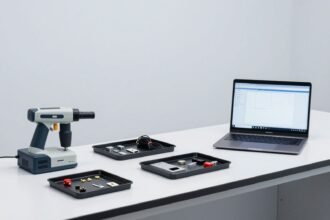
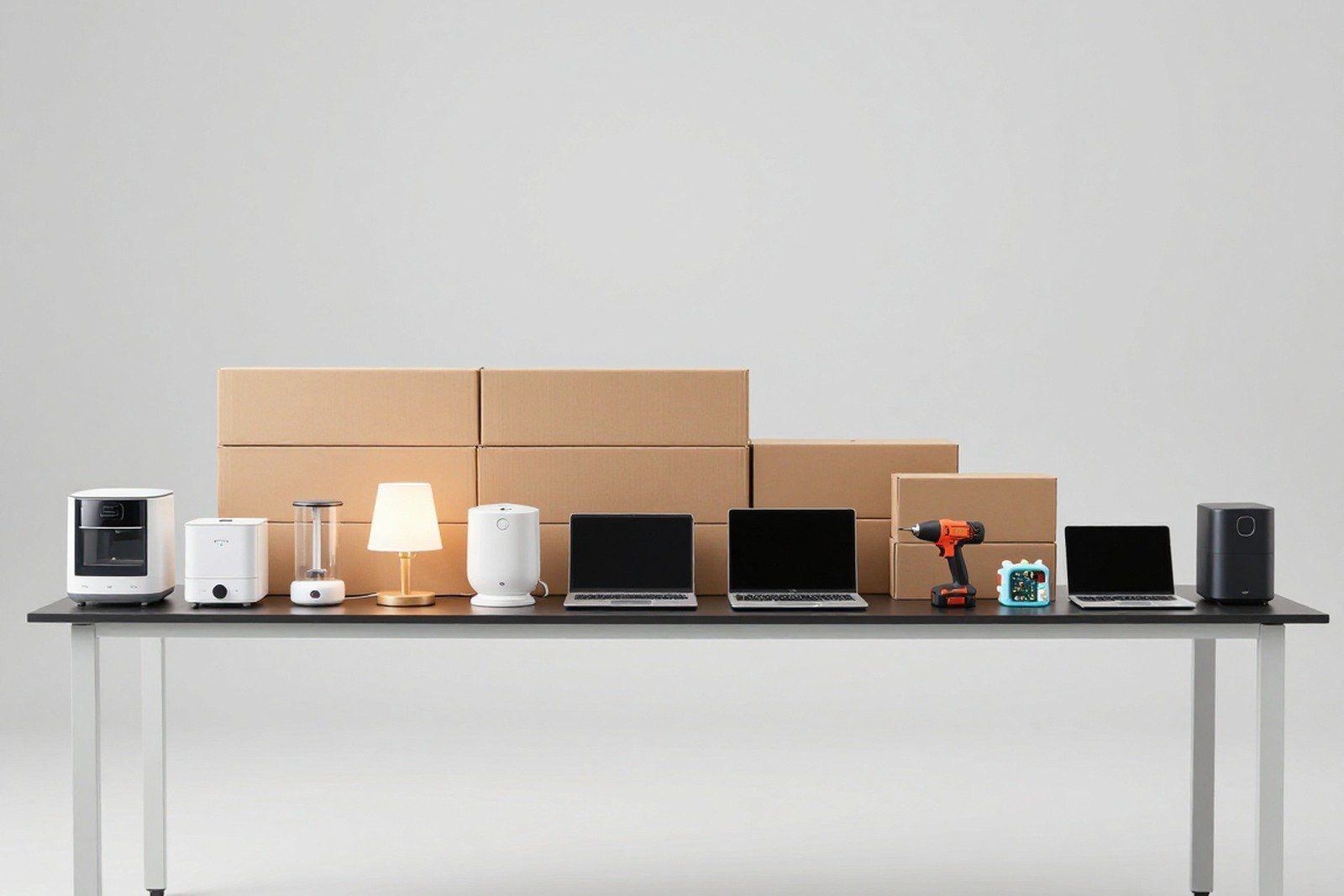
RoHS only applies to a certain group of products: electrical and electronic equipment (EEE). But the boundaries of that phrase are wider than many businesses think, and there are also acceptable categories explicitly excluded. Misdefining scope leads to two costly mistakes: testing products that are not covered, or ignoring obligations to products that are actually subject to compliance.
This article goes over the “open scope” principle of Directive 2011/65/EU, the table of 11 product groups, the exclusion lists, and examples of common misclassifications — in both directions.
1. “Open scope” — the underlying principle of RoHS 2
Original directive 2002/95/EC (RoHS 1) lists the product groups that must comply and clearly excluded Medical equipment and monitoring and control equipment. That approach changed completely from the Directive 2011/65/EU (RoHS 2): switched to open scope — every EEE are all within the scope, unless fall into a specific exclusion category.
In other words: the exclusion category is closed list. If the product is not in that list, default it belong RoHS scope. This is where many businesses misunderstand: they look for “is my product in the category”, while the correct question is “is my product in the exception”.
2. What is “electrical and electronic equipment” (EEE)?
EEE is defined as equipment depends on electric current or electromagnetic field to function properly at least one intended function, and the equipment used for generation, transmission and measurement current or electromagnetic field, designed for a rated voltage not exceeding 1,000 V AC or 1,500 V DC.
Three pieces to remember: (1) yes function depends on electricity/electromagnetic field; (2) can be equipment generate/transmit/measure electricity; (3) is within the voltage range mentioned above. One detail no Electrical functionality — e.g., plastic housing, screws, cartridges without electrical components — is not, by itself, EEE.
3. Table of 11 product groups (Appendix I)
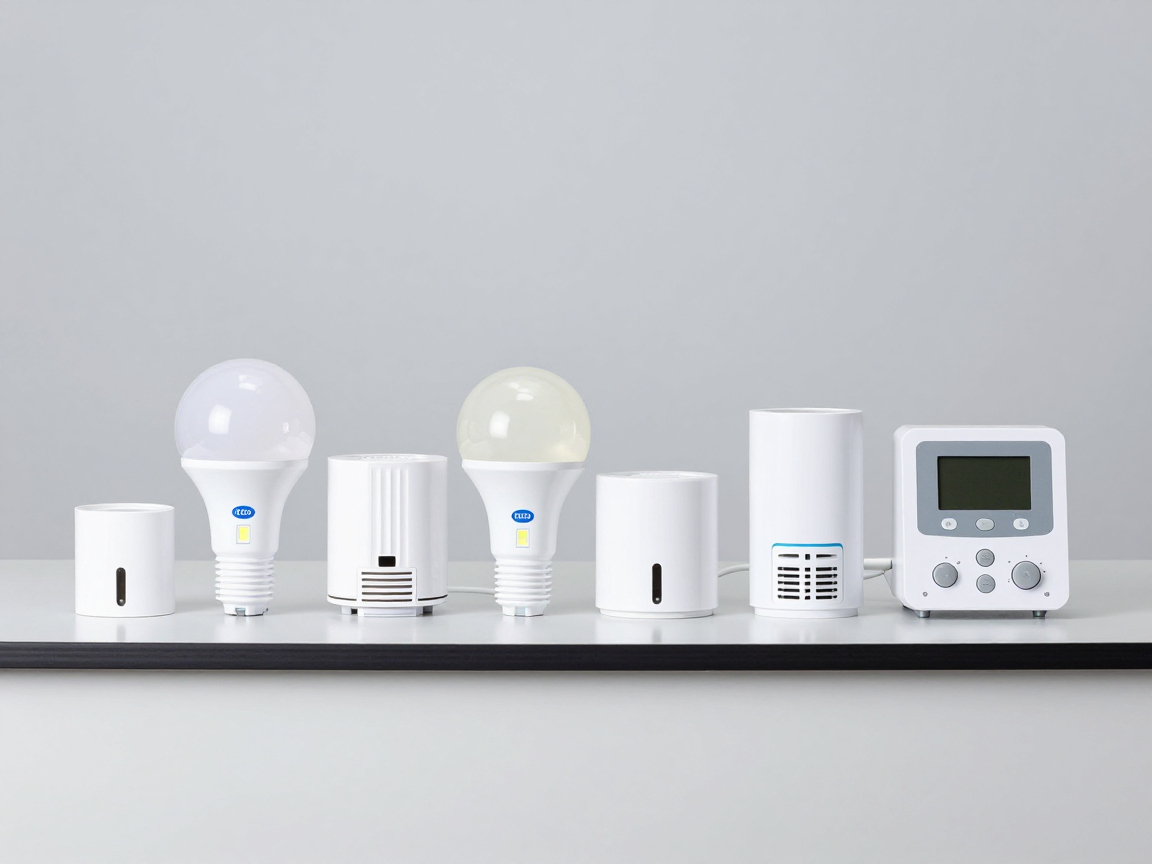
Annex I of Directive 2011/65/EU divides EEE into 11 groups. This is the framework to look up timelines and exemptions, no a range limit:
| # | Product group |
|---|---|
| 1 | Large household appliances |
| 2 | Small household appliances |
| 3 | Information technology and telecommunications equipment |
| 4 | Consumer equipment (civil electronics) |
| 5 | Lighting equipment |
| 6 | Electrical and electronic tools |
| 7 | Toys, entertainment and sports equipment |
| 8 | Medical equipment |
| 9 | Monitoring and control instruments (including industrial) |
| 10 | Vending machine |
| 11 | Other EEE does not belong to the above groups |
Groups 8, 9 and 11 — which were excluded in RoHS 1 — were gradually brought into scope and fully applied from July 22, 2019.
4. Exclusion list according to Article 2(4)
This is the “closed” list that decides which product no fall within:
| Section | Excluded |
|---|---|
| a | Equipment necessary for the essential security interests of a Member State, including arms, ammunition and supplies for specialized military purposes |
| b | Equipment designed to be sent into space |
| c | Equipment that is individually designed and installed as part of a unit of equipment already are excluded or out of scope, can only operate within that device and can only be replaced by the same type of specific design |
| d | Large-scale stationary industrial tools |
| e | Large-scale fixed installations |
| f | Transport vehicles — except electric two-wheeled vehicles that have not yet received type approval |
| g | Non-road mobile machinery for professional purposes |
| h | Active implantable medical devices |
| i | Photovoltaic panels (solar cells) used in large-scale fixed installation systems |
| j | Equipment designed specifically for research and development, sold only business-to-business (B2B) |
Notes on how to read this table: Each item has strict definitions in the Directive (e.g. what is “large-scale”, “fixed”, “tailored”). Exceptions should not be inferred based on feeling — the consolidated exclusion list and the Commission’s guidance are the basis for comparison.
5. Three self-check questions to determine scope
- Does the product function dependent on electric current/electromagnetic field? If not, the product is most likely not EEE. If yes, continue to question 2.
- Is the product excluded by any section in Article 2(4)? If it doesn’t fall into that closed list, the default is in range.
- In what form is the product brought to the EU market? Finished products, or sold separately in the form of cables, components, replacement parts — each form has its own approach to obligations.
6. Things that fall within the scope but are often mistakenly placed out
- Cables and wire bundles sold separately. RoHS 2 expands the scope to include cables and spare parts that are EEE. This is why cables are phthalate and lead “hotspots”.
- Toys with electrical functions, entertainment and sports equipment (group 7).
- RFID tags — both passive and active are in scope; When permanently attached to a device, it follows the group of the parent device.
- Medical equipment and monitoring and control tools (groups 8, 9) from July 22, 2019.
- Print cartridges have electrical components (if there is an electrical part that needs current to operate); the box only has ink and the cover does not.
7. Things that are outside the scope of RoHS but still have other regulations
- Batteries and accumulators. Battery cells are not covered by RoHS EU; they bear it Regulation (EU) 2023/1542 on batteries. But equipment contain batteries that are still EEE and must be RoHS compliant.
- Photovoltaic panels (according to item i in Article 2(4)).
- Means of transport — subject to ELV Directive 2000/53/EC for automobiles, not RoHS.
- Military, aerospace equipment, large-scale fixed industrial tools, fixed installation systems, and B2B R&D equipment.
- The product has no electrical function (textiles, non-electric toys, food, chemicals) — out of scope, but may be subject to REACH or separate regulation.
China is a notable exception: in its domestic RoHS program, the battery is in the managed group, which differs from the EU’s approach. Details are presented in our cross-market comparison.

8. Boundaries of responsibility: who is responsible for regulatory compliance?
Responsibility for compliance belongs to the manufacturer or importer brings the product to market — not individual component suppliers. But because the limit is calculated above homogeneous material, substance concentration data must be transmitted along the supply chain up to the final manufacturer. This explains why material declarations from suppliers are an integral part of any RoHS filing.
When a component is sold separately for a covered device, the component itself may also be considered EEE and subject to separate requirements. Businesses that both import and sell separately should check the scope at both levels: end products and spare parts.
9. Conclusion
RoHS scope is determined by a single question: Is the product an electrical or electronic device, and is it on the closed exclusion list of Article 2(4)? Answering incorrectly in either direction has a price: testing too much will cost money, testing too little will risk the goods being held at the border or confiscated. Safety rule: when in doubt, treat the product belong scope until an exception can be proven by documentary evidence.
References
- Directive 2011/65/EU — Article 2 (scope and exclusions), Article 3 (definitions), Annex I (product groups)
- Directive 2002/95/EC (RoHS 1) — a category approach before open scope
- Regulation (EU) 2023/1542 on batteries and waste batteries
- Directive 2000/53/EC (ELV) on vehicles at the end of their useful life
Related articles
- Batteries and RoHS: why is the EU battery regulation the main application framework?
- How are RoHS and REACH different? Thresholds, scope and reporting obligations
- RoHS for textiles, footwear and toys: when does RoHS NOT apply?
- Same toy, three sets of limits: RoHS vs EN 71-3 vs CPSIA
- What is the correct RoHS label? What words are considered misleading?
- Lead, cadmium, mercury testing: ICP-OES, ICP-MS or AAS — which method to choose?
- Selling electronics on Amazon/eBay Europe: how must foreign sellers prove RoHS?
- What is RoHS? Complete guide to Directive 2011/65/EU and its 10 restricted substances
- 10 RoHS restricted substances: how do the 0.1% and 0.01% limits apply to “homogeneous materials”?
- What is “homogeneous material”? Misunderstanding this concept is the entire result of RoHS being wrong
Discuss further
Disclaimer
This article is an interpretive content compiled by us; not legal advice. The list of product groups and exclusions is provided for reference and should be compared with the text of Directive 2011/65/EU (consolidated version) and the instructions of the European Commission.
See more: Copyright Policy & Disclaimer by ticforall.com.