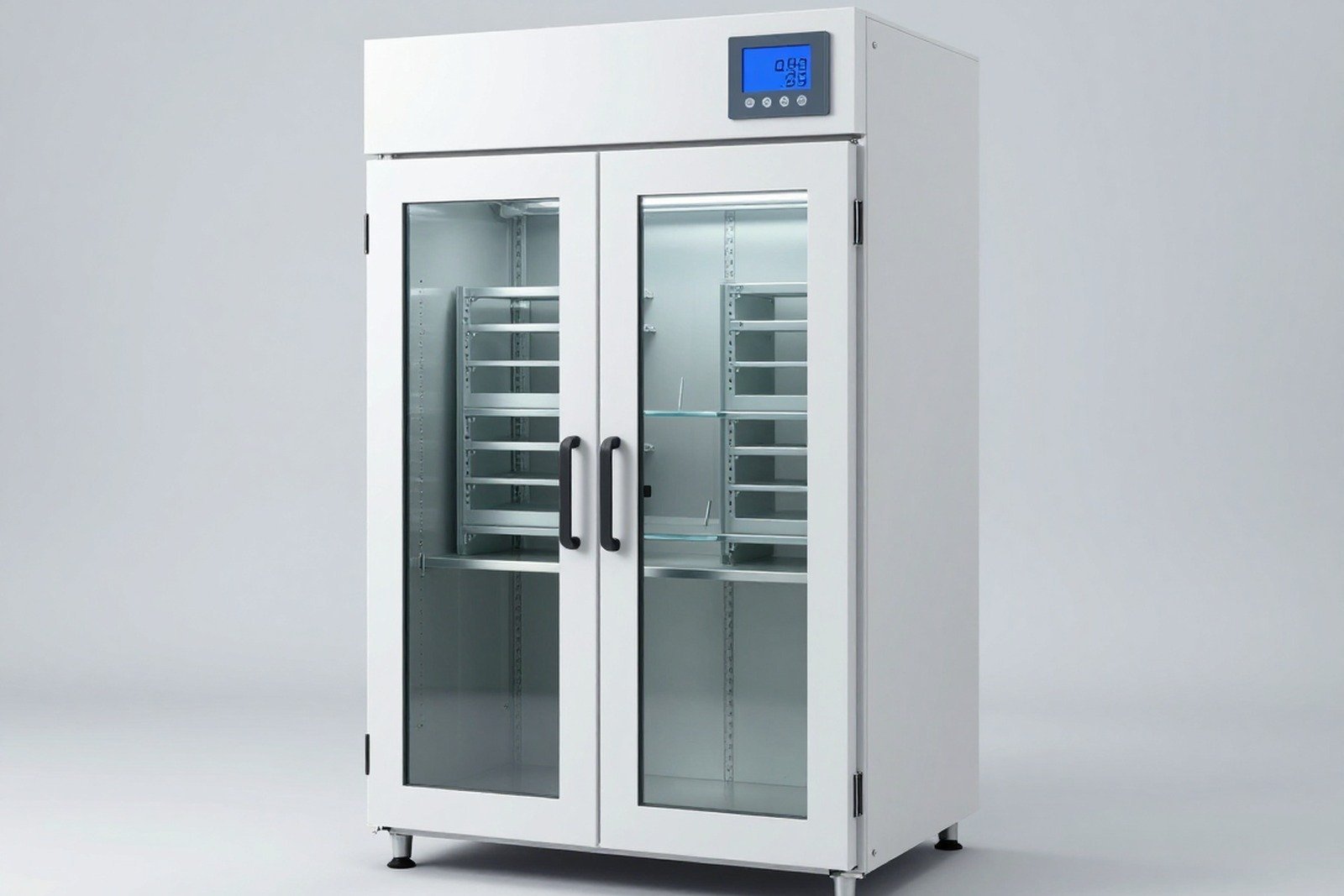
The term “85/85” has almost become an alternative term for hot humidity testing in the electronics industry. Many people say 85/85 without knowing which test in the IEC 60068 series they are talking about. In fact, the combination of 85 °C and 85 % RH is often associated with the Cy test according to IEC 60068-2-67 — a stable hot damp test under accelerated conditions, with the main object being the component.
This article explains how Cy differs from Cab and Cx, why acceleration conditions are only suitable for certain product groups, and what needs to be agreed upon with the testing laboratory before introducing Cy into a reliability assessment program.
1. What question does the Cy test answer?
Cy is a steady heat and humidity test in accelerated form, mainly for components. Samples are kept at high temperature and high relative humidity, under stable conditions, for long periods of time. Compared to Cab — which uses ambient temperature — Cy pushes temperatures higher to accelerate moisture-dependent deterioration mechanisms.
- Does the packaging material absorb too much moisture and change the electrical parameters of the component?
- Does corrosion occur on component pins, internal wires, or solder joints?
- Are protective coatings and adhesives still effective under prolonged harsh conditions?
- Is the stability of the parameters within allowable limits after hundreds to more than a thousand hours?
Because it is an accelerated test, Cy is often used in component reliability assessment, supplier qualification, and comparing material options — things that require results within weeks rather than months.
2. Cy, Cab and Cx: three moisture tests, three different targets
| Criteria | Cy (60068-2-67) | Cab (60068-2-78) | CX (60068-2-66) |
|---|---|---|---|
| Nature of conditions | Stable heat and humidity, accelerated form | Humidity and heat are stable at environmental levels | Steam is pressurized, not saturated |
| Main object | Components | Products, assemblies | The product requires special humidity conditions |
| Target | Shorten the time to evaluate moisture-related mechanisms | Evaluate long-term humidity effects at real-world environmental levels | Creates humid conditions with tightly controlled pressure and temperature |
| Risk of misuse | Acceleration conditions can create mechanisms that do not exist in reality | Mechanisms requiring higher stresses were not detected | Failure to regenerate without pressure control |
It should be noted: Cy is not an “upgraded” version of Cab. The choice of Cy is an engineering decision that must be based on the failure mechanism to be evaluated and on whether the acceleration condition still properly simulates that mechanism. How to write codes and test conditions in the request, see the article Read the IEC 60068 test designations correctly.
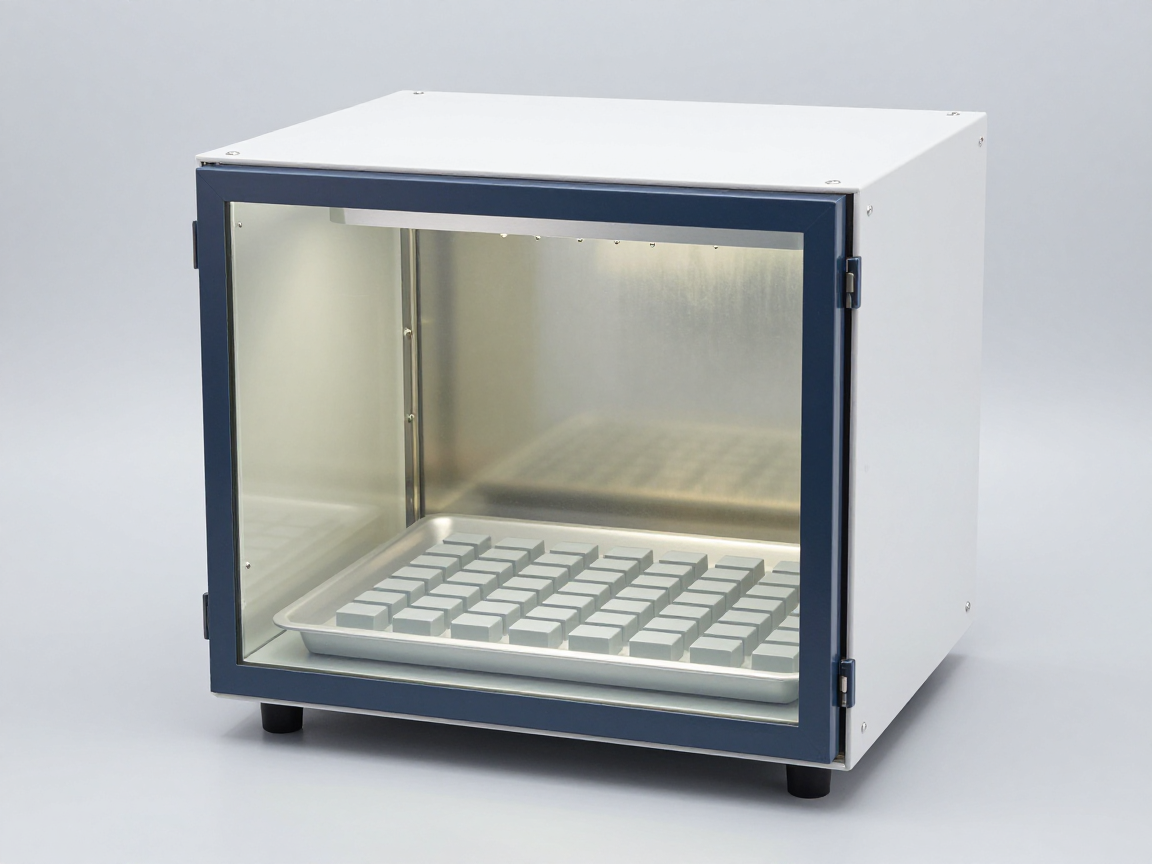
3. Why acceleration conditions cannot be used for all products
The principle of accelerated testing is to cause damage to occur faster, but with the same mechanism. When pushing the temperature too high, three risks appear:
- Switch failure mechanism: At high temperatures, stress can be applied to a mechanism different from the actual working mechanism, so the results are no longer predictable for the conditions of use.
- Exceeding material limits: glue, gasket, thermoplastic with phase transition temperature; If you cross this threshold, try another product.
- Deviation due to self-heating: At high chamber temperatures, the self-heating of a resistive device becomes relatively smaller, distorting the correlation with real conditions.
Therefore, with finished products, large sizes or organic materials, it is often necessary to choose a temperature level lower than the maximum acceleration level, accepting a longer test time.
4. Implementation sequence
- Confirm chamber capacity: Check temperature and humidity uniformity at the correct level to be used, especially at the sample location.
- Set initial milestones: Measure typical electrical parameters on the entire sample, check appearance, record batch number.
- Sample layout: clearly state the location; Avoid leaving samples shielding each other or placing them close to moisture sources, causing local deviations.
- Maintain conditions: Keep temperature and humidity stable for required time, record data continuously.
- Check by landmark: Sampling at time points to build a decline curve, instead of just measuring at the beginning and end.
- Recovery and assessment: Bring the sample to standard conditions, treat surface moisture, measure again and compare with the original mark.
5. Factors that determine results
| Factor | Influence |
|---|---|
| Test temperature and humidity level | Determine the rate of deterioration and whether the failure mechanism is still correct |
| Test time | With moisture diffusion, time is the key variable |
| Power supply status | Power supply increases local heat and creates electrochemical corrosion |
| Coatings and packaging materials | Determines the speed at which moisture reaches the inside of the component |
| Chamber stability over time | Small deviations over many weeks accumulate into large deviations in moisture dose |
| When and how to measure | Measuring while the surface is still wet will skew the conclusions |
6. Common mistakes and how to avoid them
- Use 85/85 as a default value for all products — can create failure mechanisms that do not exist in reality.
- No test clearly stated in the records — “85/85” is not enough for standard comparison.
- Measure only at the beginning and end — loss of information about degradation kinetics, inability to distinguish between early and late damage.
- Do not check appearance before testing — does not distinguish between pre-existing defects and damage caused by testing.
- Place samples too close together — local humidity varies, results between samples are not comparable.
- Use Cy results to conclude about real life expectancy without the acceleration model and accompanying assumptions.
7. Frequently asked questions
What test is 85/85 in IEC 60068?
Depends on context. In the IEC 60068 series, hot and humid conditions at high temperature, high humidity, and stability, used for components are often associated with Cy testing. When making records, always write down the test code and standard part number, not just the temperature-humidity pair.
How long does Cy last?
The standard provides time levels to choose from, usually measured in many hundreds of hours to more than a thousand hours. The specific time is chosen by the prescriber according to the assessment objectives and must be compared verbatim to the standards.
Can replacing Cy with Cab last longer?
The two tests create different stress levels. Extended cab environmental rating; Cy rates at acceleration. Replacement is only accepted when technical requirements allow and there is a correlative basis.
Does Cy need to supply power to components?
If the target includes galvanic corrosion and degradation due to bias voltage, power is required. If only packaging materials and moisture absorption are to be evaluated, an unpowered test can be performed. The status must be clearly stated in the application.
Can Cy results be used to accept parts batches?
It is possible, but acceptance criteria, number of samples, and allowable variation of parameters must be predetermined. “Still active” should not be used as the sole criterion.
Is Cy suitable for circuit boards with soldered components?
Okay, and this is a common application when evaluating assemblies. It is necessary to pay attention to whether the board material and coating glue can withstand the test temperature or not.
8. Conclusion
Cy is an accelerated steady-state heat and humidity test primarily for components, and is a test that is often mistakenly referred to as “85/85” without the test code. Acceleration conditions are only valid when the damage mechanism remains the same as in use conditions, so choosing the temperature – humidity level must have a technical basis, not based on habit.
Three things to do: write down the test code and standard part number in the file; Measure parameters at multiple time points to see decline trends; and confirm that the chamber capacity is at the correct level under the conditions in which it will be used, for as long a period of time as actually tested.
References
- IEC 60068-2-67 — Cy test: steady heat and humidity, mainly accelerated form for components.
- IEC 60068-2-78 — Cab test: steady heat and humidity.
- IEC 60068-2-66 — Cx test: steady hot damp in pressurized unsaturated steam.
- IEC 60068-3-6 and 60068-3-11 — Confirmation of environmental chamber capacity and uncertainty.
- IEC 60068-1 — General provisions and guidance.
Related articles
- Cab test: steady heat and humidity according to IEC 60068-2-78
- Cx test (IEC 60068-2-66): hot moisture in pressurized steam and when needed
- Confirmation of heat-humidity chamber capacity according to IEC 60068-3-6 and 60068-3-11
- Is 85/85 enough of a conclusion? Limits of hot damp test in reliability assessment
Discuss further
Disclaimer
This article is an interpretive content compiled by us; not legal advice. Enterprises need to compare relevant documents/standards verbatim before applying them to specific products.
See more: Copyright Policy & Disclaimer by ticforall.com.