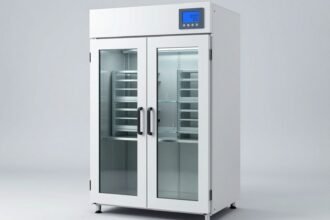
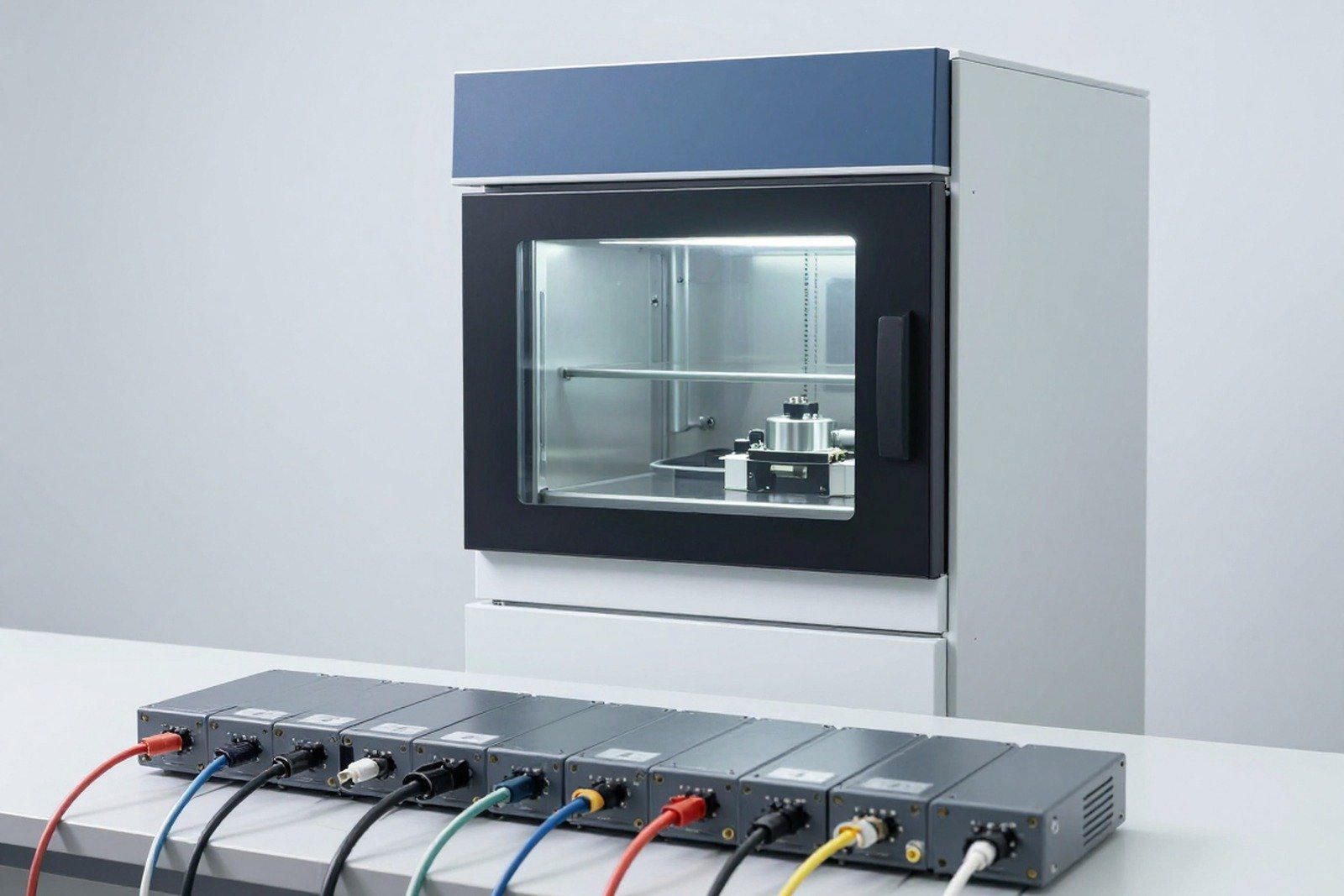
In reliability assessment programs, “85/85” appears as a default condition: put the product in a high-temperature and high-humidity chamber, hold for a number of hours, remove it, measure again, and if it passes, conclude good reliability. That approach ignores an important question: what does the hot-wet test prove, and what does it not prove?
This article analyzes the limitations of hot damp testing in assessing reliability, the conditions required for results to be meaningful, and how to present results so as not to be overinterpreted.
1. What does hot moisture testing prove?
In its most basic form, a hot-damp test proves a limited statement: under the conditions recorded, for the period of time tested, on the number of samples used, the sample does not exceed a predetermined level of degradation. That’s a conditional piece of evidence, not a general conclusion about longevity.
- Prove: the ability of the sample to withstand the selected hot and humid conditions, within the tested time.
- Prove: the existence or non-existence of some moisture-related damage mechanisms.
- Cannot demonstrate: longevity under actual usage conditions, without acceleration modeling and validity data.
- Cannot prove: behavior of other lots, if sample size is small and random sampling is not done.
2. Four limits are often overlooked
| Limit | Consequences if ignored |
|---|---|
| There is no accelerated model | Longevity cannot be inferred; The results are only meaningful under the conditions tested |
| No electrical polarity control | Ignore galvanic corrosion, leakage currents, and voltage-requiring mechanisms |
| Do not measure parameter degradation | Only know pass/fail without knowing reserve level |
| The number of samples is too small or the sample is not selected randomly | The conclusion has no statistical basis and is easily wrong with other batches |
The first limitation is the most important and also the most overlooked. Inferring life from an accelerated test requires: the assumption of a constant failure mechanism, a model describing the relationship between stress and failure rate, and experimental data at multiple stress levels to determine the model parameters. With a single data point at a stress level there is no model, only an observation.
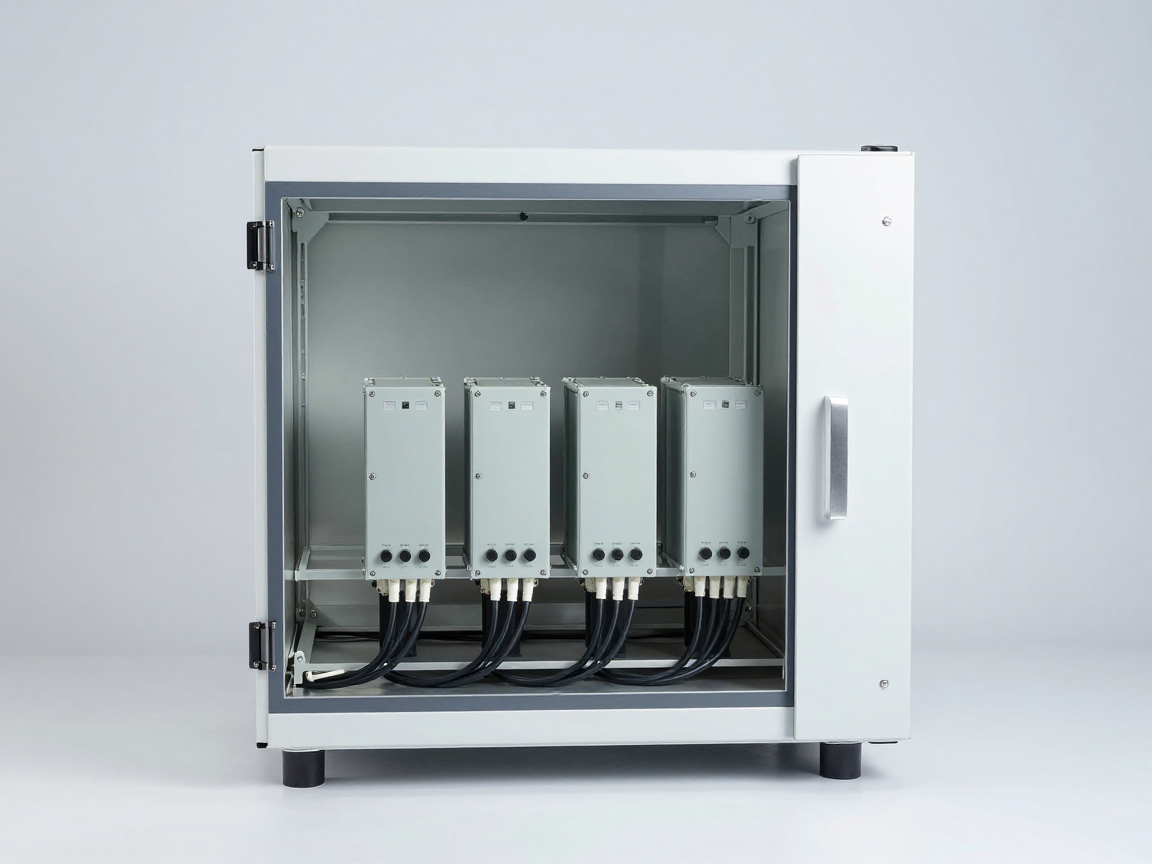
3. Why “85/85” is not a complete test
The temperature-humidity pair does not adequately describe a test. For results to be reproducible and comparable, the test request must record at least:
- Test code and standard part number — determines the condition structure (stable or cyclic, condensation or not).
- Maintenance time — the main harshness variable with the moisture diffusion mechanism.
- Transfer speed and time are stable — affects condensation and whether the sample reaches moisture balance or not.
- Power supply and load status — If there is power supply, the capacity must be recorded because self-heating causes the actual temperature of the sample to be higher than the chamber temperature.
- Pass criteria — predetermined by the allowable variation of the measurement parameter, not by “still active”.
The second point about self-heating is often overlooked. A power supply device in a chamber has an actual component temperature higher than the chamber temperature — in some cases enough of a difference to completely change the dominant failure mechanism. How to place the sensor and measure the temperature of the loaded sample is presented in the article self-heating of the device.
4. What to measure for meaningful results
| Parameter group | For example | The value of measuring |
|---|---|---|
| Electrical insulation | Insulation resistance, leakage current | Sensitive to surface moisture and corrosion; early detection |
| Function parameters | Sensor sensitivity, error, signal loss | Shows gradual deterioration rather than sudden failure |
| Structural parameters | X-ray, ultrasound, cross-sectional examination | Detect delamination, cracks, and voids |
| Appearance has classification | Degree of corrosion, swelling, discoloration | Visual evidence, requires predetermined criteria |
Important principle: measure attenuation at multiple time points, not just at the beginning and end. The decay line shows remaining reserves and helps detect early, regular damage, while a single pass/fail result gives just one bit of information.
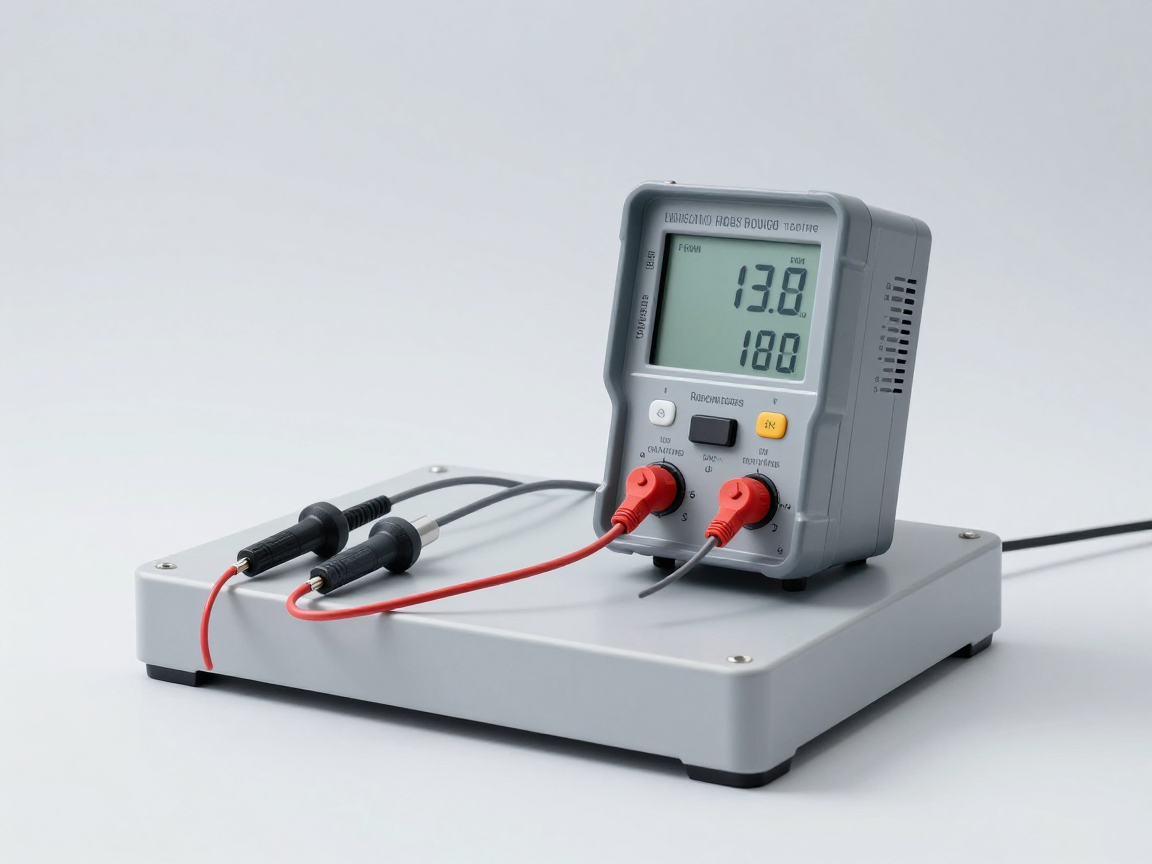
5. Properly combine with other tests
The reliability of electronic products is not determined by one test. Hot moisture testing is often associated with:
- Temperature change cycle to create repeated mechanical stress on the weld joint and the joining material.
- Vibration and mechanical shock to detect mechanical defects before moisture penetrates.
- Try hot and cold to separate the influence of pure temperature from the influence of moisture.
- Test the function at boundary temperature to detect deviations that only appear under extreme conditions.
When combining multiple tests, order is a variable. Placing the moisture test after the mechanical tests often aggravates the results, because mechanical damage opens the way for moisture. Once the order changes, the results are no longer comparable to previous attempts — so the order must be fixed in the records and kept the same between evaluations.
6. Common mistakes and how to avoid them
- Conclusion about longevity from a single moisture test — exceeds the logical limits of the data.
- Temperature and humidity tolerances are not recorded — don’t know what conditions the actual sample accepts.
- The test does not supply power but is called an assessment of operational reliability — omits a key set of mechanisms.
- Evaluation by appearance — loss of ability to detect impairment that has not yet manifested on the outside.
- The state and position of the sample in the chamber are not recorded — cannot handle differences between locations when there are abnormal patterns.
- Do not confirm chamber capacity before a long campaign — small deviations over time accumulate into large moisture dose deviations.
- Use the results of one batch for the entire product line — needs sampling and statistical facilities to do this.
7. Frequently asked questions
How long is 85/85 considered enough?
There is no general answer. Timing must be derived from the evaluation objective and from the acceleration model if longevity is to be inferred. If only proof of endurance is required, the time is chosen by the prescriber and must be clearly stated in the request.
Can hot humidity testing replace longevity testing?
No. The hot damp test is one data point at one condition. Life testing requires many data points, failure distributions, and assumptions about the mechanism — a significant amount of work and number of samples.
Is it necessary to power the sample when testing 85/85?
If the goal is to evaluate the reliability of the product in operation, power is needed — many failure mechanisms only appear when voltage is present. The no-power test is still valid, but the range of conclusions is narrower.
How many samples is enough?
Depends on the conclusion you want to reach: just observe the phenomenon, or confirm a level of confidence with a statistical basis. The number of samples should be chosen according to the objective of conclusion and sample provisioning for damage analysis.
Does a result of 85/85 mean the product is durable?
This means that the product does not exceed the allowable degradation level under the tested conditions, on the number of samples used. This is a conditional proof, not a guarantee of longevity or of other lots.
How should the results be presented to the client?
Specify the test code, conditions and tolerances, time, power supply status, number of samples, measurement parameters and variability, and predetermined pass criteria. Include original data and information confirming chamber capacity.
8. Conclusion
Hot moisture testing is an important tool for detecting moisture-related damage mechanisms, but it only provides conditional evidence: under the recorded conditions, for the time tested, on the number of samples used. Turning that evidence into conclusions about longevity is a logical leap that requires acceleration modeling and validity data.
Three things should be done: write down enough information about the test conditions so that the results are reproducible; measure parameter deterioration at multiple time points instead of just pass/fail; and clearly state the limitations of the conclusions in the report, with recommendations for additional tests when high reliability is needed.
References
- IEC 60068-2-67 — Cy test: steady heat and humidity, mainly accelerated form for components.
- IEC 60068-2-78 — Cab test: steady heat and humidity.
- IEC 60068-2-30 — Test Db: hot-humidity cycle.
- IEC 60068-2-38 — Z/AD test: combined heat-humidity cycle.
- IEC 60068-3-6 and 60068-3-11 — Confirmation of chamber capacity and uncertainty of test conditions.
- IEC 60068-1 — General provisions and guidance.
Related articles
- Cab test: steady heat and humidity according to IEC 60068-2-78
- Test Db: hot and humid cycle 12h+12h according to IEC 60068-2-30
- Z/AD combined heat-humidity cycle (IEC 60068-2-38) for electronic components
- Cy test (IEC 60068-2-67): steady heat and humidity accelerates components
Discuss further
Disclaimer
This article is an interpretive content compiled by us; not legal advice. Enterprises need to compare relevant documents/standards verbatim before applying them to specific products.
See more: Copyright Policy & Disclaimer by ticforall.com.