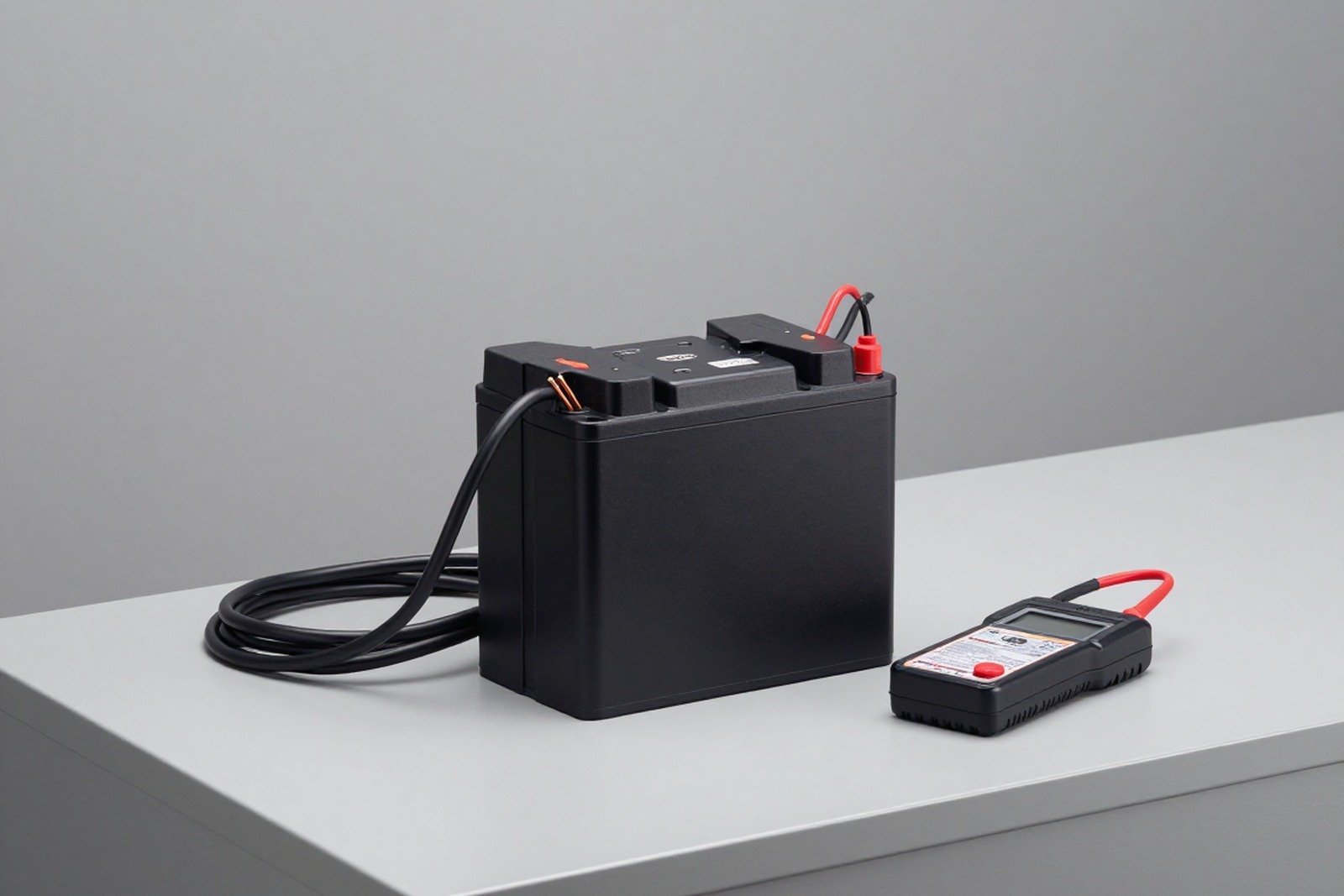
QCVN 91:2024/BGTVT is the national technical regulation on traction batteries used for electric motorcycles and mopeds, issued with Circular 48/2024/TT-BGTVT dated 15 November 2024, effective from 1 January 2025 and replacing QCVN 91:2019/BGTVT. The regulation sets technical requirements and test methods for four battery types: sealed lead acid, valve regulated lead acid, nickel metal hydride and lithium-ion. This article summarises the scope, the technical thresholds, the seven safety tests, the sample allocation and the position of this group of goods in the high-risk list under Circular 49/2026/TT-BXD.
1. Scope of application and effective date
The regulation applies to new batteries used for electric motorcycles and mopeds in production, assembly and import, and does not apply to used batteries. It covers domestic producers and assemblers, organisations and individuals importing batteries, and parties involved in management, inspection, testing and certification of technical safety quality and environmental protection for batteries.
QCVN 91:2024/BGTVT was drafted by the Vietnam Register, reviewed by the Department of Science, Technology and Environment, appraised by the Ministry of Science and Technology and issued by the Ministry of Transport with Circular 48/2024/TT-BGTVT. The same circular also issued QCVN 90:2024/BGTVT on motors used for electric motorcycles and mopeds.
Section 3.1 sets the management approach: imported, domestically produced and assembled batteries must be inspected, tested and certified for technical safety quality and environmental protection under the rules applicable to motor vehicle spare parts, rather than under the rules for vehicles.
2. Four battery types and the definitions that matter
Section 1.3 explains the terms, and most testing disputes arise from these definitions. The rated capacity C3 is the 3-hour capacity, measured when the battery discharges at a current I3 equal to C3 divided by 3 amperes from a fully charged state until the voltage falls to the threshold voltage. The threshold voltage is the lowest voltage set by the manufacturer for normal operation. A high-voltage battery is one with a rated voltage above 60 V and it faces stricter safety criteria.
| Battery type | Identifying features | Specific tests |
|---|---|---|
| Sealed lead acid (SLA) | Self-protecting construction that does not release free acid vapour and requires no water or electrolyte topping up in use | Subject to the high-current discharge test; exempt from short circuit, immersion, drop and crush tests |
| Valve regulated lead acid (VRLA) | Valve regulates rising pressure, high resistance to water loss and little or no topping up in use | Same as the lead acid group |
| Nickel metal hydride (NiMH) | Positive electrode of nickel hydroxide and negative electrode of hydrogen-treated metal, immersed in alkaline electrolyte | All seven safety items in Table 2 |
| Lithium-ion (Li-ion) | Assembly of cells in series or parallel, negative electrode of carbon, graphite or other carbon materials, positive electrode of lithium metal oxide compounds | All seven safety items in Table 2, including crush testing of a single cell |
The regulation also defines leakage, fire, explosion and rupture. Leakage means visible escape of electrolyte or material. Fire means a visible flame, while electric sparks and arcs are not counted as flames. Rupture means an opening wide enough for the IPXXB test finger to pass through and touch internal parts, and this definition keeps test results independent of the subjective judgement of an individual technician.
3. General requirements and electrical characteristics
Section 2.1 requires batteries to be manufactured in line with the producer’s technical documentation, with the positive terminal marked plus and the negative terminal marked minus in a clear and hard-to-remove way. The casing must not be deformed or cracked and components must be firmly fitted. The battery must display its rated voltage and rated capacity. High-voltage batteries must carry the marking in Appendix C, with a yellow background on the symbol and black triangle outline and arrow.
| Parameter | Pass threshold | Measurement conditions |
|---|---|---|
| Rated voltage | Not lower than the rated value and not more than 15% above it | Fully charged, stabilised for 2 h under the specified ambient conditions, measured between the terminals with a voltmeter |
| Rated capacity, lead acid batteries | Measured capacity Ce not less than 90% of the rated capacity C3 | Fully charged, stabilised for 5 h, discharged at I3 to the threshold voltage, Ce equals discharge time multiplied by I3 |
| Rated capacity, NiMH and Li-ion batteries | Measured capacity Ce not less than 100% of the rated capacity C3 | Fully charged, stabilised for 5 h, discharged at I3 to the threshold voltage |
| High-current discharge performance, lead acid only | Discharge time not less than 40 min | Fully charged, stabilised for 5 h, discharged at 3I3 until the voltage falls to n multiplied by 1.5 V |
Capacity thresholds differ by battery type: lead acid batteries only need to reach 90% of the rated value while NiMH and Li-ion batteries must reach the full 100%.
4. Seven safety tests and their pass criteria
Section 2.3 sets safety characteristics with three items applying to every battery type, namely overcharge, overdischarge and vibration resistance, plus four items applying only to batteries other than lead acid, namely short circuit, immersion, drop and crush. The general criterion during each test and one hour after it ends is that the battery must not leak, catch fire or explode, and for high-voltage batteries it must also not rupture.
| Item | Test conditions | Pass criteria |
|---|---|---|
| Overcharge | Charge at I3 or at the manufacturer’s current until the battery cuts off or limits charging current; without that function, charging continues until twice the rated capacity | No leakage, fire or explosion; high-voltage batteries must also not rupture |
| Overdischarge | Discharge at I3 or at the manufacturer’s current until cut-off or current limiting; without that function, discharging continues until the voltage equals 25% of the rated voltage | No leakage, fire or explosion; high-voltage batteries must also not rupture |
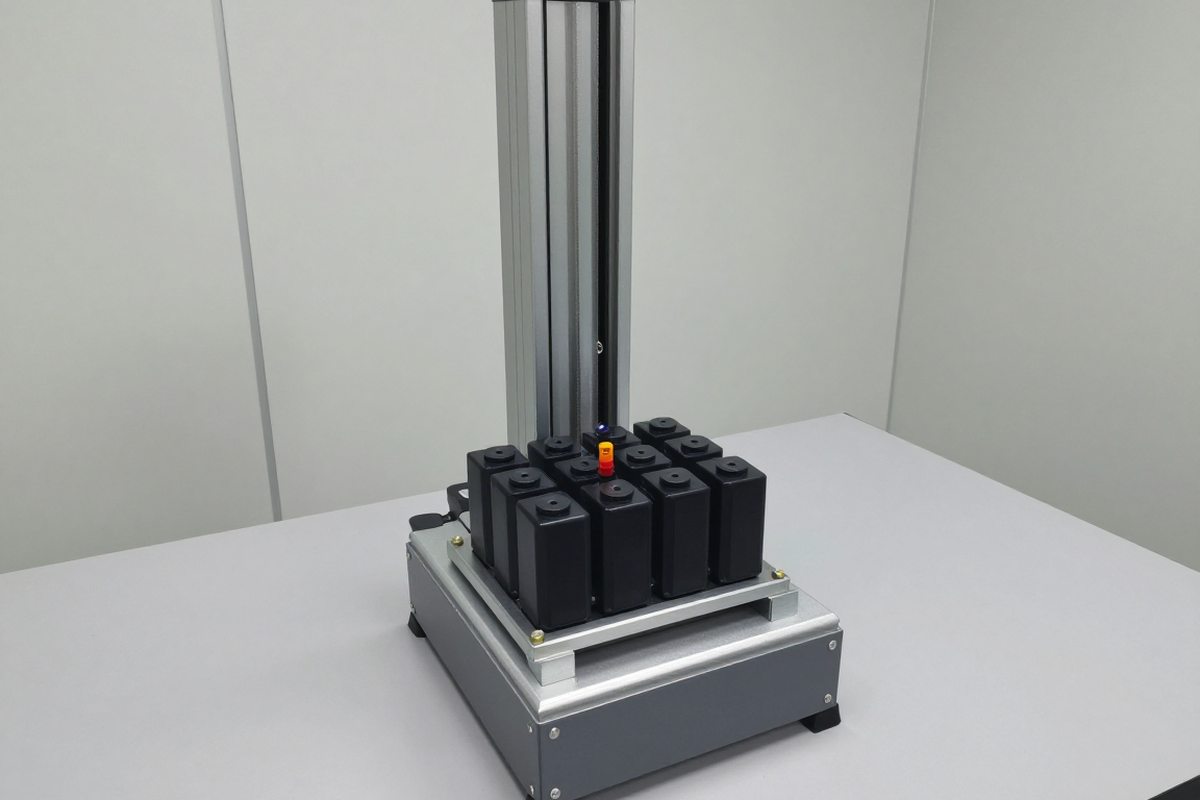
| Vibration resistance | Vertical vibration from 7 Hz to 200 Hz and back to 7 Hz within 15 min, 12 sweep cycles, 3 h total, with the battery charged to at least 50% of rated capacity | No leakage, fire or explosion for a single cell or two cells connected in series |
| Short circuit, not applicable to lead acid | Positive and negative terminals connected by a conductor with resistance below 5 mΩ, maintained until the protection device interrupts or limits the current, or at least 1 h after the case temperature stabilises | No leakage, fire or explosion |
| Immersion, not applicable to lead acid | Fully charged battery immersed with water above the top of the casing for 24 h, then stabilised for 6 h under the specified ambient conditions | No sparking, leakage, fire or explosion |
| Drop, not applicable to lead acid | Charged to at least 90% of rated capacity, dropped freely six times in different orientations from a height of 1.0 m onto a flat concrete surface | No leakage, fire or explosion |
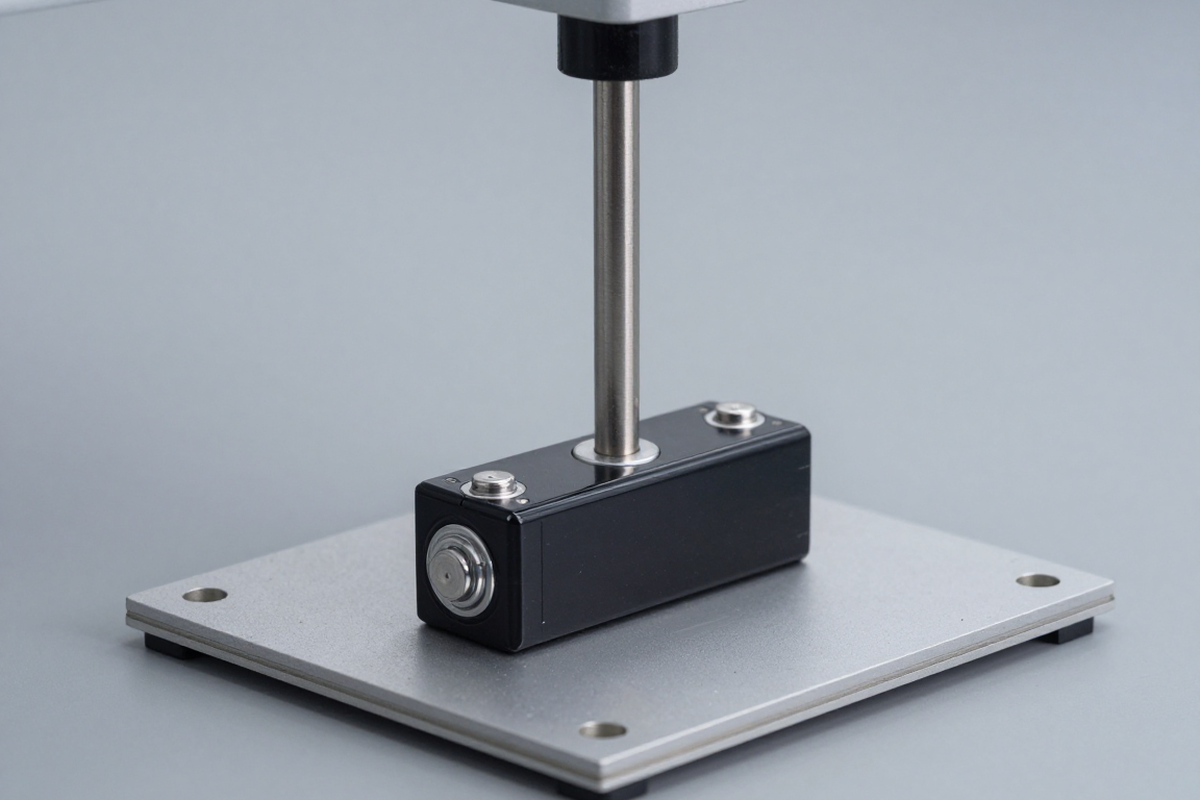
| Crush, not applicable to lead acid | Cell placed on a rigid insulated flat surface and crushed by a round bar or spherical indenter of 150 mm diameter at a rate not exceeding 6 mm per minute | No fire or explosion; the test stops when the voltage drops suddenly to one third of the initial value, or the cell deforms by at least 15% of its original size, or the force reaches 1000 times the cell weight |
5. Test conditions, measuring instruments and IPXXB protection
Appendix A sets the test conditions: temperature from 15°C to 35°C, relative humidity from 25% to 85% and atmospheric pressure from 86 kPa to 106 kPa. Instruments are also constrained: a voltmeter with resolution no coarser than 0.01 V and resistance of at least 300 Ω/V, an ammeter with resolution no coarser than 0.01 A, a thermometer with scale division no larger than 1°C, and a time measuring device with accuracy of at least 1%.
In the vibration test, acceleration depends on the mass of the finished battery. Units below 12 kg ramp from 10 to 80 m/s² and then hold 80 m/s² up to 200 Hz, while units of 12 kg or more ramp from 10 to 20 m/s² and then hold 20 m/s² up to 200 Hz. The amplitude is kept at 0.8 mm, which corresponds to a total amplitude of 1.6 mm.
If the producer or importer cannot provide a charging procedure and charger, the regulation prescribes charging methods by type: sealed lead acid at a constant current of 0.5I3 until the voltage reaches n multiplied by 2.4 V and then at 0.25I3 until the voltage changes by no more than 0.05 V per hour over 3 consecutive hours; valve regulated lead acid at a constant voltage of n multiplied by 2.4 V with a maximum current of I3 for 16 h; lithium-ion at a constant current of I3 up to n multiplied by 4.2 V and then at constant voltage until the charging current falls to 0.1I3; NiMH at a constant current of I3 for 3 h and then 0.15I3 for 2 h.
Appendix B specifies the IPXXB test equipment. The test finger is applied to any opening in the casing with a force of 10 N and must not touch any live part of the battery, while the stop face of 50 mm diameter and 20 mm length must not pass through the opening.
6. Technical documents and sample allocation
Section 3.2 requires a technical parameter registration with at least eleven items: name and address of the facility, brand, model number, design or product code, battery type, rated voltage, rated capacity, threshold voltage, cell connection diagram, a photograph of the design and the charging procedure where available.
Sample requirements differ by technology: lead acid batteries need 04 new samples per type, while NiMH and lithium-ion batteries need 04 samples plus 01 new cell per type, with the cell used for the crush test.
| Test item | Lead acid batteries (4 samples) | Li-ion and NiMH batteries (4 samples and 1 cell) |
|---|---|---|
| General requirements | Samples 1, 2, 3, 4 | Samples 1, 2, 3, 4 |
| Rated voltage | Samples 1, 2, 3, 4 | Samples 1, 2, 3, 4 |
| Rated capacity | Samples 1, 2, 3, 4 | Samples 1, 2, 3, 4 |
| High-current discharge performance | Sample 1 | Not applicable |
| Overcharge | Sample 2 | Sample 1 |
| Overdischarge | Sample 3 | Sample 2 |
| Short circuit | Not applicable | Sample 3 |
| Vibration resistance | Sample 4 | Sample 4 |
| Immersion | Not applicable | Sample 2 |
| Drop | Not applicable | Sample 1 |
| Crush | Not applicable | Sample 5, a single cell |
Because one sample carries several test items, non-destructive tests such as general requirements, rated voltage and rated capacity are performed first on the same sample, and only then does the sample move to destructive testing.
7. High-risk classification under Circular 49/2026/TT-BXD
Circular 49/2026/TT-BXD, which issues the list of medium-risk and high-risk products and goods in the transport sector, places batteries used for electric motorcycles and mopeds in section IV of Appendix I, the high-risk motor vehicle spare parts group, with HS code 85.07 and QCVN 91:2024/BGTVT as the applicable regulation. The quality management requirement on the same line is certification of technical safety quality and environmental protection under the law on road traffic order and safety.
| Product or goods | Regulation | HS code | Risk level | Quality management requirement |
|---|---|---|---|---|
| Batteries used for electric motorcycles and electric mopeds | QCVN 91:2024/BGTVT | 85.07 | High | Certification of technical safety quality and environmental protection under road traffic order and safety law |
| Motors used for electric motorcycles and electric mopeds | QCVN 90:2024/BGTVT | 85.01 | Medium | Certification of technical safety quality and environmental protection: production and assembly under Circular 55/2024/TT-BGTVT; import under Circular 54/2024/TT-BGTVT |
Placing batteries at the high-risk level while motors sit at the medium level is a point to watch when preparing a dossier for one electric motorcycle. The two groups may arrive in the same import shipment but follow different inspection channels, and the battery certification cannot substitute for the motor dossier or the other way round. QCVN 91 and QCVN 90 also do not replace each other because their scope and test sets are entirely different.
8. Certification procedure and required documents
For imported goods, the procedure follows Circular 54/2024/TT-BGTVT; for goods produced or assembled in Vietnam, it follows Circular 55/2024/TT-BGTVT. The file includes the technical parameter registration under section 3.2.1, samples under section 3.2.2 and a test report issued by the testing body under section 3.3.
Sections 4.2 and 4.3 set transitional rules: battery types whose inspection, testing or certification registration was accepted before the effective date continue under the rules in force at acceptance, and test reports issued before that date remain valid for certification.
Section 4.1 assigns the Vietnam Register to organise implementation. Where referenced documents are amended or replaced, the new documents apply.
9. Points companies often overlook
The first is the threshold voltage. This value is set by the manufacturer, recorded in the technical parameter registration and used directly in the capacity test. If the file states one value while the product technical documentation states another, the test result can be skewed even when the measurement itself is correct.
The second is the marking on the casing of high-voltage batteries. The regulation requires the Appendix C symbol with a yellow background and black triangle outline and arrow. Missing this marking is a common defect for batteries with a rated voltage above 60 V.
The third is the number of samples. For lithium-ion and NiMH batteries an extra cell is needed for the crush test, so sending only 04 battery samples will trigger a supplementary request and delay the schedule.
10. What companies need to prepare
Producers and assemblers should complete the technical parameter registration for each battery type before submitting samples, stating the rated voltage, rated capacity, threshold voltage, cell connection diagram and charging procedure. Importers should confirm the HS code in advance against group 85.07 in the high-risk list and prepare documents under Circular 54/2024/TT-BGTVT.
Testing and certification bodies should compare their designated or accredited scope with the tests of QCVN 91:2024/BGTVT, especially the cell crush test and the immersion test, because they require dedicated equipment and floor space.
Traders and import agents should check that the shipment certificate matches the actual battery type, because HS codes in the list are given at group level and must be reclassified during customs procedures.
11. Related articles on the site
- Circular 49/2026/TT-BXD: medium-risk and high-risk goods in the transport sector
- QCVN 90:2024/BGTVT: technical requirements for electric motorcycle and moped motors
- QCVN 32:2026/BCT: EV charging posts and charging stations, and what to prepare
- High-risk goods requiring QCVN 4 testing under Circular 36/2026/TT-BKHCN
- Circular 14/2026/TT-BKHCN: 8 certification methods and how to choose by risk level
- Appendix I of Decree 37/2026/ND-CP: lookup table of 69 groups of goods
- Designation of conformity assessment bodies under Decree 37/2026/ND-CP
- Law 78/2025/QH15: risk-based quality management, import inspection and conformity declaration
12. References
- QCVN 91:2024/BGTVT, national technical regulation on traction batteries used for electric motorcycles and mopeds, issued with Circular 48/2024/TT-BGTVT dated 15 November 2024, effective from 1 January 2025, replacing QCVN 91:2019/BGTVT. Available on the legal document system of the Government Portal.
- Circular 49/2026/TT-BXD issuing the list of medium-risk and high-risk products and goods in the transport sector under the management of the Ministry of Construction, effective from 1 July 2026, section IV of Appendix I.
- Circular 54/2024/TT-BGTVT on inspection of technical safety quality and environmental protection for imported motor vehicle spare parts and Circular 55/2024/TT-BGTVT on inspection of technical safety quality and environmental protection for motor vehicle spare parts produced or assembled in Vietnam.
13. Contact
Companies that need to compare their battery types with QCVN 91:2024/BGTVT or prepare a certification dossier under the high-risk classification can send their details through the form below.
Note: this article is for knowledge sharing only and does not replace legal documents or legal and technical advice for a specific case. Always check the original QCVN 91:2024/BGTVT with Appendix A, Appendix B and Appendix C and any amending, supplementing or replacing documents in force.