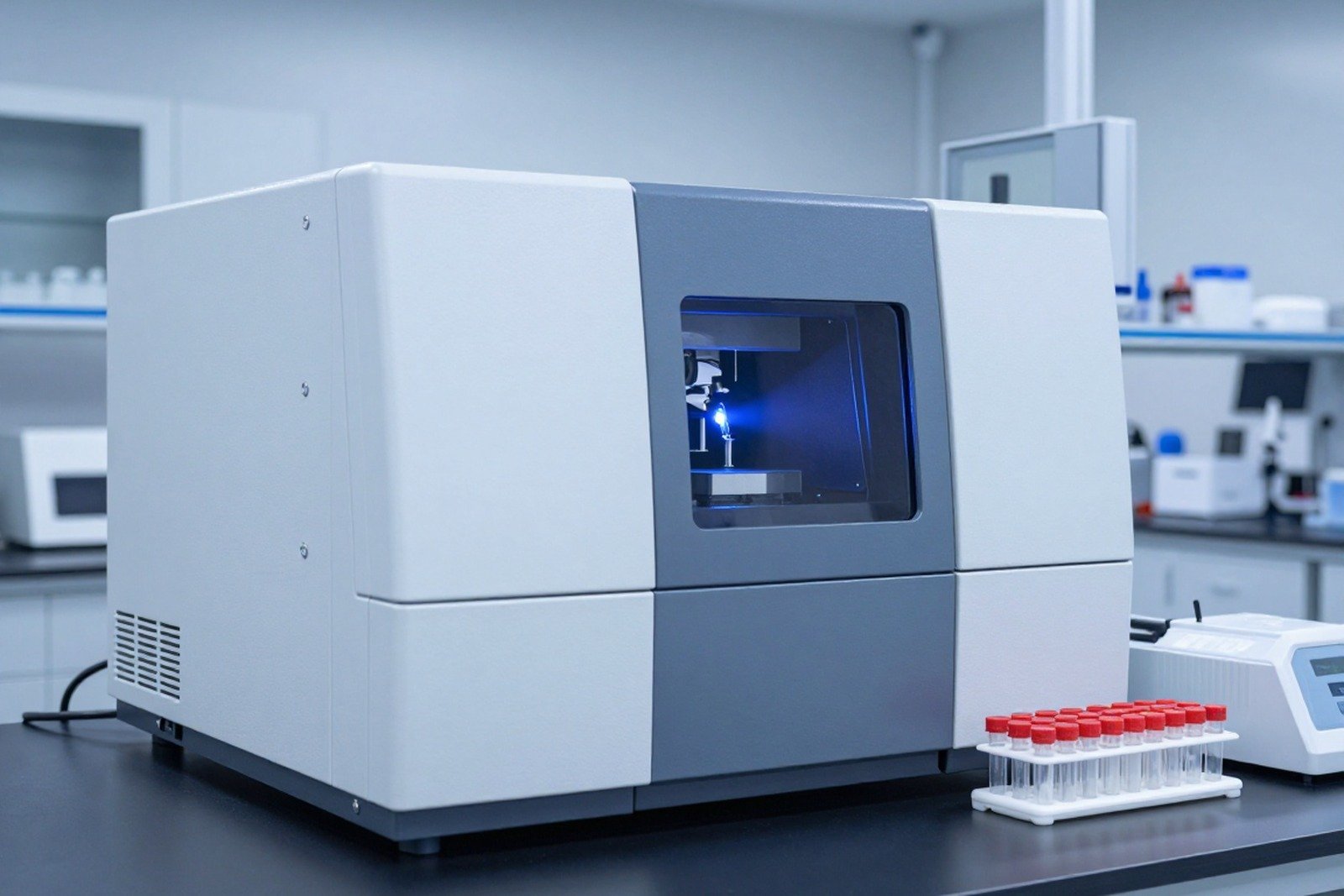
The draft national standard on the determination of elements in environmental solid matrices by ICP-MS is currently out for comment. On the cover, the standard number is left blank (TCVN :2026), marked “First edition” and “DT TD”, with the Vietnamese title Environmental solid matrices: Determination of elements using inductively coupled plasma mass spectrometry (ICP-MS). According to the foreword, the standard is identical to ISO 16965:2025; it was drafted by national technical committee TCVN/TC 190 on soil quality, proposed by the Vietnam Standards and Quality Institute, appraised by the National Committee for Standards, Metrology and Quality and published by the Ministry of Science and Technology.
Unlike the drafts on cybersecurity or electrical equipment reviewed earlier, this is a test method standard. Its direct users are testing laboratories: from sampling, digestion and measurement on an ICP-MS instrument through to reporting results. For businesses, it is the basis for reading and assessing metal analysis results in soil, sludge, sediment and waste when they have to demonstrate compliance with environmental requirements or evaluate waste before reuse and recycling. The draft runs to 26 pages, with twelve clauses, two annexes and six references.
1. What this draft is and where it stands
This is a draft national standard: the number has not been assigned, it has no legal effect and the content may change before publication. The adoption route is taking over the international standard wholesale: “identical to ISO 16965:2025”.
One point to note: ISO 16965 was written for environmental solid matrices in general (soil, sludge, sediment, waste, treated biowaste) and is not tied to any specific Vietnamese technical regulation. In other words, it is a technical tool for laboratories to demonstrate capability, while whether it is mandatory depends on the regulation, contract or accreditation programme an organisation signs up to.
2. Why this standard matters to laboratories and businesses
Three main reasons:
- Very broad element coverage. A single digestion and a single measurement run can determine dozens of elements, from the heavy metals routinely monitored (As, Cd, Cr, Cu, Hg, Ni, Pb, Zn) to elements less commonly found in Vietnamese laboratories (Be, Bi, Ce, Dy, Er, Eu, Gd, Ga, Ge, Hf, Ho, In, Ir, La, Lu, Nd, Pd, Pr, Re, Rh, Ru, Sm, Sc, Tb, Te, Th, Tl, Tm, U, V, W, Y, Yb, Zr).
- Low detection limits. For most elements the method detection limit falls between 0,1 mg/kg and 2,0 mg/kg dry mass, which is suitable for assessing parameters with very low thresholds such as Cd or Hg in agricultural soil.
- Validated performance data. Annex A provides repeatability and reproducibility standard deviations for each element on three matrices (sludge, compost, soil), helping laboratories benchmark their actual capability and helping customers understand a reasonable measurement uncertainty for the results.
3. Scope: matrices and digestion routes
Clause 1 specifies the method for determining elements in digests produced with aqua regia, nitric acid, or a mixture of hydrochloric acid (HCl), nitric acid (HNO3) and tetrafluoroboric acid (HBF4)/hydrofluoric acid (HF) when digesting soil, treated biowaste, waste, sludge and sediment. The draft also states the method can be applied to determine major, minor and trace elements in aqua regia and nitric acid digests as well as in eluates of construction products (referring to EN 17200).
| Matrix | Materials used for validation |
|---|---|
| Sludge | Municipal sewage sludge, industrial sludge, sludge from the electronics industry, printing ink sludge, sewage sludge |
| Treated biowaste | Compost, composted sludge |
| Soil | Agricultural soil, sludge-amended soil |
| Waste | Fly ash and bottom ash from municipal waste incineration plants, printing ink sludge (organic matrix), electronics industry sludge (metal matrix), reference materials BCR 146R and BCR 176 |
| Sediment | Reference material ISE 859 (sediment from de Bilt, the Netherlands) |
The digestion procedure itself is not part of this standard. The draft refers to separate digestion standards: EN 16173 for nitric-acid-soluble fractions, EN 13656 for acid mixtures containing HBF4 or HF, ISO 54321 for aqua regia, and EN 16174 method A (aqua regia, reflux heating) and method B (aqua regia, microwave heating with temperature control) for aqua regia soluble fractions.
4. The principle of the method
The analytes in the digest are nebulised into an aerosol, carried by argon gas into the plasma and ionised at the high temperature of the plasma. The ions are swept into the mass spectrometer through an interface, separated according to their mass-to-charge ratio (m/z) and quantified by a detector, for example a channel electron multiplier.
Two technical notes matter in practice: to determine tin, only the aqua regia extraction method applies; and when tetrafluoroboric acid (HBF4) is used in the acid mixture, boron cannot be determined. The working range depends on the sample matrix and on interference effects.

5. Three groups of interferences and how to handle them
5.1. Isobaric elemental interferences
These occur when isotopes of different elements have very close m/z ratios and the resolution of the instrument is too low to separate them, for example between 114Cd and 114Sn. The remedy is correction based on the contribution of the interfering element, choosing non-interfered isotopes where possible, and using the correction options built into the instrument software.
5.2. Isobaric molecular and doubly charged ion interferences
These are caused by ions made up of more than one atom, or by doubly charged ions. For example 40Ar35Cl+ interferes with the 75As signal, and 98Mo16O+ interferes with the 114Cd+ signal. The draft notes that corrections assuming a constant ratio to the parent ion are often unreliable, because oxide levels can vary with operating conditions; if such a ratio is used, the interfering solution must be measured immediately before the analytical run and the correction factor re-checked at regular intervals.
Two solutions are given: use an instrument with a collision/reaction cell, which can be extended with triple quadrupole technology to use reaction gases more effectively; or use high resolution ICP-MS, which avoids both molecular isobaric and doubly charged interferences. The threshold above which correction becomes mandatory: when the contribution may be higher than three times the detection limit or higher than half the lowest concentration to be reported.
5.3. Non-spectral interferences
These relate to sample nebulisation and transport, ion transmission efficiency, changes in surface tension or viscosity of the solution, and solids depositing on the nebuliser tip or on the sample cones. Remedies: keep the total dissolved solids low, use an internal standard matched to the analyte so that both are affected similarly by matrix variation, adjust the matrix to match the acid concentration, use standard addition, and dilute the sample (for example a five-fold dilution). The draft sets a control threshold: the relative response of the internal standard in all solutions must be within plus or minus 30 per cent of the internal standard in the preceding blank or continuing calibration verification solution.
6. Reagents, standard solutions and container materials
Clause 6 lists sixteen groups of reagents and solutions. The key points:
- Water: conductivity below 0,1 mS/m (equivalent to resistivity above 0,01 MΩ·m at 25 °C), taken from a ultrapure water system with resistivity above 0,18 MΩ·m (suppliers usually state this as 18 MΩ·cm).
- Base acids: HNO3 about 15 mol/l, HCl about 12 mol/l, HBF4 about 6 mol/l, HF about 23 mol/l; a 4 per cent by mass boric acid solution is prepared by dissolving 40 g of boric acid in 1 L of water.
- Stock standard solutions: single-element solutions from 10 mg/l to 1 000 mg/l per element; anion standards Cl–, PO43-, SO42- at 1 000 mg/l. The draft recommends nitric acid preservation to minimise interference from chlorine-containing polyatomic molecules, but notes that some elements (Bi, Hf, Hg, Mo, Sn, Sb, Te, W, Zr) may need hydrochloric acid, and some, such as Sb, may need added hydrofluoric acid.
- Internal standard solutions: commonly used elements include 6Li (enriched isotope), Be, Sc, Ga, Ge, Y, Rh, In, Cs, Pr, Tb, Ho, Re, Ir, Bi and Th. The elements chosen must not be analytes and must be present at very low concentration in the samples. Final concentration is typically 1 µg/l to 50 µg/l.
- Mercury: a gold solution in dilute HCl should be added to reach a final concentration of at least 50 µg/l; if gold itself must be determined, KBrO3 in dilute HCl can be added to reach at least 0,009 mmol/l.
- Optimisation solution: should contain elements representing the full mass range, for example Mg, Cu, Rh, In, Ba, La, Ce, U and Pb; Li, Be and Bi are not recommended because they readily cause effects at high concentration. Concentrations must be high enough for a count rate above 104 per second.
- Containers: at very low concentration levels (below 1 µg/kg), glass or polyvinyl chloride containers must not be used; use PFA, FEP or quartz cleaned with high purity dilute nitric acid or hot concentrated nitric acid in a closed system. At higher concentration levels, HDPE or PTFE are also suitable. Each batch of pipette tips and disposable plastic containers must be checked for purity.
The draft stresses that detection limits for most elements are affected by contamination of the solutions and depend mainly on the cleanliness of the laboratory air. This is a requirement about clean facilities and contamination control, not only about instrumentation.
7. Apparatus
The main instrument is an inductively coupled plasma mass spectrometer capable of scanning a mass range from 5 m/z to 240 m/z with a minimum resolution of 1 m/z peak width at 5 per cent peak height. Suitable instrument types include quadrupole ICP-MS, high resolution ICP-MS, time-of-flight ICP-MS and ICP-MS with a collision/reaction cell.
On sample introduction: mass flow controllers for the nebuliser gas are encouraged, and mass flow controllers for the plasma and auxiliary gas are preferred. The peristaltic pump speed should not be too low so that the signal remains stable; the solution uptake normally lies between 0,1 ml and 1,0 ml per minute, usually around 0,4 ml to 0,5 ml per minute. Argon must have a purity higher than 99,99 per cent by volume; reaction gases (He, H2, O2, NH3 or CH4) must also be higher than 99,99 per cent by volume.
8. Test solution preparation and instrument set-up
The test sample solution is a particle-free digest prepared in accordance with EN 16173, EN 13656 or ISO 54321; the test solution may be taken directly or diluted to fit the measuring range, and the acidity of the calibration solutions must match that of the test solution. One easily overlooked detail: all elements must be present in a non-volatile form, for example by oxidising sulfide with hydrogen peroxide.
When setting up the instrument, the draft requires determining the isotopes and the corresponding correction needs, setting the rinse time according to the length of the flow path, and the use of an internal standard is mandatory: the internal standard stock solution is added to the interference check solution, to all multi-element calibration solutions, to the calibration blank and to all measured solutions. Internal standard concentrations must be the same in all solutions, typically 10 µg/l to 50 µg/l, aiming at count rates of at least 50 000 counts/s to 100 000 counts/s. Bringing the instrument to its operating state usually takes about 30 min.
The draft is also candid about one point: ICP-MS is excellent at multi-element analysis, but that does not mean all elements can be analysed in a single measurement run, because sensitivity depends on many parameters such as nebuliser flow, radio frequency power and lens voltage.
9. Calibration and data handling
| Item | Provision in the draft |
|---|---|
| Calibration function | Two-point calibration (a blank and one upper calibration standard) gives acceptable results; more calibration solutions are recommended (at least four calibration standards plus a blank) for larger ranges |
| Regression | Multi-level calibration with ordinary least squares can cause error at the lowest point of the curve; weighted linear regression must be used, with weights inversely proportional to the standard deviation of the measurement |
| Validity of the function | Valid only under the specific operating conditions; it must be re-established if conditions change; after a failed control sample, recalibrate with at least two points and perform a calibration check |
| Standard addition calibration | Add a known standard solution (0,4 to 2 times the expected sample concentration) to two equal portions of the sample solution; use the ratio of true to measured added concentration as the correction factor |
| Interference correction factors | The need for correction factors became largely obsolete with collision reaction cells, but the factors still need to be evaluated and updated by measuring interference check solutions at regular intervals |
| Variable isotope ratios | Differences in isotopic composition between calibration and measured solutions must be taken into account (relevant for Li, Pb, U); for lead, sum the signals of isotopes 206, 207 and 208 |
Examples of correction factors in the draft: for the 40Ar35Cl interference on 75As, the factor is determined by recording the signals at mass 75 and 35 of a Cl– solution; for the 98Mo16O interference on 114Cd, the factor is determined by recording the signals at mass 114 and 98 of a Mo solution.
10. Measurement sequence
The draft gives a specific sample sequence, and this is the part that determines whether the results are valid:
- Calibration must be measured at the start of a sample run, with at least one measurement using a multi-element calibration solution and the calibration blank.
- The interference check solution is run to establish corrections or to check for the presence of interferences.
- Every 25 samples or fewer, and at the start and end of the run, measure the calibration blank and a multi-element standard solution from an independent source.
- Every 50 samples and at the end of a run, analyse the interference check solution.
- Run all samples with one or more test blanks; use certified reference materials or in-house validated control samples to check recovery, or run at least one spiked sample after digestion. If standard addition calibration is applied to all samples, this recovery check can be omitted.
A practical warning worth noting: some elements such as Ag, B, Be, Hg, Li and Th rinse very slowly from the sample introduction system, so it must be checked whether the high count rate of a preceding sample affects the following measurement. Whenever the sample matrix has an unknown composition, check the matrix effect with a spiked sample and with a five-fold diluted sample, and check interferences between the analytes.
11. Quality control: the specific numerical thresholds
| Item | Acceptance threshold |
|---|---|
| Calibration blank | Less than 0,5 times the lowest concentration to be reported |
| Continuing calibration verification (CCV) | Use a solution with certified concentration and known measurement uncertainty to demonstrate traceability; the deviation must lie within the laboratory quality control limits |
| Internal standard response | From 70 per cent to 130 per cent compared with the preceding blank or CCV solution |
| Recovery on spiking | From 75 per cent to 125 per cent, or the difference between the original and the five-fold diluted sample below 20 per cent |
| Spike concentration | From 0,4 to 2,5 times the analyte concentration |
When the internal standard response deviates for a few sample solutions, the cause is usually an error in adding the internal standard or an unacceptable physical interference; the remedy is to prepare a new solution, re-analyse and, if needed, dilute five-fold. If the internal standard response deviates for all solutions, the cones must be cleaned and the instrument recalibrated.
12. Calculation, expression and reporting of results
Clause 9 gives the calculation of the mass fraction of an element in the digested solid sample, in mg/kg, corrected to dry mass at 105 °C. Formula (1) takes the difference in concentration between the test solution and the blank solution (mg/l), multiplies by the dilution factor of the test solution and the volume of the digest (ml), divides by the mass of the digested test portion (g), and then corrects for the dry mass fraction of the sample determined in accordance with EN 15934 (expressed as a percentage) together with the correction factor for dry mass. When applying the formula, units (mg/l, ml and g) must be consistent, and it must be clear on which test portion the dry mass fraction was determined.
On expressing results, the draft requires reporting a number of significant figures consistent with the accuracy of the measured value but never more than three significant figures. This is an important practical provision: reporting too many significant figures suggests a precision that does not exist, when the measurement uncertainty of digestion and ICP-MS measurement is usually larger.
Clause 12 requires the test report to contain at least: a reference to this standard; the date of testing; all information necessary to identify the sample; information on the pre-treatment and digestion method; the results as given in Clause 10; and any detail not specified in this standard or optional, together with any factors that may have affected the results.
13. Annex A: validated performance data
Annex A (informative) provides performance data for thirteen elements (Ag, As, Cd, Co, Cr, Cu, Hg, Ni, Pb, Se, Sn, V, Zn) on three matrices and three digestion routes, using the symbols: l for the number of participating laboratories, n for the number of results after removing outliers, sr and CV,r for the repeatability standard deviation and coefficient of variation, and sR and CV,R for the reproducibility standard deviation and coefficient of variation.
| Matrix and element | Mean value (mg/kg) | Reproducibility CV,R (per cent) |
|---|---|---|
| Sludge, Cu | 944 to 953 | 8,3 to 11,4 |
| Sludge, Zn | 1 025 to 1 052 | 9,4 to 13,1 |
| Sludge, Cd | 0,97 to 1,01 | 16,4 to 22,5 |
| Sludge, Hg | 0,58 to 0,63 | 24,6 to 29,0 |
| Sludge, Sn | 12,2 to 36,7 | 9,5 to 73,7 |
| Compost, Se | 0,36 to 0,50 | 48,3 to 75,7 |
| Compost, Ag | 0,18 to 0,24 | 27,3 to 41,4 |
| Soil, As | 44,9 to 46,0 | 6,2 to 9,7 |
| Soil, Pb | 74,6 to 75,3 | 7,2 to 9,2 |
| Soil, Se | 0,48 to 0,58 | 20,7 to 44,0 |
Three practical conclusions follow. First, reproducibility for major and minor elements (Cu, Zn, Cr, Ni, Pb, As) is good, generally below 15 per cent. Second, difficult elements such as Se, Sn, Ag and Hg show poor reproducibility, in some cases up to 70 to 75 per cent, so results near a regulatory threshold should be treated cautiously and duplicate measurements considered. Third, the digestion route clearly affects results: for tin in sludge, nitric acid digestion gives a mean of 12,2 mg/kg while aqua regia gives 34,8 to 36,7 mg/kg, consistent with the note that only aqua regia is to be used for tin.
The draft states the data sources clearly: a European interlaboratory comparison organised in 2013 by the German Federal Institute for Materials Research and Testing (BAM) under EN 16171:2016; studies organised by VITO NV in Mol (Belgium) and Synlab Analytics & Services B.V. in Rotterdam (the Netherlands) to validate EN 13656 and ISO 54321; and a CEN TC 351 study to validate EN 17200.
14. Annex B: isotopes and suggested correction equations
Annex B (informative) gives examples of isobaric interference correction equations for quadrupole ICP-MS, with a note that the displayed coefficients are based on natural abundances from reference tables and need to be corrected to remove the mass bias of the ICP-MS instrument in use. Full details of selected isotopes and spectral interferences refer to ISO 17294-1.
| Element | Suggested isotope and inter-element correction |
|---|---|
| As | 75As minus 3,127(77Se minus 0,815 82Se) or 75As minus 3,127(77Se minus 0,322 0 78Se) |
| Ba | 138Ba minus 0,000 900 8 139La minus 0,002 825 140Ce |
| Cd | 114Cd minus 0,026 84 118Sn |
| Ge | 74Ge minus 0,138 5 82Se |
| In | 115In minus 0,014 86 118Sn |
| Mo | 98Mo minus 0,110 6 101Ru |
| Ni | 58Ni minus 0,048 25 54Fe |
| Pb | 208Pb plus 207Pb plus 206Pb |
| Se | 82Se minus 1,009 83Kr |
| Sn | 120Sn minus 0,013 44 125Te |
| V | 51V minus 3,127(53Cr minus 0,113 4 52Cr) |
| W | 184W minus 0,001 242 189Os |
15. Seven points laboratories should prepare for
First, the internal standard is mandatory. It is not optional. The draft requires it in every calibration solution, blank, interference check solution and measured solution, at the same concentration, with response controlled between 70 and 130 per cent.
Second, two cases that cannot be determined. Boron cannot be determined when HBF4 is used in the acid mixture, and tin can only be determined by aqua regia extraction. If a customer requests boron and tin together, two separate digestions are needed, and this must be explained in the report.
Third, mercury needs special conditions. A gold concentration of at least 50 µg/l in the measured solution is specified to stabilise mercury.
Fourth, clean facilities and material purity requirements. At very low levels, glass and PVC containers are not allowed; ordinary laboratory glassware can be a source of boron, sodium and silicon contamination.
Fifth, memory effects must be controlled. Ag, B, Be, Hg, Li and Th rinse very slowly, so blanks should be placed after high-level samples in the sequence to detect carry-over.
Sixth, calibration and regression. Two-point calibration is suitable only for narrow ranges; for wide ranges use at least four calibration standards plus a blank and weighted linear regression to avoid error at the lowest point of the curve.
Seventh, re-assess capability. Most of the quality control thresholds and performance data in the draft can serve as internal criteria for re-evaluating the measurement uncertainty of the test, especially for Se, Sn, Ag and Hg.
16. Presentation issues in the draft that should be corrected before publication
Reading the draft, a number of inconsistencies are visible. Technically they do not change the method, but they should be corrected so that the published text is clearer:
- The title on the cover is printed as “NỀU MẪU RẮN MÔI TRƯỜNG” while the inner page reads “Nền mẫu rắn môi trường”, differing in a diacritical mark and a letter.
- The standard number is left blank (only “TCVN :2026”) while the cover still states “First edition”.
- Clause 3 is headed “Thuật ngữ định nghĩa”, missing the word “và” compared with the usual heading “Thuật ngữ và định nghĩa”.
- Clause 6.8 lists the element sulfur as “5, Sb” instead of “S, Sb”.
- Clause 6 gives the terminology look-up address as “LEC Electropedia” instead of “IEC Electropedia”.
- Clause 11 has two subclauses numbered 11.5 (one on interferences and one on recovery), while no 11.4 appears.
- Clauses 10 and 12 share the heading “Test report”, one setting out the expression of results and the other the content of the report.
- The list of report contents in Clause 12 lists the item letter “d)” twice.
- Annex B contains a single table but it is numbered “Table A.1” rather than “Table B.1”.
- The internal standard response requirement is expressed two different ways: 5.2.3 states “plus or minus 30 per cent” while 11.3 states “from 70 per cent to 130 per cent” for the same requirement; one wording should be adopted.
17. What it means for laboratories and businesses in Vietnam
For laboratories, this standard adds a multi-element method for environmental solid matrices that previously had to be split into several separate measurements. Three things to prepare: build and re-validate internal procedures following the sample sequence and quality control thresholds of the standard; review instrument capability against the technical requirements (5 to 240 m/z mass range, reaction gas capability, gas flow control); and prepare records on material purity, the balance room and contamination control to justify compliance during laboratory competence assessment.
For businesses, the standard helps in three situations: reading metal analysis results in soil, sludge, sediment and waste and assessing whether the laboratory controlled internal standards, blanks and certified reference materials; evaluating waste before reuse or recycling, particularly fly ash, bottom ash, electronics industry sludge and printing ink sludge; and checking metal content in construction products via eluate testing, where this standard is referenced for mineral, bituminous, metallic, wood-based, plastic and rubber products, sealants and adhesives, paints and coatings.
On services, one point should be made clear to customers: ICP-MS results are always results in the solution after digestion, so the report must state which digestion method was used. The difference between nitric acid digestion and aqua regia digestion for tin in sludge, given in section 13 of this article, is a typical example of the same sample giving different results when the digestion method is not kept consistent.
18. Frequently asked questions
Is the draft in force?
Not yet. It is a first-edition draft with the standard number not yet assigned; the content may change and it has no legal effect.
How is this different from single-element or older national standards?
The difference is multi-element capability and the target matrices. This standard determines dozens of elements simultaneously in one digestion and one measurement run for environmental solid matrices, rather than isolating each element with its own method.
Can ICP-MS fully replace classical methods?
No. Results need to be verified against the digestion method and may require proficiency testing or interlaboratory comparison. If you need help choosing between metal measurement techniques, see the article on testing lead, cadmium and mercury: ICP-OES, ICP-MS or AAS, which method to choose.
How do cost and turnaround time change?
In principle, multi-element analysis on a single digestion reduces cost and time compared with several separate measurements, but most of the work sits in digestion, contamination control and quality control across the run, so the specifics depend on the matrix and should be discussed case by case.
What should businesses ask for when sending samples for analysis?
Ask for a report stating the standard referenced, the date of testing, sample identification, the pre-treatment and digestion method, results corrected to dry mass at 105 °C and the number of significant figures; also ask about blank results, certified reference materials and the internal standard response for that particular run.
Are the contents of this article final?
No. This article summarises and comments on the draft at the time of analysis; once the standard is published, the official text should be consulted.
19. Related reading
- Lead, cadmium, mercury testing: ICP-OES, ICP-MS or AAS, which method to choose
- Dissection of the sample according to IEC 62321-2: get this step wrong and every later result is meaningless
- What is GB/T 39560 and why does China uniquely specify this set of test methods
- QCVN 02A:2020/BCT, mercury limits in fluorescent lamps and Amendment 01:2026
- High-risk goods requiring QCVN 4 testing under Circular 36/2026/TT-BKHCN
20. References
- Draft TCVN :2026 (first edition), “Environmental solid matrices: Determination of elements using inductively coupled plasma mass spectrometry (ICP-MS)”, identical to ISO 16965:2025, drafted by national technical committee TCVN/TC 190 on soil quality, proposed by the Vietnam Standards and Quality Institute, appraised by the National Committee for Standards, Metrology and Quality and published by the Ministry of Science and Technology. The draft has no legal effect; this article summarises the content without reproducing the full clause text.
- Structure of the draft: Clause 1 scope; Clause 2 normative references; Clause 3 terms and definitions; Clause 4 principle; Clause 5 interferences; Clause 6 reagents; Clause 7 apparatus; Clause 8 procedure; Clause 9 calculation; Clauses 10 and 12 test report; Clause 11 performance characteristics; Annex A (informative) performance data; Annex B (informative) isotopes and spectral interferences; bibliography.
- The draft refers to ISO 17294-1:2004 on the application of ICP-MS, general guidelines, and cites digestion standards including EN 16173, EN 16174, EN 13656, ISO 54321, EN 15934, EN 17200 and EN 16171:2016.
- The draft bibliography contains six entries: ruggedness and element determination studies by ICP-OES and ICP-MS within the Horizontal project (2005, 2006), a study on the determination of total phosphorus and nitrogen, EPA 6020 on ICP-MS for water and solid waste, EN 16173 and EN 16174.
21. Contact
Laboratories building or expanding capability for metal analysis in environmental solid matrices, and businesses that need to evaluate waste before reuse or recycling or to demonstrate compliance with metal content requirements, can send a request through the form below to discuss scope, digestion method, quality control and how to read the results.
This article analyses a draft standard that has not been published, for information purposes only, and does not replace the standard text or technical advice for a specific case. The draft content may change before publication; the content and clauses quoted are those present in the draft at the time of analysis. Once the standard is published, use the official text together with the standards and legal instruments in force.