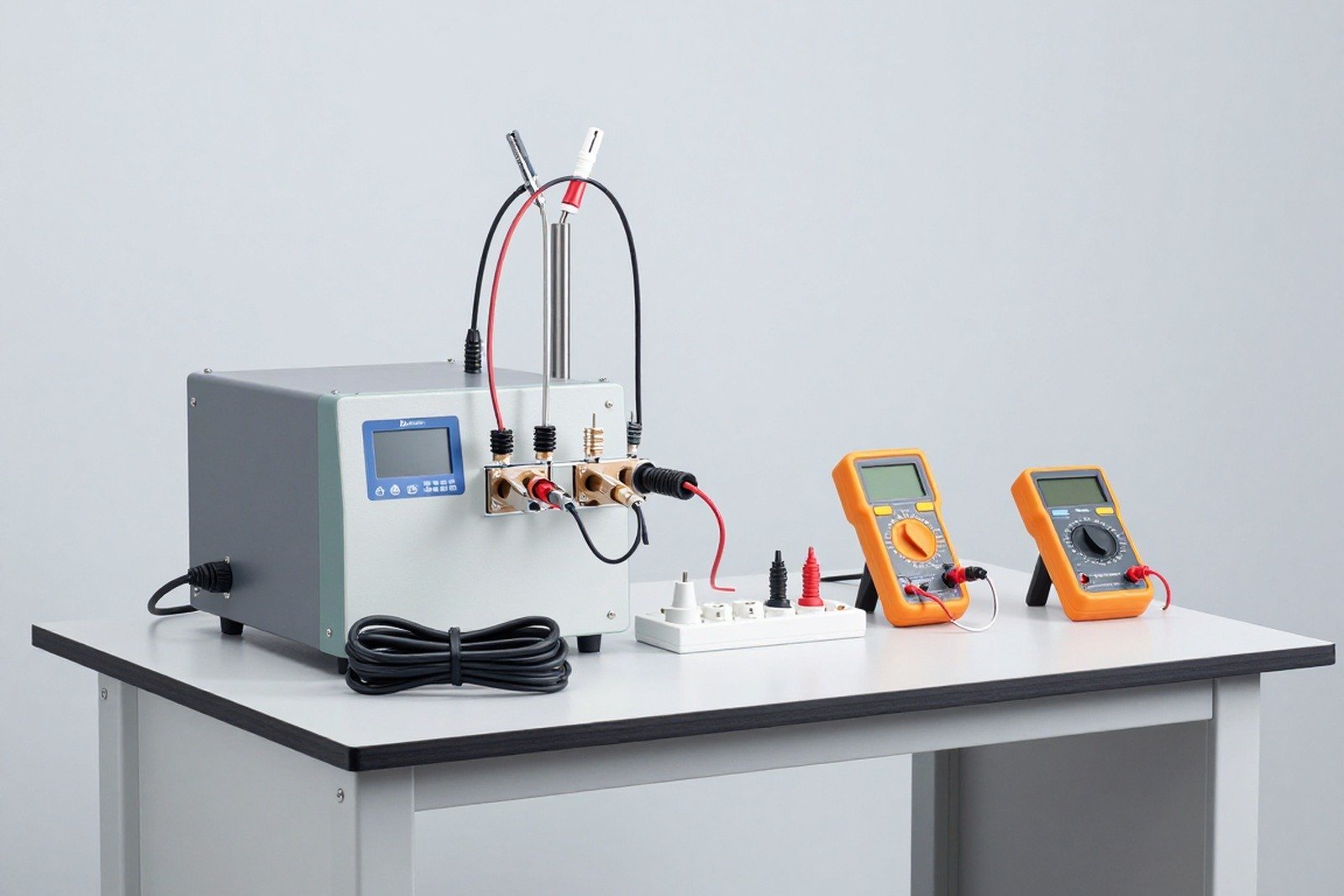
QCVN 25:2025/BKHCN is the national technical regulation on electrical equipment used in household and similar electrical installations, issued with Circular 01/TT-BKHCN dated 14 February 2025 by the Minister of Science and Technology. It covers eight groups of devices: miniature circuit breakers, RCBOs, RCCBs, socket outlets, plugs, socket adaptors, cord extension sets and switches. The equipment list is split into two appendices, each linked to a different group of conformity assessment methods; Circular 36/2026/TT-BKHCN sorts these eight groups into medium-risk and high-risk levels with separate conformity declaration requirements, applicable from 1 April 2027. This article summarises the scope, the equipment list with standards and HS codes, how to choose a certification method, the rules for recognising foreign results and the dossier enterprises need to prepare.
1. Scope of application and excluded equipment
The regulation applies to electrical equipment designed for installation in alternating current distribution systems up to 440 V in civil works. It applies to organisations and individuals that produce or trade in electrical equipment and to related parties. HS codes of the equipment in the list follow Circular 31/2022/TT-BTC dated 8 June 2022.
The regulation excludes several groups of goods: flameproof electrical equipment managed by the Ministry of Industry and Trade; socket outlets, plugs, socket adaptors and cord extension sets with a rated current above 32 A; switches above 20 A; circuit breakers above 63 A; switches designed for installation inside electrical equipment; and equipment outside the scope of the corresponding standard named in the list.
2. Eight groups of electrical equipment and applicable standards
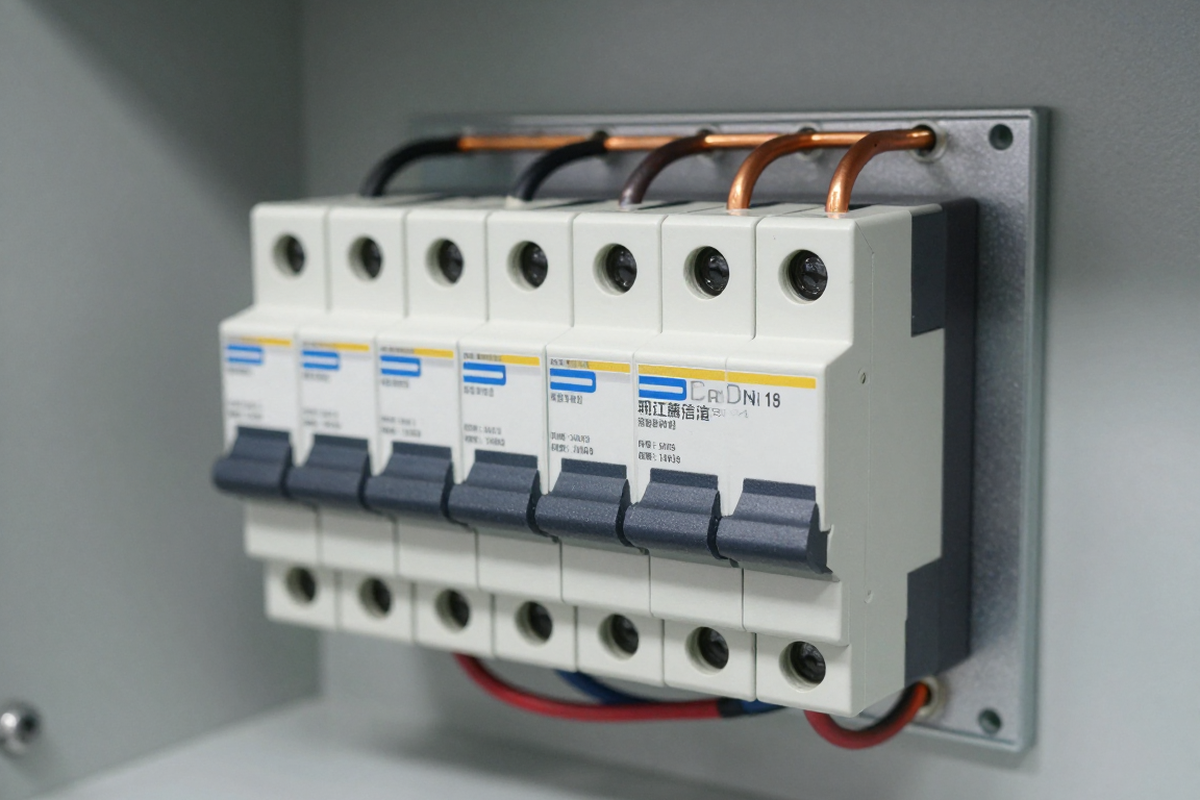
Appendix A covers miniature circuit breakers (MCB) and residual current operated circuit breakers with integral overcurrent protection (RCBO), certified under method 5 or method 7. Appendix B covers socket outlets, plugs, socket adaptors, cord extension sets, switches and residual current operated circuit breakers without integral overcurrent protection (RCCB). The regulation puts Appendix B under method 1, but Circular 36/2026/TT-BKHCN allows this group to use method 1, 5 or 7, so enterprises have more choice when declaring conformity.
| No. | Electrical equipment | Rated current | HS code | Applicable standard | Appendix |
|---|---|---|---|---|---|
| 1 | Miniature circuit breaker (MCB) | Not more than 63 A | 85362011, 85362012, 85362013, 85362091, 85362099 | TCVN 6434-1:2018 (IEC 60898-1:2015) | A, high risk |
| 2 | Residual current operated circuit breaker with integral overcurrent protection (RCBO) | Not more than 63 A | 85365020 | TCVN 6951-1:2007 (IEC 61009-1:2003) | A, high risk |
| 3 | Socket outlet | Not more than 32 A | 85366992, 85366999 | TCVN 6188-1:2007 (IEC 60884-1:2002); TCVN 6188-2-3:2016 (IEC 60884-2-3:2006); TCVN 6188-2-6:2016 (IEC 60884-2-6:1997) | B, medium risk |
| 4 | Plug | Not more than 32 A | 85366992, 85366999 | TCVN 6188-1:2007 (IEC 60884-1:2002); TCVN 6188-2-1:2008 (IEC 60884-2-1:2006) | B, medium risk |
| 5 | Socket adaptor | Not more than 32 A | 85366992, 85366999 | TCVN 6188-1:2007 (IEC 60884-1:2002); TCVN 6188-2-5:2016 (IEC 60884-2-5:1995) | B, medium risk |
| 6 | Cord extension set | Not more than 32 A | 85369094, 85369099 | TCVN 6188-1:2007 (IEC 60884-1:2002); TCVN 6188-2-7:2016 (IEC 60884-2-7:2013) | B, medium risk |
| 7 | Switch | Not more than 20 A | 85365061, 85365069 | TCVN 6480-1:2008 (IEC 60669-1:2007) | B, medium risk |
| 8 | Residual current operated circuit breaker without integral overcurrent protection (RCCB) | Not more than 63 A | 85365020 | TCVN 6950-1:2007 (IEC 61008-1:2006) | B, medium risk |
The two notes attached to the list narrow the testing scope: the short-circuit test item is not performed on MCBs and RCBOs in Appendix A, and not performed on RCCBs in Appendix B. These tests require a high-power test source, so the exclusion reduces testing cost and time.
3. Technical requirements and tropical climate conditions
Section 2.1 sets safety requirements by reference: electrical equipment must comply with the corresponding standard named in the equipment list. The regulation does not repeat technical thresholds such as temperature rise, insulation resistance or dielectric strength, leaving that content to the TCVN or IEC standard that is referenced.
Section 2.2 requires tropical climate conditions for test requirements related to climate conditions. Tropical conditions differ from temperate conditions in the nominal temperature and humidity used for testing, so a test result obtained to a standard in a temperate country may not be usable as is for the Vietnamese market.
4. Conformity declaration, conformity mark and state inspection
Domestically produced electrical equipment must be declared conformity under this regulation and marked with the conformity mark before being placed on the market. Imported equipment must pass state inspection of goods quality through a review of the conformity declaration. How the declaration is made depends on the risk level: the high-risk group must declare on the basis of a conformity certification result from a designated certification body, while the medium-risk group may rely on a conformity certification result or on the enterprise’s own assessment result.
The documents currently governing conformity declaration, conformity certification and the conditions for conformity assessment bodies are the Law on Product and Goods Quality No. 05/2007/QH12 as amended by Law No. 78/2025/QH15, the Law on Standards and Technical Regulations No. 68/2006/QH11 as amended by Law No. 70/2025/QH15, Decree 22/2026/ND-CP, Decree 37/2026/ND-CP and Circular 14/2026/TT-BKHCN. The regulation references the older set, Decree 132/2008/ND-CP and Circular 28/2012/TT-BKHCN, so a dossier should be checked against the documents now in force. The conformity mark (CR) for certification under method 1 or 5 consists of the abbreviated name of the certification body and the certificate number issued to the enterprise; the conformity mark for certification under method 7 consists only of the certification body’s name, because the certificate is valid only for the certified shipment.
5. Risk classification and conformity assessment methods under Circular 36/2026/TT-BKHCN
Circular 36/2026/TT-BKHCN dated 30 June 2026 issues the List of products and goods with medium risk and high risk levels under the management responsibility of the Ministry of Science and Technology, effective from 1 July 2026. The Circular sorts the eight groups of equipment in QCVN 25 into two risk levels, each with its own quality management requirements and conformity assessment methods; those requirements apply from 1 April 2027.
| Risk level | Electrical equipment | Conformity declaration requirement | Conformity assessment methods |
|---|---|---|---|
| High risk (Appendix I, group 6) | MCB and RCBO, rated current not more than 63 A | Declaration based on a conformity certification result from a designated certification body; imports undergo state quality inspection | Method 5, certificate valid for up to 3 years; method 7, valid per shipment |
| Medium risk (Appendix II, group 10) | RCCB not more than 63 A; socket outlets, plugs, socket adaptors and cord extension sets not more than 32 A; switches not more than 20 A | Declaration based on a conformity certification result from an accredited or designated certification body, or on the enterprise’s own assessment result; imports must declare conformity before circulation | Method 1 and method 5, certificate valid for up to 3 years; method 7, valid per shipment |
The notable change is in the assessment method. The regulation puts Appendix B under method 1, but Circular 36/2026/TT-BKHCN allows the medium-risk group to use methods 1, 5 and 7. Article 5(3) of the Circular provides that where a national technical regulation issued earlier sets different quality management requirements, the Circular prevails, so enterprises gain options beyond method 1. The content and rules for using each method come from Circular 14/2026/TT-BKHCN dated 9 April 2026, under which method 1 and method 6 do not apply to high-risk goods. For imports arriving as separate shipments, method 7 makes sense because the certificate covers only that shipment and creates no periodic surveillance obligation; for products made steadily by type, method 5 gives one certificate for up to three years. How to choose a method by risk level is set out in the article on certification methods under Circular 14/2026/TT-BKHCN.
6. Type testing, sampling and small-volume imports
Section 3.7.1 requires testing for conformity certification to be carried out by a designated or recognised testing laboratory. Section 3.7.2 encourages laboratories to build the type test result on the IECEE Test Report Form and lists four minimum groups of content: full test content per the technical requirements of the regulation; colour photographs of the outside, the inside and the product label; a list of main components with type designation, parameters and the component certificate number; and the reason for choosing the representative sample when testing a product family.
Appendix C guides sampling for each method. Under method 7, a shipment is found conforming only when both the type test result and the test result of the representative sample of the shipment pass. A shipment of more than 2,000 products must be split into sub-lots of no more than 2,000 products for sampling.
| Item | Provision |
|---|---|
| Number of representative samples of a shipment under method 7 | 03 samples per 2,000 products |
| Shipment of more than 2,000 products | Split into sub-lots of no more than 2,000 products before sampling |
| Small-volume import shipment | 15 products per type or fewer, with a letter committing to import for internal use and not for sale on the market, requires testing of only 01 sample taken from the shipment against the items in Table C.3 |
| Sample fails on the first attempt | A second sample of double the number may be taken; the shipment is found conforming only when all samples of the second round pass |
| Surveillance within a certification cycle under method 5 | Each product type is sampled and tested at least once; if a product family has been determined, at least 50% of the types in a family must be sampled |
In certification under method 5, the manufacturer has a separate obligation. For products whose applicable standard specifies both sample testing and routine testing, the manufacturer must have a procedure to sample periodically for the sample test items and to test all routine test items on outgoing products.
7. Recognition of conformity assessment results from foreign bodies
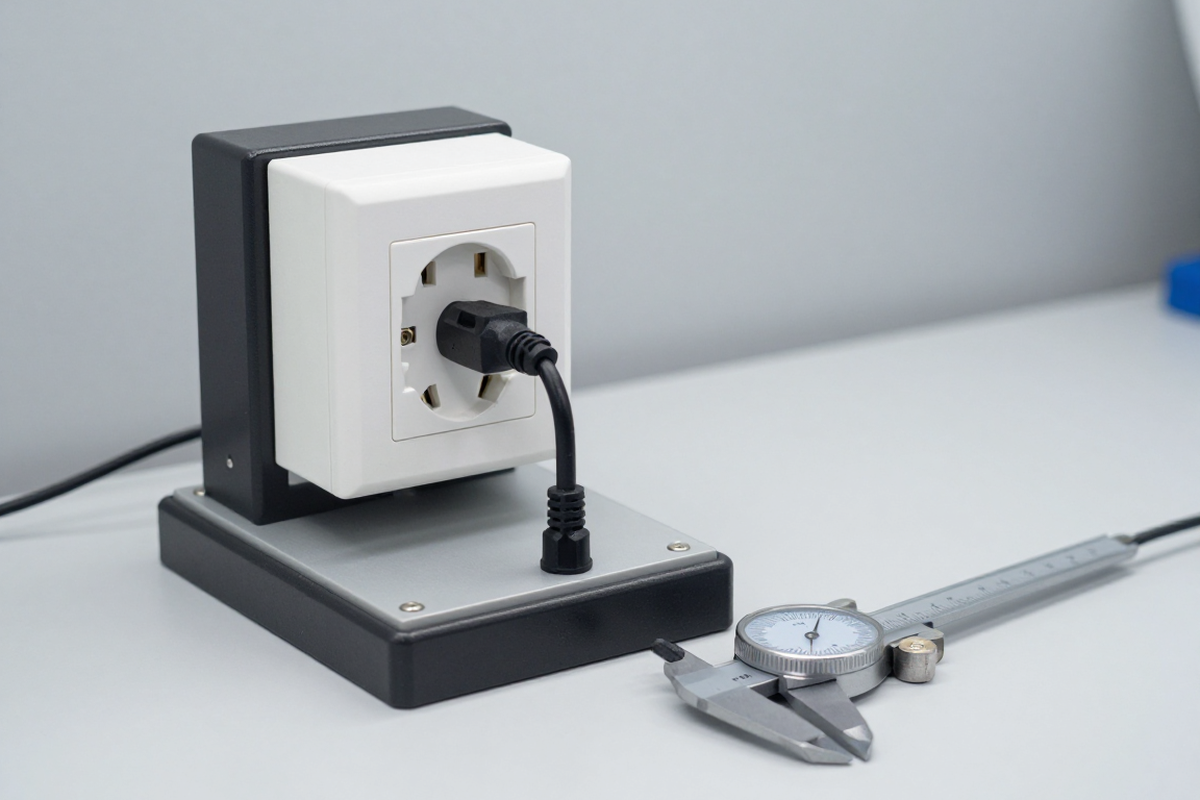
Section 3.8 allows a certification body to recognise conformity assessment results from a foreign body that Vietnam has recognised under mutual recognition agreements or arrangements. For test results, the foreign testing laboratory must be accredited as a member of APAC or by ILAC in line with ISO/IEC 17025, and the accredited scope must cover the exact standard and the exact product stated in the result being used. Mutual recognition agreements are signed under Circular 27/2007/TT-BKHCN.
Section 3.8.4 allows recognition of a test result obtained to a newer version of the standard than the version listed in the equipment list. Section 3.8.5 requires that, when recognising a type test result, the certification body check that the images, construction and components of the certified product match the product described in the type test result. Section 3.8.6 requires the certification body to report quarterly on the recognition and use of conformity assessment results to the National Commission for Standards, Metrology and Quality, and the certification body is responsible for that recognition. The signing and implementation of recognition agreements is covered in the article on Circular 16/2026/TT-BKHCN.
8. Product families and choosing a representative sample
Appendix D guides how to determine a product family following IECEE OD-2041 Ed 2.0. A product family covers different types that share the same basic design and the same factors affecting safety; types in the family may differ in size, colour, outer shape or electrical parameters such as rated current. In type testing on a product family, only one or a few representative types need to be tested, which reduces the number of samples and the testing cost.
Appendix D suggests how to determine a product family for each group: switches share the rated current, contact structure, contact base and actuator; socket outlets and plugs share the rated current, the structure of the contact part and the base of the contact part; socket adaptors and cord extension sets are determined by the socket outlet and the plug and must share the type and cross-section of the connecting cord. MCBs, RCBOs and RCCBs are determined per the appendix of TCVN 6434-1:2018, TCVN 6951-1:2007 and TCVN 6950-1:2007. The type chosen as the representative sample must be the type most likely to be non-conforming, preferring common types with large output.
9. Surveillance after certification, suspension and withdrawal
While a certificate issued under method 5 is valid, the certification body must carry out periodic surveillance at a frequency of no more than once every 12 months, or unscheduled surveillance when there is a complaint or when goods on the market show a quality problem. For a certificate under method 1, the certification body carries out unscheduled surveillance by sampling at the enterprise’s warehouse or on the market and retesting.
When there is evidence of non-conformity, or when the enterprise fails to fulfil its obligations under the Law on Standards and Technical Regulations, the certification body may suspend the certificate for no more than 3 months, or cancel its validity and withdraw the certificate. During suspension, the enterprise must stop placing products on the market, handle non-conforming products already in circulation and remedy the breach; if the suspension period ends without a remedy, the certificate is cancelled and withdrawn. A test result obtained to a newer version of the standard is accepted as a basis for certification if the result to the version in the list fails.
10. Record keeping and enterprise obligations
The conformity assessment body must keep conformity assessment records for at least 10 years, counted from the expiry date of the certificate for method 1 and method 5, and from the issue date of the certificate for method 7. The certification body must keep the technical file of the certified product, including technical documents (a description of technical characteristics, circuit diagrams, a component list, user and installation instructions), colour photographs of the product and label, a table describing differences between types in the product family and the type test result.
Producers and traders have obligations under section 4.2: provide technical documents to the certification body on request; provide and take responsibility for the information on the certificate such as manufacturer name, address and rated parameters; declare the applicable standard; ensure products placed on the market match the declared conformity file in construction, components and quality; notify the certification body of design changes to a certified product; and recall products and accept penalties when goods are non-conforming due to their own fault. Enterprises must keep the conformity declaration file and the technical file for at least 10 years from the date of declaration.
11. What enterprises need to prepare
The first step is to determine which risk level a product falls under per Circular 36/2026/TT-BKHCN, because this decides how conformity is declared and which certification methods apply. For MCBs and RCBOs in the high-risk group, an enterprise uses method 5 if it wants one certificate covering many shipments for up to three years, or method 7 if it certifies shipment by shipment. For socket outlets, plugs, switches, socket adaptors, cord extension sets and RCCBs in the medium-risk group, an enterprise chooses method 1, 5 or 7 as needed.
Enterprises should recheck HS codes against Circular 31/2022/TT-BTC, prepare a description of technical characteristics, circuit diagrams, a component list and product photos for type testing. If foreign test results already exist, check whether the testing laboratory is accredited by APAC or ILAC under ISO/IEC 17025 and whether the scope covers the exact standard and product, because this is the condition for recognition under section 3.8. Importers should plan for shipments of 15 products per type or fewer, where only an internal-use commitment letter and testing of 01 sample are needed.
12. Related reading
- QCVN 4:2009/BKHCN: safety requirements for electrical and electronic equipment and Amendment 1:2016
- Circular 14/2026/TT-BKHCN: certification methods and how to choose by risk level
- Circular 36/2026/TT-BKHCN: list of medium-risk and high-risk goods
- High-risk goods requiring QCVN 4 testing under Circular 36/2026/TT-BKHCN
- Designation of conformity assessment bodies under Decree 37/2026/ND-CP
- QCVN 9:2012/BKHCN: EMC for household electrical and electronic equipment
13. References
- QCVN 25:2025/BKHCN, national technical regulation on electrical equipment used in household and similar electrical installations, issued with Circular 01/TT-BKHCN dated 14 February 2025 of the Ministry of Science and Technology, with Appendices A to G. Available on the legal document system of the Government Portal.
- Circular 36/2026/TT-BKHCN dated 30 June 2026 issuing the List of products and goods with medium risk and high risk levels under the management responsibility of the Ministry of Science and Technology, with Appendix I and Appendix II. Full text in the article on Circular 36/2026/TT-BKHCN.
- Circular 14/2026/TT-BKHCN dated 9 April 2026 of the Minister of Science and Technology on declaration of standard conformity, declaration of conformity and conformity assessment methods for standards and technical regulations, effective from 25 May 2026.
- Law on Product and Goods Quality No. 05/2007/QH12 as amended by Law No. 78/2025/QH15; Decree 22/2026/ND-CP; Decree 37/2026/ND-CP. Circular 28/2012/TT-BKHCN and Decree 132/2008/ND-CP are the documents referenced by QCVN 25.
- Circular 31/2022/TT-BTC dated 8 June 2022 of the Ministry of Finance issuing the list of Vietnam’s exports and imports.
14. Contact
Enterprises that need to compare their products with the equipment list of QCVN 25:2025/BKHCN, decide on a suitable certification method or prepare a conformity declaration file can send their details through the form below.
Note: this article is for knowledge sharing only and does not replace legal documents or legal and technical advice for a specific case. Always check the original QCVN 25:2025/BKHCN with Appendix A, Appendix B, Appendix C, Appendix D, Appendix E, Appendix F, Appendix G and any amending, supplementing or replacing documents in force.