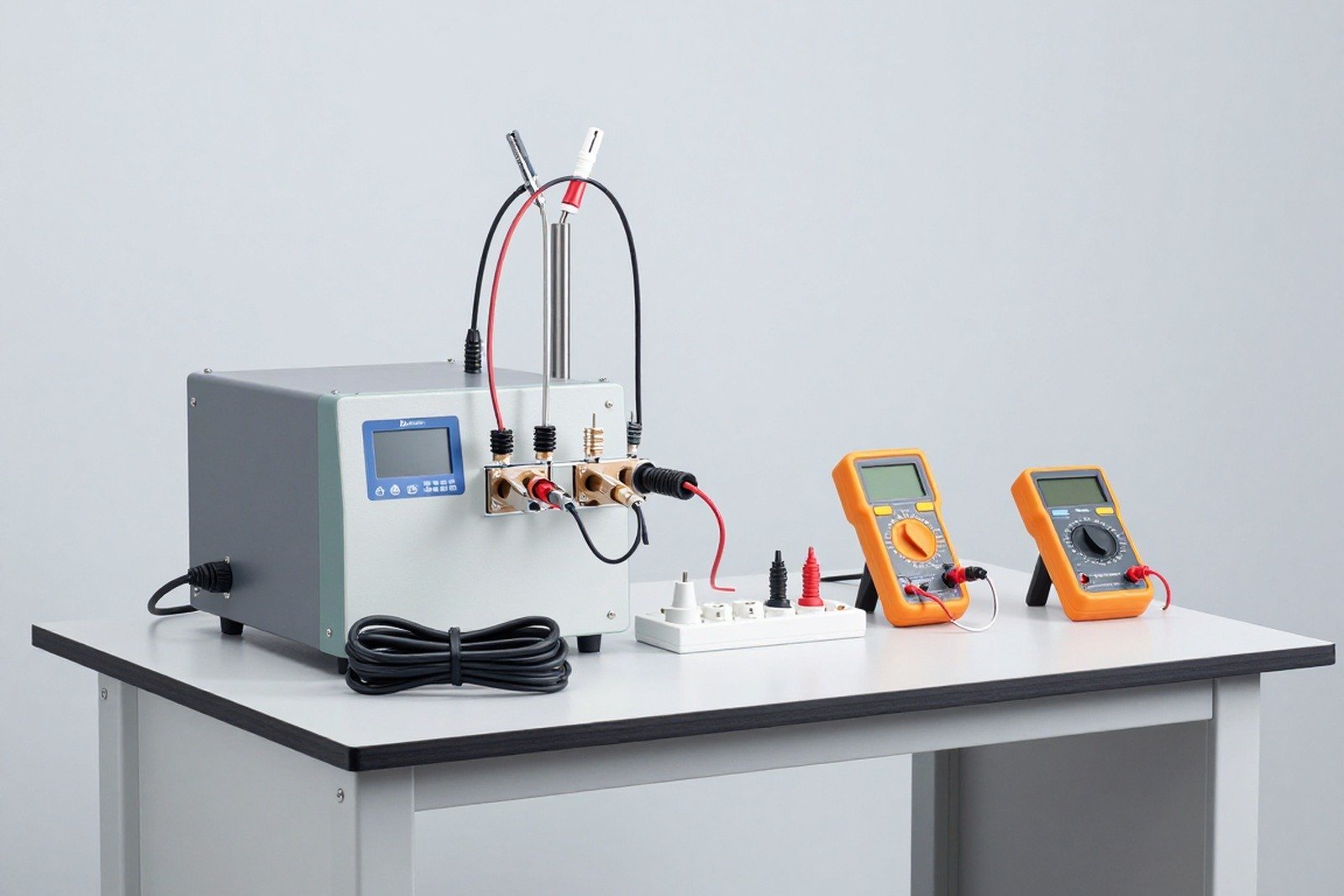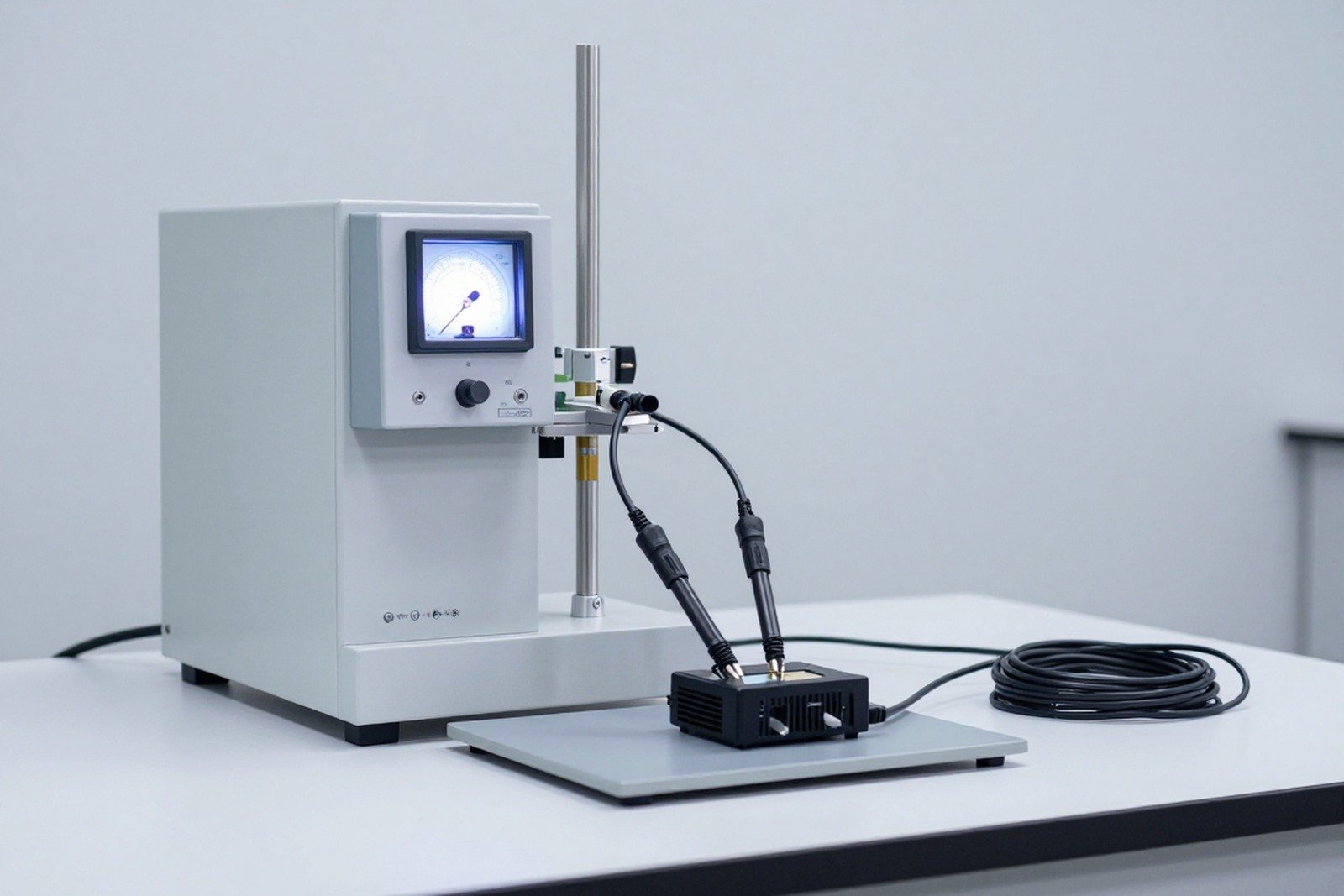
QCVN 132:2022/BTTTT is Vietnam’s national technical regulation on electrical safety for telecommunication and information technology terminal equipment. It was issued under Circular 24/2022/TT-BTTTT and is built on IEC 62368-1:2018. For a business, the real question is not reading the whole document, but knowing which tests your product will face and what those tests say about risk.
This article gathers the QCVN 132 test items into one easy-to-read matrix table, then explains each group in plain language. You do not need to be a test engineer to understand how your product is assessed.
Scope note: this is our interpretation, published to spread knowledge, not the legal text itself. For an official file, check the version published in the Official Gazette or the national legal database.
Quick summary
- Document: QCVN 132:2022/BTTTT — electrical safety for telecom and IT terminal equipment (Circular 24/2022/TT-BTTTT), effective 01/01/2024.
- Technical basis: IEC 62368-1:2018.
- Six test groups: mechanical strength; clearance and creepage; dielectric strength and touch current; temperature and materials; fire protection and short circuit; components and functional safety.
- Three test states: normal, abnormal, single fault.
- Laboratory: tests must come from an accredited, designated or recognised laboratory (Circular 36/2026/TT-BKHCN).
QCVN 132 test items matrix
The six groups below summarise the whole test content of QCVN 132. Each row shows what the group checks and what that means for a business.
| # | Test group | What it checks | What the business should know |
|---|---|---|---|
| 1 | Mechanical strength (Annex Q) |
Enclosure under force, impact and drop; thermoplastic heat resistance | A scratched, pressed or dropped device still must not expose live parts, which is a direct user-safety issue |
| 2 | Clearance and creepage distance (Annex M) |
Insulation distance between live points and to the user | Enough distance prevents flashover and short circuits, especially when the device gets dusty or damp |
| 3 | Dielectric strength and touch current (clause 2.2) |
Insulation withstands high voltage; leakage current through a user per IEC 60990 | Prevents electric shock when a user touches the device; the protective conductor current is measured too |
| 4 | Temperature and insulation materials (clause 2.2.4) |
Working temperature of materials; Vicat and ball pressure tests for plastics | A device that runs hot must not deform, melt plastic or lose its insulation |
| 5 | Fire protection and short-circuit limit (clause 2.3, Annex P) |
Potential ignition sources, fire enclosure, protective conductor under short circuit | Reduces fire risk from an electrical fault; this group often drives the enclosure design |
| 6 | Components and functional safety (Annexes D, I, K, L, O) |
Safety interlock, disconnection, electrochemical potential, explosion | Safety functions work correctly and joints do not corrode over time |
How to read it: the first three columns show what is tested and where it sits in the regulation; the last column turns each test into the real risk a business cares about. The number of tests applied changes with the design, so a device with more functions faces more tests.
Three test states and why they matter
Every test in QCVN 132 runs in three states. A product passes only when it keeps its protection in all three, even when a component fails.
- Normal: the device runs as designed, under the harshest condition within its allowed range.
- Abnormal: the device is misused, jammed, or a secondary function fails.
- Single fault: one component or connection is assumed to fail; the device must still be safe.
Key technical points by group
These are the most important numbers and methods, kept short so you get the point without digging into the regulation.
- Mechanical strength: steady force from 10 N to 250 N, a 500 g steel ball dropped from 1,300 mm, and the device dropped three times from 750 to 1,000 mm.
- Clearance and creepage: distance is measured in air and along the insulation surface; limits change with the pollution degree.
- Dielectric strength and touch current: insulation withstands impulse or AC voltage; leakage current through a user is measured per IEC 60990.
- Temperature and materials: insulation temperature is measured; Vicat and ball pressure tests cover heat-resistant plastics.
- Fire protection and short circuit: ignition sources are classified; the short-circuit test source must deliver at least 1,500 A.
- Components and functional safety: safety interlock, disconnection, electrochemical potential and explosion.
What should a business prepare?
Prepare in this order to keep the test session smooth and reduce the number of sample shipments.
- Identify the HS code and risk group under Circular 36/2026/TT-BKHCN.
- List all QCVN that apply to the product, not only QCVN 132.
- Decide whether the adapter is supplied with the product, per note (10) of Circular 36.
- Provide intact samples with circuit diagrams, drawings, a component list and the user manual.
- Choose a testing laboratory that is accredited, designated or recognised and pick Method 3 or Method 7.
Frequently asked questions
How many test items does QCVN 132 have?
The regulation does not set a fixed number. Tests are selected by device construction, and in certification practice they are grouped into the six categories in the matrix above.
I am not a test engineer. What should I focus on?
The six groups and the three test states are enough to understand the risk and to talk to a lab effectively. The deep details, such as voltage thresholds or pollution factors, are the laboratory’s job.
Which products must be tested to QCVN 132?
Telecom and IT terminal equipment within the applicable list, such as cordless phones, desktop computers, laptops, tablets, set top boxes and iDTVs. Check the HS code in the Circular 36/2026/TT-BKHCN list for the exact answer.
Is the adapter counted in QCVN 132 testing?
Per note (10) of Circular 36/2026/TT-BKHCN: if the adapter is supplied with the product, test with it; if not, test without it. This choice directly affects the scope of the conformity declaration.
Which laboratory must issue the results?
An accredited, designated or recognised laboratory with a scope covering QCVN 132. Note (9) of Circular 36 states that results from a non-designated, non-recognised laboratory cannot be used, and neither can manufacturer results.
References
- QCVN 132:2022/BTTTT, issued under Circular 24/2022/TT-BTTTT: electrical safety for telecommunication and information technology terminal equipment.
- IEC 62368-1:2018: Audio/video, information and communication technology equipment — Part 1: Safety requirements.
- Circular 36/2026/TT-BKHCN (30/6/2026): list of medium and high risk products and goods under the Ministry of Science and Technology.
- Circular 14/2026/TT-BKHCN (09/4/2026): conformity assessment methods.
Related articles
- QCVN 132:2022/BTTTT: Electrical safety for telecom terminals
- QCVN 4:2009/BKHCN: safety requirements for electrical and electronic equipment, and Amendment 1:2016
- High-risk goods requiring QCVN 4 testing under Circular 36/2026/TT-BKHCN
- The 8 certification methods under Circular 14/2026/TT-BKHCN
- QCVN 136:2025/BKHCN: 6 GHz Wi-Fi equipment regulation
Talk to us
This article is our interpretation, published to spread knowledge about testing and product quality management. It is not a legal document. The content relates to QCVN 132:2022/BTTTT, IEC 62368-1:2018, Circular 24/2022/TT-BTTTT, Circular 36/2026/TT-BKHCN and Circular 14/2026/TT-BKHCN at the time of writing; these documents may be amended, supplemented, replaced or repealed later. Before applying anything to a specific case, check the current text and consult the competent authority. The content is for reference only and does not constitute legal advice.