The terms “thermal shock” and “change of temperature / thermal cycling” are often used interchangeably in technical discussions. But they describe two different failure mechanisms, leading to two different testing approaches.
This article differentiates the two concepts, explains when one is needed, and the errors when using one to conclude the other.
1. Why are these two concepts often used interchangeably?
Because both are related to temperature changes between two levels. The difference is not in temperature, but in heat transfer rate, number of cycles, and damage mechanism targeted by the test:
- Thermal shock: Pay attention to the instantaneous stress when the sample transfers heat very quickly. Damage can appear after just a few cycles.
- Temperature change/thermal cycling: Pay attention to fatigue accumulated over many cycles with moderate heat transfer rates. Damage appears after a significant number of cycles.
2. Distinguishing table
| Aspect | Thermal shock | Temperature changes/thermal cycling |
|---|---|---|
| Question answered | Can the product withstand sudden changes in temperature? | Does the product withstand cumulative thermal fatigue? |
| Heat transfer rate | Very quickly, samples are often immediately transferred between two environments | Controlled, at a prescribed speed |
| Typical number of cycles | Few (a few cycles to a few dozen) | Many (hundreds to thousands, depending on requirements) |
| Main failure mechanism | Cracks due to thermal stress, breakage of brittle materials, peeling of coatings, opening of joints | Weld fatigue, material fatigue, parameter drift, loss of seal |
| Test time | Shorter if the number of cycles is small | Longer, depends on the number of cycles |
| Device requirements | Rapid sample transfer system or two chambers | The chamber has precise ramp control |
3. Corresponding tests in each standard system
| Standard system | Related tests | Notes |
|---|---|---|
| IEC 60068-2-14 | Na (rapid temperature change), Nb (slow temperature change) | Na with a fast heat transfer rate is often used for thermal shock purposes |
| MIL-STD-810 | Thermal shock test method | Philosophy of level selection according to life cycle environment |
| Semiconductor component industry standards (JESD family) | Thermal cycling for components | Multiple cycles, fatigue goals and component reliability |
| Electronic assembly industry standards (IPC family) | Thermal cycle for solder joints and circuit boards | Associated with thermal cycle weld fatigue assessment |
Important note: symbols and how to determine severity levels vary between systems. Results should not be extrapolated from one system to another without a recognized reference table.
4. Choosing the right test for the objective
| Target | Appropriate test | Reason |
|---|---|---|
| Assess the risk of cracking due to sudden temperature changes during transportation and storage | Thermal shock (Na at a rapid rate) | Simulates extreme conditions instantaneously |
| Evaluate weld life and material fatigue according to usage life cycle | Thermal cycle (Nb or equivalent) | Evaluate cumulative fatigue by number of cycles |
| Screening for manufacturing defects | Thermal shock has a low number of cycles | Quickly detect defective assembly parts |
| Prove the design meets customer requirements | According to the standards cited by customers | Avoid trying to be correct but not meeting the requirements |
5. Why does the rate of heat transfer determine the result?
For samples with large thermal mass, the surface temperature and core temperature are never equal during the heat transfer stage. This difference creates internal stress. The faster the heat transfer, the larger the difference and the higher the stress.
Practical consequences:
- Same temperature range, tested at a faster speed gives harsher results — but not technically equivalent.
- Large samples may not pass thermal shock but pass thermal cycling (or vice versa), because the two tests target two different mechanisms.
- The rate of change in temperature of the air in the chamber is not equal to the rate of change in temperature of the sample. Need to measure on sample.
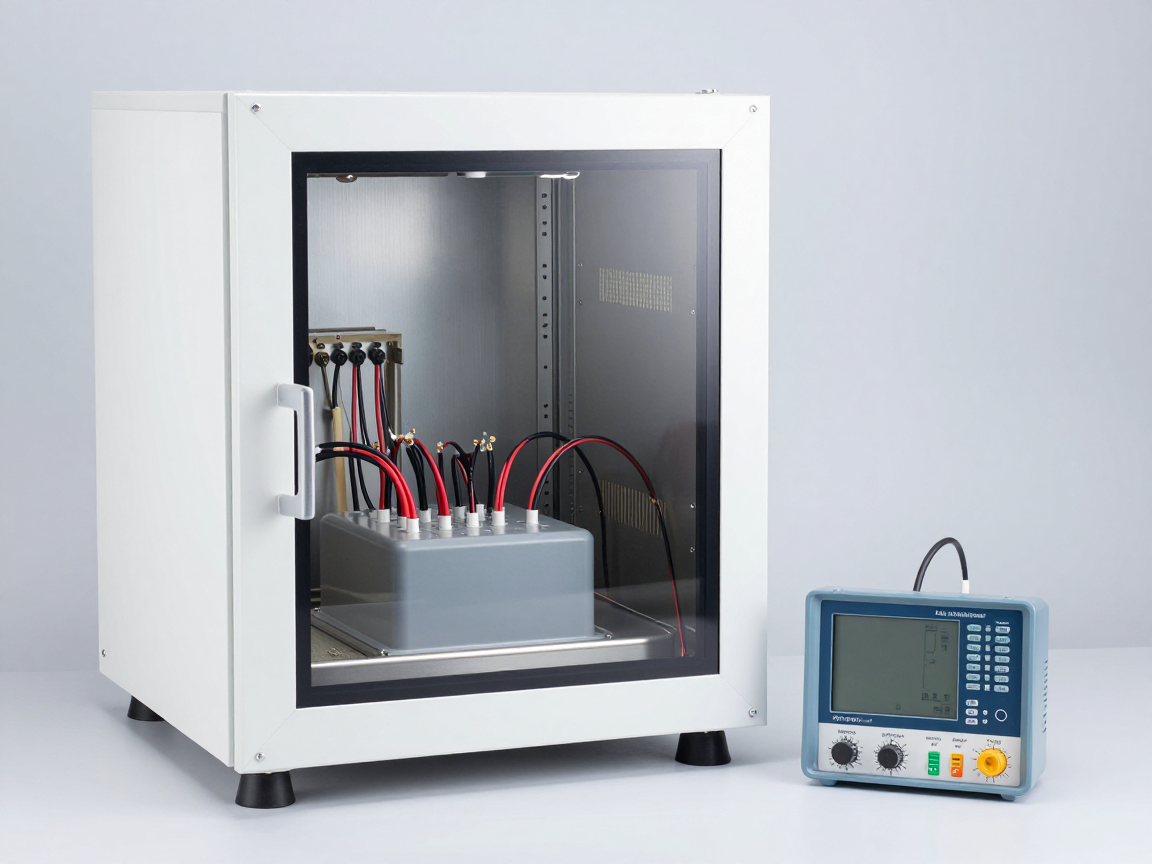
6. Mistakes when using one test instead of another
- Using thermal shock to conclude about thermal fatigue: The number of cycles is too small, not enough to reveal accumulated fatigue.
- Using slow speed thermal cycling to draw conclusions about thermal shock tolerance: Low speeds do not create equivalent instantaneous stresses.
- No heat transfer rate recorded but only records two temperatures — results are not reproducible.
- Do not record the number of cycles and intermediate inspection cycles — the level of fatigue is unknown.
- Do not measure temperature on the sample — does not prove that the sample is actually subjected to the stated conditions.
- Apply the results of this standard system to the requirements of another standard system when there is no comparison.
7. Frequently asked questions
Is thermal shock more severe than temperature change?
Cannot be compared directly because they target two different mechanisms. Thermal shock is more severe in terms of instantaneous stress; Thermal cycles are more severe in terms of cumulative fatigue.
How many cycles are considered thermal shock?
There is no distinct cycle count threshold. The distinguishing criteria are the heat transfer rate and the damage mechanism to be evaluated.
What if the customer only writes “thermal shock”?
Customers are requested to confirm specific standards, two temperature levels, holding time, sample transfer time and number of cycles. These are required parameters for this to work.
Can the same chamber be used for both tests?
Yes if the chamber meets the required rate of temperature change. With high-speed thermal shock, a two-chamber system or specialized sample transfer system is often needed.
Where should functional testing be located?
At intermediate milestones as required, and after completion. For products with safety functions, continuous monitoring during the heat transfer phase is recommended.
Does thermal shock detect weld errors?
Yes, especially with poor quality welds or defective joints. But with life cycle weld fatigue, multiple heat cycles are more suitable.
What standards should electronic circuit boards follow?
Depending on requirements: can follow IEC 60068-2-14 if the customer cites this set, or according to electronics assembly industry standards when life cycle weld fatigue assessment is required. It is important to agree in advance on the test, the number of cycles and the passing criteria.
If the sample has a large volume, which method should I choose?
Need to consider: large volumes make it difficult to achieve fast heat transfer rates, so thermal shock may not meet the required conditions. In that case, measure the temperature on the sample to confirm the actual speed before jumping to conclusions.
8. Conclusion
Thermal shock and temperature change are two essentially different tests, distinguished by heat transfer rate, number of cycles and damage mechanism to be evaluated. Using one rule to rule out another is a common source of erroneous conclusions in confidence profiles.
Three things to do: determine assessment goals before choosing the test method; Record all five parameters (two temperature levels, heat transfer rate, retention time, number of cycles, sample status); and measure the temperature on the sample to prove the test performed as described.
References
- IEC 60068-2-14 — N test: Temperature change (Na and Nb).
- IEC 60068-1 — General provisions and guidance.
- IEC 60068-3-7 — Measurement in loaded temperature chamber.
- MIL-STD-810 — Environmental test methods (temperature method group).
- Industry standards for semiconductor components and electronic assemblies (JESD family, IPC family).
Related articles
- N test: temperature change according to IEC 60068-2-14 (Na, Nb)
- Load cold/hot test: how to place the sensor and measure sample temperature according to IEC 60068-3-7
- How IEC 60068 Differs from MIL-STD-810, ISO 16750, ISTA and IEC 60529
- Self-heating of the device: how to determine the appropriate chamber temperature
Discuss further
Disclaimer
This article is an interpretive content compiled by us; not legal advice. Enterprises need to compare relevant documents/standards verbatim before applying them to specific products.
See more: Copyright Policy & Disclaimer by ticforall.com.