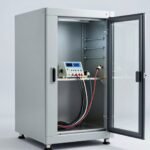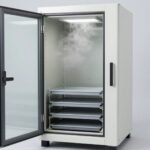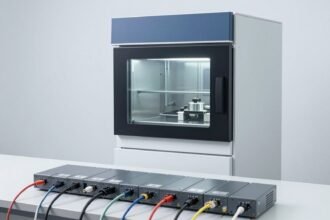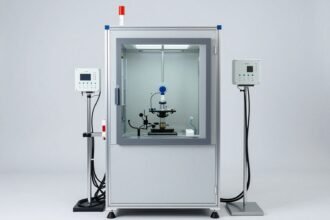
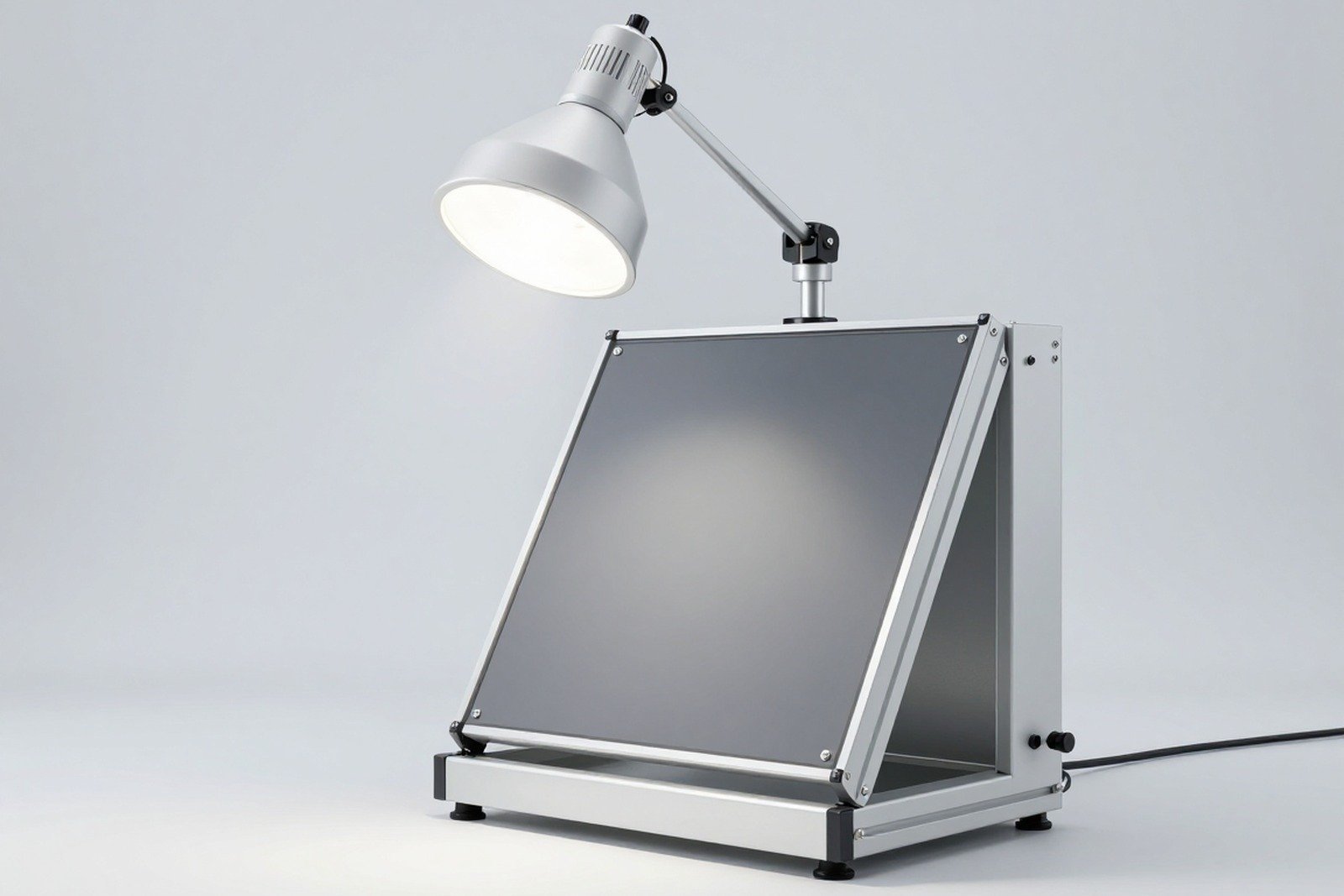
Outdoor products are not only subject to heat and humidity — they are subject to solar radiation, the fastest and most difficult to simulate material degradation agent. IEC 60068-2-5 (Test Sa) is a test that simulates solar radiation at ground level, used both to evaluate material aging and to evaluate the thermal effects of radiation.
This article explains the Sa test, the parameters that must be recorded, the failure mechanisms according to the material, and the limits of extrapolation from accelerated testing to outdoor life.
1. What questions does solar radiation testing answer?
- Do plastic materials, paint, rubber, and labels deteriorate (discolor, become brittle, crack, peel) when subjected to radiation?
- How much does the surface temperature and the temperature inside the device increase due to radiation absorption?
- Does the device still operate properly during a day/night cycle with strong radiation?
- Which part is the hottest spot and does it exceed material limits?
Unlike pure temperature tests, radiation acts selectively on material and color: dark, highly absorbent surfaces will be significantly hotter than light-colored surfaces under the same conditions.
2. How is it different from drying naturally in the open air?
| Aspect | Try Sa in the room | Dry outdoors naturally |
|---|---|---|
| Control conditions | Yes: radiation, temperature, humidity, cycle are all controllable | No: depends on weather, season, geographical location |
| Time | Much shorter (weeks/months instead of years) | Long, maybe many years |
| Reproducibility | High | Low |
| Represents reality | It is necessary to verify the correlation if one wants to infer longevity | Highest in terms of agent combination, but difficult to compare |
| Cost | High on equipment, low on time | Low on equipment, very high on time |
3. Three common uses
| Purpose | How to do it | Evaluation criteria |
|---|---|---|
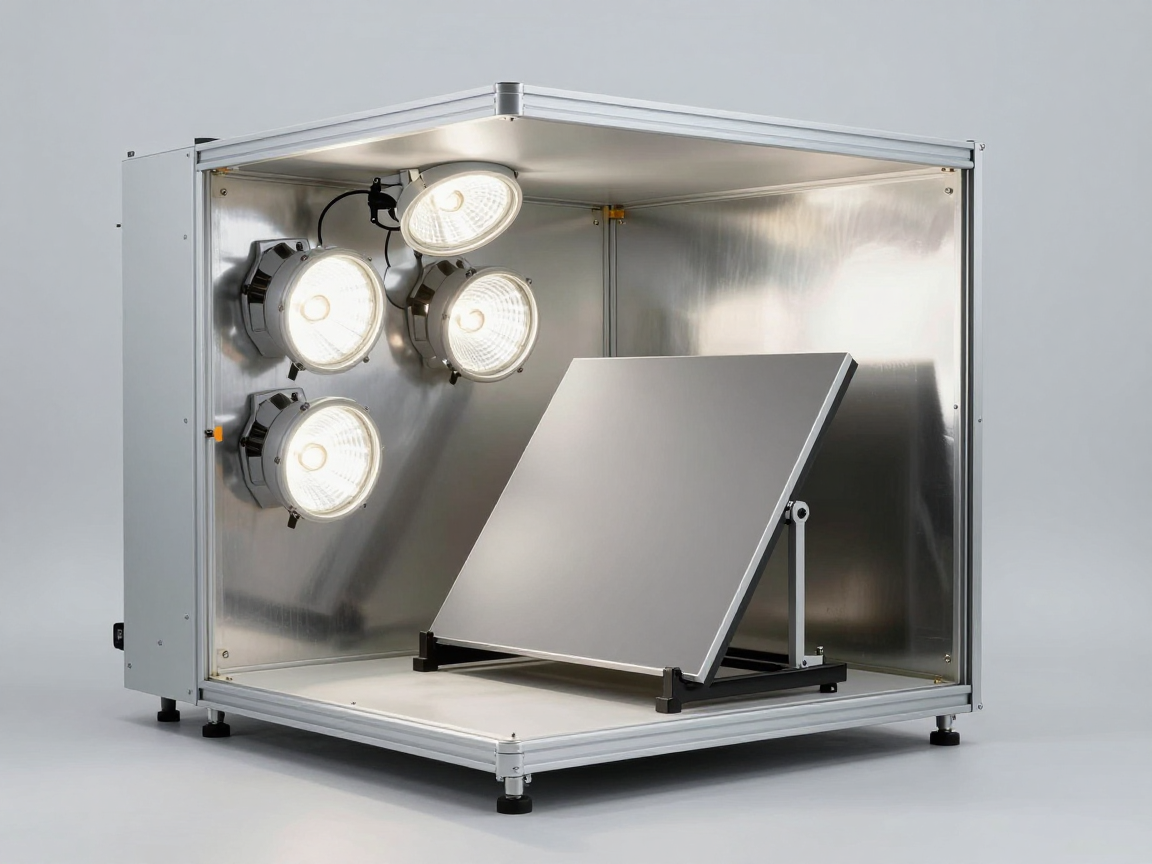
| Evaluation of material deterioration | Exposing material samples to radiation for long periods of time following a day/night cycle | Change in color, gloss, tensile strength, brittleness, surface cracking |
| Evaluate the thermal effects of radiation | Shine radiation on the device, measure temperature at points | Surface and interior temperature, difference compared to air temperature |
| Outdoor gear reviews | Combine radiation with day/night cycle and device operation | Functions, parameters, local overheating phenomenon |
4. Parameters to record
| Parameters | Why is it important? |
|---|---|
| Radiation intensity (W/m²) | Determine the heat load and material degradation rate |
| Spectral distribution (wavelength range) | UV rays cause more plastic degradation than infrared rays; Different spectra give different results |
| Light/dark cycle | Simulates the day/night cycle, which affects material fatigue and temperature |
| Chamber temperature or air temperature | High temperatures accelerate aging; recording is needed to separate thermal and radiation effects |
| Relative humidity | Humidity combined with radiation and heat can cause accelerated aging |
| Total radiation dose or exposure time | Is the basis for comparison between tests |
| Sample location and orientation | The sample is tilted or flat, and the direction it faces the light source all affects the received dose |
Regarding radiation levels, the standard provides levels and spectrum distribution tables for selection; A total radiation level commonly used to simulate peak ground conditions is about 1,120 W/m². Enterprises need to compare the verbatim standards and required documents to choose the right level and application spectrum.
5. Failure mechanism according to material
| Materials/details | Mechanism | Signs |
|---|---|---|
| Engineering plastics, equipment shells | Decomposition of polymer chains due to UV and oxidation | Discoloration, surface chalking, brittleness, cracking |
| Paint, coating | Loss of connection, peeling of layers | Peeling, losing shine, revealing foundation |
| Rubber, gasket | Aging, loss of elasticity | Hard, cracked, loss of tightness |
| Labels, ink | Discolored, ink flying | Unreadable, label peeling off |
| Screen, polarized layer | Decreased clarity, discoloration | Reduced contrast, yellowing |
| Dark details | Large radiation absorption, high local temperature | Deformation, soft plastic, deterioration of nearby components |
6. Limitations when extrapolating to outdoor lifespan
A word of caution: accelerated radiation testing does not automatically indicate outdoor longevity. To infer, you need:
- There is a correlation between the spectrum and radiation intensity in the chamber with the conditions at the location of use.
- Consider other factors that coexist outdoors: moisture, salt, dust, heat cycles, and rain.
- Considering the mechanism of deterioration: radiation acceleration may trigger a mechanism different from aging over many years outdoors.
- There is control data from actual outdoor exposure if you want to give a longevity figure.
Therefore, Sa test results should be interpreted as evidence of radiation resistance under specified conditions, not as conclusions about years of outdoor use.
7. Common errors
- Do not record the radiation spectrum, only the total strength is recorded — the two tests may be completely different in their effects on the material.
- Temperature and humidity are not recorded, making it impossible to separate the effects of radiation from the effects of heat/humidity.
- Only check appearance with the naked eye, omitting deterioration in mechanical properties and slight color changes.
- Do not place the sample in a representative direction and angle, resulting in different doses received between samples.
- Infer the life expectancy directly from the test duration, There is no correlation data.
- There are no photos or control samples, loses the ability to compare.
8. Frequently asked questions
Can Try Sa replace drying outdoors?
Are not. Try Sa shortens the time and controls the conditions, but does not fully reproduce the combination of outdoor agents. The two ways complement each other.
Is Sa testing required for indoor equipment?
Usually not required for indoor use. But it may be necessary if the product is subjected to transportation, storage or temporary use in a sunny location.
Does solar radiation increase device temperature?
Yes, and this is the most important impact on electrical and electronic equipment. Surface temperatures that absorb radiation can be markedly higher than air temperatures.
What radiation level should be chosen?
As required or industry standard, usually corresponds to the maximum conditions at the location of use. It is necessary to compare the standard verbatim and clearly state the selected level.
How long does it take to try Sa?
Depends on target: thermal assessment may require only a few hours at peak irradiance; Material degradation assessment requires cycles lasting many hundreds of hours. There is no common time.
Can the Sa test be combined with the hot humidity test?
Yes, and in reality outdoors there is always both. However, it is necessary to check the equipment capacity and clearly record the procedure, because high humidity affects the lighting system and stability of the chamber.
9. Conclusion
Solar radiation testing is a necessary test for all outdoor products, but it is also a test that is susceptible to overinterpretation. Results are only valid when recording full intensity, spectrum, cycle, temperature, humidity and total exposure time.
Three things to do: write down all seven parameters of the test; Evaluate materials by both visual and mechanical properties testing when necessary; and do not infer outdoor longevity without correlative data.
References
- IEC 60068-2-5 — Test Sa: Simulated solar radiation at ground level.
- IEC 60068-1 — General provisions and guidance.
- IEC 60068-2-9 — Guidelines for solar radiation testing (related guidance document).
- IEC 60068-2-78 and 2-30 — Hot and humid testing when it is necessary to incorporate outdoor conditions.
- TCVN 7699-2-5 — Corresponding national version (if any).
Related articles
- Self-heating of the device: how to determine the appropriate chamber temperature
- Test B (Dry heat): dry heat test according to IEC 60068-2-2, Bb and Bd
- How to Choose Environmental Tests from the Product’s Real Operating Environment
- What is IEC 60068? Structure of the Environmental Testing Standard Set and How to Read Test Codes
Discuss further
Disclaimer
This article is an interpretive content compiled by us; not legal advice. Enterprises need to compare relevant documents/standards verbatim before applying them to specific products.
See more: Copyright Policy & Disclaimer by ticforall.com.