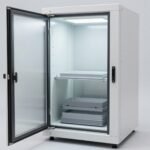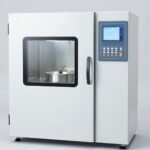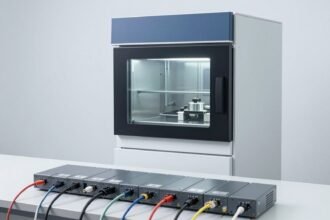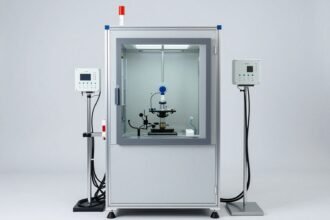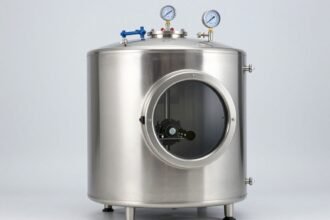
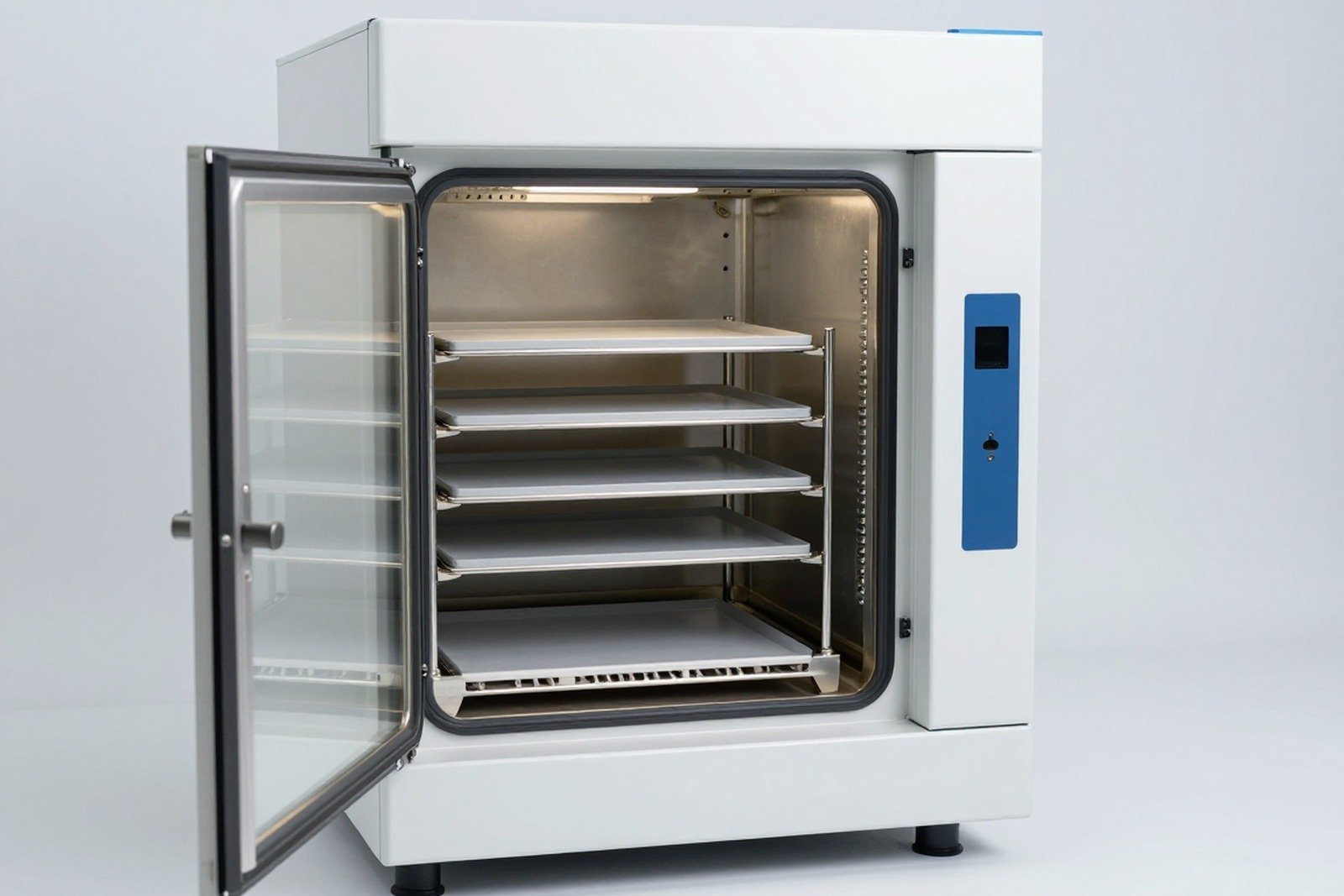
Dry heat test according to IEC 60068-2-2 is a “brother” test to cold test: same group of temperature agents, same two variants Bb and Bd, but completely different damage mechanism. The most common misconception is that the dry heat test can replace the moist heat test.
This article explains the dry heat test, the difference between Bb and Bd, the failure mechanisms to observe, and what must be documented.
1. What question does Test B answer?
The dry heat test evaluates the product’s ability to operate and/or survive high temperatures in the absence of additional moisture. Specific question:
- Does the product function properly at high temperatures?
- Are plastic materials, glue, and gaskets deformed, soft, or aging quickly?
- Do lubricants, inks, and labels evaporate or dry out?
- Do electrical and electronic components lose parameters when the temperature increases?
- Is the structure expanding, causing mechanical jamming or loss of contact?
2. What is the difference between Bb and Bd?
| Characteristics | BB | Bd |
|---|---|---|
| Main goal | Evaluated in a stable hot temperature state | Evaluated during heat up and at elevated temperatures, with functional testing during the changeover period |
| Time to test functionality | After the sample reaches high thermal equilibrium | Monitor during temperature rise as prescribed |
| Device requirements | Dry heat chamber reaches and holds temperature | Needs a heat-resistant measuring system and continuous monitoring |
| Typical application | Hot storage, transportation, equipment operating in hot environments | The device starts and operates when the temperature is rising |
Note on terminology: Bb is often associated with the scenario “constant temperature throughout the test, testing at high temperature”, while Bd is associated with the scenario “temperature changes and checking function during the change”. When reading requirements, clearly define the goal before choosing a variation.
3. Failure mechanism needs to be observed
| Material/detail group | Common mechanism | Signs to note |
|---|---|---|
| Plastic case | Soft, deformed, discolored, brittle after testing | Size distortion, warping, surface discoloration |
| Glue, gasket, gasket | Soft, oily, loss of elasticity | Oil leaks, loss of sealing, moving parts |
| Lubricant | Evaporates, separates oil, dries hard | Increased friction, noise, mechanical jamming |
| Screens, ink, labels | Blurred, flying ink, peeling labels | Reduced contrast, peeling label edges |
| Batteries, capacitors | Parameter drift, reduced lifespan, swelling | Reduced capacity, increased leakage current, case swelling |
| Welds, contacts | Different expansion causes stress and surface oxidation | Increased contact resistance, flickering contact |
| Mechanical structure | Expansion causes jamming and loss of clearance | Unable to install, increased operating force, shaft stuck |
4. Implementation sequence
- Initial stabilization and milestone testing: Appearance, functions, parameters.
- Sample mount: ensure representative heat exchange; Do not mount so that the sample is “cooled” by the metal support.
- Increase heat to specified level: at the specified speed if required.
- Maintaining at high temperatures: enough time for the sample to reach thermal equilibrium, not just for the chamber to reach temperature.
- Function test: according to Bb (after stabilization) or Bd (during heating).
- Recovery: according to prescribed conditions and time.
- Final test and conclusion: Compare with the original benchmark according to agreed criteria.
5. Factors that determine test results
- Self-heating: The device has a self-heating power supply, causing the actual temperature of the sample to be higher than the chamber temperature. This is the point that is most often overlooked.
- Volume and density of components: Multi-metal clusters take longer to reach thermal equilibrium.
- Sensor location: mounted at a representative point, recording the location on file.
- Air circulation in the chamber: affects temperature uniformity and heat transfer rate.
- Bracket material: Metal racks conduct heat quickly, which can create local “cold spots”.
The temperature range and holding time are selectable upon request; The standard does not impose a single level. With industrial and electronic equipment, common levels are within the operating and inventory temperature ranges published by the manufacturer — which should be compared with specific requirements documents rather than applied out of habit.
6. Dry heat and humid heat: do not replace each other
This is the most misleading point. Two tests evaluate two different mechanisms:
| Aspect | Dry heat (Test B) | Hot and humid (Test C, D) |
|---|---|---|
| Main stress factor | High temperature, no additional moisture | Temperature combined with high humidity |
| Typical failure mechanism | Material aging, expansion, evaporation, plastic softening | Condensation, moisture absorption, insulation breakdown, electrochemical corrosion |
| Cannot be substituted for | Evaluate insulation breakdown in highly humid environments | Evaluation of thermal aging of materials |
7. Common errors
- Consider dry heat a general “temperature test”. Then use it to draw conclusions for both hot and humid environments.
- Do not write Bb or Bd — loss of ability to compare results.
- Self-heat generation is not taken into account of electrically powered equipment.
- Do not check appearance after testing — miss deformation, discoloration, oil leakage.
- Conclusion: When there is not enough time for thermal stabilization, distort results with large samples.
- Skip recovery before functional testing, causing the measuring equipment to fail to meet working conditions.
8. Frequently asked questions
How is hot-dry testing different from testing in a regular oven?
Different in three points: temperature uniformity is confirmed, there is a regulation on the time to reach thermal equilibrium of the sample, and there are pre-agreed testing criteria.
What temperature should be chosen?
Choose according to the usage environment or customer requirements/industry standards, then clearly state the basis. There is no common level for all products.
Does dry heat testing require power supply for the sample?
Depends on the goal. Try without power to assess viability; Test with power supply to evaluate operability. If there is power supply, self-heat generation must be taken into account.
What should you pay attention to if the device has a battery/accumulator?
High temperatures strongly affect the battery: reducing capacity, swelling, increasing safety risks. It is necessary to separately monitor and consider the safety requirements of industry standards.
Can the same sample be run for cold testing and dry heat testing?
It is often possible, if the objective is an existential assessment and the requirements document does not specify a separate template. The order of implementation should be clearly stated in the dossier.
After the dry heat test, is the plastic discoloration considered unsatisfactory?
Depends on criteria. If the criteria only require functionality, color change is acceptable; If the product is a retail item, discoloration may be a serious defect. Criteria must clearly state the boundaries.
9. Conclusion
The dry heat test is a separate test, not a duplicate of the moist heat test. The value of the results lies in the correct recording of variation (Bb/Bd), temperature level, holding time, sample condition and passing criteria.
Three things to do: choose the variant according to the target (survival or activity during heating); Monitor the temperature at a representative point to prove that the sample has reached thermal balance; and a thorough visual inspection after testing because many thermal damages do not show up through functional testing.
References
- IEC 60068-2-2 — Test B: Dry heat, including Bb and Bd.
- IEC 60068-1 — General provisions and guidance.
- IEC 60068-3-1 — Guidelines for cold and dry heat testing.
- IEC 60068-2-30, 2-78 — Testing for cyclic and stable humidity.
- TCVN 7699-2-2 — Corresponding national version.
Related articles
- Test A (Cold): cold test according to IEC 60068-2-1, how are Ab and Ae different?
- N test: temperature change according to IEC 60068-2-14 (Na, Nb)
- Self-heating of the device: how to determine the appropriate chamber temperature
- How to Choose Environmental Tests from the Product’s Real Operating Environment
Discuss further
Disclaimer
This article is an interpretive content compiled by us; not legal advice. Enterprises need to compare relevant documents/standards verbatim before applying them to specific products.
See more: Copyright Policy & Disclaimer by ticforall.com.