Electric vehicle charging infrastructure in Vietnam has increased rapidly in the past few years, but until September 2026, there was still no separate national technical regulation setting mandatory requirements for charging posts and charging stations. Requirements for electrical safety, electromagnetic compatibility, labeling, measurement and operation are mainly scattered in voluntary TCVN standards (translated from IEC), plus specialized regulations on electricity, construction, fire protection and measurement.
On September 29, 2026, the Ministry of Industry and Trade issued Circular No. 61/2026/TT-BCT promulgating National Technical Regulations on electric vehicle charging posts and charging stations — symbol QCVN 32:2026/BCT. The Circular takes effect from July 1, 2027. This is the first time the field of electric vehicle charging posts and charging stations has its own national technical regulation, setting a mandatory “floor threshold” instead of letting businesses choose their own application level.
Reference translation by ticforall.com. The Vietnamese version published on this site is the authoritative text; in case of any discrepancy, the Vietnamese original prevails.
The article below is our analysis based on the full text of Circular 61/2026/TT-BCT and QCVN 32:2026/BCT: structure and scope of application, technical requirements for charging posts and charging stations, inspection methods and acceptance criteria, procedures for declaring conformity, transition roadmap, and what businesses should start right now. We also set aside a section to clearly state unverified content, so readers know where to look next.
1. Why this national technical regulation has been long awaited
During many years of assessing suitability for electrical and electronic equipment, the question we receive most from charging station investors and charging equipment importers is: What is the basis for knowing if a charging station is qualified to be put into operation, and what is the basis for accepting a charging station? Previously, there was no text that completely answered that question.
Market reality shows three clear gaps:
- Lack of common safety standards. Charging posts on the market are very diverse in capacity, configuration and origin. With AC charging, the residual DC current generated during charging can “blind” a Class A residual current protection device — a point that voluntary standards state but not all investors require suppliers to demonstrate. With unidirectional charging, structural and protection requirements are even more complex.
- Lack of grounds to accept the station. A charging station is a combination of works and equipment: power supply, distribution, earthing, lightning protection, fire prevention, lighting, signs, internal traffic organization, monitoring and payment. Previously, acceptance depended heavily on the design documents of each unit and on individual specialized regulations.
- Lack of clear regulations on operations, data and measurement. When charging stations become points of sale of electricity to customers, questions about measuring facilities, time synchronization, transaction storage, remote control authorization and network security become real technical-legal issues, and are no longer internal matters of the software provider.
QCVN 32:2026/BCT answers all three of the above gaps, but in a way that businesses need to read carefully: regulatory standards Mandatory minimum requirements (section 1.3.1) and the principle of “not replacing specialized management procedures or authority” (section 1.3.2). In other words, this is a new request layer layered on top of the old layers, rather than merging the old layers.
2. Circular 61/2026/TT-BCT at a glance
Circular 61/2026/TT-BCT has a very compact structure: just three articles. All technical content is in the attached regulations.
| Content | Regulations |
|---|---|
| Issuing agency | Ministry of Industry and Trade (Deputy Minister Truong Thanh Hoai signed on behalf of the Minister) |
| Number and date of issue | No. 61/2026/TT-BCT, dated September 29, 2026 |
| Content | Promulgation of National Technical Regulations on charging posts and electric vehicle charging stations — QCVN 32:2026/BCT (Article 1) |
| Effect | From July 1, 2027 (Article 2, Clause 1) |
| Transitional provisions | Located in Article 2 of the Circular, no is in QCVN — businesses must read both documents |
| Editing sequence | Compiled by the Drafting Team, approved by the Department of Industry, the Ministry of Science and Technology commented in Official Dispatch No. 7366/BKHCN-TĐC dated September 23, 2026 |
QCVN 32:2026/BCT itself consists of six parts, and this sequence properly reflects the standard designed to be applied: the general regulations part (read first to see if you are within the scope or not), two separate technical parts for charging posts and charging stations, management part (procedures), responsibility part and implementation organization part.
| Part | Part name | Main content |
|---|---|---|
| 1 | General regulations | Scope of regulation, subjects of application, principles of application, reference documents, and explanation of terms |
| 2 | Technical regulations for charging posts | Safety, electromagnetic compatibility, communications, additional requirements for DC charging, labeling, interfaces and instructions for use |
| 3 | Technical regulations for charging stations | General requirements, station layout, charging posts in the station, safety, power supply – connection – measurement – load management, monitoring and control, testing methods |
| 4 | Management regulations | Declaration of conformity, testing and recognition of results, design – installation – acceptance documents, conditions for putting the station into operation, operation management and maintenance |
| 5 | Responsibilities of organizations and individuals | Responsibilities according to each role: manufacturer, importer, investor, operator, management agency |
| 6 | Implementation organization | Validity and review when referenced documents are amended or supplemented |
A technical and legal detail worth noting: section 1.3.2 clearly states that specialized regulations, standards and laws on electricity, construction, fire prevention, measurement, network security, personal data protection and the environment are applied according to the correct scope, subject and effect of each document. Similarly, section 3.5.2 states that this regulation “does not create additional charging station approval procedures”. This is a beneficial point for businesses: QCVN 32 sets technical requirements, does not open a new layer of administrative procedures.
3. Scope of application: who is covered and who is not
This is the part that businesses should read before all the rest, because it determines all the obligations behind.
Entities and equipment within scope
- Charging posts that are manufactured, assembled, imported, circulated or installed must meet the charging post requirements of the regulations (section 1.1.4).
- Charging stations are installed in public areas, centralized parking areas, rest stops and similar areas (section 1.1.2).
- Devices for charging electric road vehicles: pure electric vehicles (BEVs), externally charged hybrid vehicles (PHEVs) and similar electric road vehicles with a rechargeable energy storage system installed on the vehicle.
- Voltage: nominal level up to 1,000 V alternating current (AC) or up to 1,500 V direct current (DC), nominal output voltage also up to these levels (section 1.1.3).
Excluded cases
| Section | Excluded content | Practical understanding |
|---|---|---|
| 1.1.5.1 | Charging stations are located inside buildings: basement, semi-basement, above ground floor; in garages, indoor parking areas and spaces partially or completely enclosed by building structures | Stations in the basement/car garage are still subject to construction and fire prevention laws, but are not within the scope of QCVN 32. Note: outdoor stations or under independent roofs only have the function of rain and sun protection. still within scope |
| 1.1.5.2 | Wireless charging; integrated control and protection device on the cable for mode 2 charging (IC-CPD); vehicle charging equipment; power supply equipment for storage systems not mounted on the vehicle; Separate charging equipment for railways, specialized off-road vehicles, and industrial vehicles not participating in road traffic | Mode 2 charging using the vehicle’s included wiring harness is not in scope. Mode 3 (fixed) charging post is within the scope |
| 1.1.5.3 | Charging posts and charging stations are only used for testing, research, display or training within the scope of internal control, with safety measures in place and do not provide public charging services. | The exclusion condition is associated with two factors at the same time: scope of internal control and Does not provide public charging services |
| 1.1.5.4 | Charging stations only serve the internal needs of organizations and individuals, and do not provide charging services for commercial purposes | Stations for internal use that collect fees and sell electricity to customers are no longer subject to this exclusion |
| 1.1.5.5 | Power grid infrastructure in front of the charging station connection point | The power grid part is the responsibility of the electricity unit and is not within the scope of regulations |
Regarding the subjects of application, the regulations listed are quite broad (section 1.2): organizations and individuals manufacturing, assembling, importing, distributing and circulating charging posts; investors, units that design, construct, install, manage and operate charging stations; power supply unit, dispatcher unit; organize testing, certification, inspection, and conformity assessment; State management agencies and other relevant organizations and individuals. This means that the responsibility does not lie solely with the device manufacturer.
4. Requirements for charging posts: four groups to prepare documentation for
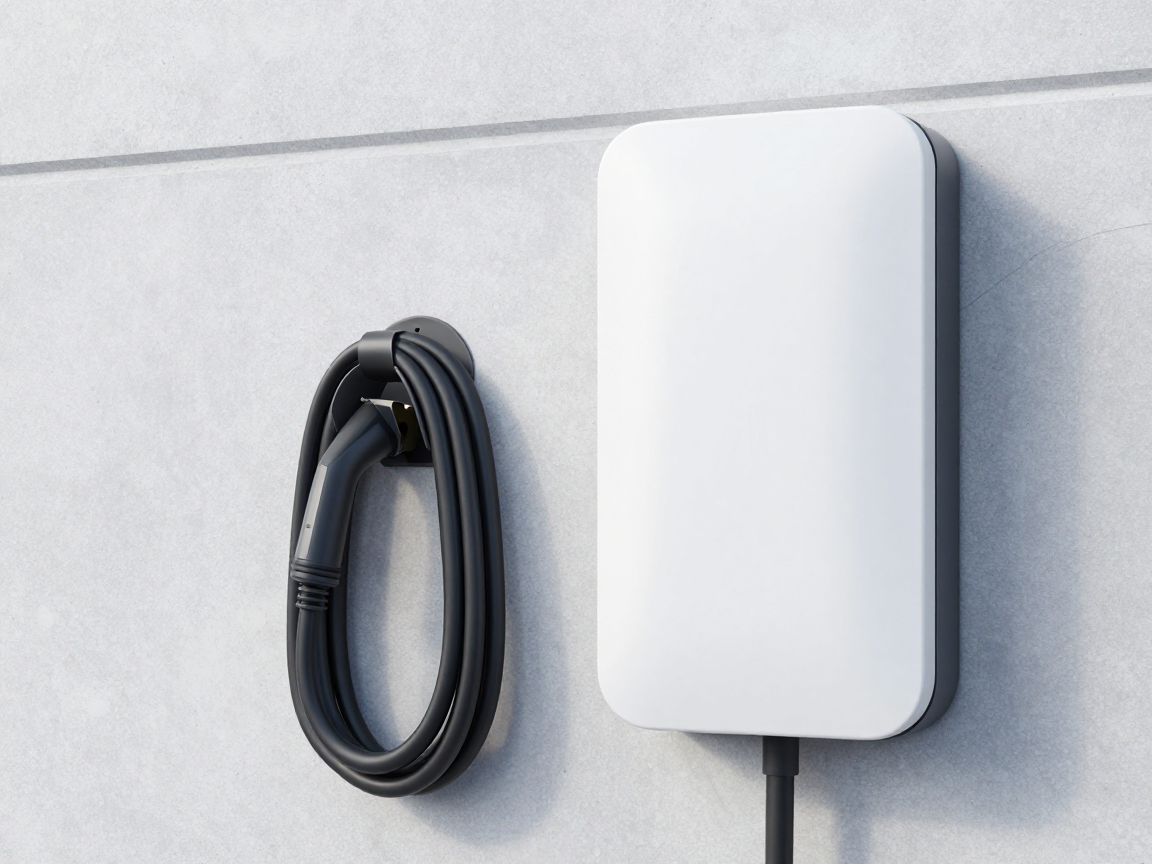
Part 2 of the standard is written in the style of “invoking standard provisions” – meaning that the standard does not copy the entire technical content, but requires meeting specific provisions of the corresponding TCVN. This way of writing is beneficial in the long run (when the standards are updated, the review mechanism in section 6.2 will handle them), but requires businesses to have a set of standards available for comparison, not just reading the standards.
| Request group | Normative content | Standard basis |
|---|---|---|
| Safe | Protection against electric shock; conductive interface; adapter; cable assemblies; structural requirements and testing; overload and short circuit protection | TCVN 13078-1:2020 (IEC 61851-1:2017), Articles 8, 9, 10, 11, 12, 13 |
| Electromagnetic compatibility (EMC) | Emission requirements and immunity requirements; In case the charging tower has the function of receiving and transmitting radio waves, it must also meet additional radio regulations and standards. | TCVN 13078-21-2:2020 (IEC 61851-21-2:2018), Article 6 and Article 5 |
| Communication | Communication requirements between charging station and vehicle | TCVN 13078-1:2020 (IEC 61851-1:2017), Article 7 |
| Complementary to one-way charging | The DC charging post must meet the corresponding additional requirements | TCVN 13078-23:2020 (IEC 61851-23:2014) |
| Labeling | Labels according to the law on goods labels; Clear information, durable enough during use, at least 10 information (manufacturer; type, type; input voltage; input current; output voltage; output current; output capacity; IP protection level; working temperature; year of manufacture) | Section 2.6 QCVN 32:2026/BCT |
| Interface and instructions for use | User interface must be in Vietnamese (other languages may be used); Installation instructions and instructions for use must be in Vietnamese | Section 2.7; TCVN 13078-1:2020, sections 16.1 and 16.2 |
Two things we often see businesses lacking in preparation:
- List of 10 information on the label. IP protection level and working temperature are the two most commonly overlooked information on imported equipment labels, while this is mandatory data to compare with actual outdoor installation conditions (section 3.3.7 requires comparing the protection level of outdoor charging posts with the product’s label and testing records).
- Compatible documentation. Section 3.3.5 requires that the technical documentation must state the applicable connector standard and version, corresponding dimension sheet, electrical parameters, communication functions, interlock conditions and Software version affects compatibility. This is a new requirement compared to the habit of only submitting product datasheets.
5. Requirements for charging stations: six groups of content
Part 3 of the standard is the longest part and also the “heaviest” part for investors, because it covers everything from site layout to network security. We grouped them into six groups for ease of comparison.
| Content group | Main requirements | QCVN section |
|---|---|---|
| Station layout and traffic organization | Suitable for land use purposes and area functions; Do not obstruct entrances, exits, or roads for fire engines; charging cell size and working space by vehicle type; separate regulations for cross-charge cells, parallel charging cells, commercial vehicles, buses, and trucks; Arrangements on sidewalks must maintain continuous clearance for pedestrians; load-bearing foundation; Identification signs, warning signs, and painted lines can be observed both day and night; Drainage and prevent water stagnation at the foot of the foundation and connection area; Charging stations at petrol stations must meet QCVN 01:2020/BCT | 3.1, 3.2 |
| Charging post in the station | Consistent with the overall design; Install according to manufacturer’s instructions; Minimum protection functions of overcurrent – overvoltage – undervoltage, short circuit, residual current protection and automatic shutdown in case of incident; Maintain measures against electric shock; publicly disclose capacity, voltage and current range, connector type, charging mode, safety instructions and warnings at the point of use or by electronic means; cable retainers and connectors do not block pathways; Separate requirements for power cabinet configuration – separate distribution posts and wall posts | 3.3 |
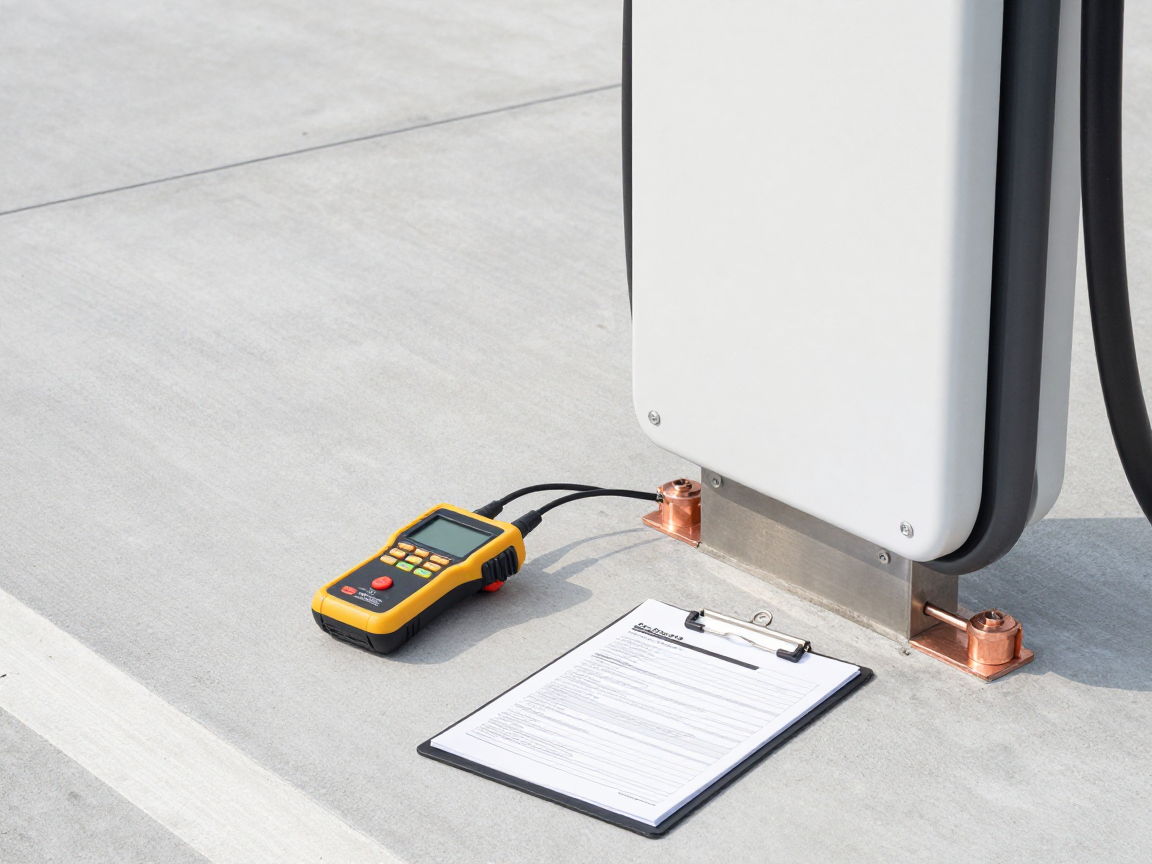
| Safety, earthing and fire prevention | Emergency power-off device or mechanism in an easily accessible location with clear symbols to prevent unintended operation; After an emergency shutdown, power should only be restored after determining the cause and eliminating the hazard, and resetting the equipment. no make the charging session automatically restart; Check and accept the earthing system, protective equipotential bonding, metal casing, light poles, camera poles, electrical cabinets before energizing, the results must be recorded and traceable; Fire prevention equipment according to QCVN 06:2022/BXD and Amendment 1:2023, QCVN 10:2025/BCA, TCVN 3890:2023; Before operating, a minimum of 9 items must be checked | 3.4 |
| Power supply, connection, metering and load management | Comply with QCVN 25:2025/BCT and QCVN 26:2025/BCT; Calculate capacity according to the largest operating mode, including auxiliary load and BESS charging capacity. The documents must state the basis for choosing the concurrent coefficient and expansion conditions; Electrical cabinets and low-voltage switchgear assemblies comply with TCVN 13724-7:2023 when within the scope of application; The cable route in the station is mechanically protected and waterproof; Controls harmonics, power factor, voltage flicker and voltage unbalance at the connection point | 3.5 |
| Monitoring, control, data and network security | Collect and store charging data, warnings, control commands, and performance results; authorization for remote functions and logging; Remote command must not override protective interlock; Power supply monitoring must have threshold exceeding warnings, event logging, and incident statistics; camera when required by law or risk assessment determines necessary, image data processed in accordance with the law on personal data protection; time synchronization for monitoring, measurement and payment systems; Backup and retrieve data | 3.6 |
| Integrating renewable energy and storage | When integrating distributed power sources, BESS or vehicle power supply functions into the station’s power system, design documents must identify connection boundaries, charging and discharging modes, capacity limits, protection coordination, measurement and status when grid power is lost; If it is not allowed to transmit to the grid, it must prevent transmitting active power to the grid; Do not unintentionally supply electricity to the isolated part of the grid | 3.6.8 |
Three technical points worth noting in this section:
- Load management is no longer a “marketing feature”. The standard allows the use of load management to limit capacity (section 3.5.1), but with very specific test conditions in section 3.7.5: the system must be tested in situations of communication loss, control failure and recovery; errors must be detected; The power limit or load reduction function must bring the system to a safe state within a specified time according to the design. In other words, “if there is a loss of network, the station must still be safe”, not if a loss of network means the station exceeds capacity.
- Emergency shutdown is a dual requirement. Not only must there be a shut-off mechanism, but also the avoidance of unintended operations (3.4.2), recording of operations and inspection results in operating records (3.4.3) and periodic inspection according to the maintenance plan (3.4.4). This is the type of requirement that operational records often miss.
- Metering electricity sales is a separate legal requirement. Section 4.5.2 requires that electricity measuring devices used to quantify goods and services in purchase, sale and payment must meet measurement requirements and control measures according to the law on measurement. before being put into use and during use. For investors, this is often the item ranked last but is the item that causes the most disputes with customers.
6. Inspection methods and acceptance criteria: how to read the D – I – M – F notation
Section 3.7 is the section we appreciate most on the technical side, as it turns qualitative requirements into documentable testing methods. The standard defines four methods: D – review documents; I – visual inspection, field; M – measure or test; F – test functions or simulate situations.
| Test item | Method | Noteworthy points about acceptance criteria |
|---|---|---|
| 3.2 – Station layout | D, I, F | Test on the vehicle with the most unfavorable size, connector position and trajectory within the design range; Passed when the vehicle enters, parks, leaves a safe location, connects and opens the vehicle door safely, the cable is not pulled beyond the manufacturer’s limit, does not cut across walkways or emergency exits, water does not accumulate at the base of the platform, electrical cabinets, or connection points. |
| 3.3 – Charging head in the station | D, I, F | Each compatible configuration must be tested by representative means or simulators that comply with the connector standard; Content includes mechanical assembly, electrical parameters, communication, interlock, initiation – maintenance – termination of charging session, stopping when there is an error; Test configuration and software version must be kept on file |
| 3.4 – Safety | D, I, M, F | Pass when earthing, equipotential bonding, insulation and protection meet standards; Emergency shutdown isolates dangerous parts; Resetting the device does not cause the charging session to restart automatically |
| 3.5 – Power supply and load management | D, M, F | Test in the mode with the largest concurrent load according to the design, including auxiliary loads; The automatic load management system must be tested in situations of communication loss, control failure and recovery |
| 3.6 – Monitoring and control | D,F | Must try valid commands, invalid or overridden commands, duplicate commands, lost connection and recovery; reached when data is accessible, invalid commands are not executed, and monitoring errors do not invalidate the security protection function |
Section 3.7.1 also sets a very important principle for both design documents and test documents: criteria stated in design documents must be based on applicable regulations, standards, equipment instructions or verification calculations, and must not be lower than the mandatory requirements of the standards. Section 3.7.7 requires that the test results must state the configuration, test conditions, measuring equipment, standards, documents used as a basis for evaluation, results and conclusions of pass or fail; Unsatisfactory parts must be remedied and rechecked before being put into operation.
7. Declaration of conformity, certification and recognition of foreign results
This is the part most directly related to conformity assessment activities, so we present it in the correct order that businesses will encounter.
7.1. Declaration of conformity obligations
- Charging posts manufactured and assembled domestically must be declared conformable according to this regulation and affixed with the conformity mark before being put into circulation on the market (section 4.1.1).
- Imported charging posts must be declared conformable and affixed with a conformity mark before being put into circulation; State inspection of the quality of imported goods is carried out in accordance with the law on product and goods quality (section 4.1.2).
- The declaration of conformity must be based on the results of certification of conformity by a certification organization designated by law; The certification body must meet ISO/IEC 17065:2013 (ISO/IEC 17065:2012) and operate within its designated or recognized scope (section 4.1.3).
- Certification of conformity for charging posts follows method 5 or method 7 prescribed in Circular No. 14/2026/TT-BKHCN dated April 9, 2026 (section 4.1.4).
- Testing for certification of conformity must be performed by a designated or recognized testing organization (section 4.2).
7.2. Three points businesses often misunderstand
| Common misunderstandings | Actual regulations |
|---|---|
| “Products that have international certification (CE, UL, certification from foreign organizations) are eligible for circulation in Vietnam.” | Section 4.3.2 clearly states: recognition of testing laboratory capacity according to TCVN ISO/IEC 17025:2017 or issuance of international certification no replacement Mechanism for recognition and conclusion of conformity according to Vietnamese law. The recognition and use of results of foreign organizations is carried out in accordance with Circular No. 16/2026/TT-BKHCN and relevant laws, within the scope, time limit and conditions of recognition (sections 4.3.1, 4.3.2). The organization using the results is responsible for the completeness and appropriateness of the results and the appropriateness assessment conclusions they make. |
| “The test report according to the newer version of IEC/TCVN is definitely usable.” | Section 4.3.3 requires preparation and retention comparison table, determine equivalent scope and content; Results should only be used for equivalent or more stringent requirements and equivalent test methods. The remaining mandatory requirements are subject to additional testing or evaluation. |
| “The charging tower has already been evaluated for radio, so the EMC part is also done.” | Section 4.1.3 limits: radio code assessment results can only be used for requirements and tests that are proven to be equivalent to the EMC requirements in section 2.3. EMC requirements that have not been evaluated, or differ in configuration, connection ports, or operating modes, must be evaluated additionally. |
7.3. Design, installation and acceptance documentation, and conditions for putting a station into operation
For charging stations, the standard requires design technical documents to show content appropriate to the configuration and scope of the project: premises and traffic organization; diagram, electrical system boundaries and cable routes; load calculation, concurrency factor, voltage drop and protection coordination; earthing, lightning protection; foundation, drainage; Fire prevention, lighting, and signage solutions; monitoring configuration, control interface, and device documentation (section 4.4.1). Installation, testing and handover documents include as-built drawings; Minutes of inspection of materials, equipment and construction quality; measurement and test results; operation and maintenance instructions and construction logbook (section 4.4.2).
A very practical point in section 4.4.3: when changing charging posts, cables, protective equipment, location, capacity, connection or fire prevention solutions, businesses must evaluate the scope of impact, update calculations and records, inspect and accept additional affected parts — but no Check and re-accept the unaffected part that has appropriate and traceable evidence. This is a regulation that helps save station upgrade costs, provided that the records of the unaffected part must be complete from the beginning.
Regarding the conditions for putting into operation, section 4.5.1 states the principle: charging stations can only be put into operation after completing inspection, testing and acceptance of items within the design scope, meeting the requirements of electrical protection, earthing, lightning protection, lighting, monitoring and communication according to the installation configuration. Section 4.5.4 adds a strong provision: charging posts installed in stations must have technical documents and documents certifying conformity and declaring conformity; Do not install or use charging stations of unknown origin, without technical documents or that do not meet safety requirements..
8. Timeline to 1 July 2027 and three transitional groups
The transition part is located in Article 2 of the Circular and divides the market into three groups. This is the business part that should be read at the same time as the technical part, because it determines the order of work.
| Group | Obligation | Deadline |
|---|---|---|
| The charging post was legally installed before the effective date of the Circular | Continued use. Owners and operators must maintain safe operations; inspect, maintain, fix defects and handle direct risks | Frequently |
| Charging stations within the scope of regulation were in operation before the effective date of the Circular | Review compliance with safety requirements of regulations; Complete remediation of unsatisfactory contents. When repairing, renovating, expanding or changing configuration from the effective date of the Circular, the repaired, renovated, expanded or changed configuration must meet standards. | Review in 06 months; fix in 24 months from the effective date of the Circular |
| Charging stations within the scope of regulation have started construction before the effective date of the Circular but have not yet been accepted and put into operation | Review and update designs for unfinished work to ensure compliance with standards; Review and evaluate the completed work on the basis of design documents, construction documents and technical evidence. The station will only be accepted and put into operation when it meets the conditions specified in the regulations | Before acceptance and commissioning |
With an effective date of July 1, 2027, the two deadlines mentioned above correspond to approximately January 1, 2028 and July 1, 2029, respectively.
Direct risk: a concept that needs to be read correctly
Article 2, Clause 5 of the Circular defines “direct risk” as a situation that is likely to cause unsafety immediately upon continued operation due to electric shock, fire, explosion, structural instability or damage to the vehicle or electrical system. When detecting a direct hazard, the owner or operator must warn, stop operation or isolate the affected part and take corrective measures; If it cannot be safely isolated, the entire charging station must be stopped from operating; The affected part can only be operated again after it has been repaired and inspected to ensure safety.
Point clause 5 point c should be read carefully because it protects the station owner’s revenue: measurement error or control error does not pose a direct risk handled in accordance with specialized laws, and You don’t have to stop operating the entire charging station when the affected part has been isolated and the remaining part is safe, unless otherwise specified by specialized law. The operator’s obligation here is to have isolation procedures and recovery procedures clear enough to properly implement this principle.
9. Field experience: eight points where businesses often get stuck
This section is our observations during the preparation of documents for similar products and systems, compared with the specific requirements of QCVN 32:2026/BCT.
- Read the scope last. Many businesses start with a test list and then discover that the product or installation area is not covered — or conversely, thought to be excluded but actually still is. Typical examples are independent covered stations (still in scope) and internal toll stations (no longer excluded).
- Wait until closer to the effective date to do so. With charging post products, the time for testing, certification, declaration of conformity and label printing often lasts many weeks to several months, not including the time to fix if there is an item that fails. Enterprises preparing for the end must accept the risk of progress with the same queue of testing capacity.
- The technical file is missing “version”. Section 3.3.5 requires stating the applicable connector standard and version, dimensions, electrical specifications, communication functions, interlock conditions and software versions affecting compatibility. This type of information must be obtained from the manufacturer’s technical specifications and cannot be quickly added at the last step.
- Cut EMC when the device has a wireless connection. Charging posts with the function of receiving and transmitting radio waves must additionally meet radio regulations and standards, and radio assessment results can only be used for parts equivalent to EMC requirements (sections 2.3 and 4.1.3). The test configuration must match the commercial configuration, including connection ports and operating modes.
- Labels and instructions are not in Vietnamese. The user interface must be in Vietnamese (other languages are allowed) and the installation instructions and usage instructions must be in Vietnamese (section 2.7). With imported equipment, this is an item that can be quickly fixed but is often overlooked in the import plan.
- Lack of measurement and acceptance records at the right time. Section 3.4.5 requires that earthing, protective equipotential bonding, metal enclosures, electrical cabinets and conductive structures be inspected, measured and accepted at appropriate stages. before turning on the power, the results must be documented and traceable. Re-measuring after the station is operational cannot replace the acceptance documents at the time of construction.
- Load management in “nominal” form. The load management system must be tested under communication loss, control and recovery failures, and must return the system to a fail-safe state (section 3.7.5). If the solution only works when everything is normal, the test profile will fail.
- There are no operating procedures, maintenance and logs. Section 4.6.1 requires the operating unit to develop and maintain operating procedures, troubleshooting, emergency power shutdown, user support and periodic inspection and maintenance plans; Section 4.6.2 requires recording and storing records of inspection, maintenance, repair, replacement, software updates and troubleshooting, traceable by device and time. This is the “software” part of the norm, and also the most underrated part of planning.

10. Preparation checklist by role
| Shoulder | Things to do |
|---|---|
| Manufacturer, assembler, importer of charging posts | Determine whether each type and type of product falls within the scope; Review technical documents according to section 3.3.5 (connector standards and versions, dimensions, parameters, communication, interlock, software version); define safety, EMC, communications, additional testing scope for DC charging; standardize labels according to 10 required information; Prepare Vietnamese interface and instructions; select certification method 5 or 7 and a designated or recognized testing and certification organization; Prepare documents to acknowledge foreign results if used |
| Charging station investor | Determine which relay group the station belongs to; Make a review and remediation plan according to two milestones: 06 months and 24 months; Prepare design documents according to section 4.4.1; Organize inspection, testing, and acceptance before putting into operation; Handling measurement requests with measuring tools used to quantify goods and services; Review fire prevention and fighting items according to applicable specialized standards |
| Design, construction and installation unit | Include the requirements of the regulations in drawings and explanations: arrange the charging cell and operating space according to the most unfavorable means; load calculation, concurrency factor, voltage drop, protection coordination; earthing, lightning protection; drainage; The cable route is mechanically protected and waterproofed; Signs and painted lines can be observed both day and night; Measurement and acceptance records before energizing |
| Operating unit | Develop operating procedures, troubleshooting, emergency power shutdown and user support; periodic inspection and maintenance plan; Maintain inspection, maintenance, repair, software update, and troubleshooting logs according to section 4.6.2; remote control authorization and logging; Periodically check the emergency power off function; Manage generated waste according to the law on environmental protection |
11. Items we have not verified
To make the article useful rather than just complete, we highlight the following points that have not been verified within the scope of the article:
- List of testing organizations and certification organizations designated for the scope of QCVN 32:2026/BCT. At the time of writing, we have no basis to publish this list, so businesses need to look up the current designation decision.
- Forms and components of specific conformity declaration documents applicable to electric vehicle charging posts. The regulations only state principles based on the results of certification of conformity and refer to Circular No. 14/2026/TT-BKHCN; Document details need to be compared with that document and the law on product and goods quality.
- Whether or not there are state inspection measures on the quality of imported goods specifically for electric vehicle charging stations, and the corresponding HS code.
- The technical content we present here is read and interpreted from the document provided by the enterprise, and has not been compared with the digital signature or official announcement on the Electronic Information Portal of the Ministry of Industry and Trade. For specific cases, readers should compare the official version.
- Actual testing capacity in Vietnam for some specific tests (such as testing storage system integration and grid failure mode). This is a factor that directly affects progress, but is beyond the scope of a text analysis article.
Conclusion
QCVN 32:2026/BCT is not just a new technical document. It moves the field of charging posts and electric vehicle charging stations from the state of “applying voluntary standards according to each business’s choice” to the state of “having a mandatory floor threshold, having an inspection method, having acceptance records and having the obligation to declare conformity”. With the rapidly expanding charging infrastructure market, having a common standard is something businesses that do the right thing should expect, as it clarifies the line between qualified products and unqualified products.
From the time of this article (October 2026) to the effective date of the Circular, there are about 9 months left. For manufacturers and importers of charging posts, that is just enough time for a cycle of testing – certification – declaration of conformity if starting immediately, and quite a stressful time if starting in the second quarter of 2027. For charging station investors, this is a good time to review the current status according to the transition section, especially measurement records, earthing acceptance and fire protection items, because these are difficult to add back later.
Three things to do immediately: (1) clearly identify which group your product or station belongs to within the scope and transition terms; (2) review technical documentation gaps according to section 3.3.5 and section 4.4; (3) finalize the testing and certification plan and timeline according to July 1, 2027. Doing these three things early often saves more on testing costs, because it avoids having to rework designs, labels, or profiles in the sprint.
References
The text below is the basis of the article; Readers should look up the official version on the Government Electronic Information Portal (vanban.chinhphu.vn) and the Ministry of Industry and Trade Electronic Information Portal (moit.gov.vn).
- Circular No. 61/2026/TT-BCT dated September 29, 2026 of the Ministry of Industry and Trade promulgating national technical regulations on electric vehicle charging posts and charging stations.
- QCVN 32:2026/BCT — National technical regulations on electric vehicle charging posts and charging stations (issued together with Circular No. 61/2026/TT-BCT).
- Circular No. 14/2026/TT-BKHCN dated April 9, 2026 of the Ministry of Science and Technology — regulating conformity assessment methods (mode 5 and method 7 are cited in section 4.1.4 QCVN 32:2026/BCT).
- Circular No. 16/2026/TT-BKHCN — principles of recognition and use of testing and certification results of foreign organizations (cited in section 4.3.1 QCVN 32:2026/BCT).
- TCVN 13078-1:2020 (IEC 61851-1:2017); TCVN 13078-21-2:2020 (IEC 61851-21-2:2018); TCVN 13078-23:2020 (IEC 61851-23:2014); TCVN 7447-7-722:2023 (IEC 60364-7-722:2018); TCVN 13724-7:2023 (IEC 61439-7:2022).
- QCVN 25:2025/BCT (electrical safety); QCVN 26:2025/BCT (electrical engineering – power grid system); QCVN 06:2022/BXD and Amendment 1:2023 (fire safety for houses and structures); QCVN 10:2025/BCA; QCVN 01:2020/BCT (gasoline stations).
- Related articles on ticforall.com: List of products requiring energy labeling in Vietnam: current documents and application roadmap.
Discuss with us
This article is our interpretation to disseminate legal knowledge about charging posts and electric vehicle charging stations, not a legal document. Legal documents may be amended, supplemented, replaced or abolished after the time the article is published; Circular No. 61/2026/TT-BCT takes effect from July 1, 2027 and the referring regulations may change before that time. Before applying to a specific case, readers need to look up the current document on official information portals (Government electronic information portal, Ministry of Industry and Trade electronic information portal) and consult competent authorities. The content of the article is for reference only and does not replace legal advice.