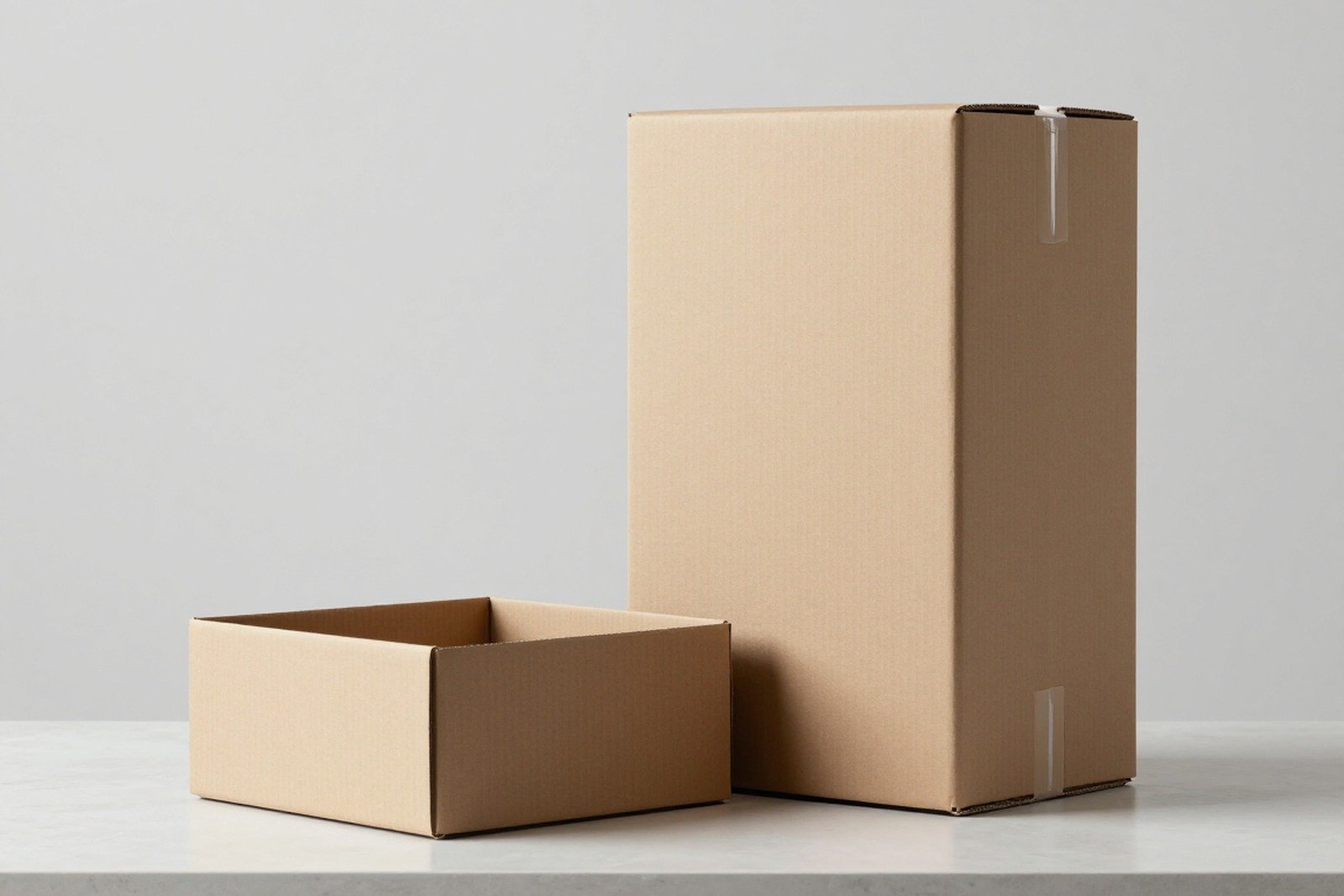
ISTA® 6-AMAZON.COM SIOC is a packaging test for products sold on Amazon but no need for an external box. SIOC stands for Ships In Own Container — “shipped in its own box”: the manufacturer’s packaging is the shipping box, labeled shipping and goes straight to the customer.
This is the heaviest and most complicated lesson in the 6-AMAZON.COM group, because it has to be simulated whole journey: from Amazon warehouse, via parcel delivery or LTL truck, to the buyer’s door — with no external protection. The 2018 document is 52 pages long, divided into: eight Type A–H groups and 25 Test Blocks shared.
This article presents the structure, classification, test series of each Type and main technical parameters, so that businesses can prepare documents before working with an accredited laboratory.
1. ISTA 6-AMAZON.COM What is SIOC?
Some characteristics to immediately understand about this type of document:
- This is a “Project”, not a “Standard”. ISTA clearly distinguishes: Series 1/2/3 are Test Procedures (standard procedure), while the 6-Series is Member Performance Tests — “protocol created by ISTA members for their own purposes”. The 6-AMAZON.COM suite was developed by ISTA in collaboration with Amazon.com.
- First launched in October 2014 and is a “General Simulation” test.: general simulation of real shipping hazards, but does not automatically comply with the shipping company’s packaging regulations. The version currently in circulation in the reference document is 2018 version.
- The object is the retail “packaged-product”. — ie product and packaging considered together, not separate.
- Ships In Own Container (SIOC) This means that the product’s original packaging must withstand the entire distribution journey without a protective outer box.
Logically, SIOC is card more rigorous Over Boxing: when there is an outer box, the outer box absorbs most of the impact; When using SIOC, it is the retail packaging that is exposed. Therefore, the requirements for carton strength, internal structure and compression resistance are all higher.
2. How are SIOC, Over Boxing and Frustration-Free Packaging different?
| Concept | Meaning | Corresponding test |
|---|---|---|
| SIOC — Ships In Own Container | The original packaging of the product is labeled and sent directly, without an outer box | 6-AMAZON.COM SIOC |
| Over Boxing | The product is packaged in a retail box, placed in an over box with dunnage, and then sent | 6-AMAZON.COM Over Boxing |
| FFP — Frustration-Free Packaging | Easy-to-open packaging, no plastic ties, no discomfort when removing; is one program Amazon’s is all about the unboxing experience | Evaluation using 6-AMAZON.COM protocols (SIOC or Over Boxing) depending on configuration |
| PFP — Prep-Free Packaging | Packaging does not require additional preparation when entering the Amazon warehouse (no need for wrapping or extra tape) | Verify that Amazon’s packaging instructions are included |
Practical points to remember: SIOC and Over Boxing are two different tests and cannot replace each other. If a business wants to “send goods without an outer box”, they must try SIOC – the result of Over Boxing is not a substitute, because Over Boxing has assumed that there is always a force-absorbing outer box. If you are not sure which direction to choose, you should read the article What is ISTA 6-AMAZON.COM Over Boxing? for comparison before finalizing the design.
3. Packaged-product classification: thresholds need to be determined in advance
The entire 6-AMAZON.COM SIOC operates on a classification system. To look up the correct Type and correct test sequence, the following thresholds must be determined:
| Classification criteria | Threshold |
|---|---|
| Volume | < 50 lb (23 kg) · 50 lb (23 kg) to < 100 lb (45 kg) · 100 lb (45 kg) or more |
| Shipping method | Parcel Delivery (delivery of parcels) · Less-Than-Truckload (LTL, combined truck shipments) · Palletized (goods on pallets) |
| Limit the volume of the parcel system | 150 lb (68 kg) — the parcel system does not accept heavier packages |
| Girth | = Length + 2 × (Width + Height) · Threshold 165 in (4.19 m) |
| Long side size | Threshold 108 in (2.7 m) |
| Special product group | TV/Monitor (considered as goods non-fragile and have separate Type sets G, H) |
| Processing method at Amazon warehouse | Standard Handling (floor loaded — without pallets when delivered to customers) · Pallet Handling (delivered to customers with pallets) |
Three notes about classification:
- Identification documents Non-fragile products require a sample for the entire process; If the goods are fragile, the number of samples increases according to ISTA’s definition of “fragile”. TV/Monitor is classified as non-fragile, and setting a separate Type for TV/Monitor helps reduce variability, increasing repeatability with fewer samples.
- One palletized or unitized load — if that is the expected delivery configuration to the end consumer — is considered one single packaged-product.
- Document the request to run the procedure once, but It is recommended to run the entire process five or more times with new samples each time, to get representative conclusions.
4. Eight groups Type A–H
| Type | Description | Volume/condition |
|---|---|---|
| A | Parcel Delivery — individual packages | Less than 50 lb (23 kg) |
| B | Parcel Delivery — individual packages | 50 lb (23 kg) to less than 100 lb (45 kg) |
| C | Parcel Delivery — individual packages | 100 lb (45 kg) or more (note: parcel system limited to 150 lb / 68 kg) |
| D | LTL Delivery — single package | Less than 100 lb (45 kg) |
| E | LTL Delivery — single package | 100 lb (45 kg) or more |
| F | LTL Delivery — goods loaded on pallets (palletized) | Individual bales/pallets |
| G | Parcel Delivery — TV/Monitor | Under 150 lb (68 kg) and girth ≤ 165 in (4.19 m) |
| H | LTL Delivery — TV/Monitor | 150 lb (68 kg) or more or girth > 165 in (4.19 m) |
For non-TV/Monitor products, three parcel system exclusion thresholds are clearly stated in the documentation: product weighs more than 150 pounds, or has any dimension greater than 108 in, or girth greater than 165 in, or goods on pallets, or yes Special delivery request from Amazon — all do not follow the parcel system.
5. Twenty-five Test Blocks
SIOC does not present individual articles, but organizes them into chapters 25 Test Blocks — “blocks” are then assembled into chains for each Type. For example, Type A uses blocks 1, 2, 12, 15, 21–25; Type H uses blocks 1, 3, 4, 5, 6, 9, 10, 13, 16, 20, 22, 24…
| Block | Category | Content |
|---|---|---|
| 1 | Climate | Temperature and humidity regulation (pre-conditioning + controlled conditioning) |
| 2 | Impact | Free fall — delivery system, first chain |
| 3 | Impact | Tip / Tip Over (tilt 22°) |
| 4 | Impact | Free fall — LTL, maximum 18 in (460 mm), 6 drops |
| 5 | Impact | Rotational Flat Drop 9 in (230 mm) |
| 6 | Impact | Rotational Edge Drop 9 in (230 mm) |
| 7 | Impact | Rotational Corner Drop |
| 8 | Impact | Inclined or horizontal impact — velocity 48 in/s (1.2 m/s) |
| 9 | Compression | Horizontal compression — Clamping Simulation |
| 10 | Compression | Vertical compression (top–bottom), hold for 1 hour |
| 11 | Impact | Fork Lift Simulation |
| 12 | Vibration | Random vibration with and without load on — Over-The-Road and Pick-up & Delivery spectrum |
| 13 | Vibration | Random vertical vibration with upper load — Steel Spring Truck spectrum |
| 14 | Vibration | Random vertical vibration with upper load |
| 15 | Impact | Free fall — delivery system, second chain (once falling on a hazard) |
| 16 | Impact | Free fall — LTL, maximum 32 in (810 mm), 6 drops |
| 17 | Impact | Falling on a flat surface |
| 18 | Impact | Falling rotating edge |
| 19 | Impact | Falling at an angle |
| 20 | Impact | Inclined or horizontal impact — LTL |
| 21 | Impact | Fall swivel edge 9 in (230 mm) |
| 22 | Impact | Full Rotational Flat Drop |
| 23 | Impact | Bridge Impact — 16 in (400 mm) fall hazard box |
| 24 | Impact | Concentrated Edge Impact — 16 in (400 mm) fall hazard box |
| 25 | Integrity | Leak Test 8 hours — liquid cargo only |
6. Type A and Type B test series
Type A — Parcel Delivery, under 50 lb (23 kg):
| # | Category | Block | Test level | Notes |
|---|---|---|---|---|
| 1 | Pre-conditioning | 1 | Lab temperature and humidity, 12 hours | Required |
| 2 | Controlled air conditioning | 1 | Temperature and humidity are selected according to the table | Optional |
| 3 | Free fall | 2 | 9 drops — height varies with mass | Required |
| 4 | Vibrate randomly | 12 | Gross grms 0.53 and 0.46 | Required |
| 5 | Free fall | 15 | 8 drops — Once fell into a hazard | Required |
| 6 | Falling rotating edge | 21 | 9 in (230 mm) | Elongated and flat bales |
| 7 | Falling on a flat surface | 22 | Varies according to bale size | Long bales and flat bales |
| 8 | Bridge impact | 23 | 16 in (400 mm) fall hazard box | Only long bales |
| 9 | Concentrated edge impact | 24 | 16 in (400 mm) fall hazard box | Only flat bales |
| 10 | Test for leaks | 25 | 8 o’clock | Liquid goods only |
Type B — Parcel Delivery, 50 lb (23 kg) to less than 100 lb (45 kg): keep the first four steps of Type A intact, but insert more three heavier items after the first free fall:
| # | Category | Block | Test level | Notes |
|---|---|---|---|---|
| 1–3 | Preconditioning · conditioning · free fall | 1, 1, 2 | Same as Type A (12 hours · 9 drops) | Required / optional |
| 4 | Tip / Tip Over | 3 | Tilt angle 22° | Required when bale ≥ 48 in (1.2 m) high and one bottom edge < ½ height; or ≥ 30 in (760 mm) high and center of gravity greater than ½ height |
| 5 | Horizontal compression — clamping | 9 | Calculate according to formula | Multi-directional clamping; Applies to shaft widths ≥ 24 in (610 mm) and < 75 in (1905 mm) |
| 6 | Vertical compression | 10 | Calculate according to the formula, keep the force for 1 hour | Use a compression machine, or dumbbells + spreader plate |
| 7 | Vibrate randomly | 12 | Gross grms 0.53 and 0.46 | Required |
| 8 | Free fall | 15 | 8 falls, one time falling on a hazard | Required |
| 9–13 | Edge rotation fall · face rotation fall · bridge impact · concentrated edge impact · leak test | 21, 22, 23, 24, 25 | Like Type A | Long bales / flat bales / loose cargo |
7. Type C, D and E test series
Type C — Parcel Delivery, 100 lb (45 kg) or more: At this mass level, the test is abandoned free fall and switch to controllable impact forms:
| # | Category | Block | Test level |
|---|---|---|---|
| 1–2 | Preconditioning (12 hours) · controlled conditioning | 1 | Lab · choose according to the table |
| 3 | Tip / Tip Over | 3 | Angle 22° |
| 4 | Falling on a flat surface | 5 | 9 in (230 mm) |
| 5 | Falling rotating edge | 6 | 9 in (230 mm) |
| 6 | Inclined or horizontal impact | 8 | 48 in/s (1.2 m/s) |
| 7–8 | Horizontal compression — clamp · vertical compression | 9, 10 | According to the formula; Compress and keep for 1 hour |
| 9 | Vibrate randomly | 12 | Grms 0.53 and 0.46 |
| 10 | Inclined or horizontal impact | 20 | 48 in/s (1.2 m/s) |
| 11–14 | Edge rotation fall · face rotation fall · spherical impact · concentrated edge impact | 21, 22, 23, 24 | Like Type A |
Type D — LTL, less than 100 lb (45 kg): LTL group uses two free fall chain Different and vibration spectrum of steel spring truck:
| # | Category | Block | Test level |
|---|---|---|---|
| 1–2 | Pre-conditioning · controlled conditioning | 1 | 12 hours · optional |
| 3 | Tip / Tip Over | 3 | Angle 22°, according to height/center of gravity conditions |
| 4 | Free fall | 4 | 6 drops — maximum 18 in (460 mm) |
| 5–6 | Horizontal compression — clamp · vertical compression | 9, 10 | According to the formula |
| 7 | Random vertical vibration with upper load | 13 | Gross grms 0.54 |
| 8 | Free fall | 16 | 6 drops — maximum 32 in (810 mm) |
| 9–11 | Face-rotating fall · bridge impact · concentrated edge impact | 22, 23, 24 | Long bales / flat bales |
Type E — LTL, 100 lb (45 kg) or more: replace free fall pair with rotational drop and horizontal impact — step 3 is Tip Over (block 3), then plane rotational drop (block 5) and edge rotation (block 6) at 9 in (230 mm), tilt/horizontal impact (block 8) at 48 in/s, clamp compression and vertical compression (blocks 9, 10), vertical vibration with top load at Grms 0.54 (block 13), second tilt/horizontal impact (block 20), then spherical impact and concentrated edge impact (blocks 23, 24). Note Type E no There are falling cards with full plane rotation.
8. Type F, G and H test series
| Type | Test sequence characteristics | Main difference |
|---|---|---|
| F — LTL unitized load | Yes fall at an angle (block 7) — the only song that uses block 7; followed by tilt/horizontal impact (block 8), vertical compression (block 10), Steel Spring Truck vibration with top load (block 14) and full plane rotational fall (block 22). | Separate test for pallet configuration; Horizontal compression omitted (no clamping with unitized load) |
| G — Parcel TV/Monitor < 150 lb and girth < 165 in | If sued under 50 lb: follow the light branch → random vibration (block 12) then free fall (block 15) and blocks 21/22/24. If sued 50 lb to < 150 lb: take heavy branch → horizontal compression (block 9), vertical compression (block 10), vibration (block 12), falling (block 15)… | Documents required Do not catch the bale every time it falls with Type G — release to bounce freely |
| H — LTL TV/Monitor ≥ 150 lb or girth > 165 in | Branches under 100 lb: tip over (block 3) → LTL free fall 6 times (block 4) → face (block 5) / side fall (block 6) → horizontal impact (block 8) → clamp compression (block 9) → vertical compression (block 10) → vibration (block 13) → second free fall (block 16) → concentrated bridge/edge impact (block 23, 24). Branch 150 lb or more: used for full plane rotation (block 22) | TV/Monitor has it separate clamp position: platen placed away from the corner 3 in (76 mm); Do not clamp to TV/Monitor under 50 lb |
Overall, The larger the volume and the less “parcel” the journey. the more the test series leans towards controllable exercises (rotational fall, horizontal impact, compression) instead of free fall. This is the big difference between SIOC and the familiar 3 Series articles.
9. Climate control and random vibration
Climate conditioning includes two parts in the same block: pre-conditioning in the lab environment 12 o’clock (mandatory), and conditioning controlled Temperature – humidity selected according to the table (optional). Documentation retains standard requirements: product and packaging sent to an accredited laboratory must be over-packaged or Repackage with new packaging at the lab, to ensure the tester is in perfect condition.
Vibrate randomly divided into two spectral groups:
| Block | Vibration spectrum | Apply for | Grms total | Download above |
|---|---|---|---|---|
| 12 | Over-The-Road (long distance) | Type A, B, C, G | 0.53 | Yes |
| 12 | Pick-up and Delivery Vehicle (delivery vehicle) | Type A, B, C, G | 0.46 | No |
| 13/14 | Steel Spring Truck (steel spring truck) | Type D, E, H / Type F | 0.54 | Yes |
With three vibration directions (side 3, side 4, side 6), the document records separate durations for each group: LTL group runs 80 minutes each direction, the unitized load group (Type F) runs 240 minutes in facing direction 3; parcel branch runs 30 minutes on face 3 for Pick-up and Delivery spectrum no download above.
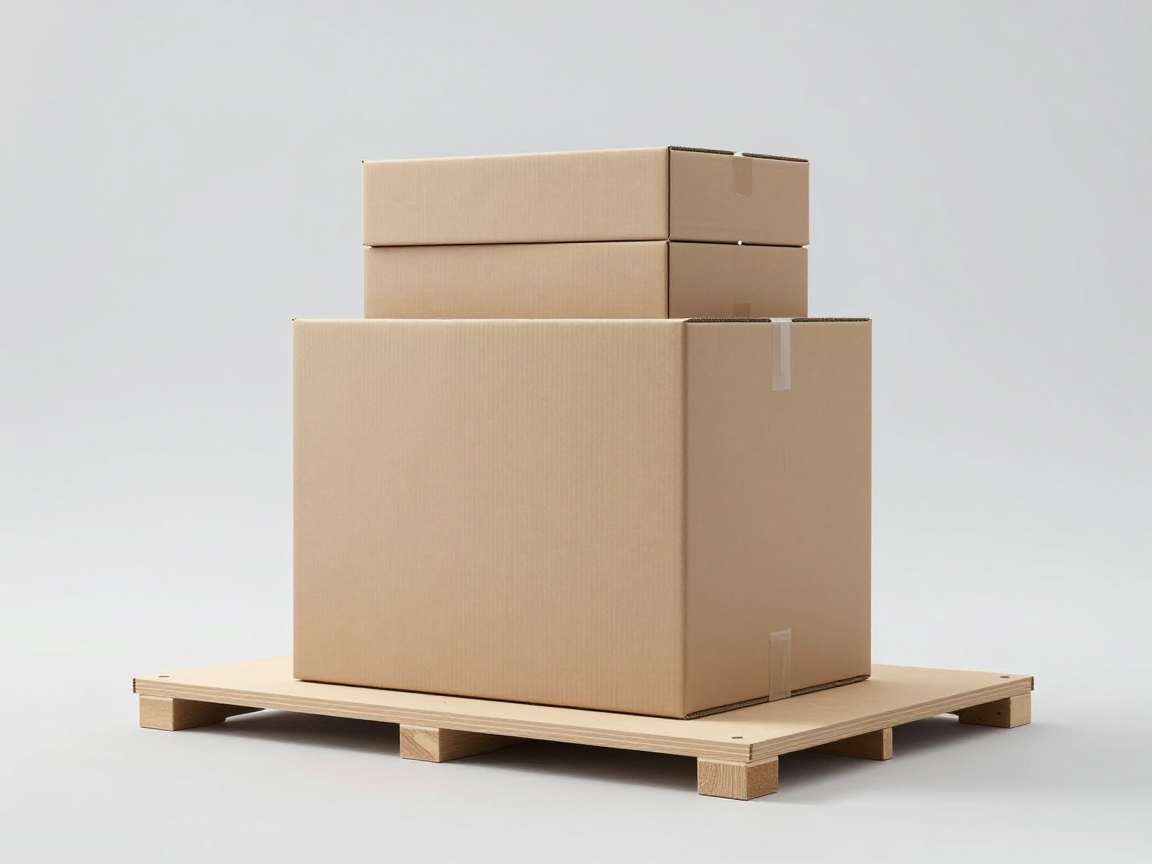
Top Load is the part that is easiest to miscalculate. The document uses the concept of “Total Theoretical Top Load” calculated according to the formula to simulate a 108 in (2.7 m) high cargo column — the inside height of a truck or container:
| Direction | Formula (in inches) | Formula (meter unit) |
|---|---|---|
| Side 1 or side 3 face down | (108 − H) × L × W × 0.0035 | (2.7 − H) × L × W × 96 |
| Side 2 or side 4 face down | (108 − W) × L × H × 0.0035 | (2.7 − W) × L × H × 96 |
| Side 5 or side 6 face down | (108 − L) × W × H × 0.0035 | (2.7 − L) × W × H × 96 |
In it 0.0035 lb/in³ (96 kg/m³) is the dynamic load factor — 50% of the average static load density of the goods. Four rules to remember:
- Group A, B, C and G use 300 lb (136 kg) do the total theoretical load; group D, E, F, H use 600 lb (272 kg).
- If the theoretical load is calculated less than 25 lb (11 kg) then no Use the upper load for that direction.
- For Type D–H: if the height is in the test direction ≥ 72 in (1.8 m), do not use the above load.
- The maximum upper load block for each direction is 600 lb (272 kg). With large bales, the above load is okay divided: do not divide if both top edges are ≤ 18 in (460 mm); divide into two parts if one side is > 18 in; Divide into four parts if both sides are > 18 in.
The theoretical load value should be round up to the nearest 5 lb (2 kg) mark and use the rounded value.
10. Drop, tip over, bridge impact and leak test
Free fall. Fall height varies by mass and by group. With the delivery system, block 2 (first chain) has 9 falls and block 15 (second string) has 8 drops — including one fall on a hazard. Height levels differentiate between the 70 lb (32 kg) mark: below 70 lb use 18 in (460 mm), from 70–150 lb (32–68 kg) use 12 in (300 mm). For Type G group, required documentation Do not catch the bale every time it falls — bounce freely, to accurately simulate the extra kinetic energy that a real cargo box would experience.
Tip / Tip Over. Only required for bales with risk of toppling: high ≥ 48 in (1.2 m) where one base edge is less than ½ of the height; or high ≥ 30 in (760 mm) whose vertical center of gravity position is greater than ½ of the bale height. Tilt angle 22°.
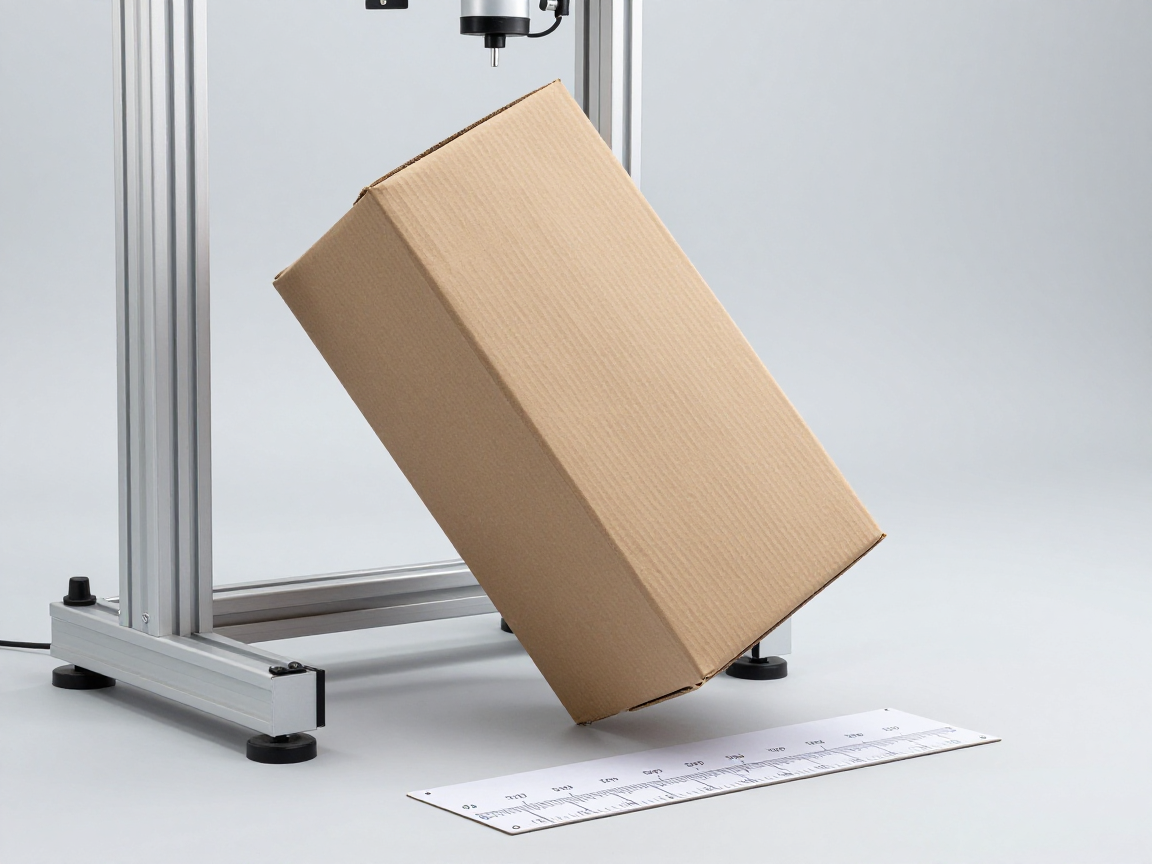
Inclined or horizontal impact (block 8, 20). The bale is placed on the sled and collided with the barrier velocity 48 in/s (1.2 m/s) — or achieve equivalent velocity variation. In practice, this is a simulation of a “rollover” when the vehicle brakes suddenly or when the bale slides and crashes into the wall of the vehicle.
Rotational drops. Three variations: plane drop, edge drop, angle drop — the bale is lifted on one side and then allowed to fall freely around the opposite edge/corner. Common level is 9 in (230 mm) for plane rotation drops and edge rotation drops. Also Full Rotational Flat Drop in block 22 there is height varies according to package size, and is a featured article in the SIOC series.
Bridge Impact, block 23 and Concentrated Edge Impact, block 24 are used hazard box dropped from a height 16 in (400 mm): the hazard box falls in the middle of the bale placed at both ends (simulating breaking the bridge) — required for long bales; or falls on the edge of the bale — required for flat bales. Here are two very realistic simulations of a situation: another bale falls from the upper shelf right in the middle of the bale lying on both ends.
Leak test (block 25) prolong 8 o’clock and only Applies to liquid cargo — check sealed packaging after entire impact sequence.
11. Compression: horizontal clamping and vertical compression
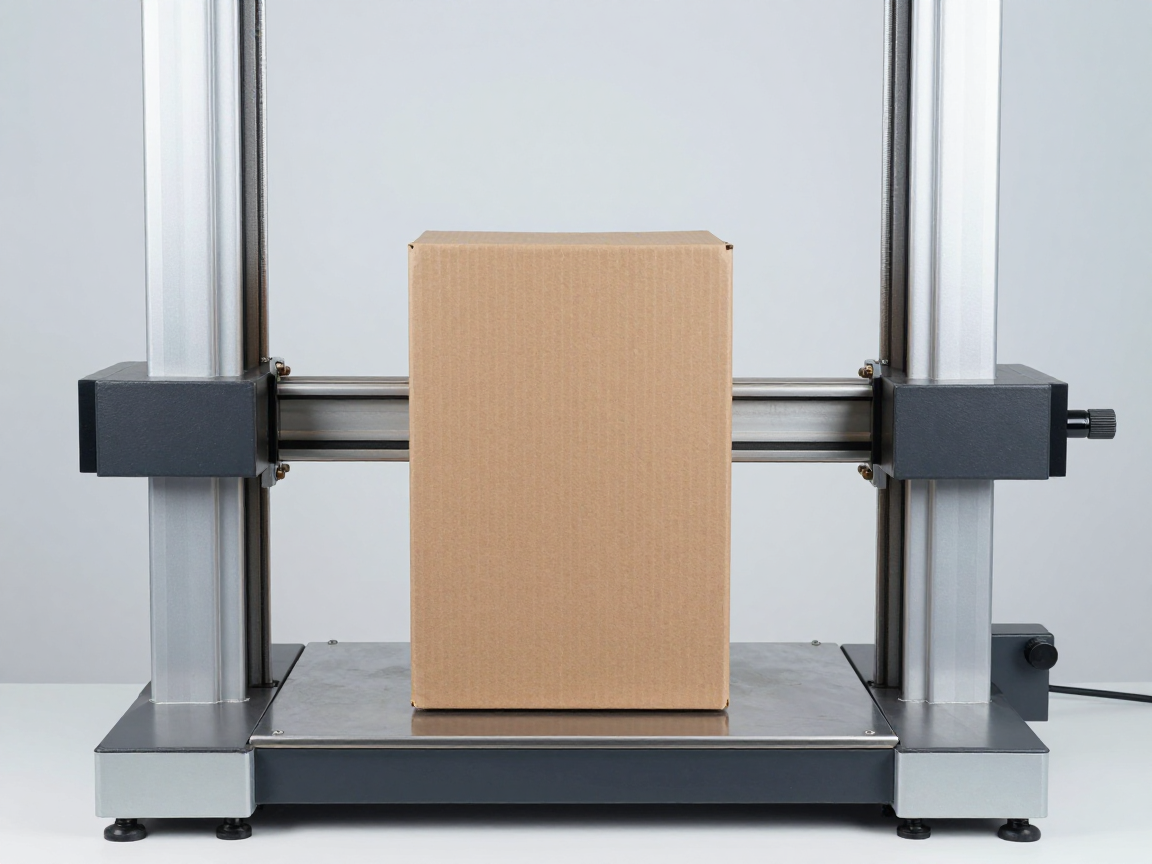
Horizontal compression — clamp simulation (block 9). The purpose is to simulate the clamping force of the clamping plates or of the lifting device when the bale is clamped from both sides. Three details to remember:
- The clamping force is calculated according to the formula in the “Clamp Testing Configuration and Forces” section, but is block both ends: if the calculated value is ≤ 200 lbf (890 N), use 200 lbf; If ≥ 2000 lbf (8900 N), use 2000 lbf (8900 N); In the middle, use the calculated value. For some branches, the floor level is 800 lbf (3559 N).
- Right platen bigger edges of the bale, the opening is wide enough to fit the bale, achieves the desired force with minimal overshoot, and ensures Force measurement accuracy within ±5%.
- Clamping way: platen placed up 3 in (76 mm) and in 3 in (76 mm) calculated from the corner of the bale. The bale is clamped 5 times, every time Raise approximately 12 in (305 mm) off the floor and Hold force for 30 seconds then lower. Clamp pairs of faces 2–4 in turn; if face distance 5–6 is in range 24 in (610 mm) to 75 in (1905 mm) Then clamp another pair of faces 5–6.
- Does not require clamping Type A, Type F, and with TV/Monitor under 50 lb in Type G and H.
Vertical compression (block 10). The bale is placed in the expected transport direction (or the most stable direction), subjected to compression force according to the formula and Hold force for 1 hour. Two ways to do it: use compressor, or use dumbbells + load sharing plate. When using weights, you must add or use the right type of pallet if the bale is originally on a pallet; and mounting recommended documentation Safe blocking to support the spreader plate and weights in case the bale suddenly collapses — a matter of labor safety, not a technical issue.
12. Common errors and frequently asked questions
Ten common mistakes
- Choose the wrong Type. Type is determined by weight, shipping method and girth — not by the perception of “my goods are light”. Note especially the 50/100/150 lb thresholds, 165 in girth, and 108 in edge.
- Think Over Boxing “converts” to SIOC. Two different articles; SIOC is more rigorous because there is no force-absorbing outer box.
- Ignore the “long bale / flat bale” condition. Blocks 21, 22, 23, 24 no Applicable to all bales: side-turning and face-turning are only required for long or flat bales; bridge impact only with long bales; Concentrated edge impact only with flat bales.
- Load calculation in wrong unit system. The inch formula uses 108 and a factor of 0.0035 lb/in³; Metric formulas use 2.7 and 96 kg/m³. Mixing units is wrong from the start.
- Do not round the above load. Values must be rounded up to nearest 5 lb (2 kg) mark before use.
- Using top load without permission. Remove the above load if the theoretical value is < 25 lb (11 kg), or for Type D–H when the test direction height is ≥ 72 in (1.8 m); and not to exceed 600 lb (272 kg).
- Catch the Type G package after it falls. Documents required no catch — must let the bale fall freely.
- Skip the special clamping process for TV/Monitor. Position platen 3 in (76 mm) from corner, and do not clamp to TV/Monitor under 50 lb.
- Wrong free fall chain. The parcel system has chain 1 (9 times) and chain 2 (8 times, sometimes falling on hazard); LTL also has two chains but maxes out at 18 in (460 mm) and 32 in (810 mm).
- Skip leak testing with liquid cargo. Liquid cargo must undergo an 8-hour leak test at the end of the chain, after all impacts.
Is SIOC an official ISTA standard?
No. 6-AMAZON.COM is one ISTA Project — protocol created by ISTA members for their own purposes, here in collaboration with Amazon.com. It is not a Test Procedure of Series 1, 2 or 3. Therefore, when quoting, it should be correctly recorded: “ISTA 6-AMAZON.COM-SIOC, 2018 version”.
How many samples does this article use?
For non-fragile goods (including TV/Monitor): a sample. The documentation requires running the procedure once but five or more runs are recommended with a new sample each time to get representative conclusions.
How are the results evaluated?
Like all ISTA tests, pass/fail must be based on criteria set by the business and partners predetermined — here is the product damage tolerance (Product Damage Tolerance) and the packaging degradation allowance (Package Degradation Allowance). With the Amazon program, the core criteria are The product is not damaged and the packaging is still capable of being delivered to customers. This principle is similar to other articles, see more Four pass/fail criteria when testing packaging.
Should I do SIOC or Over Boxing?
Answer with three questions: does the product need an outer box for protection or aesthetic reasons; Is the original packaging durable enough to withstand a series of impacts; and what the Amazon program that businesses participate in requires. SIOC offers a better unboxing experience and saves materials, but requires higher packaging design.
How long does it take to complete a SIOC sequence?
Depends on Type. The dominant factor was 12 hours of conditioning plus long vibration exercises (LTL group 80 minutes × 3 directions; Type F 240 minutes) and 1 hour of standing compression. For liquid cargo, plus 8 hours of leak testing. See more What does the cost and time of ISTA packaging testing depend on?
13. Conclusion
ISTA 6-AMAZON.COM SIOC is a test for items sold on Amazon that ship in their own packaging — without a protective outer box. Three things to remember: Identify the correct Type A–H before anything else (volume, shipping method parcel/LTL/palletized, girth, and TV/Monitor team decide the whole test chain); This is more rigorous than Over Boxing and cannot replace each other; and The easiest part to get wrong is the upper load in the flutter exercise — formulas in inches or meters, 300/600 lb marks, 25 lb and 600 lb stops, rounding up to 5 lb, and rules for dividing the load above by top size.
Before scheduling a test, it is necessary to confirm: the weight and external dimensions L × W × H of the packaged-product; girth calculated according to the formula L + 2 × (R × C); proposed shipping method (parcel, LTL, palletized); product group (usually TV/Monitor); and product damage criteria are predetermined by both parties.
Reference standard version: article content based on document ISTA 6-AMAZON.COM-SIOC, 2018 version (52 pages) — Ships in Own Container (SIOC) for Amazon.com Distribution System Shipment; Project 6-AMAZON.COM was first launched in October 2014. The test levels are a summary for reference; When implementing, the official standard, the current version of ISTA, must be used.
References
- ISTA 6-AMAZON.COM-SIOC, 2018 version — Ships in Own Container (SIOC) for Amazon.com Distribution System Shipment, International Safe Transit Association (Project, developed in collaboration with Amazon.com)
- ISTA 6-AMAZON.COM Over Boxing, 2018 edition — Over Boxing for Amazon.com Distribution System Shipment
- ISTA — Test Procedures & Projects (current catalog, accessed September 28, 2026)
- ISTA — Guidelines for Selecting and Using ISTA Test Procedures and Projects (instructions for choosing tests, cited in the literature)
Related articles
- Conditioning Before a Packaging Test: 12 Hours or 72 Hours?
- How are SIOC and Over Boxing different? Choose the right packaging test for Amazon products
- What Is the ISTA Standard? How to Choose the Right Transport Packaging Test (3A, 6-Amazon, ASTM D4169)
- What is ISTA 6-AMAZON.COM Over Boxing? Procedure for testing outer box packaging for goods sent to Amazon
- What is ISTA 7D? Temperature testing procedures for shipping packaging
- What is ISTA 3A? Packaging test procedure for parcel delivery system (Parcel Delivery)
- ISTA Packaging Test Pass/Fail Criteria: 4 Things You Must Decide Yourself
Discuss further
Disclaimer and acknowledgment of intellectual property rights
This article is an explanatory content compiled by us for the purpose of introducing and disseminating knowledge. Article is not a translation, copy, abridgement or replacement of the parent standard, and is not reviewed, approved or sponsored by ISTA (International Safe Transit Association) or Amazon.com.
The entire content of ISTA standards is copyrighted by the International Safe Transit Association, Inc. (East Lansing, Michigan, USA) — All rights reserved. ISTA® and the ISTA logo are registered trademarks of the International Safe Transit Association, Inc.; Amazon and related trademarks are the property of their respective owners. The trademarks mentioned in the article are for indicative purposes only and do not imply any affiliation, partnership or sponsorship.
Article content For reference only; Before applying for any purpose — testing, evaluation, certification, program registration with Amazon, or making a commercial decision — readers should refer directly to the original ISTA document, applicable Amazon requirements, and consult an accredited tester as needed.
The classification thresholds, test levels and formulas mentioned in the article may have been adjusted in a newer version. When performing testing, it is mandatory to use the official, current version of the standard, obtained directly from ISTA. We do not redistribute ISTA materials in any form.
See more: Copyright Policy & Disclaimer by ticforall.com.