“How long does RoHS testing take and how much does it cost?” is the opening question of nearly every conversation with the testing room. The honest answer is: there is no single number, because time and cost depend on the number of materials to be extracted, the number of chemical groups to be tested, and how the business prepares the sample before sending.
This article breaks down the time structure and cost structure of a RoHS test kit, so businesses know what items they are paying for and know how to shorten the time without cutting down on document quality.
1. What steps does a RoHS test kit include?
| Stage | Content | Time-determining factor |
|---|---|---|
| Receive and register samples | Check samples, compare test requirements, create sample code | Are testing requirements clear? Does the sample include drawings and a list of materials? |
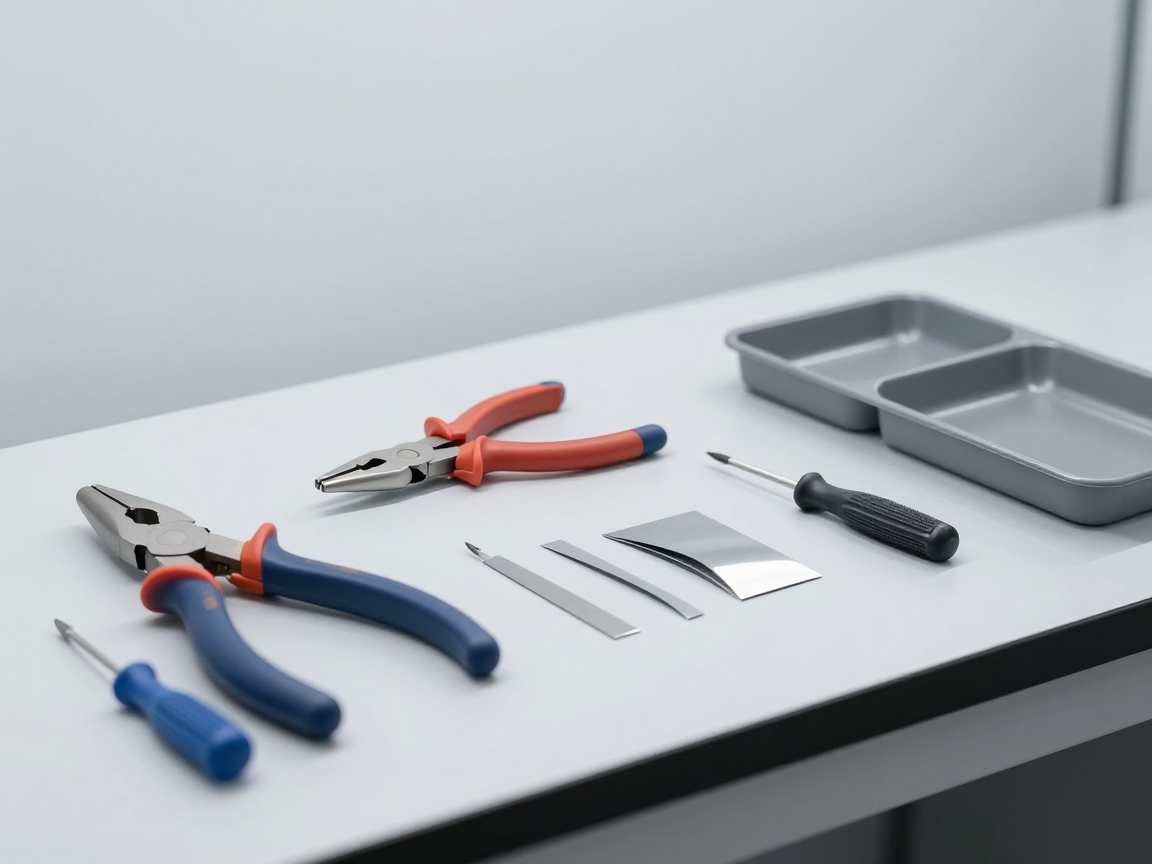
| Sample dissection | Separate products into homogeneous materials using mechanical tools | Number of materials, level of complexity (adhesive, plating, multi-layer cable) |
| Screening by XRF | Quickly check total element content and determine risk points | Number of measurement points, sample surface condition, whether the sample has a coating or not |
| Wet test by substance group | Sample decomposition and determination of heavy metals, hexavalent chromium, PBB/PBDE, phthalate | Number of substance groups required, number of materials to be tested, technical requirements |
| Quality control and report issuance | Review results, compare limits, sign release | Whether the result is near the limit or not; Do I need to test again to confirm? |
| Attached profile | List of materials, disassembly photos, conclusion of conformity | The level of detail required by the customer |
Important points: The time mainly depends on the dissection stage and the amount of materials, not located in the measuring device. A product with ten identical materials will take many times longer than a simple part, even when using the same machine.
2. Why should we not ask for a “standard” number for time?
There are four variables that cause time to vary between cases:
- Homogeneous number of materials. From 5 to 30 materials for the same product is normal.
- Number of groups of substances to be tested. XRF screening for metals is much faster than determining PBB/PBDE or phthalates by mass spectrometry.
- Document readiness level. If businesses attach drawings, material lists and supplier declarations, the testing room will take apart faster and require less re-questioning.
- Whether the result is near the limit or not. Near-limit results often require repeated measurements, re-dilutions, or cross-checking — which takes additional time.
So, instead of asking “how long”, you should ask: “given this list of materials and this list of substances, how many steps are expected, which step could be the slowest?”.
3. Cost structure: what are you paying for?
| Cost category | Nature | How to control |
|---|---|---|
| Sample removal and preparation fee | Calculated according to the number of materials and level of complexity | Provide drawings and bill of materials to reduce processing time |
| XRF screening fee | Calculated according to the number of measuring points | Specify points of suspicion in advance, using supplier data to narrow the scope |
| Wet test fee by substance group | Calculated by substance group and number of materials | Only test the groups necessary for the conclusion; Don’t try to spread it |
| Report issuance fee | Can be calculated by report or by form | Merge multiple materials of the same product into one report |
| Fee for making additional samples and storing samples | Occurs when a control sample is needed or stored in batches | Agree before the sample retention period |
| Sample transfer fee and procedure | Shipping and sample declaration | Send together and pack properly to avoid sample damage |
Note: Each test room has a different calculation method. What businesses should ask for is: Price list separated by category, to know which fraction increases as the number of materials increases, and to make comparisons between testing laboratories.
4. Four ways to shorten time without losing quality
- Attach a list of expected materials. A preliminary materials list helps the testing room finalize the dissection plan as soon as the sample is received.
- Submit the form with supplier data. If the supplier has a report or declaration, the testing laboratory can localize the risk instead of testing the entire thing.
- Finalize the substance list before sending. “RoHS testing” is not a clear enough requirement; It is necessary to clearly state the substance group and applicable limit.
- Unify the stored sample and the control sample right from the beginning. If you have to ask for additional samples midway, the time will be considered pushed back.
5. Hidden costs are often overlooked
- Try again because the sample is not representative. If the sample sent is not the product being produced, the result must be redone from the beginning.
- Try supplementing when customers ask for more. Requesting to expand the substance list after a report has been issued will incur new costs.
- Internal costs for data collection. The time it takes for a technician to find material declarations from suppliers is often greater than the cost of the testing room.
- Opportunity cost. A week’s delay during peak season can cost more than the entire test fee.

6. Frequently asked questions
Is there a faster way to test using XRF for the entire product?
XRF is suitable for screening and localizing risk, but does not replace wet testing when conclusions about hexavalent chromium, PBB/PBDE or phthalates are required. Using XRF to reduce the number of wet test points is the most effective way.
Will trying to follow uniform materials cause costs to increase dramatically?
Yes, because the limit is applied according to the homogeneous material. But this is a technical requirement, not an option: a product-specific test report will not prove compliance.
Should I try the same product code once?
Only recommended when the product codes actually use the same materials, the same supplier and the same structure. If there are different material suppliers, they should be separated because of different risks.
How long is the report due?
There is no fixed legal deadline; The value of the report depends on whether the product structure and source materials remain the same as at the time of testing. This is why many customers request reports that are not too old.
Is the testing cost included in the product price?
In terms of accounting, yes, but a better way is to allocate by product code and by material change cycle. When costs are tied to risk, businesses will know which details are worth testing periodically and which details just need to be declared.
7. Conclusion
The time and cost of a RoHS test kit are not fixed numbers but are the result of three factors: the number of homogeneous materials, the number of substance groups to be determined and the level of readiness of the business’s records.
Three things to do to both save money and maintain document quality: make a list of materials before sending samples; Request a quote separated by category; and agree in advance on the test range, stored samples, and how to handle results when results are near the limit.
References
- Directive 2011/65/EU and its amendments (limits based on homogeneous materials).
- IEC 62321 test method standard series (screening and determination of each group of substances).
- EN IEC 63000 standard on conformity assessment documents for electrical and electronic equipment.
Related articles
- Cross-section of crimp terminal and cable: compression, broken strands and gaps
- 7 situations where factories are forced to do cross-sections
- What is Cross Section? Why do we have to cut samples to evaluate solder joints and circuit boards?
- RoHS test procedure from A to Z: from sample receipt, extraction, screening to reporting
- How many samples are enough for a RoHS test kit? Principles for selecting samples, stored samples and control samples
- What does a RoHS test report need to be valid? 9 items cannot be missing
- XRF RoHS screening: how to read the results, how much to trust, 5 limitations you must know
Discuss further
Disclaimer
This article is an interpretive content compiled by us; not legal advice. Enterprises need to compare relevant documents/standards verbatim before applying them to specific products.
See more: Copyright Policy & Disclaimer by ticforall.com.