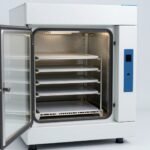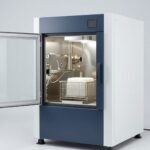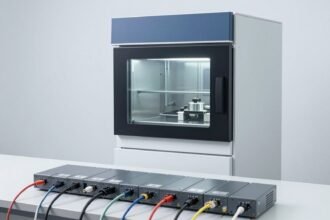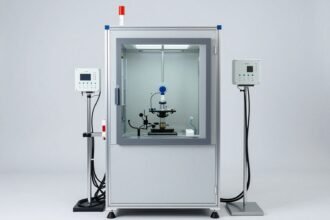
Tests A (cold) and B (dry heat) hold the product in place one temperature. The N test is different: it evaluates what happens to the temperature change — and this is the factor that causes damage to welds, joining materials and structures in reality.
This article explains N testing according to IEC 60068-2-14, the difference between Na and Nb, the parameters that must be recorded, and the failure mechanisms to observe.
1. What question does Test N answer?
The N (Change of temperature) test evaluates the effect of repeated temperature changes between two levels. Specific question:
- Can the product withstand the stresses of expansion and contraction that vary between materials?
- Are welds, joints, or coatings cracked or exposed after many cycles?
- Does the structure jam or lose contact when the temperature changes?
- Do electrical parameters drift with thermal cycling?
The core difference compared to A/B Testing: failures here come from number of cycles and rate of temperature change, not just from the absolute temperature value.
2. What is the difference between Na and Nb?
| Characteristics | Na | Nb |
|---|---|---|
| Rate of temperature change | Fast — used when sudden temperature changes need to be simulated | Slow, controlled speed — simulates gradual heat changes |
| Evaluation goals | Thermal stress and thermal shock on joints and materials | Thermal fatigue accumulates, changing the material state |
| Severity level | Higher with the same temperature amplitude | Lower, but usually lasts more cycles |
| Device requirements | Need rapid heat transfer capability, which may require two chambers or sample transfer systems | The chamber has ramp speed control |
Consequence: Na results cannot be used to conclude Nb requirements and vice versa. With the same temperature range, Na is significantly harsher in speed.
3. Parameters must be recorded in the request and report
| Parameters | Meaning | Why is it important? |
|---|---|---|
| Low temperature (TA) and tall (TB) | Two temperature levels of the cycle | Determine the temperature range — the main factor causing stress |
| Time maintained at each level | Sample holding time at TA and TB | Make sure the sample reaches thermal equilibrium before switching levels |
| Rate of temperature change | Speed of transition from one level to the other | Determine the level of thermal shock and instantaneous stress |
| Number of cycles | Number of repetitions | Determines the ability to detect thermal fatigue |
| Sample transfer time | With Na, the time it takes the sample to move between the two chambers | Direct impact on results |
| Sample status | Unpowered / powered / with load | Guaranteed to reproduce results |
4. Failure mechanism needs to be observed
| Details | Mechanism | Signs |
|---|---|---|
| SMD solder joints | The difference in expansion coefficient between components and circuit boards causes fatigue | Cracked solder joints, increased contact resistance, loss of intermittent function |
| Through-hole component pins | Cyclic tensile-compressive stress | Cracks around pins, cracked weld rings |
| Coating, paint, glue | Different expansion causes flaking | Flaking edges, surface cracks, loss of protection |
| Connectors, jacks | Loss of clearance when temperature changes | Flickering contact, increased insertion force |
| Glass, screen, clear plastic | Local thermal stress | Cracked, cracked, blurred |
| Gasket, sealed | Loss of elasticity after many cycles | Leaks, loss of seal, open joints |
5. Implementation sequence
- Initial stabilization and milestone testing: Appearance, functions, electrical parameters.
- Sample mount: As specified, record the temperature sensor location on the sample.
- Go to the first temperature level, Maintain enough time for the sample to reach thermal equilibrium.
- Switch to the second temperature level according to the prescribed speed and time, maintaining enough stabilization time.
- Repeat for the specified number of cycles.
- Function test: as required, possibly after a number of cycles and after termination.
- Recovery, visual inspection and conclusion according to agreed criteria.
It is often recommended to examine appearance and function at intermediate points (e.g. after a fraction of cycles) to determine trends in deterioration rather than just final results.
6. Factors that determine test results
- Thermal mass of sample: determines the rate at which the actual temperature of the sample changes, as opposed to the rate at which the air temperature in the chamber changes.
- Sensor location: Place it in a representative location for heat, not in a favorable location.
- Self-heating when power is applied: causing the actual temperature of the sample to deviate from the chamber temperature.
- How to mount: The holder can create a thermal path that patterns abnormally fast/slow thermal changes.
- Sample transfer time (with Na): If it is longer than specified, the test is no longer valid.
7. Common errors
- Write “temperature change test” without writing Na/Nb and does not state the number of cycles — records cannot be compared.
- Conclusion according to chamber temperature without measuring sample temperature.
- Do not wait for the sample to reach thermal equilibrium at each level before moving to the other level.
- Mistaking the chamber ramp rate for the sample’s temperature change rate.
- Not checking intermediate landmarks, leading to not knowing at what cycle the product fails.
- Use Test N to replace Test A/B when the objective is to evaluate the ability to withstand prolonged stable temperatures.
8. Frequently asked questions
Is the N test “thermal shock”?
Not entirely consistent in terminology. Na with a fast heat transfer rate is often used for thermal shock purposes. See the article on how thermal shock and temperature change are different to clearly differentiate.
How many cycles is enough?
As required or industry standard, based on assessment objective (screening, fatigue assessment, or life cycle simulation). There is no general number.
Should I choose Na or Nb when there are no specific requirements?
Choose according to the goal: if you want to evaluate the ability to withstand sudden temperature changes, then Na; If you want to simulate a life cycle with slowly changing temperature, then Nb. Should agree with the customer in writing.
Does the N test require two chambers?
Not required. This can be done by transferring the sample between two chambers or by using a chamber capable of rapid temperature changes. It is important to achieve the required rate of heat change.
Does a powered model require continuous functional monitoring?
Depends on the goal. With safety devices or devices with intermittent faults, continuous monitoring is recommended as the fault may only appear during the heat transfer phase.
After test N, do I have to try any other tests?
Usually yes. In many series, Test N is preceded by vibration/shock so that potential joint failures are exposed when subjected to mechanical loading.
9. Conclusion
The N test is a test of cyclic stress, not of extreme temperature. The value of the result depends on the correct recording of variation (Na/Nb), temperature amplitude, rate of change, retention time and number of cycles.
Three things to do: measure the temperature at a representative point on the sample to prove thermal balance is reached; records temperature data over time for the entire cycle; and check the intermediate mark for a decreasing trend.
References
- IEC 60068-2-14 — Test N: Change of temperature, including Na and Nb.
- IEC 60068-1 — General provisions and guidance.
- IEC 60068-3-7 — Measurement in loaded temperature chamber.
- IEC 60068-3-5 — Confirmation of temperature chamber capacity.
- TCVN 7699-2-14 — Corresponding national version.
Related articles
- How are thermal shock and temperature change different? How to choose the right test
- Test A (Cold): cold test according to IEC 60068-2-1, how are Ab and Ae different?
- Load cold/hot test: how to place the sensor and measure sample temperature according to IEC 60068-3-7
- How Test Sequence Affects Environmental Test Results
Discuss further
Disclaimer
This article is an interpretive content compiled by us; not legal advice. Enterprises need to compare relevant documents/standards verbatim before applying them to specific products.
See more: Copyright Policy & Disclaimer by ticforall.com.