Quick summary
- An IP code printed on a label is a technical claim, not marketing copy. Wrong syntax is already a defect; claiming more than the report shows is a legal risk.
- The three worst mistakes: stating IP68 without the depth and duration; extending an enclosure result to the whole assembly; and using one test sample’s label for an entire production run.
- A wrong label triggers liability on several layers: towards consumers, contractually towards industrial customers, and administratively under labelling rules.
- The test lab is responsible for the sample it received and the report it issued. Every claim beyond that belongs to the party making it.
This article is not about how to test — earlier articles covered that. It is about the last step: once the report exists, how the IP code goes onto labels, packaging, catalogues and websites, and who carries what when it is stated wrongly.
1. Syntax: right and wrong
The IP syntax has a fixed shape: IP + first digit (solids) + second digit (water). When a property was not tested or does not apply, the letter X replaces that digit. This is the most commonly skipped point.
| How it is written | Right/Wrong | Why |
|---|---|---|
| IP67 | Right | Two digits, backed by a matching report |
| IPX7 | Right (if water only was tested) | X states clearly that no solids protection is claimed |
| IP6X | Right (if dust only was tested) | X states clearly that no water protection is claimed |
| IP68 | Wrong without conditions | Level 8 has no fixed conditions — depth and duration must be stated |
| IP68 (1.5 m / 30 min) | Right | States the conditions actually agreed and tested |
| IP66/67/68 | Wrong | Three different levels; claiming them together claims none |
| IP69 | Wrong | There is no level 69 in IEC 60529; IP69K belongs to ISO 20653 |
| “Waterproof to IP68” | Wrong | Both missing conditions and adding “waterproof”, a word the standard does not use |
| IP54 (enclosure) / IP67 (assembly) | Right only if both are reported | Usually only the housing passed; internal parts did not |
2. The six places an IP claim appears
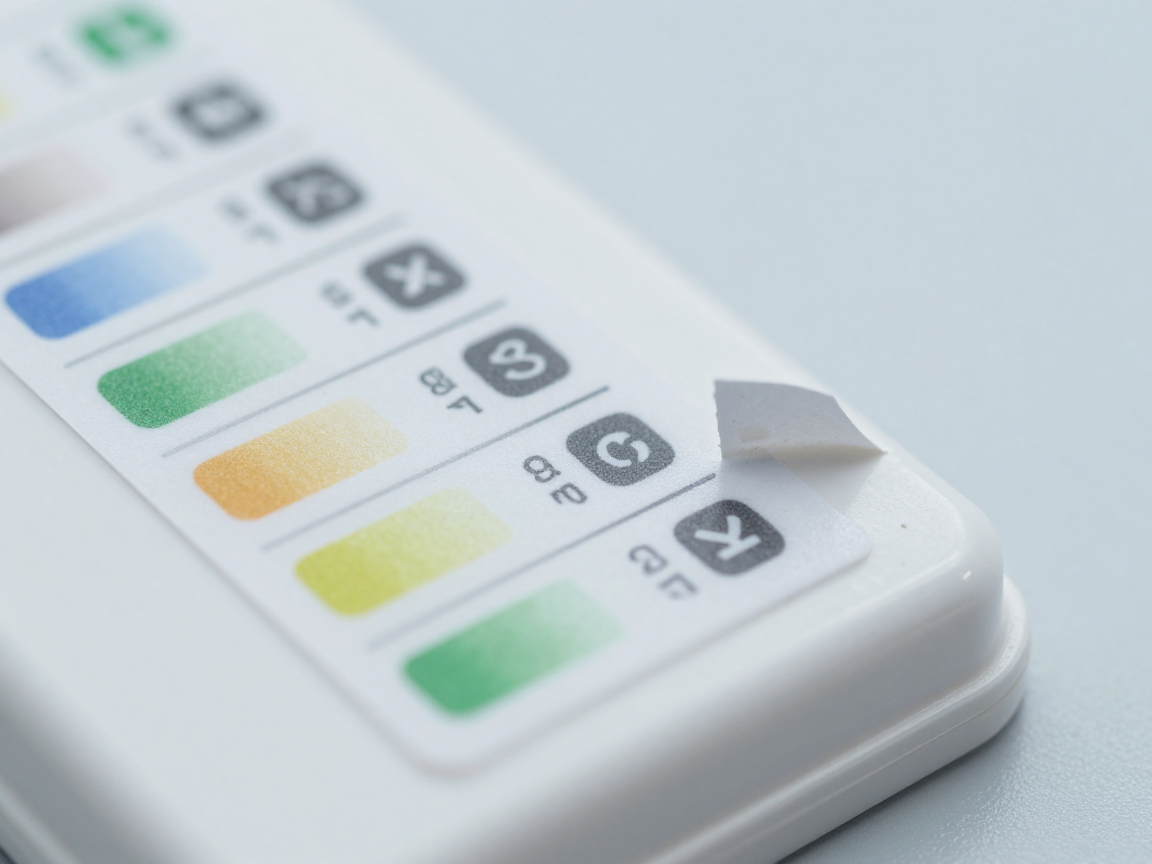
An IP claim rarely lives on the product label alone. It appears in six places, and all six must agree:
| Location | Risk if it differs |
|---|---|
| Product label | Direct evidence in any complaint |
| Packaging / box | Treated as a separate claim; may diverge from the device label |
| Datasheet, technical file | Industrial customers compare it against the contract |
| Website, catalogue | Falls under advertising — a mismatch becomes false advertising |
| User manual | Must state conditions and limits, not just the number |
| Declaration / conformity file | A mismatch there is a separate and more serious issue |
In practice, divergence happens less on the device label than on websites and catalogues — where marketing rewrote it “to keep it short” and the “IP68” got separated from its conditions.
3. Ten common mistakes
| # | Mistake | Typical consequence |
|---|---|---|
| 1 | IP68 with no conditions | Customer assumes any depth; failure at 3 m becomes a dispute |
| 2 | Claiming one level above the test result “to look better” | Intentional misstatement — heavier liability than a careless error |
| 3 | Extending an enclosure result to the whole product | Housing passes, connector or battery does not — field failures |
| 4 | Using one sample’s result for a whole model or batch | The report covers only the sample received and the configuration tested |
| 5 | Keeping IP67 after changing gasket material without retesting | A design change invalidates the old report |
| 6 | Using “waterproof”, “fully sealed” | Not standard language; reads as exaggeration |
| 7 | Mixing up “IP69” and “IP69K” | Wrong standard, wrong scope of application |
| 8 | Device label and packaging disagree | One product, two claims — credibility lost at the shelf |
| 9 | Omitting limits (no diving, no hot water …) | Users exceed the limits, units fail, complaints follow |
| 10 | Hiding or blurring the IP code “for flexibility” | You cannot erase the disclosure duty; you only remove verifiability |
4. Who is responsible for what
| Party | Responsible for | Not responsible for |
|---|---|---|
| Manufacturer | Accuracy of the claim; consistency between shipped product and tested sample | — |
| Importer / distributor | Local-language labelling per regulation; not distorting the original information | Cannot replace the manufacturer’s responsibility for the original claim |
| Seller | Not passing on false information; not promising beyond the label | Not responsible for design |
| Test lab | Correct sample, correct conditions, honest report with a clear scope | Not responsible for how the customer uses the result in advertising |
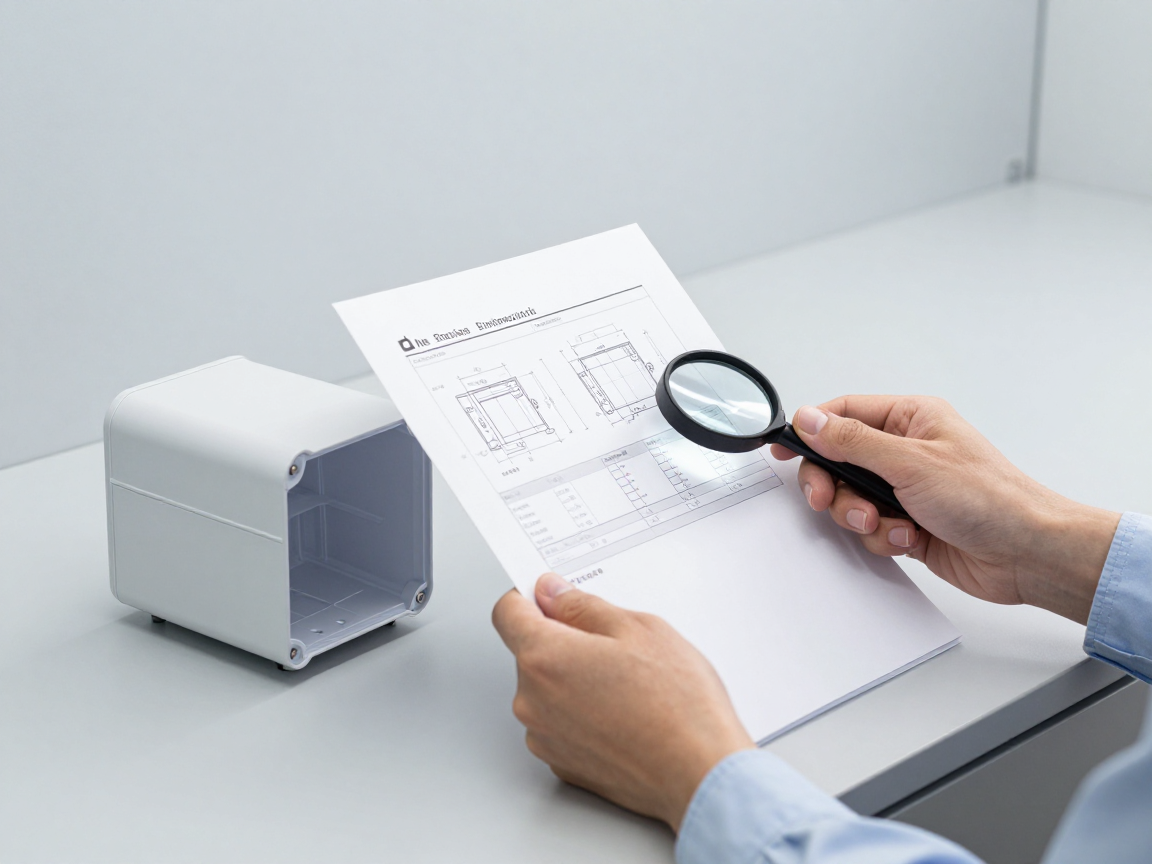
The last row matters to both sides: the clearer the lab states the scope (which sample, which configuration, which conditions, which date), the harder it is for a customer to over-claim — and the less the lab gets pulled into disputes.
5. Legal framework to be aware of (Vietnam)
In Vietnam no single text covers IP claims. They are affected by several layers of rules, and once published, an IP code is treated as a technical specification of the goods:
- On goods labelling: goods in circulation must carry labels with mandatory content, including technical specifications and safety warnings where applicable. Label content must match the actual goods.
- On consumer protection: providing misleading information about goods is prohibited.
- On advertising: advertising false product features is handled under separate rules.
- On product quality: declarations of conformity and labelling must reflect the declared parameters.
- On civil liability: where a buyer suffers loss by relying on a false claim, compensation liability may arise under the agreement and under law.
Text titles and penalty levels change with amendments, so this article gives no specific figures. The task is to check the text in force at the time of publication — and preferably to involve legal counsel.
Note: this section is a general sketch to help you see the risk, not legal advice. See the disclaimer at the end.
6. Four steps when an IP claim is challenged
| Step | What to do | Evidence needed |
|---|---|---|
| 1. Identify the product | Is the challenged unit the configuration that was tested? | Sample photos, batch code, drawing, sample receipt record |
| 2. Identify the claim | What does the label say, and how would a reasonable reader take it? | Label photos, packaging, dated website screenshots |
| 3. Compare conditions | Did the test conditions cover how the user actually used it? | Report: depth, duration, temperature, cycle count |
| 4. Conclude | Product defect, use beyond limits, or a labelling error | Analysis report, written conclusion |
Step 3 resolves most cases: the user soaked it in hot water or salt water, or for longer than the published conditions — then the fault is not the product. But if the label says a bare “IP68”, the “user misunderstood” defence turns into the manufacturer’s own labelling error.

7. An eight-point checklist before printing
- Is there a valid report for the exact configuration being shipped?
- Does the IP code follow the correct syntax, with X where a property was not tested?
- If it is level 8: are depth and duration stated?
- Does the report cover the enclosure or the whole assembly — and does the label say which?
- Do device label, packaging, datasheet and website agree?
- Are the limits stated (no hot water, no solvents, no diving …)?
- Does the technical documentation say “results apply to the tested sample only”?
- After any design or material-supplier change, has the claim been re-evaluated?
Frequently asked questions
Is writing “IP68” on a label wrong?
“IP68” alone is incomplete, because level 8 has no fixed conditions. The safe wording adds the agreed depth and duration — or states level 7 if only the level 7 conditions were tested.
Can one sample’s report cover an entire model?
Only where the whole model is identical to the tested sample in configuration, materials and process. Any change to gaskets, speaker mesh, connectors or material suppliers needs re-evaluation.
Is the lab liable if a customer advertises wrongly?
Not if the report is accurate and states its scope. That is exactly why the report should record the sample, the configuration, the conditions and the limits of applicability.
Must the local-language label repeat the IP code?
If the IP code is a declared technical specification, the label must reflect it accurately. Specific cases should be checked against the labelling rules in force and with legal counsel.
What if a customer asks for a higher level than the test result?
Decline in writing and offer additional testing at the level the customer needs. Over-claiming is a legal risk a lab should not take part in, even in an advisory role.
Conclusion
The IP code on a label is where money is most easily lost in the whole chain: testing cost is bounded, while the cost of a false claim — recall, compensation, penalties and lost credibility — is not.
Three things to do now: review every label and every web page currently in use, match each IP claim to its report, and standardise the wording (syntax, level 8 conditions, stated limits) into one template used across all documents. If a claim has no report behind it, fix that before a customer finds it.
References
- IEC 60529 — degrees of protection (IP code) and the convention for writing it.
- ISO 20653 — degrees of protection for electrical equipment on road vehicles (IP69K).
- Vietnamese legislation on goods labelling, consumer protection, advertising and product quality (texts in force).
Related articles
- What is IEC 60529? The IP code explained
- IP versus NEMA 250 and MIL-STD-810
- Is IP68 really waterproof? Seven misunderstandings
- Preparing IP test samples
Talk to us
Disclaimer
This article is our own interpretation; it is not legal advice. The legislation mentioned may have been amended; companies should check the text in force and consult their legal team before applying it to a specific product.
See also: Copyright Policy & Disclaimer of ticforall.com.