Quick summary
- “IP68” does not mean fully waterproof. The digit 8 only says the sample was immersed continuously under conditions agreed between the parties.
- IP68 is not automatically higher than IP67: level 7 has fixed conditions (1 m / 30 min), while level 8 has no fixed parameters in the standard.
- The code says nothing about seawater, chemicals, dynamic pressure, seal ageing, or whether the device operates while submerged.
- An IP68 marking is only worth something when a test report states depth, duration, water temperature and sample state.
In consumer electronics, “IP68” has become a marketing line. Speakers, watches, phones and cameras all carry it. But behind the same letters, each manufacturer tests under different conditions — and most buyers, including industrial buyers, do not know what to ask in order to compare.
The consequence is not just a marketing misunderstanding. It becomes a real problem when a company writes IP68 into a contract, a tender dossier or product literature without a matching test report. When goods come back because water got in, the customer’s first question is: “under which conditions did you test?”
This article lists the seven most common misunderstandings, with the check that prevents each one.
1. What IP68 actually means
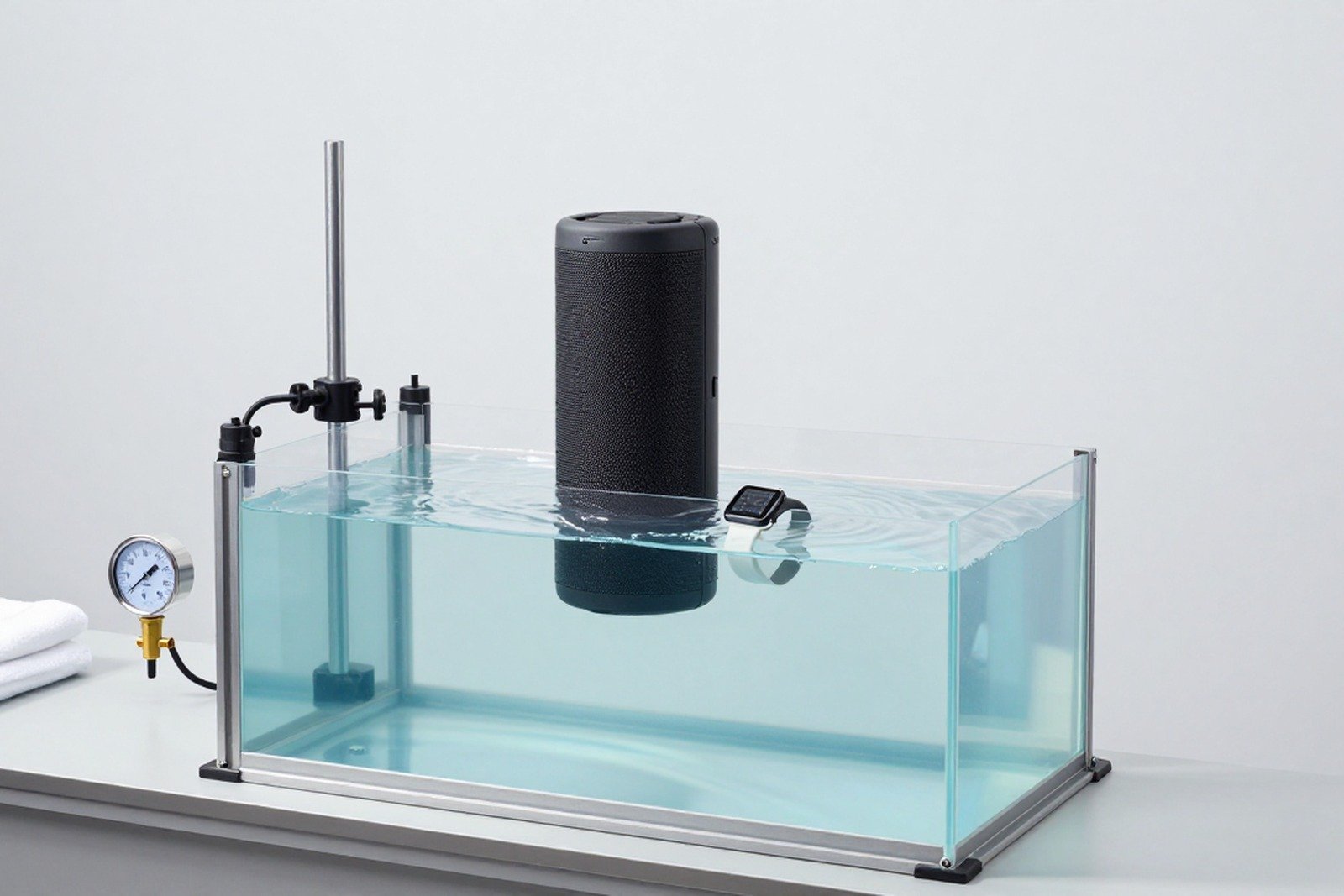
The code has two digits. The first is 6: dust tight, tested in a talc dust chamber with a slight vacuum. The second is 8: protection against the effects of continuous immersion in water under conditions agreed between the manufacturer and the user.
“Conditions agreed” is the core. IEC 60529 sets no depth and no duration for level 8, unlike level 7 (1 m for 30 minutes). The digit 8 is therefore not a defined severity; it is a gap the standard leaves open for the two parties to fill.
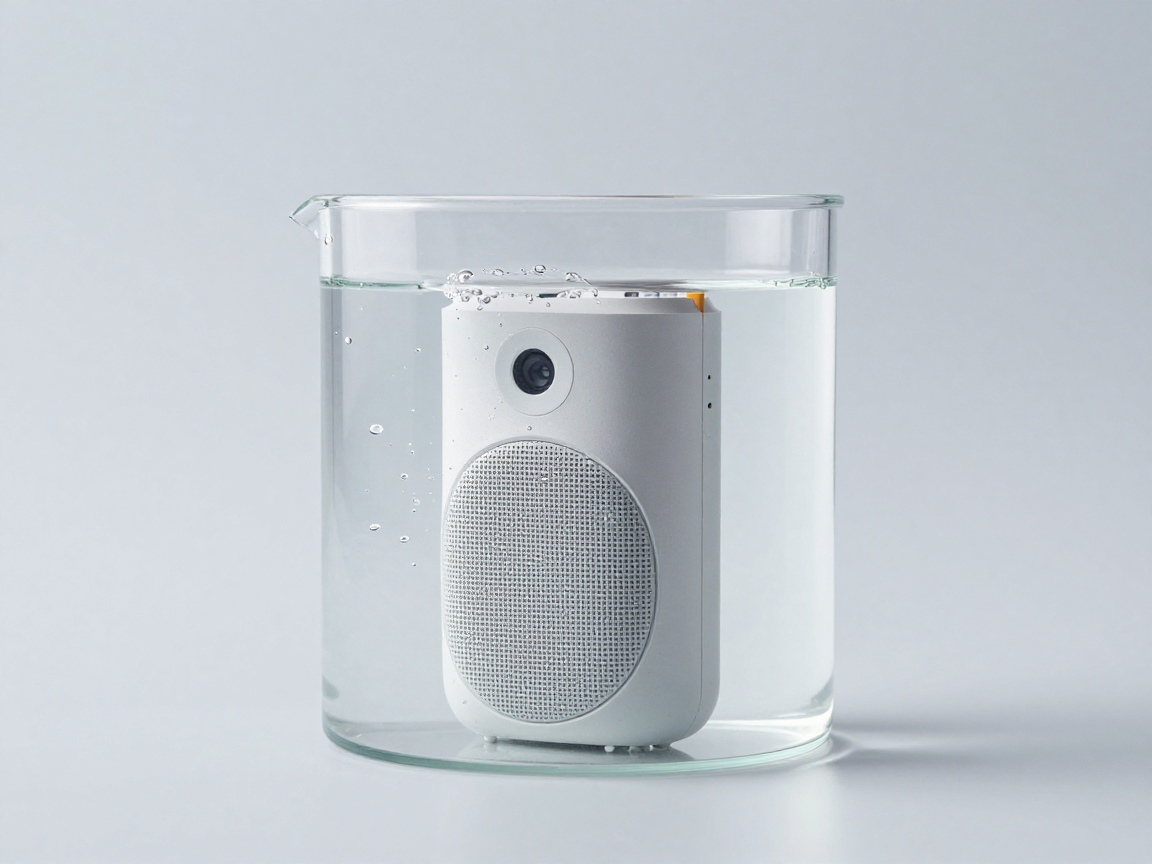
So the right question for a supplier is not “does it pass IP68”, but: “IP68 at what depth, for how long, at what water temperature, and does the sample operate while immersed?”
2. Misunderstanding 1: “68 is higher than 67, so it is always better”
This is the most common misunderstanding, and the one that costs the most in negotiation.
| Criterion | IPX7 | IPX8 |
|---|---|---|
| Test conditions | Fixed by the standard: lowest point of the sample 1,000 mm below the surface, 30 minutes | Agreed by the parties; must be written into the contract and the report |
| Comparable between suppliers? | Yes, same conditions | No, unless the agreed conditions are identical |
| Buying risk | Low | High if the contract omits the conditions |
An IPX8 product tested at 1.2 m for 30 minutes may be less demanding than IPX7 (1 m measured from the lowest point, with pressure depending on the water column). Conversely, IPX8 at 5 m for 60 minutes is far harder. Same marking, different severity.
3. Misunderstanding 2: “IP68 works with any kind of water”
Test water is clean and at room temperature. Real environments are usually seawater, chlorinated water, wastewater or cleaning solutions.
- Seawater: salt corrodes seals and metal contacts. The relevant test is salt fog, not IP.
- Chlorine and detergents: they age rubber quickly, especially low-cost silicone seals.
- Hot water: it softens seals and raises internal pressure; when the device cools, moisture can be drawn in. This is a frequent cause of “water got inside after it cooled down”.
For pools, coastal use or wash lines, IP68 alone is not enough. Add corrosion assessment and thermal-humidity cycling.
4. Misunderstanding 3: “Passing IP68 is permanent”
An IP report describes a new sample in a short test. It does not describe the product after six months of use.
| Factor | Effect | Control |
|---|---|---|
| Seal ageing | Rubber loses elasticity and cracks | Select material for real temperature and chemicals; test aged samples |
| Thermal cycling | Different expansion of housing and seal opens a gap | Run thermal shock or humidity cycling before the IP test |
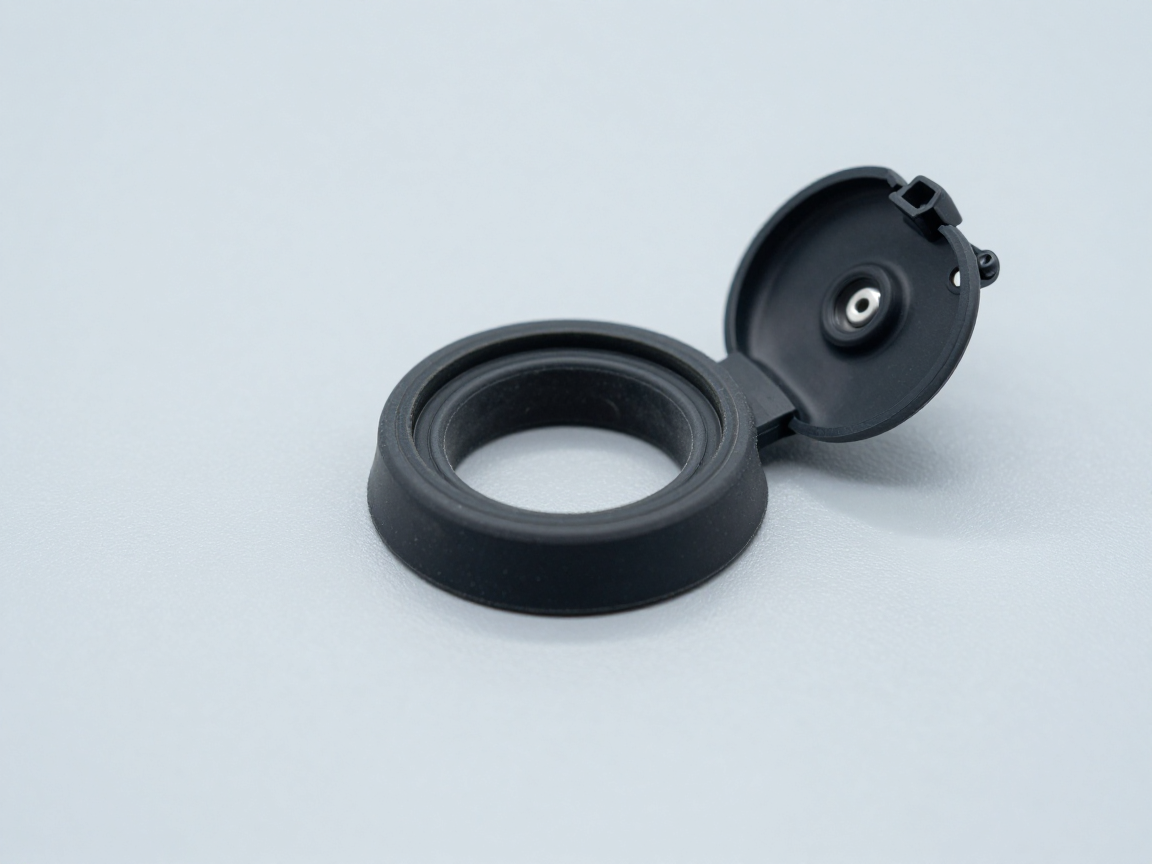
| User handling | Flap not fully closed, dust trapped under the seal | Mechanical close indicator; clear instructions |
For long-life products, require IP testing on samples after ageing cycles or after drop testing — not only on pristine units.
5. Misunderstanding 4: “IP68 replaces a leak test”
IP testing and leak testing are different methods answering different questions.
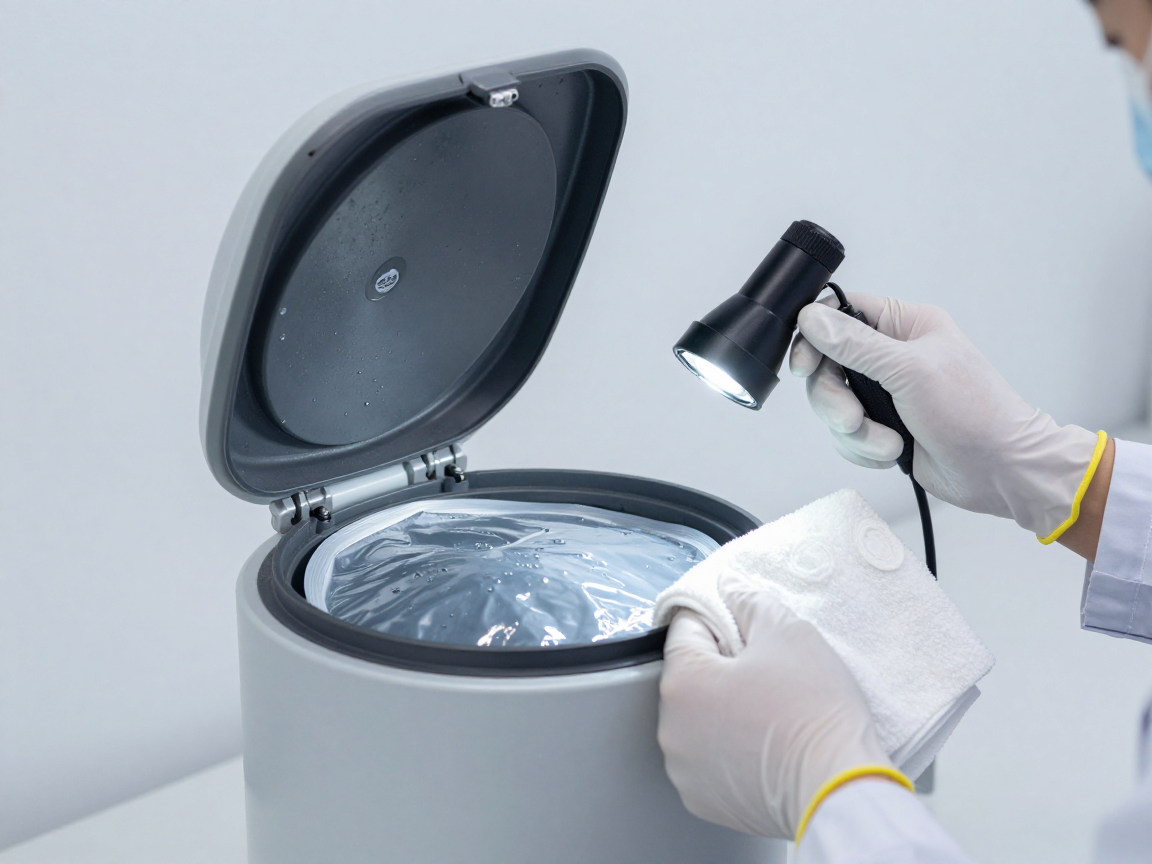
- IP testing: water or dust is applied around the sample, then the interior is inspected. The result is pass or fail for a level.
- Leak testing: measures gas or pressure loss to detect openings, commonly used in production. The result is a leak rate or pressure drop.
A device can be perfectly gas-tight yet fail IPX8 if the agreed conditions exceed its capability; conversely, an IPX8 device can still leak slightly at a level the IP test does not resolve. In production, leak testing is the quality control tool; IP is the declaration and proof tool.
6. Misunderstanding 5: “If it can be submerged, it can run submerged”
IEC 60529 allows testing with the sample not operating, and that is the usual default unless the contract says otherwise. For a device powered while immersed, thermal and pressure effects appear: the housing warms, internal pressure rises, and as it cools moisture can be drawn in.
If the product must operate under water, the contract must state: power applied throughout the test, functional checks during and after immersion, and functional acceptance criteria — not only “no water found inside”.
7. Misunderstanding 6: “Just print IP68 on the label”
This has the highest legal risk and is the easiest to check.
- Marking a code never tested — a false declaration in substance.
- Marking IP68 while the report covers IPX7, or covers water but not dust.
- Marking IP68 based on a prototype whose seal design differs from the shipped product.
- Marking IP68 without conditions, so buyers read it as “any depth”.
The simple safeguard: every IP code on a label must trace back to a valid test report, for the right model, under the stated conditions. If it cannot be traced, remove the code rather than keep it for appearance.
8. Misunderstanding 7: “A tight housing is the whole story”
In practice, water usually enters through accessories rather than the main body:
| Part | Risk |
|---|---|
| Charging and audio ports | Flap loses elasticity; trapped dust opens the edge |
| Speaker membrane, microphone holes | Paper membranes or metal mesh slow water but do not stop it |
| Push buttons | The path through the housing has no separate seal |
| Screws and screw holes | Threads are not sealed; water follows the thread |
| Joint between housing halves | Uneven torque, twisted gasket during assembly |
When reading a report, check that the sample matches the shipped configuration: flaps, buttons and membrane of the correct type.
9. Seven questions to ask a supplier
- IP68 at what depth, for how long, at what water temperature?
- What is the complete code (additional letters, M or S suffix)?
- Which edition of IEC 60529 was used?
- Was the sample operating during the test?
- Did the sample match the shipped configuration (flaps, seals, membrane)?
- Was dust (digit 6) tested, or only water?
- Which laboratory issued the report, and is it still valid?
If a supplier answers these seven in writing, the IP68 marking has real value. If not, it is decoration.
10. Choosing 67 or 68, and when more testing is needed
| Use case | Sensible choice |
|---|---|
| Dropped in puddles, heavy rain, outdoor use | IP65 or IP67 is enough |
| Wearable used while swimming, shallow | IP68 with stated conditions, 1–2 m / 30 min |
| Diving equipment, regular underwater use | IP68 at greater depth + thermal cycling + corrosion |
| Washed with a pressure hose in a plant | IP66 or IP69/69K, not IP68 |
| Coastal, exposed to salt water | IP67/68 + salt fog testing |
| Devices with hot-cold cycles | IP + thermal shock or humidity cycling |
Remember: IP68 is not the top of a ladder. For many applications IP66 is the correct level, and IP69 suits pressure washing better.
11. A model clause for contracts
Instead of one line saying “the product meets IP68”, write: complete code + standard number with year + test conditions + sample state + acceptance criteria.
Example: “The enclosure shall meet IP68 to IEC 60529; level 8 by immersion at 1.5 m for 60 minutes at room water temperature with the sample unpowered; level 6 by talc dust for 8 hours with vacuum. No water shall enter the electronics compartment, verified by disassembly and visual inspection.”
This wording protects the buyer and equally protects the manufacturer in a dispute.
Frequently asked questions
Can a phone rated IP68 take photos underwater?
IP68 describes the enclosure’s resistance to immersion under agreed conditions. It does not guarantee function underwater, does not cover pressure while swimming, and does not warrant against water damage. Read the stated conditions and the warranty terms.
Can an IP68 product fail in hot water?
It can. Hot water softens seals and creates a pressure difference as it cools. If the application involves hot water, test at that temperature rather than relying on room-temperature results.
Does IP68 testing need dedicated samples?
It should. After immersion the sample is opened for internal inspection, so it is no longer in original condition for another level. For a combination such as IP6X + IPX8, prepare at least two samples.
Does IP68 replace a customer requirement for MIL-STD-810?
No. They are different systems: IP measures ingress under defined conditions, while MIL-STD-810 applies tailored environmental methods. If the customer cites 810, test to 810 — see What is MIL-STD-810.
What if the label says IP68 but the only report is IPX7?
That is an unsupported declaration. The correct action is either to change the label to IPX7, or to test level 8 with stated conditions — plus level 6 if the first digit is to remain 6.
Conclusion
IP68 is a level with open conditions, not a promise of total waterproofing. Its value depends entirely on whether the conditions were stated and whether a report supports them.
For buyers, the seven questions in section 9 are the fastest check. For sellers, stating the right level and the right conditions avoids disputes later and makes tender documents stronger because they rest on evidence.
The immediate task: review every label and document that claims IP68, and match it to a report. Anything that cannot be traced should be corrected before a complaint arrives.
References
- IEC 60529, Degrees of protection provided by enclosures — levels 7 and 8.
- IEC 60529, amendment 2 (2013) — level 9 for high-pressure water jets.
- ISO 20653 — IP code for road vehicles, K marking.
- MIL-STD-810H, methods 512.5 (immersion) and 509.5 (salt fog).
Related articles
- What is IEC 60529? Overview of the IP code and what each digit means
- What is MIL-STD-810? Structure, 29 test methods and how to choose
- How IEC 60068 differs from MIL-STD-810, ISO 16750, ISTA and IEC 60529
Talk to us
Disclaimer
This article is our own interpretation; it is not legal advice. Readers should check the official text of the standard before applying it to a specific product.
See also: Copyright Policy & Disclaimer of ticforall.com.