Quick summary
- IPX7 is the temporary immersion test: the lowest point of the enclosure sits 1,000 mm below the water surface for 30 minutes.
- It is the only immersion level with fixed parameters — which is why results between laboratories are comparable.
- Three common errors: measuring depth from the top of the sample, water at a different temperature from the sample, and not opening the sample for internal inspection.
- IPX7 says nothing about dynamic pressure, hot water, seawater, or whether the device operates while submerged.
In the IP code, level 7 is the first level that puts the sample fully into water. For many products — earbuds, speakers, cameras, outdoor luminaires — it is also the level most often requested, because it maps to a real event: dropped into a puddle, submerged during heavy rain.
Worth noting: IPX7 is one of the few levels with fixed parameters in the standard. No agreement, no “conditions to be agreed”. That makes it the easiest level to audit — and the easiest to get wrong in practice.
This article goes into the detail of the IPX7 test: conditions, equipment, sample preparation, the errors that invalidate results, and how to read the report.
1. What IPX7 actually specifies
Under IEC 60529, level 7 is protection against the harmful effects of temporary immersion in water. The test conditions are defined by the standard:
| Parameter | Value |
|---|---|
| Sample position | Lowest point of the enclosure 1,000 mm below the water surface |
| Duration | 30 minutes |
| Water temperature | Within 5 K of the sample temperature |
| Sample state | As agreed; unpowered by default |
| Acceptance | No water ingress in a harmful quantity |
Note the wording: “1,000 mm” is measured from the lowest point of the enclosure to the surface — not from the top, not from the centre. For a device 300 mm tall, placing its base 1,000 mm below the surface puts the top at 700 mm; if someone instead measures 1,000 mm from the top, the base sits at 1,300 mm — about 30 % more pressure, and the result is no longer IPX7 as specified.

On temperature: the standard requires the water not to differ from the sample by more than 5 K. If the sample is colder than the water, air inside contracts and can draw water in; if it is warmer, expanding air pushes water out and hides a leak. Either way the result is wrong.
2. Why level 7 is the comparable one
Within the immersion group, level 8 leaves conditions to agreement. Level 7 does not. The practical effect is large:
| Criterion | IPX7 | IPX8 |
|---|---|---|
| Fixed parameters? | Yes: 1,000 mm / 30 min | No, by agreement |
| Comparing two suppliers | Possible, same conditions | Only if conditions are identical |
| Label claim | Meaningful with the standard number | Incomplete without the conditions |
For consumer products, an IPX7 requirement is often more substantive than IPX8: it forces the manufacturer to prove compliance with a test anyone can repeat.
3. Preparing the sample
This part decides the outcome, and it is the part a laboratory cannot do for you:
- Correct shipping configuration: all flaps, all seals, the right speaker membrane, the specified screw torque. A prototype with a thicker gasket than production is the most common failure.
- No added sealant, no tape: any intervention invalidates the test.
- Unpowered unless the contract requires operation; if operation is required, state it in the plan.
- Spare samples: after immersion the unit must be opened for inspection and cannot be reused for another level.
- Record the initial state: photographs, weight if relevant, and pre-test functional checks.
If the product has a flap-type charging port, consider testing an additional sample with the flap closed “as a user would close it” rather than perfectly — because users do not close it perfectly.
4. Equipment and arrangement
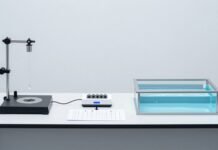
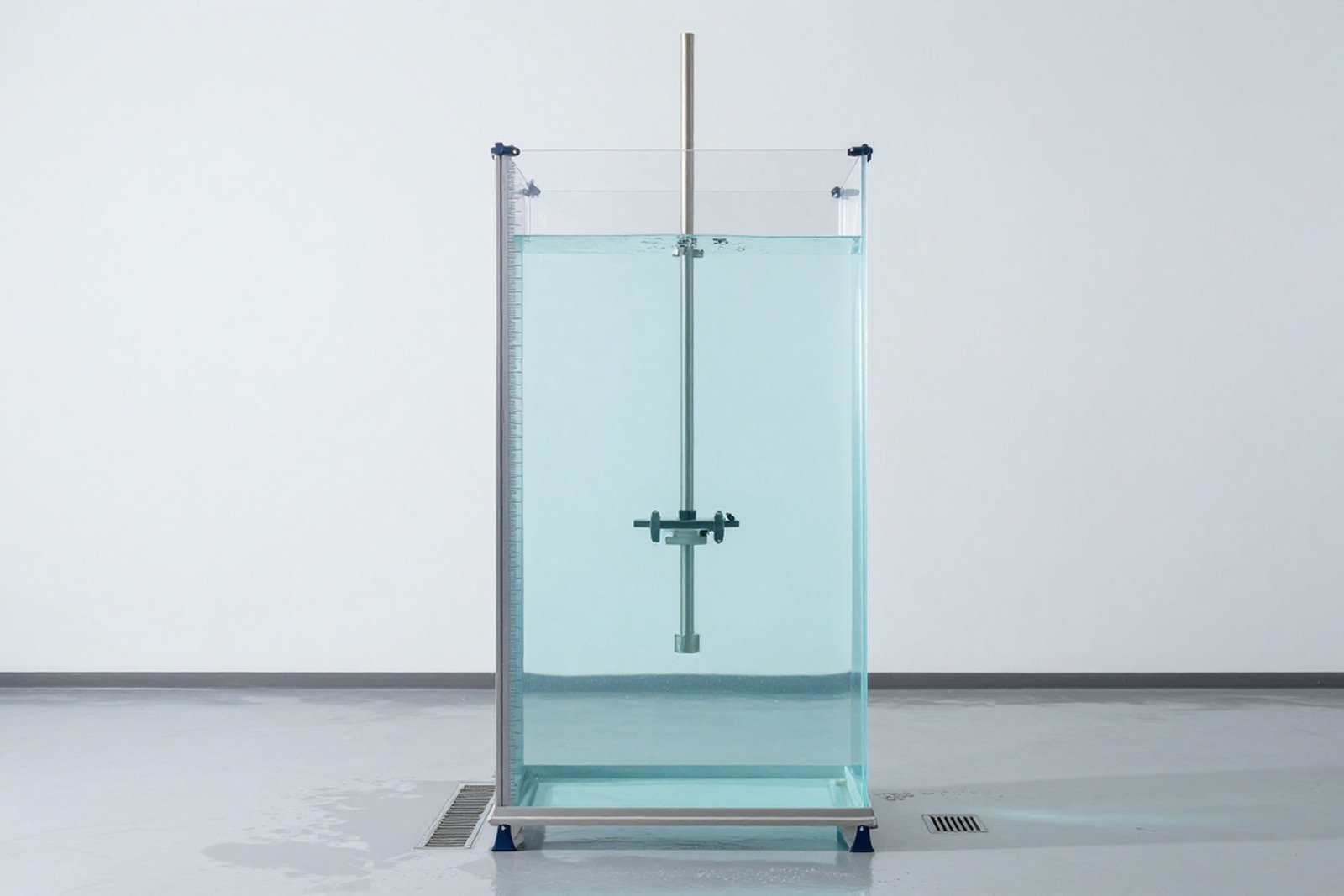
To reach 1,000 mm below the surface measured from the lowest point, the tank must be deeper than that plus the sample height and clearance to the bottom. Laboratories typically use tanks of 1.5 m or more, with a fixture to hold the sample and a depth scale.
Three technical details worth checking when assessing a laboratory:
- How depth is established: a ruler or level sensor, documented with photographs showing the reference mark.
- How the sample is held: fully submerged and not pushed by currents; the fixture must not cover surfaces that need inspection.
- Water temperature: measured and recorded, together with the sample temperature before immersion.
For samples with a large internal air volume (speakers, sealed cases), watch for buoyancy and for pressure changes as temperature drifts. Some laboratories add weights or a retaining frame so the sample cannot rise.
5. Five errors that invalidate an IPX7 result
| Error | Consequence | Prevention |
|---|---|---|
| Depth measured from the top of the sample | Actual pressure exceeds the requirement; the test is harsher than IPX7 but not to the standard | State in the record: measured from the lowest point of the enclosure |
| Water at a different temperature | Thermal-pressure effects hide or amplify a leak | Equalise sample and water temperature; record both |
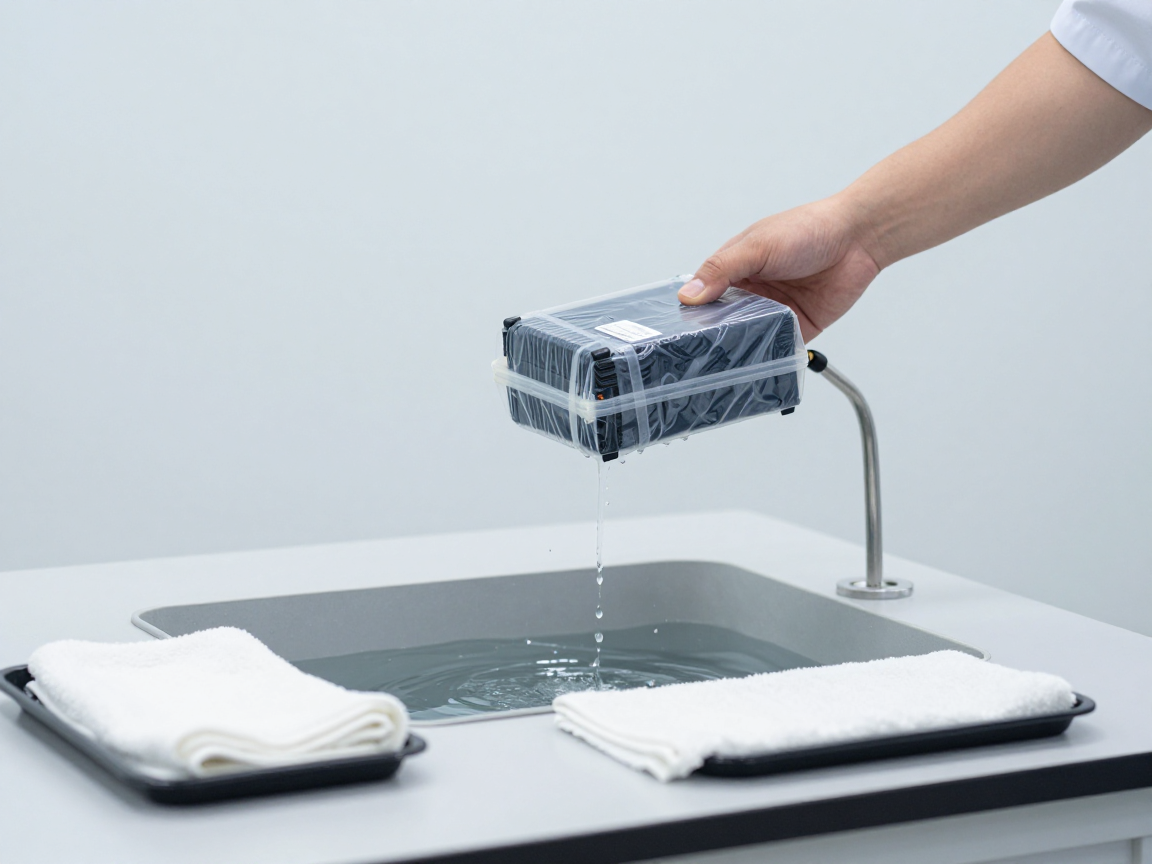
| Sample not opened after the test | Misses condensation or pooling inside sealed compartments | Disassemble and inspect, with photographs |
| Less than 30 minutes | Slow leaks have not developed yet | Use a timer; record start and end times |
| Drying the outside before opening | Erases traces that show the entry path | Observe and photograph before wiping |
All five are process issues, not equipment issues. A laboratory with a good tank can still produce a wrong result if the record omits the measuring method and the thermal state.
6. Judging pass or fail
The criterion in the standard is “no water ingress in a harmful quantity”. That phrase must be made concrete in the test plan, or the two parties will argue:
- Is there water in the electronics compartment, and at what level is it acceptable?
- Is there water in the battery compartment or the speaker cavity?
- Is there condensation on components?
- Post-test function: charging, audio, display, sensors — do they work?
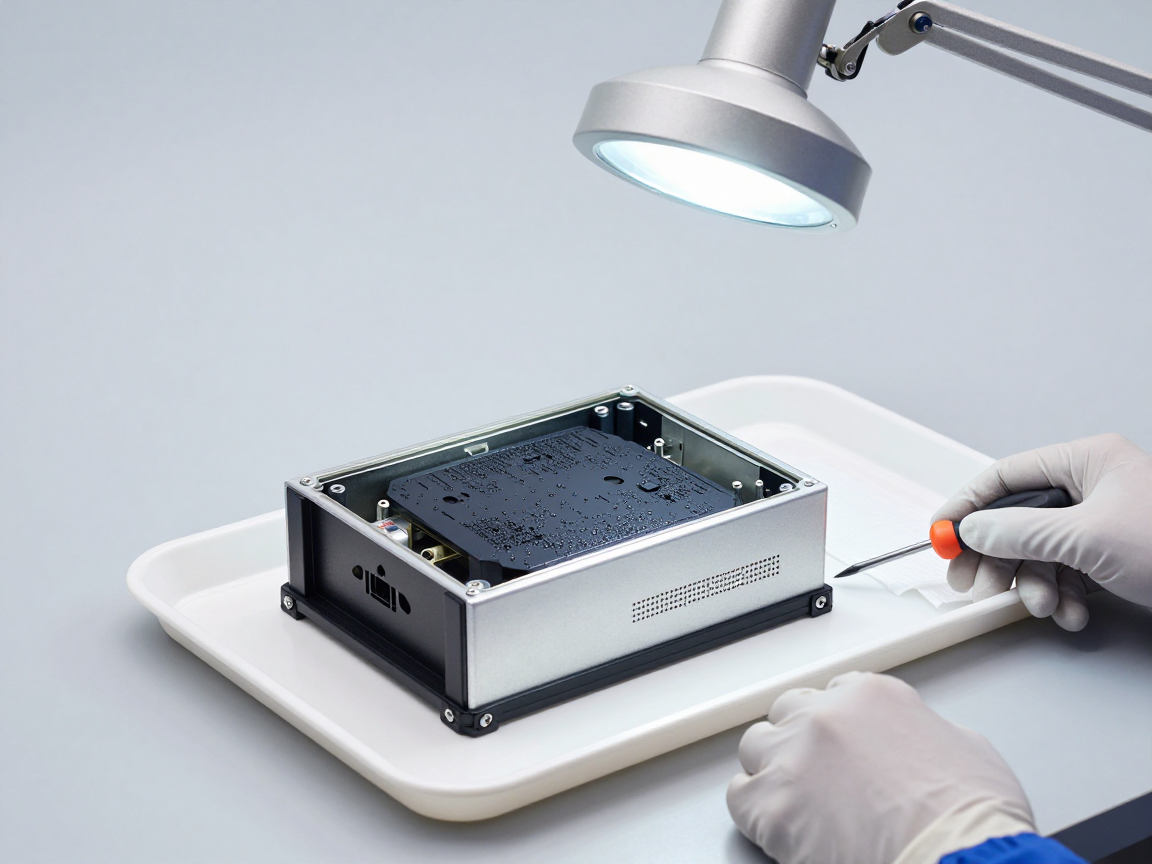
A common and defensible approach, worth writing into the contract: disassemble, inspect visually and with a magnifier, photograph each compartment; then check function after drying under stated room conditions for a stated period.
7. IPX7 versus IPX6 and MIL-STD-810
| Criterion | IPX6 | IPX7 | MIL-STD-810 |
|---|---|---|---|
| Nature | Powerful water jet | Static immersion 1 m / 30 min | Environmental test methods, tailored |
| Simulates | Hose washing, waves | Dropped into water, temporary flooding | Depends on method: 506.5 rain, 512.5 immersion |
| Fixed parameters? | Yes | Yes | No, set by the test plan |
| Typical use | Outdoor products, frequent washing | Products at risk of falling into water | Defence customers or multi-environment requirements |
Many products need both: IPX6 for washing and IPX7 for flooding. Test both on the same lot but on different samples, and state the order. Details on 810 are in What is MIL-STD-810; the IP code itself is covered in What is IEC 60529.
8. Why units still fail after passing IPX7
Three causes that lie outside the test:
- Dynamic pressure: dropping from 1 m into water produces a momentary pressure far above static immersion at the same depth.
- Thermal cycling: the device warms while running and cools in water, creating a pressure difference that pulls moisture through seals and speaker membranes.
- Ageing and handling: seals harden over months, flaps trap dust, membranes stretch.
For products used regularly in wet conditions, add thermal-humidity cycling and test aged samples. The limits of the code are described in Is IP68 really waterproof.
9. Writing IPX7 into contracts and labels
Because the conditions are fixed, the clause can be short:
“The enclosure shall meet IPX7 to IEC 60529: lowest point of the enclosure 1,000 mm below the water surface, immersed for 30 minutes, water and sample at the same temperature (within 5 K), sample unpowered; no water shall enter the electronics compartment, verified by disassembly.”
On the label, state “IPX7” rather than only “water resistant”, and in the technical file quote the standard number. A product that only meets IPX7 must not be labelled IP68 — that is an unsupported declaration.
Frequently asked questions
Does IPX7 mean it survives any depth of 1 m indefinitely?
No. It means 30 minutes. Longer immersion is outside the test, and water can pass a seal over time even if the sample passed.
Does salt water immersion count as IPX7?
No. The test uses clean water. Salt water causes corrosion and belongs to salt fog testing, not to IP.
Do I need to retest IPX7 after changing the gasket?
Yes. Changing seal material or dimensions directly affects the result, so the new configuration must be tested.
How long does IPX7 testing take?
The immersion itself is 30 minutes, but total time includes thermal stabilisation, immersion, retrieval, disassembly and inspection. For one sample it is usually a one-day job if the tank and fixture are ready.
How is a product with several sealed compartments assessed?
Each compartment must be inspected and the record must state which compartment is the “protected compartment”. If only one is protected, say so in the file to avoid the impression that the whole device is.
Conclusion
IPX7 is the most verifiable level in the immersion group, because every parameter is fixed. That is its value: a short, clear test that anyone can repeat.
But the result is only credible when the record shows four things: depth measured from the lowest point, water and sample temperatures, duration, and the internal inspection method. Without all four, the report is not evidence.
The immediate task for manufacturers: check existing IPX7 reports for those four elements. If any is missing, ask the laboratory to supplement or retest before using the report in a tender.
References
- IEC 60529, Degrees of protection provided by enclosures (IP Code) — second digit, level 7.
- ISO 20653 — IP code for road vehicles.
- MIL-STD-810H, methods 512.5 (immersion) and 506.5 (rain).
Related articles
- What is IEC 60529? The IP code explained
- Is IP68 really waterproof? Seven misunderstandings
- What is MIL-STD-810? Structure, 29 test methods and how to choose
Talk to us
Disclaimer
This article is our own interpretation; it is not legal advice. Readers should check the official text of the standard before applying it to a specific product.
See also: Copyright Policy & Disclaimer of ticforall.com.