Quick summary
- The first digit of the IP code covers solids: 5 = dust protected, 6 = dust-tight. One digit apart, a whole assessment method apart.
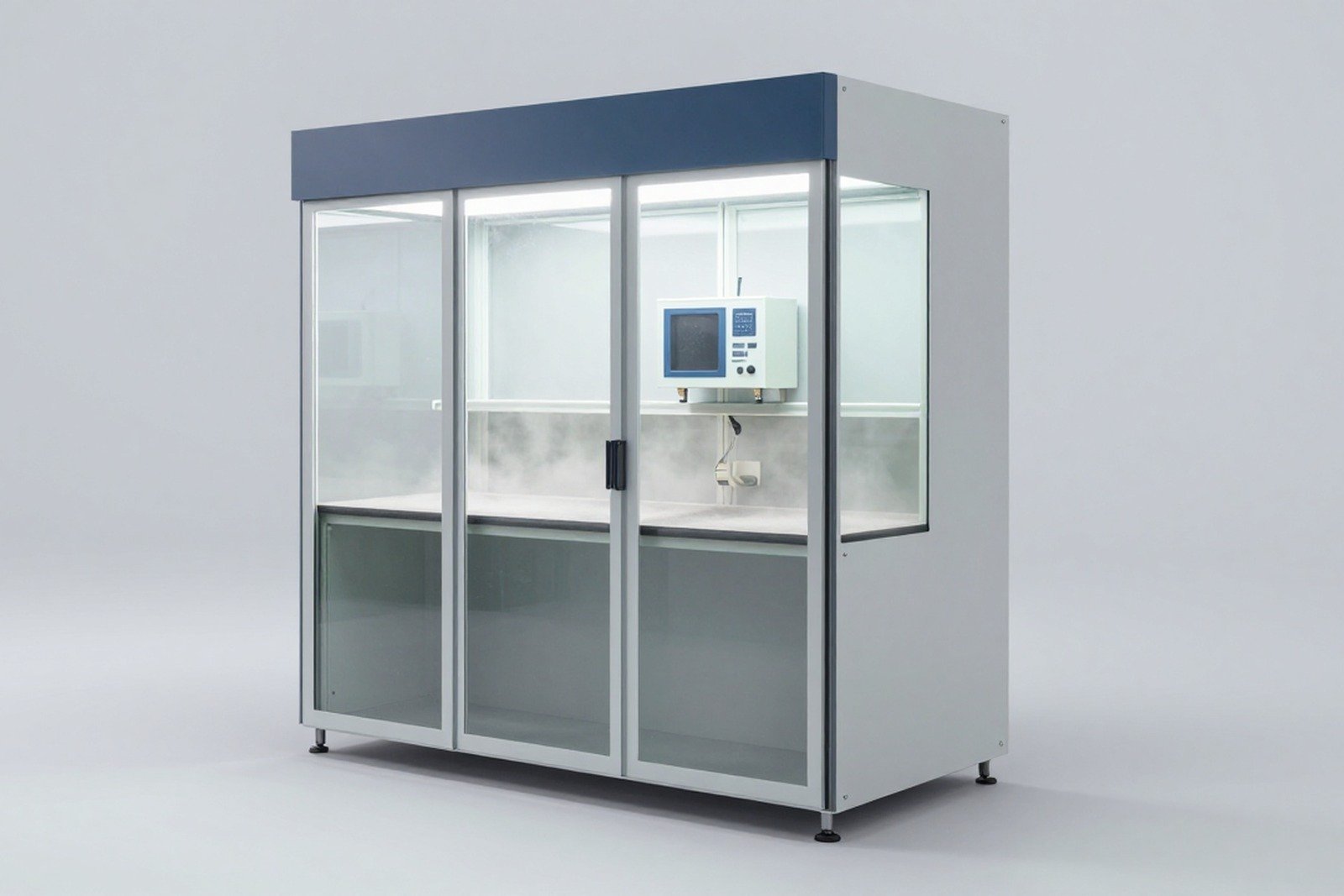
- The test uses talc powder in an enclosure for 8 hours, optionally with an underpressure inside the sample.
- IP5X allows dust in, as long as it causes no harm; IP6X allows no dust at all.
- Real-world dust (sand, cement, road dust) is not talc — products used on site should also be tested to MIL-STD-810.
The previous three articles in this cluster were about water. This one covers the other half of the IP code — the first digit — and that is the half more often skipped in Vietnamese technical files.
The reason is understandable: water is visible and water damage is obvious; dust is silent. But for switchgear, ventilation fans, motors, valves and outdoor equipment, dust is a leading cause of failure — and usually it is dust plus moisture that turns into an incident.
1. Where IP5X and IP6X differ
Both levels share the same test, the same powder and the same duration. The difference is in the acceptance criterion:
| Criterion | IP5X | IP6X |
|---|---|---|
| Name in the standard | Dust protected | Dust-tight |
| May dust enter? | Yes, in a quantity that does not cause harm | No — no dust deposit at all |
| Effect on operation | Must not interfere | No dust permitted |
| Practical difficulty | Block the bulk dust flow | Seal completely, including seals and shafts |
One point to remember: “harmful” in IP5X is a functional criterion, not a quantity. A thin dust layer inside a cabinet still passes IP5X if it does not affect insulation and operation. Conversely, a single particle sitting on a relay contact can cause a failure even though the total amount of dust is tiny.

2. Why talc powder
IEC 60529 specifies talc for three reasons: fine and uniform particles, chemically inert, and low moisture uptake. As a result the test repeats well between laboratories and does not corrode the sample during the 8 hours.
The consequence to keep in mind: talc does not represent all dust. Sand has sharp edges, cement is alkaline and cakes when damp, road dust is coarse and abrasive, and organic dust (fibres, lint) can ignite. For equipment used on construction sites, in cement plants, mines or agriculture, add testing to MIL-STD-810 method 510 (sand and dust) or to the customer’s own requirement.
3. The two test modes in the standard
The dust test has two modes, chosen by agreement and by product design:
| Mode | How it is done | When to use |
|---|---|---|
| Without pressure difference | Sample in a chamber with circulating dust; inside and outside pressure equal | Products without ventilation paths; checks passive dust blocking |
| With pressure difference (underpressure) | A tube draws air out of the enclosure, so dust is pulled in through leak paths | Products with gaps, seals, shafts, flaps; simulates harsher conditions |
The underpressure mode is the hard one — and the one most often skipped when manufacturers run their own trials. The principle is simple: if the pressure inside the enclosure is lower than outside, air enters through every gap and carries dust with it. That is exactly what happens when equipment cools down after running, or when ambient temperature drops overnight.
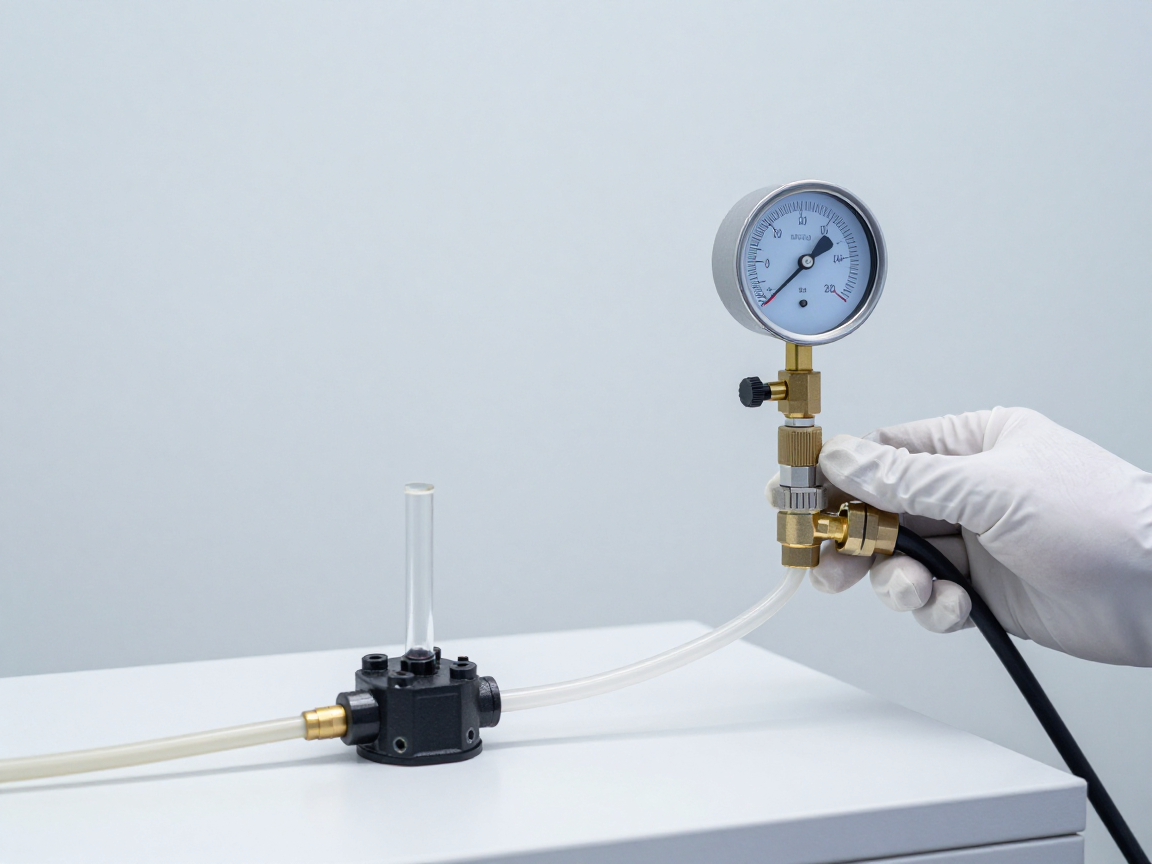
The standard test duration is 8 hours. For small samples or multi-compartment enclosures, the laboratory may use several extraction points; the arrangement must appear in the record because it directly affects the result.
4. Preparing the sample
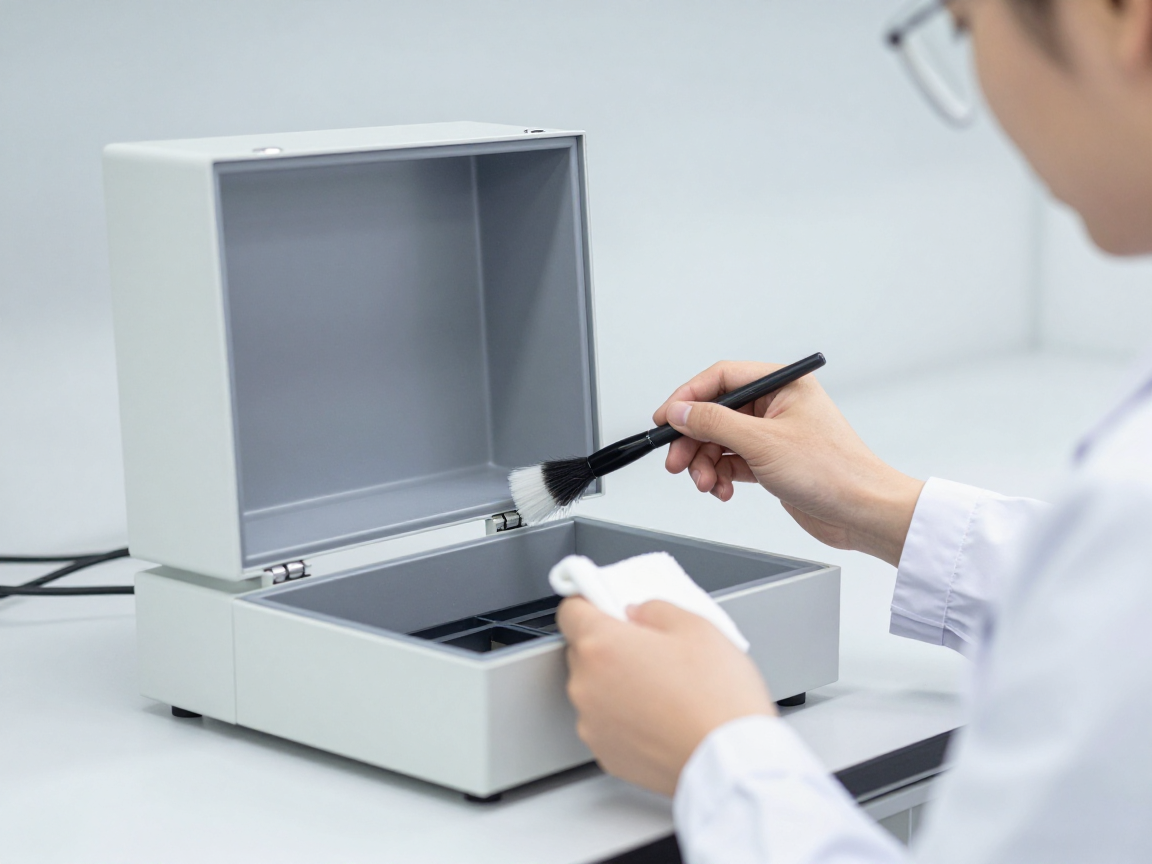
- Correct production configuration: seals, flaps, blanking plugs, washers, filters. A sample missing one blanking plug makes the test meaningless.
- No extra grease or sealant beyond the manufacturer’s instruction; grease traps dust and confuses the “no deposit” criterion.
- State the condition clearly: powered or not, fan running or not, doors open during the test or not.
- Products with vents or filters: state whether the filter is replaced during the product life, and test a sample with a used filter if relevant.
- Spare samples: a dust-tested sample usually has to be opened, so it cannot be reused for a water test under the same conditions.
5. Judging pass or fail
This is where disputes arise, because the level-5 criterion is functional:
- IP6X: no visible dust deposit inside the enclosure. In practice laboratories accept a minimal amount on sealing surfaces in contact, but not dust in functional compartments.
- IP5X: dust may be present but must not affect operation or safety. Define in advance: which insulating surfaces may carry dust, which moving parts may not.
- Functional checks: insulation resistance, run test, temperature, torque on rotating mechanisms.
A defensible approach, worth writing into the contract: open the enclosure, inspect and photograph each compartment, compare with pre-test photographs; for IP5X, list the functional checks and acceptance limits explicitly.
6. Seven ways dust actually causes failures
| Failure mode | Mechanism | Typical products |
|---|---|---|
| Insulation tracking | Damp dust builds a conductive bridge across insulation | Cabinets, control panels |
| Mechanism jamming | Dust in shafts, hinges, slides | Valves, hinges, locks |
| Bearing wear | Abrasive particles wear the raceway | Motors, fans |
| Reduced heat transfer | Dust coats fins and fan blades | LED luminaires, inverters |
| Sensor blinding | Dust films the sensing element | Smoke, light and gas sensors |
| Contact failure | Dust between mating surfaces | Relays, switches, connectors |
| Optical haze | Dust on lenses and mirrors | Cameras, spotlights |
The common thread: most of these do not happen during an 8-hour test but after months of accumulation. For equipment installed outdoors for years, a single dust test is not enough — test aged samples or repeat on a cycle.
7. Test order: dust and water
When a product needs both digits, the order matters:
- Dust first, water second: matches service life (dust settles, then rain arrives) and shows whether dust damages seals or blocks drainage.
- Do not reuse a water-tested sample for dust: residual water retains dust and skews the result.
- Record the order in the report: a report claiming “IP65” without stating the order and the number of samples will be questioned by a technical buyer.
On what each water level means, see What is IEC 60529 and IPX7 explained.
8. Choosing IP5X or IP6X
| Service situation | Recommendation | Reason |
|---|---|---|
| Indoors, clean room, air-conditioned | No high first digit needed; IP2X suffices for solids | Dust is not the main risk |
| Workshop, warehouse, car park | IP5X | Dust present but moderate, few abrasives |
| Outdoors, near roads, construction sites | IP6X (usually IP65 or IP66) | Fine dust and sand, plus rain and washing |
| Optics, sensors, measuring devices | IP6X mandatory | A single dust film is enough to shift readings |
| Switchgear and LV cabinets | IP5X minimum, IP6X outdoors | Insulation safety |
For many products the practical combination is IP65 or IP66 — digit 6 for dust and 5 or 6 for water. The jet tests are covered in the IPX5 and IPX6 article coming later in this cluster.
9. Contracts and labels
Model clause for the file:
“The enclosure shall meet IP6X to IEC 60529: tested in a talc dust chamber for 8 hours with an underpressure inside the enclosure, sample in production configuration and unpowered; no dust deposit inside the enclosure, verified by disassembly with photographs.”
For level 5, replace “no dust deposit” with “the quantity of dust entering shall not affect operation or safety”, and attach the list of functional checks and acceptance limits.
On the label, state both digits (for example IP65). A bare “IP6X” is incomplete: it says nothing about water, and buyers will misread it.
Frequently asked questions
Does IP6X mean dust can never enter, even when buried in dust?
No. It means dust-tight under the 8-hour talc test. Abrasive dust, damp caked dust or dust under pressure is not necessarily represented.
Can IP5X be upgraded to IP6X just by adding a gasket?
Not automatically. Adding a gasket changes the design and can affect moisture venting, so the new configuration must be tested.
Does the sample need power during the dust test?
Usually not. If the product has a fan or moving mechanism, agree to test in operating condition so that self-cleaning and the effect of dust on movement are also covered.
How long does dust testing take?
The test itself is 8 hours, plus preparation, stabilisation and post-test inspection. In practice 1–2 days for one set of samples.
Can one laboratory handle IP5X, IP6X, IPX7 and IPX8?
Often yes, but check the capability in detail: does the dust chamber support underpressure or only circulation, how deep is the immersion tank, and does the record capture all conditions? Those are the three questions to ask before shipping samples.
Conclusion
The 5X/6X pair is the most casually assessed part of the IP code, because dust does not fail a product immediately and the test needs specific equipment. But for electrical and electronic equipment in dusty environments, this pair decides service life.
Immediate task: review existing reports for the test mode (circulation or underpressure), the duration, the sample configuration and the internal assessment method. Without the first three, the report will not protect you when a customer complains.
References
- IEC 60529, Degrees of protection provided by enclosures (IP Code) — first digit, levels 5 and 6.
- IEC 60068-2-68 — dust and sand test (test L).
- MIL-STD-810H, method 510.5 (sand and dust).
Related articles
- What is IEC 60529? The IP code explained
- IPX7 explained: immersion at 1 m for 30 minutes
- Is IP68 really waterproof? Seven misunderstandings
Talk to us
Disclaimer
This article is our own interpretation; it is not legal advice. Readers should check the official text of the standard before applying it to a specific product.
See also: Copyright Policy & Disclaimer of ticforall.com.