Home Blog Page 15

How Test Sequence Affects Environmental Test Results

0
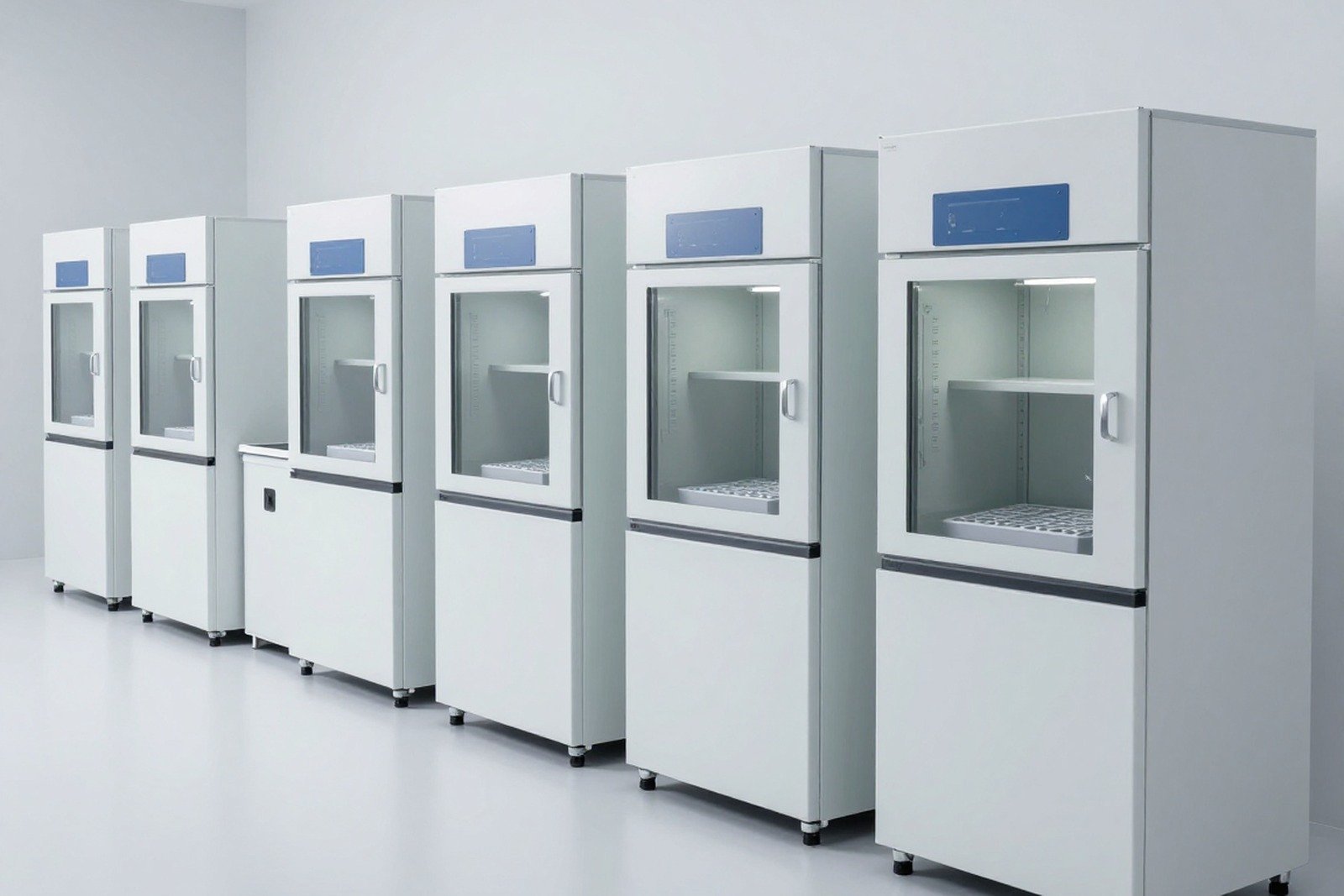
A row of environmental testing chambers along the lab wall with gray sample trays waiting in front

Two identical products, same test list, same severities — but different results simply because the order of execution is different. This is something that is often overlooked when planning environmental testing.

This article explains why test sequence is part of the test definition, ordering principles, and what needs to be agreed upon before starting.

1. Why sequence matters

Three mechanisms cause order to alter results:

  • Cumulative:The former test produces small damage, the latter amplifies it into obvious damage. Vibration testing after the sample has been cracked by thermal cycling gives much worse results than vibration testing on the intact sample.
  • Masking:The following test erases the traces of the previous test. Testing water after dust testing may wash away dust and remove evidence of intrusion.
  • Material Variation:High temperatures can change the state of the material (stress relaxation, coating transformation), causing subsequent cold testing to no longer accurately evaluate the original material.

Consequence: if the required document clearly states the test sequence, the operator cannot change the order himself. If the documents do not clearly state, it is necessary to agree in writing before testing.

2. General ordering principles

  1. Don’t destroy first, destroy later.Mild or non-destructive tests should be reserved to utilize the same sample.
  2. Climate before mechanics.A common sequence is temperature/humidity first, vibration and shock second, as moisture and thermal cycling can weaken the joint before vibration accelerates damage.
  3. Avoid cross contamination.Corrosion, dust, and solvent tests contaminate the chamber and sample; If performed in advance, they may affect later tests.
  4. Test the function at a meaningful point.Check after each step or group of steps, depending on the assessment goal.
  5. The final test should be one where the trace is clearly observed.For example, checking for corrosion, cracking, and deformation requires the sample to have its surface intact.
Buồng thử khí hậu và khu vực chuẩn bị mẫu trong phòng thử nghiệm môi trường
The order of testing determines the results, so it needs to be clearly stated in the requirements document, not just agreed upon verbally.

3. A typical reference sequence

Step Test group Reason for placing in this position
1 Initial check: appearance, function, parameters Set a benchmark before testing
2 Dry heat/cold (Test B, Test A) Non-destructive, shared samples, basic heat resistance test
3 Temperature change (Test N) Apply thermal stress to the joint and material, preparing for the following steps
4 Stable humidity/heat cycle (Cab, Db) Causes moisture and condensation — causes of insulation degradation
5 Vibration and shock (Fc/Fh, Ea) After the joint has been subjected to thermal-humidity stress, vibration amplifies potential damage
6 Rough handling, falling (Ec) Simulate the transportation and loading stages
7 Corrosion (Ka/Kb, Kc/Kd/Ke) Place it last with the climate-mechanical group to observe corrosion traces on the sample that has been subjected to stress
8 Final inspection and evaluation Compare with the initial milestone according to the agreed criteria

This is a reference string, not a mandatory regulation. The actual sequence must come from the usage environment: if the product is shipped before installation, it may be necessary to bring the roughing group up first.

4. Ordering pairs that cause disagreement

Pair Commonly used order Reason
Damp heat and salt mist Hot humidity first, frost later Salt mist leaves salt residue that affects moisture testing; Conversely, prewetting helps evaluate corrosion in conditions where a wet film has formed
Vibration and salt mist Depends on the goal If you want to evaluate corrosion at cracked joints, do a vibration test first; If you want to evaluate mechanical durability in a corrosive environment, put corrosion first
Welding heat and other environmental testing Final soldering heat (with components) The welding process changes the material state, which should not precede initial material evaluation tests
Dust and water Dust first, water later — but it must be clearly stated Water can wash away dust; If evidence of dust intrusion is required, this must be checked and recorded before water testing
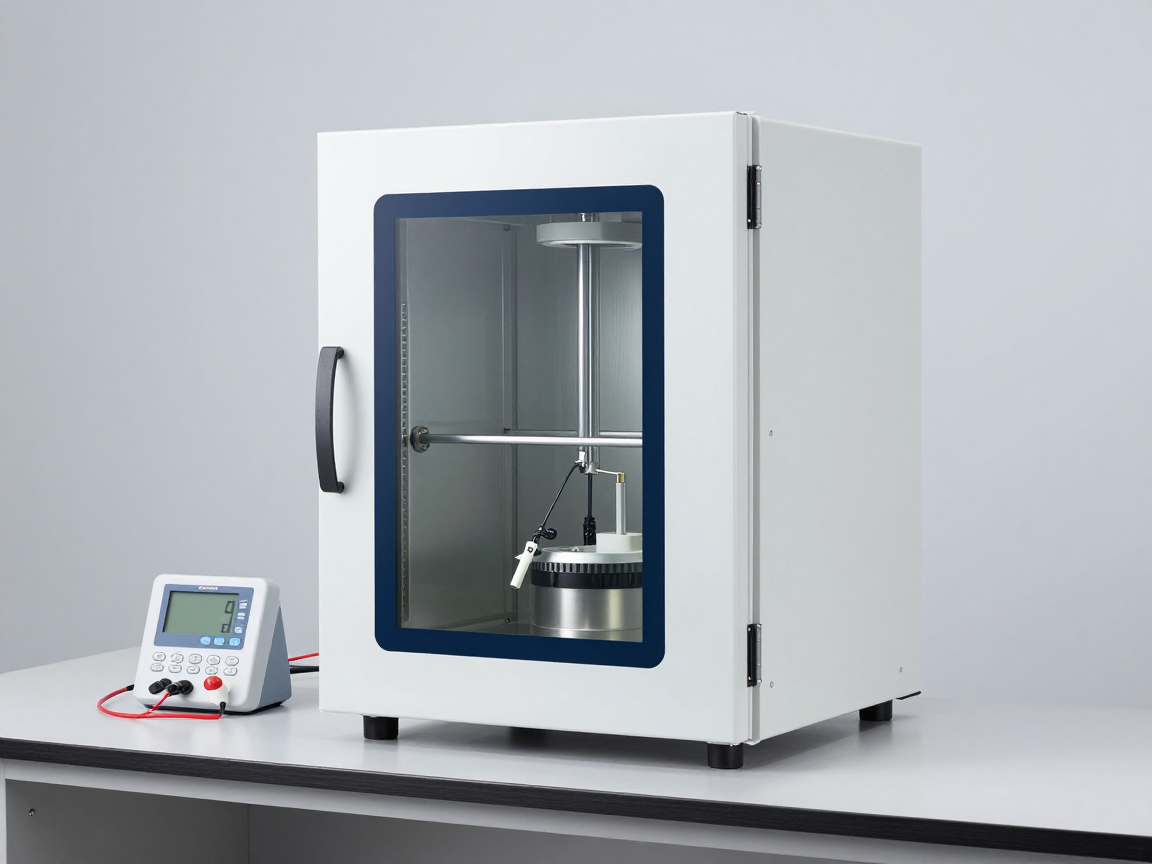
Bàn thử rung với mẫu được gá lắp và cảm biến đo
In many series, vibration is applied after climatic tests to detect potential damage.

5. Where functional examinations belong in the sequence

  • Before string:required, to have a benchmark for comparison. Without a baseline, deterioration cannot be concluded.
  • After each step:suitable when it is necessary to determine which step causes damage — for design analysis.
  • After group of steps:suitable for qualitative testing, lower cost but loss of causality.
  • During the test:Some tests require continuous functional monitoring or parameter measurements at extreme temperatures; need to be clearly defined from the beginning.

6. When the sequence can be shortened

Can be shortened when the goal is rapid screening (e.g. batch inspection), when the product already has data from previous tests, or when the risk level is low and the customer agrees. Should not be shortened when:

  • The results are used to declare conformity or certify according to standards that define their own sequences.
  • Customers require the correct string according to their documents.
  • The goal is to find the cause of the failure — at which point it is necessary to try to isolate each factor.

7. Common mistakes

  • Change the order for convenient operationwithout recording — causing the results to no longer match the requirements.
  • Use the same template for all stepswhen the documentation requires a separate sample for each test.
  • Do not check appearance between steps,leading to loss of evidence of when the damage occurred.
  • Do not clean the chamber between test groups.cause cross contamination.
  • Ignore recovery conditions,causes the following test to start while the sample is still in the unfinished state.
Hồ sơ ghi chép dữ liệu và mẫu thử sau khi thử nghiệm môi trường
Recording the order of execution, when to test, and the results of each step is the only way to protect your conclusions later.

8. Frequently asked questions

What if the requirement document gives no sequence?

Propose an authoritative sequence, send the customer written confirmation, and record that sequence in the test report.

Can each test use a separate sample?

Yes, and sometimes necessary, to separate the effects of each agent. The downside is that cumulative effects cannot be detected — which is a real condition.

Vibration before or after damp heat?

Normally, heat is applied first to condition the joint to withstand stress, then vibrate to detect potential damage. But must follow the customer’s requirement or be agreed in advance.

Is recovery time between steps mandatory?

Many tests have provisions for conditions and recovery times before testing or moving forward. Skipping this step may cause erroneous results.

How does sequence affect lead time and cost?

High impact: changing the order can increase the number of temperature ups/downs of the chamber, increase the number of functional tests, and may force additional samples to be used.

What if results across steps are inconsistent?

Fully record the phenomenon, take photos, re-measure relevant parameters, and evaluate according to agreed criteria. An abnormal result should not be “ignored” because it will lose the value of the entire record.

9. Conclusion

In environmental testing, ordering is not an operational detail but part of the test definition. The same list of tests in different orders yields different conclusions, and this should be clearly noted in the records.

Three things to do: build chains based on usage environment, not habits; Agree functional test sequences and scores in writing before testing; and record the execution order and results of each step in the report.

References

  • IEC 60068-1 — Environmental testing: General provisions and guidance.
  • IEC 60068-2-38 — Combined heat-humidity cycle (Test Z/AD).
  • IEC 60068-2-53 — Combined climatic and dynamic testing.
  • IEC 60068-2-47 — Specimen mountings for vibration, shock and similar dynamic tests.
  • IEC 60068-3-1, 3-4 — Guidelines for cold/dry heat and humidity testing.

Related articles


Talk to us


    Disclaimer

    This article is an interpretive content compiled by us;not legal advice. Enterprises need to compare relevant documents/standards verbatim before applying them to specific products.

    See more:Copyright Policy & Disclaimerby ticforall.com.

    How to Choose Environmental Tests from the Product’s Real Operating Environment

    0
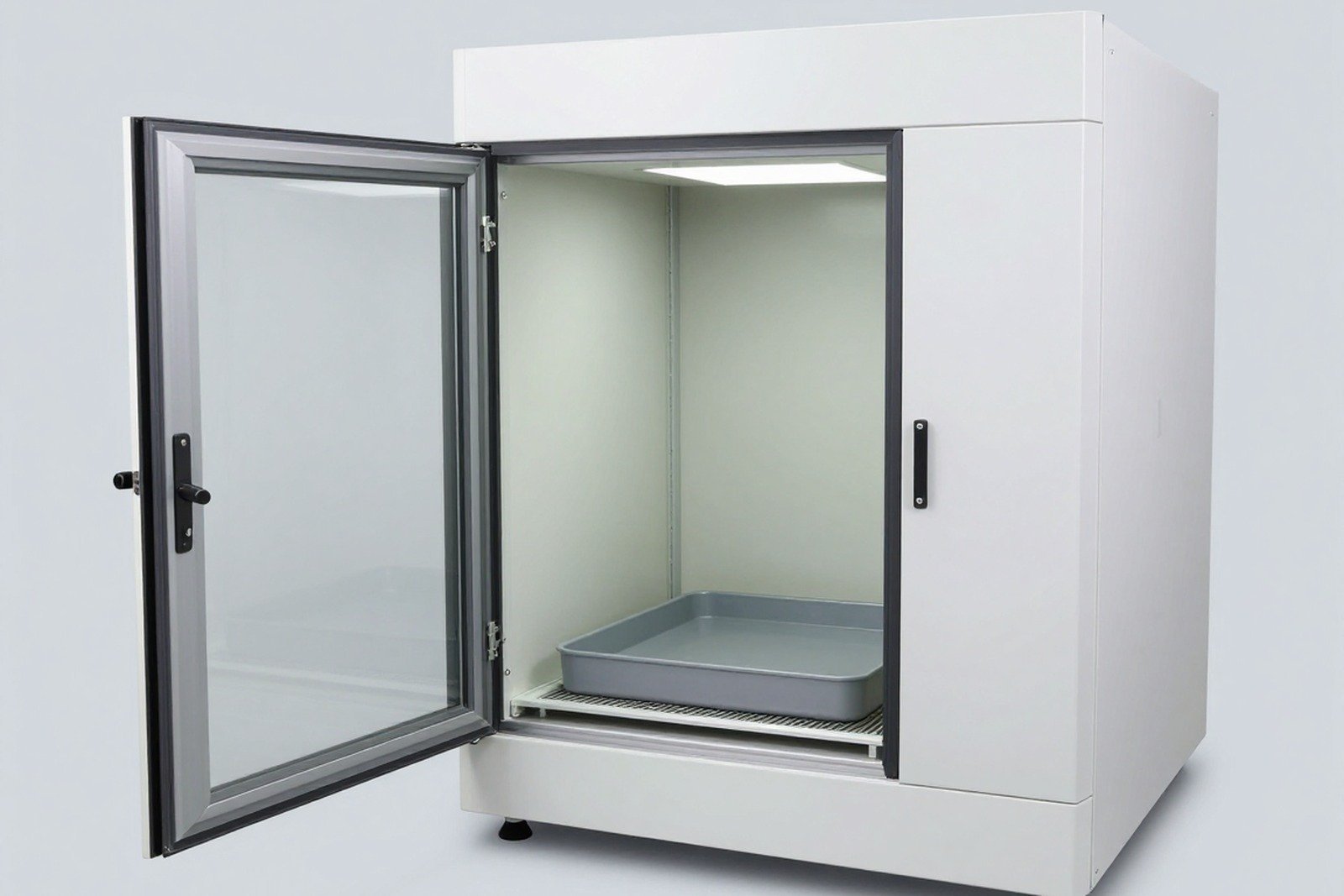
    Climate chamber slightly open with gray sample tray, viewed from inside the environmental testing room

    The question “what does this product need to test?” is often answered by listing familiar tests. That approach easily leads to two mistakes: choosing tests that are not related to the real environment, and ignoring the most important factor.

    This article shows how to choose tests according to the actual usage environment: starting with where the product will live, then moving to the IEC 60068 test list.

    1. The principle: environment first, standard second

    Any environmental test is only meaningful when it answers a specific question about the usage environment. So the correct procedure is:

    1. Describe the product’s environment and journey (production, inventory, transportation, installation, use, maintenance).
    2. Identify key actors in each stage.
    3. Select the corresponding test group in IEC 60068.
    4. Determine severity and duration based on environmental data.

    2. Suggested test matrix by operating environment

    Environment/scenario Main stress factor Suggested test group (IEC 60068-2)
    Indoor equipment, temperate climate Temperature and humidity depending on the season Test A/B (cold, dry heat), Test Cab/Db (damp heat)
    Outdoor, unshielded equipment Solar radiation, rain, humidity, day-night temperature cycle Test Sa, Test R/S/T/U, Test Cab/Db, Test N
    Coastal areas, chemical factories Salt, corrosive gas Test Ka/Kb, Test Kc/Kd/Ke
    Handheld and mobile devices Falling, impacting, environmental temperature changes, wet hands Test Ec, Test Ea, Test B/A, Test Db
    Equipment on vehicles or construction machines Continuous vibration, shock, mounting cavity temperature Test Fc/Fh, Test Ea, Test A/B/N (with industry standards)
    Medical equipment for home use Room temperature, humidity, light fall, cleaning solution Test A/B, Test XA, Test Ec (with medical industry standards)
    Goods exported by sea, long-term storage Moisture, salt, heat shock, stacking Test Cab/Db, Test Ka/Kb, Test N (with ISTA for packaging)
    Overhead equipment or air transportation Low pressure, low temperature Test M, Test A (with Test 2-39 when combined)
    Equipment in dusty and sandy environments Dust intrusion, abrasion Test L (with IEC 60529 if IP class declaration is required)
    Circuit boards and components in production Welding heat, tin whisker, lead durability Test T (Ta/Tb/Td), Test Xw1, Test U
    Buồng thử nhiệt độ ẩm và thiết bị ghi dữ liệu trong phòng thử nghiệm
    Hint table helps localize the test group; Severity levels must still be derived from actual environmental data.

    3. The environmental profile: six inputs you need

    1. Temperature:typical highest, lowest, and rate of change values.
    2. Humidity:average levels and periods of high humidity with condensation.
    3. Exposure time:total time spent under extreme conditions, in hours or cycles.
    4. Mechanical agents:vibration, shock, and impact during transportation and work.
    5. Chemical and biological agents:salt, industrial gases, solvents, dust.
    6. Working status:whether the product is energized during the test, whether under load or not.

    Missing any of the six items above, the test plan will have to rely on assumptions — and assumptions are the hardest part to defend in a dispute.

    4. From environmental profile to severity level

    What determines the level How to interpret
    Frequency of appearance Everyday events require a different level than rare events
    Duration Same temperature but different exposure time gives different conclusions
    Consequences of failure Failures that create a safety hazard call for stricter requirements than failures that only cause inconvenience
    Replacement and maintenance capabilities Equipment that is difficult to reach requires stricter requirements
    Limits of design The level chosen should not exceed the capacity of the material if the objective is to evaluate actual use

    A common mistake is to choose the highest level possible with the mindset of “the harsher the better”. This approach increases costs, lengthens time, and can misjudge the product: a device that meets the correct usage environment can still “fail” if tested at an unrealistic level.

    5. Feasibility check before freezing the plan

    • Equipment capacity:temperature range, humidity, chamber size compared to sample size and mounting system.
    • Model Number:How many samples are needed for destructive testing and how many are kept for control?
    • Time:total chamber time, recovery time, function test time between steps.
    • Human resources and profile:Who monitors, who confirms the passing criteria, how is the data saved.
    • Conditions for receiving samples:For some tests, the sample needs to be stabilized before testing under specified conditions.
    Kỹ thuật viên chuẩn bị mẫu trên bàn thử nghiệm môi trường
    Checking feasibility before finalizing the plan helps avoid having to change testing mid-process.

    6. Two short examples

    Medical equipment for home use:The main factors are not extreme temperatures but moisture, cleaning solutions and light impact. The test plan should focus on hot humidity, seasonal room temperature, solvent testing and light roughing; The extreme temperature portion only needs to be sufficient to demonstrate the ability to withstand transportation and storage.

    Electronic equipment installed outdoors along the coast:The main factors are solar radiation, diurnal heat cycles, salt and humidity. The test plan requires both Sa, N, Cab/Db and Ka/Kb; If you only test salt mist or only hot moisture, you will miss the failure mechanism due to heat cycles combined with corrosion.

    7. Common mistakes

    • Copy another project’s test planwithout checking whether the usage environment is the same or not.
    • Only try agents that are easy to try(climate) and ignore difficult agents (corrosion, dust, solvents).
    • Do not record the power supply status of the sample,making the results unreproducible.
    • Skip the shipping and inventory stages,Although this is often the harshest period for electronic products.
    • No pre-determined criteria,leading to a favorable interpretation of the results.
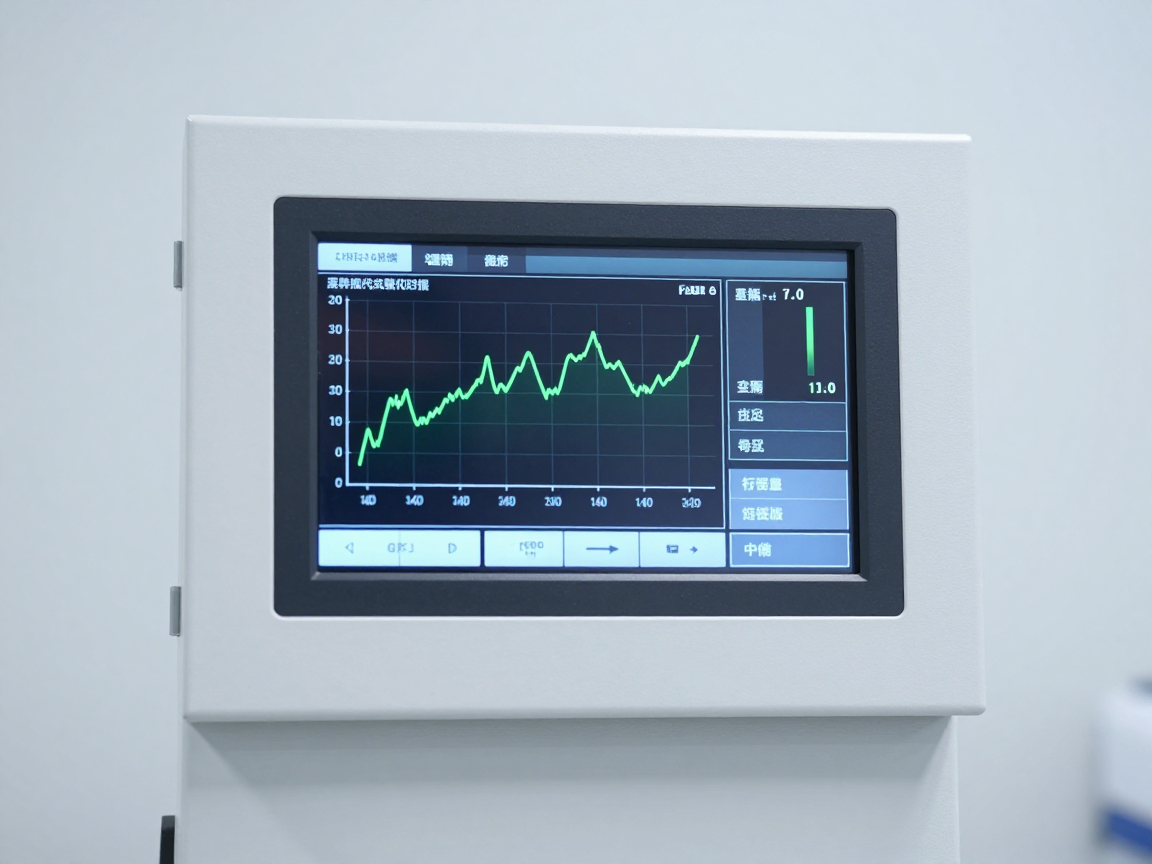
    Bảng điều khiển buồng khí hậu với đồ thị nhiệt độ và độ ẩm theo thời gian
    The more specific the environmental profile, the easier it is to protect the chosen severity level from customers and inspection agencies.

    8. Frequently asked questions

    Do we need to test every test group?

    No. Test only those forces that actually occur during the product life cycle, at the appropriate level. Excessive testing increases costs without increasing probative value.

    What if real field data is unavailable?

    Can use regional climate data, customer requirements, or recommended levels in industry standards. It is imperative to clearly state the source so readers know where that level comes from.

    Should we test above the requirement “to be safe”?

    Only if the objective is to evaluate the safety margin, and it must be clearly stated that the test exceeds the requirements. If this result is used to declare “satisfactory”, testing at another level may cause the dossier to not match the stated requirements.

    In-vehicle equipment: IEC 60068 or automotive standards?

    Usually uses industry standards for vibration, shock and temperature according to mounting location; IEC 60068 can be used for some climatic tests when referenced by an industry standard.

    How do we set a sensible test duration?

    Based on the actual total exposure time in the life cycle, then converted according to the principles of the standard. Do not choose a familiar number if there is no basis.

    Where do we start without in-house experts?

    From the table describing the usage environment and the table suggesting test groups above; Then discuss with the testing room to agree on the severity level and passing criteria.

    9. Conclusion

    Choosing an environmental test is a problem of properly describing the environment, not a problem of listing standards. A good test plan is one that explains: why this test exists, why that level was chosen, and why another test is not needed.

    Three things to do: create a six-item environmental profile before choosing a test; choose levels according to data instead of habit; and clearly state the basis for choosing the level in the dossier so that the results can be defended when challenged.

    References

    • IEC 60068-1 — Environmental testing: General provisions and guidance.
    • IEC 60068-2-1, 2-2, 2-14, 2-30, 2-78 — Temperature and humidity tests.
    • IEC 60068-2-6, 2-64, 2-27, 2-31 — Vibration, shock and rough handling.
    • IEC 60068-2-11, 2-52, 2-60, 2-68 — Corrosion, mixed gases and sand dust.
    • IEC 60068-3-8 — Guidelines for selecting vibration tests.

    Related articles


    Talk to us


      Disclaimer

      This article is an interpretive content compiled by us;not legal advice. Enterprises need to compare relevant documents/standards verbatim before applying them to specific products.

      See more:Copyright Policy & Disclaimerby ticforall.com.

      How to Read IEC 60068 Test Designations: Ab, Bb, Nb, Db, Cab, Fc, Fh, Ea, Ka

      0
      Close-up of the temperature test chamber control panel with round clock, digital display and mode selector switch

      In IEC 60068, most of the test information is contained in a few letters. “Ab” and “Ae” are the same cold test but differ in the way the sample is brought to temperature and the way the function is tested. “Db” and “Cab” are both hot and humid tests, but one has a condensation cycle, the other does not.

      This article is a decoding table of test designations, along with the most easily confused symbol pairs when writing test requests or reading reports.

      1. How test designations are structured

      A test in IEC 60068 is usually written in terms of four components:

      1. Standard number:IEC 60068-2-x (x is part number).
      2. Test names in alphabetical order:Test A, Test B, Test F…
      3. Variant (lowercase):Ab, Ae, Bb, Bd, Na, Nb…
      4. Severity and duration:specified by the request document.

      Important points:Uppercase letters indicate groups of actors, lowercase letters indicate implementation methods. Omitting lowercase letters means losing half of the test’s information.

      2. Designation decoder by test group

      Group Typical symbols Content
      Temperature A (Ab, Ae), B (Bb, Bd), N (Na, Nb), Sa Cold, dry heat, temperature changes, solar radiation
      Humidity Cab, Db, Cx, Cy, Z/AD, Z/ABDM Stable humidity and heat, cycles of humidity and heat, combination cycles, and climate chains
      Vibration and acceleration Fc, Fh, Fi, Ff, Fj, Fg, Ga Sinusoidal, random, mixed, time-history, noise-induced, steady-acceleration vibrations
      Shock and rough handling Ea, Ec, Ee, Ei, Eh Mechanical shock, rough handling, bulk cargo, shock according to response spectrum, hammer
      Corrosion Ka, Kb, Kc, Kd, Ke Salt mist, cyclic salt mist, SO₂, H₂S, mixed gases
      Dust, water, biology L, R/S/T/U, J Dust and sand, water, mold
      Welding and components Ta, Tb, Td, Te/Tc, Tf, U Weldability, solder heat resistance, solderability measurement, pin durability
      Other M, XA, Xb, Xc, Xw1 Low pressure, solvents, label abrasion, liquid contamination, tin residue
      Bảng điều khiển buồng thử khí hậu với thông số nhiệt độ và độ ẩm
      The test symbol determines how it is performed; The severity level is the part specified by technical requirements.

      3. The designations most often confused

      Pairs are easy to confuse Core difference Effects when used incorrectly
      Ab and Ae How to bring the sample to temperature and when to test function The results are not comparable to customer requirements
      Bb and Bd Same as above, in hot, dry afternoon Failure to detect errors that only appear when the sample is at high temperature
      Na and Nb Two ways to change temperature (speed and number of cycles on request) Incorrect assessment of the thermal shock resistance of welds and materials
      Cab and DB Stable (no condensation) vs. cyclic (with condensation) Ignore condensation failure mechanisms — a common cause of insulation leaks
      Test N and heat shock according to other standards Philosophy for choosing the level and speed of heat transfer The conclusion is too optimistic or too pessimistic about weld durability
      Ka and Kb Continuous salt mist versus cyclic salt mist Corrosion levels vary significantly, results are not equivalent
      Fc and Fh Sinusoidal vibration versus random vibration Cannot reproduce actual vibration conditions (usually random)
      Test K and Test C Chemical corrosion versus hot moisture Choosing the wrong agent does not answer the question that needs to be answered
      Test U and Test Xw1 Mechanical strength of the leg compared to the tin whisker phenomenon Ignore the risk of electric shock due to tin whiskers growing in the assembly
      Mẫu thử được gá lắp trong buồng thử nhiệt độ
      The same test chamber can run many different tests — distinguishing symbols helps choose the right way to sample and test.

      4. Combined designations in the standard

      Some parts of the standard use compound symbols to designate test series, for example Test Z/AD (combined heat-humidity cycle) or Test Z/ABDM (climate series). With these tests, the order and timing of each phase is part of the test definition, not chosen by the tester.

      Additionally, some tests were withdrawn or replaced during the standard review process. When reading old documents and encountering symbols that are no longer in the current version, it is necessary to determine the corresponding replacement test before planning the test.

      5. How to write designations in documents and reports

      Incomplete notation Complete notation
      Test according to IEC 60068 Cold test according to IEC 60068-2-1, Ab test, level… time…
      Try hot humidity Cyclic hot humidity test according to IEC 60068-2-30 (Test Db), level… number of cycles…
      Try vibrating Wideband random vibration test according to IEC 60068-2-64 (Test Fh), level… time…
      Try salt mist Cyclic salt mist test according to IEC 60068-2-52 (Test Kb), concentration… number of cycles…

      6. A four-step check of designations before testing

      1. Compare the original request:Take verbatim customer requirements or product standards, do not use internal summaries.
      2. Identify parts and symbols:clearly state the part number (e.g. 60068-2-30) and full symbol (Test Db).
      3. Check severity and duration:Confirm temperature, humidity, number of cycles, exposure time, and power supply status of the sample.
      4. Agree on achievement criteria:clearly state which test, what threshold, and who validated the results.

      These four steps take a little time but help avoid trial and error — one of the most common causes of having to re-do an application.

      Bản yêu cầu kỹ thuật và danh mục tiêu chuẩn trên bàn làm việc
      Reviewing symbols before testing is much cheaper than retesting due to incorrect requirements.

      7. Frequently asked questions

      Is writing “Test A” enough?

      Not enough. Test A has two variants Ab and Ae with different implementation methods; Variation and severity level should be clearly stated.

      Why are there two variants of the cold test?

      For different purposes: one variant is more concerned with tolerance to stable conditions, the other is more concerned with behavior when temperature changes and when testing functionality at low temperatures.

      Are test designations the same across standard sets?

      No. Notation is a convention specific to each set. The symbols of one set should not be used to describe tests of another set.

      How do I know a test has been withdrawn?

      Compare the current part lists of IEC 60068 and check the replacement notes in the standard. If old documents refer to a withdrawn test, a replacement should be agreed with the customer.

      Can several designations be combined in one report?

      Yes, and it is common practice when a product goes through a series of tests. It is necessary to clearly state the order, severity and pass criteria for each test.

      Does a wrong designation invalidate the result?

      Test results may be correct but do not prove the stated claim. In disputes, reports with incorrect symbols are often required to retry.

      What if we are not sure about the designation?

      Ask the party making the request in writing and ask them to clearly state the standard part number, symbol and severity level. This is a normal technical question, not a weakness of the practitioner.

      8. Conclusion

      The test designations in IEC 60068 contain technical information, not just reference codes. Reading the correct symbol helps businesses try it right the first time and avoid rework — a cost that is much more expensive than the time spent reading the requirements carefully.

      Three things to do: always include the full designation (group + variant) in the requirements document; check the current symbol list before planning; and request the testing laboratory to record the symbol and severity level in the report.

      References

      • IEC 60068-1 — Environmental testing: General provisions and guidance.
      • IEC 60068-2-1, 2-2, 2-14, 2-30, 2-78 — Cold, dry heat, fluctuating temperature, cyclic heat humidity and stable heat humidity.
      • IEC 60068-2-6, 2-64, 2-27 — Sinusoidal vibration, random vibration, mechanical shock.
      • IEC 60068-2-11, 2-52, 2-42, 2-43, 2-60 — Corrosion tests.
      • IEC 60068-5-2 — Terms and definitions.

      Related articles


      Talk to us


        Disclaimer

        This article is an interpretive content compiled by us;not legal advice. Enterprises need to compare relevant documents/standards verbatim before applying them to specific products.

        See more:Copyright Policy & Disclaimerby ticforall.com.

        How IEC 60068 Differs from MIL-STD-810, ISO 16750, ISTA and IEC 60529

        0
        Three environmental testing devices sit side by side in the lab: a climatic chamber, a large vibration table, and a drop tester

        “Environmental testing” is a phrase used for many different standard sets. IEC 60068, MIL-STD-810, ISO 16750, ISTA, IEC 60529 and DO-160 can all appear in the same file — but they answer different questions and apply to different subjects.

        This article compares the six most frequently confused standard sets, so that companies know when each one is needed and when several must be combined.

        1. Why are these standard sets so often confused?

        Because they all use the same keywords: temperature, humidity, vibration, shock, dust, water. But their philosophies differ:

        • IEC 60068: provides methods and ranges of severity levels; the requirement writer selects the level.
        • MIL-STD-810: starts from real environmental conditions by operating region and platform (ground troops, vehicles, aircraft, ships) and requires life-cycle environmental analysis.
        • ISO 16750: specifically for electrical and electronic equipment installed on road vehicles, divided by mounting location on the vehicle.
        • ISTA / ASTM D4169: for transport packaging systems, not for assessing the electronic equipment itself.
        • IEC 60529: sets out the IP protection system and how the degree is determined, not a comprehensive climatic test method set.
        • DO-160 / IEC 60945: methods for the aviation and maritime industries.

        2. Quick comparison table

        Standard Subject Philosophy for choosing severity When to use it
        IEC 60068 Products, components, electrical and electronic equipment in general The standard provides ranges; the requirement writer chooses the level Customer requirements phrased as “to IEC 60068-2-x”; general product documentation
        MIL-STD-810 Military equipment and equipment used in extreme conditions Tied to the real life-cycle environment, with analysis Defence projects, equipment for special environments
        ISO 16750 (and ISO 19453 for electric vehicles) Electrical and electronic equipment installed on road vehicles By mounting location and the exposure level of the vehicle Automotive supply chains, OEM/Tier 1 parts
        ISTA / ASTM D4169 Packaging systems and shipments By distribution mode (parcel, LTL, pallet…) Transport testing, packaging optimisation, retailer requirements
        IEC 60529 Equipment enclosures IP protection degree determined by the specified tests Declaring the product’s IP rating
        DO-160 / IEC 60945 Aviation / maritime equipment Environmental categories by mounting location Products for the respective industry
        Environmental testing area with several types of test equipment
        The same product may have to be tested against several standard sets when different markets require it.

        3. How do IEC 60068 and MIL-STD-810 differ?

        The biggest difference is how severity is determined. IEC 60068 leans towards selecting from an existing range of levels, which suits situations where the requirement has already been agreed in the product documentation. MIL-STD-810 requires the real environment to be established from the life cycle and the platform of use, so the volume of input data is much larger.

        For commercial companies, IEC 60068 is usually the default choice because cost and lead time are reasonable. For defence projects or equipment operating in extreme regions, only MIL-STD-810 supports the level of justification required.

        4. ISO 16750: when a product goes onto a vehicle

        ISO 16750 is divided by mounting location (engine compartment, passenger compartment, on the vehicle body…) and by operating state. One point companies should note: the same circuit board installed in two different locations will face different requirements. For electric and hybrid vehicles, the ISO 19453 set adds requirements for electric drive systems, while energy storage systems have their own standard set.

        5. ISTA and ASTM D4169: both about transport, different subjects

        IEC 60068 does include tests related to rough handling and transport (for example Test Ec, Test Ee). However, when the objective is to assess a packaging system according to distribution mode, the ISTA or ASTM D4169 set is the appropriate one, because they build a test sequence around the distribution route and evaluate the packaging together with the product inside.

        In practice, a product may be tested on both tracks at once: the equipment to IEC 60068 (climate, vibration, shock) and the packaging to ISTA (drop, vibration, compression). The two sets complement each other rather than replace each other. See also our series of guides on choosing ISTA test procedures in the corresponding category.

        6. Is IEC 60529 (IP rating) part of IEC 60068?

        No. IEC 60529 defines the IP code system and the method for determining the degree of protection. IEC 60068-2-18 (Test R/S/T/U) provides more detailed water test methods for a different purpose. When a customer requires “IP67”, test to IEC 60529; when they require “water resistance to IEC 60068-2-18”, the scope and purpose are different.

        7. When are several standard sets needed at once?

        Situation Standard sets commonly used together
        Consumer electronics exported to the EU IEC 60068 (environment) + EMC + electrical safety + chemical requirements
        Automotive parts ISO 16750/ISO 19453 + automotive EMC + material requirements
        Medical equipment IEC 60601-1 (safety) + IEC 60601-1-11 (home use) + EMC
        Equipment with retail packaging IEC 60068 (equipment) + ISTA/ASTM D4169 (packaging)
        Outdoor equipment IEC 60068 (Sa, Ka/Kb, L, R/S/T/U) + IEC 60529 + materials
        Vibration test bench and measurement instruments in a reliability laboratory
        Many standard sets share the same equipment but differ in how severity levels and acceptance criteria are chosen.

        8. Common mistakes when citing standards

        • Mixing criteria: taking MIL-STD-810 severity levels but applying IEC 60068 acceptance criteria.
        • Wrong inference: treating “passes IEC 60068” as sufficient to conclude that the equipment withstands the automotive environment.
        • No mounting location analysis: applying one level to every mounting location on a vehicle.
        • Ignoring the subject: using a packaging test to draw conclusions about the equipment, or the reverse.
        • Not checking the edition: the product standard refers to an old edition while the documentation cites a newer one.
        Technical requirement documents and standards records on a desk
        When a product must satisfy several markets, stating the standard set and edition applied for each market is how duplicate testing is avoided.

        One further practical note: industry standard sets often refer back to IEC 60068 for certain tests (climate testing, for example), while setting their own rules for choosing vibration or shock levels. So reading the industry standard first, and only then the method set, will make a test plan leaner and more accurate.

        9. Frequently asked questions

        If the customer does not specify a set, which should we use?

        Ask again in writing. IEC 60068 is the default for general electrical and electronic products, but confirm it, because this directly affects cost and whether the result will be accepted.

        Does IEC 60068 replace ISO 16750 for automotive parts?

        No. The two differ in how severity is determined and in their context of application.

        If we have already done ISTA, do we still need IEC 60068?

        Yes, if the objective is to demonstrate the equipment’s resistance to climatic conditions. ISTA focuses on the packaging system and the distribution journey.

        Can an IP rating replace water testing to IEC 60068?

        No. The IP rating is a classification of protection with its own method; water testing to IEC 60068-2-18 serves a different purpose and severity.

        Is there a “parent” standard set that covers everything?

        No. Each set serves a subject and a context; the choice is based on market and customer requirements.

        What should be recorded in technical documentation to avoid confusion?

        Three elements: the standard number with year, the test code and severity level, and the acceptance criteria. These three resolve almost every dispute about “which standard was tested”.

        10. Conclusion

        IEC 60068, MIL-STD-810, ISO 16750, ISTA, IEC 60529 and DO-160 do not compete with each other — they serve different objectives. The most common error is not choosing the wrong standard, but citing a standard without stating the part, the level and the acceptance criteria.

        Three things to do: confirm the standard set and edition with the customer in writing; clearly separate equipment testing from packaging testing in the test plan; and record enough information for a third party to verify the result.

        References

        • IEC 60068-1 — Environmental testing: General and guidance.
        • MIL-STD-810 — Environmental test methods and engineering guidelines.
        • ISO 16750 (parts) — Road vehicles: environmental conditions and testing for electrical and electronic equipment.
        • ISTA Series and ASTM D4169 — Transport packaging testing standards.
        • IEC 60529 — Degrees of protection provided by enclosures (IP code).
        • RTCA DO-160 and IEC 60945 — Environmental testing for aviation and maritime equipment.

        Related articles


        Discuss with us


          Disclaimer

          This article is interpretive content written by our team; it is not legal advice. Companies should review the original text of the applicable regulations and standards before applying them to a specific product.

          See also: Copyright & Disclaimer Policy of ticforall.com.

          TCVN 7699 and IEC 60068: Vietnam’s Equivalent Standard Set, and When to Use Which

          0
          Desk in the test room with plain folders and stacks of blank documents next to the temperature chamber

          In technical documentation in Vietnam, the same cold test may be recorded as “TCVN 7699-2-1” or as “IEC 60068-2-1”. These are not two different standards, but they are also not entirely identical once you compare the editions.

          This article explains the relationship between the TCVN 7699 set and the IEC 60068 set, when to cite which one, and the points to check before signing off on a test result.

          1. TCVN 7699 is the Vietnamese edition of IEC 60068

          TCVN 7699 is Vietnam’s national standard set for environmental testing, built by adopting the IEC 60068 set. For example, TCVN 7699-1:2007 corresponds to IEC 60068-1:1988 plus Amendment 1:1992. The 2-x parts of TCVN 7699 correspond to the 2-x parts of IEC 60068 (cold, dry heat, vibration, salt mist, damp heat, and so on).

          So when you read a report stating TCVN 7699-2-1, you can understand it as a cold test following the method of IEC 60068-2-1 — but you must establish which edition was adopted, because that is the single most important difference.

          2. Why are there two ways of citing the standard?

          Context Usual citation Reason
          Legal documentation, declarations of conformity in Vietnam TCVN / QCVN The national standards system is the basis cited in domestic documentation
          Contracts with overseas customers IEC 60068-2-x Customers use the international IEC system, usually quoting the edition year
          Certification requirements under a product standard Either or both The product standard refers to the corresponding test method set

          A point to note: the TCVN edition adopts one specific IEC edition at the time of review. If IEC has since published a newer edition, the technical content may have changed in some details (temperature ranges, functional checks, recovery times).

          Standards documents and test records on a laboratory desk
          Citing the standard by its correct name is not enough — you also need the right part, test code and edition year.

          3. Three questions to answer before testing

          1. Which set applies? TCVN 7699 or IEC 60068 — decided by the applicable documentation, not by the habit of the laboratory.
          2. Which edition? If the contract specifies IEC 60068-2-2:2007 but the laboratory applies the older TCVN equivalent, this must be recorded and agreed in writing.
          3. Which severity and duration? Both sets leave the level for the requirement writer to choose. A report without a level is a report that cannot be defended.

          4. Differences that can lead to disputes

          • Edition mismatch: the method content of the adopted edition and the current IEC edition may differ in technical detail.
          • Different interpretation of acceptance criteria: the same test with different functional criteria and check points leads to different conclusions.
          • Missing supporting documentation: chamber performance confirmation and measurement uncertainty are the parts most often omitted from the file.
          • Vague reporting: “passes TCVN 7699” says nothing about which test or which level — write it in detail, such as “test Ab to TCVN 7699-2-1, temperature… duration…”.

          5. How to cite the standard correctly

          Element to record Example
          Standard number with year TCVN 7699-2-1:2007 or IEC 60068-2-1:2007
          Test code Ab / Ae / Bb / Bd / Nb / Db / Cab…
          Severity level Temperature, humidity, duration, number of cycles
          Specimen state during test Not energised / energised, measured during or after the test
          Acceptance criteria Which functional and mechanical checks, at which thresholds
          Supporting documentation Method used to confirm chamber performance
          Temperature sensors and data logger inside a test chamber
          Test condition data attached to the report is the evidence that the test took place as described.

          6. How this affects the value of your documentation

          If you export, customers will usually compare your report against the list of tests in their requirement documents. A report that states the correct test code and severity level is accepted quickly; a vague report usually triggers a request to redo the work — and the resulting cost is far higher than writing it precisely from the start.

          Conversely, for domestic documentation, citing TCVN 7699 with the right part makes the file easier to accept. Where goods fall under quality management requirements, you should also check the requirements in the Ministry of Science and Technology’s list of risky goods and the corresponding technical regulations.

          7. Quick cross-reference of commonly used parts

          TCVN (national set) Corresponding IEC Content
          TCVN 7699-1:2007 IEC 60068-1:1988 and Amendment 1:1992 General provisions and guidance
          TCVN 7699-2-x IEC 60068-2-x The tests: cold, dry heat, vibration, damp heat, salt mist, soldering…
          Part 3-x of the national set (where available) IEC 60068-3-x Supporting documentation: chamber confirmation, test selection, uncertainty

          When working on domestic documentation, look up the specific TCVN edition currently in force rather than inferring part numbers from the IEC edition. Conversely, when working with international customers, cite the IEC number so that the recipient does not have to look up the equivalent themselves.

          Temperature test chamber with records of test conditions
          Recording the correct standard number and edition year lets the test result be verified across repeated inspections.

          8. Frequently asked questions

          Are TCVN 7699 and IEC 60068 the same thing?

          TCVN 7699 was built by adopting IEC 60068, so the methods are equivalent, but the numbers and edition years differ.

          A customer requires IEC. Can I test to TCVN instead?

          Only with the customer’s written agreement. The safest approach is to issue the report under the standard number the customer requested, with a note about the equivalent edition where applicable.

          Must everything be redone if there is a minor edition mismatch?

          Not every difference invalidates the result. Compare the original texts of both editions on the clauses dealing with severity level and functional checks, then assess the impact.

          Can I write “equivalent to IEC” in the report?

          Write it out precisely: “performed to TCVN …, equivalent to IEC … edition of …” so the reader can verify it, rather than a bare word “equivalent”.

          Are national standards mandatory?

          National standards are generally voluntary; they become mandatory when cited in a legal instrument, a contract or a declaration file. This must be checked case by case.

          What should a laboratory record in the report to avoid disputes?

          At minimum: standard number and year, test code, severity level, test condition data, how the specimen was mounted, the acceptance criteria and the result against each criterion.

          What if the applicable TCVN edition is older than the latest IEC edition?

          Compare the relevant clauses of both editions and state in the report which edition was applied. If the difference affects the conclusion, agree with the customer on additional testing to the newer edition.

          May I translate a standard for internal use?

          A translation for internal reference does not replace the original text of the standard. When a citation is needed in documentation, you must refer to the official standard number and a valid published edition.

          9. Conclusion

          TCVN 7699 and IEC 60068 are two ways of citing the same system of methods. The issue is not which name you pick, but whether you record enough information for the result to be verified: which part, which test code, which edition, which severity level, which acceptance criteria.

          Three things to do: agree in writing with the customer on the standard set and edition applied; record details in the report instead of a general citation; and keep the test condition data together with the equipment performance confirmation file.

          References

          • TCVN 7699-1:2007 — Environmental testing: General and guidance.
          • TCVN 7699-2 (parts) — Environmental testing: Tests.
          • IEC 60068-1 and IEC 60068-2 (parts) — Environmental testing.
          • IEC 60068-3-5, IEC 60068-3-6 — Confirmation of the performance of temperature and temperature/humidity chambers.

          Related articles


          Discuss with us


            Disclaimer

            This article is interpretive content written by our team; it is not legal advice. Companies should review the original text of the applicable regulations and standards before applying them to a specific product.

            See also: Copyright & Disclaimer Policy of ticforall.com.

            Circular 36/2026/TT-BKHCN: Full Text of the List of Medium-Risk and High-Risk Goods

            0
            Documents and desks represent Circular 36/2026/TT-BKHCN on the list of risky goods

            On June 30, 2026, the Ministry of Science and Technology issued Circular 36/2026/TT-BKHCN regulating the List of products and goods with medium-risk and high-risk levels under the management responsibility of the Ministry of Science and Technology. The Circular takes effect from July 1, 2026 and replaces a series of previous documents on the list of group 2 goods in the fields of standards – measurement – quality and information technology – telecommunications.

            Reference translation by ticforall.com. The Vietnamese version published on this site is the authoritative text; in case of any discrepancy, the Vietnamese original prevails.

            This is a document that directly affects the production, import and circulation of many product groups: petroleum and fuel, cables and electrical equipment, iron and steel, household electrical and electronic equipment, telecommunications equipment, information technology equipment, radiation and nuclear equipment. Below is the full text of the circular (8 articles), verbatim Appendix I (list of high-risk goods) and Appendix II (list of medium-risk goods) with full HS codes, technical regulations, product descriptions and corresponding quality management requirements, along with a comment on the impact on businesses.

            Quick summary

            Content Regulations in Circular 36/2026/TT-BKHCN
            Number 36/2026/TT-BKHCN
            Issuing agency Ministry of Science and Technology
            Date of issue June 30, 2026 (according to the original published on the Government Electronic Information Portal)
            Effective date July 1, 2026 (Article 6, Clause 1)
            Applicable subjects Organizations and individuals producing, importing and trading in goods on the list; Agencies, organizations and individuals with activities related to quality management of goods on the list (Article 2)
            Structure 8 things; Appendix I – list of high-risk goods; Appendix II – list of medium-risk goods
            Category size Appendix I: 84 product lines and goods with 155 HS codes; Appendix II: 93 lines with 252 HS codes (number of lines/HS codes counted according to the full text below)
            Requirements for high-risk goods Test results used as a basis for certification of conformity must be by a recognized testing organization, designated or recognized by the Ministry of Science and Technology (Article 3, Clause 3).
            Requirements for medium-risk goods Test results used as a basis for self-assessment or certification of conformity must be by a recognized testing organization, designated or recognized by the Ministry of Science and Technology (Article 4, Clause 3).
            Document expires Circular 29/2025/TT-BKHCN; Circular 30/2011/TT-BTTTT; Circular 15/2018/TT-BTTTT; Circular 10/2020/TT-BTTTT; Joint Circular 58/2015/TTLT-BCT-BKHCN; Circular 01/2009/TT-BKHCN (Article 6, Clause 2)

            1. Main points of Circular 36/2026/TT-BKHCN

            • Changing the way of classifying goods:Instead of the concept of “group 2 products and goods” (likely to cause unsafety), the circular divides it into two levels:high level of risk(Appendix I) andaverage level of risk(Appendix II). Each line of goods is assigned an HS code, applicable technical regulations, product description and corresponding quality management requirements.
            • High-risk goods:To certify conformity, test results must come from a recognized testing organization, designated or recognized by the Ministry of Science and Technology, with a testing scope in accordance with the corresponding national technical regulations (Article 3, Clause 3).
            • Medium risk goods:Test results used for self-assessment or certification of conformity must also be by a recognized, designated or recognized testing organization (Article 4, clause 3).
            • One commodity, many standards:If the product simultaneously falls under two or more national technical regulations, it must fully meet those regulations, but do not duplicate assessment content for the same evaluated technical requirement (Article 5, Clause 2).
            • Assignment to inspect imported goods:The specialized science and technology agency under the Provincial People’s Committee organizes state inspection of the quality of imported goods with high levels of risk, except gasoline, diesel fuel, biofuel and liquefied petroleum gas (LPG) (Article 8, clause 4).
            • Forward:Certificates of conformity and notices of receipt of declarations of conformity issued before the effective date of the Circular will continue to be used until the expiration date stated in the document (Article 7, Clause 1).

            2. Comment: how does this change impact the business?

            The following is ticforall.com’s assessment based on the circular content and referenced documents; This is not a legal conclusion for a specific shipment.

            2.1. From “group 2” to “risk level” — change in the nature of the procedure

            Previously, goods in the category 2 list were often processed towards certification of conformity and declaration of conformity with relatively flexible timelines between industries. Separating into two risk levels entails two different paths: the high-risk group is associated with certification of conformity by the designated certification organization, while the medium-risk group can follow the direction of self-assessment on the basis of test results. For import businesses, correctly determining whether an item is in Appendix I or Appendix II is the most important step, because it determines the entire dossier and progress behind it.

            2.2. Time to complete certification of conformity

            The Circular stipulates that state inspection of the quality of imported goods is carried out in accordance with the provisions of law on product and goods quality and references Decree No. 37/2026/ND-CP. Enterprises need to compare the verbatim of this decree to determine the specific time and sequence for each high-risk shipment, instead of assuming that in all cases a certificate can be added after the goods have arrived in the warehouse. Article 7, Clause 4 of the circular also notes the registration for state inspection during the period when the National Single Window Information Portal is adjusted and upgraded.

            For shipments that have pre-existing test results or certificates, Article 7 is the part that needs to be read carefully: dossiers received before July 1, 2026 but not yet resolved will continue to be implemented according to the regulations at the time of receipt.

            2.3. Cost and time: additional expenses need to be calculated in advance

            • Tested according to standards:High-risk goods must have test results from a recognized or designated testing organization, whose scope is consistent with the respective national technical regulations. If the product belongs to multiple standards, the number of criteria and samples to be tested will increase accordingly.
            • Certificate of conformity:For high-risk groups, businesses need to work with a designated certification organization — cost and time depend on the conformity assessment method applied.
            • Storage and storage costs:If the goods are not eligible for customs clearance at the time of inspection, the costs incurred are often in storage and adjusting delivery plans, not just in testing fees.
            • Time to prepare documents:Gathering product descriptions, HS codes, applicable standards and testing results often takes more time than businesses expect, especially for products with many variations or models.
            • Risk of goods being detained at the border gate:With high-risk goods, discrepancies in paperwork at the time of inspection can disrupt the delivery schedule to customers.

            The level of impact is not the same between industries: petroleum, iron and steel, telecommunications equipment – information technology and radiation equipment have a very detailed list according to HS codes, in which many lines differ only in configuration or operating frequency range. Comparing the correct flow of goods is a decisive factor in cost estimation.

            Enterprises should also clearly distinguish test report, certificate of conformity and declaration of conformity — three types of documents that are different in nature and use value. On the laboratory side, accredited competence according to ISO/IEC 17025 and specified scope are necessary conditions for acceptable test results.

            Most of the quality management requirements in the two appendices refer to the conformity assessment method according to Circular 14/2026/TT-BKHCN. Enterprises should determine in advance which method their products fall into (sample evaluation, production process evaluation or combination) to prepare corresponding documents.

            2.4. Six documents are no longer valid – need to review the current list

            • Circular 29/2025/TT-BKHCN dated November 13, 2025 (list of products and goods that can potentially cause insecurity in the information technology and telecommunications sector).
            • Circular 30/2011/TT-BTTTT dated October 31, 2011 on certification of conformity and declaration of conformity for products specialized in information technology and communications.
            • Circular 15/2018/TT-BTTTT dated November 15, 2018 amending and supplementing Circular 30/2011/TT-BTTTT.
            • Circular 10/2020/TT-BTTTT dated May 7, 2020 amending and supplementing Circular 30/2011/TT-BTTTT.
            • Joint Circular 58/2015/TTLT-BCT-BKHCN dated December 31, 2015 on quality management of domestically produced and imported steel.
            • Circular 01/2009/TT-BKHCN dated March 20, 2009 on the list of potentially unsafe products and goods under the management responsibility of the Ministry of Science and Technology.

            The point to note is that the national technical regulations referenced in the list (eg QCVN on petroleum, electric cables, telecommunications equipment, radiation equipment) continue to be in effect; This circular replaces the list and quality management requirements, but does not abolish the corresponding standards.

            2.5. Checklist of 7 things businesses should do immediately

            • Review all HS codes being imported/produced, compare with Appendix I and Appendix II of Circular 36/2026/TT-BKHCN to determine the level of risk.
            • For each product line, clearly state the applicable national technical regulations and the criteria that must be tested.
            • Check the capacity and accredited/designated scope of the testing laboratory being used compared to the corresponding QCVN.
            • Plan for certification of conformity or declaration of conformity according to the appropriate conformity assessment method for each product.
            • Review existing certificates and notices of receipt of declaration of conformity to take advantage of the transitional provisions in Article 7.
            • Update the import process: documents, time to register for state inspection and focal points to work with provincial inspection agencies.
            • Follow the National Single Window Information Portal/National Public Service Portal and guidance from the Ministry of Science and Technology during the transition period.

            3. Full text of Circular 36/2026/TT-BKHCN

            MINISTRY OF SCIENCE AND TECHNOLOGY— No.: 36/2026/TT-BKHCN

            SOCIALIST REPUBLIC OF VIETNAM
            Independence – Freedom – Happiness
            Hanoi, June 30, 2026

            CIRCULAR
            Promulgating the List of products and goods with medium-risk and high-risk levels under the management responsibility of the Ministry of Science and Technology

            Pursuant to the Law on Standards and Technical Regulations No. 68/2006/QH11 amended and supplemented by Law No. 35/2018/QH14 and Law No. 70/2025/QH15;

            Pursuant to the Telecommunications Law No. 24/2023/QH15;

            Pursuant to the Law on Radio Frequency No. 42/2009/QH12 amended and supplemented by Law No. 09/2022/QH15;

            Pursuant to Decree No. 37/2026/ND-CP dated January 23, 2026 of the Government detailing the implementation of a number of articles and measures to organize and guide the implementation of the Law on Product and Goods Quality;

            Pursuant to Decree No. 22/2026/ND-CP dated January 16, 2026 of the Government detailing the implementation of a number of articles and measures to organize and guide the implementation of the Law on Standards and Technical Regulations;

            Pursuant to Decree No. 55/2025/ND-CP dated March 2, 2025 of the Government regulating the functions, tasks, powers and organizational structure of the Ministry of Science and Technology;

            At the request of the Chairman of the National Quality Measurement Standards Committee;

            The Minister of Science and Technology promulgates a Circular promulgating the List of products and goods with medium-risk and high-risk levels under the management responsibility of the Ministry of Science and Technology.

            Article 1. Scope of adjustment

            This Circular stipulates the List of products and goods with medium-risk and high-risk levels under the management responsibility of the Ministry of Science and Technology with HS codes in accordance with the List of Vietnam’s export and import goods and corresponding quality management requirements.

            Article 2. Subjects of application

            This Circular applies to:

            1. Organizations and individuals producing, importing and trading products and goods on the List of products and goods with medium-risk and high-risk levels in the territory of Vietnam.

            2. Agencies, units, organizations and individuals with activities related to quality management of products and goods on the List of products and goods with medium-risk and high-risk levels in the territory of Vietnam.

            Article 3. List of products and goods with high levels of risk

            The list of products and goods with high levels of risk and corresponding quality management requirements are specified as follows:

            1. The list of products and goods with high levels of risk is specified in Appendix I issued with this Circular.

            2. Corresponding quality management requirements for products and goods with high levels of risk are specified in Appendix I issued with this Circular.

            3. For products and goods with a high level of risk, testing results as a basis for certification of conformity must be performed by a recognized testing organization or designated by the Ministry of Science and Technology or recognized in accordance with the provisions of law on technical standards and regulations, law on product and goods quality, with a testing scope consistent with the corresponding national technical regulations.

            Recognition of test results is carried out in accordance with the law on standards and technical regulations.

            Article 4. List of products and goods with average risk level

            The list of products and goods with average risk levels and corresponding quality management requirements are specified as follows:

            1. The list of products and goods with an average level of risk is specified in Appendix II issued with this Circular.

            2. Corresponding quality management requirements for products and goods with average risk levels are specified in Appendix II issued with this Circular.

            3. For products and goods with a medium-risk level, testing results as a basis for self-assessment or certification of conformity must be performed by a recognized testing organization or designated by the Ministry of Science and Technology or recognized in accordance with the provisions of law on technical standards and regulations, law on product and goods quality, with a testing scope consistent with the corresponding national technical regulations.

            Recognition of test results is carried out in accordance with the law on standards and technical regulations.

            Article 5. Principles for managing products and goods with medium and high risks under the management responsibility of the Ministry of Science and Technology

            1. The management of the quality of products and goods on the List of products and goods with medium-risk and high-risk is carried out in accordance with the provisions of law on product and goods quality, standards and technical regulations; regulations of the Ministry of Science and Technology on certification of conformity, declaration of conformity, quality inspection of products and goods and corresponding national technical regulations.

            2. Products and goods on the List promulgated together with this Circular that are also subject to two or more national technical regulations must fully meet the corresponding national technical regulations; Carry out conformity assessment, certification of conformity, declaration of conformity according to the level of risk, corresponding quality management requirements specified in the List issued with this Circular, corresponding national technical regulations and provisions of law on product and goods quality, law on standards and technical regulations; Make sure not to duplicate the content of conformity assessment for the same technical requirement that has been assessed according to the corresponding national technical regulations.

            3. In case national technical regulations issued before the effective date of this Circular have different provisions on quality management requirements for products and goods on the List promulgated together with this Circular, the provisions of this Circular shall comply.

            4. In case national technical regulations are newly promulgated, amended, supplemented or replaced by national technical regulations specified in the List of products and goods with medium-risk level and high-risk level; or newly promulgated national technical regulations for additional application to products and goods on the List promulgated together with this Circular, the provisions of the document promulgating such national technical regulations shall apply from the time the national technical regulations take effect.

            5. Products and goods with medium-risk and high-risk in the field of atomic energy, including radioactive materials, nuclear equipment and radiation equipment, are managed according to the provisions of law on atomic energy; The provisions in Clauses 2 and 3, Article 3 and Clauses 2 and 3, Article 4 of this Circular do not apply to products and goods under the specialized management of atomic energy.

            Article 6. Implementation effect

            1. This Circular takes effect from July 1, 2026.

            2. The following documents cease to be effective from the effective date of this Circular:

            a) Circular 29/2025/TT-BKHCN dated November 13, 2025 of the Minister of Science and Technology regulating the List of products and goods capable of causing insecurity in the field of information technology and telecommunications under the management responsibility of the Ministry of Science and Technology;

            b) Circular 30/2011/TT-BTTTT dated October 31, 2011 of the Ministry of Information and Communications promulgating regulations on certification of conformity and declaration of conformity for products and goods specialized in information technology and communications;

            c) Circular 15/2018/TT-BTTTT dated November 15, 2018 of the Ministry of Information and Communications amending and supplementing a number of contents of Circular 30/2011/TT-BTTTT dated October 31, 2011 of the Minister of Information and Communications regulating certification of conformity and declaration of conformity for products and goods specialized in information and communication technology notification, effective from January 1, 2019;

            d) Circular 10/2020/TT-BTTTT dated May 7, 2020 of the Ministry of Information and Communications amending and supplementing a number of contents of Circular 30/2011/TT-BTTTT dated October 31, 2011 of the Minister of Information and Communications regulating certification of conformity and declaration of conformity for products and goods specialized in information and communication technology pine;

            d) Joint Circular 58/2015/TTLT-BCT-BKHCN dated December 31, 2015 of the Minister of Industry and Trade and the Minister of Science and Technology regulating the quality management of domestically produced and imported steel;

            e) Circular 01/2009/TT-BKHCN dated March 20, 2009 of the Ministry of Science and Technology regulating the List of potentially unsafe products and goods under the management responsibility of the Ministry of Science and Technology.

            3. In case a legal document, national technical regulation or HS code specified in the List of Vietnamese exported and imported goods referenced in this Circular is amended, supplemented or replaced, the amended, supplemented or replaced document shall comply, unless that document has other transitional provisions.

            Article 7. Transitional provisions

            1. Certificate of conformity and Notice of receipt of declaration of conformity issued before the effective date of this Circular for products and goods governed by this Circular continue to be valid until the end of the term stated in the Certificate of conformity and Notice of receipt of declaration of conformity. Supervision to maintain the validity of the Certificate of Conformity issued before the effective date of this Circular continues to be carried out according to the regulations at the time of issuance of the Certificate of Conformity.

            2. Applications for registration of regulation conformity certification that have been received before July 1, 2026 but have not yet been resolved will continue to be implemented according to the provisions of law at the time of receiving the documents. Products and goods that have registered for state inspection of imported goods quality before the effective date of this Circular will continue to be handled according to the provisions of law at the time of dossier receipt.

            3. Conformity assessment organizations that have been designated to carry out conformity assessment for group 2 products and goods under the management responsibility of the Ministry of Science and Technology and the former Ministry of Information and Communications (now the Ministry of Science and Technology) and the designation decision is still valid may continue to carry out conformity assessment for products and goods with high-risk levels, medium-risk levels and certification methods as prescribed in Appendix I, Appendix Appendix II issued with this Circular until the end of the validity period of the designation decision.

            4. During the time the National Single Window Portal is adjusted and upgraded to be consistent with the List of products and goods with medium-risk and high-risk levels promulgated together with this Circular, organizations and individuals importing products and goods on the List shall register for state inspection of imported goods quality on the National Public Service Portal or according to the instructions of the inspection agency. Receiving, processing documents, and returning results of state inspection of imported goods quality are carried out in accordance with the provisions of Decree No. 37/2026/ND-CP dated January 23, 2026 of the Government and relevant legal regulations; ensure no disruption to legal import activities of organizations or individuals.

            5. Applications for registration of designation of conformity assessment organizations that have been received before July 1, 2026 but have not yet been resolved will continue to be implemented according to the provisions of law at the time of receipt of the applications.

            Article 8. Implementation organization

            1. Chief of Office, Chairman of the National Committee for Standards, Metrology and Quality, Heads of agencies and units under the Ministry of Science and Technology and relevant organizations and individuals are responsible for implementing this Circular.

            2. Reviewing and proposing updates and supplements to the List of products and goods with medium-risk and high-risk levels under the management of the Ministry of Science and Technology is carried out in accordance with the provisions of Decree No. 37/2026/ND-CP and practical management requirements.

            3. National Committee for Standards, Metrology and Quality:

            a) Preside and coordinate with agencies and units under the Ministry of Science and Technology to review national technical regulations corresponding to products and goods on the List promulgated together with this Circular; Propose new promulgation, amendment, supplement or replacement of national technical regulations according to an appropriate roadmap, ensuring quality management requirements corresponding to the risk level of products and goods;

            b) Organize state inspection of the quality of imported goods with high levels of risk specified in Appendix I of this Circular for gasoline, diesel fuel, biofuel, liquefied petroleum gas (LPG) according to the provisions of law on product and goods quality and assignments and instructions of the Ministry of Science and Technology;

            c) Preside over and coordinate with agencies and units under the Ministry of Science and Technology to develop and submit to the Minister of Science and Technology to promulgate regulations and a roadmap for implementing origin traceability for products and goods with high levels of risk specified in Appendix I issued with this Circular.

            4. People’s Committees of provinces and cities:

            a) Organize the implementation of this Circular locally according to assigned functions, tasks and authority;

            b) Direct specialized agencies in science and technology and relevant agencies to manage and inspect the quality of products and goods on the List promulgated together with this Circular according to the provisions of law. The specialized science and technology agency under the Provincial People’s Committee organizes state inspection of the quality of imported goods with high levels of risk specified in Appendix I issued with this Circular (except gasoline, diesel fuel, biofuel, liquefied petroleum gas (LPG)) according to the provisions of law on product and goods quality and instructions of the Ministry of Science and Technology;

            c) Summarize difficulties and problems arising during the implementation process and promptly send them to the Ministry of Science and Technology for review, guidance or amendments and supplements to the List to suit management practices.

            5. During the application of this Circular, organizations and individuals promptly report difficulties and problems to the Ministry of Science and Technology for consideration and guidance./.

            Recipient and signer

            • Prime Minister and Deputy Prime Ministers (to report);
            • Government Office;
            • Office of the President;
            • Office of the National Assembly;
            • Party Central Office and Party Committees;
            • Office of the General Secretary;
            • Ministries and ministerial-level agencies;
            • Supreme People’s Court;
            • Supreme People’s Procuracy;
            • State audit;
            • Central Committee of the Vietnam Fatherland Front;
            • Central agencies of socio-political organizations;
            • People’s Committees of provinces and centrally run cities;
            • Departments of Science and Technology of provinces and centrally run cities;
            • Department of Document Inspection and Law Enforcement Organization;
            • Department of Administrative Investigation – Ministry of Justice;
            • Official Gazette; Government electronic information portal; National law portal;
            • Ministry of Science and Technology: Minister and Deputy Ministers; agencies and units under the Ministry; Electronic information portal of the Ministry of Science and Technology;
            • Save: VT, Resettlement (10).

            MINISTER
            Vu Hai Quan

            4. Appendix I — List of products and goods with high levels of risk

            (Issued together with Circular 36/2026/TT-BKHCN dated June 30, 2026 of the Minister of Science and Technology)

            Section I. PRODUCTS AND GOODS IN THE FIELD OF STANDARDS, MEASUREMENT AND QUALITY

            No Name of product or commodity Technical regulations HS Code (Circular 31/2022/TT-BTC) Description of products and goods Corresponding quality management requirements
            1 Gasoline, diesel fuel and biofuel
            1.1 Unleaded gasoline QCVN 1:2022/BKHCN and “Amended 01:2026 QCVN 01:2022/BKHCN National technical regulations on gasoline, diesel fuel and biofuels” 2710.12.21
            2710.12.23
            2710.12.24
            2710.12.26
            Unleaded gasoline is a volatile mixture of liquid hydrocarbons derived from petroleum (boiling range 30 °C to 215 °C). The product may contain appropriate functional additives but absolutely does not contain lead-based additives, used as fuel for gasoline engines (stimulated combustion internal combustion engines). – Declaration of conformity based on the results of certification of conformity by the designated certification organization.
            – Conformity assessment method: Apply method 5 and method 7 according to Circular 14/2026/TT-BKHCN
            – Imported goods are subject to state quality inspection according to regulations.
            1.2 Unleaded gasoline mixed with ethanol QCVN 1:2022/BKHCN and “Amended 01:2026 QCVN 01:2022/BKHCN
            National technical regulations on gasoline, diesel fuel and biofuels”
            2710.12.22
            2710.12.25
            Unleaded gasoline mixed with Ethanol is a product that is evenly mixed between unleaded base gasoline and denatured or undenatured fuel ethanol. The product does not contain lead additives and is used for gasoline engines.
            Component E5: Denatured fuel ethanol content ranges from 4.0% to 7.5% by volume. Component E10: Denatured fuel ethanol content ranges from 8.0% to 10.0% by volume. Both base gasoline and component fuel ethanol must meet technical requirements according to current regulations before mixing.
            – Declaration of conformity based on the results of certification of conformity by the designated certification organization.
            – Conformity assessment method: Apply method 5 and method 7 according to Circular 14/2026/TT-
            BKHCN
            – Imported goods are subject to state quality inspection according to regulations.
            1.3 Diesel fuel (diesel) QCVN 1:2022/BKHCN and “Amended 01:2026 QCVN 01:2022/BKHCN National technical regulations on gasoline, diesel fuel and biofuels” 2710.19.71
            2710.19.72
            Diesel fuel is a mixture of liquid hydrocarbons obtained from the distillation of petroleum, with a boiling temperature range and cetane index suitable for fueling diesel engines (compression engines, not using spark plugs). – Declaration of conformity based on the results of certification of conformity by the designated certification organization.
            – Conformity assessment method: Apply method 5 and method 7 according to Circular 14/2026/TT-BKHCN
            – Imported goods are subject to state quality inspection according to regulations.
            1.4 Biodiesel fuel (B5) QCVN 1:2022/BKHCN and “Amended 01:2026 QCVN 01:2022/BKHCN National Technical Regulations on
            gasoline, diesel fuel and biofuels”
            2710.20.00 B5 biofuel is an evenly mixed mixture of mineral diesel fuel and original biodiesel (FAME). In particular, the content of biological esters (FAME) accounts for 4.0% to 5.0% by volume. – Declaration of conformity based on the results of certification of conformity by the designated certification organization.
            – Conformity assessment method: Apply method 5 and method 7 according to Circular 14/2026/TT-BKHCN
            – Imported goods are inspected
            State quality inspection according to regulations.
            1.5 Base biodiesel fuel (B100) and their blends QCVN 1:2022/BKHCN and “Amended 01:2026 QCVN 01:2022/BKHCN National technical regulations on gasoline, diesel fuel and biofuels” 3826.00.10
            3826.00.21
            3826.00.22
            3826.00.30
            Biofuel B100 (Original Biodiesel) is a pure product made from vegetable oil or animal fat through the esterification process. The main components of B100 are fatty acid methyl esters, used as a base component to blend into mineral diesel to form commercial biofuels. – Declaration of conformity based on the results of certification of conformity by the designated certification organization.
            – Conformity assessment method: Apply method 5 and method 7 according to Circular 14/2026/TT-BKHCN
            – Imported goods are subject to state quality inspection according to regulations.
            2 Liquefied Petroleum Gas (LPG)
            2.1 Propane QCVN 8:2019/BKHCN 2711.12.00 Liquefied petroleum gas (LPG) is a mixture of hydrocarbons obtained from petroleum processing, existing in gaseous state under environmental temperature and pressure conditions, but converted to liquid state through pressure compression or appropriate refrigeration to optimize storage and transportation. On the market, LPG is separated and circulated in three main product forms based on the base hydrocarbon composition: Commercial propane (core components are propane, propene and alkane/alkene compounds from C2 to – Declaration of conformity based on the results of certification of conformity by the designated certification organization.
            – Conformity assessment method: Apply method 5 and method 7 according to Circular 14/2026/TT-BKHCN
            – Imported goods are subject to state quality inspection according to regulations.
            2.2 Butane QCVN 8:2019/BKHCN 2711.13.00
            2.3 Other type QCVN 8:2019/BKHCN 2711.19.00 C5), Commercial Butane (core ingredients are butane, butene and compounds from C3 to C5), and Butane & Propane mixture are evenly mixed between the above two types in appropriate proportions to meet actual usage needs.
            3 Children’s toys (about children’s toy safety)
            3.1 Tricycles, strollers, pedal cars and similar wheeled toys, dolls’ vehicles QCVN 3:2019/BKHCN 9503.00.10 Tricycles, strollers, pedal cars and similar wheeled toys, dolls’ vehicles – Declaration of conformity based on the results of certification of conformity by the designated certification organization.
            – Conformity assessment method: Apply method 5 and method 7 according to Circular 14/2026/TT-BKHCN
            – Imported goods are subject to state quality inspection according to regulations.
            3.2 Doll with or without outfit QCVN 3:2019/BKHCN 9503.00.21 Doll with or without outfit
            3.3 Doll parts and accessories: Clothes and clothing accessories; shoes and hats QCVN 3:2019/BKHCN 9503.00.22 Doll parts and accessories: Clothes and clothing accessories; shoes and hats
            3.4 Doll parts and accessories: Other QCVN 3:2019/BKHCN 9503.00.29 Doll parts and accessories: Other
            3.5 Trams, including tracks, signals and accessories thereof QCVN 3:2019/BKHCN 9503.00.30 Trams, including tracks, signals and accessories thereof
            3.6 Scale models and similar entertainment models, whether or not operating QCVN 3:2019/BKHCN 9503.00.40 Scale models and similar entertainment models, whether or not operating – Declaration of conformity based on the results of certification of conformity by the designated certification organization.
            – Conformity assessment method: Apply method 5 and method 7 according to Circular 14/2026/TT-BKHCN
            – Imported goods are subject to state quality inspection according to regulations.
            3.7 Other toys and construction sets, of any material other than plastics QCVN 3:2019/BKHCN 9503.00.50 Other toys and construction sets, of any material other than plastics
            3.8 Toys shaped like animals or non-human creatures QCVN 3:2019/BKHCN 9503.00.60 Toys shaped like animals or non-human creatures
            3.9 Puzzles QCVN 3:2019/BKHCN 9503.00.70 Puzzles
            3.10 Toys, blocks or cutouts shaped like numbers, letters or animals; letter set; letter making and speaking toy set; printed toy sets; counting toy set (abaci); toy sewing machine; toy typewriter QCVN 3:2019/BKHCN 9503.00.91 Toys, blocks or cutouts shaped like numbers, letters or animals; letter set; letter making and speaking toy set; printed toy sets; counting toy set (abaci); toy sewing machine; toy typewriter
            3.11 Jump rope QCVN 3:2019/BKHCN 9503.00.92 Jump rope – Declaration of conformity based on the results of certification of conformity by the designated certification organization.
            – Conformity assessment method: Apply method 5 and method 7 according to Circular 14/2026/TT-BKHCN
            – Imported goods are subject to state quality inspection according to regulations.
            3.12 Marble QCVN 3:2019/BKHCN 9503.00.93 Marble
            3.13 Other rubber toys QCVN 3:2019/BKHCN 9503.00.94 Other rubber toys
            3.14 Other types of toys QCVN 3:2019/BKHCN 9503.00.99 Other types of toys (in addition to the groups above)
            4 Electrical and electronic equipment (electrical safety), only includes equipment that uses 1-phase electricity, with a nominal voltage of up to 250 V, does not include equipment that operates only on batteries (rechargeable batteries) or on a 1-way power source
            4.1 a) Instant water heater (Instantaneous electric water heater) used in households to heat water to a temperature lower than the boiling point of water QCVN 4:2009/BKHCN and Amendment 1:2016 QCVN 4:2009/BKHCN 8516.10.19 Electric appliance for instant hot water heating – Declaration of conformity based on the results of certification of conformity by the designated certification organization.
            – Conformity assessment method: Apply method 5 and method 7 according to Circular 14/2026/TT-BKHCN
            – Imported goods are subject to state quality inspection according to regulations.
            4.2 b) Household storage water heaters designed to heat water to temperatures below the boiling point of water QCVN 4:2009/BKHCN and Amendment 1:2016 QCVN 4:2009/BKHCN 8516.10.19 Electric water heater has spare parts
            4.3 Hair dryer for household use QCVN 4:2009/BKHCN and Amendment 1:2016 QCVN 4:2009/BKHCN 8516.31.00 Hair dryer – Declaration of conformity based on the results of certification of conformity by the designated certification organization.
            – Conformity assessment method: Apply method 5 and method 7 according to Circular 14/2026/TT-BKHCN
            – Imported goods are subject to state quality inspection according to regulations.
            4.4 a) Rice cooker
            b) Kettle
            c) Thermos
            QCVN 4:2009/BKHCN and Amendment 1:2016 QCVN 4:2009/BKHCN 8516.60.10
            8516.79.10
            8516.10.11
            Rice cooker Water kettle Water dispenser for heating water, household type – Declaration of conformity based on the results of certification of conformity by the designated certification organization.
            – Conformity assessment method: Apply method 5 and method 7 according to Circular 14/2026/TT-BKHCN
            – Imported goods are subject to state quality inspection according to regulations.
            4.5 a) Table fans and box fans for household use, with built-in electric motors with a capacity not exceeding 125 W
            Fan for household use, with built-in electric motor
            with a capacity not exceeding 125 W, including types without protective nets and with protective nets, including the following types: b) Ceiling fans c) Standing fans d) Wall-mounted fans d) Tower fans (tower-shaped) e) Bladeless fans
            QCVN 4:2009/BKHCN and Amendment 1:2016 QCVN 4:2009/BKHCN 8414.51.10
            8414.51.91
            8414.51.99
            Table fans and box fans for household use, with a built-in electric motor with a power not exceeding 125 W
            Fans other than table fans and box fans have a built-in electric motor with a capacity not exceeding 125 W,
            including types with and without protective nets
            – Declaration of conformity based on the results of certification of conformity by the designated certification organization.
            – Conformity assessment method: Apply method 5 and method 7 according to Circular 14/2026/TT-BKHCN
            – Imported goods are subject to state quality inspection according to regulations.
            4.6 Household electric thermoelectric appliances with nominal voltage not exceeding 250 V, portable type or mass not exceeding 18 kg, including: a) Contact oven b) Contact grill c) Convection oven d) Radiant oven d) Electric stove QCVN 4:2009/BKHCN and Amendment 1:2016 QCVN 4:2009/BKHCN 8516.60.90 Types of ovens, grills, stoves for household use – Declaration of conformity based on the results of certification of conformity by the designated certification organization.
            – Conformity assessment method: Apply method 5 and method 7 according to Circular 14/2026/TT-BKHCN
            – Imported goods are subject to state quality inspection according to regulations.
            5 Low-voltage electric wires and cables used in electrical installations, excluding control cables, signal transmission cables, electric wires and cables used for installation inside equipment, electric wires and cables already installed in equipment, electric wires and cables with connectors installed, electric wires and cables used for installation in vehicles, bare wires without insulation, electromagnetic wires, wires and cables processed into short lengths that are not long enough for testing, specialized wires and cables such as cables with working temperatures above 90 °C, Cables used for installation in offshore projects or ships, specialized cables installed in areas with high-risk of fire and explosion or mines, with nominal voltage up to 1000 V AC or 1500 V DC
            5.1 PVC-coated electrical wires are within the scope of application of the TCVN 6610 standard set, with a nominal voltage of up to 750 V QCVN 4:2009/BKHCN and Amendment 1:2016 QCVN 4:2009/BKHCN 8544.49.41
            8544.49.42
            Plastic insulated cable – Declaration of conformity based on the results of certification of conformity by the designated certification organization.
            – Conformity assessment method: Apply method 5 and method 7 according to Circular 14/2026/TT-BKHCN
            – Imported goods are subject to state quality inspection according to regulations.
            5.2 Extruded insulated cable falls within the scope of application of TCVN 5935-1 standard, with nominal voltage of 0.6/1 kV QCVN 4:2009/BKHCN and Amendment 1:2016 QCVN 4:2009/BKHCN 8544.49.41
            8544.49.42
            Cable insulated with plastic and rubber – Declaration of conformity based on the results of certification of conformity by the designated certification organization.
            – Conformity assessment method: Apply method 5 and method 7 according to Circular 14/2026/TT-BKHCN
            – Imported goods are subject to state quality inspection according to regulations.
            6 Electrical equipment for household electrical installations and similar installations
            6.1 Overcurrent protection circuit breaker for alternating current
            pm, for household and similar purposes (MCB), nominal current not exceeding 63 A
            QCVN 25:2025/BKHCN
            Effective from April 1, 2027
            8536.20.11
            8536.20.12
            8536.20.13
            8536.20.91
            8536.20.99
            Automatic circuit breaker, not intended for installation with household electrical equipment, current up to 63 A – Declaration of conformity based on the results of certification of conformity by the designated certification organization.
            – Conformity assessment method: Apply method 5 and method 7 according to Circular 14/2026/TT-BKHCN.
            – Imported goods are subject to state quality inspection according to regulations.
            6.2 Circuit breakers operated by residual current, with overcurrent protection for household and similar purposes (RCBO), rated current not exceeding 63 A QCVN 25:2025/BKHCN Effective from April 1, 2027 8536.50.20 The device automatically disconnects the circuit when there is an electric leakage and overload – Declaration of conformity based on the results of certification of conformity by the designated certification organization.
            – Conformity assessment method: Apply method 5 and method 7 according to Circular 14/2026/TT-BKHCN.
            – Imported goods are subject to state quality inspection according to regulations.

            Section II. PRODUCTS AND GOODS IN THE FIELD OF INFORMATION TECHNOLOGY AND TELECOMMUNICATIONS

            No Name of product or commodity Technical regulations HS Code (Circular 31/2022/TT-BTC) Description of products and goods Corresponding quality management requirements
            1 Radio wave transmitting and receiving equipment (excluding devices that only receive radio waves)
            1.1 Radio transmitter and receiver equipment used in fixed or mobile terrestrial radio communication services
            1.1.1 GSM mobile communication base station equipment QCVN 41:2016/BTTTT QCVN 103:2016/BTTTT (1) 8517.61.00 Base station equipment in mobile phone networks uses GSM technology (2G and 2.5G). – Declaration of conformity based on the results of certification of conformity by the designated certification organization.
            – Conformity assessment method: Apply method 3 and method 7 according to Circular 14/2026/TT-BKHCN.(13)
            – Imported goods are subject to state quality inspection according to regulations
            determined.
            – For QCVN 41:2016/BTTTT:
            Technical requirements do not apply
            under extreme/critical conditions
            from July 1, 2025.
            1.1.2 W-CDMA FDD mobile communication base station device QCVN 16:2018/BTTTT QCVN 103:2016/BTTTT (1) 8517.61.00 Base station equipment in mobile phone networks uses W-CDMA FDD (3G) technology. – Declaration of conformity based on the results of certification of conformity by the designated certification organization.
            – Conformity assessment method: Apply method 3 and method 7 according to Circular 14/2026/TT-BKHCN.(13)
            – Imported goods are subject to state quality inspection according to regulations.
            – For QCVN 16:2018/BTTTT: technical requirements in severe/critical conditions will not be applied from July 1, 2025.
            1.1.3 E-UTRA mobile communication base station equipment QCVN 103:2016/BTTTT (1) QCVN 110:2023/BTTTT 8517.61.00 Base station equipment in mobile phone networks uses E-UTRA (4G) technology. – Declaration of conformity based on the results of certification of conformity by the designated certification organization.
            – Conformity assessment method: Apply method 3 and method 7 according to Circular 14/2026/TT-BKHCN. (13)
            – Imported goods are subject to state quality inspection according to regulations.
            – For QCVN 110:2023/BTTTT:
            Technical requirements do not apply
            under extreme/critical conditions
            from July 1, 2025.
            1.1.4 Fifth generation (5G) mobile communication base station equipment – For single-mode base stations of type 1-C, 1-H: QCVN 128:2021/BTTTT (7) QCVN 18:2022/BTTTT (1)
            – For single-mode base stations of 1-O, 2-O types: QCVN 128:2021/BTTTT (7) QCVN 47:2015/BTTTT QCVN 18:2022/BTTTT (1)
            8517.61.00 Base station equipment of the fifth generation (5G) mobile communication network. – Declaration of conformity based on the results of certification of conformity by the designated certification organization.
            – Conformity assessment method: Apply method 3 and method 7 according to Circular 14/2026/TT-BKHCN.(13)
            – Imported goods are subject to state quality inspection according to regulations.
            – For single technology base stations of type 1-O, 2-O: the entire application of QCVN 128:2021/BTTTT will be suspended from July 1, 2025 to June 30, 2027.
            1.1.5 NR and E-UTRA multi-technology mobile communication base station equipment – For base stations of type 1-C, 1-H: QCVN 133:2024/BTTTT (11)
            QCVN 18:2022/BTTTT (1)
            – For base station type 1-O: QCVN 47:2015/BTTTT QCVN 18:2022/BTTTT (1)
            8517.61.00 Mobile communication base station equipment can operate NR and E-UTRA technology simultaneously at the same time; or can operate each NR or E-UTRA technology at
            every moment.
            – Declaration of conformity based on the results of certification of conformity by the designated certification organization.
            – Conformity assessment method: Apply method 3 and method
            Form 7 according to Circular 14/2026/TT-BKHCN.(13)
            – Imported goods are subject to state quality inspection according to regulations.
            1.1.6 GSM mobile communication repeater QCVN 47:2015/BTTTT QCVN 103:2016/BTTTT (1) 8517.62.59 The device has the function of receiving and replaying signals of mobile information networks using GSM technology (2G and 2.5G). – Declaration of conformity based on the results of certification of conformity by the designated certification organization.
            – Conformity assessment method: Apply method 3 and method 7 according to Circular 14/2026/TT-BKHCN.(13)
            – Imported goods are subject to state quality inspection according to regulations.
            1.1.7 W- CDMA FDD mobile communication repeater QCVN 66:2018/BTTTT QCVN 103:2016/BTTTT (1) 8517.62.59 The device has the function of receiving and retransmitting signals of mobile information networks using W-CDMA FDD (3G) technology. – Declaration of conformity based on the results of certification of conformity by the designated certification organization.
            – Conformity assessment method: Apply method 3 and method 7 according to Circular 14/2026/TT-BKHCN.(13)
            – Imported goods are subject to state quality inspection according to regulations.
            – For QCVN 66:2018/BTTTT: technical requirements in severe/critical conditions will not be applied from July 1, 2025.
            1.1.8 E-UTRA mobile communication repeater device QCVN 103:2016/BTTTT (1) QCVN 111:2023/BTTTT 8517.62.59 The device has the function of receiving and retransmitting signals of mobile information networks using E-UTRA (4G) technology. – Declaration of conformity based on the results of certification of conformity by the designated certification organization.
            – Conformity assessment method: Apply method 3 and method 7 according to Circular 14/2026/TT-BKHCN.(13)
            – Imported goods are subject to state quality inspection according to regulations.
            – For QCVN 111:2023/BTTTT: technical requirements in severe/critical conditions will not be applied from July 1, 2025.
            1.1.9 Fifth generation (5G) mobile communication repeater QCVN 47:2015/BTTTT QCVN 18:2022/BTTTT (1) 8517.62.59 The device has the function of receiving and retransmitting signals of the fifth generation (5G) mobile communication network. – Declaration of conformity based on the results of certification of conformity by the designated certification organization.
            – Conformity assessment method: Apply method 3 and method 7 according to Circular 14/2026/TT-BKHCN..(13)
            – Imported goods are subject to state quality inspection according to regulations.
            1.1.10 Wide area network radio equipment
            low power (LPWAN)
            – Let the device operate at the frequency band
            920 MHz – 923 MHz: + For devices with transmitting capacity up to 25 mW ERP QCVN 122:2020/BTTTT QCVN 18:2022/BTTTT (1) + For devices with transmitting capacity over 25 mW ERP up to 306 mW ERP: QCVN 47:2015/BTTTT QCVN 18:2022/BTTTT (1)
            – For devices operating in the 433.05 MHz – 434.79 MHz band with a transmitting capacity of up to 100 mW ERP: QCVN 47:2015/BTTTT QCVN 18:2022/BTTTT (1)
            – For E-UTRA narrowband IoT terminals: QCVN 131:2022/BTTTT (8) QCVN 18:2022/BTTTT (1) or QCVN 86:2025/BTTTT (1) (applicable from January 1, 2027)
            8517.61.00
            8517.62.43
            8517.62.59
            8517.62.69
            8517.62.99
            8517.69.00
            9015.10.90
            9025.19.19
            9025.80.00
            9027.89.90
            8531.10.30
            8531.90.90
            8517.14.00
            Base station device, radio access device, or terminal device
            Sensor function, measurement, recording and transmission of parameters to be measured via radio interface.
            Water level sensor device, transmitting measurement parameters via LPWAN technology radio interface.
            Air temperature sensor device, transmitting measurement parameters via LPWAN technology radio interface.
            Air humidity sensor device, transmitting measurement parameters via LPWAN technology radio interface.
            Air dust sensor device, transmitting measurement parameters via LPWAN technology radio interface.
            The smoke detector in the smoke alarm system has the function of analyzing smoke in the air and transmitting smoke warning signals to the control center or smoke alarm device via LPWAN technology radio interface.
            Terrestrial mobile communication terminals using narrowband IoT technology are designed to operate in the E-UTRA bands.
            – Regulation conformity announcement based on the organization’s regulation conformity certification results
            specified certification.
            – Conformity assessment method: Apply method 3 and method 7 according to Circular 14/2026/TT-BKHCN. (13)
            – Imported goods are subject to state quality inspection according to regulations.
            – For QCVN 122:2020/BTTTT: technical requirements in severe/critical conditions will not be applied from July 1, 2025.
            – Declaration of conformity based on the results of certification of conformity by the designated certification organization.
            – Conformity assessment method: Apply method 3 and method 7 according to Circular 14/2026/TT-BKHCN. (13)
            – Imported goods are subject to state quality inspection according to regulations.
            1.1.11 Land mobile radio equipment with integral antenna for analog voice (2) QCVN 37:2018/BTTTT (9) QCVN 100:2024/BTTTT (1) 8517.14.00 Handheld radio equipment with integral antenna using angle modulation in land mobile services, operating in the radio frequency range from 30 MHz to 1000 MHz with channel spacings of 12.5 kHz and 25 kHz, primarily for analog telephony (wireless telephones, other than smart phones, not wired telephone sets with wireless handsets). – Declaration of conformity based on the results of certification of conformity by the designated certification organization.
            – Conformity assessment method: Apply method 3 and method 7 according to Circular 14/2026/TT-BKHCN. (13)
            – Imported goods are subject to state quality inspection according to regulations.
            – For QCVN 37:2018/BTTTT: technical requirements in severe/critical conditions will not be applied from July 1, 2025.
            1.1.12 Land mobile radio equipment with separate antenna used
            for analog voice (2)
            QCVN 43:2011/BTTTT
            QCVN 100:2024/BTTTT (1)
            8517.61.00
            8517.14.00
            Devices in the modulation system
            angle used in mobile operations
            Earthquakes, operating at all frequencies
            radio numbers between 30 MHz and 1000
            MHz, has a channel spacing of 12.5
            kHz and 25 kHz are used for voice
            analog (phone for network
            wireless, not a phone
            smart, not electric
            wired phone with handheld phone
            cordless handset), including:
            – Base station equipment (with antenna socket
            name);
            – Mobile station (with antenna socket);
            – Handset with antenna socket; or without an antenna socket (integral antenna unit) but with a permanent or temporary internal 50 Ω RF connector allowing connection to the transmitter output port and receiver input port.
            – Declaration of conformity based on the results of certification of conformity by the designated certification organization.
            – Conformity assessment method: Apply method 3 and method 7 according to Circular 14/2026/TT-BKHCN. (13)
            – Imported goods are subject to state quality inspection according to regulations.
            – For QCVN 43:2011/BTTTT: technical requirements in severe/critical conditions will not be applied from July 1, 2025.
            1.1.13 Land mobile radio equipment with integral antenna for data (and voice) transmission (2) QCVN 44:2018/BTTTT (9) QCVN 100:2024/BTTTT (1) 8517.62.59 Land mobile radio equipment using constant envelope angle modulation, operating in the radio frequency range 30 MHz to 1 GHz, with channel spacings of 12.5 kHz and 25 kHz, including digital radio handsets or analog/digital combination radios using integral antennas for data and/or voice transmission. – Declaration of conformity based on the results of certification of conformity by the designated certification organization.
            – Conformity assessment method: Apply method 3 and method 7 according to Circular 14/2026/TT-BKHCN. (13)
            – Imported goods are subject to state quality inspection according to regulations.
            – For QCVN 44:2018/BTTTT: technical requirements in severe/critical conditions will not be applied from July 1, 2025.
            1.1.14 Land mobile radio equipment with separate antenna for data (and voice) transmission (2) QCVN 42:2011/BTTTT QCVN 100:2024/BTTTT (1) 8517.61.00
            8517.62.59
            Digital radio equipment and connection equipment
            analog/digital case with removable antenna with
            data transmission purposes and/or
            phone, including:
            – Base station equipment (with antenna socket
            antenna is used in a fixed position);
            – Mobile station (with antenna socket usually used on a transport vehicle or as a mobile station) or handheld station for the purpose of transmitting data and/or voice.
            – Declaration of conformity based on the results of certification of conformity by the designated certification organization.
            – Conformity assessment method: Apply method 3 and method 7 according to Circular 14/2026/TT-BKHCN.(13)
            – Imported goods are subject to state quality inspection according to regulations. (13)
            – For QCVN 42:2011/BTTTT: technical requirements in severe/critical conditions will not be applied from July 1, 2025.
            1.2 Radio transmitter and receiver equipment specialized for broadcast television and radio broadcasting
            1.2.1 DVB-T2 digital video transmitter QCVN 77:2013/BTTTT 8525.50.00 The transmitter is used for digital terrestrial broadcasting services according to DVB-T2 standards with a channel bandwidth of 8 MHz. – Declaration of conformity based on the results of certification of conformity by the designated certification organization.
            – Conformity assessment method: Apply method 3 and method 7 according to Circular 14/2026/TT-BKHCN. (13)
            – Imported goods are subject to state quality inspection according to regulations.
            1.2.2 Broadcast equipment using amplitude modulation (AM) technology QCVN 29:2011/BTTTT 8525.50.00 Amplitude Modulated (AM) Broadcast Equipment
            used for radio broadcasting
            broadcast works in the frequency band
            Medium wave (from 526.5 kHz to
            1606.5 kHz) and shortwave (from 3.2
            MHz to 26.1 MHz).
            – Declaration of conformity based on the results of certification of conformity by the designated certification organization.
            – Conformity assessment method:
            Apply method 3 and method 7 according to Circular 14/2026/TT-BKHCN. (13)
            – Imported goods are subject to state quality inspection according to regulations.
            1.2.3 Broadcasting equipment using frequency modulation (FM) technology QCVN 30:2011/BTTTT 8525.50.00 Frequency-modulated (FM) radio equipment used for broadcasting services working in both mono and stereo modes, frequency range 87 MHz to 108 MHz.
            1.2.4 Wireless broadcasting equipment uses frequency modulation (FM) technology in the band from 54 MHz to 68 MHz QCVN 70:2013/BTTTT 8525.50.00 Wireless broadcasting equipment uses frequency modulation (FM) technology in the 54 MHz to 68 MHz band, working in mono mode.
            1.3 Radar Equipment
            1.3.1 Radar equipment (except radar equipment used for ships and boats at sea and radar of the short-range radio transmitter and receiver type) QCVN 47:2015/BTTTT QCVN 18:2022/BTTTT (1) 8526.10.10
            8526.10.90
            All types of Radar equipment used on the ground, or equipped on civil aircraft, except Radar equipment used for ships and boats at sea and Radar belonging to the short-range radio transmitter and receiver equipment. – Declaration of conformity based on the results of certification of conformity by the designated certification organization.
            – Conformity assessment method: Apply method 3 and method 7 according to Circular 14/2026/TT-BKHCN. (13)
            – Imported goods are subject to state quality inspection according to regulations.
            2 Short range radio equipment (3)
            2.1 DECT wireless telephone extension equipment (2) QCVN 47:2015/BTTTT QCVN 113:2017/BTTTT (1) QCVN 132:2022/BTTTT (9)(10) QCVN 134:2024/BTTTT (applied from July 1, 2027) 8517.11.00 The wired telephone set includes a mother station (Base Station) accompanied by one or several wireless radio telephones (subs) using DECT technology. Mobile handsets (subs) connect to the fixed network through the mother station (Base Station), which is a landline phone that connects calls to the fixed network. – Declaration of conformity based on the results of certification of conformity by the designated certification organization.
            – Conformity assessment method: Apply method 3 and method 7 according to Circular 14/2026/TT-BKHCN. (13)
            – Imported goods are subject to state quality inspection according to regulations.
            2.2 Wideband data transmission equipment operating in the 2.4 GHz band with equivalent isotropically radiated power (EIRP) from 60 mW to 200 mW (2) QCVN 54:2020/BTTTT QCVN 112:2017/BTTTT (1) 8517.62.51
            8806.21.00
            8806.22.00
            8806.23.00
            8806.24.00
            8806.29.00
            Wi-Fi receiver and transmitter
            (Wi-Fi modem, Wi-Fi transmitter) use
            used in wireless local networks
            in the 2.4 GHz band (frequency band from
            2400 MHz to 2483.5 MHz), yes
            isotropic radiant power
            equivalent (EIRP) from 60 mW to 200
            mW
            Flycams (television cameras, digital cameras and image recording cameras mounted on flying devices) use remote control technology, transmitting images using spread-spectrum modulated radio waves in the 2.4 GHz band (frequency band from 2400 MHz to 2483.5 MHz), with the ability to
            equivalent isotropic radiated power (EIRP) from 60 mW to 200 mW.
            UAV/Drone (remotely controlled aerial vehicle, can integrate television camera equipment, digital cameras and image recording cameras) uses remote control technology, transmitting images using spread-spectrum modulated radio waves in the 2.4 GHz band (frequency band from 2400 MHz to 2483.5 MHz), with equivalent isotropic radiated power (EIRP) from 60 mW to 200 mW.
            – Declaration of conformity based on the results of certification of conformity by the designated certification organization.
            – Conformity assessment method: Apply method 3 and method 7 according to Circular 14/2026/TT-BKHCN. (13)
            – Imported goods are subject to state quality inspection according to regulations.
            – For QCVN 54:2020/BTTTT: stop applying technical requirements in severe/critical conditions from July 1, 2025 to June 30, 2027 for products
            Products and goods that are not Wi-Fi receiving and transmitting devices (Wi-Fi Modem, Wi-Fi transmitter), HS code: 8517.62.51, have integrated Wi-Fi receiving and transmitting functions.
            2.3 5 GHz band radio access equipment with an equivalent isotropic radiated power (EIRP) of 60 mW or more (2) QCVN 65:2021/BTTTT (6) QCVN 112:2017/BTTTT (1) 8517.62.51
            8806.21.00
            8806.22.00
            8806.23.00
            8806.24.00
            8806.29.00
            8806.21.00
            8806.22.00
            8806.23.00
            8806.24.00
            8806.29.00
            Wi-Fi receiver-transmitter devices (Wi-Fi Modem, Wi-Fi transmitter) used in wireless internal networks in the 5 GHz band (frequency band includes 3 sub-bands: 5150 MHz to 5350 MHz, 5470 MHz to 5725 MHz and 5725 MHz to 5850 MHz), with equivalent isotropic radiated power (EIRP) of 60 mW or more.
            Wi-Fi receiver and transmitter
            (Wi-Fi modem, Wi-Fi transmitter) use
            used in wireless local networks
            in the 5 GHz band (frequency band included
            includes 3 sub-bands: 5150 MHz to
            5350 MHz, 5470 MHz to 5725
            MHz and 5725 MHz to 5850
            MHz), has equal radiated power
            equivalent direction (EIRP) from 60
            mW or more.
            Flycam (television camera,
            digital camera and recording camera
            image mounted on the drone)
            Using magnetic control technology
            distance, transmitting images by radio waves
            In-band spread spectrum modulation route
            5 GHz frequency band (frequency band includes 3
            Subband: 5150 MHz to 5350
            MHz, 5470 MHz to 5725 MHz and
            5725 MHz to 5850 MHz) and yes
            isotropic radiant power
            equivalent (EIRP) from 60 mW to 200
            mW.
            UAV/Drone (flying vehicle
            Remote control, can integrate device
            with television cameras and security cameras
            digital and image recording cameras).
            Using remote control technology,
            transmit images using radio waves
            spread spectrum modulation in band 5
            GHz (frequency band includes 3 frequency bands
            sub: 5150 MHz to 5350 MHz, 5470
            MHz to 5725 MHz and 5725 MHz
            to 5850 MHz) and has radiation power
            equivalent isotropic radiation (EIRP)
            from 60 mW to 200 mW.
            – Declaration of conformity based on the results of certification of conformity by the designated certification organization.
            – Conformity assessment method: Apply method 3 and method 7 according to Circular 14/2026/TT-BKHCN. (13)
            – Imported goods are subject to state quality inspection according to regulations.
            – For QCVN 65:2021/BTTTT: suspension of application of technical requirements under severe/critical conditions from July 1, 2025 to June 30, 2027 for products
            Products and goods that are not Wi-Fi receiving and transmitting devices (Wi-Fi Modem, Wi-Fi transmitter), HS code 8517.62.51, have integrated Wi-Fi receiving and transmitting functions.
            – Declaration of conformity based on the results of certification of conformity by the designated certification organization.
            – Conformity assessment method: Apply method 3 and method 7 according to Circular 14/2026/TT-BKHCN. (13)
            – Imported goods are subject to state quality inspection according to regulations.
            – For QCVN 65:2021/BTTTT: suspension of application of technical requirements in extreme/critical conditions from July 1, 2025 to June 30, 2027 for products and goods other than Wi-Fi transceiver devices (Wi-Fi Modem, Wi-Fi transmitter), HS code 8517.62.51, with integrated functions Wi-Fi reception and broadcast.
            2.4 6 GHz band radio access equipment (2) QCVN 47:2015/BTTTT (applied until December 31, 2026) QCVN 96:2015/BTTTT (1) QCVN 136:2025/BKHCN (applied from January 1, 2027) 8517.62.51 Wi-Fi receiver and transmitter (Wi-Fi Modem, Wi-Fi transmitter) used in wireless internal networks in the 6 GHz band (5.925 GHz to 6.425 GHz) – Declaration of conformity based on the results of certification of conformity by the designated certification organization.
            – Conformity assessment method: Apply method 3 and method 7 according to Circular 14/2026/TT-BKHCN. (13)
            – Imported goods are subject to state quality inspection according to regulations.
            2.5 Radar equipment used in road or rail traffic QCVN 47:2015/BTTTT QCVN 96:2015/BTTTT (1) 8526.10.10
            8526.10.90
            Short-range radar devices operating in the 24 GHz – 24.25 GHz frequency band are used for applications in traffic information (road or rail) such as cruise control, detection, warning, and avoidance of collisions between vehicles and surrounding objects. – Declaration of conformity based on the results of certification of conformity by the designated certification organization.
            – Conformity assessment method: Apply method 3 and method 7 according to Circular 14/2026/TT-BKHCN. (13)
            – Imported goods are subject to state quality inspection according to regulations.
            2.6 Radio detection and warning equipment – For devices operating in the frequency range 9 kHz – 25 MHz: QCVN 96:2015/BTTTT (1)
            QCVN 55:2023/BTTTT
            – For devices operating in the 25 MHz – 1 GHz frequency band: QCVN 47:2015/BTTTT QCVN 96:2015/BTTTT (1)
            8517.62.69 The device includes a sensor and a control system connected to each other via a radio interface for radio detection and warning purposes.
            Wi-Fi receiver and transmitter
            (Wi-Fi modem, Wi-Fi transmitter) use
            used in wireless local networks
            in the 6 GHz band (5.925 GHz to
            6.425 GHz)
            Short range radar device in operation
            in the frequency band 24 GHz – 24.25 GHz
            used for pine applications
            traffic information (road or
            railway) as operating control
            Program, detect, warn, avoid collisions
            collision between vehicles
            with surrounding objects.
            – Declaration of conformity based on the results of certification of conformity by the designated certification organization.
            – Conformity assessment method: Apply method 3 and method 7 according to Circular 14/2026/TT-
            BKHCN. (13)
            – Imported goods are subject to state quality inspection according to regulations.
            – For QCVN 55:2023/BTTTT: technical requirements in severe/critical conditions will not be applied from July 1, 2025.
            2.7 Radio remote control equipment – For devices operating in the 9 kHz – 25 MHz frequency band: QCVN 96:2015/BTTTT (1) QCVN 55:2023/BTTTT
            – For devices operating in the 25 MHz – 1 GHz frequency band: QCVN 73:2013/BTTTT QCVN 96:2015/BTTTT (1)
            – For devices operating in the 1 GHz – 40 GHz frequency band:
            QCVN 74:2020/BTTTT QCVN 96:2015/BTTTT (1)
            – For devices not within the scope of QCVN 73:2013/BTTTT, QCVN 74:2020/BTTTT: QCVN 47:2015/BTTTT QCVN 96:2015/BTTTT (1)
            8526.92.00 Equipment that uses radio waves to control models and controls in industry and civil use. – Declaration of conformity based on the results of certification of conformity by the designated certification organization.
            – Conformity assessment method: Apply method 3 and method 7 according to Circular 14/2026/TT-BKHCN. (13)
            – Imported goods are subject to state quality inspection according to regulations.
            – For QCVN 55:2023/BTTTT: technical requirements in severe/critical conditions will not be applied from July 1, 2025.
            2.8 Radio Identification Device (RFID) – For devices operating in the 9 kHz – 25 MHz frequency band: QCVN 96:2015/BTTTT (1) QCVN 55:2023/BTTTT
            – For devices operating in the 25 MHz – 1 GHz frequency band: QCVN
            73:2013/BTTTT QCVN 96:2015/BTTTT (1) For devices operating in the 918.4 MHz – 923 MHz band: QCVN 47:2015/BTTTT QCVN 96:2015/BTTTT (1)
            – For devices operating in the 1 GHz – 40 GHz frequency band: QCVN 74:2020/BTTTT QCVN 96:2015/BTTTT (1)
            8523.52.00
            8523.59.10
            8471.60.90
            The device uses radio waves to automatically identify, track, and manage goods, people, animals, and other applications. The device has two separate units connected via a radio interface:
            – Radio transceiver and storage equipment
            information in the form of a card carrying an electric chip
            element (RF tag), attached to the required object
            identification; Applies to card types only
            have power source. Device not included
            radio identification (RFID) at
            Section 4.2 Appendix II of this Circular.
            – Radio transceiver device (RF Reader) to activate the radio card and receive card information, transferring it to the data processing system. Radio identification equipment (RFID) is not included in section 4.2, Appendix II of this Circular.
            – Declaration of conformity based on the results of certification of conformity by the designated certification organization.
            – Conformity assessment method: Apply method 3 and method 7 according to Circular 14/2026/TT-BKHCN. (13)
            – Imported goods are subject to state quality inspection according to regulations.
            – For QCVN 55:2023/BTTTT: technical requirements do not apply
            under severe/critical conditions from July 1, 2025.
            2.9 Non-stop traffic toll collection equipment applies radio identification technology (RFID) QCVN 47:2015/BTTTT QCVN 96:2015/BTTTT (1) 8523.52.00
            8523.59.10
            8471.60.90
            Traffic toll collection equipment no
            Stop applying identification technology
            radio frequency (RFID) band 920
            MHz – 923 MHz high power above
            500 mW ERP, with two separate units
            Distincts are connected through communication
            radio interface:
            – Radio transceiver and storage equipment
            information in the form of chip-bearing cards
            electronic tag (RF tag), mounted on the object
            object to be identified, applicable only
            for cards with power sources.
            – Radio transceiver (RF
            Reader) to activate the radio card
            and receive card information, transfer
            to the data processing system.
            – Declaration of conformity based on the results of certification of conformity by the designated certification organization.
            – Conformity assessment method: Apply method 3 and method 7 according to Circular 14/2026/TT-BKHCN. (13)
            – Imported goods are subject to state quality inspection according to regulations
            determined.
            2.10 Wireless audio devices QCVN 91:2015/BTTTT QCVN 130:2022/BTTTT (1) 8518.10.11
            8518.10.19
            8518.10.90
            8518.21.10
            8518.21.90
            8518.22.10
            8518.22.90
            8518.29.20
            8518.29.90
            8518.30.10
            8518.30.20
            8518.30.51
            8518.30.59
            8518.30.90
            Wireless microphone with operating frequency range 40.66 – 40.7 MHz; 87 – 108 MHz; 182.025 – 182.975 MHz; 217.025 – 217.975 MHz; 218.025 – 218.475 MHz; 470 – 694 MHz and 1795 – 1800 MHz. Wireless microphone with active frequency range
            dynamic 40.66 – 40.7 MHz; 87 – 108
            MHz; 182.025 – 182.975 MHz;
            217.025 – 217.975 MHz; 218,025 –
            218.475 MHz; 470 – 694 MHz and
            1795 – 1800 MHz.
            The wireless speaker has an operating frequency range of 40.66 – 40.7 MHz; 87 – 108 MHz; 182.025 – 182.975 MHz; 217.025 – 217.975 MHz; 218.025 – 218.475 MHz; 470 – 694 MHz and 1795 – 1800 MHz.
            Wireless headphones have an operating frequency range of 40.66 – 40.7 MHz; 87 – 108 MHz; 182.025 – 182.975 MHz; 217.025 – 217.975 MHz; 218.025 – 218.475 MHz; 470 – 694 MHz and 1795 – 1800 MHz.
            Wireless combination microphone/speaker with operating frequency range 40.66 – 40.7 MHz; 87 – 108 MHz; 182.025 – 182.975 MHz; 217.025 – 217.975 MHz; 218.025 – 218.475 MHz; 470 – 694 MHz and 1795 – 1800 MHz
            – Declaration of conformity based on the results of certification of conformity by the designated certification organization.
            – Conformity assessment method: Apply method 3 and method 7 according to Circular 14/2026/TT-BKHCN. (13)
            – Imported goods are subject to state quality inspection according to regulations.
            – Declaration of conformity based on the results of certification of conformity by the designated certification organization.
            – Conformity assessment method: Apply method 3 and method 7 according to Circular 14/2026/TT-BKHCN.
            – Imported goods are subject to state quality inspection according to regulations.
            – Declaration of conformity based on the results of certification of conformity by the designated certification organization.
            – Conformity assessment method: Apply method 3 and method 7 according to Circular 14/2026/TT-BKHCN.
            – Imported goods are subject to state quality inspection according to regulations.

            Section III. PRODUCTS AND GOODS IN THE FIELD OF RADIATION AND NUCLEAR SAFETY

            No Name of product or commodity Technical regulations HS Code (Circular 31/2022/TT-BTC) Description of products and goods Corresponding quality management requirements
            1 Radioactive materials
            1.1 Uranium ore or thorium ore and uranium concentrate or thorium concentrate
            1.1.1 Uranium ore and uranium concentrate QCVN 5:2010/BKHCN 2612.10.00 Uranium ore and uranium concentrate Implement management measures accordingly
            regulations of energy law
            atoms
            1.1.2 Thorium ore and Thorium concentrate QCVN 5:2010/BKHCN 2612.20.00 Thorium ore and Thorium concentrate Implement management measures accordingly
            regulations of energy law
            atoms
            1.2 Radioactive chemical elements and radioactive isotopes (including fissile chemical elements and isotopes
            or enrichment) and their compounds; mixtures and scraps containing the above products
            1.2.1 Natural uranium and its compounds; alloys, dispersions (including cermets), products
            Ceramic products and mixtures containing natural uranium or natural uranium compounds:
            a) Natural uranium and its compounds QCVN 5:2010/BKHCN 2844.10.10 Natural uranium in the form of needles
            type, chemical compound and any
            What other material contains one
            or more of the above mentioned substances
            Implement management measures according to the provisions of law on atomic energy
            b) Other type QCVN 5:2010/BKHCN 2844.10.90 Natural uranium in fusion form
            needles, dispersants (incl
            cermet), ceramic products and
            mixture containing natural uranium
            or natural uranium compounds
            Implement management measures according to the provisions of law on atomic energy
            1.2.2 Enriched uranium in U-235 and its compounds; plutonium and its compounds; alloys, dispersions (including ceramics
            types), ceramic products and mixtures containing uranium enriched in U-235, plutonium or compounds thereof
            this:
            a) Enriched uranium in U-235 and its compounds; plutonium and its compounds QCVN 5:2010/BKHCN 2844.20.10 Special fissile material Implement management measures according to the provisions of law on atomic energy Implement management measures according to
            regulations of energy law
            atoms
            b) Other type QCVN 5:2010/BKHCN 2844.20.90 Special fissile material Implement management measures accordingly
            regulations of energy law
            atoms
            1.2.3 Uranium depleted in U-235 and its compounds; thorium and its compounds; alloys, dispersions (incl
            cermets), cermet products and mixtures containing uranium depleted in U-235, thorium or compounds
            of the above products:
            a) Uranium has depleted U-235 and its compounds; Thorium and its compounds QCVN 5:2010/BKHCN 2844.30.10 Uranium has been depleted
            part U-235 or thorium as
            metals, chemical compounds and real estate
            any other material containing one
            or more of the above mentioned substances
            Implement management measures according to the provisions of law on atomic energy Implement management measures according to
            regulations of energy law
            atoms
            b) Other type QCVN 5:2010/BKHCN 2844.30.90 Alloys, dispersions (incl
            including cermets), ceramic products
            metals and mixtures containing
            The uranium has been depleted
            part U-235, thorium or combinations
            quality of the above products.
            Implement management measures according to the provisions of law on atomic energy
            1.2.4 Radioactive elements and isotopes and compounds other than those of subheading 2844.10, 2844.20 or 2844.30; alloy, the
            dispersions (including cermets), ceramic products and mixtures containing the above elements, isotopes or compounds; substance
            radioactive emissions:
            a) Tritium and its compounds; alloys, dispersions (including cermets), ceramic products and mixtures containing tritium or its compounds QCVN 5:2010/BKHCN, QCVN 6:2010/BKHCN 2844.41.00 Tritium and tritium compounds, alloys, dispersions (including cermets), ceramic products and mixtures containing tritium or its compounds. Implement management measures according to the provisions of law on atomic energy Implement management measures according to
            regulations of energy law
            atoms
            b) Actinium-225, actinium-227, california-253, curi-240, curi- 241, curi-242, curi-243, curi- 244, einsteinium- 253, einsteinium- 254, gadolium- 148, polonium-208, polonium- 209, polonium-210, radium- 223, uranium-230 or uranium-232, and their compounds; suitable
            metals, dispersions (including cermets), ceramic products and mixtures containing these elements or compounds
            QCVN 5:2010/BKHCN, QCVN 6:2010/BKHCN 2844.42.00 Actinium-225, actinium-227, california- 253, curi-240, curi-241, curi-242, curi-243, curi-244, einsteinium-253, einsteinium-254, gadolium-148, polonium-208, polonium- 209, polonium- 210, radium-223, uranium-230 or uranium-232, and compounds thereof; alloys, dispersions (including cermets), ceramic products and mixtures containing these elements or compounds. Implement management measures according to the provisions of law on atomic energy
            c) Other radioactive elements, isotopes and compounds; other alloys, other dispersions (including cermets), ceramic products and other mixtures containing these elements, isotopes or compounds. QCVN 5:2010/BKHCN, QCVN 6:2010/BKHCN 2844.43.00 All radioactive elements, isotopes and compounds other than those listed above; other alloys, other dispersions (including cermets), ceramic products and other mixtures containing these elements, isotopes or compounds Implement management measures according to the provisions of law on atomic energy
            d) Radioactive scrap QCVN 5:2010/BKHCN 2844.44.00 Implement management measures accordingly
            regulations of energy law
            atoms
            d) Used (irradiated) fuel cartridges of nuclear reactors QCVN 5:2010/BKHCN 2844.50.00 Implement management measures according to the provisions of law on atomic energy Implement management measures according to
            regulations of energy law
            atoms
            2 Nuclear equipment
            2.1 Nuclear reactor and associated equipment
            a) Nuclear reactor 8401.10.00 Implement management measures accordingly
            regulations of energy law
            atoms
            b) Parts of nuclear reactors 8401.40.00 Includes: Furnace barrel, cashew bar
            controls, fuel loading and unloading machines
            Reactor materials, pressure pipes
            Reactor force, Zirconium tube, Pump
            primary coolant
            Implement management measures according to the provisions of law on atomic energy Implement management measures according to
            regulations of energy law
            atoms
            c) Unirradiated nuclear fuel cartridges 8401.30.00 Implement management measures according to the provisions of law on atomic energy
            2.2 Uranium conversion and enrichment equipment
            Machines and apparatus for separating isotopes, and parts thereof
            8401.20.00 Includes: Gas centrifuge; sets
            specially designed or manufactured part
            especially for gas centrifuges; devices
            and the main part used to make
            rich; Systems, equipment and sets
            specially designed or manufactured part
            specifically for use in factories
            rich by chemical exchange or
            ion exchange, according to laser technology,
            Plasma separation, using electromagnetism
            school
            Implement management measures according to the provisions of law on atomic energy Implement management measures according to
            regulations of energy law
            atoms
            2.3 Nuclear fuel manufacturing equipment
            Equipment for direct contact or direct handling or inspection
            direct control of the flow of nuclear materials in production
            8207.30.00
            8514.40.00
            8515.31.00
            9027.89
            Specially designed types of equipment
            used to make bars
            fuel used for nuclear reactors
            personnel and equipment specially designed or manufactured for that purpose.
            Implement management measures according to regulations
            provisions of the law on raw energy
            death
            2.4 Used nuclear fuel processing equipment
            Equipment for handling irradiated nuclear fuel
            7310.29
            8421.29
            Types of equipment used for recycling
            manufacturing irradiated fuel rods, and
            designed equipment and components
            or specially manufactured for that purpose.
            Implement management measures according to the provisions of law on atomic energy Implement management measures according to regulations
            provisions of the law on raw energy
            death
            3 Radiation equipment
            3.1 Accelerators are used in radiotherapy to treat cancer QCVN 5:2010/BKHCN QCVN 13:2017/BKHCN 9022.14.00
            9022.21.00
            Electron and other heavy particle beam accelerators used in medicine Implement management measures according to the provisions of law on atomic energy Implement management measures according to regulations
            provisions of the law on raw energy
            death
            3.2 Accelerators are used in industrial irradiation equipment and cargo screening QCVN 5:2010/BKHCN 8543.10.00 Electron beam accelerators are used in industrial irradiation and cargo screening Implement management measures according to the provisions of law on atomic energy
            3.3 Computerized tomography equipment QCVN 5:2010/BKHCN QCVN 12:2016/BKHCN 9022.12.00 Computerized tomography equipment used in medical diagnosis Implement management measures according to the provisions of law on atomic energy
            3.4 X-ray equipment for industrial radiography QCVN 5:2010/BKHCN 9022.19.90 Equipment for emitting X-rays in photography
            Industrial radiation, photographic examination
            non-destructive investigation
            Implement management measures according to regulations
            provisions of the law on raw energy
            death

            5. Appendix II — List of products and goods with average risk level

            (Issued together with Circular 36/2026/TT-BKHCN dated June 30, 2026 of the Minister of Science and Technology)

            Section I. PRODUCTS AND GOODS IN THE FIELD OF STANDARDS, MEASUREMENT AND QUALITY

            No Name of product or commodity Technical regulations HS Code (Circular 31/2022/TT-BTC) Description of products and goods Corresponding quality management requirements
            1 Denatured/undenatured fuel ethanol
            1.1 Undenatured fuel ethanol QCVN 1:2022/BKHCN and “Amended 01:2026 QCVN 01:2022/BKHCN National technical regulations on gasoline, diesel fuel and biofuels” 2207.10.00 Undenatured ethanol fuel is the original bioethanol product, containing pure high concentration ethanol (C H OH) along with normal impurities naturally produced during the original fermentation and distillation process (including a certain proportion of water). – Declaration of conformity with corresponding technical regulations based on: Results of certification of conformity by a recognized certification organization or designated by the Ministry of Science and Technology according to the provisions of law on standards and technical regulations, law on product and goods quality; Self-assessment results of organizations and individuals.
            – Conformity assessment method: Apply method 5 and method 7 according to Circular 14/2026/TT-BKHCN.
            – Imported goods must be declared conformity to regulations before being circulated on the market.
            1.2 Denatured fuel ethanol 2207.20.11
            2207.20.19
            Denatured ethanol fuel is a bio-alcohol product that has been actively mixed with a small amount, most commonly gasoline or naphtha with a regulated content of 1.96% to 5.0% by volume.
            2 Helmets for motorcyclists and motorcyclists QCVN 2:2021/BKHCN 6506.10.10 Helmets for motorcyclists and motorcyclists – Declaration of conformity with corresponding technical regulations based on: Results of certification of conformity by a recognized certification organization or designated by the Ministry of Science and Technology according to the provisions of law on standards and technical regulations, law on product and goods quality; Self-assessment results of organizations and individuals.
            – Conformity assessment method: Apply method 5 and method 7 according to Circular 14/2026/TT-BKHCN.
            – Imported goods must be declared conformity to regulations before being circulated on the market.
            3 Commercial natural gas QCVN 140:2025/BKHCN Effective from January 1, 2027 2711.21.10
            2711.11.00
            2711.21.90
            Commercial natural gas (CNG and LNG)
            4 Steel for concrete reinforcement
            4.1 Iron or non-alloy steel, bars and rods, in irregularly wound coils, hot-rolled QCVN 7:2019/BKHCN 7213.91.20
            7213.99.20
            Iron or non-alloy steel, bars and rods, in irregularly wound coils, hot-rolled
            – Other – – Concrete reinforced steel
            – Declaration of conformity with corresponding technical regulations based on: Results of certification of conformity by a recognized certification organization or designated by the Ministry of Science and Technology according to the provisions of law on standards and technical regulations, law on product and goods quality; Self-assessment results of organizations and individuals.
            – Conformity assessment method: Apply method 5 and method 7 according to Circular 14/2026/TT-BKHCN.
            – Imported goods must be declared conformity to regulations before being circulated on the market.
            4.2 Other bars and rods of iron or non-alloy steel, not further worked than forged, hot-rolled, hot-drawn or hot-extruded, but including those twisted after rolling QCVN 7:2019/BKHCN 7214.20.31
            7214.20.41
            7214.20.51
            7214.20.61
            Other bars and rods of iron or non-alloy steel, not further worked than forged, hot-rolled, hot-drawn or hot-extruded, but including those twisted after rolling
            – Having notches, grooves, ribs or other forms formed during rolling or twisted after rolling:
            – Concrete reinforced steel
            – Declaration of conformity with corresponding technical regulations based on: Results of certification of conformity by a recognized certification organization or designated by the Ministry of Science and Technology according to the provisions of law on standards and technical regulations, law on product and goods quality; Self-assessment results of organizations and individuals.
            – Conformity assessment method: Apply method 5 and method 7 according to Circular 14/2026/TT-BKHCN.
            – Imported goods must be declared conformity to regulations before being circulated on the market.
            4.3 Iron or non-alloy steel in other bars and rods QCVN 7:2019/BKHCN 7215.50.91
            7215.90.10
            Iron or non-alloy steel in other bars and rods
            – Other, not further worked than cold-formed or cold-finished.
            – Other types
            – Declaration of conformity with corresponding technical regulations based on: Results of certification of conformity by a recognized certification organization or designated by the Ministry of Science and Technology according to the provisions of law on standards and technical regulations, law on product and goods quality; Self-assessment results of organizations and individuals.
            – Conformity assessment method: Apply method 5 and method 7 according to Circular 14/2026/TT-BKHCN.
            – Imported goods must be declared conformity to regulations before being circulated on the market.
            4.4 Wire of iron or non-alloy steel QCVN 7:2019/BKHCN 7217.10.22
            7217.10.33
            Wire of iron or non-alloy steel
            – Not coated, plated or decorated, whether or not polished: With carbon content from 0.25% to less than 0.6% by weight Flat wire rolled in drum; wire used to make strands for prestressed concrete; Easy-to-cut steel wire with a carbon content of 0.6% or more by weight: Wire used to make strands for prestressed concrete
            – Declaration of conformity with corresponding technical regulations based on: Results of certification of conformity by a recognized certification organization or designated by the Ministry of Science and Technology according to the provisions of law on standards and technical regulations, law on product and goods quality; Self-assessment results of organizations and individuals.
            – Conformity assessment method: Apply method 5 and method 7 according to Circular 14/2026/TT-BKHCN.
            – Imported goods must be declared conformity to regulations before being circulated on the market.
            4.5 Stranded wire, ropes, cables, plaited bands, slings and the like, of iron or steel, not insulated QCVN 7:2019/BKHCN 7312.10.91 Stranded wire, ropes, cables, plaited bands, slings and the like, of iron or steel, not insulated
            – Stranded ropes, ropes and cables:
            – Other types
            – Braided steel wire for prestressed concrete
            – Declaration of conformity with corresponding technical regulations based on: Results of certification of conformity by a recognized certification organization or designated by the Ministry of Science and Technology according to the provisions of law on standards and technical regulations, law on product and goods quality; Self-assessment results of organizations and individuals.
            – Conformity assessment method: Apply method 5 and method 7 according to Circular 14/2026/TT-BKHCN.
            – Imported goods must be declared conformity to regulations before being circulated on the market.
            4.6 Other alloy steel wire, of silicon-manganese steel QCVN 7:2019/BKHCN 7229.20.00 Other alloy steel wire
            – Made of silicon-manganese steel
            – Declaration of conformity with corresponding technical regulations based on: Results of certification of conformity by a recognized certification organization or designated by the Ministry of Science and Technology according to the provisions of law on standards and technical regulations, law on product and goods quality; Self-assessment results of organizations and individuals.
            – Conformity assessment method: Apply method 5 and method 7 according to Circular 14/2026/TT-BKHCN.
            – Imported goods must be declared conformity to regulations before being circulated on the market.
            5 Stainless steel
            5.1 Flat-rolled stainless steel products, with a width of 600 mm or more QCVN 20:2019/BKHCN and Amendment 1:2021 QCVN 20:2019/BKHCN 7219.11.00
            7219.12.00
            7219.13.00
            7219.14.00
            7219.21.00
            7219.22.00
            7219.23.00
            7219.24.00
            7219.31.00
            7219.32.00
            7219.33.00
            7219.34.00
            7219.35.00
            7219.90.00
            Flat-rolled stainless steel products, with a width of 600 mm or more – Declaration of conformity with corresponding technical regulations based on: Results of certification of conformity by a recognized certification organization or designated by the Ministry of Science and Technology according to the provisions of law on standards and technical regulations, law on product and goods quality; Self-assessment results of organizations and individuals.
            – Conformity assessment method: Apply method 5 and method 7 according to Circular 14/2026/TT-BKHCN.
            – Imported goods must be declared conformity to regulations before being circulated on the market.
            5.2 Flat-rolled stainless steel products, with a width of less than 600 mm QCVN 20:2019/BKHCN and Amendment 1:2021 QCVN 20:2019/BKHCN 7220.11.10
            7220.11.90
            7220.12.10
            7220.12.90
            7220.20.10
            7220.20.90
            7220.90.10
            7220.90.90
            Flat-rolled stainless steel products, with a width of less than 600 mm – Declaration of conformity with corresponding technical regulations based on: Results of certification of conformity by a recognized certification organization or designated by the Ministry of Science and Technology according to the provisions of law on standards and technical regulations, law on product and goods quality; Self-assessment results of organizations and individuals.
            – Conformity assessment method: Apply method 5 and method 7 according to Circular 14/2026/TT-BKHCN.
            – Imported goods must be declared conformity to regulations before being circulated on the market.
            5.3 Stainless steel bars and rods are hot rolled, irregularly wound in coils QCVN 20:2019/BKHCN and Amendment 1:2021 QCVN 20:2019/BKHCN 7221.00.00 Stainless steel bars and rods are hot rolled, irregularly wound in coils
            5.4 Stainless steel in other bars and rods; stainless steel in angles, molds and other shapes QCVN 20:2019/BKHCN and Amendment 1:2021 QCVN 20:2019/BKHCN 7222.11.00
            7222.19.00
            7222.20.10
            7222.20.90
            7222.30.10
            7222.30.90
            7222.40.10
            7222.40.90
            Stainless steel in other bars and rods; stainless steel in angles, molds and other shapes – Declaration of conformity with corresponding technical regulations based on: Results of certification of conformity by a recognized certification organization or designated by the Ministry of Science and Technology according to the provisions of law on standards and technical regulations, law on product and goods quality; Self-assessment results of organizations and individuals.
            – Conformity assessment method: Apply method 5 and method 7 according to Circular 14/2026/TT-BKHCN.
            – Imported goods must be declared conformity to regulations before being circulated on the market.
            5.5 Stainless steel wire QCVN 20:2019/BKHCN and Amendment 1:2021 QCVN 20:2019/BKHCN 7223.00.10 7223.00. 90 Stainless steel wire – Declaration of conformity with corresponding technical regulations based on: Results of certification of conformity by a recognized certification organization or designated by the Ministry of Science and Technology according to the provisions of law on standards and technical regulations, law on product and goods quality; Self-assessment results of organizations and individuals.
            – Conformity assessment method: Apply method 5 and method 7 according to Circular 14/2026/TT-BKHCN.
            – Imported goods must be declared conformity to regulations before being circulated on the market.
            5.6 Stainless steel tube QCVN 20:2019/BKHCN and Amendment 1:2021 QCVN 20:2019/BKHCN 7306.40.20
            7306.40.90
            7306.61.10
            7306.61.90
            7306.69.10
            7306.69.90
            Other tubes, pipes and hollow bars, of iron or steel (for example, open-jointed or welded, riveted or similarly joined)
            – Other, welded, of circular cross-section, of stainless steel – – Pipes and tubes of stainless steel, with an outside diameter exceeding 105 mm
            – Other, welded, of circular cross-section, of stainless steel – – Other
            – Other types, welded, with a cross-section other than circular
            – Declaration of conformity with corresponding technical regulations based on: Results of certification of conformity by a recognized certification organization or designated by the Ministry of Science and Technology according to the provisions of law on standards and technical regulations, law on product and goods quality; Self-assessment results of organizations and individuals.
            – Conformity assessment method: Apply method 5 and method 7 according to Circular 14/2026/TT-BKHCN.
            – Imported goods must be declared conformity to regulations before being circulated on the market.
            6 Internal combustion engine lubricant QCVN 14:2018/BKHCN and Amendment 1:2018 QCVN 14:2018/BKHCN 2710.19.46 2-stroke and 4-stroke internal combustion engine lubricants for roads and waterways, such as internal combustion engine lubricants for motorbikes, cars, and boats – Declaration of conformity with corresponding technical regulations based on: Results of certification of conformity by a recognized certification organization or designated by the Ministry of Science and Technology according to the provisions of law on standards and technical regulations, law on product and goods quality; Self-assessment results of organizations and individuals.
            – Conformity assessment method: Apply method 5 and method 7 according to Circular 14/2026/TT-BKHCN.
            – Imported goods must be declared conformity to regulations before being circulated on the market.
            7 Lighting products using LED technology
            7.1 Integrated LED bulbs work at voltages greater than 50 V QCVN 19:2025/BKHCN 8539.52.10
            8539.52.90
            Integrated LED-lamp: LED lamp, integrating the controller and additional elements necessary for stable operation of the light source, designed to be connected directly to the power source. – Declaration of conformity with corresponding technical regulations based on: Results of certification of conformity by a recognized certification organization or designated by the Ministry of Science and Technology according to the provisions of law on standards and technical regulations, law on product and goods quality; Self-assessment results of organizations and individuals.
            – Conformity assessment method: Apply method 1, method 5 and method 7 according to Circular 14/2026/TT-BKHCN.
            – Imported goods must be declared conformity to regulations before being circulated on the market.
            7.2 Double-ended LED bulbs are designed to replace straight tube fluorescent bulbs QCVN 19:2025/BKHCN 8539.52.90 Double-capped retrofit LED lamp: An LED lamp can be used to replace a double-capped fluorescent lamp without requiring any modifications to the luminaire and, once installed, maintains a level of safety equivalent to that of the lamp being replaced in the luminaire. NOTE 1: Replacing a flash starter according to TCVN 6482 (IEC 60155) with an LED starter of the same dimensions and fitted so that the double-ended LED lamp can work properly is not considered a modification of the luminaire. – Declaration of conformity with corresponding technical regulations based on: Results of certification of conformity by a recognized certification organization or designated by the Ministry of Science and Technology according to the provisions of law on standards and technical regulations, law on product and goods quality; Self-assessment results of organizations and individuals.
            – Conformity assessment method: Apply method 1, method 5 and method 7 according to Circular 14/2026/TT-BKHCN.
            – Imported goods must be declared conformity to regulations before being circulated on the market.
            7.3 Fixed universal LED lamp Recessed fixed universal LED lamp Portable universal LED lamp QCVN 19:2025/BKHCN 9405.11.91
            9405.11.99
            9405.21.90
            – General purpose LED luminaire: LED light that is not designed for a special purpose. NOTE: Examples of LED lights used for special purposes: LED lights used for filming, photography, swimming pools, farming, fishing, lights on vehicles, sterilizer lights, decorative lights… – General purpose fixed LED luminaire: LED lights are commonly used and are designed to only be removed when there is support tools or when used out of reach. NOTE: Examples of common fixed LED lights: Down lights, spotlights, hanging lights… – Common fixed LED lights
            general purpose recessed LED luminaire: a common LED lamp designed by the manufacturer to be completely or partially recessed inside the installation surface
            – General purpose portable LED luminaire: is an LED used for lighting purposes and can be moved from one location to another while still connected to the source. NOTE: Examples of common portable LED lights: table lamps, spotlights, hanging lights…
            – Declaration of conformity with corresponding technical regulations based on: Results of certification of conformity by a recognized certification organization or designated by the Ministry of Science and Technology according to the provisions of law on standards and technical regulations, law on product and goods quality; Self-assessment results of organizations and individuals.
            – Conformity assessment method: Apply method 1, method 5 and method 7 according to Circular 14/2026/TT-BKHCN.
            – Imported goods must be declared conformity to regulations before being circulated on the market.
            – Code 9405.11.99 applies from January 1, 2027.
            8 Electrical and electronic equipment (electrical safety), excluding equipment using 3-phase power
            8.1 Instant water heating equipment and tools other than instant water heaters, used in households (such as faucets with rapid water heating parts) QCVN 4:2009/BKHCN and Amendment 1:2016 QCVN 4:2009/BKHCN 8516.10.19 Instant water heaters are different from instant water heaters as faucets have rapid water heating elements – Declaration of conformity with corresponding technical regulations based on: Results of certification of conformity by a recognized certification organization or designated by the Ministry of Science and Technology according to the provisions of law on standards and technical regulations, law on product and goods quality; Self-assessment results of organizations and individuals
            – Conformity assessment method: Apply method 1, method 5 and method 7 according to Circular 14/2026/TT-BKHCN.
            – Imported goods must be declared conformity to regulations before being circulated on the market.
            8.2 Electrical equipment used for human skin or hair care, for household and similar purposes, with a rated voltage not exceeding 250 V, including:
            a) Hair curling comb;
            b) Hair curling clip;
            c) Hair curling iron with separate heating device;
            d) Heating equipment for removable curling facilities;
            d) Device for creating permanent hair texture;
            e) Hair steamer (using steam);
            f) Hair iron g) Hand dryer
            QCVN 4:2009/BKHCN and Amendment 1:2016 QCVN 4:2009/BKHCN 8516.32.00
            8516.33.00
            Hairdressing or hand drying tools are different from hair dryers – Declaration of conformity with corresponding technical regulations based on: Results of certification of conformity by a recognized certification organization or designated by the Ministry of Science and Technology according to the provisions of law on standards and technical regulations, law on product and goods quality; Self-assessment results of organizations and individuals.
            – Conformity assessment method: Apply method 1, method 5 and method 7 according to Circular 14/2026/TT-BKHCN.
            – Imported goods must be declared conformity to regulations before being circulated on the market.
            8.3 Electric fans for household use, with a single-phase electric motor, attached with a capacity of not more than 125 W, including types without protective nets and with protective nets, including:
            a) Ventilation fans b) Ducted fans c) Floor fans
            d) Other electric fans
            QCVN 4:2009/BKHCN and Amendment 1:2016 QCVN 4:2009/BKHCN
            QCVN 4:2009/BKHCN and Amendment 1:2016 QCVN 4:2009/BKHCN
            8414.51.91
            8414.51.99
            8414.59.41
            8414.59.49
            Fans other than table fans and box fans with or without protective nets, with an attached motor with a capacity not exceeding 125 W
            Fans other than table fans, floor fans, wall fans, window fans, ceiling fans or roof fans with a capacity not exceeding 125 W
            – Declaration of conformity with corresponding technical regulations based on: Results of certification of conformity by a recognized certification organization or designated by the Ministry of Science and Technology according to the provisions of law on standards and technical regulations, law on product and goods quality; Self-assessment results of organizations and individuals.
            – Conformity assessment method: Apply method 1, method 5 and method 7 according to Circular 14/2026/TT-BKHCN.
            – Imported goods must be declared conformity to regulations before being circulated on the market.
            8.4 Appliances for heating potable water for domestic use, whether or not having filtering or cooling functions, including:
            a) Drinking water heater
            b) Machine for filtering and heating and cooling drinking water for domestic use, filtration capacity not exceeding 500 liters/hour
            c) Drinking water heater with a beverage cooling compartment for household use
            QCVN 4:2009/BKHCN and Amendment 1:2016 QCVN 4:2009/BKHCN
            QCVN 4:2009/BKHCN and Amendment 1:2016 QCVN 4:2009/BKHCN
            QCVN 4:2009/BKHCN and Amendment 1:2016 QCVN 4:2009/BKHCN
            8516.10.19
            8421.21.11
            8418.69.90
            Drinking water heater
            Machines and filtration equipment used in the home have the function of heating water
            Drinking water cooling device, with drinking water heating function
            – Declaration of conformity with corresponding technical regulations based on: Results of certification of conformity by a recognized certification organization or designated by the Ministry of Science and Technology according to the provisions of law on standards and technical regulations, law on product and goods quality; Self-assessment results of organizations and individuals.
            – Conformity assessment method: Apply method 1, method 5 and method 7 according to Circular 14/2026/TT-BKHCN.
            – Imported goods must be declared conformity to regulations before being circulated on the market.
            8.5 Electrical equipment used to heat liquids for household use, with a nominal voltage not greater than 250V, including:
            a) Pressure cooker with nominal cooking pressure not exceeding 140 kPa and nominal capacity not exceeding 10 liters b) Slow cooker c) Egg cooker d) Steamer d) Decoction kettle e) Electric pan
            f) Tea or coffee making equipment
            g) Food bottle heating equipment h) Yogurt heating equipment i) Washing pot k) Milk heating equipment l) Appliances
            used to boil water, with nominal capacity not exceeding 10 liters
            QCVN 4:2009/BKHCN and Amendment 1:2016 QCVN 4:2009/BKHCN
            QCVN 4:2009/BKHCN and Amendment 1:2016 QCVN 4:2009/BKHCN
            QCVN 4:2009/BKHCN and Amendment 1:2016 QCVN 4:2009/BKHCN
            8516.60.90
            8516.71.00
            8516.79.90
            Cooking appliances other than rice cookers, used in household use
            Tea or coffee making equipment for household use
            Thermoelectric devices are different from tea or coffee makers and kettles used in households
            – Declaration of conformity with corresponding technical regulations based on: Results of certification of conformity by a recognized certification organization or designated by the Ministry of Science and Technology according to the provisions of law on standards and technical regulations, law on product and goods quality; Self-assessment results of organizations and individuals.
            – Conformity assessment method: Apply method 1, method 5 and method 7 according to Circular 14/2026/TT-BKHCN.
            – Imported goods must be declared conformity to regulations before being circulated on the market.
            – Declaration of conformity with corresponding technical regulations based on: Results of certification of conformity or designation by the Ministry of Science and Technology according to the provisions of law on standards and technical regulations, law on product and goods quality; Self-assessment results of organizations and individuals.
            – Conformity assessment method: Apply method 1, method 5 and method 7 according to Circular 14/2026/TT-BKHCN.
            – Imported goods must be declared conformity to regulations before being circulated on the market.
            8.6 Electric irons for household or similar purposes (such as laundries), excluding those for industrial use, include:
            a) Electric iron without steam injection b) Electric iron with steam injection c) Electric iron with separate water tank or steam generator, with capacity not greater than 5 liters
            QCVN 4:2009/BKHCN and Amendment 1:2016 QCVN 4:2009/BKHCN 8516.40.90 Electric irons, excluding those designed to use steam from an industrial boiler system – Declaration of conformity with corresponding technical regulations based on: Results of certification of conformity by a recognized certification organization or designated by the Ministry of Science and Technology according to the provisions of law on standards and technical regulations, law on product and goods quality; Self-assessment results of organizations and individuals.
            – Conformity assessment method: Apply method 1, method 5 and method 7 according to Circular 14/2026/TT-BKHCN.
            – Imported goods must be declared conformity to regulations before being circulated on the market.
            8.7 Microwave oven or microwave oven combined with grill for household use, nominal voltage not greater than 250 V, including:
            a) Microwave
            b) Microwave combined with grill
            QCVN 4:2009/BKHCN and Amendment 1:2016 QCVN 4:2009/BKHCN
            QCVN 4:2009/BKHCN and Amendment 1:2016 QCVN 4:2009/BKHCN
            8516.50.00
            8516.60.90
            Microwave oven for household use
            Microwave oven combined with grill for household use
            – Declaration of conformity with corresponding technical regulations based on: Results of certification of conformity by a recognized certification organization or designated by the Ministry of Science and Technology according to the provisions of law on standards and technical regulations, law on product and goods quality; Self-assessment results of organizations and individuals.
            – Conformity assessment method: Apply method 1, method 5 and method 7 according to Circular 14/2026/TT-BKHCN.
            – Imported goods must be declared conformity to regulations before being circulated on the market.
            – Declaration of conformity with corresponding technical regulations based on: Results of certification of conformity by a recognized certification organization or designated by the Ministry of Science and Technology according to the provisions of law on standards and technical regulations, law on product and goods quality; Self-assessment results of organizations and individuals.
            – Conformity assessment method: Apply method 1, method 5 and method 7 according to Circular 14/2026/TT-BKHCN.
            – Imported goods must be declared conformity to regulations before being circulated on the market.
            8.8 Household electric thermoelectric devices with a nominal voltage not exceeding 250 V, portable or weighing not more than 18 kg, including:
            a) Stovetop oven b) Raclette oven c) Rotisserie oven
            d) Toaster
            d) Cooking equipment with baking function
            QCVN 4:2009/BKHCN and Amendment 1:2016 QCVN 4:2009/BKHCN
            QCVN 4:2009/BKHCN and Amendment 1:2016 QCVN 4:2009/BKHCN
            QCVN 4:2009/BKHCN and Amendment 1:2016 QCVN 4:2009/BKHCN
            8516.60.90
            8516.72.00
            8516.72.00
            8516.60.90
            Types of ovens used in households
            Toaster
            Cooking equipment with baking function
            – Declaration of conformity with corresponding technical regulations based on: Results of certification of conformity by a recognized certification organization or designated by the Ministry of Science and Technology according to the provisions of law on standards and technical regulations, law on product and goods quality; Self-assessment results of organizations and individuals.
            – Conformity assessment method: Apply method 1, method 5 and method 7 according to Circular 14/2026/TT-BKHCN.
            – Imported goods must be declared conformity to regulations before being circulated on the market.
            – Declaration of conformity with corresponding technical regulations based on: Results of certification of conformity by a recognized certification organization or designated by the Ministry of Science and Technology according to the provisions of law on standards and technical regulations, law on product and goods quality; Self-assessment results of organizations and individuals.
            – Conformity assessment method: Apply method 1, method 5 and method 7 according to Circular 14/2026/TT-BKHCN.
            – Imported goods must be declared conformity to regulations before being circulated on the market.
            – Declaration of conformity with corresponding technical regulations based on: Results of certification of conformity by a recognized certification organization or designated by the Ministry of Science and Technology according to the provisions of law on standards and technical regulations, law on product and goods quality; Self-assessment results of organizations and individuals.
            – Conformity assessment method: Apply method 1, method 5 and method 7 according to Circular 14/2026/TT-BKHCN.
            – Imported goods must be declared conformity to regulations before being circulated on the market.
            8.9 Immersion-type electric water heaters for household and similar purposes, with a nominal voltage not exceeding 250 V (including electric heating rods) QCVN 4:2009/BKHCN and Amendment 1:2016 QCVN 4:2009/BKHCN 8516.10.30 Immersion type electric water heater for household use – Declaration of conformity with corresponding technical regulations based on: Results of certification of conformity by a recognized certification organization or designated by the Ministry of Science and Technology according to the provisions of law on standards and technical regulations, law on product and goods quality; Self-assessment results of organizations and individuals.
            – Conformity assessment method: Apply method 1, method 5 and method 7 according to Circular 14/2026/TT-BKHCN.
            – Imported goods must be declared conformity to regulations before being circulated on the market.
            8.10 Low-voltage electric wires and cables used in electrical installations, excluding control cables, signal transmission cables, electric wires and cables used for installation inside equipment, electric wires and cables already installed in equipment, electric wires and cables with connectors installed, electric wires and cables used for installation in vehicles, bare wires without insulation, electromagnetic wires, wires and cables processed into short lengths that are not long enough for testing, specialized wires and cables such as cables with working temperatures above 90oC, Cables used for installation in offshore projects or ships, specialized cables installed in areas with high-risk of fire and explosion or mines, with nominal voltage up to 1000 V AC or 1500 V DC
            PVC-coated electrical wires are not within the scope of application of the standards TCVN 6610 and TCVN 5935-1
            QCVN 4:2009/BKHCN and Amendment 1:2016 QCVN 4:2009/BKHCN 8544.49.41
            8544.49.42
            Cable insulated with rubber and plastic – Declaration of conformity with corresponding technical regulations based on: Results of certification of conformity by a recognized certification organization or designated by the Ministry of Science and Technology according to the provisions of law on standards and technical regulations, law on product and goods quality; Self-assessment results of organizations and individuals.
            – Conformity assessment method: Apply method 1, method 5 and method 7 according to Circular 14/2026/TT-BKHCN.
            – Imported goods must be declared conformity to regulations before being circulated on the market.
            9 Electrical and electronic equipment (electromagnetic compatible), excluding products that use 3-phase power and products that operate only on batteries/rechargeable batteries or use other DC power sources
            9.1 Instant water heating electric appliances (including instant water heaters used for bathing purposes, faucets with instant water heaters. Does not include other water heaters or water heaters, including:
            a) Instant water heater for domestic use
            b) Instant water heating devices and appliances other than instant water heaters for household use and similar purposes (such as faucets with instant water heaters)
            QCVN 9:2012/BKHCN and Amendment 1:2018 QCVN 9:2012/BKHCN
            QCVN 9:2012/BKHCN and Amendment 1:2018 QCVN 9:2012/BKHCN
            8516.10.19
            8516.10.19
            Instant hot water heating electric appliance for household use
            Instant water heaters are different from instant water heaters such as faucets with instant water heaters
            – Declaration of conformity with corresponding technical regulations based on: Results of certification of conformity by a recognized certification organization or designated by the Ministry of Science and Technology according to the provisions of law on standards and technical regulations, law on product and goods quality; Self-assessment results of organizations and individuals.
            – Conformity assessment method: Apply method 1, method 5 and method 7 according to Circular 14/2026/TT-BKHCN.
            – Imported goods must be declared conformity to regulations before being circulated on the market.
            9.2 Hand-held drill powered by motor, used in household appliances with capacity up to 1000W (excluding machines attached to electric motors operated by batteries/rechargeable batteries) QCVN 9:2012/BKHCN and Amendment 1:2018 QCVN 9:2012/BKHCN 8467.21.00 Drilling types – Declaration of conformity with corresponding technical regulations based on: Results of certification of conformity by a recognized certification organization or designated by the Ministry of Science and Technology according to the provisions of law on standards and technical regulations, law on product and goods quality; Self-assessment results of organizations and individuals.
            – Conformity assessment method: Apply method 1, method 5 and method 7 according to Circular 14/2026/TT-BKHCN.
            – Imported goods must be declared conformity to regulations before being circulated on the market.
            9.3 Vacuum cleaners with built-in motors (including commercial vacuum cleaners). Includes:
            a) Vacuum cleaner with built-in motor, capacity not exceeding 1,500 W and dust collection bag or other container with capacity not exceeding 20 liters
            b) Vacuum cleaners with built-in motors, other types suitable for household use
            c) Vacuum cleaners with other built-in motors
            QCVN 9:2012/BKHCN and Amendment 1:2018 QCVN 9:2012/BKHCN
            QCVN 9:2012/BKHCN and Amendment 1:2018 QCVN 9:2012/BKHCN
            QCVN 9:2012/BKHCN and Amendment 1:2018 QCVN 9:2012/BKHCN
            8508.11.00
            8508.19.10
            8508.19.90
            Vacuum cleaner with built-in motor, power not exceeding 1,500 W and dust collection bag or other container with capacity not exceeding 20 liters
            Vacuum cleaner with built-in motor, capacity over 1,500 W or with dust collection bag or other container with capacity over 20 liters for household purposes
            Vacuum cleaners with built-in motor, capacity over 1,500 W or with dust bag or other container with capacity over 20 liters for commercial purposes
            – Declaration of conformity with corresponding technical regulations based on: Results of certification of conformity by a recognized certification organization or designated by the Ministry of Science and Technology according to the provisions of law on standards and technical regulations, law on product and goods quality; Self-assessment results of organizations and individuals.
            – Conformity assessment method: Apply method 1, method 5 and method 7 according to Circular 14/2026/TT-BKHCN.
            – Imported goods must be declared conformity to regulations before being circulated on the market.
            9.4 Refrigerators, freezers and other refrigerating or freezing equipment, electric; Heat pumps used for household and similar purposes have a capacity of up to 1000 liters. Includes:
            a) Combination freezer (equipment with separate ice making and refrigeration chambers), with separate opening doors. Type for household use, capacity not exceeding 230 liters
            b) Combination freezer (equipment with separate ice making and cooling chambers), with separate opening doors. Type for household use, capacity over 230 liters
            c) Combination freezer (equipment with separate ice making and cooling chambers), with separate opening doors. Type with capacity not exceeding 350 liters
            d) Combination freezer (equipment with separate ice making and cooling chambers), with separate opening doors. Type with capacity over 350 liters
            d) Refrigerators for domestic use, using compressors, with a capacity of not more than 230 liters
            e) Refrigerators for household use, using compressors, other types (such as cooling cabinets, storage cabinets)
            g) Refrigerators for household use, those that do not use a compressor
            h) Top-door freezer, capacity not exceeding 200 liters
            i) Top door freezer, capacity from 200 liters to not more than 800 liters
            k) Front door freezer, capacity not exceeding 200 liters
            l) Front door freezer, capacity from 200 liters to not more than 900 liters
            m) Types with other interior designs for storage and display: counters, display cabinets and the like, equipped with refrigeration equipment, capacity over 200 liters (not suitable for medical, surgical or laboratory use)
            n) Types with other interior designs: cabinets, drawers and similar types for storage and display, equipped with refrigeration or freezing equipment (not suitable for medical, surgical or laboratory use)
            o) Beverage cooling equipment
            p) Cold water dispenser
            QCVN 9:2012/BKHCN and Amendment 1:2018 QCVN 9:2012/BKHCN
            QCVN 9:2012/BKHCN and Amendment 1:2018 QCVN 9:2012/BKHCN
            QCVN 9:2012/BKHCN and Amendment 1:2018 QCVN 9:2012/BKHCN
            QCVN 9:2012/BKHCN and Amendment 1:2018 QCVN 9:2012/BKHCN
            QCVN 9:2012/BKHCN and Amendment 1:2018 QCVN 9:2012/BKHCN
            QCVN 9:2012/BKHCN and Amendment 1:2018 QCVN 9:2012/BKHCN
            QCVN 9:2012/BKHCN and Amendment 1:2018 QCVN 9:2012/BKHCN
            QCVN 9:2012/BKHCN and Amendment 1:2018 QCVN 9:2012/BKHCN
            QCVN 9:2012/BKHCN and Amendment 1:2018 QCVN 9:2012/BKHCN
            QCVN 9:2012/BKHCN and Amendment 1:2018 QCVN 9:2012/BKHCN
            QCVN 9:2012/BKHCN and Amendment 1:2018 QCVN 9:2012/BKHCN
            QCVN 9:2012/BKHCN and Amendment 1:2018 QCVN 9:2012/BKHCN
            QCVN 9:2012/BKHCN and Amendment 1:2018 QCVN 9:2012/BKHCN
            QCVN 9:2012/BKHCN and Amendment 1:2018 QCVN 9:2012/BKHCN
            QCVN 9:2012/BKHCN and Amendment 1:2018 QCVN 9:2012/BKHCN
            8418.10.31
            8418.10.32
            8418.10.32
            8418.10.32
            8418.21.10
            8418.21.90
            8418.29.00
            8418.30.10
            8418.30.90
            8418.40.10
            8418.40.90
            8418.50.19
            8418.50.99
            8418.69.10
            8418.69.30
            Combination freezer (equipment with separate ice making and cooling chambers), with separate opening doors. Type for household use, capacity not exceeding 230 liters
            Combination freezer (equipment with separate ice making and cooling chambers), with separate opening doors. Type for household use, capacity over 230 liters
            Combination freezer (equipment with separate ice making and cooling chambers), with separate opening doors. Type with capacity not exceeding 350 liters
            Combination freezer (equipment with separate ice making and cooling chambers), with separate opening doors. Type with capacity over 350 liters
            Refrigerators for domestic use, using compressors, with a capacity of not more than 230 liters
            Refrigerators for household use, using compressors (such as cooling cabinets, storage cabinets), with a capacity of over 230 liters
            Refrigerators for household use, those that do not use a compressor
            Top door freezer, capacity not exceeding 200 liters
            Top door freezer, capacity from 200 liters to no more than 800 liters
            Front door freezer, capacity not exceeding 200 liters
            Front door freezer, capacity from 200 liters to no more than 900 liters
            Counters, display cases and the like, not suitable for medical, surgical or laboratory use, fitted with refrigeration equipment, of capacity exceeding 200 liters
            Cabinets, chests of drawers, counters, display cases and the like for storage and display other than those in item m), not suitable for medical, surgical or laboratory use
            Beverage cooling equipment
            Cold water dispenser
            – Declaration of conformity with corresponding technical regulations based on: Results of certification of conformity by a recognized certification organization or designated by the Ministry of Science and Technology according to the provisions of law on standards and technical regulations, law on product and goods quality; Self-assessment results of organizations and individuals.
            – Conformity assessment method: Apply method 1, method 5 and method 7 according to Circular 14/2026/TT-BKHCN.
            – Imported goods must be declared conformity to regulations before being circulated on the market.
            – Declaration of conformity with corresponding technical regulations based on: Results of certification of conformity by a recognized certification organization or designated by the Ministry of Science and Technology according to the provisions of law on standards and technical regulations, law on product and goods quality; Self-assessment results of organizations and individuals.
            – Conformity assessment method: Apply method 1, method 5 and method 7 according to Circular 14/2026/TT-BKHCN.
            – Imported goods must be declared conformity to regulations before being circulated on the market.
            – Declaration of conformity with corresponding technical regulations based on: Results of certification of conformity by a recognized certification organization or designated by the Ministry of Science and Technology according to the provisions of law on standards and technical regulations, law on product and goods quality; Self-assessment results of organizations and individuals.
            – Conformity assessment method: Apply method 1, method 5 and method 7 according to Circular 14/2026/TT-BKHCN.
            – Imported goods must be declared conformity to regulations before being circulated on the market.
            – Declaration of conformity with corresponding technical regulations based on: Results of certification of conformity by a recognized certification organization or designated by the Ministry of Science and Technology according to the provisions of law on standards and technical regulations, law on product and goods quality; Self-assessment results of organizations and individuals.
            – Conformity assessment method: Apply method 1, method 5 and method 7 according to Circular 14/2026/TT-BKHCN.
            – Imported goods must be declared conformity to regulations before being circulated on the market.
            – Declaration of conformity with corresponding technical regulations based on: Results of certification of conformity by a recognized certification organization or designated by the Ministry of Science and Technology according to the provisions of law on standards and technical regulations, law on product and goods quality; Self-assessment results of organizations and individuals.
            – Conformity assessment method: Apply method 1, method 5 and method 7 according to Circular 14/2026/TT-BKHCN.
            – Imported goods must be declared conformity to regulations before being circulated on the market.
            – Declaration of conformity with corresponding technical regulations based on: Results of certification of conformity by a recognized certification organization or designated by the Ministry of Science and Technology according to the provisions of law on standards and technical regulations, law on product and goods quality; Self-assessment results of organizations and individuals.
            – Conformity assessment method: Apply method 1, method 5 and method 7 according to Circular 14/2026/TT-BKHCN.
            – Imported goods must be declared conformity to regulations before being circulated on the market.
            – Declaration of conformity with corresponding technical regulations based on: Results of certification of conformity by a recognized certification organization or designated by the Ministry of Science and Technology according to the provisions of law on standards and technical regulations, law on product and goods quality; Self-assessment results of organizations and individuals.
            – Conformity assessment method: Apply method 1, method 5 and method 7 according to Circular 14/2026/TT-BKHCN.
            – Imported goods must be declared conformity to regulations before being circulated on the market.
            – Declaration of conformity with corresponding technical regulations based on: Results of certification of conformity by a recognized certification organization or designated by the Ministry of Science and Technology according to the provisions of law on standards and technical regulations, law on product and goods quality; Self-assessment results of organizations and individuals.
            – Conformity assessment method: Apply method 1, method 5 and method 7 according to Circular 14/2026/TT-BKHCN.
            – Imported goods must be declared conformity to regulations before being circulated on the market.
            – Declaration of conformity with corresponding technical regulations based on: Results of certification of conformity by a recognized certification organization or designated by the Ministry of Science and Technology according to the provisions of law on standards and technical regulations, law on product and goods quality; Self-assessment results of organizations and individuals.
            – Conformity assessment method: Apply method 1, method 5 and method 7 according to Circular 14/2026/TT-BKHCN.
            – Imported goods must be declared conformity to regulations before being circulated on the market.
            – Declaration of conformity with corresponding technical regulations based on: Results of certification of conformity by a recognized certification organization or designated by the Ministry of Science and Technology according to the provisions of law on standards and technical regulations, law on product and goods quality; Self-assessment results of organizations and individuals.
            – Conformity assessment method: Apply method 1, method 5 and method 7 according to Circular 14/2026/TT-BKHCN.
            – Imported goods must be declared conformity to regulations before being circulated on the market.
            9.5 Washing machines at home or in laundromats, including machines with only a drying function or washing machines with a drying function. Includes:
            a) Fully automatic washing machine, with a capacity of not more than 06 kg of dry fabric per wash
            b) Fully automatic washing machine, with capacity from 06 kg to no more than 10 kg of dry fabric per wash
            c) Washing machines that are not fully automatic, have a centrifugal drying function, and have a capacity of not more than 06 kg of dry fabric per wash.
            d) Washing machines that are not fully automatic, have a centrifugal drying function, have a capacity of 06 kg to no more than 10 kg of dry fabric per wash.
            e) Washing machines that are not fully automatic, do not have a centrifugal drying function, are electrically operated, and have a capacity of not more than 06 kg of dry fabric per wash.
            g) Washing machines that are not fully automatic, do not have centrifugal drying function, are electrically operated, have a capacity of 06 kg to no more than 10 kg of dry fabric per wash.
            QCVN 9:2012/BKHCN and Amendment 1:2018 QCVN 9:2012/BKHCN
            QCVN 9:2012/BKHCN and Amendment 1:2018 QCVN 9:2012/BKHCN
            QCVN 9:2012/BKHCN and Amendment 1:2018 QCVN 9:2012/BKHCN
            QCVN 9:2012/BKHCN and Amendment 1:2018 QCVN 9:2012/BKHCN
            QCVN 9:2012/BKHCN and Amendment 1:2018 QCVN 9:2012/BKHCN
            QCVN 9:2012/BKHCN and Amendment 1:2018 QCVN 9:2012/BKHCN
            8450.11.10
            8450.11.90
            8450.12.10
            8450.12.90
            8450.19.11
            8450.19.19
            Fully automatic washing machine, with a capacity of not more than 06 kg of dry fabric per wash
            Fully automatic washing machine, with capacity from 06 kg to no more than 10 kg of dry fabric per wash
            The washing machine is not fully automatic, has a centrifugal drying function, and has a capacity of not more than 06 kg of dry fabric per wash.
            Non-automatic washing machine, with centrifugal drying function, with capacity from 06 kg to no more than 10 kg of dry fabric per wash
            The washing machine is not fully automatic, does not have a centrifugal drying function, is electrically operated, and has a capacity of not more than 06 kg of dry fabric per wash.
            Washing machines that are not fully automatic, do not have a centrifugal drying function, are electrically operated, have a capacity of from 06 kg to no more than 10 kg of dry fabric per wash.
            – Declaration of conformity with corresponding technical regulations based on: Results of certification of conformity by a recognized certification organization or designated by the Ministry of Science and Technology according to the provisions of law on standards and technical regulations, law on product and goods quality; Self-assessment results of organizations and individuals.
            – Conformity assessment method: Apply method 1, method 5 and method 7 according to Circular 14/2026/TT-BKHCN.
            – Imported goods must be declared conformity to regulations before being circulated on the market.
            – Declaration of conformity with corresponding technical regulations based on: Results of certification of conformity by a recognized certification organization or designated by the Ministry of Science and Technology according to the provisions of law on standards and technical regulations, law on product and goods quality; Self-assessment results of organizations and individuals.
            – Conformity assessment method: Apply method 1, method 5 and method 7 according to Circular 14/2026/TT-BKHCN.
            – Imported goods must be declared conformity to regulations before being circulated on the market.
            – Declaration of conformity with corresponding technical regulations based on: Results of certification of conformity by a recognized certification organization or designated by the Ministry of Science and Technology according to the provisions of law on standards and technical regulations, law on product and goods quality; Self-assessment results of organizations and individuals.
            – Conformity assessment method: Apply method 1, method 5 and method 7 according to Circular 14/2026/TT-BKHCN.
            – Imported goods must be declared conformity to regulations before being circulated on the market.
            – Declaration of conformity with corresponding technical regulations based on: Results of certification of conformity by a recognized certification organization or designated by the Ministry of Science and Technology according to the provisions of law on standards and technical regulations, law on product and goods quality; Self-assessment results of organizations and individuals.
            – Conformity assessment method: Apply method 1, method 5 and method 7 according to Circular 14/2026/TT-BKHCN.
            – Imported goods must be declared conformity to regulations before being circulated on the market.
            9.6 Air conditioners, consisting of a motor-driven fan and temperature and humidity changing components, including those not separately regulated, for household and similar uses, with a rated current limit of not more than 25A. Includes:
            a) Air conditioners designed to be installed on windows, walls, ceilings or floors, one-piece type (integrated in the same shell, one unit) or “multi-function system” (separate hot and cold units), cooling capacity not exceeding 26.38 kW
            b) Air conditioners of a type other than those mentioned in item a) with a refrigeration unit and another hot/cold cycle reversing valve (reversible heat pump), cooling capacity not exceeding 21.10 kW
            c) Air conditioners of a type other than those mentioned in items a) and b) with a refrigeration unit, cooling capacity not exceeding 26.38 kW
            QCVN 9:2012/BKHCN and Amendment 1:2018 QCVN 9:2012/BKHCN
            QCVN 9:2012/BKHCN and Amendment 1:2018 QCVN 9:2012/BKHCN
            QCVN 9:2012/BKHCN and Amendment 1:2018 QCVN 9:2012/BKHCN
            8415.10.20
            8415.10.30
            8415.81.97
            8415.82.91
            Air conditioners designed to be installed on windows, walls, ceilings or floors, one-piece type (integrated in the same shell, one unit) or “multi-function system” (separate hot and cold units), cooling capacity not exceeding 26.38 kW
            Air conditioners of a type other than those mentioned in item a), accompanied by a refrigeration unit and another hot/cold cycle reversing valve (reversible heat pump), cooling capacity not exceeding 21.10 kW
            Air conditioners of a type other than those mentioned in items a) and b), type with attached refrigeration unit, cooling capacity not exceeding 26.38 kW
            – Declaration of conformity with corresponding technical regulations based on: Results of certification of conformity by a recognized certification organization or designated by the Ministry of Science and Technology according to the provisions of law on standards and technical regulations, law on product and goods quality; Self-assessment results of organizations and individuals.
            – Conformity assessment method: Apply method 1, method 5 and method 7 according to Circular 14/2026/TT-BKHCN.
            – Imported goods must be declared conformity to regulations before being circulated on the market.
            – Declaration of conformity with corresponding technical regulations based on: Results of certification of conformity by a recognized certification organization or designated by the Ministry of Science and Technology according to the provisions of law on standards and technical regulations, law on product and goods quality; Self-assessment results of organizations and individuals.
            – Conformity assessment method: Apply method 1, method 5 and method 7 according to Circular 14/2026/TT-BKHCN.
            – Imported goods must be declared conformity to regulations before being circulated on the market.
            – Declaration of conformity with corresponding technical regulations based on: Results of certification of conformity by a recognized certification organization or designated by the Ministry of Science and Technology according to the provisions of law on standards and technical regulations, law on product and goods quality; Self-assessment results of organizations and individuals.
            – Conformity assessment method: Apply method 1, method 5 and method 7 according to Circular 14/2026/TT-BKHCN.
            – Imported goods must be declared conformity to regulations before being circulated on the market.
            9.7 Other products and goods (specified in the Appendix of Amendment 1:2018 QCVN 9:2012/BKHCN). Includes:
            a) Hair dryer
            b) Meat grinder c) Blender d) Juicer e) Egg beater
            g) Electric stove (including induction stove)
            h) Microwave
            i) Combination microwave oven
            QCVN 9:2012/BKHCN and Amendment 1:2018 QCVN 9:2012/BKHCN
            QCVN 9:2012/BKHCN and Amendment 1:2018 QCVN 9:2012/BKHCN
            QCVN 9:2012/BKHCN and Amendment 1:2018 QCVN 9:2012/BKHCN
            QCVN 9:2012/BKHCN and Amendment 1:2018 QCVN 9:2012/BKHCN
            QCVN 9:2012/BKHCN and Amendment 1:2018 QCVN 9:2012/BKHCN
            8516.31.00
            8509.40.00
            8516.60.90
            8516.50.00
            8516.60.90
            Hair dryer
            Food grinder and mixer, fruit or vegetable juicer
            Electric stove
            Microwave
            Microwave combined with grill
            – Declaration of conformity with corresponding technical regulations based on: Results of certification of conformity by a recognized certification organization or designated by the Ministry of Science and Technology according to the provisions of law on standards and technical regulations, law on product and goods quality; Self-assessment results of organizations and individuals.
            – Conformity assessment method: Apply method 1, method 5 and method 7 according to Circular 14/2026/TT-BKHCN.
            – Imported goods must be declared conformity to regulations before being circulated on the market.
            – Declaration of conformity with corresponding technical regulations based on: Results of certification of conformity by a recognized certification organization or designated by the Ministry of Science and Technology according to the provisions of law on standards and technical regulations, law on product and goods quality; Self-assessment results of organizations and individuals.
            – Conformity assessment method: Apply method 1, method 5 and method 7 according to Circular 14/2026/TT-BKHCN.
            – Imported goods must be declared conformity to regulations before being circulated on the market.
            10 Electrical equipment for household electrical installations and similar installations
            a) Circuit breakers operated by residual current, without overcurrent protection for household and similar purposes (RCCB), nominal current not exceeding 63 A
            b) Household electrical sockets have a nominal current not exceeding 32 A
            c) Household power plugs have a nominal current not exceeding 32 A
            d) Socket adapter for household use with a rated current not exceeding 32 A
            e) Extension power cord set for household use with nominal current not exceeding 32 A
            g) Electrical switches for household use with nominal current not exceeding 20 A
            QCVN 25:2025/BKHCN Effective from April 1, 2027
            QCVN 25:2025/BKHCN Effective from April 1, 2027
            QCVN 25:2025/BKHCN Effective from April 1, 2027
            QCVN 25:2025/BKHCN Effective from April 1, 2027
            QCVN 25:2025/BKHCN Effective from April 1, 2027
            QCVN 25:2025/BKHCN Effective from April 1, 2027
            8536.50.20
            8536.69.92
            8536.69.99
            8536.69.92
            8536.69.99
            8536.69.92
            8536.69.99
            8544.42.94
            8544.42.95
            8544.42.97
            8536.50.61
            8536.50.69
            Circuit breaker that automatically disconnects the circuit when there is electric leakage and overload
            Household power sockets have a nominal current not exceeding 32 A
            Household power plugs have a nominal current not exceeding 32 A
            Socket adapter for household use with a rated current not exceeding 32 A
            Extension power cord sets for household use with a nominal current not exceeding 32 A
            Electrical switches for household use have a nominal current not exceeding 20 A
            – Declaration of conformity with corresponding technical regulations based on: Results of certification of conformity by a recognized certification organization or designated by the Ministry of Science and Technology according to the provisions of law on standards and technical regulations, law on product and goods quality; Self-assessment results of organizations and individuals.
            – Conformity assessment method: Apply method 1, method 5 and method 7 according to Circular 14/2026/TT-BKHCN.
            – Imported goods must be declared conformity to regulations before being circulated on the market.
            – Declaration of conformity with corresponding technical regulations based on: Results of certification of conformity by a recognized certification organization or designated by the Ministry of Science and Technology according to the provisions of law on standards and technical regulations, law on product and goods quality; Self-assessment results of organizations and individuals.
            – Conformity assessment method: Apply method 1, method 5 and method 7 according to Circular 14/2026/TT-BKHCN.
            – Imported goods must be declared conformity to regulations before being circulated on the market.
            – Declaration of conformity with corresponding technical regulations based on: Results of certification of conformity by a recognized certification organization or designated by the Ministry of Science and Technology according to the provisions of law on standards and technical regulations, law on product and goods quality; Self-assessment results of organizations and individuals.
            – Conformity assessment method: Apply method 1, method 5 and method 7 according to Circular 14/2026/TT-BKHCN.
            – Imported goods must be declared conformity to regulations before being circulated on the market.

            Section II. PRODUCTS AND GOODS IN THE FIELD OF INFORMATION TECHNOLOGY AND TELECOMMUNICATIONS (12)

            No Name of product or commodity Technical regulations HS Code (Circular 31/2022/TT-BTC) Description of products and goods Corresponding quality management requirements
            1 Information technology equipment
            1.1 Desktop personal computers, industrial computers (Desktop computers) QCVN 118:2018/BTTTT QCVN 132:2022/BTTTT (9)(10) 8471.41.10
            8471.41.90
            Device designed to contain, in the same housing, at least one central processing unit, one input unit and one output unit, combined or not. – Declaration of conformity with corresponding technical regulations based on: Results of certification of conformity by a recognized certification organization or designated by the Ministry of Science and Technology according to the provisions of law on standards and technical regulations, law on product and goods quality; Self-assessment results of organizations and individuals.
            – Conformity assessment method: Apply method 3 and method 7 according to Circular 14/2026/TT-BKHCN. (13)
            – Imported goods must be declared conformity to regulations before being circulated on the market.
            1.2 Laptop and portable computer QCVN 118:2018/BTTTT QCVN 101:2020/BTTTT (5) QCVN 132:2022/BTTTT (9)(10) QCVN 134:2024/BTTTT (applied from July 1, 2027) 8471.30.20 Portable automatic data processing machine, weighing not more than 10 kg, consisting of at least a central data processing unit, a keyboard and a display. – Declaration of conformity with corresponding technical regulations based on: Results of certification of conformity by a recognized certification organization or designated by the Ministry of Science and Technology according to the provisions of law on standards and technical regulations, law on product and goods quality; Self-assessment results of organizations and individuals.
            – Conformity assessment method: Apply method 3 and method 7 according to Circular 14/2026/TT-BKHCN. (13)
            – QCVN 134:2024/BTTTT only applies to laptops with integrated radio functions.
            – Imported goods must be declared conformity to regulations before being circulated on the market.
            1.3 Tablet QCVN 118:2018/BTTTT QCVN 101:2020/BTTTT (5) QCVN 132:2022/BTTTT (9)(10) QCVN 134:2024/BTTTT (applied from July 1, 2027) 8471.30.90 Portable automatic data processing machine, weighing no more than 10 kg, consisting of at least one central data processing unit, one keyboard and one screen (except laptops, notebooks, subnotebooks). – Declaration of conformity with corresponding technical regulations based on: Results of certification of conformity by a recognized certification organization or designated by the Ministry of Science and Technology according to the provisions of law on standards and technical regulations, law on product and goods quality; Self-assessment results of organizations and individuals.
            – Conformity assessment method: Apply method 3 and method 7 according to Circular 14/2026/TT-BKHCN. (13)
            – QCVN 134:2024/BTTTT only applies to tablet computers with integrated radio function.
            – Imported goods must be declared conformity to regulations before being circulated on the market.
            2 Radio and television equipment
            2.1 Television signal decoding equipment (Set Top Box) in satellite television networks (except DVB-S/S2 satellite digital television signal decoding equipment) QCVN 118:2018/BTTTT 8528.71.91
            8528.71.99
            The device decodes satellite television signals in analog form, without information interaction function. – Declaration of conformity with corresponding technical regulations based on: Results of certification of conformity by a recognized certification organization or designated by the Ministry of Science and Technology according to the provisions of law on standards and technical regulations, law on product and goods quality; Self-assessment results of organizations and individuals.
            – Conformity assessment method: Apply method 3 and method 7 according to Circular 14/2026/TT-BKHCN. (13)
            – Imported goods must be declared conformity to regulations before being circulated on the market.
            2.2 DVB-S/S2 satellite digital television signal decoding device QCVN 118:2018/BTTTT 8528.71.91
            8528.71.99
            Receiver device used to receive and decode unlocked satellite television signals (Free To Air
            – FTA) DVB-S and/or DVB-S2 technology, supports SDTV/HDTV, no information interaction function.
            – Declaration of conformity with corresponding technical regulations based on: Results of certification of conformity by a recognized certification organization or designated by the Ministry of Science and Technology according to the provisions of law on standards and technical regulations, law on product and goods quality; Self-assessment results of organizations and individuals.
            – Conformity assessment method: Apply method 3 and method 7 according to Circular 14/2026/TT-BKHCN. (13)
            – Imported goods must be declared conformity to regulations before being circulated on the market.
            2.3 Set Top Box in a digital cable television network QCVN 118:2018/BTTTT QCVN 132:2022/BTTTT (9)(10) 8528.71.11
            8528.71.19
            8528.71.91
            8528.71.99
            Signal decoding equipment in cable television networks uses digital. The device may or may not have the ability to interact with the service provider. – Declaration of conformity with corresponding technical regulations based on: Results of certification of conformity by a recognized certification organization or designated by the Ministry of Science and Technology according to the provisions of law on standards and technical regulations, law on product and goods quality; Self-assessment results of organizations and individuals.
            – Conformity assessment method: Apply method 3 and method 7 according to Circular 14/2026/TT-BKHCN. (13)
            – Imported goods must be declared conformity to regulations before being circulated on the market.
            2.4 Television signal decoder device (Set Top Box) in IPTV television network QCVN 118:2018/BTTTT QCVN 132:2022/BTTTT (9)(10) 8528.71.11
            8528.71.19
            8528.71.91
            8528.71.99
            Signal decoding device in IPTV television network (television over internet connection). The device may or may not have the ability to interact with the service provider. – Declaration of conformity with corresponding technical regulations based on: Results of certification of conformity by a recognized certification organization or designated by the Ministry of Science and Technology according to the provisions of law on standards and technical regulations, law on product and goods quality; Self-assessment results of organizations and individuals.
            – Conformity assessment method: Apply method 3 and method 7 according to Circular 14/2026/TT-BKHCN. (13)
            – Imported goods must be declared conformity to regulations before being circulated on the market.
            2.5 DVB-T2 digital terrestrial television signal decoder (Set Top Box DVB-T2) QCVN 63:2020/BTTTT QCVN 118:2018/BTTTT 8528.71.91
            8528.71.99
            Terrestrial digital television signal decoding equipment uses DVB-T2 technology, without information interaction function. – Declaration of conformity with corresponding technical regulations based on: Results of certification of conformity by a recognized certification organization or designated by the Ministry of Science and Technology according to the provisions of law on standards and technical regulations, law on product and goods quality; Self-assessment results of organizations and individuals.
            – Conformity assessment method: Apply method 3 and method 7 according to Circular 14/2026/TT-BKHCN. (13)
            – Imported goods must be declared conformity to regulations before being circulated on the market.
            2.6 Television receiver with integrated DVB-T2 digital terrestrial television signal reception function (iDTV) QCVN 63:2020/BTTTT QCVN 118:2018/BTTTT QCVN 132:2022/BTTTT (9)(10) 8528.72.92
            8528.72.99
            Receiver equipment used in television has the function of decoding terrestrial digital television signals using DVB-T2 technology. Designed to mount video or display equipment, be color, not battery operated, and does not use a cathode ray tube. – Declaration of conformity with corresponding technical regulations based on: Results of certification of conformity by a recognized certification organization or designated by the Ministry of Science and Technology according to the provisions of law on standards and technical regulations, law on product and goods quality; Self-assessment results of organizations and individuals.
            – Conformity assessment method: Apply method 3 and method 7 according to Circular 14/2026/TT-BKHCN. (13)
            – For QCVN 63:2020/BTTTT: can use test results of other television sets using the same chassis/platform to make declaration of conformity. Iron xi is a combination of three components: Tuner, main processing IC (IC with Demodulator and Decoder integrated inside), Software (or Firmware); or a combination of two components: Mainboard (Mainboard) and Software (or Firmware). Technical documents in the dossier declaring conformity and registering for quality inspection of imported goods must show that the television set is used with iron, specifically:
            – Technical documents of the type of television set declaring conformity/registering for quality inspection of imported goods, showing all iron components, accompanied by codes of iron components.
            – Manufacturer’s commitment document for television sets using the same iron, including a List of televisions using the same iron, with codes of the same iron components.
            – Test results of a type of television receiver in the List of television receivers using the same iron, clearly showing the code of the iron components.
            – Imported goods must be declared conformity to regulations before being circulated on the market.
            2.7 Amplifier equipment in cable television distribution systems QCVN 72:2013/BTTTT 8543.70.90 Equipment with signal amplification function used in cable television networks (carrier wired systems or digital wired systems). – Declaration of conformity with corresponding technical regulations based on: Results of certification of conformity by a recognized certification organization or designated by the Ministry of Science and Technology according to the provisions of law on standards and technical regulations, law on product and goods quality; Self-assessment results of organizations and individuals.
            – Conformity assessment method: Apply method 3 and method 7 according to Circular 14/2026/TT-BKHCN. (13)
            – Imported goods must be declared conformity to regulations before being circulated on the market.
            3 Radio transmitters and receivers with a transmitting capacity of 60 mW or more (excluding devices that only receive radio waves)
            3.1 Radio transmitter and receiver equipment used in fixed or mobile terrestrial radio communication services
            3.1.1 Digital microwave equipment – For microwave devices, points – points QCVN 53:2017/BTTTT (9) QCVN 18:2022/BTTTT
            – For digital microwave devices other than point-to-point microwave devices: QCVN 47:2015/BTTTT QCVN 18:2022/BTTTT
            8517.62.59 Transmission equipment combined with receiving equipment using digital microwave technology in the frequency range from 1.4 GHz to 55 GHz: – Declaration of conformity with corresponding technical regulations based on: Results of certification of conformity by a recognized certification organization or designated by the Ministry of Science and Technology according to the provisions of law on standards and technical regulations, law on product and goods quality; Self-assessment results of organizations and individuals.
            – Conformity assessment method: Apply method 3 and method 7 according to Circular 14/2026/TT-BKHCN. (13)
            – For QCVN 53:2017/BTTTT: technical requirements in severe/critical conditions will not be applied from July 1, 2025.
            – Imported goods must be declared conformity to regulations before being circulated on the market.
            3.1.2 Terrestrial radio trunking equipment (TETRA) (2) QCVN 47:2015/BTTTT QCVN 100:2024/BTTTT 8517.61.00
            8517.14.00
            8517.62.59
            8517.62.59
            8517.62.69
            Wireless trunking equipment
            TETRA ground, including:
            – Base station equipment (BS);
            – Base station equipment (BS);
            – Mobile phone
            (MS);
            – Mobile phone –
            direct mode (DM-MS);
            – Mobile phone –
            DW (DW-MS);
            – Repeater – direct mode
            (DM-REP), not electricity
            voice;
            – Repeater/Gateway – mode
            direct (DM-
            REP/GATE), no
            telephone;
            – Repeater – trunk mode
            (TMO-REP), it’s not
            telephone;
            – Gateway device – direct mode (DM-GATE), not a phone;
            – Mobile equipment of TETRA radio communication systems, other than telephones.
            – Port device – mode
            direct (DM-GATE),
            not a phone;
            – Mobile equipment of the
            information system
            TETRA route, no
            must phone.
            – Declaration of conformity with corresponding technical regulations based on: Results of certification of conformity by a recognized certification organization or designated by the Ministry of Science and Technology according to the provisions of law on standards and technical regulations, law on product and goods quality; Self-assessment results of organizations and individuals.
            – Conformity assessment method: Apply method 3 and method 7 according to Circular 14/2026/TT-BKHCN. (13)
            – Imported goods must be declared conformity to regulations before being circulated on the market.
            – Declaration of conformity with corresponding technical regulations based on: Results of certification of conformity by a recognized certification organization or designated by the Ministry of Science and Technology according to the provisions of law on standards and technical regulations, law on product and goods quality; Self-assessment results of organizations and individuals.
            – Conformity assessment method: Apply method 3 and method 7 according to Circular 14/2026/TT-BKHCN. (13)
            – Imported goods must be declared conformity to regulations before being circulated on the market.
            3.2 Radio transmitters and receivers specialized for satellite communications (except mobile devices used in maritime and aviation)
            3.2.1 VSAT devices operate in the C band QCVN 38:2011/BTTTT QCVN 47:2015/BTTTT QCVN 18:2022/BTTTT 8517.62.59 VSAT equipment (transmission equipment combined with receiver equipment) operates in the C-band of satellite information services in geostationary orbit. – Declaration of conformity with corresponding technical regulations based on: Results of certification of conformity by a recognized certification organization or designated by the Ministry of Science and Technology according to the provisions of law on standards and technical regulations, law on product and goods quality; Self-assessment results of organizations and individuals.
            – Conformity assessment method: Apply method 3 and method 7 according to Circular 14/2026/TT-BKHCN. (13)
            – For QCVN 38:2011/BTTTT: full application ceases from July 1, 2025 to June 30, 2027.
            – Imported goods must be declared conformity to regulations before being circulated on the market.
            3.2.2 VSAT devices operate in the Ku band QCVN 39:2011/BTTTT QCVN 47:2015/BTTTT QCVN 18:2022/BTTTT 8517.62.59 VSAT equipment (transmission equipment combined with receiver equipment) operates in the Ku band of satellite information services in geostationary orbit. – Declaration of conformity with corresponding technical regulations based on: Results of certification of conformity by a recognized certification organization or designated by the Ministry of Science and Technology according to the provisions of law on standards and technical regulations, law on product and goods quality; Self-assessment results of organizations and individuals.
            – Conformity assessment method: Apply method 3 and method 7 according to Circular 14/2026/TT-BKHCN. (13)
            – For QCVN 39:2011/BTTTT: full application ceases from July 1, 2025 to June 30, 2027.
            – Imported goods must be declared conformity to regulations before being circulated on the market.
            3.2.3 Land mobile terminal of the global mobile communication system via non-geostationary satellite in the band 1 GHz – 3 GHz QCVN 40:2011/BTTTT QCVN 18:2022/BTTTT 8517.62.59 Mobile terrestrial terminal station (equipment) of the global mobile communication system via non-geostationary satellite in the band 1 GHz – 3 GHz (transmitting equipment combined with receiving equipment). – Declaration of conformity with corresponding technical regulations based on: Results of certification of conformity by a recognized certification organization or designated by the Ministry of Science and Technology according to the provisions of law on standards and technical regulations, law on product and goods quality; Self-assessment results of organizations and individuals.
            – Conformity assessment method: Apply method 3 and method 7 according to Circular 14/2026/TT-BKHCN. (13)
            – Imported goods must be declared conformity to regulations before being circulated on the market.
            3.2.4 Mobile earth station equipment operates in the Ku band. QCVN 116:2017/BTTTT (9) 8517.62.59 Mobile earth station equipment (MES) (except aeronautical mobile earth stations, operating in the Ku band) operates in the frequency bands of the fixed satellite (FSS) service (transmitting equipment combined with receiving equipment): – 10.70 GHz to 11.70 GHz (space-to-Earth); – 12.50 GHz to 12.75 GHz (space-to-earth direction); – 14.00 GHz to 14.25 GHz (from Earth to space). – Declaration of conformity with corresponding technical regulations based on: Results of certification of conformity by a recognized certification organization or designated by the Ministry of Science and Technology according to the provisions of law on standards and technical regulations, law on product and goods quality; Self-assessment results of organizations and individuals.
            – Conformity assessment method: Apply method 3 and method 7 according to Circular 14/2026/TT-BKHCN. (13)
            – Imported goods must be declared conformity to regulations before being circulated on the market.
            3.3 Specialized radio transmitter and receiver equipment for maritime mobile services (including support equipment and satellite equipment)
            3.3.1 VHF radio transceiver equipment of the coastal station belongs to the GMDSS system QCVN 24:2011/BTTTT QCVN 47:2015/BTTTT QCVN 119:2019/BTTTT 8517.62.53
            8517.62.59
            Transmitter and transceiver are available
            external antenna connectors
            of coastal stations,
            operates within the frequency band
            VHF of the storage service
            maritime movements and uses
            emission types G3E, and G2B
            for DSC signaling:
            – Analog voice equipment,
            selective calling (DSC), or
            both;
            – The device operates in
            frequency band from 156 MHz to
            174 MHz;
            – The device operates with
            local control or
            remote control;
            – Devices to work with
            channel spacing 25 kHz;
            – The device operates in
            simplex and semi-complex modes
            duplex and duplex;
            – Equipment may consist of many
            block;
            – Device can be single
            channel or multi-channel;
            – The device works on
            radio wave areas
            shared;
            – The device operates separately
            especially for wireless devices
            other route.
            – Declaration of conformity with corresponding technical regulations based on: Results of certification of conformity by a recognized certification organization or designated by the Ministry of Science and Technology according to the provisions of law on standards and technical regulations, law on product and goods quality; Self-assessment results of organizations and individuals.
            – Conformity assessment method: Apply method 3 and method 7 according to Circular 14/2026/TT-BKHCN. (13)
            – For QCVN 24:2011/BTTTT: full application ceases from July 1, 2025 to June 30, 2027.
            – Imported goods must be declared conformity to regulations before being circulated on the market.
            3.3.2 Two-way VHF telephone equipment permanently installed on the rescue ship QCVN 26:2011/BTTTT QCVN 47:2015/BTTTT QCVN 119:2019/BTTTT 8517.18.00 Two-way VHF radiotelephone equipment, operating in the frequency band from 156 MHz to 174 MHz used in maritime mobile services and suitable for fixed installation on rescue ships belonging to the global maritime distress and safety information system (GMDSS). – Declaration of conformity with corresponding technical regulations based on: Results of certification of conformity by a recognized certification organization or designated by the Ministry of Science and Technology according to the provisions of law on standards and technical regulations, law on product and goods quality; Self-assessment results of organizations and individuals.
            – Conformity assessment method: Apply method 3 and method 7 according to Circular 14/2026/TT-BKHCN. (13)
            – For QCVN 26:2011/BTTTT: full application ceases from July 1, 2025 to June 30, 2027.
            – Imported goods must be declared conformity to regulations before being circulated on the market.
            3.3.3 Inmarsat-C equipment used on ships QCVN 28:2011/BTTTT QCVN 47:2015/BTTTT QCVN 119:2019/BTTTT 8517.62.59 Inmarsat-C ground station equipment used on ships belongs to the global maritime rescue and safety information system (GMDSS) (transmission equipment combined with receiver equipment). – Declaration of conformity with corresponding technical regulations based on: Results of certification of conformity by a recognized certification organization or designated by the Ministry of Science and Technology according to the provisions of law on standards and technical regulations, law on product and goods quality; Self-assessment results of organizations and individuals.
            – Conformity assessment method: Apply method 3 and method 7 according to Circular 14/2026/TT-BKHCN. (13)
            – For QCVN 28:2011/BTTTT: full effect is suspended from July 1, 2025 to June 30, 2027.
            – Imported goods must be declared conformity to regulations before being circulated on the market.
            3.3.4 VHF telephone equipment used on life-saving vehicles QCVN 50:2020/BTTTT (9) QCVN 47:2015/BTTTT QCVN 119:2019/BTTTT 8517.18.00 Portable VHF radiotelephone equipment operating in the maritime mobile service band from 156 MHz to 174 MHz; Suitable for use on rescue ships and can be used on ships at sea. – Declaration of conformity with corresponding technical regulations based on: Results of certification of conformity by a recognized certification organization or designated by the Ministry of Science and Technology according to the provisions of law on standards and technical regulations, law on product and goods quality; Self-assessment results of organizations and individuals.
            – Conformity assessment method: Apply method 3 and method 7 according to Circular 14/2026/TT-BKHCN. (13)
            – For QCVN 50:2020/BTTTT: the entire application will be suspended from July 1, 2025 to June 30, 2027.
            – Imported goods must be declared conformity to regulations before being circulated on the market.
            3.3.5 Maritime emergency position-indicating radio beacons (EPIRBs) operate in the frequency band 406.0 MHz to 406.1 MHz QCVN 57:2018/BTTTT (9) QCVN 47:2015/BTTTT QCVN 119:2019/BTTTT 8526.91.10 Emergency Position Indicating Radio Buoy (EPIRB) equipment via satellite exploited in the COSPAS-SARSAT satellite system for radio communication in the Global Maritime Distress and Safety Information System (GMDSS). – Declaration of conformity with corresponding technical regulations based on: Results of certification of conformity by a recognized certification organization or designated by the Ministry of Science and Technology according to the provisions of law on standards and technical regulations, law on product and goods quality; Self-assessment results of organizations and individuals.
            – Conformity assessment method: Apply method 3 and method 7 according to Circular 14/2026/TT-BKHCN. (13)
            – For QCVN 57:2018/BTTTT: full effect is suspended from July 1, 2025 to June 30, 2027.
            – Imported goods must be declared conformity to regulations before being circulated on the market.
            3.3.6 The personal location beacon operates on the 406.0 MHz to 406.1 MHz frequency band QCVN 108:2016/BTTTT QCVN 47:2015/BTTTT QCVN 119:2019/BTTTT 8526.91.10
            8526.91.90
            Buoy Device (transmitter only
            used for telegraphy) indicator
            personal position (hereinafter referred to
            short is float PLB) active
            in the satellite system
            COSPAS-SARSAT. The
            This PLB float works
            on the 406.0 MHz band
            to 406.1 MHz and yes
            temperature range:
            – From -40 °C to +55 °C
            (type 1 PLB buoy), or
            – From -20 °C to +55 °C
            (type 2 PLB buoy).
            Type for personal use
            on civil aircraft,
            or specialized for ships
            seagoing boat.
            Type for personal use
            other.
            – Declaration of conformity with corresponding technical regulations based on: Results of certification of conformity by a recognized certification organization or designated by the Ministry of Science and Technology according to the provisions of law on standards and technical regulations, law on product and goods quality; Self-assessment results of organizations and individuals.
            – Conformity assessment method: Apply method 3 and method 7 according to Circular 14/2026/TT-BKHCN. (13)
            – For QCVN 108:2016/BTTTT: full effect is suspended from July 1, 2025 to June 30, 2027.
            – Imported goods must be declared conformity to regulations before being circulated on the market.
            3.3.7 Emergency radio locator buoys (ELT) QCVN 47:2015/BTTTT QCVN 18:2022/BTTTT 8526.91.10 Emergency location signaling device using specialized radio waves used on aircraft (ELT device). – Declaration of conformity with corresponding technical regulations based on: Results of certification of conformity by a recognized certification organization or designated by the Ministry of Science and Technology according to the provisions of law on standards and technical regulations, law on product and goods quality; Self-assessment results of organizations and individuals.
            – Conformity assessment method: Apply method 3 and method 7 according to Circular 14/2026/TT-BKHCN. (13)
            – Imported goods must be declared conformity to regulations before being circulated on the market.
            3.3.8 The calling device selects the DSC number QCVN 58:2011/BTTTT QCVN 47:2015/BTTTT QCVN 119:2019/BTTTT 8517.62.59 Digital selective calling (DSC) equipment, other than telephone equipment, operates in the MF, MF/HF and/or VHF bands in the global maritime distress and safety information system (GMDSS) commonly used on ships and boats (transmitting equipment combined with receiving equipment). – Declaration of conformity with corresponding technical regulations based on: Results of certification of conformity by a recognized certification organization or designated by the Ministry of Science and Technology according to the provisions of law on standards and technical regulations, law on product and goods quality; Self-assessment results of organizations and individuals.
            – Conformity assessment method: Apply method 3 and method 7 according to Circular 14/2026/TT-BKHCN. (13)
            – For QCVN 58:2011/BTTTT: full effect is suspended from July 1, 2025 to June 30, 2027.
            – Imported goods must be declared conformity to regulations before being circulated on the market.
            3.3.9 Search and rescue radar transponder QCVN 60:2011/BTTTT QCVN 47:2015/BTTTT QCVN 119:2019/BTTTT 8517.62.59 Radar transponder operating in the 9200 MHz – 9500 MHz band for search and rescue purposes (transmission device combined with receiver device). – Declaration of conformity with corresponding technical regulations based on: Results of certification of conformity by a recognized certification organization or designated by the Ministry of Science and Technology according to the provisions of law on standards and technical regulations, law on product and goods quality; Self-assessment results of organizations and individuals.
            – Conformity assessment method: Apply method 3 and method 7 according to Circular 14/2026/TT-BKHCN. (13)
            – For QCVN 60:2011/BTTTT: full application ceases from July 1, 2025 to June 30, 2027.
            3.3.10 Radiotelex equipment used in maritime MF/HF service QCVN 62:2011/BTTTT QCVN 47:2015/BTTTT QCVN 119:2019/BTTTT 8517.62.59 Radiotelex equipment used on ships in the global maritime distress and safety information system (GMDSS) (transmitting equipment combined with receiving equipment). – Declaration of conformity with corresponding technical regulations based on: Results of certification of conformity by a recognized certification organization or designated by the Ministry of Science and Technology according to the provisions of law on standards and technical regulations, law on product and goods quality; Self-assessment results of organizations and individuals.
            – Conformity assessment method: Apply method 3 and method 7 according to Circular 14/2026/TT-BKHCN. (13)
            – For QCVN 62:2011/BTTTT: full application ceases from July 1, 2025 to June 30, 2027.
            – Imported goods must be declared conformity to regulations before being circulated on the market.
            3.3.11 Equipment in the automatic identification system (AIS) used on ships QCVN 68:2013/BTTTT QCVN 47:2015/BTTTT QCVN 119:2019/BTTTT 8526.91.10 Radio navigation equipment, used in automatic identification systems used on ships (determine the position of your ship and surrounding ships and boats within a certain range to adjust direction and speed accordingly). – Declaration of conformity with corresponding technical regulations based on: Results of certification of conformity by a recognized certification organization or designated by the Ministry of Science and Technology according to the provisions of law on standards and technical regulations, law on product and goods quality; Self-assessment results of organizations and individuals.
            – Conformity assessment method: Apply method 3 and method 7 according to Circular 14/2026/TT-BKHCN. (13)
            – For QCVN 68:2013/BTTTT: full effect is suspended from July 1, 2025 to June 30, 2027.
            – Imported goods must be declared conformity to regulations before being circulated on the market.
            3.3.12 The identification device automatically broadcasts search and rescue alerts QCVN 107:2016/BTTTT QCVN 47:2015/BTTTT QCVN 119:2019/BTTTT 8517.62.53 Automatic identification device for transmitting search and rescue alerts (AIS SART) (transmitting device combined with receiving device used for telegraphy).
            Flat navigation equipment
            radio waves, used in
            self identification system
            used on ships
            (determine the ship’s position
            yourself and other ships and boats
            around in one
            certain range for things
            Adjust direction and speed
            suitable).
            Automatic identification device
            issue a search and rescue report
            (AIS SART) (device
            transmission combined equipment
            receiver used for telegraphy).
            – Declaration of conformity with corresponding technical regulations based on: Results of certification of conformity by a recognized certification organization or designated by the Ministry of Science and Technology according to the provisions of law on standards and technical regulations, law on product and goods quality; Self-assessment results of organizations and individuals.
            – Conformity assessment method: Apply method 3 and method 7 according to Circular 14/2026/TT-BKHCN. (13)
            – For QCVN 107:2016/BTTTT: full effect is suspended from July 1, 2025 to June 30, 2027.
            – Imported goods must be declared conformity to regulations before being circulated on the market.
            3.3.13 VHF telephone equipment used for maritime mobile services QCVN 52:2020/BTTTT QCVN 47:2015/BTTTT QCVN 119:2019/BTTTT 8517.18.00 VHF transmitter for telephone and digital selective calling (DSC), with external antenna connector for use on boats.
            VHF transmitter used for
            phone and call the number
            (DSC), with antenna connector
            outside for use on ships
            boat.
            – Declaration of conformity with corresponding technical regulations based on: Results of certification of conformity by a recognized certification organization or designated by the Ministry of Science and Technology according to the provisions of law on standards and technical regulations, law on product and goods quality; Self-assessment results of organizations and individuals.
            – Conformity assessment method: Apply method 3 and method 7 according to Circular 14/2026/TT-BKHCN. (13)
            – For QCVN 52:2020/BTTTT: full application ceases from July 1, 2025 to June 30, 2027.
            – Imported goods must be declared conformity to regulations before being circulated on the market.
            3.3.14 MF and HF radiotelephone equipment QCVN 59:2011/BTTTT QCVN 47:2015/BTTTT QCVN 119:2019/BTTTT 8517.18.00 Receiver, transmitter
            line, used for electricity
            phone, used on
            Large, active ships
            only at mid frequency
            flask (MF) or in bands
            medium and high frequency
            frequency (MF/HF), divided
            complementary to mobile operations
            marine (MMS), bag
            includes:
            – Single modulation device
            margin (SSB) for work
            voice transmission and reception (J3F);
            – Frequency shift locking device
            (FSK) or SSB modulation
            of subcarrier has
            key to transmit and receive and
            transmit selected call signals
            number (DSC);
            – Radio equipment, no
            Integrated with encoder
            or DSC decoder,
            but identify the intersections
            exposed to such equipment.
            – Declaration of conformity with corresponding technical regulations based on: Results of certification of conformity by a recognized certification organization or designated by the Ministry of Science and Technology according to the provisions of law on standards and technical regulations, law on product and goods quality; Self-assessment results of organizations and individuals.
            – Conformity assessment method: Apply method 3 and method 7 according to Circular 14/2026/TT-BKHCN. (13)
            – For QCVN 59:2011/BTTTT: full application ceases from July 1, 2025 to June 30, 2027.
            – Imported goods must be declared conformity to regulations before being circulated on the market.
            3.3.15 UHF radio telephone equipment QCVN 61:2011/BTTTT QCVN 47:2015/BTTTT QCVN 119:2019/BTTTT 8517.18.00 Radio equipment for telephones, installed on large vessels and systems operating on UHF frequencies allocated to maritime mobile services. – Declaration of conformity with corresponding technical regulations based on: Results of certification of conformity by a recognized certification organization or designated by the Ministry of Science and Technology according to the provisions of law on standards and technical regulations, law on product and goods quality; Self-assessment results of organizations and individuals.
            – Conformity assessment method: Apply method 3 and method 7 according to Circular 14/2026/TT-BKHCN. (13)
            – For QCVN 61:2011/BTTTT: full application ceases from July 1, 2025 to December 15, 2026.
            – Imported goods must be declared conformity to regulations before being circulated on the market.
            3.3.16 Radar equipment used for ships and boats at sea QCVN 47:2015/BTTTT QCVN 119:2019/BTTTT 8526.10.10
            8526.10.90
            All types of radar equipment installed on seagoing vessels. – Declaration of conformity with corresponding technical regulations based on: Results of certification of conformity by a recognized certification organization or designated by the Ministry of Science and Technology according to the provisions of law on standards and technical regulations, law on product and goods quality; Self-assessment results of organizations and individuals.
            – Conformity assessment method: Apply method 3 and method 7 according to Circular 14/2026/TT-BKHCN. (13)
            – Radar equipment used for imported seagoing vessels is exempt from quality inspection according to Resolution 99/NQ-CP dated November 13, 2019 of the Government, but must still declare conformity before being put into use.
            – Imported goods must be declared conformity to regulations before being circulated on the market.
            3.4 Specialized radio transmitter and receiver equipment for the aeronautical mobile service (including support equipment and satellite equipment)
            3.4.1 Radio equipment for the aeronautical mobile service in the band 117.975 MHz – 137 MHz for use on the ground using AM modulation QCVN 105:2016/BTTTT QCVN 106:2016/BTTTT 8517.61.00
            8517.14.00
            8517.62.59
            8517.62.69
            8517.14.00
            8517.62.59
            8517.62.69
            Transmitter or transmitter incorporating full-carrier double-side amplitude modulation (DSB AM) VHF radio receiver, with channel spacing of 8.33 kHz or 25 kHz for analog voice, to transmit information to ACARS. Devices include:
            – Ground base station equipment;
            – Mobile devices;
            – Portable equipment and handheld equipment used on the ground.
            – Declaration of conformity with corresponding technical regulations based on: Results of certification of conformity by a recognized certification organization or designated by the Ministry of Science and Technology according to the provisions of law on standards and technical regulations, law on product and goods quality; Self-assessment results of organizations and individuals.
            – Conformity assessment method: Apply method 3 and method 7 according to Circular 14/2026/TT-BKHCN. (13)
            – Imported goods must be declared conformity to regulations before being circulated on the market.
            3.4.2 Radio equipment for the aeronautical mobile service in the 117.975 MHz – 137 MHz band for use on the ground QCVN 47:2015/BTTTT QCVN 106:2016/BTTTT 8517.61.00
            8517.14.00
            8517.62.59
            8517.62.69
            Radio devices
            in mobile service
            Aviation can operate
            dynamic in all or
            part of the frequency band
            117.975 MHz – 137 MHz,
            include:
            Ground base station equipment;
            Mobile, portable and handheld equipment used on land.
            – Declaration of conformity with corresponding technical regulations based on: Results of certification of conformity by a recognized certification organization or designated by the Ministry of Science and Technology according to the provisions of law on standards and technical regulations, law on product and goods quality; Self-assessment results of organizations and individuals.
            – Conformity assessment method: Apply method 3 and method 7 according to Circular 14/2026/TT-BKHCN. (13)
            – Imported goods must be declared conformity to regulations before being circulated on the market.
            3.4.3 Landing angle indicating device in an aviation radio navigation system QCVN 104:2016/BTTTT QCVN 18:2022/BTTTT 8526.91.10 Landing angle indicators in civil aviation radio navigation systems for ground use operate in the frequency band from 328.6 MHz to 335.4 MHz. – Declaration of conformity with corresponding technical regulations based on: Results of certification of conformity by a recognized certification organization or designated by the Ministry of Science and Technology according to the provisions of law on standards and technical regulations, law on product and goods quality; Self-assessment results of organizations and individuals.
            – Conformity assessment method: Apply method 3 and method 7 according to Circular 14/2026/TT-BKHCN. (13)
            – Imported goods must be declared conformity to regulations before being circulated on the market.
            3.5 Radio transmitter and receiver equipment specialized for positioning and remote measurement (except offshore equipment for the oil and gas industry) QCVN 47:2015/BTTTT QCVN 18:2022/BTTTT 8517.62.59
            8517.62.69
            Radio transmitter and receiver equipment specialized for positioning and remote measurement (except offshore equipment for the oil and gas industry) but not for telegraphy/telephone use. – Declaration of conformity with corresponding technical regulations based on: Results of certification of conformity by a recognized certification organization or designated by the Ministry of Science and Technology according to the provisions of law on standards and technical regulations, law on product and goods quality; Self-assessment results of organizations and individuals.
            – Conformity assessment method: Apply method 3 and method 7 according to Circular 14/2026/TT-BKHCN. (13)
            – Imported goods must be declared conformity to regulations before being circulated on the market.
            3.6 Radio navigation equipment QCVN 47:2015/BTTTT QCVN 18:2022/BTTTT
            QCVN 47:2015/BTTTT QCVN 119:2019/BTTTT
            8526.91.10
            8526.91.90
            8526.91.10
            8526.91.90
            Radio navigation equipment is used for navigation and obstacle warning purposes in the satellite radio navigation, air navigation, and satellite navigation services.
            used for
            navigation and scene purposes
            Obstacle warning belongs
            guided radio service
            via satellite, navigation
            airway, conduit
            air route through guard
            crystal.
            Radio navigation equipment is used for navigation and obstacle warning purposes in the maritime radio navigation service and maritime navigation via satellite.
            used for
            navigation and scene purposes
            Obstacle warning belongs
            guided radio service
            maritime route, guide
            maritime route through the sea
            crystal.
            – Declaration of conformity with corresponding technical regulations based on: Results of certification of conformity by a recognized certification organization or designated by the Ministry of Science and Technology according to the provisions of law on standards and technical regulations, law on product and goods quality; Self-assessment results of organizations and individuals.
            – Conformity assessment method: Apply method 3 and method 7 according to Circular 14/2026/TT-BKHCN. (13)
            – Imported goods must be declared conformity to regulations before being circulated on the market.
            – Declaration of conformity with corresponding technical regulations based on: Results of certification of conformity by a recognized certification organization or designated by the Ministry of Science and Technology according to the provisions of law on standards and technical regulations, law on product and goods quality; Self-assessment results of organizations and individuals.
            – Conformity assessment method: Apply method 3 and method 7 according to Circular 14/2026/TT-BKHCN. (13)
            – Imported goods must be declared conformity to regulations before being circulated on the market.
            3.7 Amateur radio equipment QCVN 56:2011/BTTTT 8517.62.59 Radio transmitter and receiver equipment operates on the frequency range allocated to the amateur radio service (allocated according to the provisions of the National Radio Frequency Spectrum Plan). – Declaration of conformity with corresponding technical regulations based on: Results of certification of conformity by a recognized certification organization or designated by the Ministry of Science and Technology according to the provisions of law on standards and technical regulations, law on product and goods quality; Self-assessment results of organizations and individuals.
            – Conformity assessment method: Apply method 3 and method 7 according to Circular 14/2026/TT-BKHCN. (13)
            – Imported goods must be declared conformity to regulations before being circulated on the market.
            3.8 Other equipment QCVN 47:2015/BTTTT QCVN 18:2022/BTTTT 8517.62.59
            8517.62.69
            8517.62.99
            8517.69.00
            8526.10.10
            8526.10.90
            8526.91.10
            8526.91.90
            8526.92.00
            – Radio transmitters and receivers with frequency bands ranging from 9 kHz to 400 GHz and with a transmitting capacity of 60 mW or more are not listed in section 1, Appendix I and section 3, Appendix II of this Circular.
            – Radio transmitter and receiver equipment with a frequency band ranging from 9 kHz to 400 GHz and a transmitting capacity of 60 mW or more are listed in section 1, Appendix I and section 3, Appendix II of this Circular but are not within the scope of the corresponding applicable technical regulations.
            – Declaration of conformity with corresponding technical regulations based on: Results of certification of conformity by a recognized certification organization or designated by the Ministry of Science and Technology according to the provisions of law on standards and technical regulations, law on product and goods quality; Self-assessment results of organizations and individuals.
            – Conformity assessment method: Apply method 3 and method 7 according to Circular 14/2026/TT-BKHCN. (13)
            – Imported goods must be declared conformity to regulations before being circulated on the market.
            4 Short range radio equipment (3)
            4.1 Ultra wideband (UWB) data transmission equipment QCVN 47:2015/BTTTT QCVN 94:2015/BTTTT (1 8517.62.59 Equipment for public use
            ultra-wideband technology
            (UWB) used for transmission
            fixed information in the house
            or mobile and portable,
            include:
            – Unique radio devices
            made with or without parts
            attached controls;
            – Plug-in radio devices
            add (plug-in) model-
            The module is used for plugging
            on device objects
            different hosts, like machines
            Personality, head device
            handheld end;
            – Plug-in radio devices
            add is used in
            combination equipment, e.g
            cable modems, Set Top
            Box, access point;
            – Combined or nested equipment
            of wireless equipment
            plug in and one device
            specific owner;
            – Equipment used in the
            road vehicles and
            railway.
            – Declaration of conformity with corresponding technical regulations based on: Results of certification of conformity by a recognized certification organization or designated by the Ministry of Science and Technology according to the provisions of law on standards and technical regulations, law on product and goods quality; Self-assessment results of organizations and individuals.
            – Conformity assessment method: Apply method 3 and method 7 according to Circular 14/2026/TT-BKHCN. (13)
            – For QCVN 55:2023/BTTTT: technical requirements in severe/critical conditions will not be applied from July 1, 2025.
            – Imported goods must be declared conformity to regulations before being circulated on the market.
            4.2 Short-range radio transmitter and receiver for general purposes – For devices operating in the 9 kHz – 25 MHz frequency range: QCVN 96:2015/BTTTT QCVN 55:2023/BTTTT
            – For devices operating in the 25 MHz – 1 GHz frequency band: QCVN 73:2013/BTTTT QCVN 96:2015/BTTTT
            – For devices operating in the 1 GHz – 40 GHz frequency band: QCVN 74:2020/BTTTT QCVN 96:2015/BTTTT
            – For devices to operate in the 40 GHz – 246 GHz frequency band: QCVN 123:2021/BTTTT (9) QCVN 18:2022/BTTTT
            8517.62.59
            8517.62.69
            8517.62.59
            8526.92.00
            8526.10.10
            8526.10.90
            Equipment with an external antenna connector and/or with an integrated antenna, for transmitting or receiving voice, images or other forms of data; including devices using active NFC (Near Field Communication) near-field communication technology.
            Radio warning equipment
            electricity, magnetic control equipment
            away from radio and equipment
            General data transmission, active
            operates in the frequency range from 40
            GHz to 246 GHz for the
            case:
            – There is an input and output connection
            route with separate antenna
            or with integrated antenna;
            – Use all kinds of things
            institutional;
            – Fixed equipment, equipment
            mobile and handheld devices.
            Radio telemetry equipment
            Electricity (Radar measures distance level
            short).
            – Declaration of conformity with corresponding technical regulations based on: Results of certification of conformity by a recognized certification organization or designated by the Ministry of Science and Technology according to the provisions of law on standards and technical regulations, law on product and goods quality; Self-assessment results of organizations and individuals.
            – Conformity assessment method: Apply method 3 and method 7 according to Circular 14/2026/TT-BKHCN. (13)
            – For QCVN 55:2023/BTTTT: technical requirements in severe/critical conditions will not be applied from July 1, 2025.
            – Imported goods must be declared conformity to regulations before being circulated on the market.
            – Declaration of conformity with corresponding technical regulations based on: Results of certification of conformity by a recognized certification organization or designated by the Ministry of Science and Technology according to the provisions of law on standards and technical regulations, law on product and goods quality; Self-assessment results of organizations and individuals.
            – Conformity assessment method: Apply method 3 and method 7 according to Circular 14/2026/TT-BKHCN. (13)
            – For QCVN 123:2021/BTTTT: the entire application will be suspended from July 1, 2025 to June 30, 2027.
            – Imported goods must be declared conformity to regulations before being circulated on the market.
            4.3 Radio Identification Device (RFID) For devices operating in the band 13.553 MHz – 13.567 MHz: QCVN 96:2015/BTTTT QCVN 55:2023/BTTTT 8523.52.00
            8523.59.10
            8471.60.90
            The device uses radio waves to automatically identify, track, manage goods, people, animals and other applications, operating in the 13,553 MHz – 13,567 MHz band. The device has two separate units connected via a radio interface:
            – Input receiving and transmitting equipment
            online, storing information
            in the form of a chip-bearing card
            electronic (RF tag), okay
            mounted on the required object
            identification; only applicable
            for cards with sources
            electricity.
            – Radio transceiver device (RF Reader) to activate the radio card and receive card information, transferring it to the data processing system.
            – Declaration of conformity with corresponding technical regulations based on: Results of certification of conformity by a recognized certification organization or designated by the Ministry of Science and Technology according to the provisions of law on standards and technical regulations, law on product and goods quality; Self-assessment results of organizations and individuals.
            – Conformity assessment method: Apply method 3 and method 7 according to Circular 14/2026/TT-BKHCN. (13)
            – For QCVN 55:2023/BTTTT: technical requirements in severe/critical conditions will not be applied from July 1, 2025.
            – Imported goods must be declared conformity to regulations before being circulated on the market.
            4.4 Radar equipment used in road or rail traffic For devices operating in the 76 GHz – 77 GHz frequency band: QCVN 18:2022/BTTTT 8526.10.10
            8526.10.90
            Short-range radar devices operating in the 76 GHz – 77 GHz frequency band are used for applications in traffic information (road or rail) such as cruise control, detection, warning, and avoidance of collisions between vehicles and surrounding objects.
            Short range radar equipment
            operates in frequency band 76
            GHz – 77 GHz used for
            applications in pine
            traffic information (road
            or railway) as article
            cruise control, play
            detect, warn, avoid collision
            mid-vehicle collision
            traffic with objects
            around.
            – Declaration of conformity with corresponding technical regulations based on: Results of certification of conformity by a recognized certification organization or designated by the Ministry of Science and Technology according to the provisions of law on standards and technical regulations, law on product and goods quality; Self-assessment results of organizations and individuals.
            – Conformity assessment method: Apply method 3 and method 7 according to Circular 14/2026/TT-BKHCN. (13)
            – Imported goods must be declared conformity to regulations before being circulated on the market.
            4.5 Wireless charging device QCVN 96:2015/BTTTT 8504.40.19
            8504.40.90
            Radio equipment transmits electrical energy and signals from the power supply to the device that needs to be charged according to the principle of electromagnetic induction (electrostatic conversion device). – Declaration of conformity with corresponding technical regulations based on: Results of certification of conformity by a recognized certification organization or designated by the Ministry of Science and Technology according to the provisions of law on standards and technical regulations, law on product and goods quality; Self-assessment results of organizations and individuals.
            – Conformity assessment method: Apply method 3 and method 7 according to Circular 14/2026/TT-BKHCN. (13)
            – Imported goods must be declared conformity to regulations before being circulated on the market.
            4.6 Radio telemetry equipment QCVN 73:2013/BTTTT QCVN 96:2015/BTTTT
            QCVN 47:2015/BTTTT QCVN 96:2015/BTTTT
            8526.92.00
            8526.10.10
            8526.10.90
            A radio telemetry device that automatically displays or records measurement parameters and controls the functions of other devices via a radio interface.
            Short-range radar devices, operating in the 24 GHz – 24.25 GHz band, used for positioning and distance measurement applications (not radar devices used in road or rail traffic).
            – Declaration of conformity with corresponding technical regulations based on: Results of certification of conformity by a recognized certification organization or designated by the Ministry of Science and Technology according to the provisions of law on standards and technical regulations, law on product and goods quality; Self-assessment results of organizations and individuals.
            – Conformity assessment method: Apply method 3 and method 7 according to Circular 14/2026/TT-BKHCN. (13)
            – Imported goods must be declared conformity to regulations before being circulated on the market.
            – Declaration of conformity with corresponding technical regulations based on: Results of certification of conformity by a recognized certification organization or designated by the Ministry of Science and Technology according to the provisions of law on standards and technical regulations, law on product and goods quality; Self-assessment results of organizations and individuals.
            – Conformity assessment method: Apply method 3 and method 7 according to Circular 14/2026/TT-BKHCN. (13)
            – Imported goods must be declared conformity to regulations before being circulated on the market.
            4.7 Short-range radio transceiver device, frequency band 401 MHz – 406 MHz, equipped in programmers or sensors, radio remote data transmission QCVN 47:2015/BTTTT QCVN 96:2015/BTTTT 8517.62.59 Short-range radio transceiver device, frequency band 401 MHz – 406 MHz, equipped in programmers or sensors, transmitting data remotely via radio. – Declaration of conformity with corresponding technical regulations based on: Results of certification of conformity by a recognized certification organization or designated by the Ministry of Science and Technology according to the provisions of law on standards and technical regulations, law on product and goods quality; Self-assessment results of organizations and individuals.
            – Conformity assessment method: Apply method 3 and method 7 according to Circular 14/2026/TT-BKHCN. (13)
            – Imported goods must be declared conformity to regulations before being circulated on the market.
            4.8 High-speed radio access equipment in the 60 GHz band QCVN 88:2015/BTTTT QCVN 112:2017/BTTTT 8517.62.51 Input device
            high-speed line, up to
            Gigabit goods, used for
            application in internal network
            WLAN wireless kit or
            wireless personal network
            Short range WPAN works
            operates in band 60
            GHz (not applicable to
            with all kinds of devices
            route used for the application
            Extend LAN network
            outdoor concentration or response
            use radio transmission
            fixed point – active point
            operates in band 60
            GHz).
            – Declaration of conformity with corresponding technical regulations based on: Results of certification of conformity by a recognized certification organization or designated by the Ministry of Science and Technology according to the provisions of law on standards and technical regulations, law on product and goods quality; Self-assessment results of organizations and individuals.
            – Conformity assessment method: Apply method 3 and method 7 according to Circular 14/2026/TT-BKHCN. (13)
            – Imported goods must be declared conformity to regulations before being circulated on the market.
            4.9 Wireless digital image transmission device QCVN 92:2015/BTTTT QCVN 93:2015/BTTTT 8525.50.00
            8525.60.00
            Digital image transmission equipment
            Wireless works in
            frequency range from 1.3 GHz to 50
            GHz, available channel bandwidth
            Maximum allowed is 5 MHz,
            10 MHz, 20 MHz, included
            includes:
            – Transmitting equipment;
            – Transmitting equipment;
            – The transmitter is attached to the receiver.
            – Declaration of conformity with corresponding technical regulations based on: Results of certification of conformity by a recognized certification organization or designated by the Ministry of Science and Technology according to the provisions of law on standards and technical regulations, law on product and goods quality; Self-assessment results of organizations and individuals.
            – Conformity assessment method: Apply method 3 and method 7 according to Circular 14/2026/TT-BKHCN. (13)
            – Imported goods must be declared conformity to regulations before being circulated on the market.
            4.10 Simbox device QCVN 86:2019/BTTTT or QCVN 86:2025/BTTTT (1) (applied until December 31, 2026) QCVN 86:2025/BTTTT (1) (applied from January 1, 2027) QCVN 117:2023/BTTTT (4) 8517.62.59 The SIM box has multiple (more than 2) SIM slots, with antennas connecting terrestrial mobile communications using one or more technologies: E-UTRA (4G); W-CDMA FDD (3G); GSM (2G and 2.5G), 5th generation (5G) mobile communication and works as an IP network device – Declaration of conformity with corresponding technical regulations based on: Results of certification of conformity by a recognized certification organization or designated by the Ministry of Science and Technology according to the provisions of law on standards and technical regulations, law on product and goods quality; Self-assessment results of organizations and individuals.
            – Conformity assessment method: Apply method 3 and method 7 according to Circular 14/2026/TT-BKHCN. (13)
            – Imported goods must be declared conformity to regulations before being circulated on the market.
            4.11 Other short-range radio equipment – For devices operating in the frequency range 9 kHz – 40 GHz: QCVN 47:2015/BTTTT QCVN 96:2015/BTTTT
            – For devices operating in the frequency band above 40 GHz: QCVN 18:2022/BTTTT
            8517.62.59
            8526.10.10
            8526.10.90
            8526.92.00
            – Short-range radio equipment not listed in section 2, Appendix I of this Circular and section 4, Appendix II of this Circular;
            – Short-range radio equipment is listed in section 2, Appendix I of this Circular and section 4, Appendix II of this Circular but is not within the scope of regulation of the corresponding applicable technical regulations.
            – Declaration of conformity with corresponding technical regulations based on: Results of certification of conformity by a recognized certification organization or designated by the Ministry of Science and Technology according to the provisions of law on standards and technical regulations, law on product and goods quality; Self-assessment results of organizations and individuals.
            – Conformity assessment method: Apply method 3 and method 7 according to Circular 14/2026/TT-BKHCN. (13)
            – Imported goods must be declared conformity to regulations before being circulated on the market.
            5 Radio transmitter and receiver equipment used in fixed or mobile terrestrial radio communication services
            5.1 Land mobile communication terminals (2)
            Land mobile communication terminals (2)
            QCVN 86:2019/BTTTT (1) or QCVN 86:2025/BTTTT (1) (applied until December 31, 2026) QCVN 86:2025/BTTTT (1) (applied from January 1, 2027) QCVN 101:2020/BTTTT (1) (5) QCVN 117:2023/BTTTT (4) QCVN 134:2024/BTTTT (Applicable from January 1, 2027)
            QCVN 86:2019/BTTTT (1) or QCVN 86:2025/BTTTT (1) (applied until December 31, 2026) QCVN 86:2025/BTTTT (1) (applied from January 1, 2027) QCVN 117:2023/BTTTT (4)
            8517.13.00
            8517.14.00
            8517.62.59
            – Smartphone.
            – Another phone for another wireless cellular network.
            Terrestrial mobile communication terminal equipment other than mobile phones (transmitting device combined with receiving device), integrating/using one or more technologies: E-UTRA (4G); W-CDMA FDD (3G); GSM (2G and 2.5G).
            – Declaration of conformity according to corresponding technical regulations based on: Results of certification of conformity by a recognized certification organization or designated by the Ministry of Science and Technology according to the provisions of law on standards and technical regulations, law on product and goods quality;
            – Conformity assessment method: Apply method 3 and method 7 according to Circular 14/2026/TT-BKHCN.(13)
            – Imported goods must be declared conformable before being circulated on the market.
            – Declaration of conformity according to corresponding technical regulations based on: Results of certification of conformity by a recognized certification organization or designated by the Ministry of Science and Technology according to the provisions of law on standards and technical regulations, law on product and goods quality;
            – Conformity assessment method: Apply method 3 and method 7 according to Circular 14/2026/TT-BKHCN.(13)
            – Imported goods must be declared conformable before being circulated on the market.
            5.2 Fifth generation (5G) mobile communication terminal (2) QCVN 18:2022/BTTTT (1) or QCVN 86:2025/BTTTT (1) (applied until December 31, 2026) QCVN 86:2025/BTTTT (1) (applied from January 1, 2027) QCVN 101:2020/BTTTT (1) (5) QCVN 127:2021/BTTTT QCVN 129:2021/BTTTT QCVN 134:2024/BTTTT (applied from January 1, 2027)
            QCVN 18:2022/BTTTT (1) or QCVN 86:2025/BTTTT (1) (applied until December 31, 2026) QCVN 86:2025/BTTTT (1) (applied from January 1, 2027) QCVN 127:2021/BTTTT QCVN 129:2021/BTTTT
            8517.13.00
            8517.14.00
            8517.62.59
            Terrestrial mobile phones use fifth generation (5G) mobile information technology.
            Terrestrial mobile communication terminals other than mobile phones (transmitting devices combined with receiving devices), use fifth generation mobile communication technology (5G).
            – Declaration of conformity according to corresponding technical regulations based on: Results of certification of conformity by a recognized certification organization or designated by the Ministry of Science and Technology according to the provisions of law on standards and technical regulations, law on product and goods quality;
            – Conformity assessment method: Apply method 3 and method 7 according to Circular 14/2026/TT-BKHCN.(13)
            – Imported goods must be declared conformable before being circulated on the market.
            – Standalone 5G devices (SA) apply QCVN 127:2021/BTTTT; Hybrid 5G devices (NSA) apply QCVN 129:2021/BTTTT.
            – Declaration of conformity according to corresponding technical regulations based on: Results of certification of conformity by a recognized certification organization or designated by the Ministry of Science and Technology according to the provisions of law on standards and technical regulations, law on product and goods quality;
            – Conformity assessment method: Apply method 3 and method 7 according to Circular 14/2026/TT-BKHCN.(13)
            – Imported goods must be declared conformable before being circulated on the market.
            – Standalone 5G devices (SA) apply QCVN 127:2021/BTTTT; Hybrid 5G devices (NSA) apply QCVN 129:2021/BTTTT.
            6 Lithium batteries for handheld devices
            Lithium batteries for laptops, mobile phones, tablets
            QCVN 101:2020/BTTTT (5) 8507.60.90
            8507.60.31
            8507.60.10
            Removable Lithium batteries for mobile phones. Does not apply to removable Lithium batteries that are rechargeable batteries used to charge these devices.
            Removable Lithium batteries for mobile phones. Does not apply to removable Lithium batteries that are rechargeable batteries used to charge these devices.
            – Declaration of conformity with corresponding technical regulations based on: Results of certification of conformity by a recognized certification organization or designated by the Ministry of Science and Technology according to the provisions of law on standards and technical regulations, law on product and goods quality; Self-assessment results of organizations and individuals.
            – Conformity assessment method: Apply method 3 and method 7 according to Circular 14/2026/TT-BKHCN. (13)
            – Imported goods must be declared conformity to regulations before being circulated on the market.

            Section III. PRODUCTS AND GOODS IN THE FIELD OF RADIATION AND NUCLEAR SAFETY

            No Name of product or commodity Technical regulations HS Code (Circular 31/2022/TT-BTC) Description of products and goods Corresponding quality management requirements
            1 Medical diagnostic X-ray equipment
            Medical diagnostic X-ray equipment (except computerized tomography equipment)
            QCVN 5:2010/BKHCN QCVN 11:2015/BKHCN QCVN 15:2018/BKHCN QCVN 16:2018/BKHCN QCVN 17:2018/BKHCN QCVN 21:2019/BKHCN QCVN 24:2023/BKHCN 9022.14.00 X-ray equipment used in medical diagnosis (composite X-ray, television intensifier, mobile, dental and breast imaging, bone density measurement) Implement management measures according to the provisions of law on atomic energy.
            2 X-ray equipment in industry
            Other equipment used in level measurement, thickness measurement, composition analysis
            QCVN 5:2010/BKHCN 9022.19.90
            9022.19.10
            9022.30.00
            X-ray tube, X-ray device for industrial applications: level measurement, thickness measurement, composition analysis Implement management measures according to the provisions of law on atomic energy

            6. Applicable notes attached to the list (verbatim)

            • The method of assessing conformity and principles of applying the certification method are implemented in accordance with the provisions of Circular 14/2026/TT-BKHCN dated April 9, 2026 of the Minister of Science and Technology regulating declaration of standard conformity, declaration of conformity with regulations and methods of assessing conformity with standards and technical regulations.
            • Products and goods with radio emission function must comply with Vietnam’s radio frequency planning and allocation, corresponding technical and exploitation conditions, as well as current legal regulations on radio frequencies.
            • Organizations and enterprises that produce, import, distribute and use products and goods must commit to strictly comply with the provisions of law on the management and use of radio frequencies.
            • The implementation of regulation conformity certification and announcement of product and goods conformity is specified in section II Appendix I and section II Appendix II for some specific cases as follows:

            (1)For this technical regulation, products and goods do not have to undergo certification of conformity, but only declaration of conformity.

            (2)This type of products and goods does not apply to explosion-proof information equipment.

            (3)Short-range radio equipment in this section does not include radio receiver-only equipment; broadband data transmission equipment operating in the 2.4 GHz band with an equivalent isotropically radiated power (EIRP) of less than 60 mW; 5 GHz band radio access equipment with an equivalent isotropically radiated power (EIRP) of less than 60 mW; broadband data transmission equipment, stand-alone radio access equipment operating on the 6 GHz band (5.925 GHz to 6.425 GHz); Bluetooth and Zigbee devices have an equivalent isotropically radiated power (EIRP) of less than 60mW.

            (4)For QCVN 117:2023/BTTTT: the requirements for total radiation sensitivity of the receiver (TRS) in article 2.2.12, section B.2.2.18 and total radiated power (TRP) in article 2.2.13, section B.2.2.19 of the technical regulations do not apply; Technical requirements for GSM technology (2G and 2.5G) do not apply.

            (5)For QCVN 101:2020/BTTTT: only mandatory declaration of conformity with requirements on safety characteristics specified in Article 2.6 of this technical regulation.

            (6)For QCVN 65:2021/BTTTT: in article 2.1.2 of QCVN 65:2021/BTTTT, formula (1) of the technical regulation does not apply.

            (7)For QCVN 128:2021/BTTTT: 5G base station performance requirements in article 2.4 do not apply. When applying QCVN 128:2021/BTTTT, devices supporting bands n77 and n78 must apply the requirements in Appendix D of QCVN 128:2021/BTTTT, except for the spurious emission limit requirement in section D.4 of QCVN 128:2021/BTTTT.

            (8)For QCVN 131:2022/BTTTT: the requirements for Total Receiver Radiation Sensitivity (TRS) in Article 2.2.12 and Total Radiated Power (TRP) in Article 2.2.13 of the technical regulations do not apply.

            (9)Do not use measurement/test results of domestic or foreign testing laboratories that have not been designated or recognized, or measurement/test results of the manufacturer to evaluate conformity with this technical regulation.

            (10)For QCVN 132:2022/BTTTT: in case products and goods use voltage converters (adapters), if voltage converters are included, test QCVN 132:2022/BTTT for products and goods that come with voltage converters; If the voltage converter is not included, test QCVN 132:2022/BTTTT for products and goods that do not come with a voltage converter.

            (11)For QCVN 133:2024/BTTTT: the requirements for Radiated Emitted Power (EIRP) in Article 2.2.2.7 and OTA Receive Sensitivity (EIS) in Article 2.2.2.13 of the technical regulations do not apply.

            (12)In case the products and goods specified in Section II Appendix I issued with this Circular are integrated into the products and goods specified in Section II Appendix II issued with this Circular, the integrated products and goods may apply quality management measures for products and goods with an average level of risk, but must fully meet the corresponding national technical regulations applicable to the main products and goods and the integrated components, parts and functions. Relevant organizations and individuals must perform certification of conformity or self-assess conformity with corresponding technical regulations, and declare conformity according to the provisions of law on standards and technical regulations, law on product and goods quality and corresponding national technical regulations.

            (13)For products and goods applying Method 3 according to Circular 14/2026/TT-BKHCN, certification organizations are exempt from assessing the production process at the production site if the product is produced in a production line that has been certified to conform to valid quality management system standards and has a scope suitable for the products and goods being evaluated; Applies to domestically produced products and imported goods. Sampling for testing and conformity assessment is carried out in accordance with the provisions of Circular 14/2026/TT-BKHCN, corresponding national technical regulations and legal regulations on product and goods quality./.

            Reference source

            • Full text of Circular 36/2026/TT-BKHCN (digitally signed PDF version, Government Electronic Information Portal):https://datafiles.chinhphu.vn/cpp/files/vbpq/2026/7/36-bkhcn.signed.pdf
            • Circular 36/2026/TT-BKHCN on the Electronic Information Portal of the Ministry of Science and Technology:https://mst.gov.vn/van-ban-phap-luat/25459.htm
            • Circular 14/2026/TT-BKHCN on standard conformity announcement, regulation conformity announcement and conformity assessment methods.
            • Decree No. 37/2026/ND-CP details the implementation of a number of articles and measures to organize and guide the implementation of the Law on Product and Goods Quality.
            • Law on Product and Goods Quality No. 05/2007/QH12 (amended and supplemented by Law No. 78/2025/QH15).

            Related articles


            Discuss further


              Disclaimer

              This article was compiled by ticforall.com, including the original text and comments; contentnot legal advice. In case there is a difference between the article and the original published text, the original text shall prevail. Enterprises need to compare the full text of the circular, appendix and reference documents before applying to specific products and shipments.

              See more:Copyright Policy & Disclaimerby ticforall.com.

              What is IEC 60068? Structure of the Environmental Testing Standard Set and How to Read Test Codes

              0
              Environmental test chamber with climatic chamber, electrodynamic vibration table and salt mist chamber lined up — cover image of what IEC 60068 is

              IEC 60068 is the international standard set for environmental testing of electrical and electronic products. When a technical requirement says “tested to IEC 60068-2-1” or “tested to IEC 60068-2-30”, the reader needs to know immediately what that test is, how severe it is, and who has the authority to decide the severity level.

              This article explains the three document groups that make up the standard set, how to read test code letters, and the points most often misread when IEC 60068 is quoted in technical documentation.

              1. What is IEC 60068 and which products does it cover?

              IEC 60068 is a collection of environmental test methods used to assess how products behave under conditions such as cold, dry heat, damp heat, vibration, shock, corrosion, dust, water and low air pressure. The standard set addresses electrical and electronic products, components, assemblies and complete equipment.

              The key point to understand: IEC 60068 provides methods and ranges of severity levels; it does not prescribe which level a given product must withstand. Selecting the test and the severity level belongs to whoever writes the requirement — the customer, the manufacturer, or an industry standard. That is why a test report stating only “passed IEC 60068” without naming the part, the level and the duration cannot be verified against anything.

              2. The three document groups

              Group Function Examples
              IEC 60068-1 General provisions and guidance: terminology, standard atmospheric conditions, principles for choosing severity levels Measurement and test conditions, how to report results
              IEC 60068-2-xx The individual tests; each part corresponds to one agent or one family of agents 60068-2-1 (cold), 60068-2-6 (sinusoidal vibration), 60068-2-11 (salt mist)
              IEC 60068-3-x, 60068-4, 60068-5-2 Supporting documents: technical guidance, chamber performance confirmation, how to choose between tests, terminology 60068-3-5 and 3-6 (chamber confirmation), 3-8 (selecting vibration tests)

              These three groups play different roles. Part 2 is what you use to run a test; Part 3 is what you use to run the test correctly — making sure the chamber, the measurement chain and the mounting do not introduce errors of their own.

              3. Classifying tests by agent family

              Agent family Typical tests Question the test answers
              Temperature Test A (cold), Test B (dry heat), Test N (change of temperature) Does the product still work and remain intact when temperature changes or reaches extremes?
              Humidity Test Cab, Test Db, Test Z/AD, Test Cx, Cy Do humidity and condensation degrade insulation, cause corrosion or functional faults?
              Mechanical Test Fc, Fh, Fi, Ff/Fj, Ea, Ei, Ga, Eh Do vibration and shock cause cracks, loosened joints, structural failure or intermittent faults?
              Transport and handling Test Ec, Ee Does the product survive drops, toppling, edge impacts and loose cargo during transport?
              Corrosion and chemical environment Test Ka, Kb, Kc, Kd, Ke How do salt-laden or industrial atmospheres affect contacts and coatings?
              Dust, water, biological Test L, Test R/S/T/U, Test J Can foreign objects and biological humidity penetrate and damage the equipment?
              Soldering and components Test T (Ta/Tb/Td), Test Te/Tc, Test U, Test Xw1 Do components withstand soldering heat, lead robustness and whisker growth?
              Others Test M (low air pressure), Test Sa (solar radiation), Test XA/Xb/Xc Application-specific conditions: altitude, outdoor exposure, solvents, marking abrasion
              Climate test chamber in an environmental testing laboratory
              Most IEC 60068 climate tests are performed in a temperature and humidity chamber with controlled conditions.

              4. How to read a test code

              Test names in IEC 60068-2 normally carry two layers of code: a capital letter (A, B, C, E, F, J, K, L, M, N, Q, R, S, T, U, X) and a second, lower-case letter indicating the variant (for example Ab and Ae, Bb and Bd, Na and Nb).

              Common codes Family What to remember
              Ab, Ae Test A — Cold Two variants differing in how the specimen reaches temperature and when functionality is checked
              Bb, Bd Test B — Dry heat The same logic with the temperature direction reversed
              Cab Test C — Damp heat, steady state One constant temperature and humidity condition held throughout the test
              Db Test D — Damp heat, cyclic Repeating cycles that include a condensation phase
              Fc, Fh, Fi Test F — Vibration Sinusoidal, broad-band random, mixed mode
              Ea, Ec, Ee Test E — Shock and rough handling Mechanical shock, rough handling, loose cargo
              Ka, Kb, Kc, Kd, Ke Test K — Corrosion Salt mist, cyclic salt mist, SO₂, H₂S, mixed gas
              Ta, Tb, Td, Te/Tc, Tf Test T — Soldering The family of tests related to soldering processes
              Xb, Xc, Xw1 Test X — Miscellaneous Marking abrasion, contamination by fluids, solder whiskers
              Measurement instruments and sensor system used in environmental testing
              A test code only identifies the agent; severity, duration and measurement method come from the requirement document.

              5. Where misreadings usually happen

              • Assuming the standard chooses the level. The standard offers a range of options; the requirement writer must select and state one.
              • Confusing the test with the condition. The same test name at different temperatures, humidity levels or durations leads to entirely different conclusions.
              • Ignoring the supporting documents. If the chamber performance has never been confirmed, the result is hard to defend in a dispute.
              • Not recording how the specimen was mounted. In vibration and shock testing, mounting can change the resonant frequency and the amplitude actually seen by the specimen.
              • Not defining acceptance criteria. Decide in advance which failures are critical, which are acceptable, and at which points functionality is checked.
              • Using test results to infer service life. Environmental testing to IEC 60068 answers “does it survive this condition”; it does not automatically yield a lifetime in years.

              6. Who benefits from this standard set?

              1. Equipment manufacturers: they need evidence of environmental robustness before selling or before entering a supply chain.
              2. Importers: they need to match customer or certification requirements against the methods actually available in a laboratory.
              3. Design teams: they use the results to find design weaknesses, not merely to obtain a certificate.
              4. Testing bodies: they need the right test, the right level, the right acceptance criteria and a traceable record.
              Vibration test bench and measurement equipment in a reliability laboratory
              After testing, the record is only useful when the result is tied to the correct standard part, test code and applied severity level.

              A practical observation: many companies send samples for testing but keep no record of the test conditions (temperature and humidity over time, mounting arrangement, agreed acceptance criteria). When a customer or an inspector asks for justification, the absence of that data erases the value of an otherwise correctly performed test.

              7. Frequently asked questions

              Can IEC 60068 replace MIL-STD-810?

              No. They are two different method systems with different philosophies for choosing severity and different target products. Which one applies depends on customer requirements, market and industry sector.

              What does it mean for a product to “pass IEC 60068”?

              By itself, nothing definite. You must state the part (for example 60068-2-1), the test code (Ab or Ae), the temperature, the duration and the acceptance criteria.

              Must testing be done in an accredited laboratory?

              Not in every case. But when a third party has to accept the result, laboratory competence and the accredited scope are decisive for how much the result is worth.

              How many samples are enough for an environmental test?

              There is no universal number. Sample size depends on the objective (qualitative assessment or trend monitoring), the value of the samples, and the acceptance criteria agreed in advance.

              Can a slower, cheaper test be substituted?

              Only when the requirement document allows it. Substituting a test without documenting the change is a common root cause of disputes when goods are returned.

              Which document should a newcomer read first?

              Start with IEC 60068-1 for terminology and principles, then move to the Part 3 guidance that corresponds to the test you are about to perform.

              8. Conclusion

              IEC 60068 is a set of methods, not a set of prescribed levels. Understanding the three document groups and how test codes are read helps companies avoid quoting a standard by its correct name while misstating what it actually requires.

              Three things to do immediately: record the full standard part and test code in technical documentation; define acceptance criteria before testing; and confirm chamber performance before issuing conclusions that may be challenged.

              References

              • IEC 60068-1 — Environmental testing: General and guidance.
              • IEC 60068-2 (parts) — Environmental testing: Tests.
              • IEC 60068-3 (parts) — Supporting documentation and guidance.
              • IEC 60068-5-2 — Guide to drafting test methods: Terms and definitions.

              Related articles


              Discuss with us


                Disclaimer

                This article is interpretive content written by our team; it is not legal advice. Companies should review the original text of the applicable regulations and standards before applying them to a specific product.

                See also: Copyright & Disclaimer Policy of ticforall.com.