Home Blog Page 13

What is ISTA 2C? Packaging test procedure for furniture (Case Goods)

0
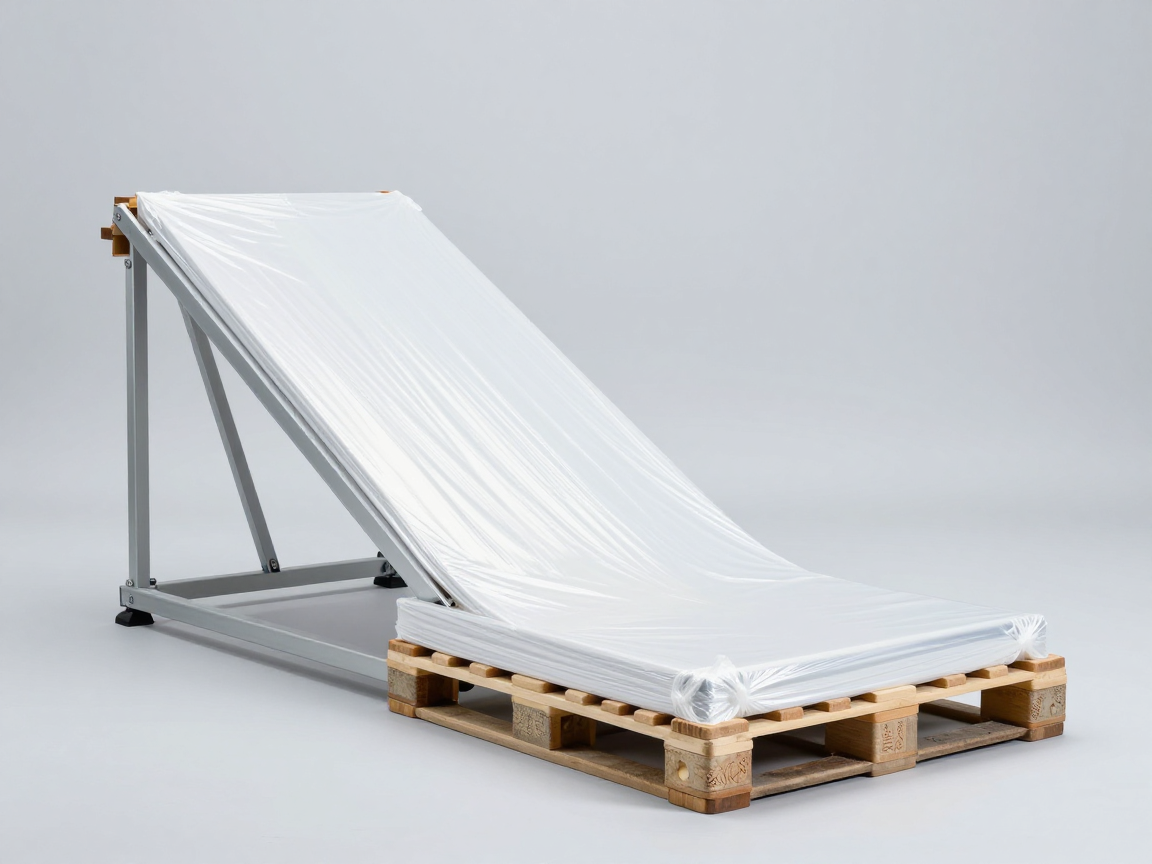
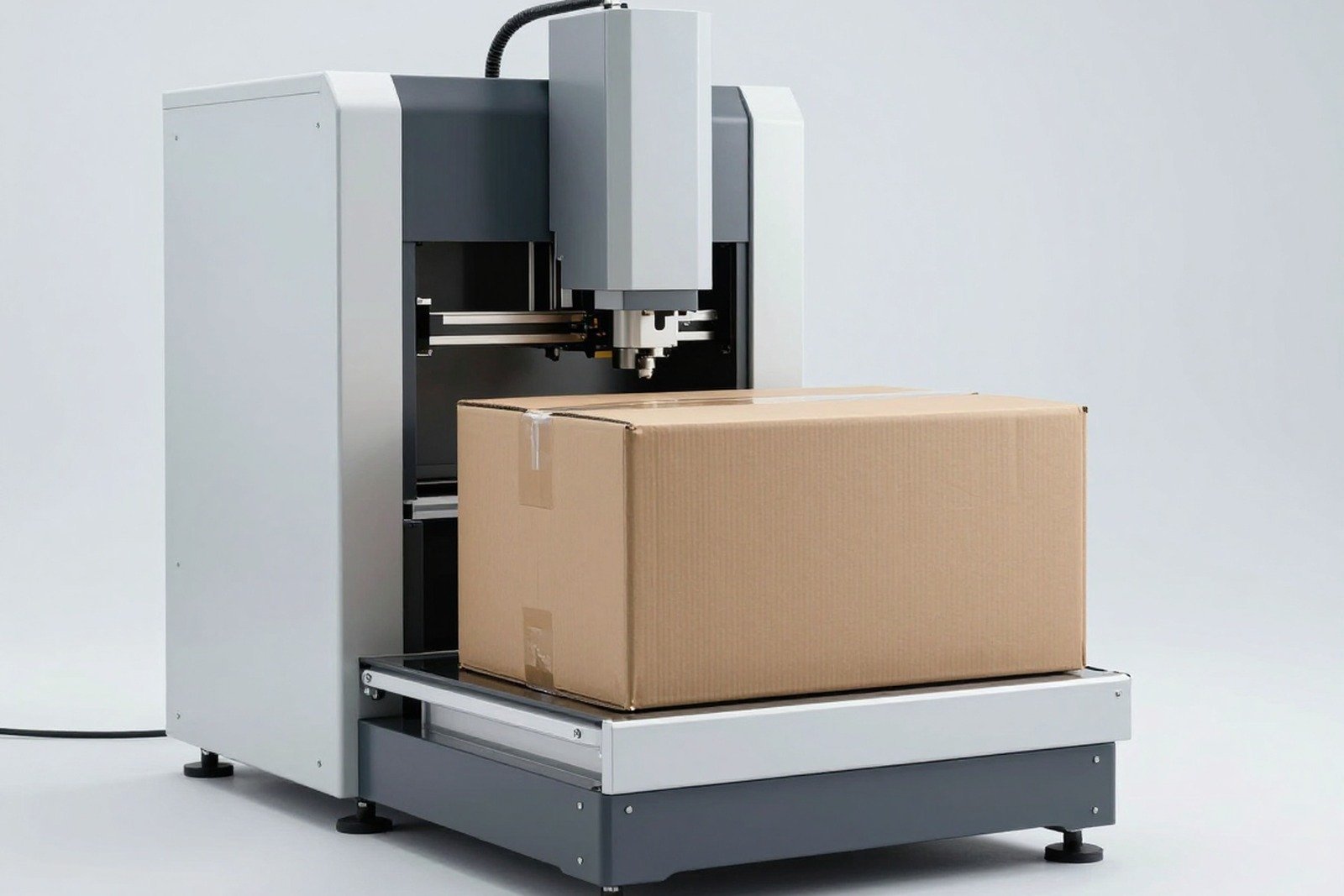
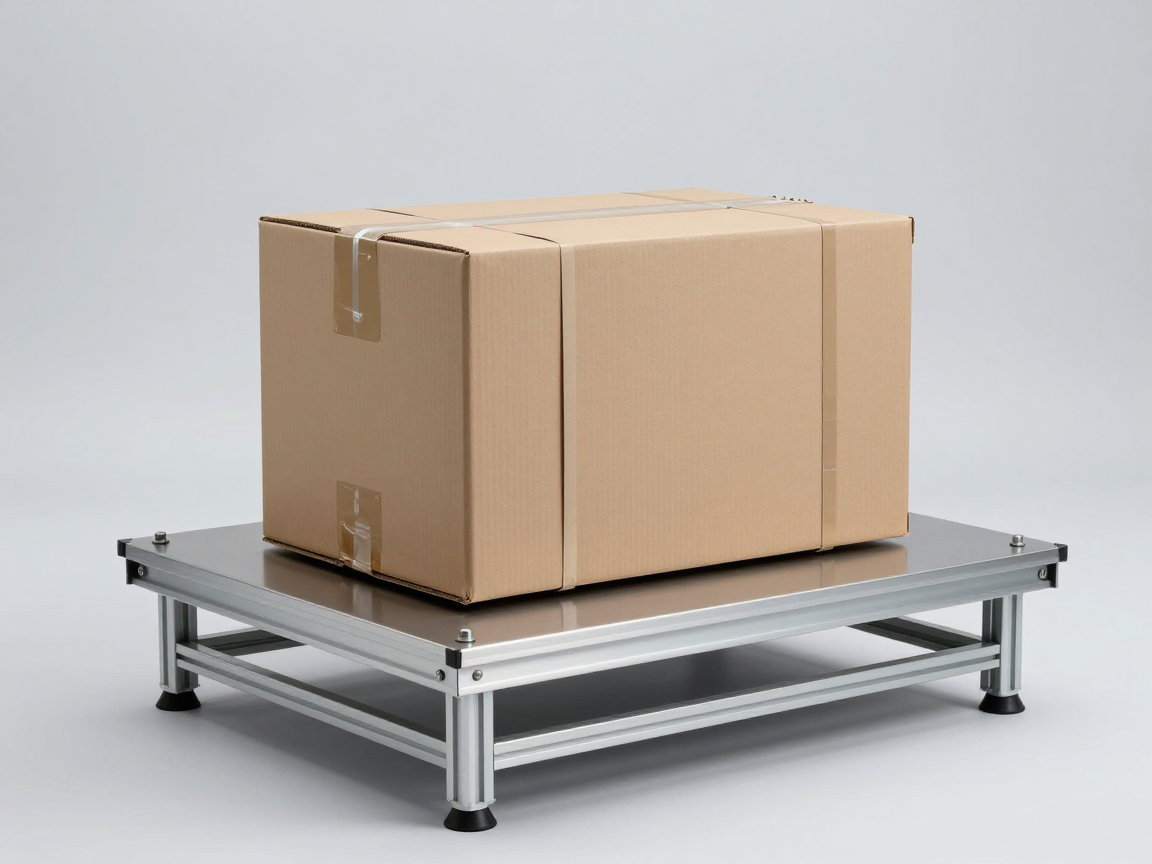
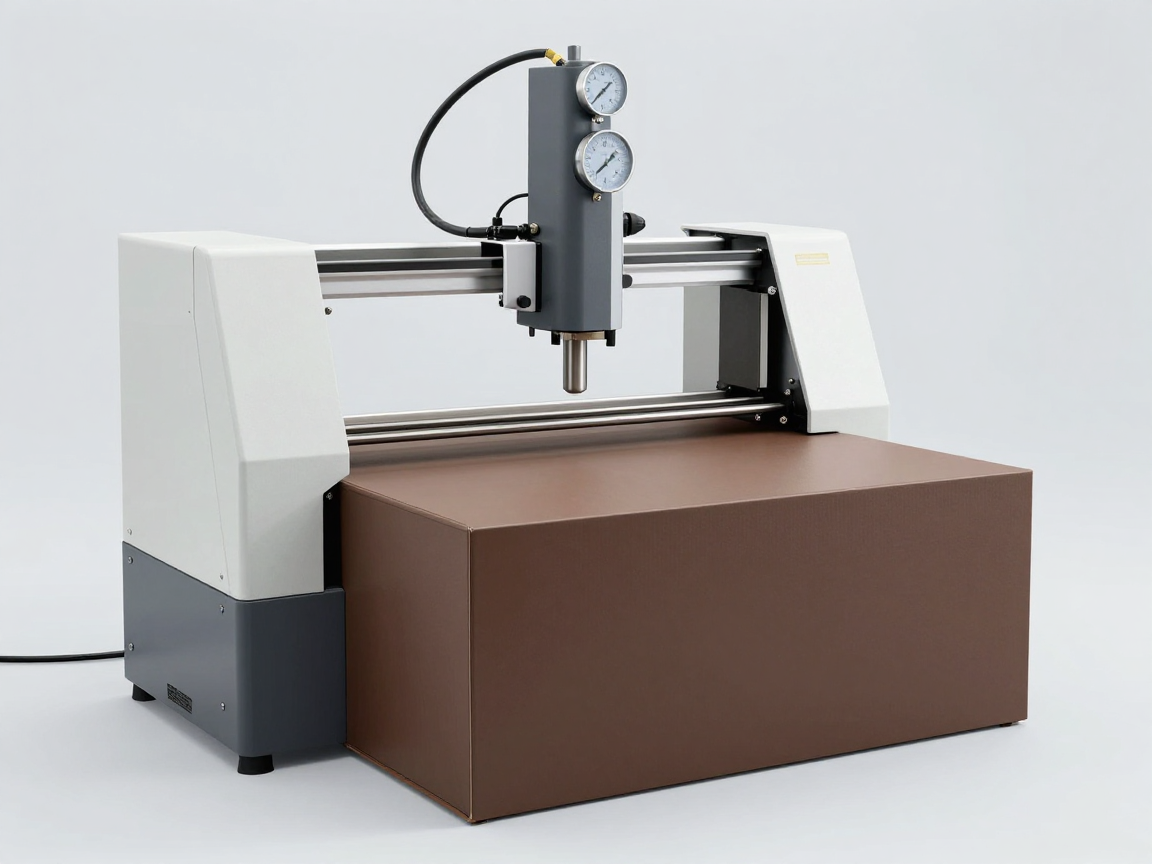
Cover image of the article «What is ISTA 2C? Packaging test procedure for furniture (Case Goods)» — illustrates testing of shipping packaging according to ISTA standards

1. What is ISTA 2C?

ISTA 2C is the test procedure partial simulation (Partial Simulation Performance Test) of ISTA, applicable to individual furniture packages (Case Goods) — furniture products are packaged and shipped in containers.

It is necessary to understand the correct scope from the beginning: although the name “case goods” in the traditional sense refers to hard goods (not upholstered), ISTA’s overview states that 2C can be used for any type of furniture transported in a container. That means 2C is not limited to wooden cabinets, tables, and shelves.

ISTA describes Series 2 as the combines the basic elements of Series 1 with the advanced elements of Series 3. With the 2C, the “advanced” part is where the vibrations are performed vibration under dynamic load — that is, while vibrating, the sample is also forced by an upper load that simulates stacked goods in a container.

Three limitations ISTA states, which should be discussed with the client before using the results: Series 2 articles Challenge the tolerance of packaging and products, but only simulates some real shipping risks, and It is not necessary to comply with the shipping company’s packaging regulations.

2. Most common misunderstanding about ISTA 2C

  1. “2C is a shaking + falling exercise like the other exercises, just with a different number of steps.” — No. The core difference of the 2C is the vibration performed under stacked load, with The upper load and vibration spectrum depend on the distribution channel, size and configuration of the package. This is a condition that “bare” vibrating exercises cannot simulate.
  2. “2C can also replace 3A/3E.” — No. 2C is simulation part; ISTA itself suggests considering 3A or 3E if a more general level of simulation is needed. 2C also no automatically meets the shipping company’s packaging regulations.
  3. “Just stronger vibration is enough for furniture.” — With furniture, damage usually comes from prolonged stacking load combines vibration, and magnetism impact when loading and unloading. Therefore, ISTA places the vibration category under dynamic loading in step 3 and the impact category in step 4, rather than just increasing the vibration intensity.

3. What does ISTA 2C test? — 4-step sequence
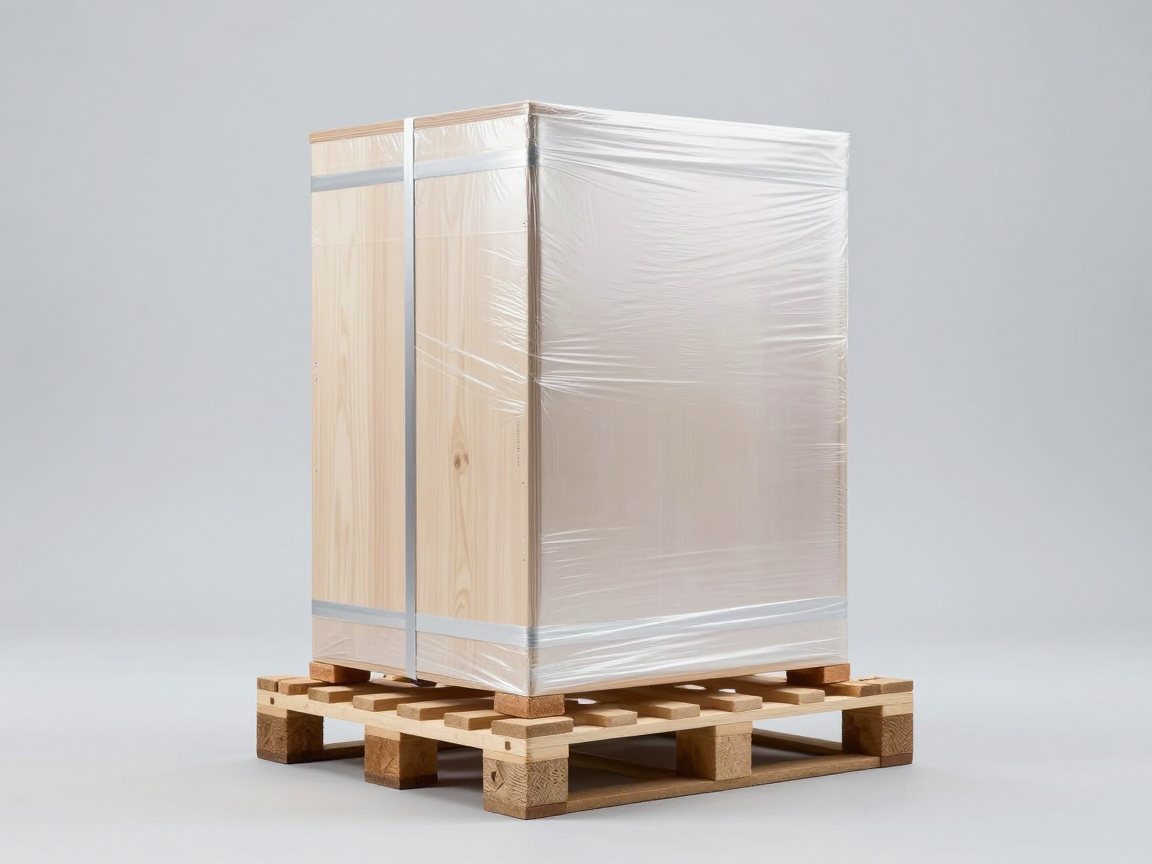
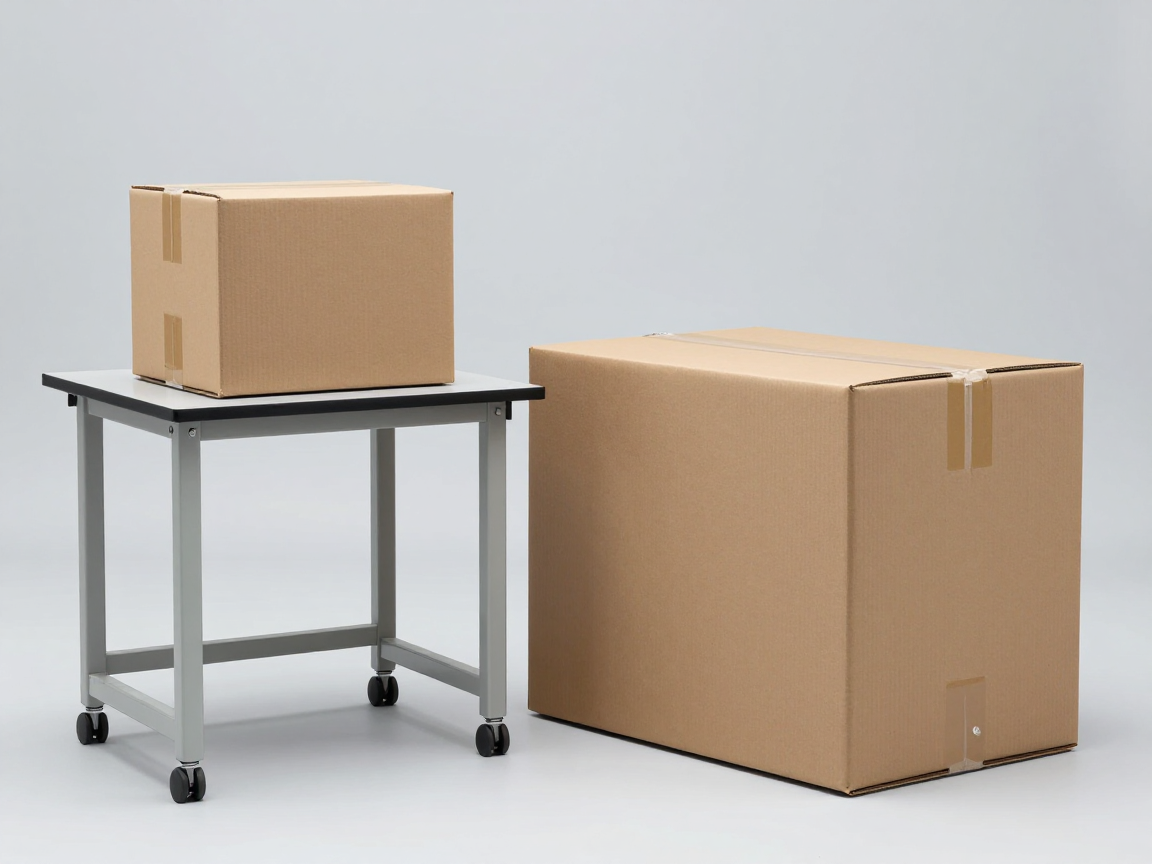
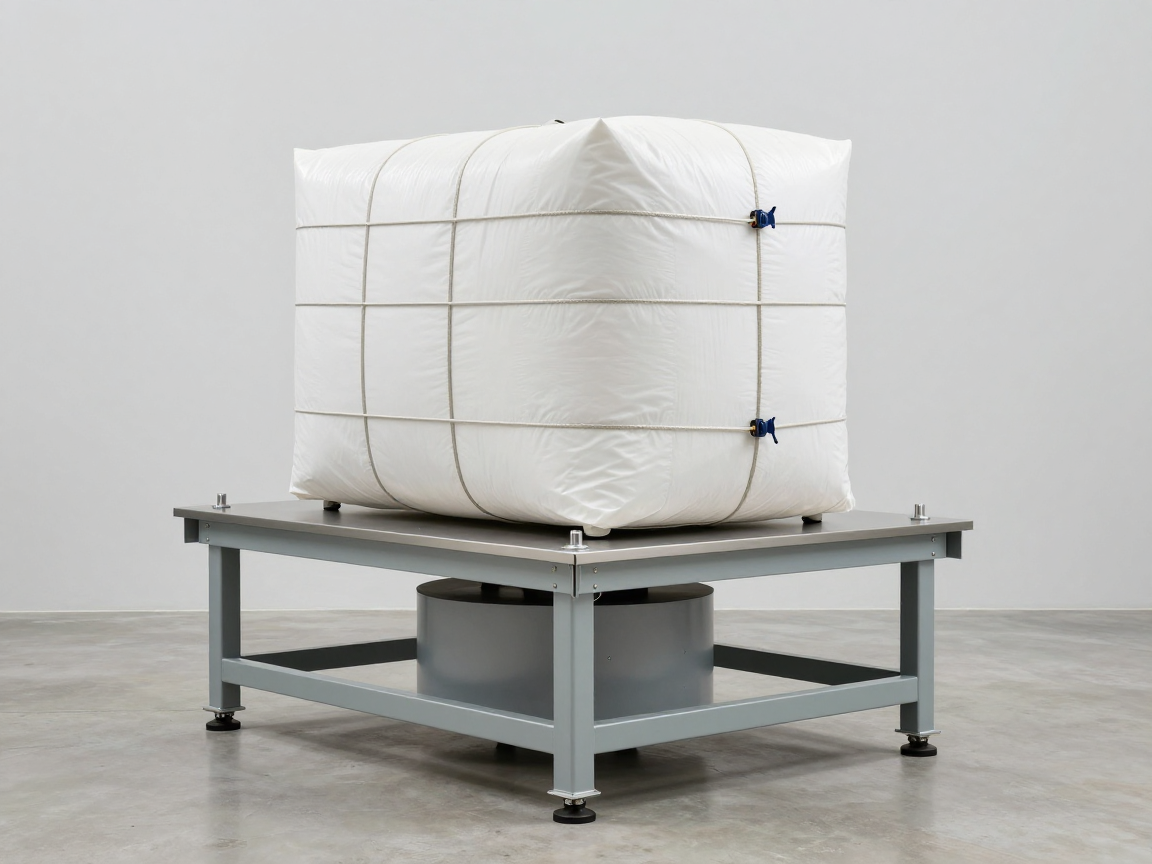
Illustration of the «4 step sequence» section of the article «What is ISTA 2C? Packaging test procedure for furniture (Case Goods)»
Illustration of the «4-step sequence» section.

All steps are done sequentially on the same sample. Accumulated damage from the previous step is part of the result.

Step Category Test type Required
1 Atmospheric Preconditioning Environmental temperature and humidity Required
2 Atmospheric Conditioning Temperature/humidity is selected according to the standard table Options
3 Vibration Under Dynamic Load Random vibration + superimposed load above Required
4 Shock Drop / Incline Impact / Horizontal Impact Required (with exceptions)

Different from 2A and 2B (controlled conditioning is required), in 2C step 2 is option. This is the easiest point to make mistakes when planning a test.
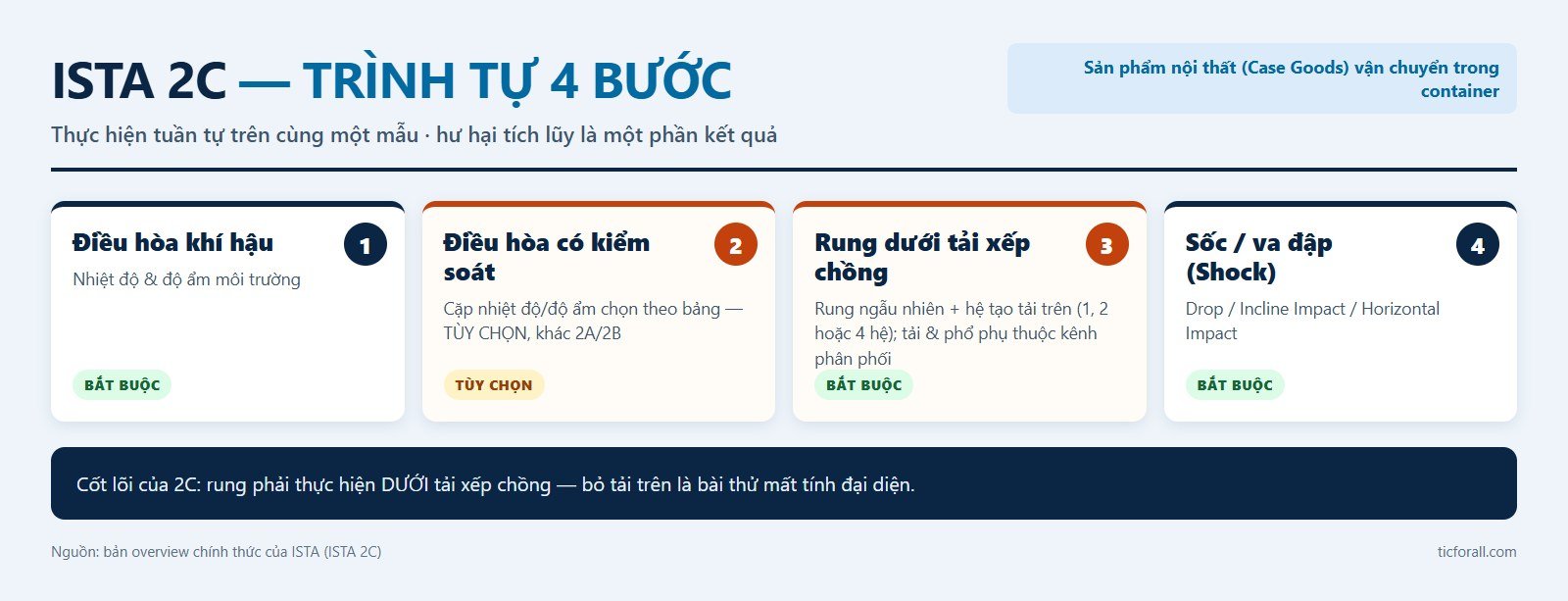
Sequence diagram of 4 steps of ISTA 2C packaging testing
Figure 1. ISTA 2C 4-step sequence — the core is random vibration under superimposed load.

Step 1 — Atmospheric Preconditioning

Templates are saved in ambient temperature and humidity conditions according to the time specified in the standard. Temperature and humidity must be recorded. This is a required step, not a performance test.

Step 2 — Atmospheric Conditioning — optional

If selected, the sample enters a conditioning chamber with a temperature/humidity couple Choose according to the table of standards. For furniture, this is a step worth considering if the product has moisture-sensitive materials (industrial wood, glue, plywood, surface paper) and the actual journey goes through high humidity areas.

Step 3 — Vibration Under Dynamic Load

This is a typical category of 2C and is the part that determines the representativeness of the test:

  • Use random vibrating table system according to ASTM D 4728.
  • The sample is loaded superimposed on top of the flat top-load apparatus — ISTA states that it can be used one, two or four separate load generating systems.
  • Load on calculation different accordingly distribution channel, package size and product configuration. Similarly, The random vibration spectrum also differs according to the distribution channel.

Since both the above load and the vibration spectrum depend on the distribution channel, The party sending the sample must clearly determine which channel the goods go to before registering for testing. This is not a parameter that the laboratory can choose for the customer. The full spectrum and loading table is in the original ISTA 2C document.

Step 4 — Shock

Choose one of three methods: Drop (drop height varies according to package weight and according to distribution channels). Incline Impact (Conbur) or Horizontal Impact (impact velocity varies with package weight). The standard includes exceptions (Exception One and Exception Two) for this category — the exception text and height/velocity tables are taken from the original document.

💡 Practical note: With furniture, the most common damage after impact is not “broken” but joint cracking, dented edges/corners, scratches the finish and frame deviation. The four pass/fail criteria must accurately describe these types of damage, otherwise the test will not “see” true damage.

4. Accompanying equipment and method standards
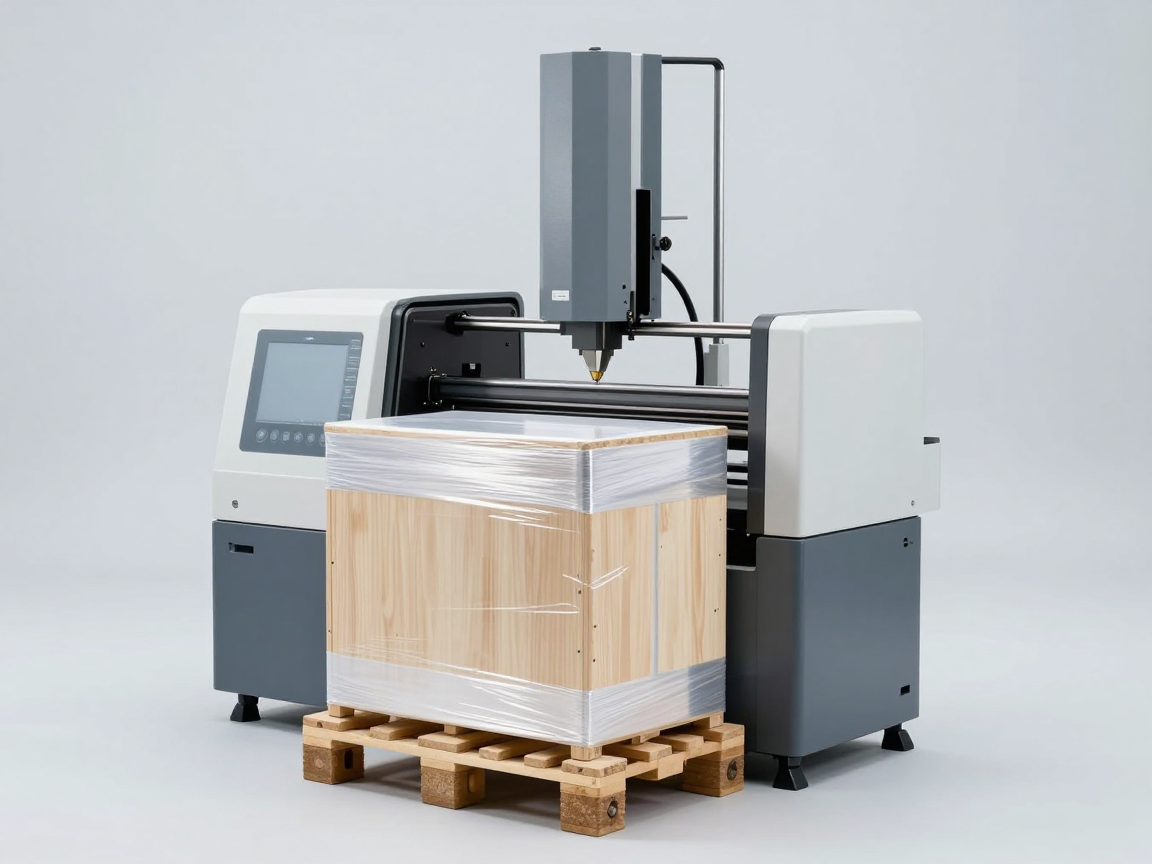
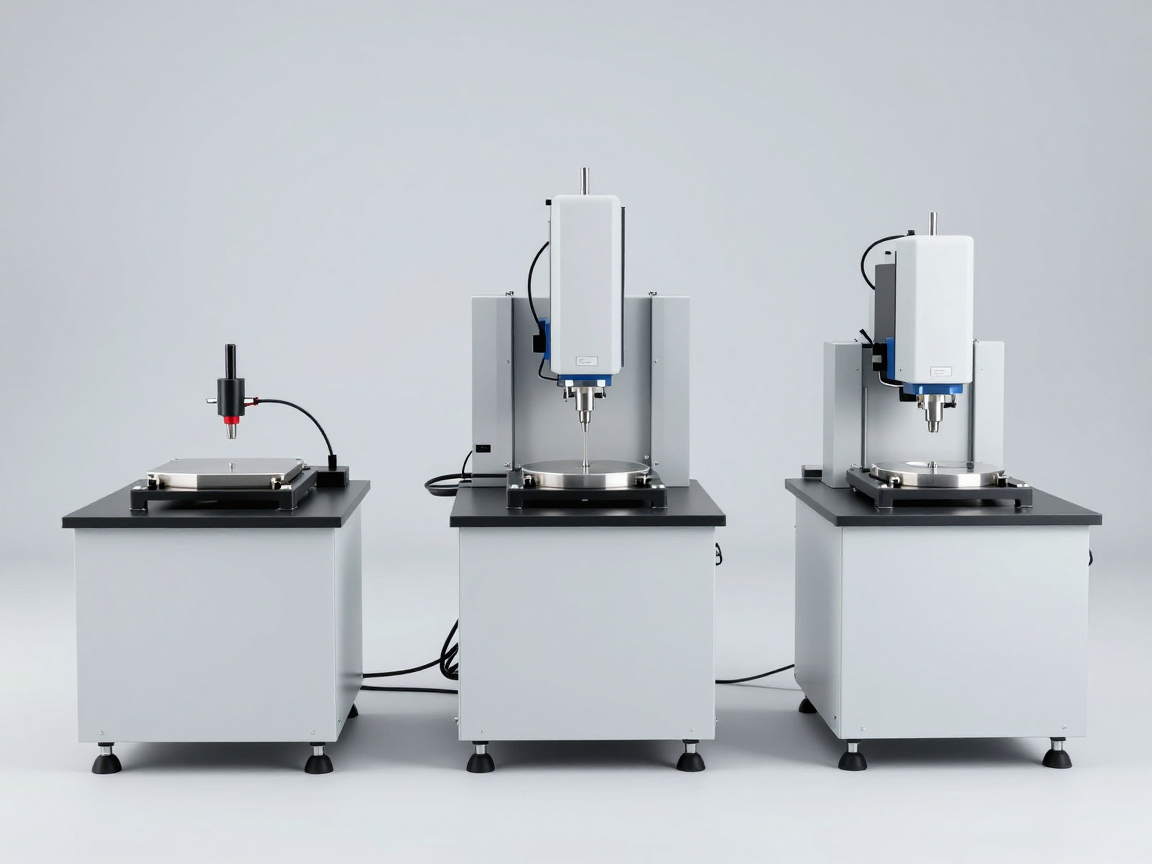
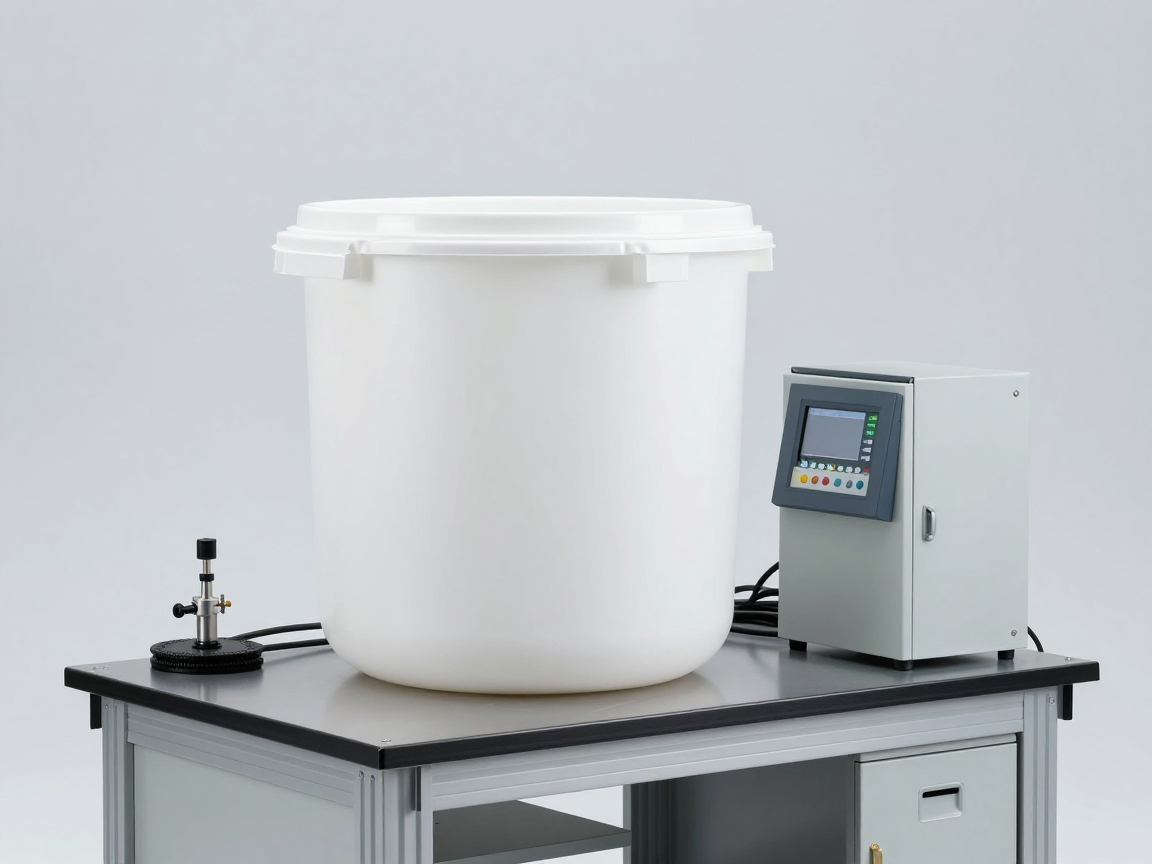
Illustration of the «Device» section of the article «What is ISTA 2C? Packaging test procedure for furniture (Case Goods)»
Illustration of the «Equipment» section.
Category Equipment Method standards
Climate conditioning Temperature and humidity recording device; conditioning chamber if using optional step ASTM D 4332
Vibration under dynamic load Random vibration table system + upper load generation system (one, two or four systems) ASTM D 4728
Free fall The machine falls freely ASTM D 5276
Vertical shock Shock machine ASTM D 5487
Incline (conbur) Inclined impactor ASTM D 880
Horizontal impact Horizontal impact system ASTM D 4003
Raise the rotating edge Rotational drop device ASTM D 6179

Three things need to be confirmed with the lab before Registration: (1) the above load generation system has enough systems and enough load capacity; (2) vibrating table with travel and size to accommodate bulky furniture; (3) the lab has vibration/load spectrum data corresponding to the distribution channel you declared.

5. Number of samples and sample preparation

With 2C, a sample isn’t just “a package” — it should be Correct interior configuration sold, because the stacking load used in the test is calculated from the package size and configuration.

  • Model Number: one sample for the entire sequence; ISTA Recommended repetitions 5 times or more, each time a new sample is used.
  • Each configuration is a separate set of samples. If the product is sold in multiple configurations (with or without accessories, packaged, whole or disassembled), prepare samples for the correct configuration to demonstrate and do not mix results between configurations.
  • Check size before try-on day: The sample must match the test chamber dimensions and loading system the laboratory will use.
  • If you choose a controlled conditioning step (optional step of 2C), the sample must be conditioned to the declared conditions before vibration — otherwise, the conditioning step is just a formality.
  • Send sample to lab: Excessive packaging or Repackage with new packaging at the lab.

Set of pass/fail criteria that businesses must finalize before trying: see 4 criteria businesses must determine for themselves before trying.

6. When should ISTA 2C not be used?

Situation Recommended procedure Why?
Interior passes through Parcel delivery system, each individual package ISTA 3A ISTA suggests it directly in the 2C overview
Goods come and go whole unit/pallet according to defined distribution channels ISTA 3E Correct process group for pallet loads
Just basic strength testing at minimal cost, no stacking required ISTA 1A / ISTA 1G Fewer categories; but cannot simulate stacking conditions
It is necessary to directly compare with conventional carton packaged goods in the same channel ISTA 2A / ISTA 2B In the same group of partial simulations, there is a compression category and two vibration steps
The customer/carrier requests a specific process According to that request 2C does not necessarily comply with the carrier’s packaging regulations

7. Common errors when implementing ISTA 2C

  1. Wrong distribution channel declaration. Both the above load and the vibration spectrum depend on the distribution channel; Wrong declaration makes the entire category lose its representativeness.
  2. Ignore the stacked load because “the vibrating table does not have a load generating device”. Then it’s no longer 2C — vibration under dynamic loading is the core of this process.
  3. I thought atmospheric conditioning was mandatory (or vice versa, thought it was optional but the customer requested it). In 2C this step is option — need to close with end customers.
  4. Pass/fail criteria are too general (“product is still usable”). For furniture, you must describe cracked joints, dented edges/corners, scratched finishes, and misaligned frames.
  5. Using a model that is not in the correct configuration for sale. Missing accessories and different mounting methods cause the calculated load to be incorrect.
  6. Finalize criteria after testing. Four criteria must be determined in advance; otherwise, the results become the judge’s opinion.

8. What does the cost and time of ISTA 2C testing depend on?

2C has two cost-differentiating features: the vibration steps performed under stacked load the above load generation system is needed (ISTA allows the use of one, two or four separate load generation systems — the greater the number of systems, the greater the preparation work), and Controlled atmospheric conditioning is optional instead of mandatory.

For large pieces of furniture, the cost also depends on the size of the testing chamber and the loading and unloading effort. Whether or not to use air conditioning should be based on the product material and actual journey, and be finalized with the end customer in advance. Summary of common factors: What does the cost and time of ISTA packaging testing depend on?

9. Frequently asked questions

What types of products is ISTA 2C used for?

Give Each individual piece of furniture is transported in a container. Although “case goods” traditionally refers to hard goods, ISTA clearly states that 2C can be used for any type of furniture shipped in containers.

How is 2C different from 2A and 2B?

Three points: (1) vibration category of 2C is implemented under stacked load with the above load generating system; (2) upper load and vibration spectrum depends on the distribution channel; (3) controlled atmospheric conditioning step at 2C is option, while in 2A/2B it is mandatory.

What is the above load generation system?

A system that places a load on the sample while vibrating, simulating the stacking of goods in a container. ISTA allows use one, two or four separate load generating systems depending on configuration and requirements.

Do I have to choose a controlled conditioning step?

Standard is left as an option. The decision should be based on the product’s material and actual riding conditions — and should be finalized with the end customer before testing.

Does reaching 2C mean the interior is not damaged during transportation?

No. The result means that the sample has withstood the specified test sequence, compared with Failure criteria are determined by yourself before testing. 2C is still a partial simulation.

If my goods go in both parcel and container, which process should I choose?

Main distribution channels need to be identified and risks need to be demonstrated. For parcel, ISTA suggests 3A; For interior box containers, 2C is the partial simulation option. Many businesses try to follow the channel with the largest proportion first.

10. Conclusion

ISTA 2C is a partial simulation procedure for Case Goods are transported in containers, with 4 steps: atmospheric conditioning at ambient conditions, controlled atmospheric conditioning (optional), random vibration under superimposed load, and impact.

The bottom line: the value of 2C lies in the category of vibration under dynamic load — and this category is only true when Distribution channels, top load and package configuration are declared accurately. Omitting the stacked load or incorrectly declaring the distribution channel will make the test unrepresentative, even if all other steps are still taken.


References

Related articles


Discuss further


    Disclaimer and acknowledgment of intellectual property rights

    This article is an explanatory content compiled by us for the purpose of introducing and disseminating knowledge. Article is not a translation, copy, abridgement or replacement of the original standard, and is not evaluated, approved or sponsored by ISTA (International Safe Transit Association)..

    The entire content of ISTA standards is copyrighted by the International Safe Transit Association, Inc. (East Lansing, Michigan, USA) — All rights reserved. ISTA® and the ISTA logo are registered trademarks of the International Safe Transit Association, Inc.; Mentioned in this article are for guidance purposes only and do not imply any affiliation, partnership or sponsorship.

    Article content For reference only; Before applying for any purpose — testing, evaluation, certification or commercial decision-making — the reader should refer directly to the original ISTA document (the most complete and up-to-date version) and consult an accredited testing facility when necessary.

    When performing testing, it is mandatory to use the official, current version of the standard, obtained directly from ISTA. We do not redistribute ISTA materials in any form. Information in this article may be out of date with the current version of the standard.

    See more: Copyright Policy & Disclaimer by ticforall.com.
    What is ISTA 2B? Partially simulated packaging test procedures for packages over 150 lb (68 kg)

    0
    Cover image of the article «What is ISTA 2B? Partially simulated packaging test procedures for packages over 150 lb (68 kg)» — illustrates testing of shipping packaging according to ISTA standards

    1. What is ISTA 2B?

    ISTA 2B is the test procedure partial simulation (Partial Simulation Performance Test) of ISTA, applicable to individual packages weighing more than 150 lb (68 kg) has been packaged and ready to be sent.

    ISTA describes Series 2 as the combines the basic elements of Series 1 (Non-Simulation Integrity) with enhanced Series 3 elements (General Simulation). With 2B, the “advanced” part appears in three places: yes controlled climate step, yes compression category, and yes Two vibration steps surround the impact item (total 7 steps).

    Three limitations ISTA clearly states in the overview, which should be discussed with the client before using the results: Series 2 articles Challenge the tolerance of packaging and products, but only simulates some real shipping risks, and It is not necessary to comply with the shipping company’s packaging regulations.

    2B is often considered for heavy goods for international distribution, bulky goods that need to compare packaging options, or as a “screening” step before deciding to invest in general simulations (Series 3).

    2. Most common misunderstanding about ISTA 2B

    1. “2B is an upgrade of 1B so it’s definitely more suitable.” — 2B more categories 1B (7 steps vs. about 4 steps, with additional controlled conditioning and compression), but ISTA still classifies 2B as partial simulation. More items does not mean it can simulate the real journey.
    2. “REACHing 2B means meeting the shipping carrier’s packaging requirements.” — No. Overview of ISTA clearly states the Series 2 articles It is not necessary to comply with the shipping company’s packaging regulations.
    3. “For heavy goods on pallets, just use 2B.” — Not really. ISTA allows parcels on the skid/pallet is clearly visible switch to 1E or 3E — process groups dedicated to bulk cargoes. Choosing the wrong group will mischaracterize the risk.

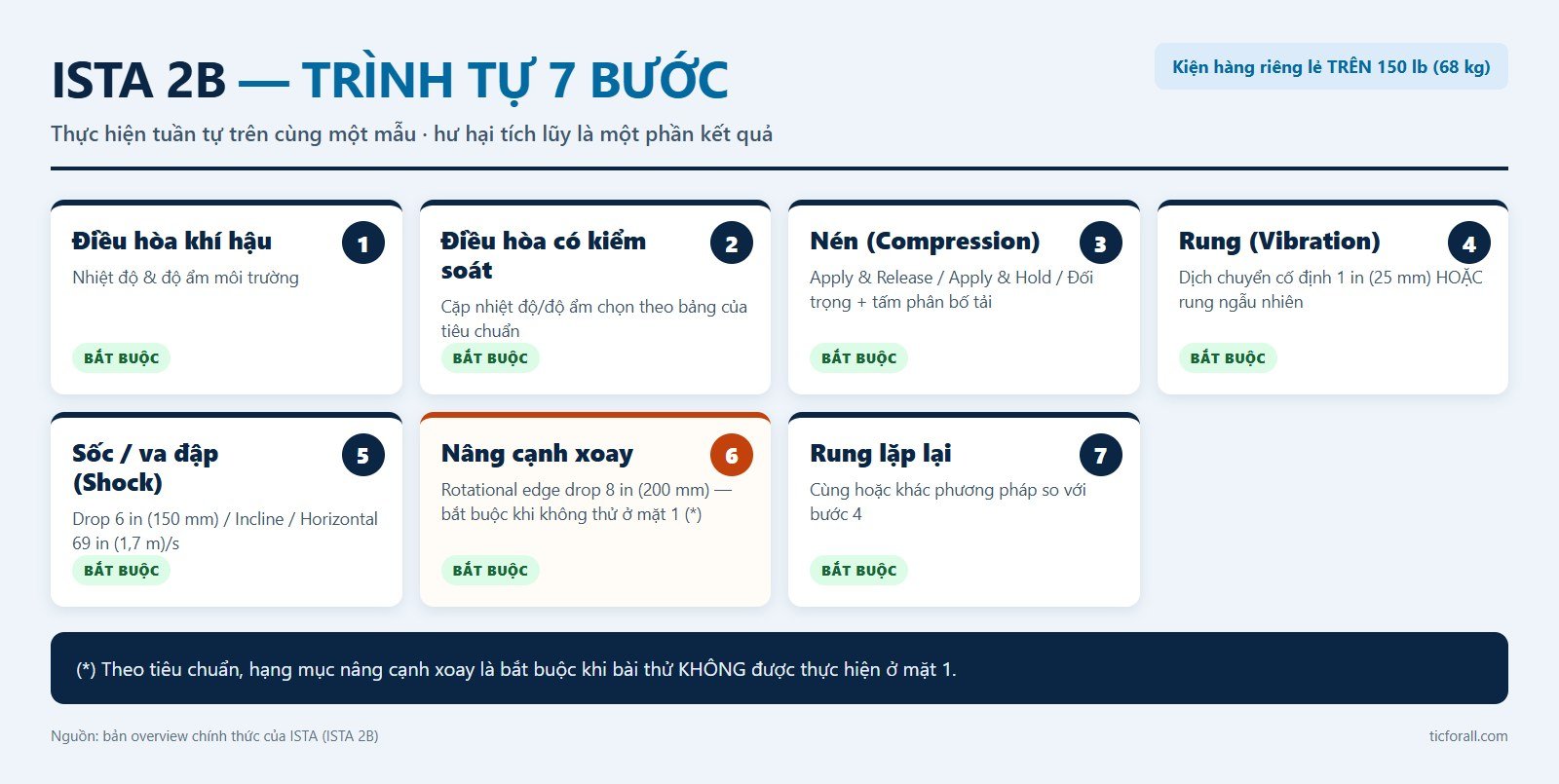
    3. What does ISTA 2B test? — 7-step sequence

    Illustration of the «7 step sequence» section of the article «What is ISTA 2B? Partially simulated packaging test procedures for packages over 150 lb (68 kg)»
    Illustration of the «7-step sequence» section.

    All 7 steps are done sequentially on the same sample. Accumulated damage from the previous step is part of the result.

    Step Category Test type Required
    1 Atmospheric Preconditioning Environmental temperature and humidity Required
    2 Atmospheric Conditioning Temperature/humidity is selected according to the standard table Required
    3 Compression Apply & Release / Apply & Hold / Weight and Load Spreader Required
    4 Vibration Fixed displacement or vibrate randomly Required
    5 Shock Drop 6 in (150 mm) / Incline Impact / Horizontal Impact Required
    6 Shock — Rotational Edge Drop 8 in (200 mm) Required when not tested on side 1
    7 Vibration — repeat Fixed displacement or vibrate randomly Required

    The three parameters in bold in steps 5 and 6 are the test levels published by ISTA in the free overview of 2B. The full drop height/velocity table by mass step must still be obtained from the original document.

    Standard note: steps 4 and 7 are allowed same or different vibration method; The report must clearly state which method is used for each step.

    Sequence diagram of 7 steps of ISTA 2B packaging testing
    Figure 1. ISTA 2B 7-step sequence — raised rotating edge (step 6) required when not tested on side 1.

    Step 1 — Atmospheric Preconditioning

    Templates are saved in ambient temperature and humidity conditions of the laboratory according to the time specified in the standard. Temperature and humidity must be recorded at the beginning and at the end.

    Step 2 — Atmospheric Conditioning

    Sample is included air conditioning chamber with temperature/humidity couple Choose according to the table of standards. With heavy goods, this is often the step that takes up the most time and space, because bulky samples must enter and exit the chamber using lifting equipment.

    Step 3 — Compression

    Simulate stacked loads. The standard allows choosing one of three variations: Machine Apply & Release (press up to the calculated force with compensation factor then release immediately), Machine Apply & Hold (press and hold the load for the specified time), or Weight and Load Spreader (counterweight + load distribution plate). Test force/load is calculated according to the formula depending on the package weight and box size, then is limited to the minimum – maximum range of the standard.

    ⚠️ Safety: With goods over 68 kg, the operation of placing/holding the load and counterweight is the highest risk point for occupational accidents in the test. There must be lifting procedures and a safe distance before starting.

    Step 4 — Vibration

    Choose one of two methods, and other methods than step 7 are allowed:

    • Fixed displacement vibration — the vibrating table has moved forward 1 in (25 mm) peak–peak according to ASTM D 999 (Method A1 or A2); Rotational or vertical movements are acceptable; The test frequency must be determined.
    • Vibrate randomly — according to ASTM D 4728, with total Grms level as prescribed by the standard.

    Step 5 — Shock

    Choose one of three methods: Drop — for packages over 150 lb, the specified drop height is 6 in (150 mm); Incline Impact (Conbur) — change velocity 69 in (1.7 m)/second; Horizontal Impact — also changes velocity 69 in (1.7 m)/second. For other mass levels, height/velocity is taken from the table in the original document.

    Step 6 — Rotational Edge Drop

    The sample is lifted at one edge and dropped rotated to the ground, the test level 8 in (200 mm). Point to note: this item Required when the test is not performed on side 1. This is a specific category of the heavy goods group – simulating the situation of the package tilting and falling on its sides when loading and unloading, something that the flat falling card cannot simulate.

    Step 7 — Vibration

    After the two impact items, the sample is vibrated again in a degraded state. With heavy goods, this is a step that easily reveals accumulated damage to the pallet bottom structure, straps and corner joints.

    4. Accompanying equipment and method standards

    Illustration of the «Device» section of the article «What is ISTA 2B? Partially simulated packaging test procedures for packages over 150 lb (68 kg)»
    Illustration of the «Equipment» section.
    Category Equipment Method standards
    Climate conditioning Air conditioning chamber + temperature and humidity recording device ASTM D 4332
    Compression Apply & Release / Apply & Hold compression system; or load distribution plate + counterweight ASTM D 642 (counterbalancing variant only: not referenced)
    Fixed displacement vibration 1 in (25 mm) vibration table, ~0.06 in (1.5 mm) metal base plate, frequency meter, timer ASTM D 999 (Method A1/A2)
    Vibrate randomly Random vibrating table system ASTM D 4728
    Free fall The machine falls freely ASTM D 5276
    Vertical shock Shock machine ASTM D 5487
    Incline (conbur) Inclined impactor ASTM D 880
    Horizontal impact Horizontal impact system ASTM D 4003
    Raise the rotating edge Rotational drop device ASTM D 6179

    With heavy goods, three technical questions determine the ability to perform the test: the falling machine/impact device has enough load and table size, the vibrating table has enough travel to reproduce the amplitude or spectrum, and the lab has a lifting facility to move the sample in and out of the air conditioning chamber. This is a parameter that should be checked before Register to try.

    5. Number of samples and sample preparation

    2B is for packages over 68 kg (150 lb), and it changes sample preparation in three specific ways.

    • Model Number: a template for all seven steps; ISTA Recommended repetitions 5 times or more with new samples each time. Loading and unloading costs make repetition more expensive than lighter exercises, so the number of repetitions needs to be agreed upon in advance.
    • Sample shipping: Must use appropriate vehicles and tie-downs; A sample that is misaligned on the way to the lab is considered to have finished testing before entering the test chamber. If possible, Repackage with new packaging at the lab instead of shipping packaging that has already endured the journey.
    • Declaring configuration and load center: mass, size, center of gravity position and method of securing goods. Step Raise the rotating edge at the end of the sequence depends directly on the focus, so this information must be correct from the beginning.
    • If the test does not take side 1 as the standard, the sample must be intact enough to complete the rotating edge lift at the end — this is why samples that show signs of pre-existing damage should not be used.

    💡 With heavy packages, packaging damage is more dangerous: Just one flattened corner can destabilize an entire column of goods stacked in a warehouse or container. If the goods have been stored, they should be classified as “flattened packaging causing stacking collapse”. failed right from the criteria.

    Pass/fail criteria predetermined by the business: see 4 criteria businesses must determine for themselves before trying.

    6. When should ISTA 2B not be used?

    Situation Recommended procedure Why?
    Package over 150 lb on exposed skid/pallet ISTA 1E / ISTA 3E ISTA allows switching to process groups for bulk/pallet loads
    Just basic strength testing, no controlled conditioning or compression required ISTA 1B Fewer items, lower costs
    Want to use random vibration in the form “vibration + shock only” ISTA 1H The correct component needs to be checked, not dragging other items
    Need to forecast performance according to specific distribution channels ISTA 3 Series (e.g. 3E) General simulation, taking into account the transport channel
    The carrier/customer requires a specific process According to that request 2B does not necessarily comply with the carrier’s packaging regulations

    7. Common mistakes when implementing ISTA 2B

    1. Skip step 6 (raising the rotating edge) because “step 5 has already fallen”. The two categories simulate two different risks; Rotational edge drop is also required when the test is not performed on side 1.
    2. The wrong process group was selected for the goods on the pallet. Bales on skids/pallets are clearly visible so consider 1E or 3E instead of 2B.
    3. Miscalculation of compression force due to mixing inch–pound and SI units. The formula accepts only one consistent system of units.
    4. Did not check device load/size before registering. Heavy goods can exceed the load or exceed the size of the lab table; Late discovery causes the entire scheduling session to be lost.
    5. Use the same pattern for all 5 iterations or use shipped samples without repackaging.
    6. Finalize pass/fail criteria after testing. The four criteria must be determined in advance, otherwise the result will only be an opinion.

    8. What does the cost and time of the ISTA 2B test depend on?

    2B is for bales over 68 kg (150 lb) so heavy lifting equipment and vibrating tables are required. Also, step Raise the rotating edge — performed when the test does not take side 1 as the standard — requires separate operations and equipment; This is an item 2A does not have, and is also an easily overlooked part when asking for a quote.

    The remaining two variables are the choice of vibration method at each step and the number of iterations. Summary of common factors: What does the cost and time of ISTA packaging testing depend on?

    9. Frequently asked questions

    How is ISTA 2B different from ISTA 1B?

    1B is a monolithic durability test for loads over 150 lb: environmental conditioning, fixed displacement vibration, impact, and rotating edge lift. 2B add Controlled atmospheric conditioning, extra compression category, and one more step of vibration after impact — total 7 steps.

    Why does 2B have a mandatory rotating edge step?

    Because with packages over 68 kg, the actual risk is not just “falling flat” but also tilted and fallen edges when loading and unloading, getting on and off vehicles or storing in warehouses. A flat drop card does not simulate this situation. The standard requires this item when the test is not performed on side 1.

    My goods are 200 kg, packed on pallets with wrapping film — use 2B or 3E?

    Need to distinguish visible skid/pallet with single packages. For whole unit loads on pallets, ISTA allows use 1E or 3E — 3E simulates the distribution channel more closely. Should be finalized according to actual channels and end-customer requirements.

    Does reaching 2B mean that the goods are not damaged during transportation?

    No. The result means that the sample has withstood the specified test sequence, compared with Failure criteria are determined by yourself before testing. 2B is still a partial simulation.

    Can step 4 and step 7 use two different vibration methods?

    Okay. The standard allows for both steps with fixed displacement vibration, with random vibration, or one type each — as long as the report clearly states which method each step uses.

    10. Conclusion

    ISTA 2B is a partial simulation procedure for individual packages over 150 lb (68 kg), incl 7 sequential steps on the same sample: atmospheric conditioning at ambient conditions, controlled conditioning, compression, vibration, impact, rotating edge lift and repetitive vibration.

    Two points determine the quality of the result: Four pass/fail criteria must be finalized before testing, and The rotating edge lift item must not be overlooked when the test does not perform on side 1. And like all Series 2 tests, the result is 2B no automatically meets the shipping company’s packaging regulations.


    References

    Related articles


    Discuss further


      Disclaimer and acknowledgment of intellectual property rights

      This article is an explanatory content compiled by us for the purpose of introducing and disseminating knowledge. Article is not a translation, copy, abridgement or replacement of the original standard, and is not evaluated, approved or sponsored by ISTA (International Safe Transit Association)..

      The entire content of ISTA standards is copyrighted by the International Safe Transit Association, Inc. (East Lansing, Michigan, USA) — All rights reserved. ISTA® and the ISTA logo are registered trademarks of the International Safe Transit Association, Inc.; Mentioned in this article are for guidance purposes only and do not imply any affiliation, partnership or sponsorship.

      Article content For reference only; Before applying for any purpose — testing, evaluation, certification or commercial decision-making — the reader should refer directly to the original ISTA document (the most complete and up-to-date version) and consult an accredited testing facility when necessary.

      When performing testing, it is mandatory to use the official, current version of the standard, obtained directly from ISTA. We do not redistribute ISTA materials in any form. Information in this article may be out of date with the current version of the standard.

      See more: Copyright Policy & Disclaimer by ticforall.com.
      What is ISTA 2A? Partially simulated packaging test procedures for packages up to 150 lb (68 kg)

      0
      Cover image of the article «What is ISTA 2A? Partially simulated packaging test procedures for packages up to 150 lb (68 kg)» — illustrates testing of shipping packaging according to ISTA standards

      1. What is ISTA 2A?

      ISTA 2A is the test procedure partial simulation (Partial Simulation Performance Test) of ISTA, applicable to Individual packages weigh up to 150 lb (68 kg) has been packaged and ready to be sent.

      Points to understand correctly from the beginning: 2A no a stronger test than 1A of the same type, also no an abridged version of 3A. ISTA describes Series 2 as the combines the basic elements of Series 1 (Non-Simulation Integrity — monolithic durability test) with enhanced Series 3 elements (General Simulation — general simulation). That means 2A has both a “durability test” part and a “transportation risk simulation” part, but only simulates part actual risks.

      ISTA clearly states in the overview: Series 2 articles Challenge the tolerance of packaging and products, but only simulates some real shipping risks, and It is not necessary to comply with the shipping company’s packaging regulations. Those three limitations must be made clear to customers before they use 2A results for any commercial purpose.

      2A is often considered when goods are expected for international distribution, when it is necessary to compare packaging options before finalizing the design, or when the goal is “screening” rather than accurately predicting performance on each line.

      2. Most common misunderstanding about ISTA 2A

      1. “2A is in series number 2 so it is definitely better than 1A, using 2A is safe.” — Incorrect in nature. 2A adds a category and adds a simulation element, but ISTA still classifies 2A as a group partial simulation: it only simulates part of the risk. “More items” does not mean “predicting the real journey”.
      2. “REACHing 2A means meeting the shipping carrier’s packaging requirements.” — No. The ISTA overview clearly lists Series 2 articles do not necessarily comply with the shipping company’s packaging regulations. If the end customer or carrier requires a specific procedure, it must be matched to that procedure.
      3. “One passing sample is enough to conclude that the packaging is okay.” — ISTA minimum requirements 1 sample, but Recommended to repeat 5 times or more with new sample for each test, to have a basis for talking about the “representative performance” of the packaging. A sample gives only one data point.

      3. What does ISTA 2A test? — 6-step sequence

      Illustration of the «6 step sequence» section of the article «What is ISTA 2A? Partially simulated packaging test procedures for packages up to 150 lb (68 kg)»
      Illustration of the «6-step sequence» section.

      All 6 steps are performed sequentially on the same sample, do not change samples midway. Accumulated damage from the previous step is part of the result.

      Step Category Test type Required
      1 Atmospheric Preconditioning Environmental temperature and humidity Required
      2 Atmospheric Conditioning Temperature/humidity is selected according to the standard table Required
      3 Compression Apply & Release / Apply & Hold / Weight and Load Spreader Required
      4 Vibration Fixed displacement or vibrate randomly Required
      5 Shock Drop / Incline Impact / Horizontal Impact Required
      6 Vibration — repeat Fixed displacement or vibrate randomly Required

      Important note of the standard: steps 4 and 6 are allowed same or different vibration method; The test report must clearly state which method is used for each step.

      Sequence diagram of 6 steps of ISTA 2A packaging testing
      Figure 1. ISTA 2A 6-step sequence — performed sequentially on the same sample.

      Step 1 — Atmospheric Preconditioning

      Templates are saved in ambient temperature and humidity conditions of the laboratory within the time specified by the standard before testing. Temperature and humidity must be recorded at the beginning and at the end. This is a mandatory conditioning step, not a performance measure.

      Step 2 — Atmospheric Conditioning

      Unlike 1A (which only conditions under ambient conditions), 2A has an additional step of sample introduction air conditioning chamber with temperature/humidity couple Choose according to the table of standards. This is the first “advanced simulation” that Series 2 takes from Series 3. Temperature, humidity and time must be noted in the report.

      Step 3 — Compression

      Simulate stacked loads in warehouses. The standard allows choosing one of three variations:

      • Machine Apply & Release — the compressor presses to the calculated force with compensation factor and then releases immediately.
      • Machine Apply & Hold — the compressor presses to the calculated force and holds the load for the specified time.
      • Weight and Load Spreader — Use load distribution plates and counterweights according to calculated load.

      Test force/load is calculated from the formula depending on package weight and box size, then limited to the minimum – maximum range specified by the standard. Full parameter tables and formulas taken directly from the original ISTA document.

      Step 4 — Vibration

      Choose one of two methods, and Other methods are allowed compared to step 6:

      • Fixed displacement vibration — the vibrating table system has moved forward 1 in (25 mm) peak–peak according to ASTM D 999 (Method A1 or A2); Rotary or vertical linear movements are acceptable; The test frequency must be determined.
      • Vibrate randomly — according to ASTM D 4728, with total Grms level as prescribed by the standard.

      Step 5 — Shock

      Choose one of three methods: Drop (drop height varies according to package weight), Incline Impact (Conbur) or Horizontal Impact (impact velocity varies with package weight). The specific fall height and velocity are taken from the table in the original document.

      Step 6 — Vibration

      After impact, the sample is vibrated again. This is the clearest distinction between 2A and 1A: 1A vibrates once and then impacts, while 2A places the impact in between two vibration steps. Purpose: after the packaging has suffered mechanical damage from a fall, the packaging’s ability to withstand vibration is tested again in a reduced state.

      4. Accompanying equipment and method standards

      Illustration of the «Device» section of the article «What is ISTA 2A? Partially simulated packaging test procedures for packages up to 150 lb (68 kg)»
      Illustration of the «Equipment» section.
      Category Equipment Method standards
      Climate conditioning Air conditioning chamber + temperature and humidity recording device ASTM D 4332
      Compression Apply & Release / Apply & Hold compression system; or load distribution plate + counterweight ASTM D 642 (counterbalancing variant only: not referenced)
      Fixed displacement vibration 1 in (25 mm) vibration table, ~0.06 in (1.5 mm) metal base plate, frequency meter, timer ASTM D 999 (Method A1/A2)
      Vibrate randomly Random vibrating table system ASTM D 4728
      Free fall Free fall drop tester ASTM D 5276
      Vertical shock Shock machine ASTM D 5487
      Incline (conbur) Inclined impactor ASTM D 880
      Horizontal impact Horizontal impact system ASTM D 4003

      For the compression category, the standard allows both fixed platen and floating platen. This is a point that needs to be confirmed in advance with the laboratory if the customer has specific requirements for device configuration.

      5. Number of samples and sample preparation

      In 2A, all six steps run above same sample, and that sample goes through a compression step before entering vibration and then impact. Therefore, the sample needs to be selected and recorded as a benchmark, not just a “goods for testing”.

      • Model Number: one sample for the entire sequence; ISTA Recommended repetitions 5 times or more, one new sample at a time.
      • Sample must be in correct retail configuration — the same type of box, packing material and sealing method as when shipped. Small delivery packages are often reinforced when sent; do not include the same reinforcement layer in the test sample.
      • Record status before testing: weight, external dimensions, six-sided photo and packaging condition. This is the only landmark to attribute future damage.
      • Repackage when sending to the lab: Excessive packaging or Repackage with new packaging at the lab.

      💡 As for the compression category of 2A: If the package may be stored In the distribution chain, the packaging is so flattened that it can cause damage stacking collapse considered failed. If the goods are not stored, flattened packaging is still acceptable with conditions The product is still within specified tolerances and the packaging is still in sealed condition.

      The set of pass/fail criteria is determined in advance by the business, the standards are not defined instead: see 4 criteria businesses must determine for themselves before trying.

      6. When should ISTA 2A not be used?

      2A has a very real minus: Packages over 100 lb (45 kg) placed on visible skids/pallets then ISTA allows switching to another more suitable process. The table below shows cases where another procedure should be considered:

      Situation Recommended procedure Why?
      Just need “can the goods withstand the basic level”, minimum budget ISTA 1A Fewer items, still testing monolithic durability
      Packages over 100 lb (45 kg) on exposed skids/pallets ISTA 1E / ISTA 2B / ISTA 3E Correct group of monolithic/pallet goods, more closely simulated
      Goods go to small delivery systems (parcel) such as UPS/FedEx/DHL ISTA 3A ISTA recommends it directly in the overview of 2A
      Need to forecast performance according to specific journey/distribution channel ISTA 3 Series General simulation, taking into account the transport channel
      The customer/carrier requests a specific process According to that request 2A does not necessarily comply with the carrier’s packaging regulations

      7. Common mistakes when implementing ISTA 2A

      1. Skip step 2 (controlled air conditioning) because “1A is also not available”. This is the core difference between 1A and 2A — removing it is no longer 2A.
      2. Use the same pattern for all 5 iterations. The sample tested is no longer representative; The recommendation of 5 new samples is to get the distribution of results.
      3. Finalize pass/fail criteria after testing. The four criteria in section 5 must be determined before at the start; otherwise, the results become the judge’s opinion.
      4. Mistaken vibration method between step 4 and step 6. The standard allows the use of different methods, but the report must clearly state each step which type is used — confusion here makes the report unreproducible.
      5. Miscalculation of compression force due to mixing inch–pound and SI units. The formula accepts only one consistent system of units; Mixing the unit system distorts the compression force greatly.
      6. Send shipped samples without repackaging. Pre-existing damage distorts the entire result and cannot prove the cause.

      8. What does the cost and time of ISTA 2A testing depend on?

      2A has more items than a corresponding Series 1 article: in addition to vibration and impact, the procedure also has a climate step and a mandatory impact sequence according to package mass. The more items run on the same model, the longer the equipment occupancy time — this is why quotes for 2A are often higher than 1A even for the same group of packages up to 68 kg (150 lb).

      Details also depend on the choice of vibration at each step (fixed or random movement) and the number of iterations. Summary of common factors: What does the cost and time of ISTA packaging testing depend on?

      9. Frequently asked questions

      How is ISTA 2A different from ISTA 1A?

      1A only regulates environmental conditions then fixed vibration and impact — about 3 categories. 2A added Controlled air conditioning, added compression category, allowed vibrate randomly, and Place the impact in between the two vibration steps (total 6 steps).

      Why does 2A have two vibration steps?

      Because this is a way to check the packaging’s ability to withstand vibration after has been impaired by an impact – a common situation in practice when the goods fall on one stage and then continue to shake on the vehicle in the following stages.

      Is it mandatory to use random vibration in both vibration steps?

      No. The standard allows both steps to use fixed displacement vibration, both to use random vibration, or one step of each type — as long as the report clearly states which method each step uses.

      Can 2A replace 3A?

      No. 2A is simulation part; 3A is simulation general, taking into account distribution channels and risks that 2A does not simulate. For goods sent to small delivery systems, ISTA itself suggests using 3A.

      Does reaching 2A mean that the goods will not be damaged during transportation?

      No. A result of 2A means that the sample has withstood the specified test sequence, compared with Failure criteria are determined by yourself before testing. It is not a commitment for every journey.

      Should a 120 lb package be placed on a visible pallet use 2A or another process?

      ISTA allows: sue above 100 lb (45 kg) located on a clearly visible skid/pallet possible Try following 2B or 3E. Should be chosen according to actual distribution channels and end customer requirements.

      10. Conclusion

      ISTA 2A is the logical step between “durability testing” (Series 1) and “general simulation” (Series 3) for Individual packages up to 150 lb (68 kg): 6 sequential steps on the same model, with controlled atmospheric conditioning, with compression, with two vibration steps surrounding the impact section.

      Bottom line: 2A no the upgrade automatically replaces 3A, and no automatically meets the shipping company’s packaging regulations. Results are only valid when the four pass/fail criteria are predetermined, the number of samples is sufficient to represent representative performance, and the test sample has not been shipped.


      References

      Related articles


      Discuss further


        Disclaimer and acknowledgment of intellectual property rights

        This article is an explanatory content compiled by us for the purpose of introducing and disseminating knowledge. Article is not a translation, copy, abridgement or replacement of the original standard, and is not evaluated, approved or sponsored by ISTA (International Safe Transit Association)..

        The entire content of ISTA standards is copyrighted by the International Safe Transit Association, Inc. (East Lansing, Michigan, USA) — All rights reserved. ISTA® and the ISTA logo are registered trademarks of the International Safe Transit Association, Inc.; Mentioned in this article are for guidance purposes only and do not imply any affiliation, partnership or sponsorship.

        Article content For reference only; Before applying for any purpose — testing, evaluation, certification or commercial decision-making — the reader should refer directly to the original ISTA document (the most complete and up-to-date version) and consult an accredited testing facility when necessary.

        When performing testing, it is mandatory to use the official, current version of the standard, obtained directly from ISTA. We do not redistribute ISTA materials in any form. Information in this article may be out of date with the current version of the standard.

        See more: Copyright Policy & Disclaimer by ticforall.com.
        What Is ISTA Series 1? An Overview of the 7 Packaging Test Procedures (1A–1H)

        0
        Cover image of the article «What Is ISTA Series 1? An Overview of the 7 Packaging Test Procedures (1A–1H)»: cartons on a vibration table in a packaging testing laboratory, with a drop tester and a compression tester behind

        ISTA® Series 1 is the group of durability test procedures — the full name in the ISTA document is Non-Simulation Integrity Performance Test. Things to know from the beginning: Series 1 does not simulate any specific transportation itinerary. It answers a narrower but more fundamental question: Are your products and packaging mechanically durable enough to withstand the basic impacts of transportation?

        Because it does not simulate the journey, Series 1 is often the cheapest screening step before businesses invest in more expensive simulation tests in Series 2, Series 3 or specific distribution channel projects. It detects material errors, box structure errors, lack of internal reinforcement — errors that, if left to the actual shipping stage, would cost many times more.

        This article is Pillar of the Series 1 group: the seven 1A–1H processes, the four axes that differentiate them, a comparison table, how to choose the right process according to the situation, and the limitations to know. Each procedure has its own detailed analysis article, linked inline and in the “Related articles” section at the end of the post. If you are not familiar with the ISTA standard system in general, you should read the article first What is ISTA standard? for a map of the entire series.

        1. What is ISTA Series 1?

        In the ISTA system, each series answers a different type of question:

        • Series 1 — Non-Simulation Integrity: tests the durability of the product and packaging without simulating the journey. Processes: 1A, 1B, 1C, 1D, 1E, 1G, 1H.
        • Series 2 — Partial Simulation: simulate a portion of the journey (eg 2A, 2B, 2C).
        • Series 3 — General Simulation: Generic multi-leg simulation of a typical journey (eg 3A, 3B, 3E).
        • Channel-specific projects (e.g. 6-AMAZON.COM) and targeted product development tests.

        Three features of Series 1 that newcomers often overlook:

        1. There is no “distribution standard”. Series 1 results do not say your goods will survive a particular journey — they only say the packaging will withstand specified levels of mechanical testing.
        2. Test sequentially on the same sample. Accumulated damage from the previous step is part of the result, so do not replace the sample or “rest” it midway.
        3. This is a testing process, not a certification. The product is not “ISTA 1A certified”; The enterprise receives a pass/fail report according to the criteria it determines before testing (see four pass/fail criteria).

        2. What processes does Series 1 include?

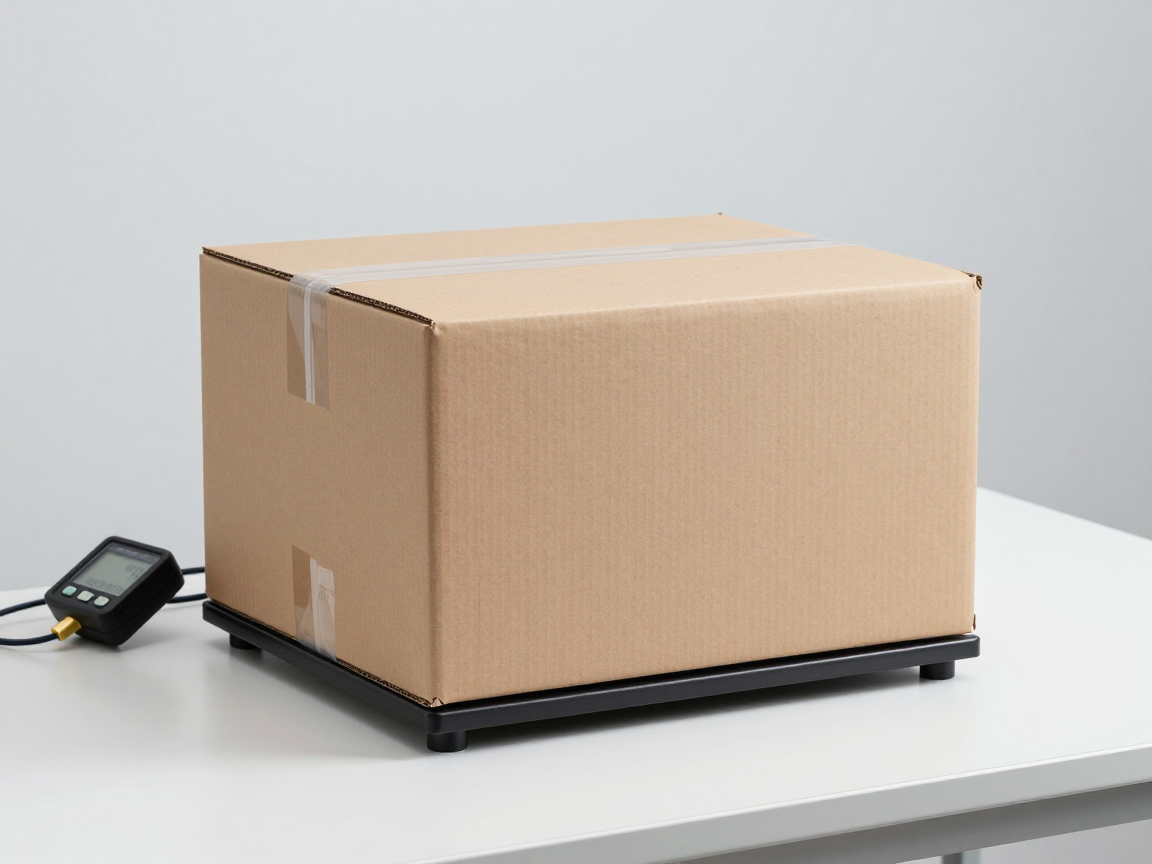
        Illustration of the two weight branches of Series 1: small packages up to 150 lb (68 kg) and packages heavier than 150 lb (68 kg)
        Illustrate two weight categories: single bales up to 150 lb (68 kg) and over 150 lb (68 kg).

        The seven processes of Series 1 fall into three functional groups: groups basic (1A, 1B), group expansion has compression item (1C, 1D), group vibrate randomly (1G, 1H), and a separate process for whole unit block of goods (1E).

        Procedure Applicable subjects Main category
        1A Single packages up to 150 lb (68 kg) Conditioning → fixed displacement vibration → shock (free fall or impact). There is no compression item.
        1B Single packages over 150 lb (68 kg) Conditioning → fixed displacement vibration → shock → rotational edge drop.
        1C Single packages up to 68 kg — extended version Conditioning → compressed → vibration (fixed displacement or random) → shock.
        1D Single packages over 68 kg — extended version Conditioning → compressed → vibration (fixed or random) → shock → rotational edge drop.
        1E Unitized load of like products Conditioning → vibration (vertical or random) → shock (incline impact or horizontal impact) → rotational edge drop. There is no compression item.
        1G Single packages up to 68 kg — random vibration Conditioning → just vibrate randomly → shock.
        1H Single package over 68 kg — random vibration Conditioning → just random vibration → shock → rotational edge drop (when not testing side 1).

        3. Four axes distinguish seven processes

        Looking at the table above, we can see that the seven processes do not differ in “difficulty” but in four axes. You only need to correctly identify these four axes to choose the process:

        Axis 1 — Package weight. The division mark is 150 lb (68 kg). Up to 68 kg: 1A, 1C, 1G. Over 68 kg: 1B, 1D, 1H. As for 1E, it is not divided by weight but by packaging form.

        Axis 2 — Vibration pattern. Fixed displacement vibration (fixed displacement) is a traditional vibration type, simulating repetitive vibrations at a specified amplitude and frequency; used in 1A, 1B and as an option of 1C, 1D, 1E. Random vibration (random vibration) has a wide frequency spectrum, closer to real road conditions; is a mandatory choice in 1G, 1H and an option in 1C, 1D, 1E. This is the reason why pairs 1A/1G and 1B/1H exist in parallel.

        Axis 3 — Whether there is a compression item or not. Only 1C and 1D have it compression conditioning — simulates stacking loads in warehouses or containers before vibration. If your goods are stacked in multiple layers, this is the decisive difference: 1A/1B does not answer the question of stacking load capacity.

        Shaft 4 — Single bale or whole unit. 1A–1D, 1G, 1H are for single package (individual packaged-product). 1E is for whole unit block of goods: one or more products/bales of the same type fixed together — usually on pallets or skids — for circulation as a single unit. Pallets of mixed goods of many types not covered by 1E.

        4. Comparison table of seven Series 1 procedurees

        Three types of equipment distinguish Series 1 procedures: fixed displacement vibrating table, random vibrating table, and compression tester
        Three types of equipment distinguish Series 1 procedurees: fixed displacement vibration, random vibration, and compression.
        Procedure Subject Vibration Shock/impact Compression Steps
        1A Single piece ≤ 68 kg Fixed displacement Drop or alternative impact No 3
        1B Single package > 68 kg Fixed displacement Free fall / incline / horizontal + rotational edge drop No 4
        1C Single piece ≤ 68 kg Select: fixed or random Same as 1A Yes 4
        1D Single package > 68 kg Select: fixed or random Same as 1B Yes 5
        1E Whole unit blocks of the same type Choose: vertical or random Incline impact or horizontal impact + rotational edge drop No 4
        1G Single piece ≤ 68 kg Random (required) Free fall / incline / horizontal No 3
        1H Single package > 68 kg Random (required) Free fall / incline / horizontal + rotational edge drop No 4

        Specific test levels (drop height, vibration amplitude and frequency, Grms level, impact velocity, compression force) are all in the lookup table of the original document for each process — please refer directly to the current standard version when performing. The test level at the shock step also depends on the weight of the package, do not use a common level for all weights.

        5. Which process to choose for your goods?

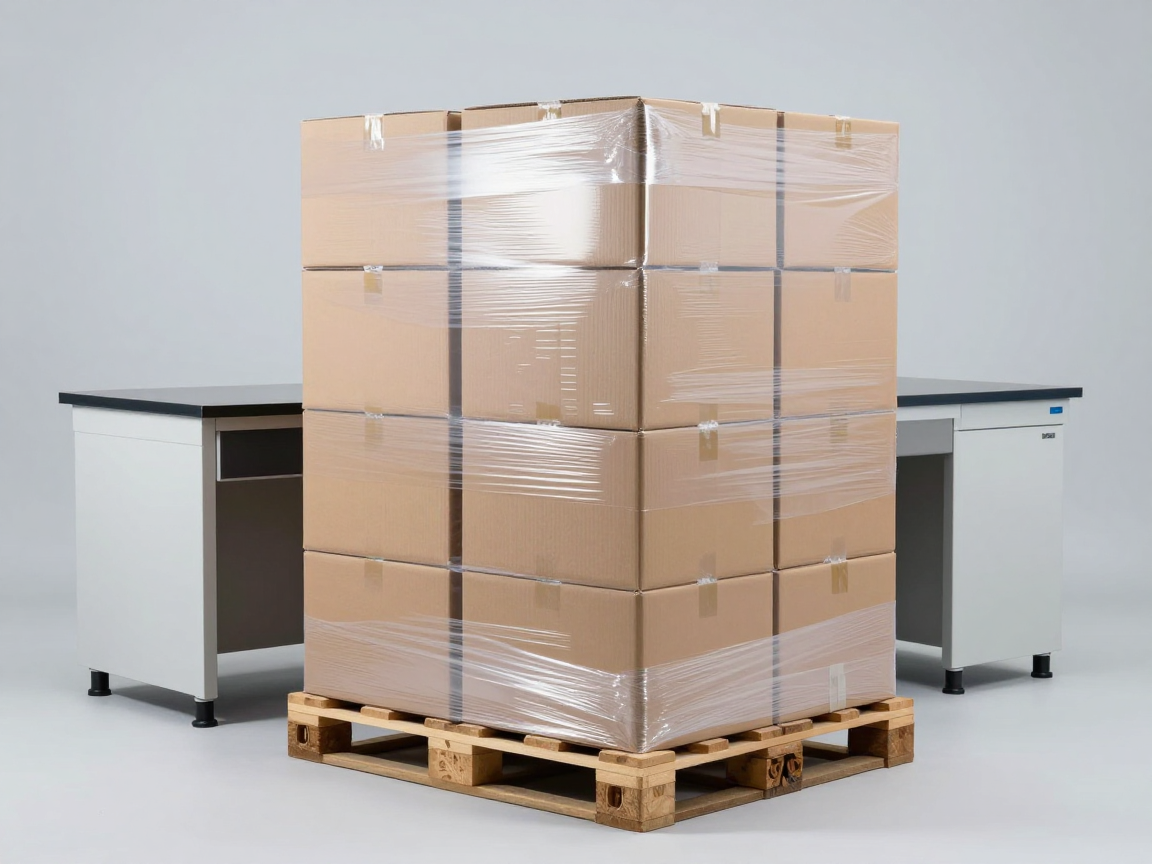
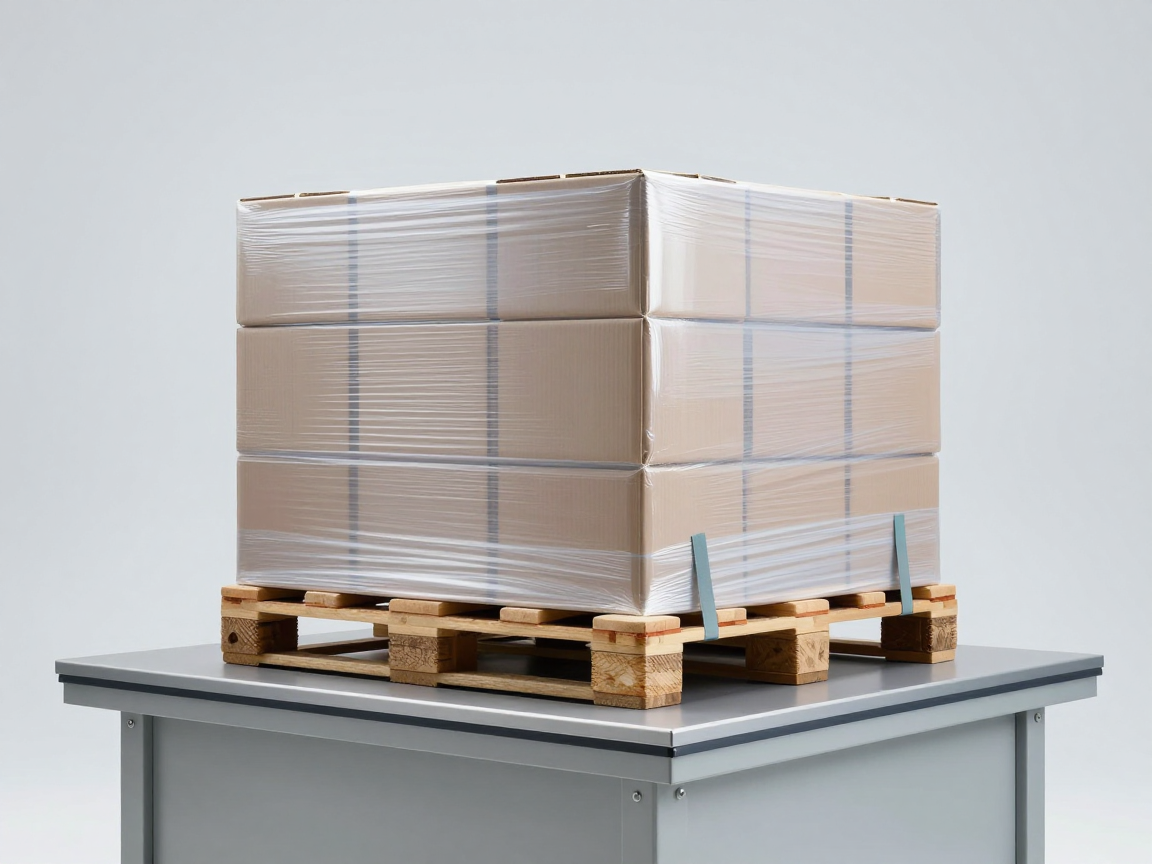
        A unitized load wrapped in shrink wrap on a pallet — the subject of the ISTA 1E process
        A whole unit of shrink-wrapped goods on a pallet — subject of ISTA 1E.

        The fastest way is to follow the actual situation:

        Your situation Proper process
        Single packages up to 68 kg, no test data available, need to refine packaging design 1A — the most basic, cost-effective and lightest device
        Single packages up to 68 kg, want more realistic vibration conditions 1G — vibrate randomly
        Single package up to 68 kg, goods stacked in many layers in warehouse/container 1C — has compression item
        Single package over 68 kg, basic version required 1B
        Single packages over 68 kg, want to shake randomly 1H
        Single package over 68 kg, goods are stacked 1D — with compression
        Goods packed on pallets of the same type, fixed into blocks, shipped in the same vehicle 1E
        Pallets of mixed goods of many types Not in 1E — see group 3B/3E
        Need to simulate a specific journey (parcel, LTL, FTL, airline…) Don’t use Series 1 — switch to Series 2, Series 3 or project by channel

        A practical note: if the business has identified a distribution channel and the customer requests a journey simulation report, Series 1 should only be an internal test first, not a replacement for the test required by that channel.

        6. How is Series 1 different from Series 2 and Series 3?

        These three groups do not replace each other but answer three different questions:

        Group The question it answers Test characteristics
        Series 1 Is the packaging and product sufficiently mechanically durable? No cruise simulation; discrete tests according to prescribed levels
        Series 2 Does the packaging withstand the major impacts of an unknown channel journey? Partial simulation; There are additional climatic conditions
        Series 3 Does the packaging survive a typical channel-specific journey? General simulation of many stages, including loading, unloading and transportation

        Therefore, the reasonable order of costs is usually: Series 1 to refine and correct the design → Series 2 when a closer to reality level is needed → Series 3 or project by channel when customers/partners request a journey simulation report.

        7. What does Series 1 answer — and what doesn’t it answer?

        Can answer: Can the packaging withstand vibration and shock at specified levels; Is the box structure peeling, dented, or torn at the load-bearing edges; Are the products inside moving or bumping into each other? stacking load capacity (1C/1D only).

        Unable to answer: how the actual journey will impact (not simulated); number of loading and unloading times and specific routes; climate conditions outside the lab (Series 1 only regulates ambient conditions); interaction with other goods in the same container; Actual damage rate in the market.

        This is why a “pass” Series 1 report does not mean there is evidence of safety for every journey — the report needs to be read with an understanding of the limitations of the chosen process.

        8. Equipment and preparation before testing

        Series 1 items reference standard test methods, so when you receive the report you can compare it back:

        Test item Equipment Reference method
        Fixed displacement vibration Fixed moving vibration table (1 in / 25 mm), with thin metal shim and frequency meter ASTM D999 (Method A1 or A2)
        Random vibration Random vibration system with spectrum control ASTM D4728
        Compression (1C, 1D) Compression tester (apply and release / apply and hold) or counterweight + load distribution plate ASTM D642
        Free fall Free-fall drop tester ASTM D5276
        Vertical shock Vertical shock tester ASTM D5487
        Incline impact Conbur table (incline impact tester) ASTM D880
        Horizontal impact Horizontal impact test system ASTM D4003
        Rotational edge drop Rotational edge drop test system (1B, 1D, 1E, 1H) ASTM D6179
        Conditioning Sample storage area is under environmental conditions, with temperature/humidity recorded According to the regulations of each process

        Prepare before testing: (1) determine the correct weight of the package including packaging; (2) determine single bales or whole units; (3) finalize the four pass/fail criteria with the shipper before testing; (4) unify the number of samples according to the procedure and test plan — each procedure stipulates a different minimum number of samples; (5) record the condition of the sample before testing (photos, descriptions) to separate existing damage from damage caused by testing.

        9. What does cost and time depend on?

        There is no universal price for “an ISTA test”: cost and time depend on the mass and size of the package, the number of items to be run (3, 4, or 5 steps), the type of vibration (random vibration requires more expensive equipment and is less available in laboratories than fixed displacement vibration), the number of samples per procedure, the climate conditioning time, and how the packaged sample must be prepared. Article What does the cost and time of ISTA packaging testing depend on? Carefully analyze these five factors and how to get quotes that are comparable between units.

        10. Five common mistakes when choosing a Series 1 procedure

        1. Confused 1A with 1G. The two processes have the same mass group but different vibration types. If the report you need is random vibration then 1A is no substitute — see 1G.
        2. Ignore compressed optiones. For multi-layer stacked goods, if tested 1A/1B, the “pass” result does not say anything about the ability to withstand the stacking load.
        3. Use 1E for mixed pallets. 1E only applies to whole units of goods made from products of the same type.
        4. Consider the result a “certification”. Series 1 is a test procedure; The value lies in reporting with predetermined pass/fail criteria.
        5. Thought Series 1 simulates the journey. If the customer requires reporting by distribution channel, Series 2, Series 3 or project by channel are needed.

        11. Frequently asked questions

        Is Series 1 a mandatory standard? No. ISTA is a voluntary standard adopted at the request of customers, retailers or distribution channels. Whether it is mandatory or not is determined by the purchasing party or the channel.

        Is 1A the “lightest” test? It is the most basic exercise in the group up to 68 kg, but still includes three blocks of mandatory items and must still finalize pass/fail criteria before attempting.

        Can I skip the rotational edge drop step? For 1B, 1D, 1H and 1E, this is a mandatory item, unless side 1 has been tested – specific conditions according to the regulations of each process.

        Is random vibration always better than fixed displacement vibration? Not “better”, but different purposes. Random vibration is closer to real transport conditions but requires more expensive equipment; In many cases where the goal is only to screen for durability, fixed displacement vibration is sufficient.

        Can packaging that meets Series 1 be exempt from Series 3 testing? No. The two groups answered two different questions; Testing requirements are determined by the distribution channel or customer.

        Where should my business start? Determine the distribution channel and buyer’s requirements first, then select the process group; If there are no specific requirements, Series 1 is a reasonable cost screening step.

        12. Conclusion

        ISTA Series 1 is a group of non-simulation durability tests consisting of seven procedures, differentiated on four axes: bale mass, vibration type, whether there is a compression item, and single bales or whole units. Choosing the right process is more important than choosing the “heaviest test” — choosing the wrong option will cost money and still not answer the business’s question.

        If you need to determine the appropriate process for a specific product, start by describing: bale weight, packaging type (single bale or pallet), storage stacking conditions, and distribution channel. Those four pieces of information determine almost all of the process selection.

        Reference standard version: article based on free overviews published by ISTA for Series 1 and each of the 1A–1H processes (accessed September 27, 2026). Detailed test level tables are in the original document of each procedure — the current version, look up directly from ISTA.


        References

        The full standard should be searched and ordered directly from ISTA. Below are the public sources used for reference when compiling the article:

        • ISTA — Test Procedures (list of current series and procedures, accessed September 27, 2026)
        • ISTA — free overview of each procedure 1A–1H (“Overview and equipment required” on ista.org; not sufficient to perform the test)
        • ISTA — Certify your Lab (testing laboratory certification program)
        • ASTM — cited method standards: D4332, D642, D999, D4728, D5276, D5487, D880, D4003, D6179

        Related articles


        Talk to us


          Disclaimer and IP acknowledgement

          This article is an explanatory content compiled by us for the purpose of introducing and disseminating knowledge. Article is not a translation, copy, abridgement or replacement of the parent standard, and is not evaluated, approved or sponsored by ISTA (International Safe Transit Association)..

          The entire content of ISTA standards is copyrighted by the International Safe Transit Association, Inc. (East Lansing, Michigan, USA) — All rights reserved. ISTA® and the ISTA logo are registered trademarks of the International Safe Transit Association, Inc.; Mentioned in this article are for guidance purposes only and do not imply any affiliation, partnership or sponsorship.

          Article content For reference only; Before applying for any purpose — testing, evaluation, certification or commercial decision-making — the reader should refer directly to the original ISTA document (the most complete and up-to-date version) and consult an accredited testing facility when necessary.

          When performing testing, it is mandatory to use the official, current version of the standard, obtained directly from ISTA. We do not redistribute ISTA materials in any form. Information in this article may be out of date with the current version of the standard.

          See more: Copyright Policy & Disclaimer by ticforall.com.
          What Is ISTA 1H? Random Vibration Testing for Packages Over 150 lb (68 kg)

          0
          Cover image of the article «What Is ISTA 1H? Random Vibration Testing for Packages Over 150 lb (68 kg)» — illustration of transport packaging testing to the ISTA standard

          With packages over 150 lb (68 kg), choosing the right test procedure often boils down to a single question: “1B or 1D?”. But Series 1 has a third option that is rarely mentioned — use vibrate randomly instead of fixed displacement vibration. That is ISTA 1H.

          This article analyzes the ISTA 1H in a self-locating standard way: what it tests, how it differs from the 1B/1D, and when choosing random vibrations actually creates value for heavy loads.

          1. What is ISTA 1H?

          ISTA 1H is a standard testing procedure Series 1 — Non-Simulation Integrity Performance Test, applies to individual packages weighing more than 150 lb (68 kg) when prepared for shipping.

          Full name in document: Packaged-Products Over 150 lb (68 kg) (Random Vibration) — the word “Random Vibration” is what distinguishes 1H from 1B.

          With 1H, the following three things determine how the result is read:

          • 1H Durability tested, not simulated actual routes — do not use the results to infer failure rates on a particular route.
          • 1H No default response carrier’s packaging regulations; these are two different things.
          • With heavy goods, the object being assessed is tightly attached How to fix goods on pallets or skids — Changing the way of tying means changing the test object.

          Something to remember right from the scope section: document 1H clearly states For unitized loads, ISTA 1E must be used — do not use 1H. Definition of unitized load: one or more products/packages usually located on skids or pallets, but always fixed or bound to circulate as a single block.

          Current version: ISTA 1H 2014 (latest technical change March 2014, editorial change January 2016).

          2. Most common misunderstanding about ISTA 1H

          1. “Heavy goods are only 1B or 1D.” — Missing. Series 1 has three optiones for goods over 68 kg: 1B (basic lesson, fixed displacement vibration), 1D (expanded article, with compressed categories) and 1H (random vibration). Which option to choose depends on the type of stimulation and goals you need.
          2. “1H is a cruise simulation for heavy cargo.” — No. 1H is still Non-Simulation Integrity: it does not recreate the itinerary, does not model shipping routes, and does not automatically comply with carrier regulations.
          3. “For heavy goods packed on pallets, try 1H.” — Not enough. If the goods have been fixed into a block to circulate as a unit, the correct procedure is ISTA 1E. 1H is for each individual package.

          3. What does ISTA 1H test? — 4-step sequence

          Illustration of the «4-step sequence» section of the article «What is ISTA 1H? Random Vibration Test Procedure for Packages Over 150 lb (68 kg)»
          Illustration of the «4-step sequence» section.
          Step Test item Select method Required
          1 Atmospheric preconditioning Ambient temperature and humidity Required
          2 Vibration Random vibration only Required
          3 Shock Choose 1: drop or incline impact or horizontal impact Required
          4 Shock Rotational Edge Drop Required when no try face 1

          The specific test level of each item (Grms level, drop height, impact velocity) is specified by the standard in the lookup table — please refer to the original document when doing so.

          Step 1 — Atmospheric conditioning

          The package is brought to ambient temperature/humidity conditions before entering the test sequence. With heavy goods, this is a step that takes considerable time because large volumes of goods take longer to reach heat-humidity balance.

          Step 2 — Random vibration

          The package is randomly vibrated according to the specified total Grms level. For heavy goods, this is both the most rigorous test and the most equipment-consuming test: the vibration system must have enough load and enough spectrum control ability.

          Regarding practical value: heavy structures (machine frames, electrical cabinets, equipment with stands) often have low natural frequencies, located exactly in the range where random vibration excites the most. That’s why 1H can detect problems that an conditioning cannot detect.

          Step 3 — Shock (impact)

          Choose one of three methods: drop. drop, incline impact or horizontal impact. For heavy loads, incline impact and horizontal impact are often chosen more because it is difficult to create a safe and repeatable free-fall position.

          Step 4 — Rotational Edge Drop

          Required when not testing side 1 of the package. This test simulates the exact type of “tip/fall around the edges” that occurs when heavy loads are pushed, dragged, or pushed off the lifting platform. For goods over 68 kg, this is often the item that causes the most obvious packaging damage.

          4. Accompanying equipment and method standards

          Illustration of the «Equipment» section of the article «What is ISTA 1H? Random Vibration Test Procedure for Packages Over 150 lb (68 kg)»
          Illustration of the «Equipment» section.
          Test item Equipment Method reference
          Random vibration Random vibration system ASTM D4728
          Drop test Free-fall drop tester ASTM D5276
          Vertical shock Vertical shock tester ASTM D5487
          Incline impact Conbur table (incline impact tester) ASTM D880
          Horizontal impact Horizontal impact test system ASTM D4003
          Rotational Edge Drop Rotational edge drop test system ASTM D6179

          Compared to 1B/1D, the difference lies in step 2: 1B and 1D use a vibrating table fixed displacement (with metal shim and frequency meter), 1H remaining needed random vibration system with spectrum control — equipment is more expensive and fewer labs have it.

          5. Sample number and sample preparation

          With 1H, sample quantity requirements still follow the general regulations of Series 1 (Minimum 1 sample; ISTA 5 or more repetitions recommended with a new sample each time), but the cost of performing each iteration is much higher than the processes for light bales. The reason lies in three things that only goods over 68 kg (150 lb) have: sample transportation, sample loading and unloading, and accuracy when declaring configuration.

          • Finalize the sample transportation plan in advance: Heavy samples often have to be rented, lashed and loaded with lifting equipment. A misaligned load on the way to the lab means the sample has already been “tested” before entering the test chamber.
          • Confirm the lab has appropriate lifting equipment and access (warehouse door, floor, forklift or pallet jack) as soon as you schedule, don’t wait until the day the goods arrive to ask.
          • Declare correct configuration and load center: weight, size, center of gravity position, way to fix goods on pallet or skid. A misaligned load center changes the way the load reacts to vibration and tilt — the lab needs to know this to position the sample correctly.
          • Unify the safe standing area: samples of several hundred kilograms when falling or falling over is a dangerous situation; need to pre-fix who is where during the test.
          • Repackage: sample must be Excessive packaging during shipping or Repackage in new packaging at the lab. With heavy goods, repackaging at a lab is often the cleaner option for both parties.

          Because each iteration is costly, many businesses only try it once with heavy goods. That method is acceptable, but the report needs to be clear number of times performed, and should be agreed in advance with the end customer so that the results of one test are not interpreted as representative of the whole batch. The criteria for passing or failing are still determined in advance by the business: see 4 criteria businesses must determine for themselves before testing.

          6. When should you not use ISTA 1H?

          1H is not suitable in the following cases — often because the test subject or goal is different:

          Your situation Should switch
          Want to use vibration fixed displacement instead of random vibration 1B
          Need to add compression item to verify stacking ability 1D
          Goods have been unitized into whole units 1E (or 3E if simulation is needed)
          Packages up to 68 kg (150 lb) only 1A · 1C · 1G
          The goal is to simulate heavy cargo traveling internationally 2B
          It is necessary to forecast risks according to specific cargo routes Series 3 group (3B, 3E…)

          7. Common errors when performing ISTA 1H

          1. Use 1H for rows fixed into blocks. Document 1H clearly states: unitized load must use 1E. Testing 1H for a pallet of wrapped goods is technically correct but on the wrong subject.
          2. Expect 1H to replace 1D. The two processes differ in vibration type and compression item; Data are not interchangeable.
          3. Skip the Rotational Edge Drop step. This step is required if you don’t try side 1 — skipping it will be in the wrong order.
          4. Does not control the actual volume of the sample. With heavy goods, the error of a few kilograms and the difference in center of gravity distribution significantly change the impact posture.
          5. Do not finalize damage criteria before testing. Heavy goods are often only dented/cracked locally — if not fixed in advance, the “pass/fail” conclusion will depend on emotions.

          8. What does the cost and time of the ISTA 1H test depend on?

          1H is a card that combines two expensive conditions: Packages over 68 kg (150 lb) and vibrate randomly, including edge impact category. Costs therefore have three separate items: lifting equipment and loading and unloading labor in both the factory and the laboratory; random vibrating table with enough load; and shipping samples — with heavy goods, the last item often takes the largest share of the quote.

          Because the cost per iteration is high, many businesses only try it once. That method is acceptable as long as the report clearly states the number of times it has been done and both parties agree in advance. Summary of common factors: What does the cost and time of ISTA packaging testing depend on?

          9. Frequently asked questions

          How is ISTA 1H different from ISTA 1B?

          Same weight group (over 150 lb / 68 kg), but different vibration type: 1B uses fixed vibration, 1H uses random vibration. Both have a Rotational Edge Drop step.

          How is ISTA 1H different from ISTA 1D?

          1D is card extend For goods over 68 kg: there are additional items compression conditioning and allows random vibration selection. 1H has no compression item — in return, 1H is fixed on the random vibration option. If your target has compression/stacking sections, 1D is the right choice.

          Does ISTA 1H have a compression item?

          Are not. Sequence 1H consists of atmospheric conditioning → random vibration → shock → rotational edge drop. There are no compression categories.

          Should a 90 kg package be placed on a pallet, use 1H or 1E?

          The decisive question is: the goods are obtained fixed/bound to circulate as a single block? If there is (wrapping film, tightening belt, tray + lid, goods linked to pallet), it is unitized load → use 1E, and the 1H document clearly states not to use 1H for this case. If it is still an individual package, 1H (or 1B/1D) is the correct group.

          How is ISTA 1H different from ISTA 2B and 3E?

          1H is Non-Simulated Integrity: only challenges endurance, does not simulate travel. 2B is Partial Simulation for heavy goods with international distribution. 3E is General Simulation for whole unit loads on a full-truckload trip. If you need to predict the risk of damage along the journey, the new 2B/3 Series is the right tool.

          What does “pass ISTA 1H” result mean?

          This means that the package can withstand the specified test sequence, compared with the damage criteria you determine yourself before testing. It is not guaranteed that the goods will be intact during all transportation journeys.

          10. Conclusion

          ISTA 1H is what the Series 1 procedure is for individual packages over 150 lb (68 kg), use vibrate randomly and there are steps rotational edge drop required when face 1 is not attempted. It is the third option that is rarely mentioned besides 1B and 1D — and for heavy structures with low natural frequencies, this is the test that is easiest to detect problems.

          The three procedures for goods over 68 kg are therefore not three “basic → advanced” levels, but three different types of excitation: 1B (fixed, basic vibration), 1D (fixed or random vibration + compression), 1H (random vibration). Choose the right question type first, then choose the process.

          Bottom line: 1H is for packages over 150 lb (68 kg) that need to simulate random vibration with edge impacts. The test is only reliable when the sample, mass and damage criteria are determined before testing.


          References

          The full standard should be searched and ordered directly from ISTA. Below are the public sources used for reference when compiling the article:

          Original source: ISTA 1H 2014 – Packaged-Products Over 150 lb (68 kg) (Random Vibration), © International Safe Transit Association.

          Related articles:


          Talk to us


            Disclaimer and IP acknowledgement

            This article is an explanatory content compiled by us for the purpose of introducing and disseminating knowledge. Article is not a translation, copy, abridgement or replacement of the parent standard, and is not evaluated, approved or sponsored by ISTA (International Safe Transit Association)..

            The entire content of ISTA standards is copyrighted by the International Safe Transit Association, Inc. (East Lansing, Michigan, USA) — All rights reserved. ISTA® and the ISTA logo are registered trademarks of the International Safe Transit Association, Inc.; Mentioned in this article are for guidance purposes only and do not imply any affiliation, partnership or sponsorship.

            Article content For reference only; Before applying for any purpose — testing, evaluation, certification or commercial decision-making — the reader should refer directly to the original ISTA document (the most complete and up-to-date version) and consult an accredited testing facility when necessary.

            When performing testing, it is mandatory to use the official, current version of the standard, obtained directly from ISTA. We do not redistribute ISTA materials in any form. Information in this article may be out of date with the current version of the standard.

            See more: Copyright Policy & Disclaimer by ticforall.com.
            What Is ISTA 1G? Random Vibration Testing for Packages Up to 150 lb (68 kg)

            0
            Cover image of the article «What Is ISTA 1G? Random Vibration Testing for Packages Up to 150 lb (68 kg)» — illustration of transport packaging testing to the ISTA standard

            In Series 1 of ISTA there is a pair of almost “twin” procedures: same mass group, same number of steps, same shock category — but different in exactly one point: vibration type. ISTA 1G is half used vibrate randomly for packages up to 150 lb (68 kg); The other half is ISTA 1A with fixed displacement vibration.

            This article analyzes ISTA 1G in the way the standard positions itself: what it tests, how it differs from 1A, and when random vibration selection actually adds value.

            1. What is ISTA 1G?

            ISTA 1G is a test procedure that belongs to Series 1 — Non-Simulation Integrity Performance Test, applies to Individual packages weighing up to 150 lb (68 kg) when prepared for shipping.

            Full name in document: Packaged-Products 150 lb (68 kg) or Less (Random Vibration) — The word “Random Vibration” in brackets is what distinguishes 1G from 1A.

            Right in the scope section, the standard states a exception Remember: individual packages located on a visible skid or pallet and weighing more than 100 lb (45 kg) can be tried accordingly 1E or 1H instead of 1G.

            Three foundational points apply to every Series 1 procedure—with 1G, read them in the context of random vibration:

            • This is the article durability test, does not simulate transportation hazards: the results indicate that the packaging survives the test sequence, does not predict a specific journey.
            • 1G no replacement Individual packaging requirements of the carrier or end customer.
            • Products and packaging are evaluated together; changing either means having to try again.

            Current version: ISTA 1G 2014 (latest technical change March 2014, editorial change January 2012).

            2. Most common misunderstanding about ISTA 1G

            The following three misunderstandings explain much of the misguided conversation about 1G:

            1. “Random vibration is more ‘real’, so 1G is always better than 1A.” — No. Vibration randomly generates value when you need multi-frequency energy spectrum (or when the enterprise has standardized to random vibration internally). If the goal is just a cheap, stable, and repeatable measurement to benchmark over time, a fixed displacement vibration of 1A is more appropriate.
            2. “1G includes compression.” — No. 1G includes atmospheric conditioning → random vibration → shock (drop/incline/horizontal). There are no compression categories; want to verify the minimum stacking load, the correct procedure is 1C.
            3. “For light goods, it’s 1A or 1G, whatever you choose.” — Do not choose arbitrarily. These are two different tests in terms of the nature of the excitation: single-frequency/specified-displacement harmonic vibration (1A) versus band-pass simultaneous vibration with total Grms level (1G). Goods with specific frequency-sensitive structures may “hit 1A” but fail at 1G — and vice versa.

            3. What does ISTA 1G test? — 3-step sequence

            Illustration of the «3-step sequence» section of the article «What is ISTA 1G? Random vibration test procedure for packages up to 150 lb (68 kg)»
            Illustration of the «3-step sequence» section.
            Step Test item Select method Required
            1 Atmospheric preconditioning Ambient temperature and humidity Required
            2 Vibration Random vibration only — no fixed displacement option Required
            3 Shock Choose 1: drop or incline impact or horizontal impact Required

            Important note: in step 3, The test level depends on the weight of the package — Drop height and impact velocity (incline/horizontal) vary with weight, not the same level for all packages. The specific level table is in the original ISTA document.

            Step 1 — Atmospheric conditioning

            The package is brought to ambient temperature/humidity conditions before testing. For cardboard/paper/wood products, this step determines the stiffness and moisture content of the packaging at the time of testing – factors that directly affect the vibration results.

            Step 2 — Random vibration

            The package is randomly vibrated according to the total Grms level specified in the standard lookup table. Unlike harmonic vibration, random vibration simultaneously stimulates multiple frequencies in a range, closer to the vibration nature of the vehicle floor and road surface.

            This is also the most common trap of expectations: Random vibration doesn’t automatically mean “more real” — it is a different type of excitation, has its own set of parameters, and does not simulate any specific stroke.

            Step 3 — Shock (impact)

            Choose one of three methods: drop, incline impact or horizontal impact. For light packages, drop is the most popular choice; The remaining two methods are suitable when the line is long, flat or difficult to create a stable falling position.

            4. Accompanying equipment and method standards

            Illustration of the «Equipment» section of the article «What is ISTA 1G? Random vibration test procedure for packages up to 150 lb (68 kg)»
            Illustration of the «Equipment» section.
            Test item Equipment Method reference
            Random vibration Random vibration system ASTM D4728
            Drop test Free-fall drop tester ASTM D5276
            Vertical shock Vertical shock tester ASTM D5487
            Incline impact Conbur table (incline impact tester) ASTM D880
            Horizontal impact Horizontal impact test system ASTM D4003

            Compared to 1A, the difference in equipment lies in step 2: 1A requires a fixed moving vibration table with metal shim and frequency meter; 1G needed The random vibration system has the ability to control the spectrum — equipment is more expensive and fewer labs have it.

            5. Sample number and sample preparation

            In terms of sample quantity, 1G is no different from other Series 1 procedurees: Minimum 1 sample, and ISTA 5 or more repetitions recommended with new samples each time. What is worth paying attention to when preparing samples for 1G lies elsewhere: this is the article includes only random vibration and impact, there is no compression item, so any small deviations in the sample’s initial condition go straight into the results.

            • Take samples from real production batches, correct configuration sold: same type of box, same insert material, same sealing method. Samples are “custom made” and are not representative of the lot.
            • Allow packaging to stabilize before testing: The glue is still wet, the shrink film has not yet cooled, and the box has not yet recovered its folds, all making the sample less resistant to vibration than it actually is. You should wait according to the factory’s packaging process as when shipping.
            • Record the initial condition: weight, size, six-sided photo, packaging condition. This is the only point of comparison to conclude damage after the test — without it, no one can prove that the dent occurred before or after the test.
            • Transport samples to the lab: packages up to 68 kg (150 lb) can be delivered by delivery, but must be Excessive packaging or Repackage in new packaging at the lab.

            The criteria for passing or failing are determined in advance by the business, the standards are not decided for you: see 4 criteria businesses must determine for themselves before testing.

            6. When should ISTA 1G not be used?

            If you fall into the following situations, 1G is not the right choice:

            Your situation Should switch
            Want to use vibration fixed displacement instead of random vibration 1A
            Need to add compression item to verify stacking ability 1C
            Packages exceeding 68 kg (150 lb) 1B · 1D · 1H
            Packages over 45 kg (100 lb) placed exposed on skids/pallets 1E or 1H
            Goods have been unitized into whole units 1E (or 3E if simulation is needed)
            The goal is to simulate international travel 2A
            Goods go through the parcel delivery system 3A

            7. Common errors when implementing ISTA 1G

            1. 1G expectations “more realistic than 1A” — leads to ignoring damage criteria. 1G is still Non-Simulation Integrity; it does not forecast the journey.
            2. Using the wrong type of vibrating table — 1G forced random vibration; results from a fixed moving vibration table cannot be recorded as “reaching 1G”.
            3. Packaging humidity is not controlled — damp cardboard causes vibration results to vary markedly between iterations.
            4. Do not adjust the test level according to mass — step 3 is weight dependent; Using a single level for the entire product group is wrong.
            5. Compare results 1A and 1G as if they were substitutes — two different types of stimulation; Data is not redeemable.

            8. What does the cost and testing time of ISTA 1G depend on?

            In Series 1, 1G is generally in the lower cost category: packages up to 68 kg (150 lb) require no special lifting or handling equipment, and the process involves only random vibration and impact. Costs therefore boil down to three variables: the number of iterations (a minimum sample, or five as recommended), the impact plan chosen, and the time for climate control if the actual trip requires conditions other than the room environment.

            One point about time: random vibrating tables are usually more expensive than fixed-displacement vibration tables, so the waiting time can be longer than the test itself. You should ask for the equipment schedule before finalizing the sampling plan. Summary of common factors: What does the cost and time of ISTA packaging testing depend on?

            9. Frequently asked questions

            How is ISTA 1G different from ISTA 1A?

            Same weight group (up to 150 lb / 68 kg) and same 3 steps, but different vibration type: 1G uses random vibration (total Grms level), 1A uses fixed vertical displacement vibration. In addition, the test level at the shock step of 1G is regulated according to the weight of the package.

            When should you choose random vibration instead of fixed vibration?

            When the goal is to simultaneously excite a range of frequencies rather than a single harmonic frequency — often found in goods with specific frequency-sensitive components, or when a business has standardized internal processes around random vibration. If you just need a stable, well repeatable and low cost measurement to benchmark over time, 1A is more suitable.

            Does ISTA 1G have a compression item?

            No. 1G does not have compression item. If a minimum level of compression is needed, the correct procedure is 1C.

            Does ISTA 1G have a Rotational Edge Drop step?

            No. 1G has only 3 steps: atmospheric conditioning, random vibration and impact shock. The Rotational Edge Drop category appears in processes for heavy/block loads (e.g. 1B, 1D, 1E, 1H).

            My 55 kg package is on a clearly visible pallet, what should I use?

            Subject to exception within 1G: individual packages on skids/pallets that are clearly visible and weigh more than 100 lb (45 kg) possible tested according to 1E or 1H. If the row has been fixed into blocks, 1E is the process that correctly describes the object.

            How is ISTA 1G different from ISTA 2A and 3A?

            1G is the card Non-Simulated Integrity: only challenges endurance. 2A is Partial Simulation (add simulation element, suitable for products with international distribution) and 3A is General Simulation Let the goods go through the parcel delivery system. If you need to predict the risk of damage along the journey, 2A/3A is the right tool.

            What does the result “pass ISTA 1G” mean?

            This means that the package can withstand the specified test sequence, compared with the damage criteria you determine yourself before testing. It is not guaranteed that the goods will be intact on every journey.

            10. Conclusion

            ISTA 1G is the Series 1 procedure for Individual packages up to 150 lb (68 kg), where the only difference from 1A is vibrate randomly. The real value of 1G is that it allows simultaneous stimulation of a range of frequencies — useful when the row has dangerous natural frequencies or when you need to synchronize with an internal standard that already uses random vibration.

            But don’t mistake 1G for a simulation. It has no compression, no rotational edge drop, and no travel reconstruction. When it is necessary to predict damage risk by cargo route, turn to the appropriate 2A, 3A or 3 Series process.

            Bottom line: The 1G and 1A differ in exactly one category — vibration. If your product ever breaks down because of road vibrations, 1G is more suitable than 1A; If compression is also needed, 1C is the correct procedure.


            References

            The full standard should be searched and ordered directly from ISTA. Below are the public sources used for reference when compiling the article:

            Original source: ISTA 1G 2014 – Packaged-Products 150 lb (68 kg) or Less (Random Vibration), © International Safe Transit Association.

            Related articles:


            Talk to us


              Disclaimer and IP acknowledgement

              This article is an explanatory content compiled by us for the purpose of introducing and disseminating knowledge. Article is not a translation, copy, abridgement or replacement of the parent standard, and is not evaluated, approved or sponsored by ISTA (International Safe Transit Association)..

              The entire content of ISTA standards is copyrighted by the International Safe Transit Association, Inc. (East Lansing, Michigan, USA) — All rights reserved. ISTA® and the ISTA logo are registered trademarks of the International Safe Transit Association, Inc.; Mentioned in this article are for guidance purposes only and do not imply any affiliation, partnership or sponsorship.

              Article content For reference only; Before applying for any purpose — testing, evaluation, certification or commercial decision-making — the reader should refer directly to the original ISTA document (the most complete and up-to-date version) and consult an accredited testing facility when necessary.

              When performing testing, it is mandatory to use the official, current version of the standard, obtained directly from ISTA. We do not redistribute ISTA materials in any form. Information in this article may be out of date with the current version of the standard.

              See more: Copyright Policy & Disclaimer by ticforall.com.

              What Is ISTA 1E? The Test Procedure for Unitized Loads on Pallets

              0
              Cover image of the article «What Is ISTA 1E? The Test Procedure for Unitized Loads on Pallets» — illustration of transport packaging testing to the ISTA standard

              A pallet of goods shrink-wrapped, strapped, or placed on a tray + lid — it is no longer an “individual package”, but a unitized load. Many businesses still take pallets to test according to 1B or 1D (which are for each individual package), then are surprised because the results do not say anything about the actual behavior of the entire block of goods. ISTA 1E was born exactly for that gap.

              This article analyzes ISTA 1E in terms of how the standard positions itself: what it checks, what it does not check, what types of goods it is used for, and when it is required to switch to another process.

              1. What is ISTA 1E?

              ISTA 1E is a test procedure that belongs to Series 1 — Non-Simulation Integrity Performance Test, for a whole unit block of goods made from one or more products/packages of the same type.

              Standard definition unitized load is: one or more products or packages, usually located on skids or pallets, but always secured or bound to circulate as a single block. Typical example:

              • Stretch wrap pallets include many individual boxes;
              • A machine that does not pack boxes, is strapped directly onto the pallet;
              • Pallet has carton tray + tube + lid.

              Three things to remember about 1E before reading on:

              • 1E belongs to group test durability, not the travel simulation group: it answers the question “will this product-packaging combination withstand the test sequence”, not reconstructing the actual hazards of the transport route.
              • Achieved 1E not synonymous Meets shipping company’s packaging regulations.
              • In 1E, the product and packaging are a unified whole — the results are only valid for the unitization method tested.

              Current version of the document: ISTA 1E 2014 (latest technical change March 2014, editorial change January 2017).

              2. Most common misunderstanding about ISTA 1E

              The following three misunderstandings determine whether to choose the right or wrong process:

              1. “1E is a real shipping simulation for pallet goods.” — No. 1E is still a Non-Simulation Integrity song: it challenges endurance but does not recreate the journey. Want to simulate a full-truckload shipment for a whole unit load, the correct direction is ISTA 3E.
              2. “Every pallet try 1E.” — Not enough. 1E is for unitized load made from products of the same type. If the pallet is a mixed cargo of different types/products, or if your cargo must be mechanically manipulated in the form of a container/bulk, the correct direction is in group 3 (eg 3E, 3B) — not in the 1E range.
              3. “1E includes compression during stacking.” — No. The sequence of 1E includes atmospheric conditioning, vibration, and shock rotational edge drop — There are no compressed items. If your goal is warehouse/container stacking load capacity, 1E doesn’t answer that question.

              3. What does ISTA 1E test? — 4-step sequence

              Illustration of the «4-step sequence» section of the article «What is ISTA 1E? Test procedure for unitized loads»
              Illustration of the «4-step sequence» section.

              The test is performed in the correct order following, per sample:

              Step Test item Select method Required
              1 Atmospheric preconditioning Ambient temperature and humidity Required
              2 Vibration Select 1: vertical fixed displacement vibration or vibrate randomly Required
              3 Shock Choose 1: incline impact (conbur) or horizontal impact Required
              4 Shock Rotational Edge Drop Required

              Specific test levels for each item (frequency/displacement, Grms level, impact velocity, height) are specified in the table of the original document — please refer directly to the ISTA document when performing.

              Step 1 — Atmospheric conditioning

              The cargo block is brought to environmental temperature and humidity conditions before entering the test sequence. This is the step to “standardize the starting point” for the whole batch of goods, especially important for goods with hygroscopic materials (carton, wood, paper).

              Step 2 — Vibrate

              Standards allow choose one of the two method:

              • Fixed displacement, vertical linear vibration: The vibrating table can only move vertically — Rotary motion is not accepted. This method requires an additional metal shim and a frequency measuring device.
              • Random vibration (random): Use random vibration system with total Grms level according to the standard lookup table.

              Note on practical value: pallet loads often have low natural frequencies and are strongly influenced by wrapping/tightening — so the 1E’s vibration results are very sensitive to the way the goods are secured, not just to the packaging of each box.

              Step 3 — Shock (impact)

              Choose one of two methods: incline impact (conbur table) or horizontal impact. These are horizontal impact tests, consistent with the behavior of pallets when pushed/braked/hit against walls in warehouses and on vehicles.

              Step 4 — Rotational Edge Drop

              Required in 1E. The load is rolled/dropped around a lower edge, simulating a tip-over when the pallet is dragged or pushed off the platform. With pallet goods, this is often the category where the most problems are discovered: shrink wrap, loose straps, bottom boxes with flattened corners.

              4. Accompanying equipment and method standards

              Illustration of the «Equipment» section of the article «What is ISTA 1E? Test procedure for unitized loads»
              Illustration of the «Equipment» section.
              Test item Equipment Method reference
              Fixed displacement vibration 1 in (25 mm) fixed/controlled, vertical moving vibration system ASTM D999 (Method A1 or A2)
              Tools included Metal shim ~0.06 in (1.5 mm) × ~2 in (50 mm); Frequency meter (Hz/CPM); timer or stopwatch —
              Random vibration Random vibration system ASTM D4728
              Rotational Edge Drop Rotational edge drop test system ASTM D6179
              Incline impact Conbur table (incline impact tester) ASTM D880
              Horizontal impact Horizontal impact test system ASTM D4003

              Here’s why a pallet load can’t be tested in a “small” lab: The size of the vibrating table and the load-bearing capacity of the impact device are the deciding factors Can you try 1E or not?

              5. Number of samples and sample preparation

              The 1E sample requirements are similar to all Series 1 procedures, as the standard generally states: Minimum 1 sample, and ISTA Recommended repetitions 5 times or more, each time a new sample is used. The difference of 1E lies in that unit for testing not a single package but a whole unit load (unitized load) — so the amount of preparation, transportation labor and number of people loading and unloading are all calculated by the whole block, not by one box.

              Four things to consider when preparing samples for 1E:

              • Fix the unitization plan before testing it: wooden pallets or plastic pallets, wrapping film or straps, number of layers, stacking direction. Changing any element means changing the load-bearing structure of the entire block – the old test results are no longer applicable to the new solution.
              • Check the pallet before entering the test chamber: Cracked, rotten or damp pallets distort the results and make it difficult to assign responsibility later. It is recommended to take photos of the pallet at four corners before testing.
              • Record the configuration of each iteration: if repeated 5 times, all five blocks should have the same configuration. To compare two unitization options, each option needs a separate set of samples, not mixed together.
              • Send the batch to the lab: shipped goods no longer represent standard condition, so the shipment must be Excessive packaging during shipping or Repackage in new packaging at the lab.

              Regarding pass or fail criteria, the standards do not define them for you: see 4 criteria businesses must determine for themselves before testing.

              6. When should ISTA 1E not be used?

              Situation Recommended procedure
              Individual packages up to 150 lb (68 kg) 1A (fixed displacement vibration) · 1C (with compression item) · 1G (random vibration)
              Individual packages over 150 lb (68 kg) 1B (basic) · 1D (with compression) · 1H (random vibration)
              Whole cargo block, need to simulate a full-truckload trip 3E
              Goods pallets mixed many different types Not covered by 1E — see group 3 (3B/3E)
              The target is the ability to withstand stacked loads 1E does not have a compression item — requires a different process/assessment
              Need to simulate international travel Series 2 (e.g. 2B) or Series 3 depending on the distribution channel

              7. Common errors when implementing ISTA 1E

              1. Block of goods “not similar to reality” — Wrap the shrink wrap by hand more loosely than the chain, or tighten the belt with incorrect force. With 1E, the way the row is secured is part of the sample, not a technical detail.
              2. Selected the wrong option — rotation is not acceptable; If the lab only has a rotating vibrating table, it is not possible to conclude according to 1E.
              3. Skip step 4 — Rotational Edge Drop is required, not optional.
              4. Test on pallets of shipped goods — the sample is not representative, the results cannot be used.
              5. Do not finalize damage criteria before testing — It’s not until the goods are opened that we debate “if slight damage counts as pass or fail”, and the test loses its value.

              8. What does the cost and time of ISTA 1E testing depend on?

              In 1E, the unit to be tested is a whole block of goods in one unit, so the cost includes four items that are completely different from a single package: consumable products for the entire block (usually not reusable after testing); unitization (pallets, wrapping films, straps); Test equipment can withstand the load of the entire block; and transport the batch to the laboratory.

              Each iteration is a new block, so this is the procedure where the number of iterations most significantly affects cost. For expensive products, it’s okay to use samples as replacements for iterations — as long as the replacements are authentic and the unitization stays the same. Summary of common factors: What does the cost and time of ISTA packaging testing depend on?

              9. Frequently asked questions

              How is ISTA 1E different from 1B and 1D?

              1B and 1D are for each individual package over 150 lb (68 kg). 1E is for whole unit block of goods — means the goods have been fixed into a block on the pallet/skid. You don’t choose 1E over 1B because the goods are heavy, but because rows are presented as a block.

              Does ISTA 1E have a compression item?

              No. 1E includes atmospheric conditioning → vibration → shock → rotational edge drop. If the target has a compression/stacking section, 1E is not met.

              If my pallet has only one strapping tool, can I still run 1E?

              Okay. The document gives the main example of “a machine that does not pack a case that is strapped onto a pallet” — this is a unitized load because the product and pallet are bound into one block for circulation.

              Is it mandatory to make 5 samples?

              Not required, but A sample is not a statistical conclusion. Minimum requirement is 1 sample; ISTA recommends 5 or more runs with a new sample each time for representative results.

              How is ISTA 1E different from ISTA 3E?

              1E is the card Non-Simulated Integrity: challenges the durability of the cargo. 3E is the card General Simulation for whole-unit cargo on a full-truckload trip: recreates the hazard chain of the journey, with stacking/compression and vibration according to the model. If you need to predict the risk of failure on a specific route, 3E is the right tool.

              What does the result “pass ISTA 1E” mean?

              This means that the cargo has withstood the specified test sequence and compared it with the damage criteria by yourself determined before testing. It no Must commit that the goods will be intact during all transportation journeys.

              10. Conclusion

              ISTA 1E is the correct Series 1 procedure for a whole unit block of goods made from products of the same type: 4 required steps, minimum 1 sample, 5 samples or more recommended. The greatest value of 1E lies in the fact that it is binding product + packaging + way to fix goods must be evaluated as a system — something 1B/1D cannot do because they only look at individual bales.

              And remember: 1E challenges endurance, not simulation of travel. When data is needed to decide on the risk of damage on the actual line, turn to 3E or the appropriate 2/3 Series processes.

              Bottom line: “1E” only makes sense when the load is properly defined as a unitized load made from the same product. If the cargo is a pallet mixed with many types of products, or you need to forecast risks according to the actual journey, a specialized process team (eg 3E) will answer the right question.


              References

              The full standard should be searched and ordered directly from ISTA. Below are the public sources used for reference when compiling the article:

              Original source: ISTA 1E 2014 – Unitized Loads of Same Product, © International Safe Transit Association.

              Related articles:


              Talk to us


                Disclaimer and IP acknowledgement

                This article is an explanatory content compiled by us for the purpose of introducing and disseminating knowledge. Article is not a translation, copy, abridgement or replacement of the parent standard, and is not evaluated, approved or sponsored by ISTA (International Safe Transit Association)..

                The entire content of ISTA standards is copyrighted by the International Safe Transit Association, Inc. (East Lansing, Michigan, USA) — All rights reserved. ISTA® and the ISTA logo are registered trademarks of the International Safe Transit Association, Inc.; Mentioned in this article are for guidance purposes only and do not imply any affiliation, partnership or sponsorship.

                Article content For reference only; Before applying for any purpose — testing, evaluation, certification or commercial decision-making — the reader should refer directly to the original ISTA document (the most complete and up-to-date version) and consult an accredited testing facility when necessary.

                When performing testing, it is mandatory to use the official, current version of the standard, obtained directly from ISTA. We do not redistribute ISTA materials in any form. Information in this article may be out of date with the current version of the standard.

                See more: Copyright Policy & Disclaimer by ticforall.com.
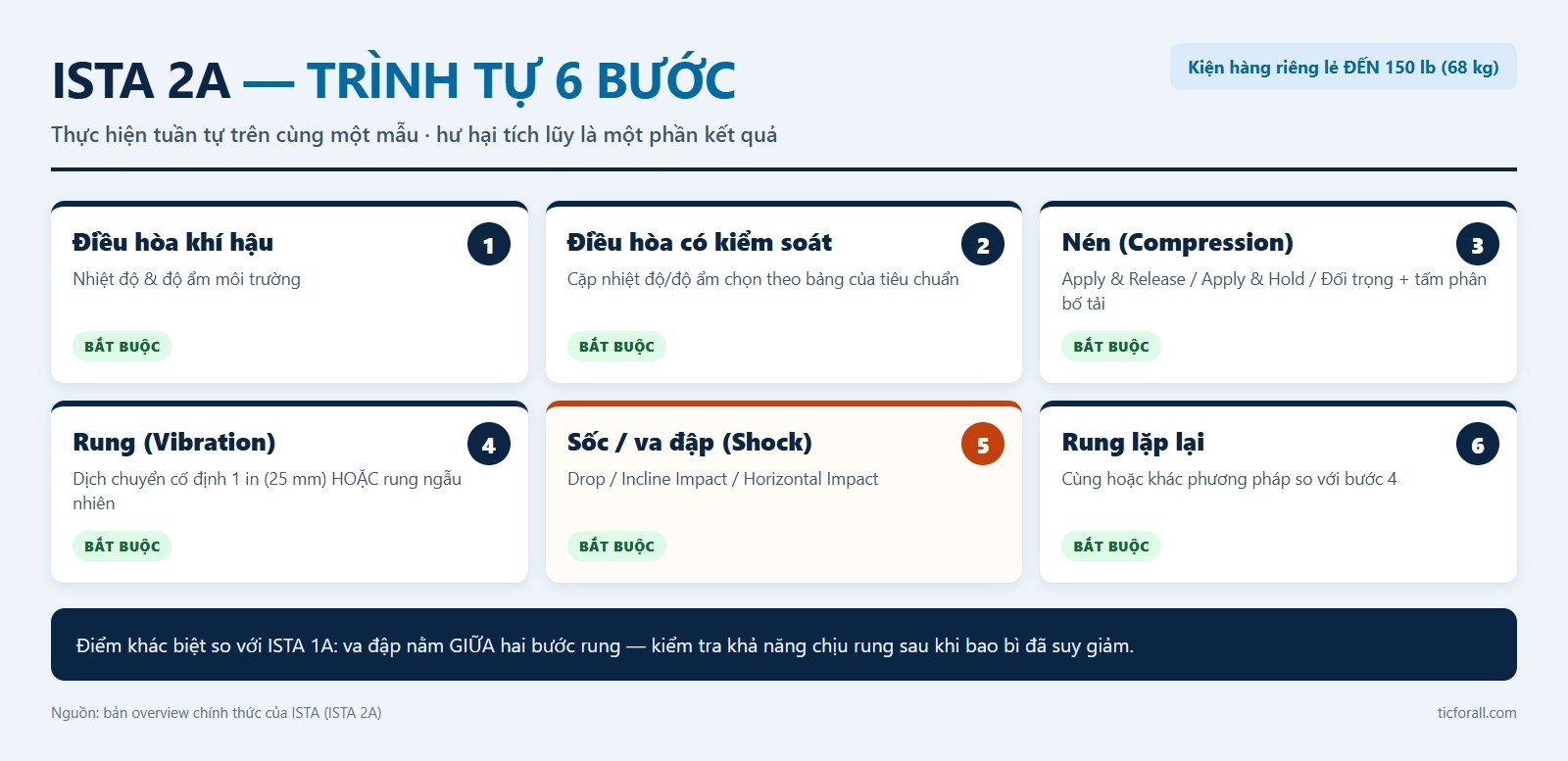
                What Is ISTA 1D? The Extended Packaging Test Procedure for Packages Over 150 lb (68 kg)

                0
                Cover image of the article «What Is ISTA 1D? The Extended Packaging Test Procedure for Packages Over 150 lb (68 kg)» — illustration of transport packaging testing to the ISTA standard

                If you have ever worked with the ISTA standards, you will see a pretty clear rule: Each mass group has two test levels — a basic song and an “extended” song with added compression. For groups up to 150 lb (68 kg), the pair is 1A – 1C. For heavier goods, that pair is 1B – 1D.

                In this article, we analyze ISTA 1D — process Extended Testing for individual packages weighing more than 150 lb (68 kg): what steps does it include, how is it different from 1B and 1C, when to choose and when to switch to another process.

                A note from the beginning: many businesses choose 1D because they think “expanded articles are definitely better”. That’s only true when compression item really has to do with how your goods are stacked in the supply chain. The content below will help you clearly determine that.


                1. What is ISTA 1D?

                ISTA 1D is the packaging testing process ISTA 1 Series — the most basic group of standards of the International Safe Transit Association.

                • Full name: ISTA 1D – Extended Testing for Packaged-Products Over 150 lb (68 kg)
                • Version: 1D 2014 (latest technical change March 2014)
                • Classification: Non-Simulation Integrity Performance Test — test the overall durability of the product + packaging combination, does not simulate a specific shipping journey
                • Subject: each individual package has mass over 150 lb (68 kg), packaged and ready to ship

                ISTA states two main uses of 1D: Evaluate protection performance of a packaging option, and relative comparison between packaging/product design options. Products and packaging are considered as a combination, not separate from each other.

                Most confusing point: What is the difference between 1D and 1C?

                The difference lies in volume threshold, not in strictness:

                • ISTA 1C — extended test for packages to 150 lb (68 kg)
                • ISTA 1D — extended test for packages over 150 lb (68 kg)

                Using the wrong volume threshold is the most common mistake, and also the most costly: the results may be technically correct but Does not describe the product group correctly that the end customer cares about.

                One important exception (very easy to miss)

                If the package has been fixed into a block on a skid or pallet (unitized load) — or multiple packages bound/wrapped for transport as a single unit — then standard no towards 1D, which towards:

                • ISTA 1E — group of tests for unitized loads of the same product type, or
                • ISTA 3E — general simulation for full pallet loads sent by truck (FTL)

                The reason is very practical: once the goods form a mass on the pallet, it is no longer subject to shocks and vibrations the way an individual package would. 1D testing for a fixed pallet is testing with the right technique but on the wrong subject.

                2. Most common misunderstanding about ISTA 1D

                The following three misunderstandings determine whether to choose the right or wrong process:

                1. “1D is an upgrade, so it’s always better than 1B.” — Only true if your goal is related to stacking/compression. Otherwise, 1D adds cost and time without adding value to the question you are trying to answer.
                2. “Compression in 1D is a test of compression performance.” — No. Here it is conditioning step create a load condition before vibration and shock testing — similar to the role of the compression item in 1C.
                3. “1D can be used for whole pallet goods.” — No. 1D is for each individual package. Goods are fixed into blocks on pallets/skids ISTA 1E, or 3E If you need a simulation for full pallet goods.

                3. What does ISTA 1D test? — 5-step sequence

                Illustration of the «5-step sequence» section of the article «What is ISTA 1D? Extended packaging testing procedures for packages over 150 lb (68 kg)»
                Illustration of the «5-step sequence» section.

                Characteristics of the 1 Series line are performed sequentially on the same sample, do not change the sample midway: the accumulated damage from the previous step is part of the final result.

                # Test item Test method Required
                1 Conditioning
                (Atmospheric preconditioning)
                Temperature and humidity at laboratory conditions ✅
                2 Compression
                (Compression Conditioning)
                By compressor or equal to static load (counterweight + transfer plate) — according to specified load/calculation ✅
                3 Vibration
                (Vibration)
                Choose 1 of 2: fixed displacement (fixed displacement) or vibrate randomly (random) ✅
                4 Shock
                (Shock)
                Choose 1 of 3: free fall (drop) / incline impact (conbur) / horizontal impact ✅
                5 Shock — Rotational Edge Drop Try rotating edge impact, for heavy goods ✅ when no try face 1

                The specific test levels of each item (load/compression force, displacement level or Grms level, drop height, impact velocity…) are specified in detail in the ISTA 1D 2014 document — please see the original document.

                Two core differences from ISTA 1B

                1. There is an additional compression item (step 2). This is the meaning of the word Extended. 1B has 4 steps; The 1D has 5 steps, where the compression step is inserted immediately after climate control and before vibration.
                2. Allows random vibration selection instead of just fixed vibration. With heavy loads, random vibration often more closely reflects truck vibration — but not all testing laboratories have vibration tables that meet the required frequency range.

                In short: 1D = 1B + compression item + random vibration option.

                One detail that is easy to get wrong: the drop height

                In the light goods group (lesson 1C), the height falls gradually decreases with volume — the heavier the bale, the lower the drop height. In the heavy goods group (1D), the documents stipulate a specific drop height Applies to groups over 150 lb, not divided into weight ranges like 1C.

                Therefore, when reading the test report, do not assume “the drop height of 1D must be different from 1B” — you need to compare the correct table specified in the original document of each standard version.

                Step 5 — Rotational Edge Drop: required, but conditional

                This is the style edge impact test step rotate/fall, describes a situation where a package topples over during loading and unloading — a situation very typical of heavy goods because it is difficult for the carrier to control the direction of landing.

                The standard that specifies this step is Required when the test is not performed on side 1 (top side by convention). If the item has a visible skid/pallet, or testing in that position is not safe, the operator can omit the shock test on side 1 — and then step 5 becomes a compensation. This is a detail that needs clarification before into the lab, because it affects the value of the entire report.


                4. Accompanying equipment and method standards

                Illustration of the «Equipment» section of the article «What is ISTA 1D? Extended packaging testing procedures for packages over 150 lb (68 kg)»
                Illustration of the «Equipment» section.

                ISTA 1D cites standard test methods, so when you receive the report you can compare it back:

                • Compression: Compressor tested according to the method of ASTM D642 (style apply and release — apply load then release); or style apply and hold — hold the load for a specified time; or use static counterweight + load transfer plate when there is no compressor suitable for the package size.
                • Fixed displacement vibration: vibrating table with fixed/controlled movement, according to ASTM D999 (method A1 or A2), attached metal shim to detect sample displacement/rotation during vibration, frequency measuring device and stopwatch.
                • Random vibration: Table system vibrates randomly ASTM D4728.
                • Shock: Free fall tester (drop tester) follows ASTM D5276; Incline impact/conbur testing machine according to ASTM D880; horizontal impact test system ASTM D4003; Rotational edge drop test table follows ASTM D6179.
                • Measurement system: The document presents two systems in parallel — the English system (inch–pound) and the SI system (metric). The operator chooses one system as the standard unit and uses it consistently throughout the test; two systems no Absolutely accurate conversion value.

                For goods over 68 kg, equipment section sub is equally important as the main equipment: forklift or crane to move the sample, load-bearing floor, and device to stabilize the sample when performing tilt/rotation.


                5. Sample number and sample preparation — a mistake in this step will invalidate the entire test

                Minimum requirements: 1 sample for the entire procedure sequence.

                ISTA Recommendations: perform repetition 5 times or more, each time with a new sample, to have a basis for conclusions about the representative performance of the product + packaging combination. With heavy goods, sample costs are often much higher than with light goods — but testing just one sample and then concluding it is the biggest risk in the entire chain of packaging decisions.

                Four points to close before testing (responsibility of the shipper, not the laboratory):

                1. What is damage? for this product
                2. Allowable damage tolerance level (if any)
                3. How to determine product condition at the end of the test
                4. Packaging condition is considered acceptable at the end of the test

                Additionally, the sample must be Genuine product, not tested. Transported packaging should not be considered representative of standard conditions — so samples sent to the laboratory should be over-packaged to protect, or Repackage in new packaging right in the testing room before starting.


                6. When should ISTA 1D not be used?

                Here’s the part that helps avoid off-target tests — and is a question that should be clear from the start:

                Situation Recommended standards
                Package to 150 lb (68 kg), just basic durability needed ISTA 1A
                Package to 150 lb (68 kg), requires expansion with compression ISTA 1C
                Package over 150 lb (68 kg), just basic durability needed ISTA 1B
                Packages over 150 lb, need to expand with compression (this article) ISTA 1D ✅
                Goods Fixed on pallet/skid into one block ISTA 1E or ISTA 3E
                Need simulate real journey (parcel, LTL, full truck) Group Series 3 (3A / 3B / 3E…)

                Two limits to remember: 1 Series no simulation actual transportation hazards, and do not automatically comply packaging regulations of shipping companies. If the end customer or carrier requires a specific process, 1D does not replace that requirement.


                7. Common errors when implementing ISTA 1D

                • Confusing 1C with 1D. Same “expansion with compression” structure but different mass threshold. This is the most common mistake when businesses choose their own processes.
                • Try 1D for goods already on the pallet. Then 1E or 3E should be used — otherwise, the report will be questioned by partners about its representativeness.
                • Consider the compression step as a performance compression test. In the 1 Series, compression is calculated conditioning (compression conditioning) — it creates a loading condition before vibration and shock testing, not a conclusion about the packaging’s ability to withstand compression. If you need performance compression data, see the more specialized group processes.
                • Use shipped samples. Existing damage distorts all results, and cannot be proven to be caused by the test.
                • Skip finalizing pass/fail criteria before testing. The results then become the problem examiner’s point of view — and is entirely subject to debate later.
                • No unified system of units. Mixing inch–pounds with metric in the same test can easily lead to errors when calculating compression loads or comparing test levels.
                • Try wrong positions in step 5. The rotational edge drop step is required when face 1 is not attempted — skipping or incorrectly performing the pose convention will invalidate the report.
                • Consider “reaching 1D” as a commitment that the goods are not damaged. This is a conclusion that the standard itself does not draw.

                8. What does the cost and time of ISTA 1D testing depend on?

                1D accumulates two expensive factors: Packages over 68 kg (150 lb) and vibrate randomly — type of vibration that requires a vibrating table and a specialized control system, not available in every laboratory. On the same sample, the process also runs the compression and impact items, so the long equipment time and heavy loading and unloading work must be calculated separately.

                The remaining three variables are the impact plan selected, number of samples (minimum one sample or five replicates), and documentation requirements. Because both “heavy” and “multi-item” conditions occur at the same time, the price range between labs is often wider than for light items. Summary of common factors: What does the cost and time of ISTA packaging testing depend on?

                9. Frequently asked questions

                How is ISTA 1D different from ISTA 1B?

                Same weight group (over 150 lb / 68 kg), but 1D is extended test: more categories compression conditioning in step 2, and allow selection vibrate randomly instead of fixed displacement vibration. 1B has 4 steps; 1D has 5 steps.

                How is ISTA 1D different from ISTA 1C?

                Similar structure (conditioning → compression → vibration → shock, with edge impact step according to condition), but different volume thresholds: 1C for packages up to 150 lb (68 kg), 1D for packages over 150 lb (68 kg).

                Is ISTA 1D a certification?

                No. 1D is testing procedure; The result is a report indicating whether or not the sample met the specified test levels. If the business wants to use the results for the program ISTA Certification, the test needs to be performed at an ISTA-accredited laboratory, in the correct order and with all required items.

                How many samples are needed for one ISTA 1D test?

                Minimum requirements are 1 sample. ISTA recommends implementation 5 times or more with new samples each time for representative conclusions. If the results are used to make production decisions or customer commitments, a larger number of samples will give a more reliable conclusion.

                If my goods are on a pallet, should I use 1D or 1E?

                If the goods are fixed as a block on the pallet/skid, the correct direction is ISTA 1E, or ISTA 3E If you need a general simulation for whole pallet goods sent by truck. 1D is for each individual package.

                Does ISTA 1D replace carrier requirements?

                No. The ISTA document states that the 1 Series does not simulate shipping hazards and does not automatically comply with carrier packaging regulations. The alternative test procedure (if any) must be approved by the requesting party — the end customer or carrier —.


                10. Conclusion

                ISTA 1D is an extended test for individual packages over 150 lb (68 kg), with two core differences compared to the basic test of the same weight group: there is an additional compression item, and allows selection vibrate randomly.

                Three things to remember:

                1. Choose the correct volume threshold first, choose the test level later. 1C (up to 68 kg) and 1D (over 68 kg) are two different procedures, not interchangeable.
                2. Compression in 1D is a conditioning step, not performance compression. If your goal is data intensive compression, a different process is needed.
                3. Goods on a fixed pallet are no longer “individual packages”. — the correct direction is 1E or 3E.

                Bottom line: 1D is no substitute for actual risk analysis of the distribution chain. If your goods travel multiple routes or pass through transit points, comparing 1D with 1B, 1E or 3E by shipping channel and package weight is more important than choosing the “strongest” test.


                References

                The full standard should be searched and ordered directly from ISTA. Below are the public sources used for reference when compiling the article:

                Original source: ISTA 1D 2014 – Extended Testing for Packaged-Products Over 150 lb (68 kg), © International Safe Transit Association.

                Related articles: – ISTA Series 1 — 7-process overview (1A–1H) – What is ISTA 1A? Packaging testing procedures for packages up to 150 lb (68 kg) – What is ISTA 1B? Complete packaging testing process for packages over 150 lb (68 kg) – What is ISTA 1C? Extensive packaging testing procedures for packages up to 150 lb (68 kg) – What is ISTA 1H? Random Vibration Test Procedure for Packages Over 150 lb (68 kg) – What is ISTA 1E? Test procedure for unitized loads – What is ISTA standard? Instructions for choosing the right shipping packaging test – What is ISTA 2B? Partially simulated packaging test procedures for packages over 150 lb (68 kg) – What is ISTA 2A? Partially simulated packaging test procedures for packages up to 150 lb (68 kg)


                Talk to us


                  Disclaimer and IP acknowledgement

                  This article is an explanatory content compiled by us for the purpose of introducing and disseminating knowledge. Article is not a translation, copy, abridgement or replacement of the parent standard, and is not evaluated, approved or sponsored by ISTA (International Safe Transit Association)..

                  The entire content of ISTA standards is copyrighted by the International Safe Transit Association, Inc. (East Lansing, Michigan, USA) — All rights reserved. ISTA® and the ISTA logo are registered trademarks of the International Safe Transit Association, Inc.; Mentioned in this article are for guidance purposes only and do not imply any affiliation, partnership or sponsorship.

                  Article content For reference only; Before applying for any purpose — testing, evaluation, certification or commercial decision-making — the reader should refer directly to the original ISTA document (the most complete and up-to-date version) and consult an accredited testing facility when necessary.

                  When performing testing, it is mandatory to use the official, current version of the standard, obtained directly from ISTA. We do not redistribute ISTA materials in any form. Information in this article may be out of date with the current version of the standard.

                  See more: Copyright Policy & Disclaimer by ticforall.com.
                  What Is ISTA 1C? The Extended Packaging Test Procedure for Packages Up to 150 lb (68 kg)

                  0
                  Cover image of the article «What Is ISTA 1C? The Extended Packaging Test Procedure for Packages Up to 150 lb (68 kg)» — illustration of transport packaging testing to the ISTA standard

                  In the ISTA standard system, there is a confusing point: The same product group (up to 150 lb / 68 kg) has many different processes — 1A, 1C, 1D, 1G, 1H…

                  The difference is not in volume, but in level and number of test items. In which, ISTA 1C is the process designed to expand basic endurance test: additional items compression and allows choice random vibration.

                  This is the process often chosen when businesses want data that is “firmer” than the basic test — but before that, there is an important detail that many people misunderstand: the compression item in ISTA 1C not a performance compression test. This article will clarify that.


                  1. What is ISTA 1C?

                  ISTA 1C is the packaging testing process ISTA 1 Series — the most basic group of standards of the International Association for Safe Transportation.

                  • Full name: ISTA 1C – Extended Testing for Packaged-Products 150 lb (68 kg) or Less
                  • Version: 1C 2014 (latest technical change March 2014; editorial update July 2022)
                  • Classification: Non-Simulation Integrity Performance Test — overall durability test, does not accurately simulate actual transportation hazards
                  • Subject: each individual package has mass 150 lb (68 kg) or less, packaged and ready to ship

                  Key words to note in the standard name are: “Extended Testing” — Extensive testing. Same weight group as the basic test, but the test sequence is longer and has additional items.

                  One important exception (easy to miss)

                  If the package located on a clearly visible skid or pallet and has mass over 100 lb (45 kg), standard for testing according to ISTA 1E or ISTA 3E instead of 1C.

                  The reason is very practical: once the goods are secured as a block on the pallet, the individual test for each bale no longer accurately describes how the goods actually move. This is a detail that if overlooked, the test may fail technically correct but wrong subject.

                  2. Most common misunderstanding about ISTA 1C

                  The following three misunderstandings explain most of the misguided conversations about ISTA 1C:

                  1. “The compression item in 1C is a performance compression test.” — No. In 1C, compression is compression conditioning step: it creates a load-bearing condition before vibration and shock testing, but does not make conclusions about the compression resistance of the packaging or predict stacking in the warehouse.
                  2. “1C is for goods weighing over 68 kg.” — No. 1C is limited to packages to 150 lb (68 kg). Use heavier goods 1B (basic lesson) or 1D (extended post with compression).
                  3. “Same mass group so 1A and 1C are interchangeable.” – Are not. The 1C adds exactly what the 1A doesn’t: a longer sequence, has a compression item, and allows random vibrato selection. The two processes answer two different questions.

                  3. What does ISTA 1C test? — 4-step sequence

                  Illustration of the «4-step sequence» section of the article «What is ISTA 1C? Extensive packaging testing procedures for packages up to 150 lb (68 kg)»
                  Illustration of the «4-step sequence» section.
                  # Test item Test method Required
                  1 Conditioning Temperature and humidity at laboratory conditions (before testing) ✅
                  2 Compression Compression conditioning — by compressor or by static load ✅
                  3 Vibration Choose 1 of 2: fixed displacement (fixed displacement) or random vibration ✅
                  4 Shock Choose 1 of 3: drop / incline impact / horizontal impact ✅

                  The specific test levels of each item (compressive force/load, displacement level or Grms level, drop height, impact velocity…) are specified in detail in ISTA 1C 2014 — please see the original document.

                  Compared to the basic durability test of the same mass group, the difference of 1C lies in item number 2 (compression) and at work allows random vibration selection instead of being forced to use fixed displacementation.


                  Step 1 — Atmospheric preconditioning

                  Templates are saved in ambient temperature and humidity conditions of the laboratory according to the time specified in the standard before testing. Temperature/humidity must be recorded at start and end.

                  This is a mandatory pre-conditioning step for all vibrations and rear impacts — not a performance test.


                  Step 2 — Compression Conditioning: typical category of 1C

                  This is the part that causes the most confusion, and is also the part worth reading most carefully.

                  ⚠️ Important principles: ISTA states that compression in 1C just requires conditioning before starting the vibration and impact exercises. Here no is a compression performance test, and neither must be an index that predicts stackability in the warehouse or on the vehicle.

                  In other words: the purpose of this step is create a realistic load state to the sample before vibration and shock testing — not to find the “maximum compression force the tank can withstand”.

                  Three ways to determine compressive force/load

                  The standard offers three options, depending on available equipment:

                  Method Characteristics
                  Apply & Release (AR) Press to a certain level of force release immediately; Additional calculation formula Compensation coefficient according to compression time
                  Apply & Hold – compressor (AH) Press to a specified level of force and Hold the load for the specified time
                  Dead Weight – static load (DW-AH) Use load distribution plate + counterweight reach a specified load level, Hold the load for the specified time

                  Test force/load is calculated from formula depends on package weight (Wt) and total length + barrel width (L + W), then okay limited to a minimum – maximum range specified by the standard. Special:

                  • If package height exceeds the specified threshold → use only minimum value.
                  • If the calculated value lower than the minimum level → use the minimum; higher than the maximum → use maximum level.

                  Detailed formulas and minimum – maximum limit tables are fully specified in the original document ISTA 1C 2014.

                  💡 Technical notes: One point that is easy to make mistakes when calculating is units of L and W. In the SI formula, L and W are calculated as meters (not inches), and the mass is in kg — if the wrong unit is transmitted, the compression force result will be greatly distorted.

                  How to do it

                  With compressor: Place the package with side 3 on the bottom table, bring the two table sides together at the speed specified in the original document, then test depending on the type:

                  • Apply & Release: increase force to AR level → release force → completed, move to vibration step.
                  • Apply & Hold: Increase force to AH level → Hold the load for the specified time → release force → move to vibration step.

                  With static load: Place the package on a flat, hard surface; put load distribution plate hard (larger than the top of the sample) upward; counterbalancing substance to the extent DW-AH → Hold the load for the specified time → unloading → move to vibration step.

                  ⚠️ Safety warning: When using counterweights and load distribution plates, ISTA requires special care to avoid workplace accidents. This is the highest risk category in the entire 1C process.


                  Step 3 — Vibration: choose fixed or random displacement

                  Option A — Fixed Displacement (fixed displacement)

                  The principle of determining frequency is the same as other fixed displacement tests: vibration with 1 in (25 mm) displacement, gradually increasing the frequency until the package arrives begins to leave the tabletop intermittently, confirmed by metal base plate.

                  Test time is calculated according to the formula in the original document (based on the specified number of impact pulses divided by the determined frequency).

                  The biggest difference of 1C compared to simple vibration tests: vibrating time Divided into many positions of the package, don’t just run in one position and then rotate 90°/180°:

                  Posture Time ratio
                  Side 3 on the vibration table 1/2 total time
                  Flip – face 1 on the table 1/6 total time
                  Face 2 or 4 on the table 1/6 total time
                  Face 5 or 6 on the table 1/6 total time

                  This means the package is tested all 4 posture groups in the same total duration — each change of position must redefine the resonance frequency (repeat the shim operation).

                  Option B — Random Vibration (random vibration)

                  This is an option that brings data closer to actual shipping. The vibration controller is programmed accordingly PSD spectrum specified in the original document, with The total Grms level is 1.15.

                  The random vibration time for each position (duration and distribution according to test surface) is specified separately in the original ISTA 1C document.

                  💡 Practical notes: total vibration time of random selection does not depend on the resonance frequency — so the results are much more repeatable than with fixed displacement. This is often the main technical reason for choosing the random option, not just because it “sounds more realistic”.


                  Step 4 — Shock: fall or impact

                  Falling height decreases with mass

                  Unlike tests that use a fixed drop height, ISTA 1C stipulates Drop height varies with package weight: the lighter the bale, the greater the fall height.

                  • Lightest mass group: highest falling height
                  • Heaviest mass group: smallest falling height

                  The full table (5 mass groups, with equivalent impact velocities for incline/horizontal articles) is specified in the original document.

                  The physics behind it is remarkable: The heavier the load, the lower the drop height. Because as the mass increases, the impact energy increases — if the drop height is kept high, the test will go beyond real conditions and become a destructive test.

                  Sequence of action: corner → edge → face

                  Another difference with 1C: impact sequence Start from the corner most vulnerable, then the edges radiating from that corner, then the faces — the full order and number of impact points are specified in the original document. This is more detailed than the tests that only list by face.

                  Three notes apply:

                  • Must try falling in all positions require that falling is feasible.
                  • If you fall in one position not feasible, can be replaced by post equivalent incline or horizontal for that pose.
                  • If the impact velocity is measured lower than the minimum level, that event must do it again until reached.

                  With parcel There are not exactly 6 faces (e.g. specially shaped barrels), the standard has a procedure for selecting and replacing corresponding corners, edges and faces.


                  4. Accompanying equipment and method standards

                  Illustration of the «Equipment» section of the article «What is ISTA 1C? Extensive packaging testing procedures for packages up to 150 lb (68 kg)»
                  Illustration of the «Equipment» section.
                  Test item Equipment Method standards
                  Compression Compression test system (Apply & Release / Apply & Hold) ASTM D642
                  Counterweight + load distribution plate (Dead Weight – Apply & Hold) —
                  Vibration – fixed displacement 1 in (25 mm) fixed-displacement vibration table, rotary or vertical linear ASTM D999 (Method A1 or A2)
                  Metal shim ~0.06 in (1.5 mm) —
                  Frequency meter (tachometer), stopwatch/timer —
                  Vibration – random Random Vibration Test System ASTM D4728
                  Shock – Drop Free fall drop tester ASTM D5276
                  Shock test machine (vertical shock test) ASTM D5487
                  Shock – Incline Incline impact tester (conbur) ASTM D880
                  Shock – Horizontal Horizontal impact test system ASTM D4003

                  ⚠️ Mandatory requirements for vibrating table: must use restraining device so that the sample does not slide off the table, but Vertical movements must not be restricted of sample. With lighter goods (≤150 lb), it is easy to be subjective and tighten the sample too tightly — leading to the sample not being able to “bounce” as designed in the test.

                  Like other standards in the ISTA 1 Series, 1C presents two measurement systems with English units written first, metric in brackets; The performer can choose one system but must Use consistently and convertible values Round to two significant figures.


                  5. Sample number and sample preparation

                  The point to note when preparing samples for 1C is not the quantity but the location order of items run on the same sample: climate control, then compression, then vibration, then impact. Pre-compressed packaging will enter the vibration step in a degraded state — that is the intention of the process, but it also means that The initial state of the sample determines the outcome of all subsequent steps.

                  • Model Number: one sample for the entire sequence; ISTA Recommended repetitions 5 times or more with new samples each time.
                  • Record the status immediately after the compression step (photo + minutes), because the following steps add up and it is difficult to separate the cause if you wait until the end to check.
                  • The sample must be a real package and has not been tested; If the genuine product is not available, the replacement sample must be as similar as possible.
                  • Send sample to lab: Excessive packaging or Repackage with new packaging at the lab.

                  The set of pass/fail criteria is still predetermined by the business, the standards are not defined instead — see 4 criteria businesses must determine for themselves before testing.

                  6. When should ISTA 1C not be used?

                  Situation Recommended standards
                  Packages up to 150 lb, require durability test basic ISTA 1A
                  Package over 150 lb (68 kg) ISTA 1B
                  Goods up to 150 lb, need expansion with compression (this article) ISTA 1C ✅
                  Goods over 150 lb, need expansion with compression ISTA 1D
                  Unitized load on pallets/skids ISTA 1E
                  Need Test compression performance (not conditioning) ISTA 1D or specialized compression test
                  Skid/pallet clearly visible and goods over 100 lb (45 kg) ISTA 1E or ISTA 3E (substitutions allowed)
                  Want to vibrate random but no compression required ISTA 1G/1H
                  Goods for international distribution ISTA 2B (Partial Simulation)
                  Goods go to specific retail channels (Amazon, Sam’s Club…) ISTA 6 (Corresponding Project)

                  💡 Practical notes: A fairly common misunderstanding is to use the compression results of 1C to answer the question “How many floors can the box withstand when warehoused?”. ISTA has stated that compression in 1C is just that conditioning and is not a predictor of stackability in the warehouse or on the vehicle. If the objective is to evaluate compression resistance in storage, another test is needed (e.g. group 1D or specialized compression procedures) — and this objective should be made clear before planning the test.


                  7. Common errors when implementing ISTA 1C

                  1. Wrong drop height applied — ignore height drop decrease with volume, leading to overtesting.
                  2. Forget the time compensation factor in the Apply & Release formula.
                  3. Do not clamp the value to the min/max range specified by the standard.
                  4. Do not check the barrel height — if the specified height threshold is exceeded without switching to the minimum value.
                  5. Wrong unit used in SI formula — transmit L, W accordingly inches instead meters.
                  6. Misunderstanding the purpose of the compression item — consider it a measurement of compression performance or stacking index.
                  7. Wrong division of fixed displacement vibration time — forget structure 1/2 – 1/6 – 1/6 – 1/6 and having to redefine the frequency in each position.
                  8. Do not check the vibrating table stroke when running, vibrate randomly — lack of travel does not reproduce the correct spectrum.
                  9. Using a retaining device that is too tight — limits the vertical movement of the sample.
                  10. Ignore skid/pallet exception — still try individual packages secured on pallets.

                  8. What does the cost and time of the ISTA 1C test depend on?

                  1C is the process with the most items in Series 1: Climate control, compression, vibration and impact run consecutively on the same sample. The cost therefore depends strongly on the option you choose in each category — compression by machine or by static counterweight; fixed vibration or random vibration (two different types of vibration tables); impact by free fall, incline or horizontal. Each combination of options results in a quote and a different equipment occupancy time.

                  Because many items run on the same pattern, completion time is often much longer than a single vibrato; The number of iterations increases the cost exponentially. Summary of common factors: What does the cost and time of ISTA packaging testing depend on?

                  9. Frequently asked questions

                  ISTA 1C is different ISTA 1A at what point? Same weight group (up to 150 lb / 68 kg). The main difference: 1C is a test expand, there are additional categories Compression Conditioning (compression) and allows choice random vibration next to the fixed displacement vibration.

                  Is the compression item in 1C a “compression test”? No. ISTA states this is just that Conditioning requirements against vibrations and shocks — not a compression performance test, nor a predictor of stackability in a warehouse or on a vehicle.

                  How to choose between Apply & Release, Apply & Hold and Dead Weight? Depends on available equipment and target: AR uses test force with compensation factor and then releases immediately; AH holds the force according to the time specified on the compressor; DW-AH uses counterweight + load distribution plate and also holds the load for a specified time. All three have a min/max range that must be adhered to.

                  How long does random vibration take in 1C? The duration and distribution according to each test surface are specified in the original document of ISTA 1C.

                  How long does it take for a fixed displacement vibration in 1C? Depends on the determined frequency, calculated according to the formula in the original document. The point to note is that the duration is divided into 4 groups of postures (1/2 – 1/6 – 1/6 – 1/6), do not run in a single position.

                  What should I do if a 120 lb item has skids? ISTA 1C allows the following test ISTA 1E or ISTA 3E in cases where the package is on a visible skid/pallet and weighs over 100 lb (45 kg).

                  Are 5 samples required? Optional — 1 sample is the minimum requirement; Five or more samples is recommended to assess representativeness.

                  If you want to look up detailed test levels, where can you look? Compression formula, min/max limits, random vibration spectrum, drop height table and detailed step-by-step sequence are fully specified in the original document ISTA 1C 2014 — can be searched and ordered at ista.org.


                  10. Conclusion

                  ISTA 1C is a test expand for loads up to 150 lb (68 kg), with three core differences from the basic test: There is a category of conditioning compression, allows random vibration selection, and Detailed impact sequence according to corner → edge → face.

                  Three most memorable things:

                  1. Compression in 1C is conditioning, not a performance test — don’t use this result to answer the question about storage/vehicle stacking capabilities.
                  2. The compression formula must be clamped to the min/max range, and if the tank height exceeds the specified threshold, only the minimum value is applied.
                  3. The greater the mass, the lower the drop height — this is a physical principle, not an arbitrary standard.

                  For goods under 150 lb but requiring more solid data for packaging decisions, 1C is often a reasonable balance between depth of testing and cost of implementation.


                  References

                  The full standard should be searched and ordered directly from ISTA. Below are the public sources used for reference when compiling the article:

                  Original source: ISTA 1C 2014 – Extended Testing for Packaged-Products 150 lb (68 kg) or Less, © International Safe Transit Association.

                  Related articles: – ISTA Series 1 — 7-process overview (1A–1H) – What is ISTA 1B? Complete packaging testing process for packages over 150 lb (68 kg) – What is ISTA 1A? Packaging testing procedures for packages up to 150 lb (68 kg) – What is ISTA 1D? Extended packaging testing procedures for packages over 150 lb (68 kg) – What is ISTA 1G? Random vibration test procedure for packages up to 150 lb (68 kg) – What is ISTA 1E? Test procedure for unitized loads – What is ISTA standard? Instructions for choosing the right shipping packaging test – What is ISTA 2A? Partially simulated packaging test procedures for packages up to 150 lb (68 kg) – What is ISTA 2B? Partially simulated packaging test procedures for packages over 150 lb (68 kg)


                  Talk to us


                    Disclaimer and IP acknowledgement

                    This article is an explanatory content compiled by us for the purpose of introducing and disseminating knowledge. Article is not a translation, copy, abridgement or replacement of the parent standard, and is not evaluated, approved or sponsored by ISTA (International Safe Transit Association)..

                    The entire content of ISTA standards is copyrighted by the International Safe Transit Association, Inc. (East Lansing, Michigan, USA) — All rights reserved. ISTA® and the ISTA logo are registered trademarks of the International Safe Transit Association, Inc.; Mentioned in this article are for guidance purposes only and do not imply any affiliation, partnership or sponsorship.

                    Article content For reference only; Before applying for any purpose — testing, evaluation, certification or commercial decision-making — the reader should refer directly to the original ISTA document (the most complete and up-to-date version) and consult an accredited testing facility when necessary.

                    When performing testing, it is mandatory to use the official, current version of the standard, obtained directly from ISTA. We do not redistribute ISTA materials in any form. Information in this article may be out of date with the current version of the standard.

                    See more: Copyright Policy & Disclaimer by ticforall.com.

                    What Is ISTA 1B? The Complete Packaging Test Procedure for Packages Over 150 lb (68 kg)

                    0
                    Cover image of the article «What Is ISTA 1B? The Complete Packaging Test Procedure for Packages Over 150 lb (68 kg)» — illustration of transport packaging testing to the ISTA standard

                    There is a question that almost every business has encountered, but it is very difficult to answer emotionally: “Is my packaging sturdy enough?”

                    With light goods, the error may be just a few dented products. But with packages weigh more than 150 lb (68 kg) — machinery, industrial equipment, electrical cabinets, wooden crated goods — one damage due to transportation can lead to a chain of consequences: customers refuse to accept goods, compensation costs, liability disputes between the seller – transporter – packaging supplier, and reputation is affected.

                    When a dispute occurs, the question is always: Is there a packaging problem, or is there a shipping problem? And to answer that question objectively, one needs data — not speculation.

                    ISTA 1B is one of the most commonly used standards to generate such data for goods weighing over 68 kg. This article summarizes the core content of ISTA 1B 2014 along with practical notes commonly encountered when performing this test in the laboratory.


                    1. What is ISTA 1B?

                    ISTA 1B is a packaging testing process ISTA 1 Series — the most basic group of standards of the International Safe Transit Association.

                    • Full name: ISTA 1B – Packaged-Products Over 150 lb (68 kg)
                    • Version: 1B 2014 (latest technical change March 2014, editorial update July 2022)
                    • Classification: Non-Simulation Integrity Performance Test — try overall durability of the package, no simulation Accurate actual shipping hazards.
                    • Subject: each individual package (individual packaged-product) has volume over 150 lb (68 kg), packaged and ready to ship.

                    It is necessary to clearly distinguish two easily confused points:

                    1. ISTA 1 Series no simulation actual transportation hazards, and
                    2. ISTA 1 Series do not automatically comply Packaging regulations of shipping companies.

                    In other words, 1B answers the question “How durable is this packaging, and which option is better?” — but not answer the question “Is this packaging up to the shipping company’s standards?”.

                    Position in the ISTA system

                    ISTA clearly distinguishes between Non-Simulated Integrity (Series 1), Partial Simulation (Series 2), General Simulation (Series 3), the Project according to specific distribution channels (Series 6) and Development Tests (Series 7).

                    ISTA 1B is located on the first floor the most basic: fast, inexpensive, suitable for early screening and Compare plans before entering more expensive simulation tests.

                    2. Most common misunderstanding about ISTA 1B

                    Before getting into the test sequence, there are three misunderstandings that come up most often in conversations about ISTA 1B:

                    1. “1B is a simulation of a real transport journey.” — No. 1B belongs to Series 1 (Non-Simulation Integrity) and the standard itself clearly states this group no simulate realistic shipping hazards; nor does it automatically comply with the carrier’s packaging regulations. To simulate a specific journey, 3 Series group processes are needed.
                    2. “Reaching 1B means the goods will not be damaged.” — No. The result is a report describing whether the sample withstands the specified test sequence, compared with criteria that the business must determine itself before testing. A passing sample is not a commercial commitment.
                    3. “For heavy items, just use 1B.” — Not enough. If the package has been secured as a block on the pallet/skid, the correct direction is ISTA 1E or 3E. If the target has additional compression when stacked, it is necessary ISTA 1D.

                    3. What value does ISTA 1B really bring?

                    The ISTA document itself clearly states the benefits of applying the correct process:

                    • Shorten packaging development time and increase confidence when launching products
                    • Protect products and profits: reduce damage, reduce loss of goods
                    • Distribution costs are reasonably balanced Economically (no over-pack, no under-pack)
                    • Increase customer satisfaction and maintain business operations

                    In addition, in actual operation, result 1B is also used as one technical profile for three very common situations:

                    Situation How does ISTA 1B help?
                    New product development Compare 2–3 packaging options using data, not gut feeling
                    When there is a damage claim There is objective evidence to determine whether the packaging meets or fails the test level
                    Evaluate packaging suppliers There are standard technical criteria to compare, not just prices

                    💡 A practical observation: The packaging supplier offers a lower price that sounds very attractive — until the packaging fails the test and the difference in savings is “eaten up” by the cost of handling damaged goods, reshipping, or compensation. This is why many businesses move from price comparison to comparison test results.


                    4. What does ISTA 1B test? — 4-step sequence

                    Illustration of the «4-step sequence» section of the article «What is ISTA 1B? Complete packaging testing process for packages over 150 lb (68 kg)»
                    Illustration of the «4-step sequence» section.

                    ISTA 1B requires implementation 4 items in correct order above each test sample:

                    # Test item Test method Required
                    1 Conditioning Temperature and humidity at laboratory conditions (before testing) ✅
                    2 Vibration Fixed displacement (fixed displacement) ✅
                    3 Shock Choose 1 of 3: drop / incline impact / horizontal impact ✅
                    4 Shock Rotational edge drop ✅ unless don’t try side 1

                    The specific test levels of each item (drop height, displacement level, vibration duration, impact velocity…) are specified in detail in ISTA 1B 2014 — please see the original document.

                    Step 1 — Atmospheric preconditioning

                    Templates are saved in ambient temperature and humidity conditions of the laboratory according to the time specified in the standard before testing. Temperature/humidity must be recorded at start and end.

                    💡 Practical notes: This is the most overlooked step. But cardboard, glue, foam, and wood all absorb moisture very differently between the dry season and the rainy season. Skipping step 1 is a common cause of poor results cannot be recreated try again at another time.

                    Step 2 — Vibration: Fixed Displacement Vibration

                    Implementation principles:

                    1. Place the package on the vibrating table so that side 3 is in contact with the table surface.
                    2. Vibrate with fixed displacement 1 in (25 mm) at the lowest frequency, yes gradually increase the frequency until the parcel starts leave the tabletop intermittently.
                    3. Certificate confirmation metal shim inserted between the bottom of the package and the table top. If shim can be inserted intermittently → the required frequency has been reached.
                    4. Calculate test time from the specified number of impact pulses divided by the determined vibration frequency (CPM, or Hz × 60), according to the formula in the original document.
                    5. If the table vibrates Do not use vertical movements, yes rotate the sample 90° halfway through the test — or 180° if 90° rotation is not feasible due to size/stability — then run the rest.

                    ⚠️ Mandatory note: must use restraining device so that the sample does not slide off the vibrating table, but this device Vertical movements must not be restricted of sample. Holding too tightly is a fairly common technical error, distorting the nature of the test.

                    Step 3 — Shock: drop or impact

                    Select one in three methods:

                    • Drop (free fall): according to the drop height specified in the standard — with ISTA 1B 2014 it is 6 in (150 mm).
                    • Incline Impact (Conbur): Use the minimum impact velocity as prescribed by the standard.
                    • Horizontal Impact: Use the minimum speed change as prescribed by the standard.

                    Order of impact: smallest face → opposite face → average face → opposite face → largest face → … according to the table in the original document, then comes edges and corners.

                    💡 If the velocity is measured lower than the minimum level request, test event must be done again until passed — ISTA does not accept missing results.

                    Exception: No need to try to shock it side 1 (top side) If the package have clearly visible skids or pallets, or if the positioning/testing is in that position not safe.

                    Step 4 — Rotational Edge Drop

                    Done without testing shock on face 1: place one edge on the spacer bar of the specified height, lift the opposite edge up 8 in (200 mm) Then let it fall freely onto a hard, flat surface (steel or concrete). Then repeat with a bottom edge 90° perpendicular with the edge just tested.

                    ⚠️ Safety note: if the package has it Length ≥ 2 times width and The center of gravity is higher than the height midpoint, sample at risk flip when testing on the longest edge — in this case it is permissible to do the above both shortest sides.


                    5. Accompanying equipment and method standards

                    Illustration of the «Equipment» section of the article «What is ISTA 1B? Complete packaging testing process for packages over 150 lb (68 kg)»
                    Illustration of the «Equipment» section.
                    Test item Equipment Method standards
                    Vibration 1 in (25 mm) fixed-displacement vibration table, rotary or vertical linear ASTM D999 (Method A1 or A2)
                    Metal shim ~0.06 in (1.5 mm) —
                    Frequency meter (tachometer) or CPM/Hz indicating device —
                    Stopwatch or automatic timer —
                    Shock – Drop Free fall drop tester ASTM D5276
                    Shock test machine (vertical shock test) ASTM D5487
                    Shock – Incline Incline impact tester (conbur) ASTM D880
                    Shock – Horizontal Horizontal impact test system ASTM D4003
                    Shock – Rotational Rotational edge drop ASTM D6179

                    A little-noticed detail: ISTA 1B presentation two measurement systems — Imperial system (inch–pound) and SI system (metric). Implementer is selected a system as a standard unit, but yes Use consistently throughout the process, and convertible values Round to two significant figures (not an absolutely exact equivalent). This is why on test records, test levels are often recorded in pairs such as 150 lb / 68 kg nice 6 in / 150 mm.


                    6. Sample number and sample preparation — a mistake in this step will invalidate the entire test

                    1B is the lesson for Packages over 68 kg (150 lb), so the “sample preparation” part here is more about loading and unloading than about packaging techniques.

                    • Model Number: one sample for the whole sequence (fixed displacement vibration then selected impact category). ISTA Recommended repetitions 5 times or more with new samples each time.
                    • Sending samples to the laboratory: Because the model is heavy, vehicles, lashings, and lifting equipment must be considered in advance. A block of goods that is jostled along the way is a sample that was damaged before it started.
                    • Repackaging: sample must be Excessive packaging during shipping or Repackage in new packaging at the laboratory — goods that have passed their voyage no longer represent standard condition.
                    • Prepare data before testing: total mass and external dimensions (length × width × height) according to the measurement system you choose, because the test level of 1B depends on mass.

                    And one thing that cannot be left to the laboratory: the shipper must determine its own set of pass/fail criteria before testing — see 4 criteria businesses must determine for themselves before testing.

                    7. When should ISTA 1B not be used?

                    Here’s the part that helps avoid off-target tests — and is a question that should be clear from the start:

                    Situation Recommended standards
                    Package ≤ 150 lb (68 kg) ISTA 1A
                    Package > 150 lb (68 kg) ISTA 1B ✅
                    Want to try random vibration instead of fixed displacement ISTA 1H
                    Need to check minimum compression value (compression) ISTA 1D
                    Goods unitized load on pallets/skids ISTA 1E
                    Goods for international distribution ISTA 2B (Partial Simulation)
                    Goods go to specific retail channels (Amazon, Sam’s Club…) ISTA 6 (Corresponding Project)

                    The ISTA document itself gives clear redirection suggestions:

                    • If you want to use it random vibration instead of fixed displacement → use ISTA 1H, do not use 1B.
                    • If needed check one Minimum compression value → use ISTA 1D.
                    • If it is unitized goods → use ISTA 1E, do not use 1B. (Unitized load defined as one or more products/packages usually placed on skids or pallets, always fixed or tied for distribution as a single block.)
                    • If the row is towards international distribution → consider ISTA 2B (Partial-Simulation).

                    💡 Practical notes: In many cases, partners request “ISTA results” for multi-hop export shipments, and the default is interpreted as 1B. While 1B — with its non-simulation nature — may not be the test that partners are actually looking for. Clarification Test purpose and output requirements before choosing a standard will avoid a whole round of rework.


                    8. Common mistakes when implementing ISTA 1B

                    Summary from actual tests performed:

                    1. Choosing the wrong standard by volume — use 1A for packages exceeding 68 kg, or vice versa.
                    2. Skip the climate control step — results are not reproducible, especially in the rainy season.
                    3. Submit shipped samples without overpackaging or repackaging.
                    4. Only try with 1 sample while representative conclusions are needed → ISTA recommends 5 or more samples.
                    5. The sample holder is too tight, restricting the vertical movement of the package.
                    6. Wrong calculation of vibration time — confuse CPM with Hz, or choose the wrong resonance frequency.
                    7. Skip the Rotational Edge Drop step when side 1 is not tested → missing items, incomplete records.

                    An error that is rarely mentioned but still has a clear impact: failure criteria and acceptance tolerances are not predetermined. At that time, the test results may be technically correct but not conclusive pass nice fail. fail — and the test became commercially meaningless.


                    9. What does the cost and time of the ISTA 1B test depend on?

                    With 1B, costs are pushed up by two characteristics: Packages over 68 kg (150 lb) and The impact item has many options. Heavy goods entail lifting equipment, heavy-duty vibrating tables and the labor of transporting samples to the laboratory. The impact part can be performed by free fall, incline (conbur) or horizontal impact — three different groups of equipment, not every laboratory has enough.

                    The remaining two variables are number of samples (one sample as minimum requirement, or five replicates as recommended by ISTA) and documentation requirements. Because the sample is heavy, shipping and handling costs often account for a significant proportion of the quote — this should be clearly asked when comparing prices between units. Summary of common factors: What does the cost and time of ISTA packaging testing depend on?

                    10. Frequently asked questions

                    Other ISTA 1B ISTA 1A at what point? The main difference is volume threshold: 1A for packages up to 150 lb (68 kg), 1B for packages over 150 lb (68 kg). Regarding the sequence, 1B has additional items Rotational Edge Drop (Step 4) for heavy goods.

                    Is ISTA 1B a certification? No. ISTA 1B is testing procedure; The result is one test report Indicate whether or not the sample meets the specified test levels. Testing by itself does not create “product certification”.

                    Is it mandatory to try 5 samples? Not required. ISTA Request 1 sample but 5 samples or more recommended to evaluate representation. If the results are used to make production decisions, a larger number of samples will give more reliable conclusions.

                    Does ISTA 1B replace carrier requirements? No. ISTA states that the 1 Series does not simulate actual shipping hazards and does not automatically comply with carrier packaging regulations. Need to check specific customer/carrier requirements.

                    Do goods with pallets have to be tested to fall on the top? Not required. ISTA 1B allows shock testing on side 1 (top side) to be omitted if the package has a clearly visible skid/pallet, or if testing in that position is unsafe.

                    What if the sample tips over during testing? For long packages (length ≥ 2 times width) with a high center of gravity, the standard allows Rotational Edge Drop to be performed on both shortest edges instead of the longest edge, to ensure safety.

                    If you want to look up detailed test levels, where can you look? Specific test levels (drop height, displacement level, vibration duration, impact velocity, detailed step-by-step sequence) are fully specified in the original document ISTA 1B 2014 — can be searched and ordered at ista.org.


                    11. Conclusion

                    ISTA 1B is a fast, compact and economical choice for testing packaging durability for packages weighing over 68 kg during the screening and comparison phase.

                    Three most memorable things:

                    1. 1B does not simulate actual transport — its value lies in comparing, screening and creating technical profiles, not in simulating the shipment’s journey.
                    2. Choosing the right standard is more important than running the wrong test correctly — check the volume, product properties (unitized or not), and partner requirements before starting.
                    3. Sample preparation determines the value of the results — untested samples, overpackaging for shipping, and predetermined damage criteria.

                    With heavy goods, investing in the right test from the start is always cheaper than the cost of dealing with a damaged shipment at the other end of the supply chain.


                    References

                    The full standard should be searched and ordered directly from ISTA. Below are the public sources used for reference when compiling the article:

                    Original source: ISTA 1B 2014 – Packaged-Products Over 150 lb (68 kg), © International Safe Transit Association.

                    Related articles: – ISTA Series 1 — 7-process overview (1A–1H) – What is ISTA standard? Instructions for choosing the right shipping packaging test – What is ISTA 1A? Packaging testing procedures for packages up to 150 lb (68 kg) – What is ISTA 1C? Extensive packaging testing procedures for packages up to 150 lb (68 kg) – What is ISTA 1D? Extended packaging testing procedures for packages over 150 lb (68 kg) – What is ISTA 1H? Random Vibration Test Procedure for Packages Over 150 lb (68 kg) – What is ISTA 1E? Test procedure for unitized loads – What is ISTA 2B? Partially simulated packaging test procedures for packages over 150 lb (68 kg) – What is ISTA 2A? Partially simulated packaging test procedures for packages up to 150 lb (68 kg)


                    Talk to us


                      Disclaimer and IP acknowledgement

                      This article is an explanatory content compiled by us for the purpose of introducing and disseminating knowledge. Article is not a translation, copy, abridgement or replacement of the parent standard, and is not evaluated, approved or sponsored by ISTA (International Safe Transit Association)..

                      The entire content of ISTA standards is copyrighted by the International Safe Transit Association, Inc. (East Lansing, Michigan, USA) — All rights reserved. ISTA® and the ISTA logo are registered trademarks of the International Safe Transit Association, Inc.; Mentioned in this article are for guidance purposes only and do not imply any affiliation, partnership or sponsorship.

                      Article content For reference only; Before applying for any purpose — testing, evaluation, certification or commercial decision-making — the reader should refer directly to the original ISTA document (the most complete and up-to-date version) and consult an accredited testing facility when necessary.

                      When performing testing, it is mandatory to use the official, current version of the standard, obtained directly from ISTA. We do not redistribute ISTA materials in any form. Information in this article may be out of date with the current version of the standard.

                      See more: Copyright Policy & Disclaimer by ticforall.com.