ISTA® 3L is General simulation project for e-commerce channels — full name is Generalized E-commerce Retailer Fulfillment Test. This is the ISTA process newest and greatest in the 3 Series group: the 2023 version is up to 51 pages long, with eight packaged-product types (Small, A, B, C, D, E, F, G, H) ranges from 4.5 kg parcels to LTL pallets and both models are dedicated to TV/Monitor.
First point to understand: 3L is not “new version 3A”. 3A simulation parcel delivery system with a fixed test sequence. 3L simulation The order fulfillment process of a typical online retailer — goods go through fulfillment warehouses, packaging, then to consumers by parcel or LTL, with special situations such as drop in a bag, edge/corner drop, bridge impact, and even concentrated edge impact for flat bales.
This article goes through: why ISTA built 3L; eight packaged-product types; two handling methods; two shape concepts determine the whole test sequence (elongated and flat); sequence table for each group; special test stages; number of samples rule; device; and when to choose 3L instead of 3A, 3B, 3E or 6-AMAZON.COM.
1. What is ISTA 3L?
3L is the project for Generalized E-commerce Retailer Fulfillment — simulates an online retailer fulfilling orders and sending individual packaged-products to consumers. The 3L document clearly defines three shipping systems:
- Parcel Delivery — sent via delivery system (UPS, FedEx…) when weight < 150 lb (68 kg), longest side ≤ 108 in (2.74 m) and total length + girth not exceed 165 in (4.19 m). Including elongated and flat bales.
- LTL Standard — sent via LTL system (joint shipment), no build pallets or shelves.
- LTL Palletized — sent via LTL system but yes Separate pallets/shelves for each package.
The document also defines standard pallets (universal design, published parameters, correct use) and custom pallets (specifically designed for a narrow product/range of products, uncommon parameters) — because the standard applies the same test level but different interpretations of “pallet” will affect the interpretation results.
One note ISTA emphasizes in the Samples section: product and packaging must As close to actual production as possible. Pre-production samples — hand-made samples, one-piece CAD samples or short batches — often insufficiently represented for the results to make sense. Maybe try early in the product development cycle, but The final official test must use actual production goods. This is where many businesses make mistakes when they rush to get certification for their prototypes.
2. Why does ISTA have its own 3L?
The e-commerce channel creates dangers that 3A (traditional parcel) does not adequately simulate:
- Sue extreme shapes — flat furniture, picture frames, elongated bars, large flat panels — packages that 3A does not handle separately.
- Throw/drop in bag — many online retailers bag or sack items before shipping; equipment drop in a bag, which means the object rotates/impacts differently than when falling freely from the ground.
- The product is fragile and leaks easily — glass, ceramic, liquid — with separate sampling rules (section 8).
- TV/Monitor — a product group with its own fragile characteristics and unique handling, ISTA separates into two styles G and H.
- Calculated horizontal and vertical compression — simulate clamping forces on conveyors and stacking forces in LTL warehouses.
In other words: 3L is “3A that spans the entire spectrum of shapes and forms encountered by a physical online retailer”.
3. Eight types of ISTA 3L packaged-products
| Type | Sending system | Volume | Size |
|---|---|---|---|
| Small | Parcel | ≤ 10 lb (4.5 kg) | Long side ≤ 14 in (350 mm) and volume ≤ 800 in³ (13,000 cm³) |
| A | Parcel | < 50 lb (23 kg) | Length+girth ≤ 165 in (4.19 m); long side > 14 in (350 mm) and ≤ 108 in (2.74 m) |
| B | Parcel | 50 lb – < 100 lb (23–45 kg) | Length+girth ≤ 165 in; long side ≤ 108 in |
| C | Parcel | 100–150 lb (45–68 kg) | Length+girth ≤ 165 in; long side ≤ 108 in |
| D | LTL | < 100 lb (45 kg) | Length+girth > 165 in (4.19 m) or Long side > 108 in (2.74 m) |
| E | LTL | ≥ 100 lb (45 kg) | Length+girth > 165 in or Long side > 108 in or ≥ 150 lb (68 kg) |
| F | LTL, handled by pallets | Palletized LTL bales — test level according to pallet handling method | |
| G | Parcel — TV/Monitor | < 150 lb (68 kg) | Length+girth ≤ 165 in; long side ≤ 108 in |
| H | LTL — TV/Monitor | ≥ 150 lb (68 kg) | or length+girth > 165 in, or long side > 108 in |
The two G/H types don’t just differ in mass — ISTA separates them product category specifically because of “specific product characteristics and vulnerable areas, plus different handling methods”. If your product is a TV or monitor, do not use an A–F style table to derive the test sequence.
4. Two processing methods at fulfillment warehouse
3L differentiates how goods arrive at the retailer’s Fulfillment Center (FC):
| Method | Definition |
|---|---|
| Standard Handling (floor loaded) | Sue to FC no pallets, or multiple packages on the same pallet, and sent to the consumer no Includes pallets. |
| Pallet Handling | Sue to FC on separate pallets and sent to the consumer on pallets. |
This is the easiest place to make a mistake when reading 3L: the same product can fall into different test series depending on how the retailer handles the case — not the product. Need to directly ask the customer/consignee about the handling method at FC before choosing the style.
5. Two concepts determine the whole test sequence: “elongated” and “flat”
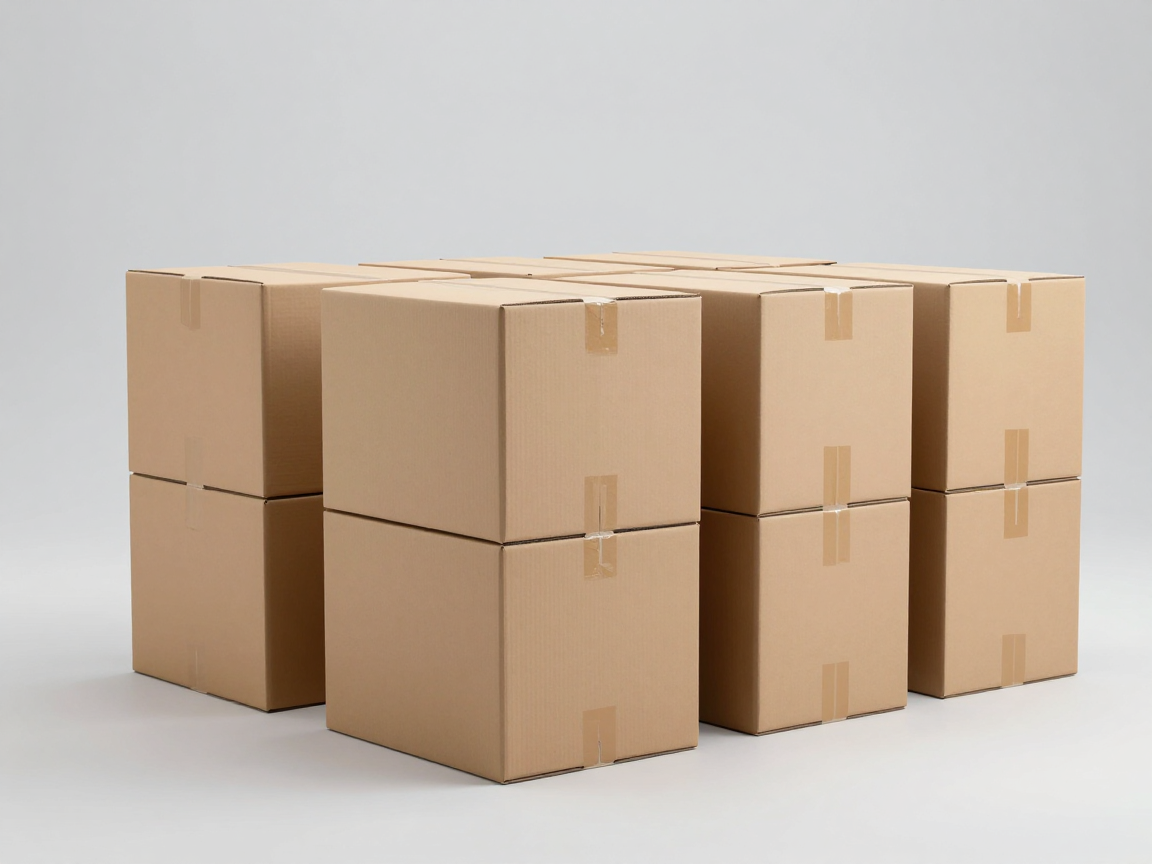
Three specific 3L test blocks — edge swing drop, full flat swing drop, bridge impact and concentrated edge impact — Only required for elongated or flat bales. This is why bale shape must be determined before anything else.
- Rotational Edge Drop (block 21), 9 in (230 mm): required for lawsuits elongated and flat.
- Full Rotational Flat Drop (block 22): test level packaged-product size depends; Required for elongated and flat bales.
- Bridge Impact (block 23): hazard box Drop 16 in (400 mm); only required for lawsuits elongated.
- Concentrated Edge Impact (block 24): 16 in (400 mm) fall hazard box; only required for lawsuits flat.
Bridge impact simulates the classic situation on a conveyor/shipping yard: a long bale lies across two edges, the middle part is unsupported, and then gets hit by another object — a typical damage pattern of long lines. Concentrated edge impact simulates a small heavy block (edge hazard box) hitting it edge of flat bales. Equipment details of hazard box: see section 9.
6. Test sequence: table according to main group
3L is divided into two “families” of sequences: family parcel (Small, A, B, C) and last name LTL / pallet (D, E, F) same TV/Monitor family (G, H). The table below is the parcel group sequence (Small/A) according to the documentation:
| # | Group | Test type | Test level | Request |
|---|---|---|---|---|
| 1 | Climate | Pre-conditioning | Ambient lab room, 12 o’clock | Required |
| 2 | Climate | Controlled air conditioning | Temperature/humidity select according to the chart | Options |
| 3 | Shock | Free fall (no in bag) | 9 falls — altitude changes with mass | Required |
| 4 | Vibration | Vibrate randomly yes and no download above | Grms total 0.53 and 0.46 | Required |
| 5 | Shock | Free fall (in the bag / on the dangerous side) | 8 drops (some types: 7 times) — including falling on a hazard | Required |
| 6 | Shock | Rotational Edge Drop | 9 in (230 mm) | Required for elongated & flat bales |
| 7 | Shock | Full Rotational Flat Drop | According to packaged-product size | Required for elongated & flat bales |
| 8 | Shock | Bridge Impact | 16 in (400 mm) fall hazard box | Only elongated lawsuits |
| 9 | Shock | Concentrated Edge Impact | 16 in (400 mm) fall hazard box | Only flat cases |
| 10 | Integrity | Leak Test (leak test) | 8 o’clock | Only with liquid goods |
With the group Type Small and Type A, the document clearly separates stage 3 fell into the bag (9 times) and stage 5 is fell in the bag (7 times for Type A) — meaning small goods and goods up to 23 kg can be packed in bags at one stage, creating a different appearance. With the group LTL (D, E, F), the test string adds:
- Tip / Tipover (block 3): inclined 22° — required for bales ≥ 48 in (1.2 m) high and with a bottom edge < ½ height; or ≥ 30 in (760 mm) high with center of gravity > ½ bale height.
- Drop flat swivel & edge swivel at 9 in (230 mm): blocks 5 and 6, mandatory.
- Inclined or horizontal impact (block 8): va velocity 48 in/s (1.2 m/s).
- Horizontal compression (Clamping, block 9): Value calculated by formula, clamped in many positions — required with each axle width ≥ 24 in (610 mm) and < 75 in (1,905 mm).
- Vertical compression (block 10): value calculated according to the formula, holding force 1 hour, try in the intended transport position or the most stable position.
- Random vibration with/without load on: still Grms 0.53 and 0.46.
- With Type F (LTL palletized): release and rotate flat using level 9 in (230 mm) and do it on the 3 side down.
With Type G/H (TV/Monitor), the document has a separate drop height table with two columns < 70 lb (32 kg) and 70–150 lb (32–68 kg), including the step "fall from 36 in (910 mm) / 24 in (610 mm) to the most dangerous flat position"; If you don't know the most dangerous position of Type G, use it Face 6.
7. Details of some notable test stages
Vibration with and without top load
Both levels Grms 0.53 and 0.46 are required — you don’t have to choose one. Some runs no top load (bale lying bare on vibrating table), some running yes top load to simulate a bale being crushed by other bales. This is an important difference from procedures that only run a single spectrum: 3L tests both load states because resonant damage appears in one state but not in the other.
Fall by mass and fall on hazard
Falling height varies with volume packaged-product, not fixed. For example, for the LTL group, the height table has two columns < 70 lb (32 kg) and 70–150 lb (32–68 kg): side/corner drops of 18 in (460 mm) with light bales reduce to 12 in (300 mm) with heavier bales, and dangerous flat falls of 36 in (910 mm) / 24 in (610 mm). There is a prescribed drop on hazard (hazard side): the bale must hit the middle of the hazard, vertically on the long side and parallel to the short side of the hit side; Falling range calculated to the collision, not taking into account the hazard.
Release edge rotation and release flat rotation
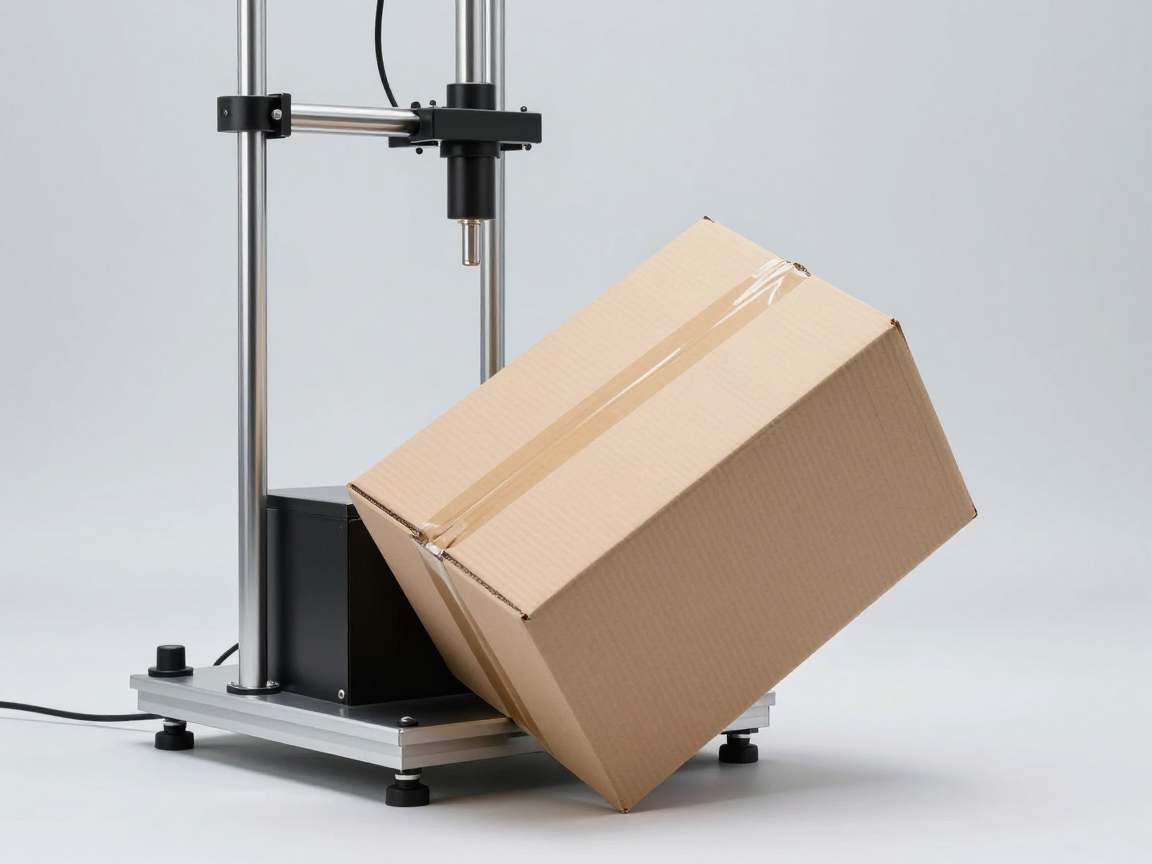
With LTL types (C, E, F, H), flat rotation is performed by placing the bale on a hard surface (steel or concrete), raising one edge to the specified height and then quick release let the case fall freely. Documents note: if the bale has turned over before raising the edge to the required height, rotate it cannot be performed — This case must be clearly recorded in the minutes, not silently ignored.
Leak Test 8 hours
Only required for liquid goods. The case is kept 8 o’clock in the prescribed position to detect leaks — this is the step most missed when testing liquid cargo using other procedures.
8. Model number rule — the difference of 3L
3L states a notable rule: For fragile goods, five samples are needed. The document defines fragile goods as goods that break easily or can leak during distribution, including:
- Glass/ceramic/porcelain/terracotta.
- Liquid/semi-liquid/or solid that can liquefy at high temperature (above 70 °F).
- According to the literature, in general products are composed of 25% or more (the ingredients mentioned above) also belong to this group.
If your goods are fragile, do the math five samples and all must pass right from the budgeting stage. For non-fragile goods, number of sampless follow the general regulations of the procedure. And as stated in part 1: the sample must be actual manufactured goods, not a hand-made prototype or a CAD model of one — otherwise, the test results are not representative.
Before testing, the document requires gathering information about Initial shipping configuration, approved loading diagram, details on shipping and configuration in the distribution system, typical climatic conditions… to determine the correct test parameters. This is the document that businesses need to prepare in advance, not the lab that has to guess on its own.
9. Equipment and method standards
| Category | Equipment | Method standards |
|---|---|---|
| Climate conditioning | Record temperature and humidity; controlled air conditioning chamber | ASTM D4332 or ISO 2233 |
| Free fall | The machine falls freely | ASTM D5276 or ISO 2248 |
| Tip / Tipover | Sample tilting device | ASTM D6179 or ISO 2876 |
| Drop flat rotation / edge & corner rotation | Tester + support block 3.5–4.0 in (90–100 mm) high, proportionately wide, at least 8 in (200 mm) longer than the longest side of the bale | ASTM D6179 or ISO 2876 |
| Inclined/horizontal impact | Inclined or horizontal impactor | ASTM D880, ASTM D4003 or ISO 2244 |
| Concentrated Edge Impact | Free fall machine + edge hazard box: wooden box 12 × 12 × 12 in (305 × 305 × 305 mm), total volume 9 lb (4.1 kg); Ballast is a loose material contained in a bag, held by void fill; The edge of the box is covered with angle iron | ASTM D5276 or ISO 2248 |
| Vibrate randomly | Vertical vibration system, with top load/no top load | ISO 13355 or ASTM D4728 |
| Clamping | Horizontal clamping machine — value calculated according to the 3L formula | — |
| Vertical compression | Compressor, or weight + load distribution plate; Hold force for 1 hour | — |
The concentrated edge impact hazard box is an easy part to get wrong: the correct size is 12 in, the correct weight is 9 lb, the ballast is loose material in the bag, and the impact edge must be covered with angle iron. Using a “similar” box will change the results.
10. When to use ISTA 3L — and when not to?
| Real situation | Recommended procedure | Why? |
|---|---|---|
| Goods sold online, sent from the retailer’s fulfillment warehouse to the consumer (parcel or LTL) | 3L | Exact scope of “e-commerce retailer fulfillment” |
| Long/flat packages (furniture, frames, large panels) | 3L | There are dedicated bridge impact / concentrated edge impact blocks |
| TV, monitor | 3L Type G/H | There are separate falling sequences and poses for the TV/Monitor group |
| Sold on the Amazon system, goods sent with the product box or need to be overboxed | 6-AMAZON.COM (SIOC / Over Boxing) | The process is built by Amazon, reflecting Amazon’s operating infrastructure |
| Sold at Sam’s Club system | 6-SAMSCLUB | Process built by Sam’s Club |
| Traditional parcel goods, not following the fulfillment model of online retailers | 3A | 3A is simpler, correct basic parcel chain |
| Multiple LTL shipments, no pallets | 3B (or 3L Type D/E) | 3B targets a pure LTL model; 3L is used when there is a specific fulfillment/product type factor |
| Whole pallets come with the whole vehicle | 3E | 3L does not simulate FTL homogeneous pallets |
General principles: Choose according to the actual itinerary of the package, not the product name. If the same product runs multiple channels (for example, sold on Amazon and sold in stores), it may be necessary to try multiple processes in parallel.
11. Common mistakes when implementing ISTA 3L
- Choose the wrong style. Use Type A–F panels for TV/Monitor (correctly should be G/H), or skip the next two groups shape elongated / flat — results in removing 4 required blocks.
- Only run one vibration spectrum. 3L required both Grms 0.53 and 0.46, both with and without top load.
- Leave it “in your pocket”. The in a bag style creates a completely different look; to skip is to try an exercise that is different from the standard.
- Making the hazard box incorrectly. Exactly 12 × 12 × 12 in, exactly 9 lb, loose ballast in bag, edge covered with angle iron.
- Use the prototype. One-piece hand-made/CAD samples are often unrepresentative; Official tests must use actual manufactured goods.
- Forget the five-piece rule for fragile goods. Glass, ceramic, liquid… need five samples and all must pass.
- Do not prepare distribution documents. 3L requires information on dispatch configurations, loading plans, typical climatic conditions, etc. to determine test parameters.
- Forgot to do the 8 hour leak test with liquid goods — only block 25 is available, and no other process can replace it.
- Confusing horizontal compression with vertical compression. Two different blocks: clamping (horizontal, clamping in many positions, only with shaft width ≥ 24 in and < 75 in) and vertical compression holding force for 1 hour.
- Do not record a failed test. If the bale overturns on its own before being raised to a sufficient height (rotation release), it must be clearly recorded in the record.
12. What does the cost and time of ISTA 3L testing depend on?
Four key variables: packaged-product type (Type A has a lot less stops than Type E/F — LTL group has additional tip/tipover, impact 1.2 m/s, horizontal compression and vertical compression 1 hour); model number (fragile goods require five samples, all must pass); optional/mandatory blocks by shape (drop rotated edge/flat, bridge impact, concentrated edge impact — required if bales are long or flat); and cumulative time — 12 hours of pre-conditioning, plus controlled conditioning if selected, vibration stages, 1-hour holding force vertical compression, and for liquid cargo an additional 8 hours of leak testing. Article What does the cost and time of ISTA packaging testing depend on? Analyze how quotes compare between labs.
13. Frequently asked questions
How is ISTA 3L different from ISTA 3A?
3A simulates a fixed sequence of parcels for a single parcel. 3L simulates an online retailer’s order fulfillment process, featuring eight packaging-product types, two handling methods, and specific steps such as drop in bag, edge/corner rotation drop, bridge impact, concentrated edge impact, horizontal compression, and calculated vertical compression. If your goods follow the e-commerce model with complex shaped packages, 3L is more suitable.
How many pieces are considered “elongated” and “flat”?
Document 3L defines these two groups based on the ratio between the long side and the other two sides (long is called elongated, flat/thin is called flat). Because this is the condition that determines the three required blocks (bridge impact and concentrated edge impact), you must look up the definition in the applicable standard instead of guessing based on your feelings.
Why does 3L need to run both Grms vibration levels?
Because the condition of the bale with/without the above load creates different resonance damage; Running only one state will miss the type of failure that only occurs in the other state.
How many samples are needed for fragile goods?
Five samples, and all must pass. Fragile goods include glass/ceramic/porcelain/terracotta, liquid or semi-liquid, and in general the product is composed of 25% or more of such components.
Can I use a hand-made sample to test for certification before production?
Shouldn’t. It can be tested early in the development cycle for reference, but the final official test must use actual production goods — prototypes are often not representative enough.
Can 3L replace 6-AMAZON.COM?
No. If a customer requests certification under the Amazon system, the exact two 6-AMAZON.COM processes (SIOC or Over Boxing) must be used — the 6 Series process is built by that member to reflect their own operating infrastructure.
Does 3L include compression?
Yes, for the LTL group: horizontal compression (clamping, calculated according to the formula, multi-position clamping, only for shafts with width ≥ 24 in and < 75 in) and vertical compression (holding force for 1 hour in the intended transport position or most stable position).
14. Conclusion
ISTA 3L is the largest and most detailed project in the 3 Series — ISTA’s “e-commerce test”. Three things to remember: Eight packaged-product styles range from 4.5 kg parcel to LTL pallet and TV/Monitor; The shape (elongated / flat) determines the four required blocks; and There are specific stages that cannot be replaced by any process — drop in bag, bridge impact, concentrated edge impact, horizontal/vertical compression and 8 hour leak test for liquid cargo.
Before placing a trial order, businesses need to prepare: weight and three bale sizes (to check the type); elongated/flat shape; sending system (parcel or LTL, with pallet or not); how to handle the retailer’s FC; and if it is a TV/Monitor, immediately determine the model G or H. Don’t forget the model year rule with fragile goods and the requirement to use actual manufactured goods.
Reference standard version: article content is based on ISTA Project 3L document (2023 version) — Generalized E-commerce Retailer Fulfillment Test. The test levels are a summary for reference; When implementing, the official standard, the current version of ISTA, must be used.
References
- ISTA Project 3L — Generalized E-commerce Retailer Fulfillment Test, 2023 edition, International Safe Transit Association
- ISTA — Test Procedures & Projects (current catalog, accessed September 27, 2026)
- ISO — ISO 2233, ISO 2248, ISO 2876, ISO 2244, ISO 13355 (referenced methods)
- ASTM — D4332, D5276, D6179, D880, D4003, D4728 (equivalent methods cited)
Related articles
- ISTA 6-AMAZON.COM What is SIOC? Packaging test procedure sent in the product’s own box
- What is ISTA 7D? Temperature testing procedures for shipping packaging
- What is ISTA 6-SAMSCLUB? Packaging test procedure for Sam’s Club distribution system
- What is ISTA 6-AMAZON.COM Over Boxing? Procedure for testing outer box packaging for goods sent to Amazon
- What Is the ISTA Standard? How to Choose the Right Transport Packaging Test (3A, 6-Amazon, ASTM D4169)
- What is ISTA 3A? Packaging test procedure for parcel delivery system (Parcel Delivery)
- What is ISTA 3B? Packaging test procedure for LTL shipping (joint shipments)
- What is ISTA 3K? Fast-moving consumer goods packaging test procedure in European retail chains
- What is ISTA 3F? Packaging test procedure for individual packages on mixed pallets at retail intersections
- ISTA Packaging Test Pass/Fail Criteria: 4 Things You Must Decide Yourself
Discuss further
Disclaimer and acknowledgment of intellectual property rights
This article is an explanatory content compiled by us for the purpose of introducing and disseminating knowledge. Article is not a translation, copy, abridgement or replacement of the parent standard, and is not evaluated, approved or sponsored by ISTA (International Safe Transit Association)..
The entire content of ISTA standards is copyrighted by the International Safe Transit Association, Inc. (East Lansing, Michigan, USA) — All rights reserved. ISTA® and the ISTA logo are registered trademarks of the International Safe Transit Association, Inc.; Mentioned in this article are for guidance purposes only and do not imply any affiliation, partnership or sponsorship.
Article content For reference only; Before applying for any purpose — testing, evaluation, certification or commercial decision-making — the reader should refer directly to the original ISTA document (the most complete and up-to-date version) and consult an accredited testing facility when necessary.
When performing testing, it is mandatory to use the official, current version of the standard, obtained directly from ISTA. We do not redistribute ISTA materials in any form. Information in this article may be out of date with the current version of the standard.
See more: Copyright Policy & Disclaimer by ticforall.com.