
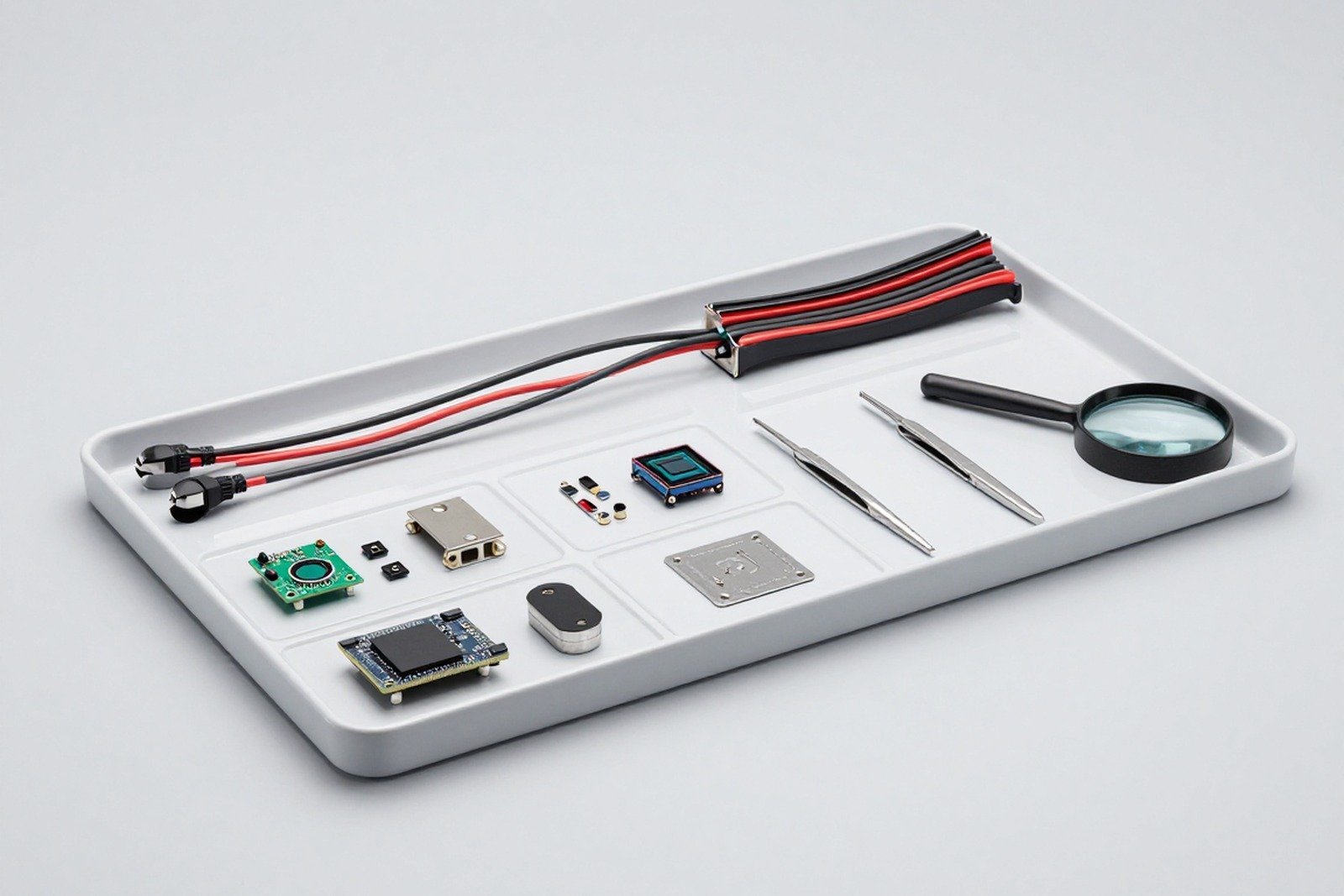
If you can only remember one concept in the entire RoHS, remember this one: homogeneous material (homogeneous material). The 0.1 % limit does not apply to products, it does not apply to assembled parts — it applies to each material is homogeneous constitutes the product.
The standard definition used in the European Commission guidelines: homogeneous material is a unit of material that cannot be separated into different materials by mechanical means. “Mechanical disassembly” means unscrewing, cutting, crushing, crushing, grinding or similar mechanical processes.
Misunderstanding this concept doesn’t just lead to wrong results — it defeats the entire enterprise protection logic.
1. Why is this concept so important?
Let’s look at a numerical example. A heavy aluminum part 100 g covered with a heavy layer of paint 1 g. The paint contains lead at levels 40 % — that is 0.4 g of lead. All remaining details are almost lead-free.
| How to calculate | Results | Conclusion |
|---|---|---|
| Average in all details | 0.4 g / 101 g ≈ 0.4 % | There is a slight excess, but the number looks “small”. |
| On each material uniformly | Paint layer: 40 % lead | Exceeded the limit 400 times |
The second number is the correct number. With that coating, the part does not pass RoHS — unless an exemption applies.
Actual meaning: Volume does not protect you. A plating layer of a few micrometers, a small bead of solder, a 1-g rubber gasket — each is evaluated independently, and each can cause the product to fail.
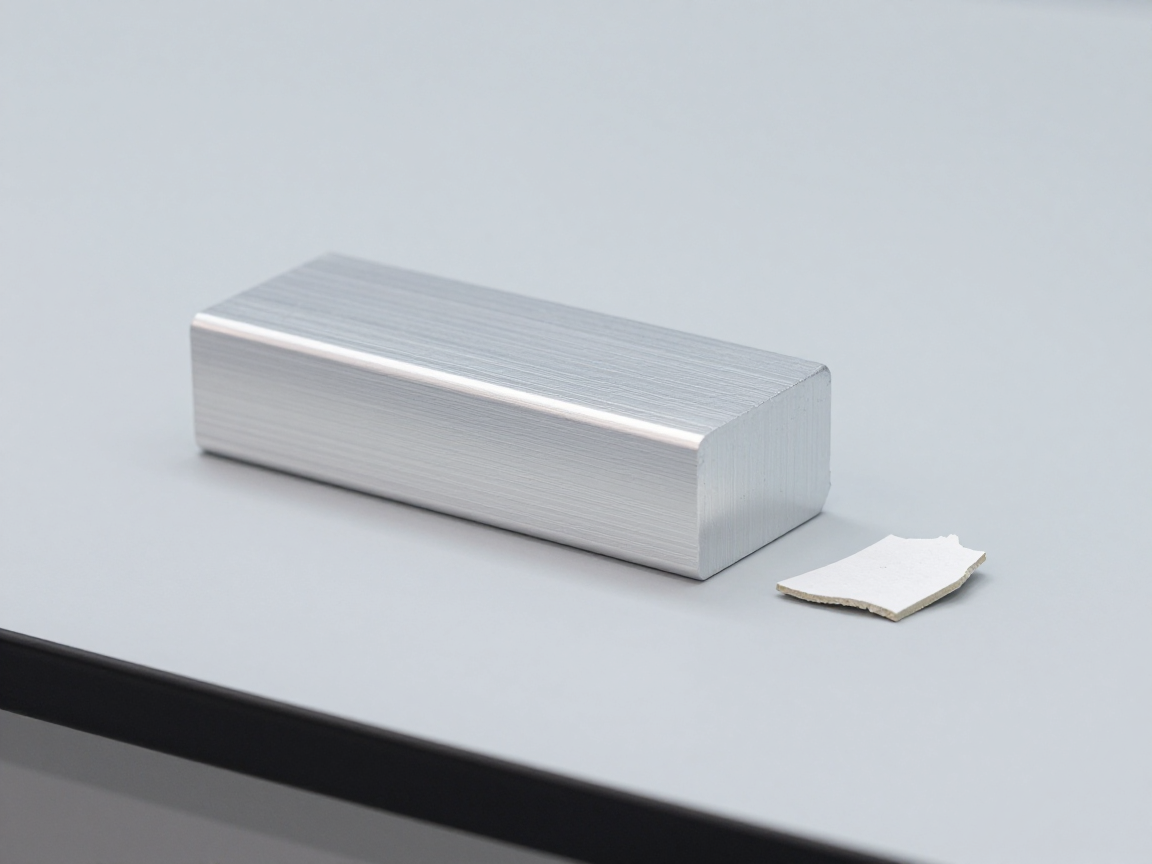
2. Example of disassembling a cable
An electric cable is often understood as “a detail”. But it consists of many homogeneous materials, each of which must be tested separately:
| Homogeneous materials | Typical RoHS risks |
|---|---|
| Outer shell made of PVC | Phthalates (plasticizer), lead (stabilizer), cadmium (color) |
| Metal braided mesh cover | Usually fine; Worth noting if there is a plating or polishing layer |
| Aluminum foil anti-interference layer | Low risk; Check if it is alloy |
| Copper conductor | Low risk, but need to pay attention to cadmium/lead impurities in some alloy grades |
| Covering each core (if any) | Phthalates, colorants |
| Connector / pin | Cadmium in the plating layer, lead in the alloy, Cr(VI) in the passivation layer |
One such cable can produce 6 sets of test samples. If you just send the “cable” to the testing room and receive a “pass” line, you do not have a basis to protect the product against the question: Have you tried the PVC cover alone?
3. How to define boundaries: three principles
- Mechanical separation, not chemical separation. Allowed: removing screws, prying, cutting, crushing, grinding, ultrasonic separation of adhesive layers. Do not: use a solvent to dissolve the paint layer to “get the bottom part” — because the solvent changes the nature of the material and is not a “mechanical measure”.
- Stopping at the smallest level also has material implications. The plating, the paint, the hot-dip zinc coating, the welds, every plastic — it’s all a homogeneous material. Do not further separate the “shiny part” and “scratched part” of the same plating layer.
- If a part is made from a single material, it is a homogeneous material. For example, a pure steel screw: the screw body is a homogeneous material; but if the screw has a plating, the plating is the second most homogeneous material.
4. Actual breakdown table for some familiar products
| Products | Number of homogeneous materials (estimated) | The riskiest place |
|---|---|---|
| The circuit board has components glued | 20–50+ (weld joints, component pins, each type of plastic body, protective coating, glue) | Solder joints, protective coatings, ceramic capacitors (PBDE in recycled plastic) |
| Power cable | 4–8 | PVC shell (phthalate, lead, cadmium) |
| Device plastic case | 1–4 (main resin, paint or coating, stamp, adhesive) | Recycled plastic (PBDE), paint (Cr(VI), lead) |
| Screws and tightening accessories | 1–3 (steel, plating, passivation) | Zinc coating with chromium passivation: Cr(VI) |
| Shaped aluminum bar | 1–2 (aluminum, anodized or painted) | Aluminum alloy contains lead (0.4 %), paint layer |
The number “20–50+” on the circuit board is the reason why testing laboratories cannot test every material of a complex product. The actual way to do it is Test with representative groups of materials combines risk assessment and material declaration from the supply chain. This is where a good technical file differs from a simple “test report” file.
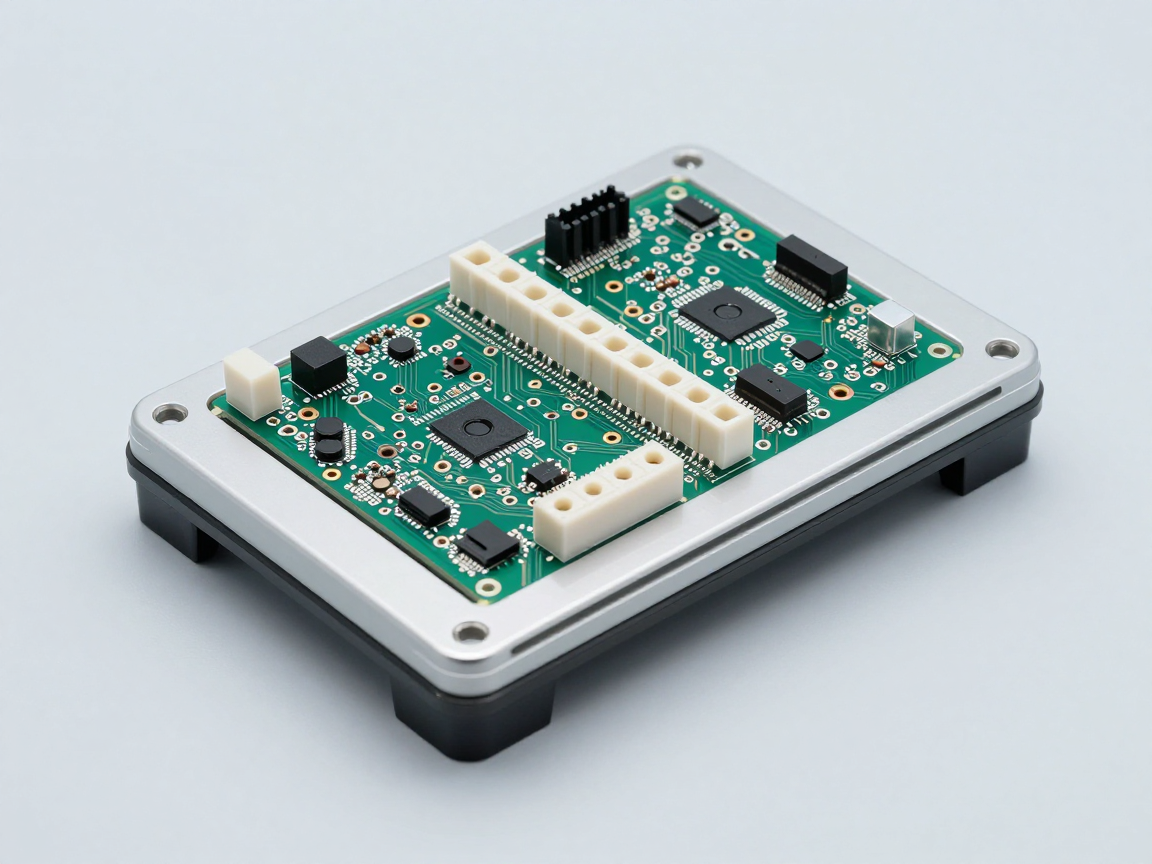
5. Four ways businesses do wrong
- Declare all details as “one material”. For example, declare “USB connection port” in one line. This declaration eliminates the ability to detect plating or contact pins that exceed the limit.
- Grind the whole cluster together. Results are diluted by mass. Offending material may disappear from the figure.
- Consider “black materials” as a group. Different types of black plastic (black ABS, black PC/ABS, black PBT) are distinct homogeneous materials, with different origins and risks.
- Skip the coating. This is the most serious error, because the plating and repainting layers are where cadmium, Cr(VI) and lead are concentrated.
6. Declaration to the supply chain also follows this logic
When asking suppliers to declare materials, the question should not be “Is this component RoHS compliant?” which is “Declare for me each homogeneous material in this component, along with the content of restricted substances”. Material declaration standards such as IEC 62474 or IPC-1752A are designed to follow that structure — declare by material, not declare by claim.
7. Frequently asked questions
If a wire is braided with many copper strands, then each strand is a homogeneous material?
No need to go that far. Copper fibers of the same composition, which cannot be separated into different materials by meaningful mechanical means, are considered a homogeneous material (copper conductor).
Is the coating a few micrometers thick a homogeneous material?
Yes. The plating layer is a separate homogeneous material, different from the underlying metal substrate. For galvanized parts with chromium passivation, even the passivation layer is considered separately.
Is it permissible to “dilute” violative material by mixing?
No. Dilution changes the numbers but does not change the nature of the material, and RoHS evaluates the material, not the average result. Legally, this is a dangerous misunderstanding.
Is it okay to try the whole product once quickly?
Does not meet RoHS logic. The pooling test can be used for this purpose internal screening When the material structure is clearly known, documents proving conformity must be based on results for each homogeneous material (or group of materials with a basis for risk assessment).
Are glue, labels, and ink considered homogeneous materials?
Yes. Glue, stamps, and ink are all separate materials and all have risks — ink in particular may contain phthalates. This is a group that is often overlooked when creating a dissection list.
8. Conclusion
“Homogeneous material” is the sole unit of assessment for RoHS. Three sentences to remember: one, the limit is calculated per material, not per product; two, the volume of materials does not protect the business; three, plating and coating are independent materials and where the risk is highest.
The step of removing to a homogeneous material is the step that determines the correctness of all subsequent results. If you make a mistake here, no matter how good the testing room is, the file will still not stand up.
References
- Directive 2011/65/EU, Article 3 and Annex II — definition and list of restricted substances
- European Commission guidance on the RoHS Directive — “homogeneous material” and “mechanically disjointed” concepts section
- IEC 62321-2 — mechanical sample removal, disassembly and preparation
Related articles
- RoHS scope of application: which products must comply, which products are excluded?
- Testing 4 phthalates (DEHP, BBP, DBP, DIBP): GC-MS principles and 6 common traps
- Dissection of the sample according to IEC 62321-2: if this step is done incorrectly, all subsequent results will be meaningless
- How many samples are enough for a RoHS test kit? Principles for selecting samples, stored samples and control samples
- What is IEC 62321? What parts does the RoHS test method set include and what substances is it used for?
- RoHS test procedure from A to Z: from sample receipt, extraction, screening to reporting
- XRF reports “Cr” exceeds the limit: why is it not sure it is Cr(VI) and what should be tested next?
- XRF RoHS screening: how to read the results, how much to trust, 5 limitations you must know
- 10 RoHS restricted substances: how do the 0.1% and 0.01% limits apply to “homogeneous materials”?
- What is RoHS? Complete guide to Directive 2011/65/EU and its 10 restricted substances
- RoHS 2026: changes Vietnamese businesses must understand before import season
Discuss further
Disclaimer
This article is an interpretive content compiled by us; not legal advice. The interpretation of the concept of “homogeneous material” is presented in accordance with European Commission guidance and test practice; Enterprises should compare the original text of Article 3 of Directive 2011/65/EU.
See more: Copyright Policy & Disclaimer by ticforall.com.