Quick summary
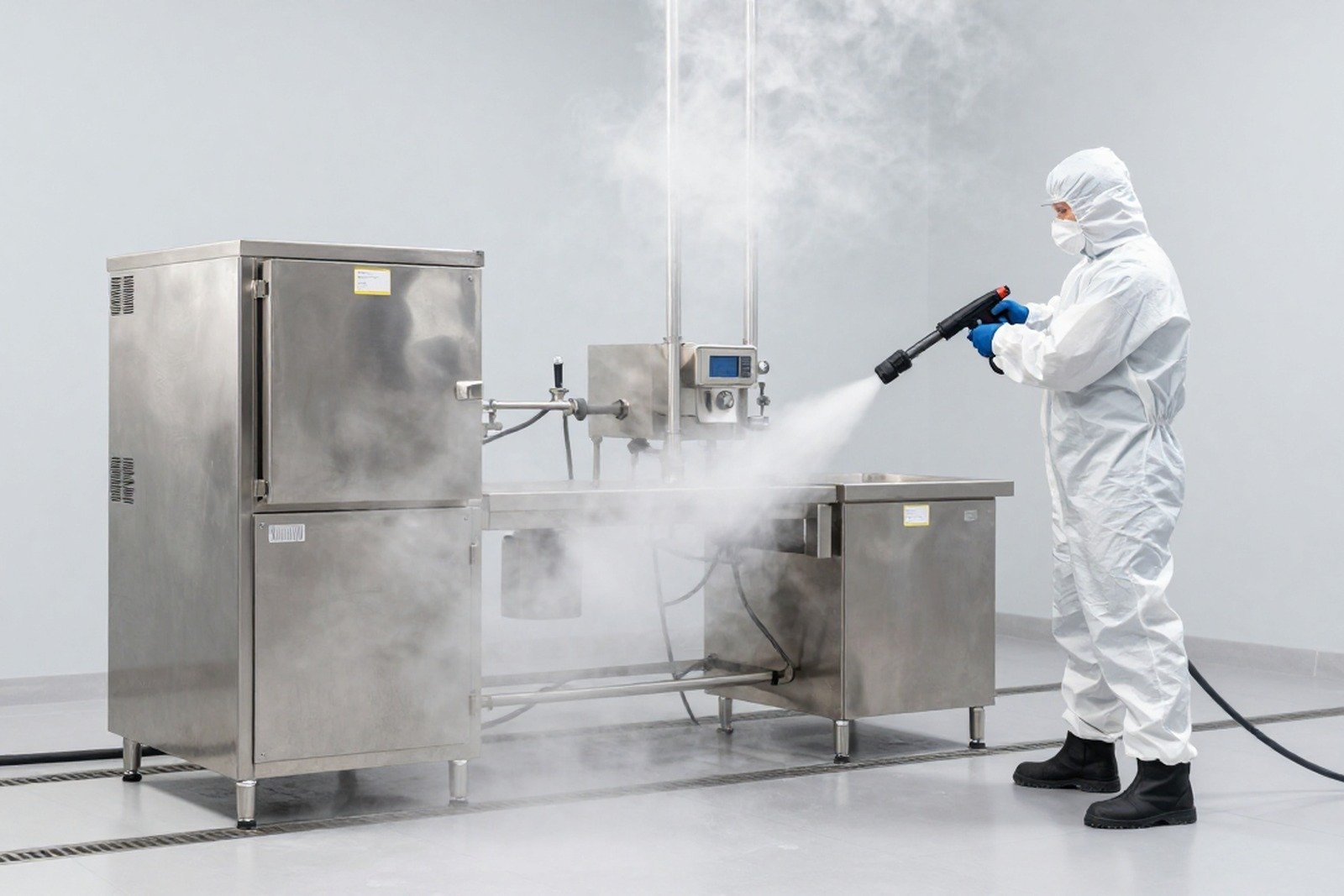
- IP69K is not in IEC 60529 but in ISO 20653 — the road-vehicle series — with four fixed parameters: 80–100 bar, water at 80 °C, 14–16 l/min, 10–15 cm distance.
- It is not the top of the IP ladder. It is a different axis: a high-pressure, high-temperature jet, not deep immersion.
- IP69K does not imply IP68, and IP68 does not imply IP69K. The two tests probe different failure mechanisms.
- IP69K says nothing about cleaning chemicals, saturated steam (autoclaves), corrosion, or how many wash cycles the product will see — the things that decide service life in a food plant.
Of all the IP levels, “69K” is the most misunderstood — not because it is difficult, but because it looks like the top of a ladder when it is in fact a different axis entirely.
1. Where IP69K comes from
IP69K is defined in ISO 20653 (road vehicles — degrees of protection of electrical equipment), not in IEC 60529. That matters for two practical reasons:
- An IP69K report must cite the correct standard. A report saying “IP69K per IEC 60529” is a signal to look again.
- The other levels (IPX1–IPX8) are broadly equivalent between IEC 60529 and ISO 20653, but level 9/9K with fixed parameters exists only in ISO 20653.
The origin explains why the parameters look so industrial: the standard grew out of vehicle electrical equipment — lamp units, connectors, control boxes — that must survive being washed with a high-pressure lance, hot water and detergent.
2. The four fixed parameters
| Parameter | Value | Practical meaning |
|---|---|---|
| Pressure at the nozzle | 80–100 bar (8–10 MPa) | 800–1,000 times the static pressure of IPX7 |
| Water temperature | 80 °C | Causes thermal shock and softens seals |
| Flow rate | 14–16 l/min | Maintains a continuous jet at rated pressure |
| Distance | 10–15 cm | Very close — the big difference from IPX5/IPX6 (2.5–3 m) |
| Spray angles | 0°, 30°, 60°, 90° | Four positions, 30 seconds each |
| Sample motion | 5 revolutions per minute | Models a surface being swept evenly |
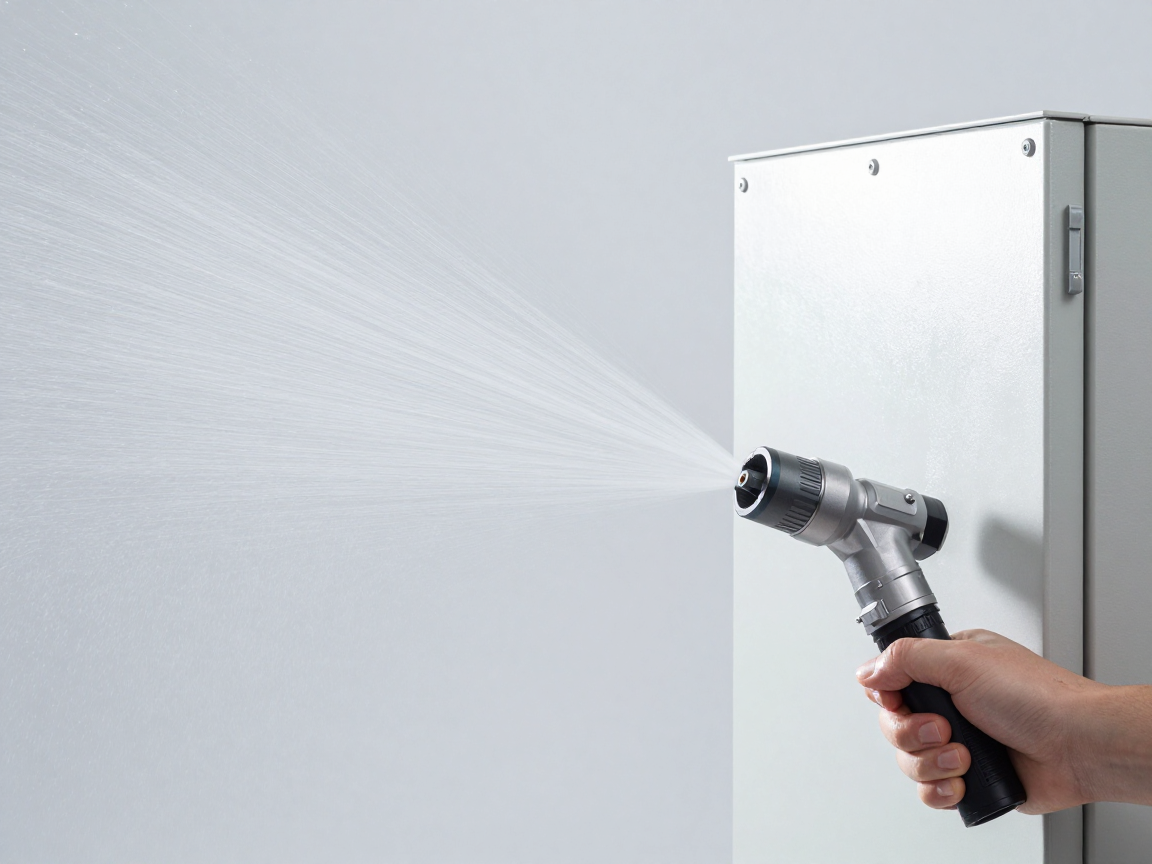
Note the 10–15 cm distance. In IPX5/IPX6 the nozzle stands 2.5–3 m away and the jet disperses on the way. In IP69K the nozzle is almost touching the surface, so the pressure arriving at the housing is much closer to the nozzle pressure. That is why a product that passes IPX6 can fail in the first second of an IP69K test.
3. Why the “K” — and why it is not the top level
The letter “K” marks a fixed set of parameters, to distinguish it from “IPX9” in IEC 60529 — where the test conditions, like IPX8, are agreed between manufacturer and user.
More importantly: level 9 is not on the same axis as levels 7 and 8. In IEC 60529 the second digit rises with “water protection”, but each level probes a different mechanism. Level 9 is not “a stronger level 8” — it is a high-pressure, high-temperature jet, whereas level 8 is continuous immersion.
| Level | Failure mechanism probed | Condition | Implies another level? |
|---|---|---|---|
| IPX7 | Static pressure, short immersion | 1 m / 30 min | No |
| IPX8 | Static pressure, longer/deeper | By agreement | No |
| IPX9 | High-pressure, high-temperature jet | By agreement (IEC 60529) | No |
| IP69K | High-pressure, high-temperature jet | 80–100 bar, 80 °C, 10–15 cm (ISO 20653) | No |
So a label reading only “IP69K” is a narrow, honest claim. A label reading “IP68/IP69K” contains two separate claims — and both need their own report.
4. What 100 bar actually means
Converted into familiar units:
| Quantity | Value | Comparison |
|---|---|---|
| 80 bar | 8 MPa ≈ 800 kPa | ≈ 80 m water column |
| 100 bar | 10 MPa ≈ 1,000 kPa | ≈ 1,000 m water column; ≈ 100× IPX7 |
| Water at 80 °C | — | About 55 K above the IPX7 test temperature |
| Distance 10–15 cm | — | 1/20 of the IPX6 distance |
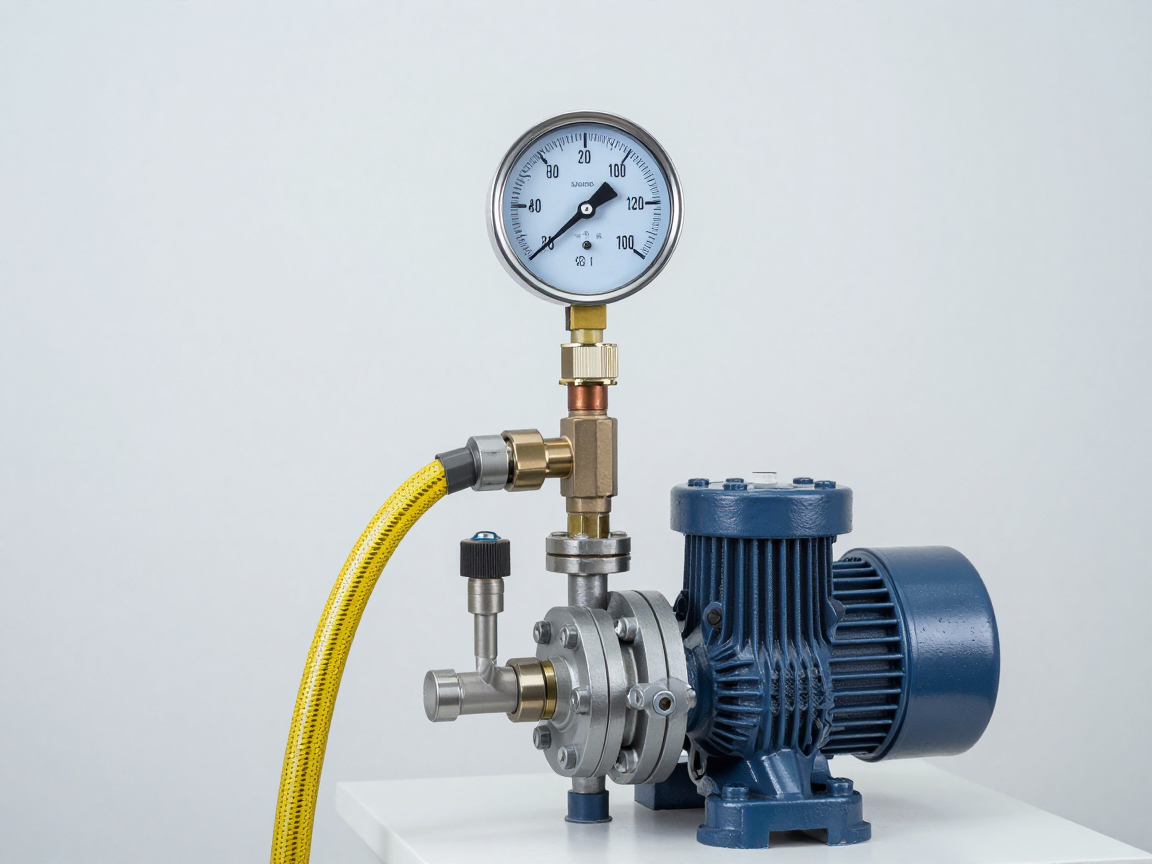
But read that number correctly: 100 bar is the pressure at the nozzle, and a jet loses energy quickly with distance and angle. The pressure actually arriving on the housing is far lower and depends on the nozzle type, the spray angle and the geometry of the enclosure. So do not use “100 bar” to derive structural requirements the way you would from static pressure; use the test itself.
5. Thermal shock: the most overlooked part
If it were only pressure, IP69K would be close to a mechanical test. But 80 °C water on a housing at 20–25 °C produces two effects at once:
- Uneven surface expansion: the outer layer heats within seconds while the inside is still cold. That thermal stress works on the lid, the screws and the gasket edges.
- Seals soften: many rubbers lose sealing force when hot — exactly when the water pressure peaks. After cooling they harden again, but already deformed.
The second consequence matters for service life: after washing, the device cools and the internal pressure falls — exactly the “draws moisture in” mechanism analysed in our article on why IP67 devices still fail. A plant that washes equipment twice a day creates 700 moisture-drawing cycles a year.

6. IP69K does not replace IP68 — or vice versa
This is the most expensive misunderstanding. The two tests create different damage patterns, and the material choice that suits one may be poor for the other.
| Criterion | IP68 | IP69K |
|---|---|---|
| Source standard | IEC 60529 (by agreement) | ISO 20653 (fixed parameters) |
| Main load | Static pressure, sustained | Dynamic jet, high pressure, high temperature |
| Duration | Long (minutes to hours) | Short (30 seconds per angle) |
| Main risk | Seepage past seals under sustained pressure | Erosion of seal edges, thermal shock, leaks at cable entries |
| Passing one proves the other? | No | No |
In design terms: a thick, ribbed housing with excellent deep-immersion sealing can trap hot water in recesses and create steam pockets during washing; conversely, a smooth, free-draining housing for pressure washing may not be stiff enough for large static pressures. If you need both, test both, on the same configuration.
7. What IP69K does not cover
| Factor | Covered by IP69K? | Note for plant users |
|---|---|---|
| Cleaning chemicals, alkalis, acids | No | Needs a separate chemical compatibility test; many failures are chemical, not water |
| Saturated steam / autoclave | No | Sterilisation is a different test (pressure–temperature cycles, vacuum) |
| Corrosion, salt, chlorine | No | Requires material selection plus a separate salt spray test |
| Number of washes over product life | No | One test ≠ 700 washes a year; need ageing by cycle count |
| Microbiological cleanability (no crevices) | No | Belongs to hygienic design (3-A, EHEDG), not to IP |
This is where to be explicit with food-industry customers: IP69K is a necessary condition for washdown equipment, but not a sufficient one for the real production environment. A device rated IP69K can still fail within six months if the materials cannot take the detergent or if the design has dirt-trapping crevices.
8. Six common misunderstandings
| Misunderstanding | Reality |
|---|---|
| “IP69K is the highest level, so it covers all lower ones” | No. Each level probes a mechanism; IP69K does not include IP68 or IP67 |
| “If it passes IP69K it can be immersed” | No. The test has no immersion; sustained static pressure is a different load |
| “IP69 and IP69K are the same” | IP69 (IEC 60529) leaves conditions open; IP69K (ISO 20653) fixes them |
| “IP69K means it resists cleaning chemicals” | No. Chemicals are a separate test |
| “An IP69K device can go anywhere on the line” | Mounting orientation, water pooling and actual wash frequency all matter |
| “Just specify IP69K and stop worrying” | Cost rises, while chemical and lifetime risks remain untouched |
9. When IP69K is genuinely needed
Choose by the cleaning procedure, not by a feeling that “more is safer”:
| Actual cleaning procedure | Appropriate level | Why |
|---|---|---|
| Damp wiping with cloth and solution | IP65 | No jet, only dust and light splashing |
| Soft hose, low pressure | IPX5, possibly IPX6 | Small jet or large stream at distance |
| High-pressure lance, ambient water | IPX6 minimum, usually IPX9/IP69K | Short distance and high pressure exceed IPX6 |
| High-pressure lance, 80 °C water | IP69K | Exactly the scope of the test |
| High pressure plus aggressive detergents | IP69K + chemical testing | IP69K does not include chemicals |
| Sterilisation / CIP, SIP | IP69K + pressure–temperature cycling | Steam and vacuum need their own tests |
10. What to write in the contract and the file
Even though IP69K parameters are fixed, the contract still needs five points — because a test can follow the standard yet use the wrong configuration:
- Sample configuration: complete unit, with cable glands, the flap type used in service, and the correct cable.
- Orientation and spray positions: the four standard angles 0/30/60/90°; state any additional weak point (lid edge, connector) if required.
- Condition after the test: no water in the functional compartment, inspected within 5 minutes, plus a functional check.
- Standard cited: state “ISO 20653” explicitly — not “IEC 60529” for IP69K.
- Additional tests if needed: chemical compatibility, salt spray, thermal cycling, repeated cycles matching the real wash frequency.
Model wording: “Degree of protection per ISO 20653: IP69K, complete unit in shipping configuration; pass when no water is present in the functional compartment after testing at the four standard angles and the product performs all functions; report to state measured pressure, water temperature, flow rate and distance.”
Frequently asked questions
Is IP69K higher than IP68?
The two cannot be ranked. IP68 is continuous immersion; IP69K is a high-pressure, high-temperature jet. They probe different failure mechanisms, so neither includes the other.
What does “IP68/IP69K” on a product mean?
Two independent claims. Ask for two separate reports, each stating the conditions of its own test.
Will an IP69K device survive plant cleaning chemicals?
Not by implication. IP69K covers water at high pressure and temperature only. Chemical compatibility must be tested with the actual chemical at the actual concentration.
Can an IP69K device be used in an autoclave?
Do not assume so. Steam sterilisation involves saturated steam and vacuum–pressure cycles, a very different mechanism. It needs dedicated pressure–temperature cycling tests.
How often should IP69K be retested?
When gaskets, cable glands, housing material or assembly change; and annually on samples taken from production. For equipment washed daily, also test samples that have been through simulated wash cycles.
Conclusion
IP69K is a very specific test — 80–100 bar, 80 °C, 10–15 cm — built for high-pressure washdown environments. It is strong on exactly that axis and says nothing about deep immersion, chemicals, steam or lifetime.
Use it correctly: choose the level from the real cleaning procedure, cite the right standard, and add the tests IP69K leaves out — especially chemicals and cycle count. Do those three things and an IP69K claim actually protects both the manufacturer and the user.
References
- ISO 20653 — road vehicles, degrees of protection (including IP69K).
- IEC 60529 — degrees of protection; level 9 with conditions by agreement.
- IEC 60068-2-14 — change of temperature; IEC 60068-2-52 — salt mist, cyclic.
- 3-A Sanitary Standards, EHEDG — hygienic design principles (outside the IP scope).
Related articles
- IPX5 and IPX6: the 6.3 mm versus 12.5 mm jet
- IPX8: why there is no standard level
- Why IP67 devices still fail in the field
- Is IP68 really waterproof? Seven misunderstandings
Talk to us
Disclaimer
This article is our own interpretation; it is not legal advice. Readers should check the official text of the standard before applying it to a specific product.
See also: Copyright Policy & Disclaimer of ticforall.com.