Quick summary
- A sample that passes IP67 in the laboratory can still fail in the field, because the test models one static condition for 30 minutes.
- Four mechanisms sit outside the test: dynamic pressure when hitting water, thermal-pressure cycling that makes the enclosure “breathe”, gasket ageing, and user handling.
- A fully sealed enclosure heated by 40 K raises internal pressure by about 13 kPa — enough to push air out, and to draw moisture in through any leak path as it cools.
- Countermeasures: add thermal cycling, specify the right breather vent, and test aged samples instead of new ones.
This is the question service technicians ask most often: “The report says IP67 — so why did it die after two minutes in water?” The answer is not that the report is wrong. The report is correct for a test that differs from the condition that actually caused the failure.
This article analyses four failure mechanisms, with simple calculations to show their magnitude, and explains how to extend the test plan to block them in advance.
1. What the IP test models — and what it does not
Read the scope again: IPX7 is static immersion for 30 minutes at 1 m; IPX6 is a jet at 100 l/min for a few minutes; IP6X is talc dust for 8 hours. All three are static states, new samples, one exposure, no cycling.
| Factor | In the IP test | In the field |
|---|---|---|
| Water pressure | Static, uniform, known | Impact, fluctuating, with very high peaks |
| Temperature | Stable, within 5 K of the sample | Day–night cycles, sun–rain, self-heating |
| Number of exposures | One | Hundreds to thousands over the product life |
| Gasket age | New | Compressed, hardened, possibly cracked |
| Dust and chemicals | None, or clean talc | Abrasive dust, salt, oil, detergents |
In other words: IP67 proves the design is capable of sealing under one standard condition; it does not prove the design keeps that capability after two years and 500 wet–dry cycles.
2. Mechanism 1: dynamic pressure on impact
Static immersion at 1 m gives about 10 kPa of hydrostatic pressure. But when a device falls into water, the surface does not cushion it — it stops it within milliseconds. The momentary pressure is many times the static pressure at the same depth.
A quick calculation for scale: free fall from 1 m gives about 4.4 m/s; the stagnation pressure ½ρv² is roughly 10 kPa — comparable to static pressure at 1 m. But a real impact is not smooth flow: water is locally compressed, air is trapped in recesses, and water-hammer effects can multiply the pressure several times over a very short interval. With a flat impact (a flat face slapping the surface), the peak is higher still.
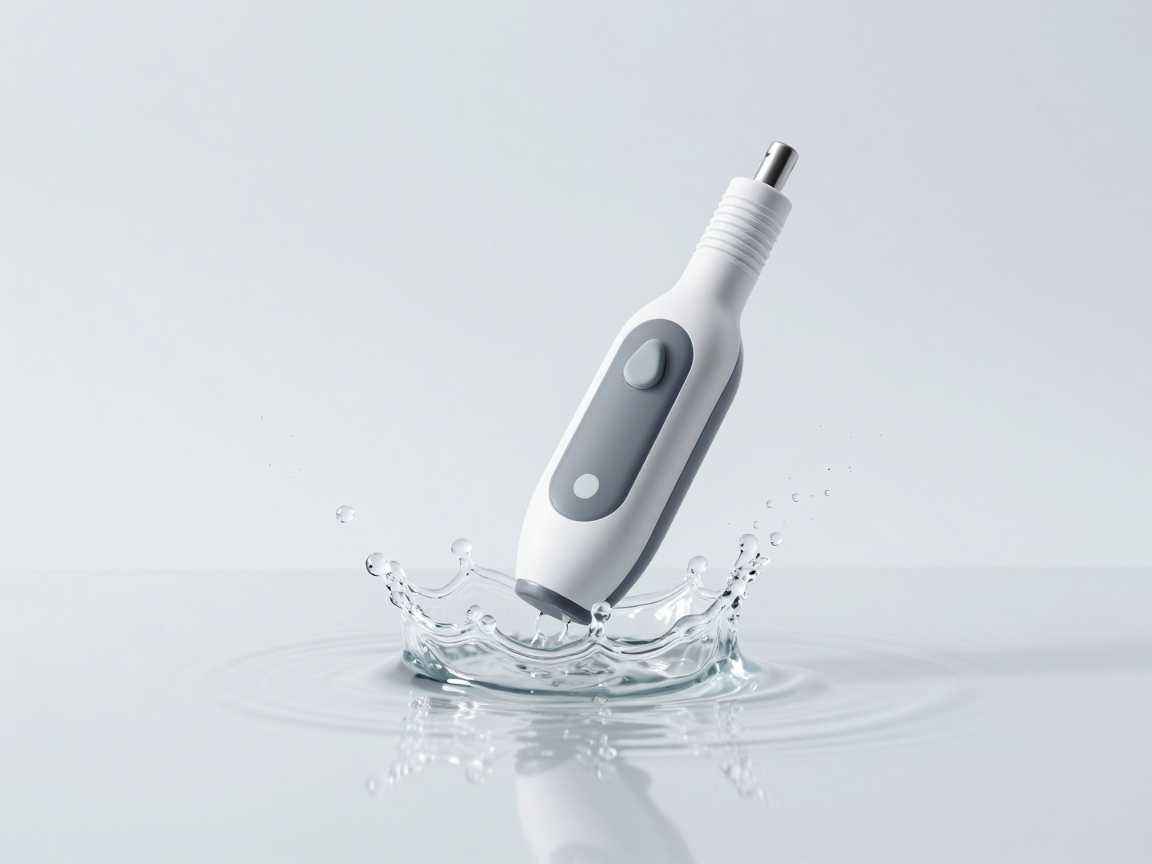
Design consequence: seals and flaps must survive the peak pressure, not the average. The IPX7 test does not generate that peak, so a design that only just passes the test can still fail on a drop.
3. Mechanism 2: thermal-pressure cycling makes the enclosure breathe
This is the most underrated mechanism, and the easiest to calculate. In a fully sealed enclosure, the internal gas follows pV/T = constant. If the volume is nearly fixed, pressure changes with absolute temperature:
Δp/p ≈ ΔT/T. With T ≈ 300 K and the device 40 K warmer (normal in sunlight or with a power stage running), Δp ≈ 13 % of 101 kPa, about 13 kPa — equivalent to more than 1.3 m of water column.
As the device cools, the internal gas contracts, the pressure drops below atmospheric, and if there is any leak path at all, moist outside air is drawn in. The cycle repeats daily. Water does not need to be pushed in — it is sucked in.
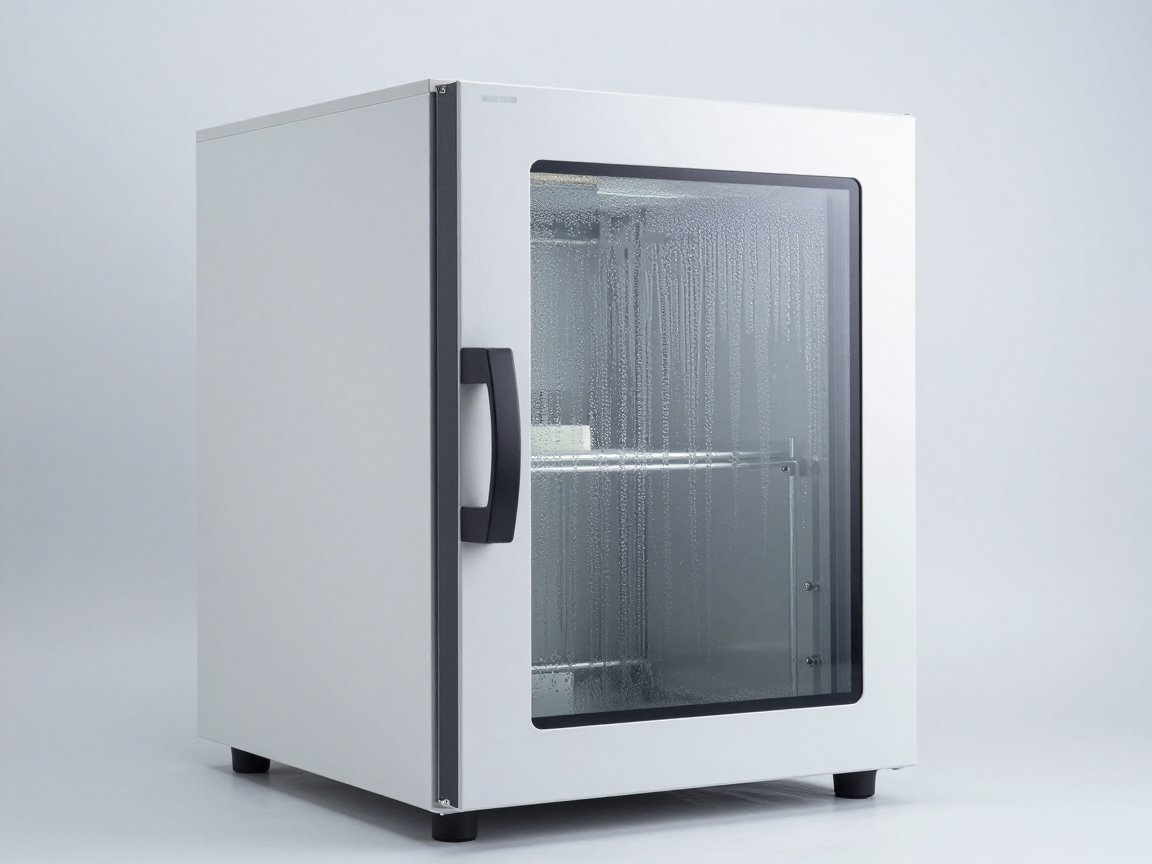
How to block it: fit a breather vent (ePTFE) on sealed enclosures, sized by the rate of temperature change rather than by enclosure volume, and placed where water cannot pool. Some products omit the vent, which loads the entire pressure difference onto the gasket — that only postpones failure, it does not prevent it.
4. Mechanism 3: gasket ageing
Rubber seals do not fail suddenly; they lose elasticity gradually. Three drivers:
- Compression set: a gasket compressed for months keeps the compressed shape, sealing force drops and the gap grows. High temperature accelerates this.
- Chemicals and ozone: oil, solvents, detergents, exhaust and ozone crack the rubber surface. Small cracks are enough for capillary flow.
- Hot–cold cycling: gasket and housing materials expand differently, causing slip and local wear.
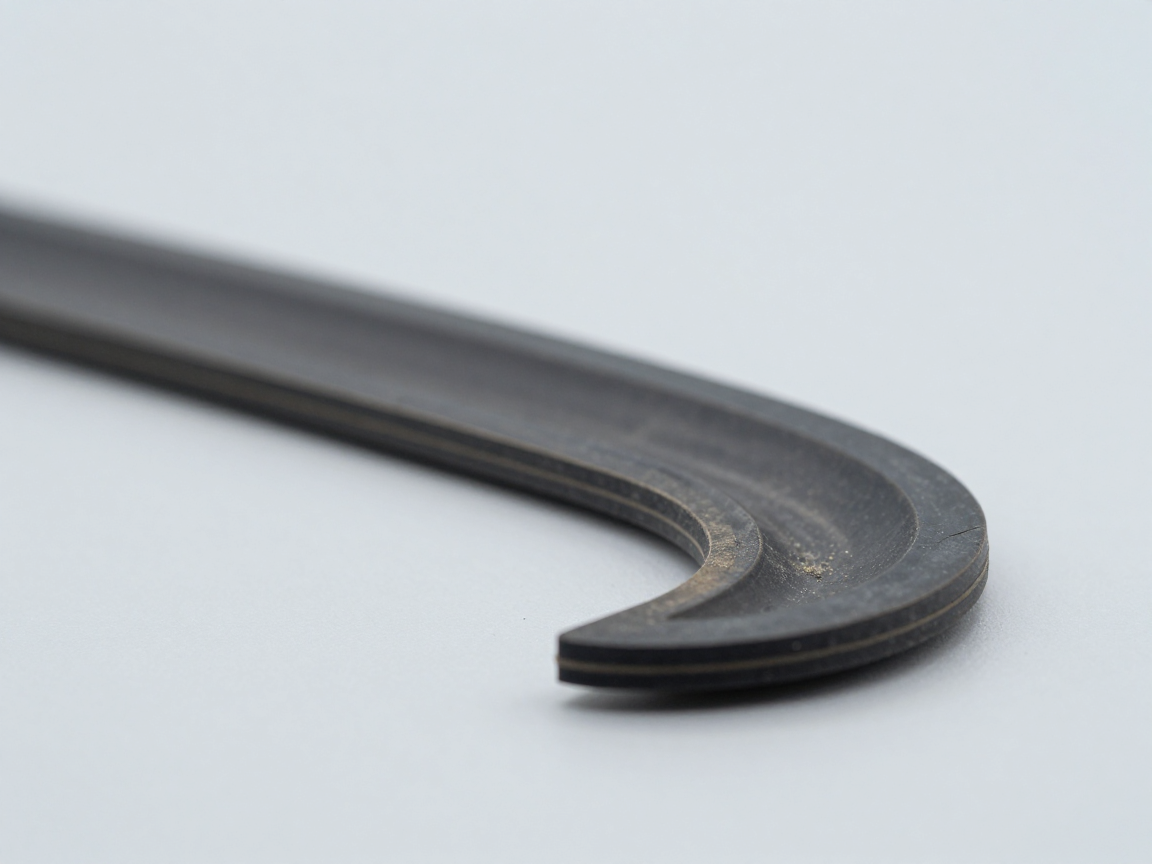
Note the tension: the IP67 report is produced on a new sample, as the standard requires. But the customer uses the product for three to five years. That gap must be closed by ageing before the IP test, not by explanations after an incident.
5. Mechanism 4: user handling and contamination
Three handling errors repeat most often:
| Error | Consequence | Mitigation |
|---|---|---|
| Charging flap not fully closed | Water enters directly through the port | Design a flap with a positive click, or remove the flap with an internally sealed port |
| Sand or dust trapped in the gasket groove | Creates a capillary path; water passes although the flap is closed | Wide, easy-to-clean groove; cleaning instructions |
| Wrong screws or insufficient torque | The housing never reaches its designed compression | Captive screws; torque marked inside the housing |
A subtle point: if the product is designed to seal only when the user closes it correctly, the declared IP level is only valid under that condition. State it in the instructions, and where possible design so that a user error does not lead to total failure.
6. Finding the water path
Once you have a failed unit, the job is to find the actual entry path, not to replace gaskets wholesale. A suggested sequence:
- Photograph before wiping: water traces, flow direction, pooled areas.
- Open at an angle: let water run out along its original path, which identifies the compartment it entered.
- Use dye or a fluorescent tracer on a repeat test, then inspect under UV to see the route.
- Compare with the real installation orientation: many failures occur only when the device is tilted or hanging, not in the test orientation.
- Check the vents and speaker membranes: the two most common “sealed but not sealed” locations.
7. Five design changes that reduce the risk
- ePTFE breather vent on every sealed enclosure with significant temperature change; size the airflow by the rate of temperature change, not by volume.
- Grooves with a compression stop to limit compression set and prevent over-tightening from squeezing the gasket out.
- Two layers of protection at critical points: a primary seal plus a secondary barrier (membrane or partition) — the field always finds a way past the primary.
- Active drainage: channels that lead water away from the sealing zone instead of letting it pool on the flap.
- Avoid capillary gaps: two surfaces held close together without compression are a water trap; the design must either compress fully or separate them.
8. Extending the test plan
| Additional test | Purpose | When it is needed |
|---|---|---|
| Drop/impact before the IP test | Checks IP after the housing has been deformed | Handheld products at risk of dropping |
| Thermal-humidity cycling before the IP test | Reveals the breathing mechanism and gasket cracking | Outdoor products with internal heat |
| Gasket ageing (heat, ozone) | Models two to three years of service | Long-life products that are hard to service |
| Repeated IP cycles | Reveals accumulating slow leaks | Equipment that is frequently wet and dry |
| Testing production samples | Reveals differences between test samples and shipped goods | Always |
On order, the general rule: mechanical tests first, environmental tests after — a housing that is already cracked or deformed gives a very different IP result from an intact one.
9. Three levels of verification worth having on file
- Level 1 — design sample: basic IP test to prove the sealing principle.
- Level 2 — production sample: IP test on a unit taken from the line, in shipping configuration.
- Level 3 — aged sample: IP test after a drop sequence, thermal cycling and ageing — modelling the product life.
Most files today only hold levels 1 and 2. Level 3 is the part that answers the question “why does it pass IP67 and still fail”.
10. Three quick questions to audit an existing file
Before running any additional test, answer these three on the file you already have:
| Question | If the answer is “no” | Consequence when something goes wrong |
|---|---|---|
| Does the report record water temperature and sample temperature? | You cannot prove the test conditions were correct | A technical customer rejects the report |
| Was the sample taken from production, in shipping configuration? | The result does not represent delivered goods | No way to compare when a batch is returned |
| Was there an ageing or thermal cycling test before the IP test? | Product life has not been modelled | The design still fails in the field despite a complete file |
These three questions do not replace testing, but they separate a file with enough paper from a file with enough protection.
Frequently asked questions
Does passing IP67 mean water never gets in?
No. IP67 is 30 minutes of static immersion at 1 m on a new sample. It does not cover impact, thermal cycling, ageing or incorrect handling.
Why does a sealed device “suck” water in?
Because internal gas contracts as it cools, creating a pressure below ambient. About 13 kPa for every 40 K of temperature change — enough to draw moisture through very small gaps.
Is a breather vent needed if the enclosure is fully sealed?
The more sealed, the more it is needed. A fully sealed enclosure puts the whole pressure difference onto the gasket; a vent equalises pressure without letting water through, if the type and airflow are right.
Should the IP test come before or after the drop test?
Drop first, then IP on the same sample. The reverse order misses mechanical damage that affects sealing.
How often should the IP test be repeated for a product already on the market?
Whenever the gasket material, component supplier, assembly process changes, or when field complaints appear. Beyond that, run an annual test on samples taken from production.
Conclusion
IP67 is a correct result for a narrow test. Field failures do not contradict it; they show that the test plan did not include the mechanisms that actually cause failures: impact, thermal-pressure cycling, ageing and handling.
Immediate task: list the failure mechanisms seen in the last 12 months, compare them with the current test plan, and add the missing tests — often a single thermal cycle before the IP test reveals most of the problem.
References
- IEC 60529 — degrees of protection, immersion and jet test conditions.
- IEC 60068-2-14 — change of temperature (test N); IEC 60068-2-30 — damp heat, cyclic.
- MIL-STD-810H — methods 507 (humidity), 512.5 (immersion), 516 (shock).
Related articles
- IPX7 explained: immersion at 1 m for 30 minutes
- Is IP68 really waterproof? Seven misunderstandings
- IPX5 and IPX6: the 6.3 mm versus 12.5 mm jet
- What is IEC 60529? The IP code explained
Talk to us
Disclaimer
This article is our own interpretation; it is not legal advice. Readers should check the official text of the standard before applying it to a specific product.
See also: Copyright Policy & Disclaimer of ticforall.com.