Quick summary
- IPX8 is the only level where the standard fixes neither depth nor duration: both are agreed between manufacturer and user, as long as the condition is more severe than IPX7.
- So “IPX8 rated” means nothing until depth and time are stated. IPX8 at 1.5 m/30 min and at 30 m/10 min are very different products.
- Each extra metre of water adds about 10 kPa (0.1 bar). 1.5 m ≈ 15 kPa; 30 m ≈ 300 kPa — a twentyfold difference.
- Contracts and labels must carry four numbers: depth, duration, water temperature, sample configuration. Without them the result cannot be compared and protects neither party.
In the IP scale, level 8 is the only open one. Every other level has fixed numbers in the standard: IPX5 is a 6.3 mm nozzle, IPX6 is a 12.5 mm nozzle, IPX7 is 1 m for 30 minutes. IPX8 has none — and that gap accounts for most commercial disputes about “waterproof”.
1. How IPX8 differs from IPX7 — in the standard
Level 8 is defined as continuous immersion under conditions agreed between manufacturer and user, provided the condition is more severe than level 7. The standard sets no numbers, but it sets one constraint: it must be harsher than IPX7.
| Factor | IPX7 | IPX8 |
|---|---|---|
| Depth | 1 m (fixed) | By agreement |
| Duration | 30 minutes (fixed) | By agreement |
| Water temperature | Within 5 K of the sample | By agreement |
| Sample orientation | Specified in the standard | By agreement |
| Comparable between two products? | Yes | Only at the same depth and duration |
Worth remembering: “IPX8” is a framework, not a level. It is like saying a car “can drive long distance” without saying how far.
2. Why the standard leaves it open
Because the depth range in service is too wide for one number. A wearable must survive 1.5 m of pool water; a marine sensor must survive 100 m; an industrial valve may need 5 bar. Any single number would be either too mild for one group or unnecessarily expensive for another.
But leaving it open also means the quality of an IPX8 claim depends entirely on how precisely the parties state the conditions. That is where the effort belongs when writing a contract — not in letting “IPX8 per IEC 60529” stand alone on a label.
3. Four parameters to fix before testing
| Parameter | Why it matters | A correct example |
|---|---|---|
| Depth | Sets the pressure — the main driver of leakage | “depth 1.5 m measured to the top of the sample” |
| Duration | Sets the accumulated water ingress | “30 minutes continuous” |
| Water temperature | Affects viscosity and material expansion | “water 20 ± 5 °C, within 5 K of the sample” |
| Sample configuration | Whether flaps are closed, ports plugged, battery fitted | “complete unit, charging flap closed, battery installed” |
The two most often omitted are temperature and configuration. A sample tested at 5 °C behaves differently from one at 40 °C — seals harden and materials contract; a sample tested without its battery gives a different result from a complete unit because there is one more opening.
4. Pressure: the real number behind “depth”
Each metre of water gives about 9.8 kPa, rounded to 10 kPa. The table converts depth figures commonly seen in IPX8 claims:
| Depth | Pressure (kPa) | Approx. bar | Typical of |
|---|---|---|---|
| 1 m | 10 | 0.1 | IPX7 level; “light” IPX8 claims |
| 1.5 m | 15 | 0.15 | Wearables, phones |
| 3 m | 30 | 0.3 | Watersports devices |
| 10 m | 100 | 1.0 | Offshore sensors, light diving equipment |
| 30 m | 300 | 3.0 | Professional diving equipment |
| 100 m | 1,000 | 10 | Marine equipment, pressure housings |
The table shows why two products “both IPX8” can differ twentyfold in structural requirement, and why the figure on a label must come with units and duration: “IPX8 30 m” says nothing about how long.
One technical detail that gets missed: pressure is not uniform over the sample. A housing 30 cm tall immersed at “1.5 m” sees 15 kPa at the top but about 18 kPa at the bottom, because the bottom sits 0.3 m deeper. For a 1 m tall housing at 10 m, the difference between top and bottom is 10 kPa — an entire IPX7 test. So state “depth to the top of the sample”, and inspect the underside of the housing as well.
5. The rig, and three common errors
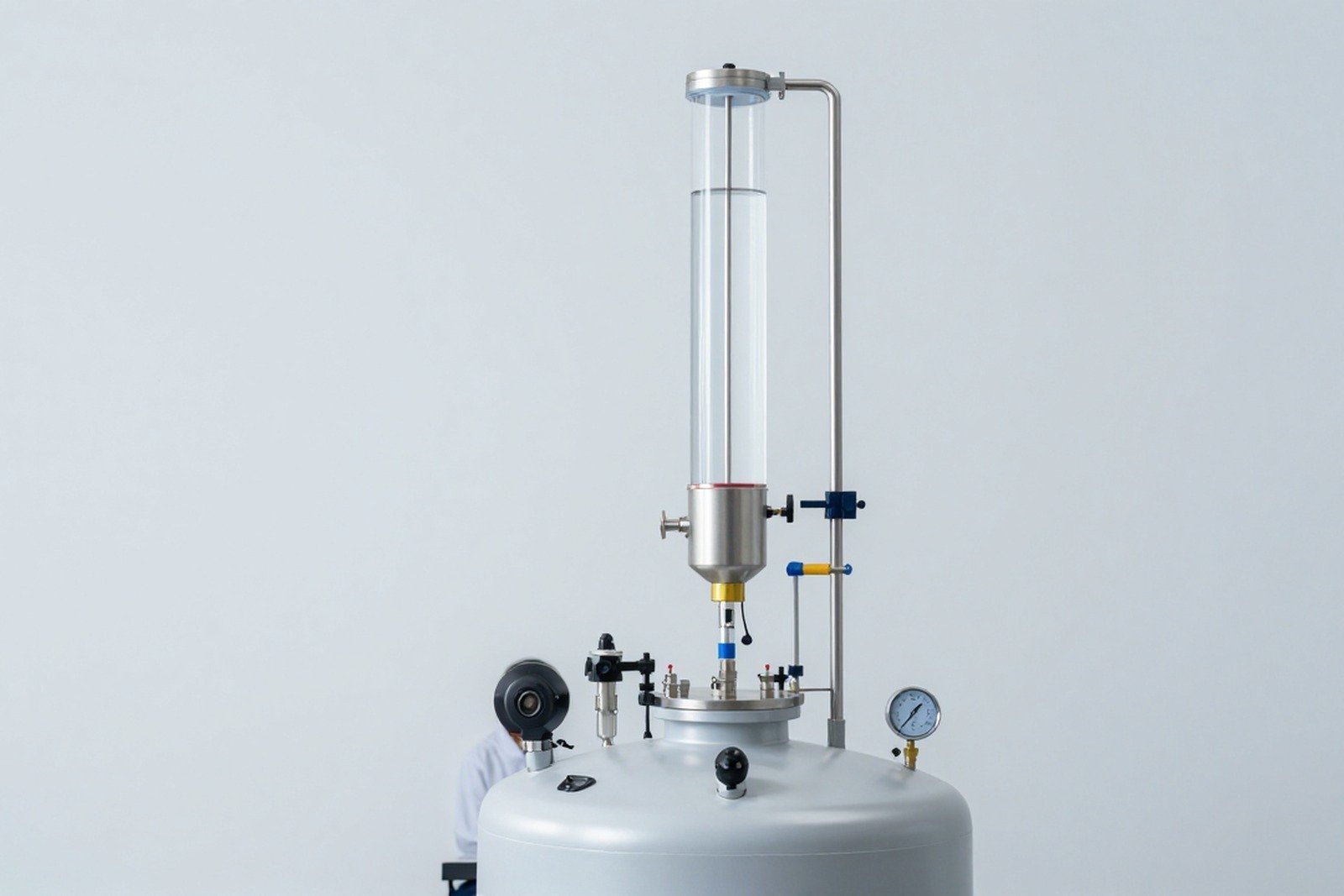
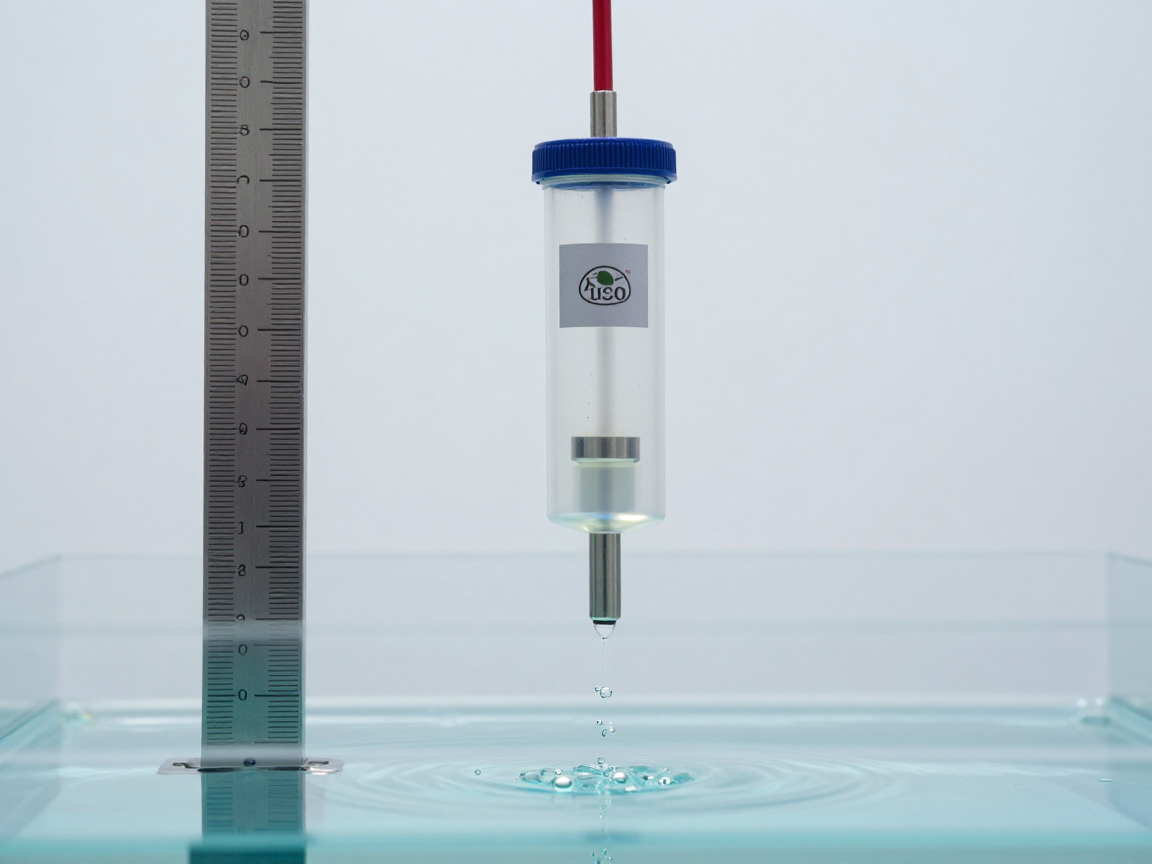
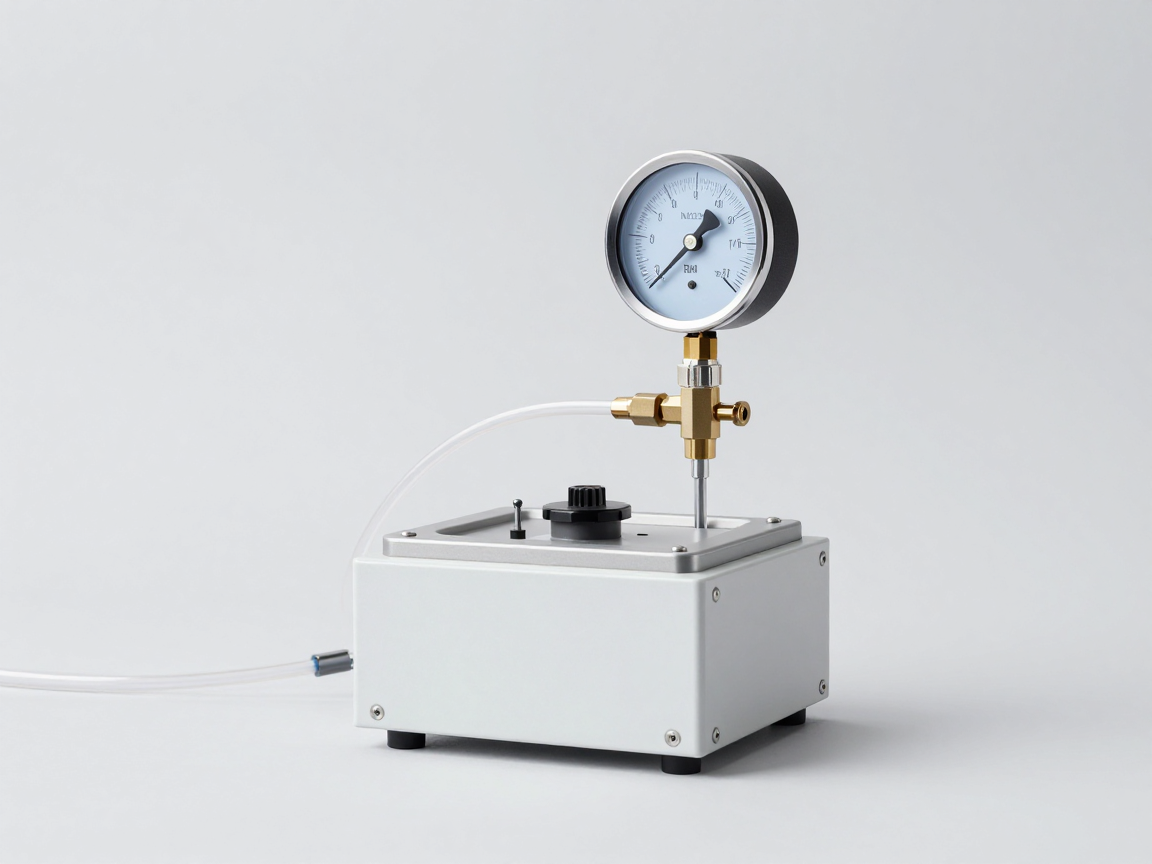
You need: a pressure vessel or deep tank, a fixture holding the sample in a defined orientation, a calibrated pressure gauge or depth scale, a water thermometer, and a stopwatch.
- Measuring depth to the wrong point: from the surface to the tank bottom instead of to the top of the sample. For a 20 cm tall sample that is 20 cm ≈ 2 kPa of error — enough to put the result outside the contractual tolerance.
- Water temperature off: freshly filled tanks are colder than the room; dropping a warm sample into cold water creates a thermal gradient — exactly the “breathing” mechanism that can draw moisture in, and which can also bias the result the other way.
- No start time recorded: the clock starts when the sample is at the specified depth, not when lowering begins.
6. Pass or fail: criteria must be written first
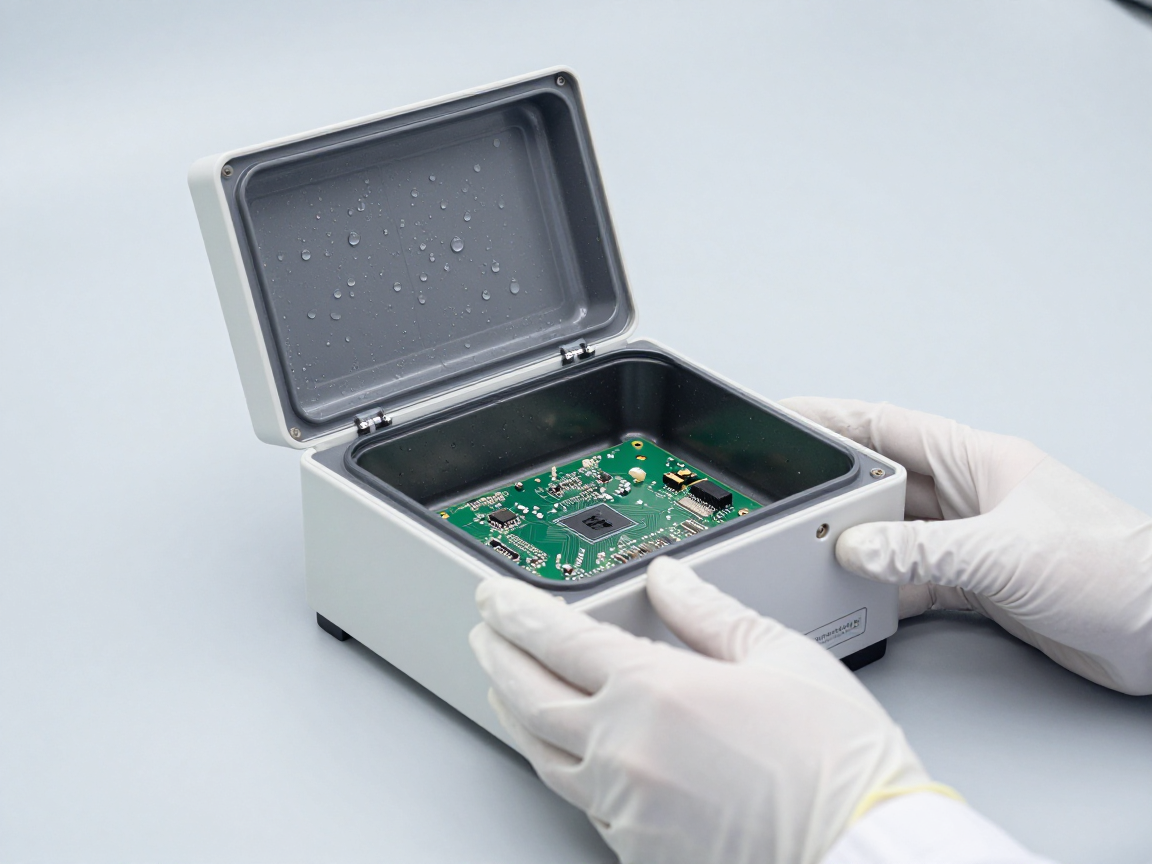
This is the second biggest source of dispute, after depth. “Water got in” is a spectrum, not a binary: a few droplets of condensation in an outer compartment, a trace on the gasket, and standing water on the PCB are three different outcomes.
| Criterion | How to state it | Risk if left blank |
|---|---|---|
| Water in the functional compartment | “no water visible to the naked eye in the PCB compartment” | Argument over whether condensation counts |
| Outer or battery compartment | “moisture permitted, pooling not permitted” | Either wrongful rejection or accepting a unit that will fail |
| Function after test | “full function within 30 minutes of removal” | Works at test, fails two days later |
| When to open the sample | “opened within 5 minutes of completion” | Water evaporates, evidence lost |
| Number of samples | “3 samples, all must pass” | Dispute when 2 of 3 pass |
A practical recommendation: state the criteria per compartment rather than per product, and state the inspection timing. A sentence such as “no water in the PCB compartment, inspected visually under light within 5 minutes of completion” removes most later argument.
Where a quantitative criterion is needed instead of visual inspection, use weighing: weigh the sample before and after the test (wiping the surface the same way both times); the mass difference is the water that entered. This only works when the ingress is large enough to exceed the balance resolution — but for large housings or long immersions it gives a number instead of an opinion.
7. When pressure decay replaces immersion
Immersion is the reference test, but it is slow and not quantitative. For production or post-repair checks, pressure decay is often more suitable.
| Criterion | Immersion | Pressure decay |
|---|---|---|
| Result | Pass/fail, qualitative | Leak rate (Pa/s or ml/min), quantitative |
| Time | 30 minutes plus preparation | Tens of seconds to a few minutes |
| Detecting very small leaks | Poor (water has not arrived yet) | Good, if sensitivity is right |
| Usable as a contract criterion | Yes — this is the reference | Only after correlation with immersion |
| Effect on the sample | May wet and corrode it | No water contact |
Principle: if the contract cites IPX8 per IEC 60529, the test must be immersion. Pressure decay may substitute only when both parties agree in writing on an equivalent leak threshold — and that threshold must be established experimentally on that specific product.
8. Six common errors in claims and in testing
| Error | Consequence | How to avoid |
|---|---|---|
| Stating “IPX8” with no numbers | The claim cannot be verified | Always state “IPX8 <depth> / <duration>” |
| Copying a competitor’s figures | The design was never tested at that level | Derive the level from real service conditions |
| Testing depth but not duration | Slow leaks go undetected | State and measure the time with a stopwatch |
| Testing an empty housing | Leak paths through ports and buttons are missed | Test the shipping configuration |
| Testing new samples only | The result does not represent product life | Add thermal cycling before the test |
| Not recording water temperature | Not reproducible, easily rejected | Record water and sample temperature |
9. Model wording for contracts and labels
This is the most practical part of the article. A sufficiently tight sentence usually looks like this:
“Degree of protection per IEC 60529: IPX8, continuous immersion at a depth of 1.5 m measured to the top of the sample, 30 minutes, water at 20 ± 5 °C, complete unit in shipping configuration; pass when no water is visible in the PCB compartment and the product performs all functions after the test; 3 samples, all must pass.”
On labels and sales material, a shorter form is acceptable but must still carry both numbers: “IPX8 — 1.5 m / 30 min”. If space runs out, put “IPX8” on the label and the full conditions in the technical documentation, with a pointer to where they can be found.
10. How to read a supplier’s IPX8 claim
When a supplier’s file arrives, four questions in order:
- What are the depth and duration? If absent, the claim is not usable yet.
- Where is depth measured? Top of the sample or tank bottom — the difference can be several kPa.
- Was the sample in shipping configuration? Battery fitted, flap closed, accessories attached?
- Was it tested after ageing or thermal cycling? If not, the result holds only for day one.
If all four are answered clearly, the file is good enough to compare. If not, ask for the missing items before signing — proving them after delivery is far harder.
Frequently asked questions
How much deeper is IPX8 than IPX7?
There is no fixed number. The standard only requires a condition more severe than IPX7 (1 m/30 min). The specific level is agreed between the parties, so 1.5 m/30 min and 30 m/10 min can both be called IPX8.
What if a product says IPX8 but gives no depth?
That claim cannot be verified. Technically, ask for the conditions; commercially, a claim without conditions is a risk for both seller and buyer.
Dive watches marked 30 m or 100 m — is that IPX8?
Not necessarily. Dive watches usually follow their own standards (ISO 22810, ISO 6425) with different terminology, and those numbers do not map directly to IP test depths. Read which standard is cited.
Can pressure decay replace immersion?
Only when both parties agree in writing and an experimental correlation between the leak threshold and immersion results has been established on that product.
Should we claim a higher IPX8 level than we need?
No, unless a customer requires it. A higher level means thicker seals, heavier housings, higher cost and longer tests — while the real benefit to users is often disproportionate.
Conclusion
IPX8 is not a level but a blank for the two parties to fill in. Filled properly, the file has value and the product is protected; filled poorly, every later dispute is hard to resolve, even when the product is good.
Immediate task: review every IPX8 claim in your documentation, labels and website; wherever it says only “IPX8”, add depth and duration. Small job, done once, removes most of the downstream risk.
References
- IEC 60529 — degrees of protection, definition of level 8 and agreed conditions.
- ISO 22810 — water-resistant watches; ISO 6425 — diving watches.
- IEC 60068-2-14 — change of temperature; IEC 60068-2-30 — damp heat, cyclic.
Related articles
- IPX7 explained: immersion at 1 m for 30 minutes
- Is IP68 really waterproof? Seven misunderstandings
- Why IP67 devices still fail in the field
- What is IEC 60529? The IP code explained
Talk to us
Disclaimer
This article is our own interpretation; it is not legal advice. Readers should check the official text of the standard before applying it to a specific product.
See also: Copyright Policy & Disclaimer of ticforall.com.