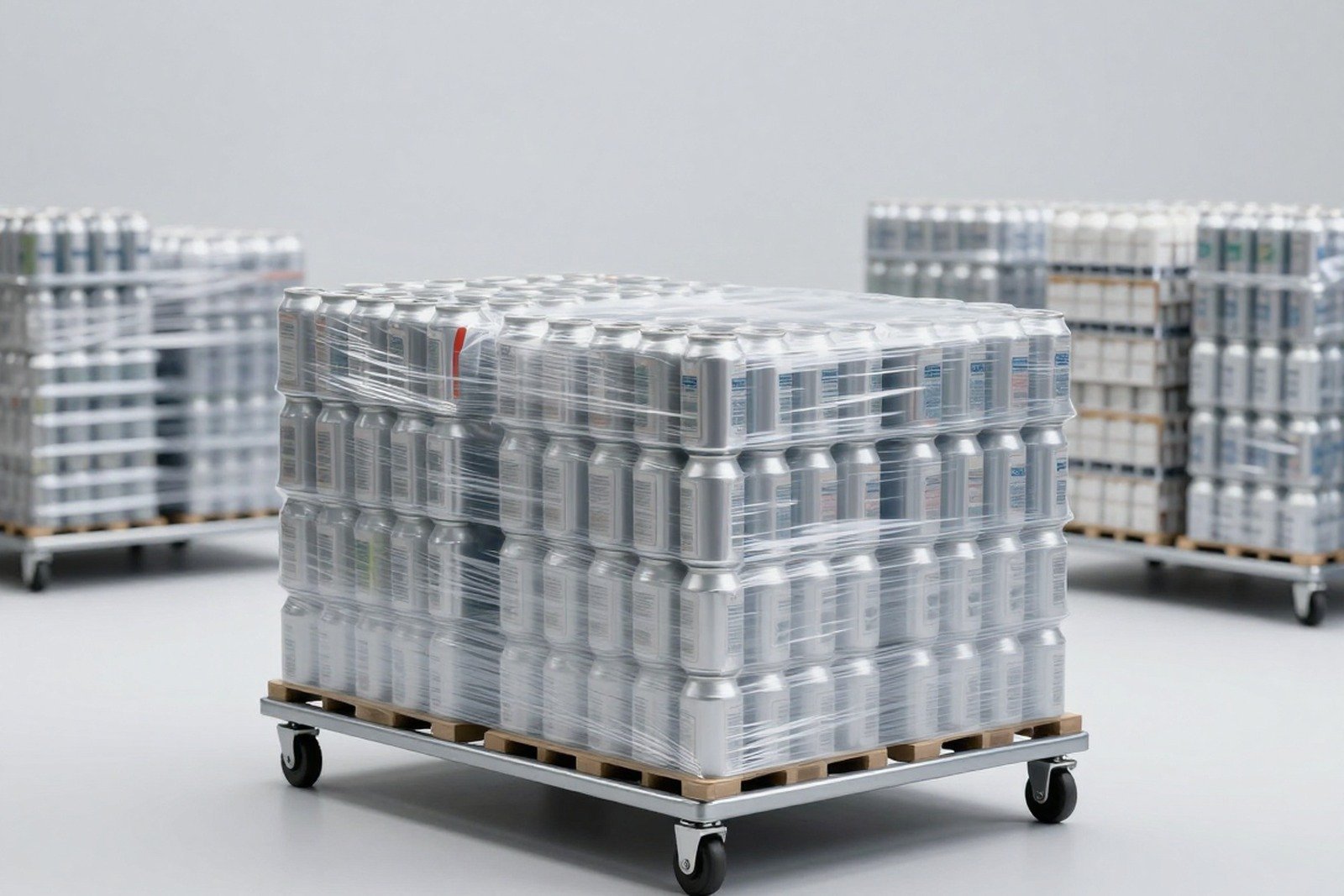
ISTA® 3K is one project. project (project) belongs to the general simulation group, for Fast-moving consumer goods (FMCG) circulate through multi-point retail chains in Europe — Fast Moving Consumer Goods in the European Retail Supply Chain. This is one of ISTA’s most “region-specific” processes: it simulates the supply chain part controlled by the retailer — from picking goods at the retailer’s distribution center, building mixed pallets/roll cages, delivering them to supermarkets, and then processing them in the store until they hit the shelves.
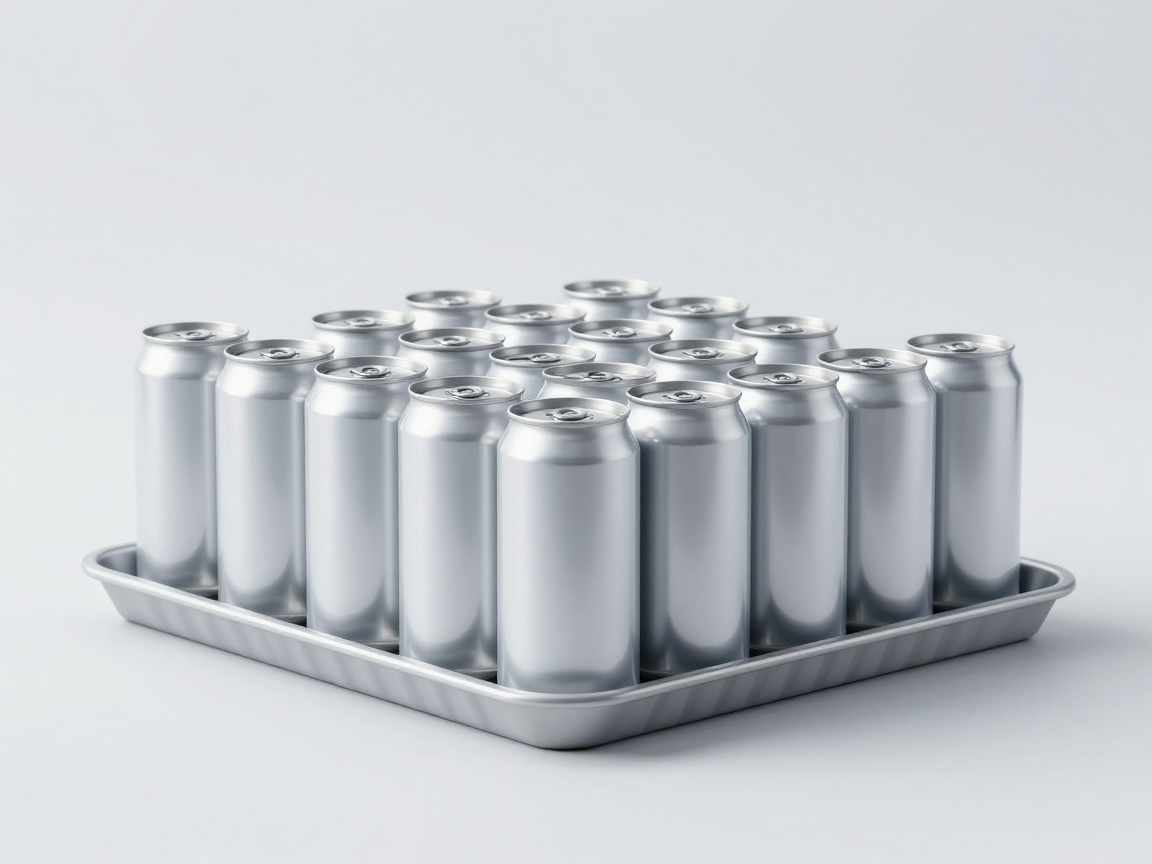
What makes 3K different from every other process in the Series 3: The test unit is a “package” — a multiple batch of retail units (collation of primary packs), for example, shrink-wrap tray of 6 cans, carton of 12 milk cartons, bag of 10 kg of pet seeds; and the test not only evaluates the fact itself but also evaluates it in a mixed pallet/roll cage setting. This is why 3K requires a larger number of samples than nearly any other process: enough to build an entire composite block.
This article presents the scope of application of 3K, four packaging types that 3K distinguishes, a series of 14 test blocks, three types of samples (test package / dummy package / roll cage fill), required equipment and points to prepare before testing. If your goods do not go to a European retail chain, section 9 will help determine the more appropriate process.
1. What is ISTA 3K?
According to the original document, Project 3K is a general simulation for submitted fast-moving consumer products multiple-retail supply chain environment in Europe — where the retailer’s operations include Send mixed goods separately to each store in roll cages or on mixed pallets.
ISTA’s geographical scope is (not limited to): Sweden, Norway, Denmark, England, France, Belgium, Netherlands, Germany, Austria, Switzerland, Spain and Italy. The document also clarifies the scope of application for other similarly developed European countries if they have multi-point retail infrastructure; and because the hybrid delivery model is spreading, 3K could apply in other countries as well. Many European grocery packaging is in form shelf-ready (shelf-ready) — 3K applies equally to both shelf-ready and non-shelf-ready packaging.
The most important scope boundaries: 3K is only simulated portion controlled by the retailer. The ISTA document clearly states: “This test method relates only to the retailer controlled parts of this supply chain. Separate testing should be undertaken at the unit load level”. unit load from the manufacturer to the retailer’s distribution center no belongs to 3K, but must be tested separately at the unit load level (eg group 3E). ISTA also notes: research shows hazards in the section controlled by retailers often more harsh (due to complex product mix), but reached 3K no Eliminates the need to evaluate at the unit load level.
The four ISTA limitations mentioned in the General section should be discussed with customers before using the results:
- Test levels are based on observations of the distribution systems of many brand owners and retailers, corrected for field damage — but the test may not be representative of a particular distribution system.
- Products and packaging are evaluated together.
- Some conditions may not be covered: humidity, pressure, careless or unusual handling.
- With dangerous goods packaging: reached 3K no This means meeting international/national requirements for transporting dangerous goods; 3K does not replace UN standards but can only be used in conjunction with them.
2. Most common misconception about ISTA 3K
Biggest misunderstanding: consider 3K a “pallet test”. Not. The unit of evaluation is multi-lot retail package (shrink film trays, cartons, bags) — these packages are subject to pass/fail review. Mixed pallet or roll cage is just that context create load. If you need to evaluate the entire pallet as a unit (the entire pallet comes with the vehicle), that is a different problem (3E).
Second misunderstanding: I think 3K is used for delivery goods. Are not. 3K simulates a retail chain (retailer → supermarket → shelf) with rows mixed in roll cage. Goods sent individually according to the delivery system used 3A or group 3L.
Third misunderstanding: Prepare too few samples. This is the point that makes many businesses “shocked” when receiving sample requests: 3K does not need “a few packages” but needs enough packages to Build a block of goods minimum size 0.8 m × 0.8 m × 1.6 m, then double that number (details in section 7).
3. Four packaging styles that ISTA 3K distinguishes
3K classifies packages according to how one lifts and carries it — because this is exactly the kind of impact that DC picking causes. Four styles:
| Type | How to lift/carry | Identification conditions |
|---|---|---|
| Type 1 | Lift/carry one hand — both ends closed | Weight ≤ 4.5 kg; and one main dimension ≤ 120 mm; and packaging without holes ≥ 60 × 40 mm with enough softness/space behind to insert 3 fingers (i.e. closed containers, or shrink-wrap trays that cannot be lifted by inserting your hand into the top of the packaging) |
| Type 2 | Lift/carry two hands — both ends closed | All main dimensions ≥ 120 mm; and/or mass > 4.5 kg; and There aren’t enough holes to put your hands through like above |
| Type 3 | Lift/carry one hand — open-top style | Weight ≤ 7 kg; and has a hole in one (or more) ends ≥ 60 × 40 mm with enough softness/space to insert 3 fingers (usually a shrink-wrap tray) |
| Type 4 | Lift/carry two hands — open style at both ends | Weight > 7 kg; and has holes at opposite ends ≥ 60 × 40 mm large enough to pass a hand through (usually a shrink-wrap tray with open ends) |
Why is this classification important? Because it determines how the “carry” in test block 4 is performed — whether the carry is supported by the bottom or carried by hand holes in the shrink film. The two cases cause completely different loads on the joints and on the packaging. Before submitting a sample, you need to clearly define your style; If the packaging can be lifted in more than one way, it is necessary to agree with the tester which method is popular in your channel.
4. What does ISTA 3K test? — Series of 14 test blocks
3K runs in a fixed order test block sequence, divided into two parts: sue (package) and mixed block level (mixed load). The table below is the order according to the document:
| # | Granted | Test type | Test level | Required |
|---|---|---|---|---|
| 1 | Sue | Preliminary atmospheric conditioning | Ambient, frozen or cool — choose according to distribution and sales channels | Required |
| 2 | Sue | Pyramid pick (overhang stack) | 5 minutes | Required |
| 3 | Sue | Drag (drag) | 900 mm at 1.0 m/s | Required |
| 4 | Sue | Carry (to carry) | 10 seconds of static + 5 cycles of oscillation when worn | Required |
| 5 | Sue | Placement drop (drop when placed down) | 5 hits, multiple positions, 150 mm high | Required |
| 6 | Sue | Drop-on (drop over the lower bale) | The bottom of the upper bale hits the top of the lower bale, 150 mm | Required |
| 7 | Sue | Impact | 8 hits at 1.35 m/s | Options |
| 8 | Mixed block | Impact | 4 hits at 0.91 m/s | Required |
| 9 | Mixed block | Vibrate randomly | Gross grms 0.28 in 40 minutes, then 0.517 in 60 seconds | Required |
| 10 | Mixed block | Fall flat | 1 drop from 60 mm | Required |
| 11 | Sue | Placement drops | 4 impacts, multiple positions, 150 mm | Required |
| 12 | Sue | Falling (try expanding) | 4 collisions, many positions, 300mm | Recommended (optional) |
| 13 | Sue | Drop-on (try expanding) | The bottom of the upper bale beats the top of the lower bale, 300mm | Recommended (optional) |
| 14 | Reviews | Test and evaluate | Don’t try — evaluate the test package and roll cage fill package | Required |
The ISTA document has a separate note for blocks 12–13: the 300 mm level represents the “worst within normal limits” handling — not every bale will fall from 300 mm, but a few will, so it’s worth testing for performance. If no To perform these two blocks, the test report must clearly state.
5. Package delivery item group: simulates picking up goods at DC
This is 3K’s “specialty” — an exact simulation of what happens when warehouse staff remove goods from raw pallets to build mixed goods:
- Pyramid pick / overhang stack (block 2): simulates a situation where a package is only partially supported on the pallet at the picking side, because other packages have been removed — the package is “protruding” and subject to bending.
- Drag (block 3): simulates dragging a bale off a pallet — 900 mm at a speed of 1.0 m/s. This impact mainly destroys the bottom surface and the adhesive/adhesive joints.
- Carry (block 4): simulates lifting and carrying the bale a short distance from the picking face to the mixed load — 10 seconds of static plus 5 cycles of oscillation while carrying. The way to carry it (supporting the bottom or putting your hand through the shrink film hole) depends on the packaging type in part 3.
- Placement drop & drop-on (block 5, 6, 11, 12, 13): simulate impact when put sue down and when drop one bale onto the bale below while building the load block. This is why the 3K comes in two heights: 150 mm (normal) and 300 mm (extended).
- Horizontal impact (block 7, optional): Simulate impacts occurring on automatic conveyor systems at DCs with bale-level automation. ISTA clearly states: if known or capable Packages pass through a DC with a conveyor system/package automation system, should be done this block.
6. Group of mixed block level items: roll cage and mixed pallet
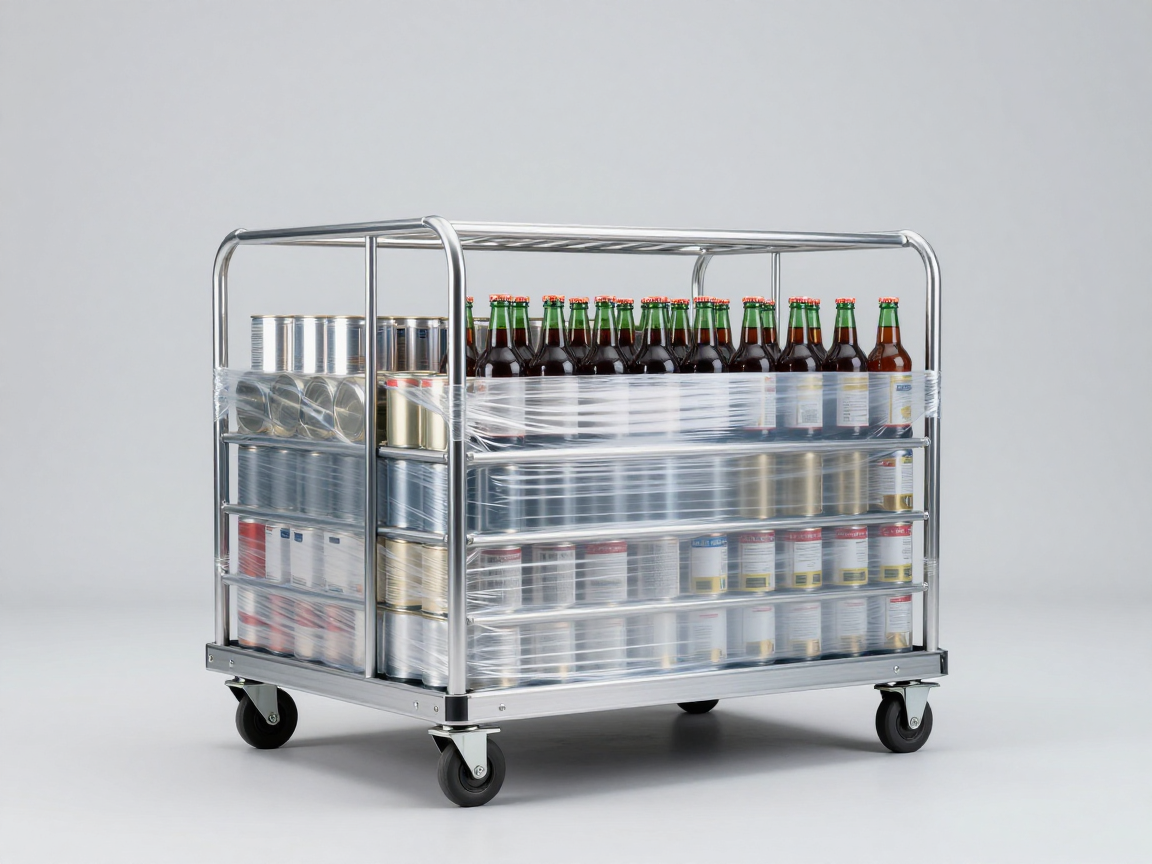
The 3K document states a notable technical decision: in Europe, both are used mixed pallets and mixed roll cage; observation shows roll cage is at greater risk because the bales can lean against the mesh wall of the cage (mixed pallets do not have walls). Since both forms are popular, ISTA chooses worse case — roll cage — Do a test configuration.
Three mixed block level categories:
- Horizontal impact (block 8): 4 impacts at 0.91 m/s — simulates cage-to-cage (or mixed pallet to mixed pallet) collisions, or load-to-fixture collisions when loading, driving, and handling at the supermarket.
- Random vibration (block 9): Grms 0.28 for 40 minutes, then Grms 0.517 for 60 seconds. The additional 60 seconds of vibration at a higher level simulates more severe vibration when the load is moved over ramp chequer-plate or rough floors in the receiving area — usually at a supermarket.
- Flat fall (block 10): 1 drop from 60 mm — simulates higher level vertical impulses commonly encountered when loads are damaged accumulate/arrange or cross the threshold.
7. Number of samples and three sample types (TP/DP/RCF)
3K required Many samples are identical, quantity depends on package size. Instructions on how to estimate: build the number of bales needed to create a block at least 0.8 m × 0.8 m × 1.6 m There are no significant gaps, then double. Example given in the document: bale 0.4 × 0.4 × 0.2 m needed 16 bales for that block → total needed 32 bales to try.
Patterns are divided into three categories with different roles — points that are easily misunderstood:
| Type | Symbol | Role | Rated pass/fail? |
|---|---|---|---|
| Test package | City | Runs from the beginning to the end of the chain; when testing many similar bales, all Must pass all tests | Yes |
| Dummy packages | DP | Used in blocks 1, 2, 3, 6 and 13 to create the correct real load conditions (so that the hazard is correctly applied to the test package); If it loses shape/support, replace it with another model | No |
| Roll cage fill package | RCF | Only used in blocks 8, 9, 10 to build mixed cargo blocks around the test package; After block 10 is set aside and review later | Yes (assessment at block 14) |
ISTA notes three conditions for converting between sample types. If done incorrectly, it will ruin the test value: dummy package of blocks 1–6 no used as roll cage fill for blocks 8–10; roll cage fill after block 10 no used as dummy for blocks 11–13 (because they were marked for pass/fail). Samples should be labeled TP/DP/RCF right from the start to trace.
Four other principles of preparation:
- Samples must be packaging and products not yet tested; Sent to the lab must be over-packaged or repackaged in new packaging at the lab.
- Yes Document carefully about configuration, materials, structure of products and packaging; ISTA strongly recommends using photos to supplement descriptions.
- With carton, ISTA recommends identifying and recording basisweight (paper/board rating) — if the nominal rating changes, even if the board remains at the same performance level, should try again.
- Select the right air conditioning mode (ambient/frozen/cool). suitable for distribution and sales channels product — do not use default.
8. Accompanying equipment and method standards
| Category | Equipment | Method standards |
|---|---|---|
| Climate conditioning | Temperature and humidity recording device; air conditioning chamber | ISO 2233 or ASTM D4332 |
| Free fall (preferred) | fork-type free-fall drop tester | ISO 2248 or ASTM D5276 |
| Free fall (alternative 1) | Manual drop with standard ruler — for drops of 150 mm | — |
| Free fall (alternate 2) | Belt + quick release — for 60 mm drop of mixed block | ISO 2248 or ASTM D5276 |
| Impact | Inclined impact machine or horizontal impact system | ISO 2244, ASTM D880 or ASTM D4003 |
| Vibrate randomly | Vertical random vibration system; There must be measures to keep the sample from leaving the table no Limit vertical movement | ISO 13355 or ASTM D4728 |
| Mixed batch of goods | 4-wheel metal roll cage, approximately 800 mm × 700 mm (horizontal) and 1800 mm height (from bottom of wheel to top of cage); an additional middle floor may be needed | — |
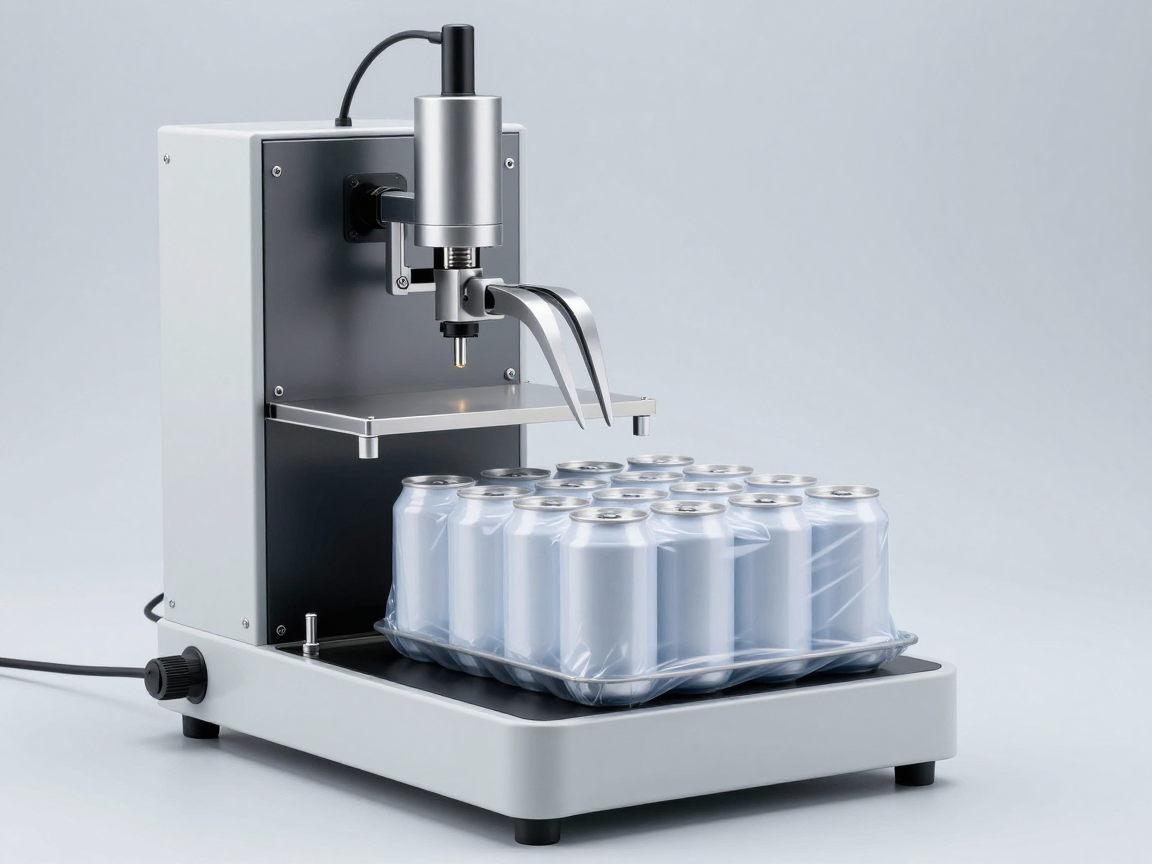
Noteworthy detail: the 3K document clearly states that the machine falls as a crutch preferred choice for all 3K drop tests, including 60 mm drops of composite blocks; but because some machines cannot lower down to 150 mm or 60 mm, the new document lists the two alternatives mentioned above. If the lab does not have a properly calibrated machine, the results may not be comparable between tests.
9. When should you not use ISTA 3K?
| Real situation | Recommended procedure | Why? |
|---|---|---|
| Goods go to European retail chains, mixed delivery by store by mixed roll cage/pallet | 3K | True range simulation part retailer controls |
| Raw pallets from the manufacturer to the retailer’s DC | 3E (try separately at unit load level) | 3K only covers the retailer-controlled portion |
| Goods sent individually via parcel delivery system | 3A | The treatment and hazard models are completely different |
| E-commerce goods delivered directly to consumers | Group 3L / 6-series by channel | 3K does not simulate delivery to consumers |
| Goods go to North America or Asia market | Process according to the right channel | The 3K test level is based on observations of the European retail system |
| Packaging for dangerous goods | UN standards and corresponding regulations | 3K does not supersede these requirements |
10. Common mistakes when performing ISTA 3K
- Mix three types of samples. Using dummy package (DP) instead of roll cage fill (RCF), or using RCF that has passed block 10 as dummy for blocks 11–13 — distorts both the load structure and the evaluation scope.
- Just prepare a few packages. Without enough samples to build a 0.8 × 0.8 × 1.6 m block (duplicated), it is not possible to run a full series of blocks 8–10.
- Choose the wrong air conditioning mode. Using ambient for frozen/cool products is to ignore the most important practical conditions of that channel.
- Remove block 7 because it’s “optional”. If goods possible going through the package level automation DC, the ISTA document clearly states this block should be implemented.
- The removal of blocks 12–13 is not recorded. Two 300 mm blocks are recommended; If omitted, the minutes must state — otherwise, the report is considered incomplete.
- Do not record board weight (basis weight). When changing paper suppliers, even if the board is at the same performance level, the old results are no longer valid — without the original data, it cannot prove anything.
- I thought reaching 3K was enough for the whole chain. 3K only covers the part the retailer controls; The unit load part must be tested separately.
11. What does the cost and time of the ISTA 3K test depend on?
Four dominant factors: The number of samples is very large (according to bale size, it can be up to several dozen bales, divided into three types) — usually the most expensive factor; 14 block chain running time includes 5 minutes pyramid pick, 900 mm drag, 5 carrying cycles, multiple 150/300 mm drops, plus 40 minutes + 60 seconds vibration, plus conditioning; must build a mixed roll cage according to the prescribed size, with a middle floor if necessary; and specialized equipment — Crutch-type fall machine can be lowered to 60 mm, impact system, vibrating table enough to load the entire cage. Article What does the cost and time of ISTA packaging testing depend on? Analyze further how to compare quotes.
12. Frequently asked questions
What types of products is ISTA 3K used for?
Fast-moving consumer goods packaged in mixed batches (shrink trays, cartons, bags) sold through multi-point retail chains in Europe — food, beverages, groceries, personal care, pet food… As long as the goods follow a mixed delivery model to each store.
Is 3K a European process?
Yes. 3K’s test level and roll cage configuration are based on European retail observations; The document lists the main applicable countries and similar developed countries. For other markets, it is necessary to choose the appropriate channel process.
How many samples are needed for a 3K test?
There is no fixed number: estimate by the number of bales enough to build a block ≥ 0.8 × 0.8 × 1.6 m, then double. The smaller the bale, the larger the number of samples — for example, a 0.4 × 0.4 × 0.2 m bale requires about 32 bales.
Why use roll cages and not mixed pallets?
Because ISTA considers roll cage to be a worse case scenario (bales can lean against the net wall, creating greater lateral load), and both forms are popular in European practice. Choosing the worse case helps the result cover both.
Does a dummy package count as a pass/fail sample?
No. Dummy package is only to create correct loading conditions for test package; it is not tested or rated pass/fail, and if it loses its ability to support, replace it with another model.
In what way is the 3L group different from the 3K group?
3L is a project for e-commerce/delivery channel (online retailer’s parcel), with SMALL/A/B models and separate test series including vibration with/without top load, drop, rotating drop, bridge impact… 3K for retail chains store in Europe with mixed roll cages.
Does reaching 3K mean that the goods are not damaged at the supermarket?
No. 3K is a general simulation based on observations of many distribution systems, not a specific system; The results say the packaging exceeds the specified test levels according to your predetermined criteria — see four pass/fail criteria.
13. Conclusion
ISTA 3K is a project dedicated to fast-moving consumer goods passing through multi-point retail chains in Europe, simulating the part of the supply chain controlled by the retailer. Three points to remember: The unit of evaluation is the batch package, not the pallet; Test configuration is mixed roll cage — worse case than mixed pallet; and Large number of samples, divided into three types TP/DP/RCF with strict conversion rules.
Before placing a trial order, businesses should prepare: packaging type (Type 1–4) and package size; channel-appropriate air conditioning mode (ambient/frozen/cool); Quantity of board if it is a carton; and confirm whether the goods go through a DC with an automated conveyor system for bale feeding (to decide block 7).
Reference standard version: article content based on ISTA Project 3K document (2011 version, revised 2022) — Fast Moving Consumer Goods in the European Retail Supply Chain. The test levels are a summary for reference; When implementing, the official standard, the current version of ISTA, must be used.
References
- ISTA Project 3K — Fast Moving Consumer Goods in the European Retail Supply Chain, 2011 edition (edited 2022), International Safe Transit Association
- ISTA — Test Procedures & Projects (current catalog, accessed September 27, 2026)
- ISO — ISO 2233, ISO 2248, ISO 2244, ISO 13355 (referenced methods)
- ASTM — D4332, D5276, D880, D4003, D4728 (equivalent methods cited)
Related articles
- Conditioning Before a Packaging Test: 12 Hours or 72 Hours?
- How are SIOC and Over Boxing different? Choose the right packaging test for Amazon products
- ISTA 6-AMAZON.COM What is SIOC? Packaging test procedure sent in the product’s own box
- What is ISTA 7D? Temperature testing procedures for shipping packaging
- What is ISTA 6-SAMSCLUB? Packaging test procedure for Sam’s Club distribution system
- What is ISTA 6-AMAZON.COM Over Boxing? Procedure for testing outer box packaging for goods sent to Amazon
- What is ISTA 3L? E-commerce fulfillment process
- What Is the ISTA Standard? How to Choose the Right Transport Packaging Test (3A, 6-Amazon, ASTM D4169)
- What is ISTA 3E? Procedure for testing unitized load traveling by full truck (FTL)
- What is ISTA 3F? Packaging test procedure for individual packages on mixed pallets at retail intersections
- What is ISTA 3A? Packaging test procedure for parcel delivery system (Parcel Delivery)
- What is ISTA 3B? Packaging test procedure for LTL shipping (joint shipments)
- ISTA Packaging Test Pass/Fail Criteria: 4 Things You Must Decide Yourself
Discuss further
Disclaimer and acknowledgment of intellectual property rights
This article is an explanatory content compiled by us for the purpose of introducing and disseminating knowledge. Article is not a translation, copy, abridgement or replacement of the parent standard, and is not evaluated, approved or sponsored by ISTA (International Safe Transit Association)..
The entire content of ISTA standards is copyrighted by the International Safe Transit Association, Inc. (East Lansing, Michigan, USA) — All rights reserved. ISTA® and the ISTA logo are registered trademarks of the International Safe Transit Association, Inc.; Mentioned in this article are for guidance purposes only and do not imply any affiliation, partnership or sponsorship.
Article content For reference only; Before applying for any purpose — testing, evaluation, certification or commercial decision-making — the reader should refer directly to the original ISTA document (the most complete and up-to-date version) and consult an accredited testing facility when necessary.
When performing testing, it is mandatory to use the official, current version of the standard, obtained directly from ISTA. We do not redistribute ISTA materials in any form. Information in this article may be out of date with the current version of the standard.
See more: Copyright Policy & Disclaimer by ticforall.com.