

A pallet of goods shrink-wrapped, strapped, or placed on a tray + lid — it is no longer an “individual package”, but a unitized load. Many businesses still take pallets to test according to 1B or 1D (which are for each individual package), then are surprised because the results do not say anything about the actual behavior of the entire block of goods. ISTA 1E was born exactly for that gap.
This article analyzes ISTA 1E in terms of how the standard positions itself: what it checks, what it does not check, what types of goods it is used for, and when it is required to switch to another process.
1. What is ISTA 1E?
ISTA 1E is a test procedure that belongs to Series 1 — Non-Simulation Integrity Performance Test, for a whole unit block of goods made from one or more products/packages of the same type.
Standard definition unitized load is: one or more products or packages, usually located on skids or pallets, but always secured or bound to circulate as a single block. Typical example:
- Stretch wrap pallets include many individual boxes;
- A machine that does not pack boxes, is strapped directly onto the pallet;
- Pallet has carton tray + tube + lid.
Three things to remember about 1E before reading on:
- 1E belongs to group test durability, not the travel simulation group: it answers the question “will this product-packaging combination withstand the test sequence”, not reconstructing the actual hazards of the transport route.
- Achieved 1E not synonymous Meets shipping company’s packaging regulations.
- In 1E, the product and packaging are a unified whole — the results are only valid for the unitization method tested.
Current version of the document: ISTA 1E 2014 (latest technical change March 2014, editorial change January 2017).
2. Most common misunderstanding about ISTA 1E
The following three misunderstandings determine whether to choose the right or wrong process:
- “1E is a real shipping simulation for pallet goods.” — No. 1E is still a Non-Simulation Integrity song: it challenges endurance but does not recreate the journey. Want to simulate a full-truckload shipment for a whole unit load, the correct direction is ISTA 3E.
- “Every pallet try 1E.” — Not enough. 1E is for unitized load made from products of the same type. If the pallet is a mixed cargo of different types/products, or if your cargo must be mechanically manipulated in the form of a container/bulk, the correct direction is in group 3 (eg 3E, 3B) — not in the 1E range.
- “1E includes compression during stacking.” — No. The sequence of 1E includes atmospheric conditioning, vibration, and shock rotational edge drop — There are no compressed items. If your goal is warehouse/container stacking load capacity, 1E doesn’t answer that question.
3. What does ISTA 1E test? — 4-step sequence

The test is performed in the correct order following, per sample:
| Step | Test item | Select method | Required |
|---|---|---|---|
| 1 | Atmospheric preconditioning | Ambient temperature and humidity | Required |
| 2 | Vibration | Select 1: vertical fixed displacement vibration or vibrate randomly | Required |
| 3 | Shock | Choose 1: incline impact (conbur) or horizontal impact | Required |
| 4 | Shock | Rotational Edge Drop | Required |
Specific test levels for each item (frequency/displacement, Grms level, impact velocity, height) are specified in the table of the original document — please refer directly to the ISTA document when performing.
Step 1 — Atmospheric conditioning
The cargo block is brought to environmental temperature and humidity conditions before entering the test sequence. This is the step to “standardize the starting point” for the whole batch of goods, especially important for goods with hygroscopic materials (carton, wood, paper).
Step 2 — Vibrate
Standards allow choose one of the two method:
- Fixed displacement, vertical linear vibration: The vibrating table can only move vertically — Rotary motion is not accepted. This method requires an additional metal shim and a frequency measuring device.
- Random vibration (random): Use random vibration system with total Grms level according to the standard lookup table.
Note on practical value: pallet loads often have low natural frequencies and are strongly influenced by wrapping/tightening — so the 1E’s vibration results are very sensitive to the way the goods are secured, not just to the packaging of each box.
Step 3 — Shock (impact)
Choose one of two methods: incline impact (conbur table) or horizontal impact. These are horizontal impact tests, consistent with the behavior of pallets when pushed/braked/hit against walls in warehouses and on vehicles.
Step 4 — Rotational Edge Drop
Required in 1E. The load is rolled/dropped around a lower edge, simulating a tip-over when the pallet is dragged or pushed off the platform. With pallet goods, this is often the category where the most problems are discovered: shrink wrap, loose straps, bottom boxes with flattened corners.
4. Accompanying equipment and method standards
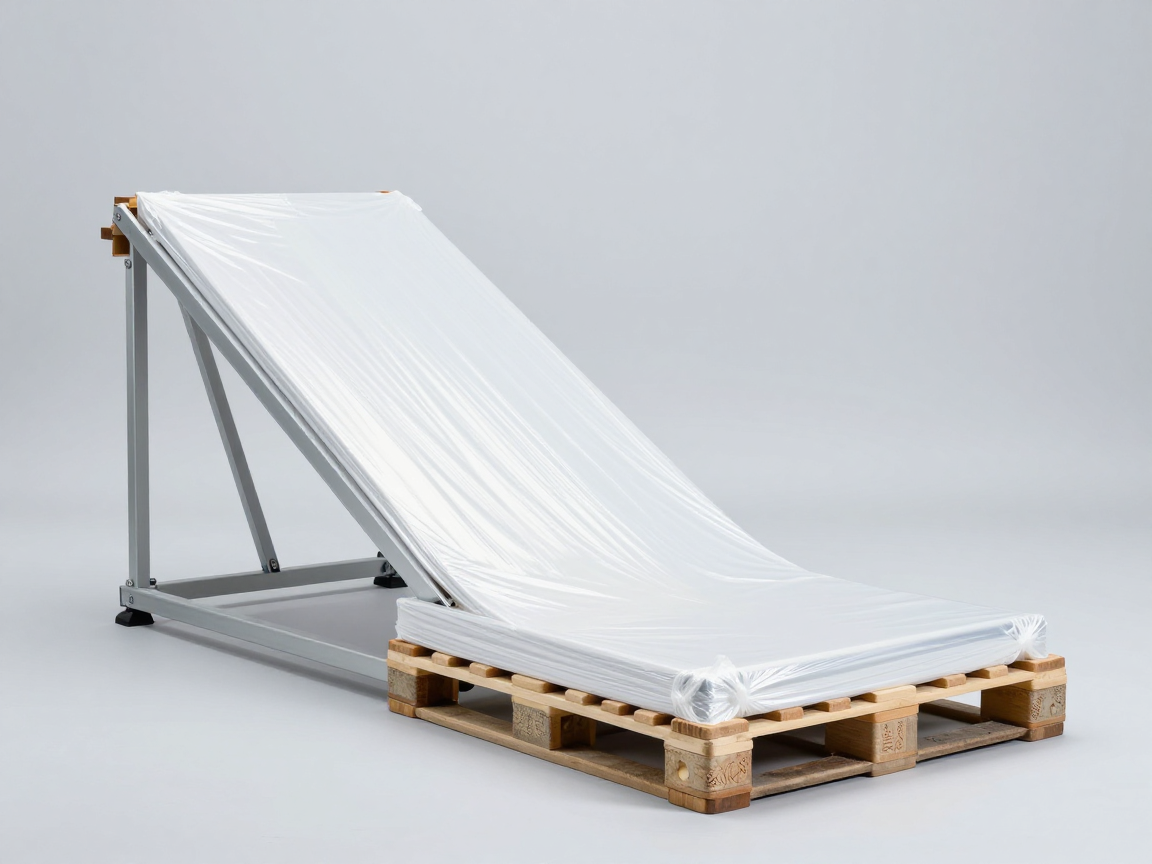
| Test item | Equipment | Method reference |
|---|---|---|
| Fixed displacement vibration | 1 in (25 mm) fixed/controlled, vertical moving vibration system | ASTM D999 (Method A1 or A2) |
| Tools included | Metal shim ~0.06 in (1.5 mm) × ~2 in (50 mm); Frequency meter (Hz/CPM); timer or stopwatch | — |
| Random vibration | Random vibration system | ASTM D4728 |
| Rotational Edge Drop | Rotational edge drop test system | ASTM D6179 |
| Incline impact | Conbur table (incline impact tester) | ASTM D880 |
| Horizontal impact | Horizontal impact test system | ASTM D4003 |
Here’s why a pallet load can’t be tested in a “small” lab: The size of the vibrating table and the load-bearing capacity of the impact device are the deciding factors Can you try 1E or not?
5. Number of samples and sample preparation
The 1E sample requirements are similar to all Series 1 procedures, as the standard generally states: Minimum 1 sample, and ISTA Recommended repetitions 5 times or more, each time a new sample is used. The difference of 1E lies in that unit for testing not a single package but a whole unit load (unitized load) — so the amount of preparation, transportation labor and number of people loading and unloading are all calculated by the whole block, not by one box.
Four things to consider when preparing samples for 1E:
- Fix the unitization plan before testing it: wooden pallets or plastic pallets, wrapping film or straps, number of layers, stacking direction. Changing any element means changing the load-bearing structure of the entire block – the old test results are no longer applicable to the new solution.
- Check the pallet before entering the test chamber: Cracked, rotten or damp pallets distort the results and make it difficult to assign responsibility later. It is recommended to take photos of the pallet at four corners before testing.
- Record the configuration of each iteration: if repeated 5 times, all five blocks should have the same configuration. To compare two unitization options, each option needs a separate set of samples, not mixed together.
- Send the batch to the lab: shipped goods no longer represent standard condition, so the shipment must be Excessive packaging during shipping or Repackage in new packaging at the lab.
Regarding pass or fail criteria, the standards do not define them for you: see 4 criteria businesses must determine for themselves before testing.
6. When should ISTA 1E not be used?
| Situation | Recommended procedure |
|---|---|
| Individual packages up to 150 lb (68 kg) | 1A (fixed displacement vibration) · 1C (with compression item) · 1G (random vibration) |
| Individual packages over 150 lb (68 kg) | 1B (basic) · 1D (with compression) · 1H (random vibration) |
| Whole cargo block, need to simulate a full-truckload trip | 3E |
| Goods pallets mixed many different types | Not covered by 1E — see group 3 (3B/3E) |
| The target is the ability to withstand stacked loads | 1E does not have a compression item — requires a different process/assessment |
| Need to simulate international travel | Series 2 (e.g. 2B) or Series 3 depending on the distribution channel |
7. Common errors when implementing ISTA 1E
- Block of goods “not similar to reality” — Wrap the shrink wrap by hand more loosely than the chain, or tighten the belt with incorrect force. With 1E, the way the row is secured is part of the sample, not a technical detail.
- Selected the wrong option — rotation is not acceptable; If the lab only has a rotating vibrating table, it is not possible to conclude according to 1E.
- Skip step 4 — Rotational Edge Drop is required, not optional.
- Test on pallets of shipped goods — the sample is not representative, the results cannot be used.
- Do not finalize damage criteria before testing — It’s not until the goods are opened that we debate “if slight damage counts as pass or fail”, and the test loses its value.
8. What does the cost and time of ISTA 1E testing depend on?
In 1E, the unit to be tested is a whole block of goods in one unit, so the cost includes four items that are completely different from a single package: consumable products for the entire block (usually not reusable after testing); unitization (pallets, wrapping films, straps); Test equipment can withstand the load of the entire block; and transport the batch to the laboratory.
Each iteration is a new block, so this is the procedure where the number of iterations most significantly affects cost. For expensive products, it’s okay to use samples as replacements for iterations — as long as the replacements are authentic and the unitization stays the same. Summary of common factors: What does the cost and time of ISTA packaging testing depend on?
9. Frequently asked questions
How is ISTA 1E different from 1B and 1D?
1B and 1D are for each individual package over 150 lb (68 kg). 1E is for whole unit block of goods — means the goods have been fixed into a block on the pallet/skid. You don’t choose 1E over 1B because the goods are heavy, but because rows are presented as a block.
Does ISTA 1E have a compression item?
No. 1E includes atmospheric conditioning → vibration → shock → rotational edge drop. If the target has a compression/stacking section, 1E is not met.
If my pallet has only one strapping tool, can I still run 1E?
Okay. The document gives the main example of “a machine that does not pack a case that is strapped onto a pallet” — this is a unitized load because the product and pallet are bound into one block for circulation.
Is it mandatory to make 5 samples?
Not required, but A sample is not a statistical conclusion. Minimum requirement is 1 sample; ISTA recommends 5 or more runs with a new sample each time for representative results.
How is ISTA 1E different from ISTA 3E?
1E is the card Non-Simulated Integrity: challenges the durability of the cargo. 3E is the card General Simulation for whole-unit cargo on a full-truckload trip: recreates the hazard chain of the journey, with stacking/compression and vibration according to the model. If you need to predict the risk of failure on a specific route, 3E is the right tool.
What does the result “pass ISTA 1E” mean?
This means that the cargo has withstood the specified test sequence and compared it with the damage criteria by yourself determined before testing. It no Must commit that the goods will be intact during all transportation journeys.
10. Conclusion
ISTA 1E is the correct Series 1 procedure for a whole unit block of goods made from products of the same type: 4 required steps, minimum 1 sample, 5 samples or more recommended. The greatest value of 1E lies in the fact that it is binding product + packaging + way to fix goods must be evaluated as a system — something 1B/1D cannot do because they only look at individual bales.
And remember: 1E challenges endurance, not simulation of travel. When data is needed to decide on the risk of damage on the actual line, turn to 3E or the appropriate 2/3 Series processes.
Bottom line: “1E” only makes sense when the load is properly defined as a unitized load made from the same product. If the cargo is a pallet mixed with many types of products, or you need to forecast risks according to the actual journey, a specialized process team (eg 3E) will answer the right question.
References
The full standard should be searched and ordered directly from ISTA. Below are the public sources used for reference when compiling the article:
- ISTA — Test Procedures (list of current series and projects, accessed September 27, 2026)
- ISTA — Procedure 1E — Overview and equipment required (free overview published by ISTA; not enough to conduct testing)
- ISTA — Certify your Lab (testing laboratory certification program)
Original source: ISTA 1E 2014 – Unitized Loads of Same Product, © International Safe Transit Association.
Related articles:
- What is ISTA 6-AMAZON.COM Over Boxing? Procedure for testing outer box packaging for goods sent to Amazon
- What is ISTA 3L? E-commerce fulfillment process
- What is ISTA 3K? Fast-moving consumer goods (FMCG) packaging test procedure in European retail chains
- What is ISTA 3F? Packaging testing procedure for individual packages on mixed pallet load (mixed pallet load)
- What is ISTA Series 1? Overview of 7 packaging testing procedures (1A–1H)
- What is ISTA 1B? Complete packaging test procedure for packages over 150 lb (68 kg)
- What is ISTA 1D? Extended packaging testing procedures for packages over 150 lb (68 kg)
- What is ISTA 1H? Random Vibration Test Procedure for Packages Over 150 lb (68 kg)
- What is ISTA standard? Instructions for choosing the right shipping packaging test
- What is ISTA 2B? Partially simulated packaging test procedures for packages over 150 lb (68 kg)
- What is ISTA 2A? Partially simulated packaging test procedures for packages up to 150 lb (68 kg)
- What is ISTA 3E? Procedure for testing unitized load traveling by full truck (FTL)
Talk to us
Disclaimer and IP acknowledgement
This article is an explanatory content compiled by us for the purpose of introducing and disseminating knowledge. Article is not a translation, copy, abridgement or replacement of the parent standard, and is not evaluated, approved or sponsored by ISTA (International Safe Transit Association)..
The entire content of ISTA standards is copyrighted by the International Safe Transit Association, Inc. (East Lansing, Michigan, USA) — All rights reserved. ISTA® and the ISTA logo are registered trademarks of the International Safe Transit Association, Inc.; Mentioned in this article are for guidance purposes only and do not imply any affiliation, partnership or sponsorship.
Article content For reference only; Before applying for any purpose — testing, evaluation, certification or commercial decision-making — the reader should refer directly to the original ISTA document (the most complete and up-to-date version) and consult an accredited testing facility when necessary.
When performing testing, it is mandatory to use the official, current version of the standard, obtained directly from ISTA. We do not redistribute ISTA materials in any form. Information in this article may be out of date with the current version of the standard.
See more: Copyright Policy & Disclaimer by ticforall.com.